
Why is the equator warmer than the poles




- Slides: 25
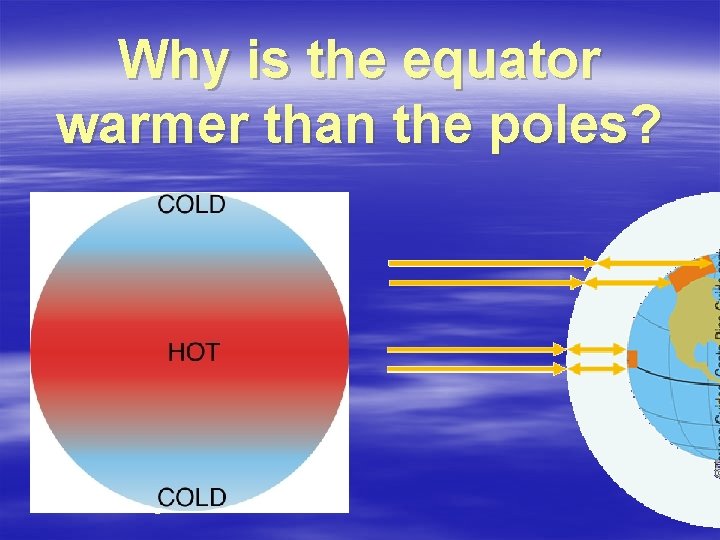
Why is the equator warmer than the poles? The rays of the sun strike the Earth directly at the equator. At the poles the curvature of the Earth spreads the rays out.
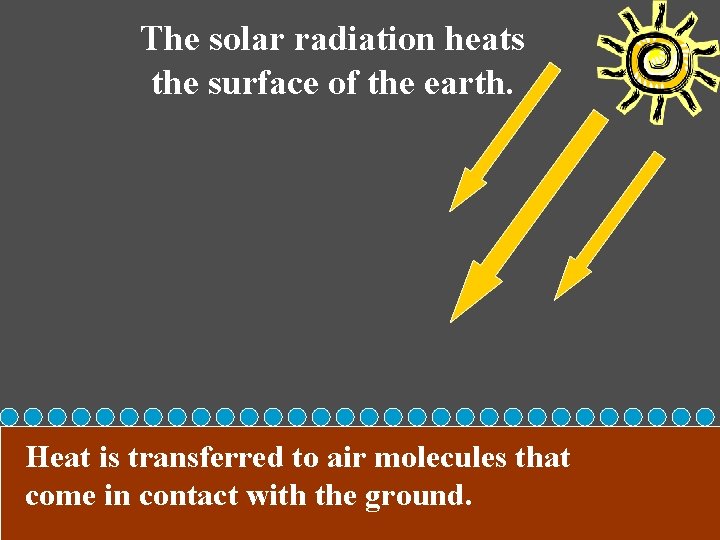
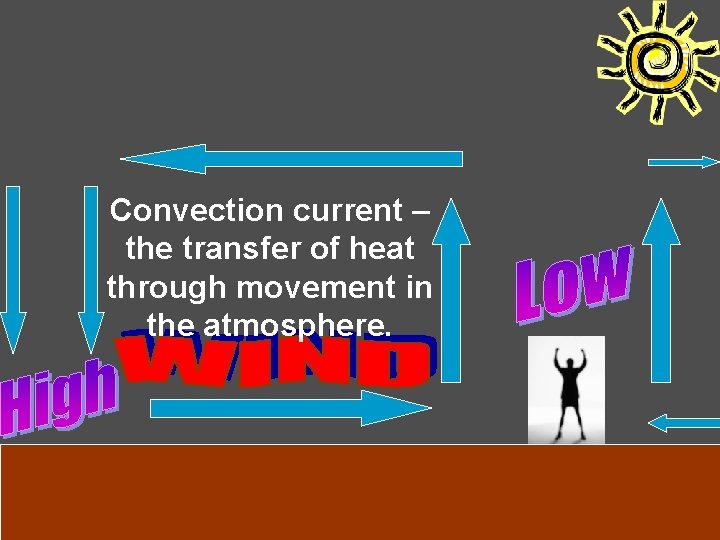
The solar radiation heats the surface of the earth. Heat is transferred to air molecules that come in contact with the ground.
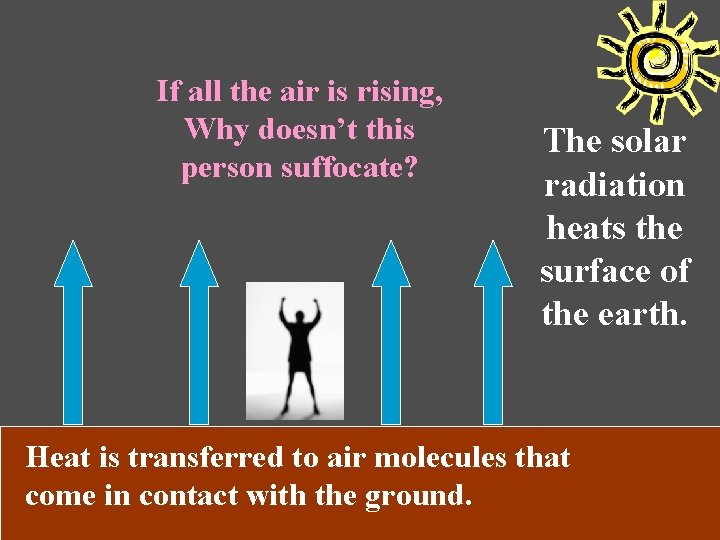
If all the air is rising, Why doesn’t this person suffocate? The solar radiation heats the surface of the earth. Heat is transferred to air molecules that come in contact with the ground.
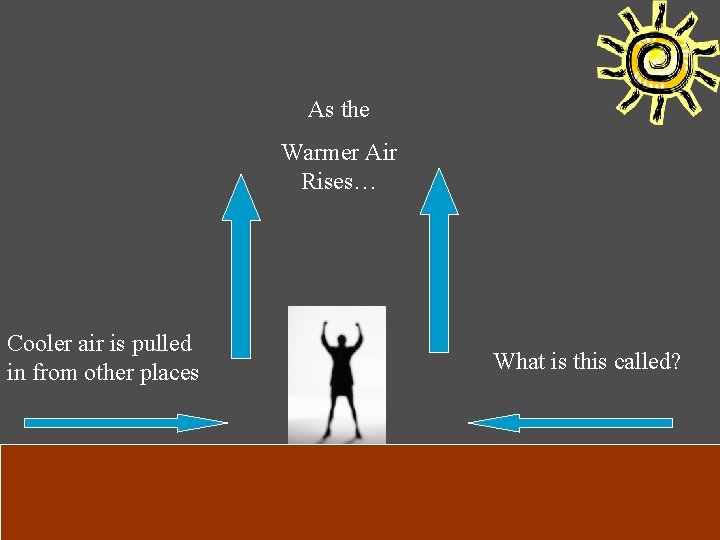
As the Warmer Air Rises… Cooler air is pulled in from other places What is this called?
Convection current – the transfer of heat through movement in the atmosphere.
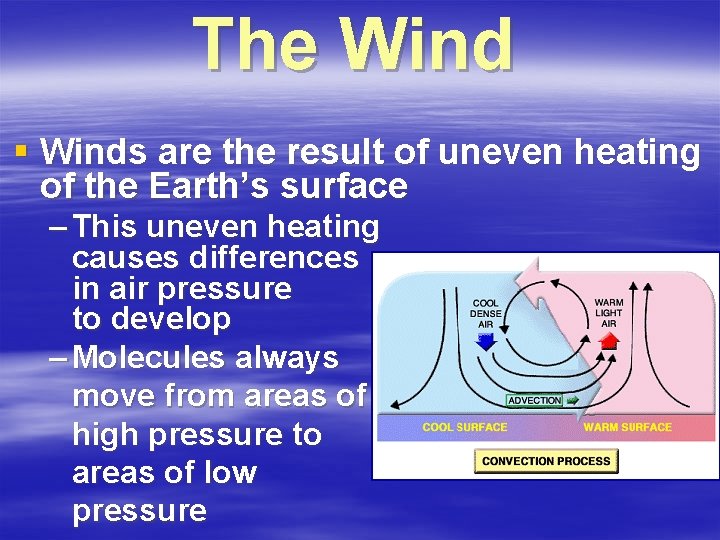
The Wind § Winds are the result of uneven heating of the Earth’s surface – This uneven heating causes differences in air pressure to develop – Molecules always move from areas of high pressure to areas of low pressure
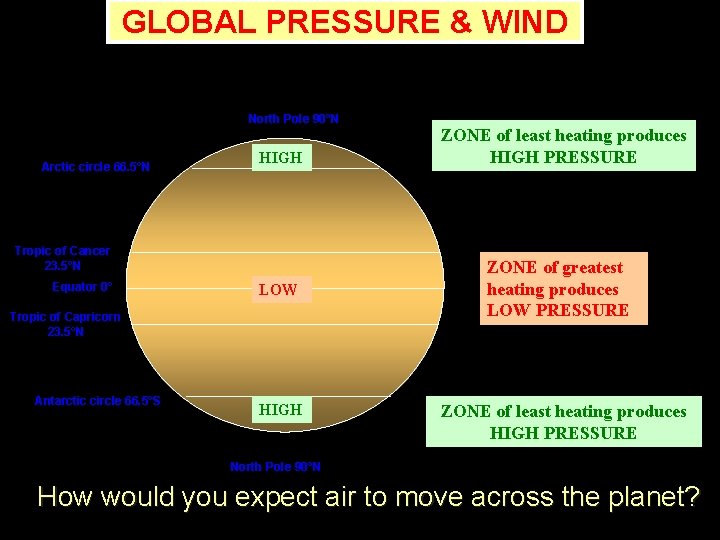
GLOBAL PRESSURE & WIND North Pole 90°N Arctic circle 66. 5°N HIGH Tropic of Cancer 23. 5°N Equator 0° LOW Tropic of Capricorn 23. 5°N Antarctic circle 66. 5°S HIGH ZONE of least heating produces HIGH PRESSURE ZONE of greatest heating produces LOW PRESSURE ZONE of least heating produces HIGH PRESSURE North Pole 90°N How would you expect air to move across the planet?
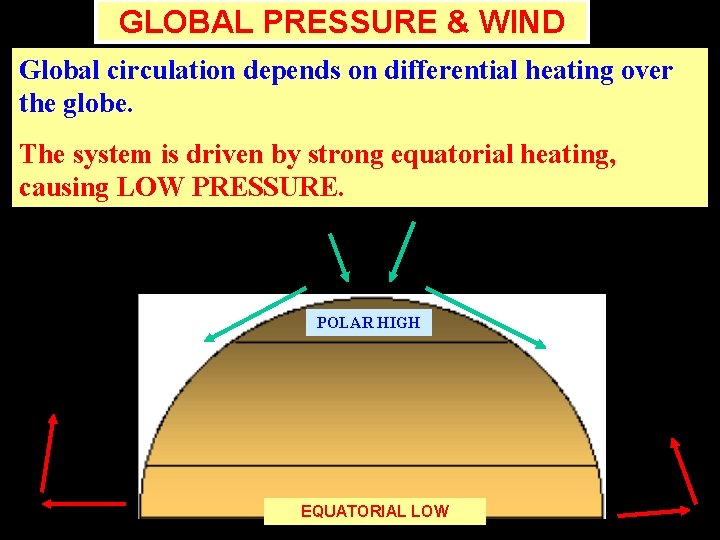
GLOBAL PRESSURE & WIND Global circulation depends on differential heating over the globe. The system is driven by strong equatorial heating, causing LOW PRESSURE. POLAR HIGH EQUATORIAL LOW
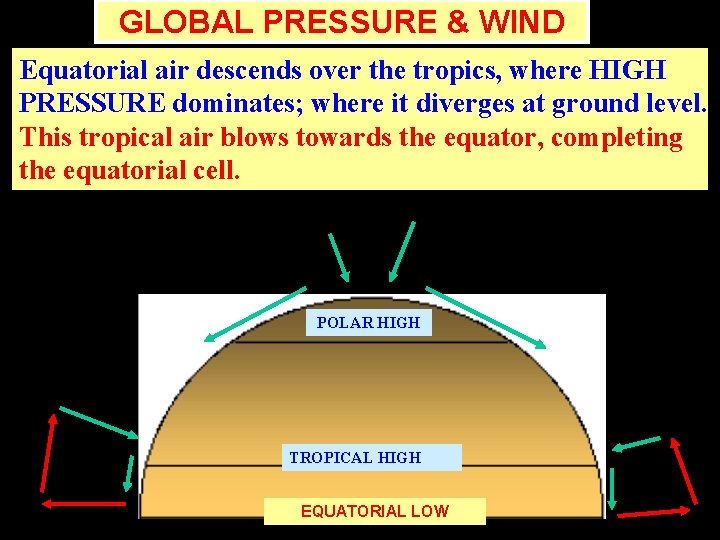
GLOBAL PRESSURE & WIND Equatorial air descends over the tropics, where HIGH PRESSURE dominates; where it diverges at ground level. This tropical air blows towards the equator, completing the equatorial cell. POLAR HIGH TROPICAL HIGH EQUATORIAL LOW
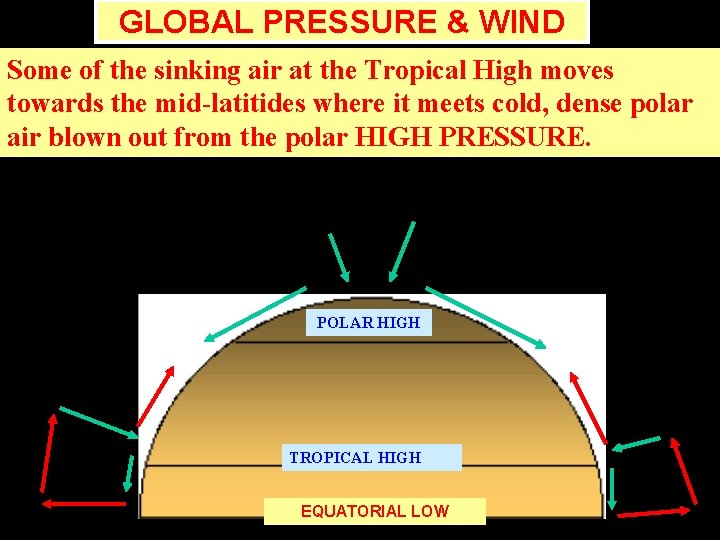
GLOBAL PRESSURE & WIND Some of the sinking air at the Tropical High moves towards the mid-latitides where it meets cold, dense polar air blown out from the polar HIGH PRESSURE. POLAR HIGH TROPICAL HIGH EQUATORIAL LOW
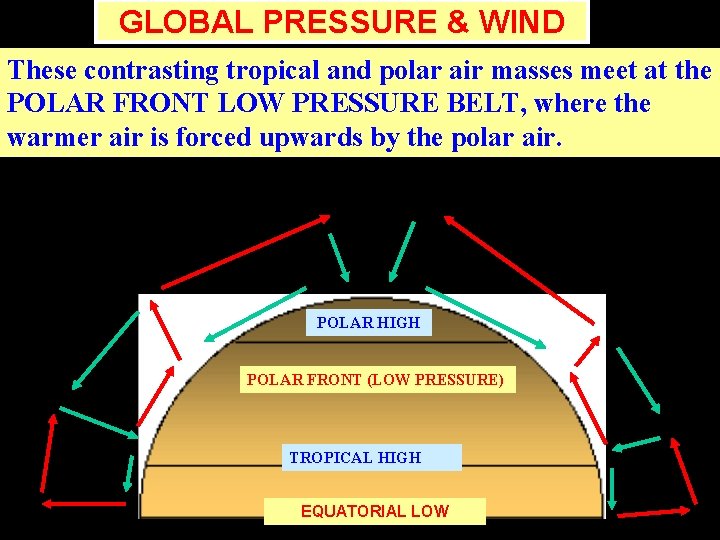
GLOBAL PRESSURE & WIND These contrasting tropical and polar air masses meet at the POLAR FRONT LOW PRESSURE BELT, where the warmer air is forced upwards by the polar air. POLAR HIGH POLAR FRONT (LOW PRESSURE) TROPICAL HIGH EQUATORIAL LOW
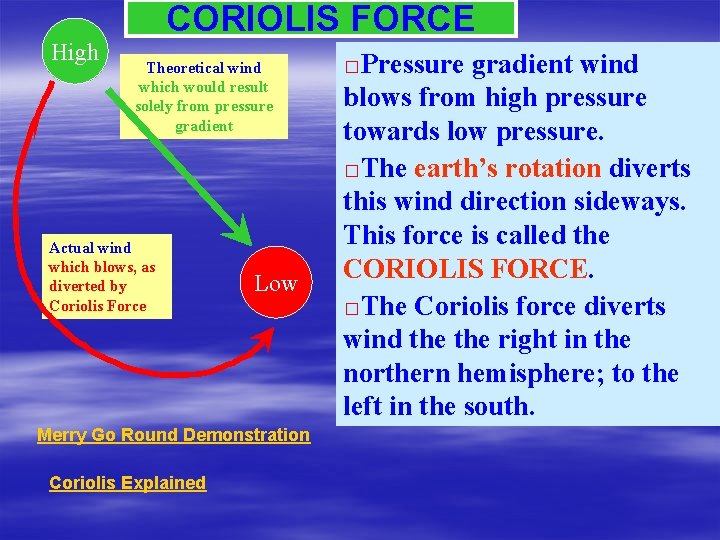
High CORIOLIS FORCE Theoretical wind which would result solely from pressure gradient Actual wind which blows, as diverted by Coriolis Force Low Merry Go Round Demonstration Coriolis Explained Pressure gradient wind blows from high pressure towards low pressure. �The earth’s rotation diverts this wind direction sideways. This force is called the CORIOLIS FORCE. �The Coriolis force diverts wind the right in the northern hemisphere; to the left in the south. �
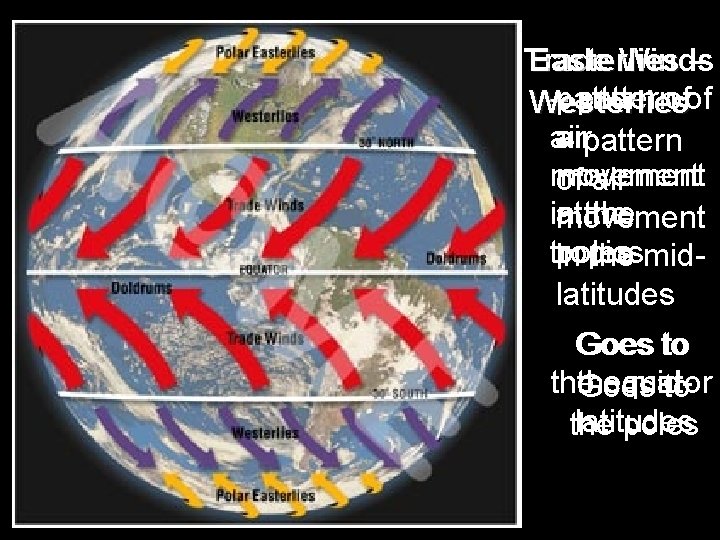
Trade Easterlies Winds – –patternofof Westerlies air – pattern movement of air in at the movement tropics poles in the midlatitudes Goes to the equator mid. Goes to latitudes the poles
Why do the gas giants appear to have a striped surface?
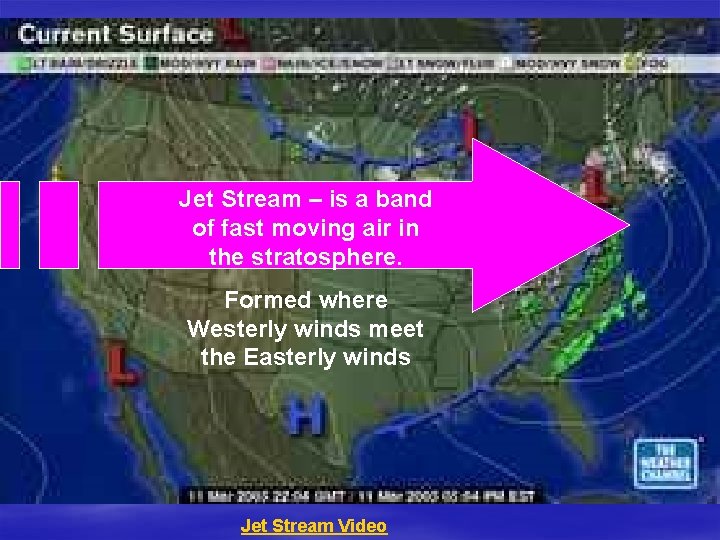
Jet Stream – is a band of fast moving air in the stratosphere. Formed where Westerly winds meet the Easterly winds Jet Stream Video
Summarizing Convection § What is convection? § Where does convection occur? § In what states of matter does convection occur? § What other liquid could convection occur in on Earth?
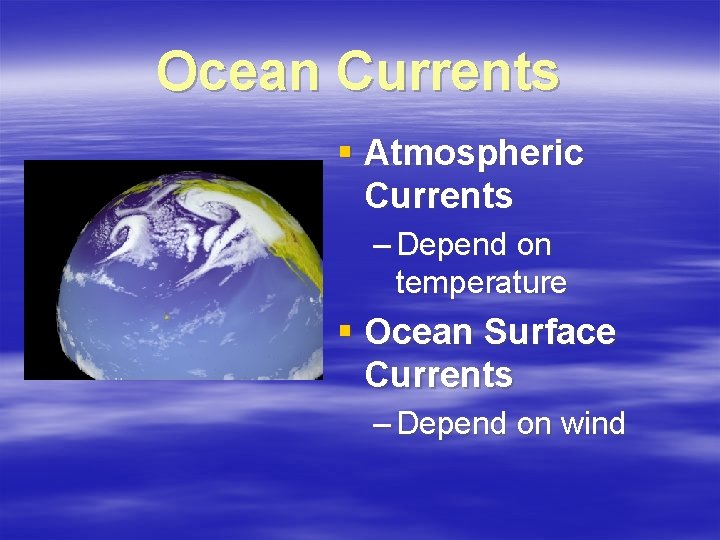
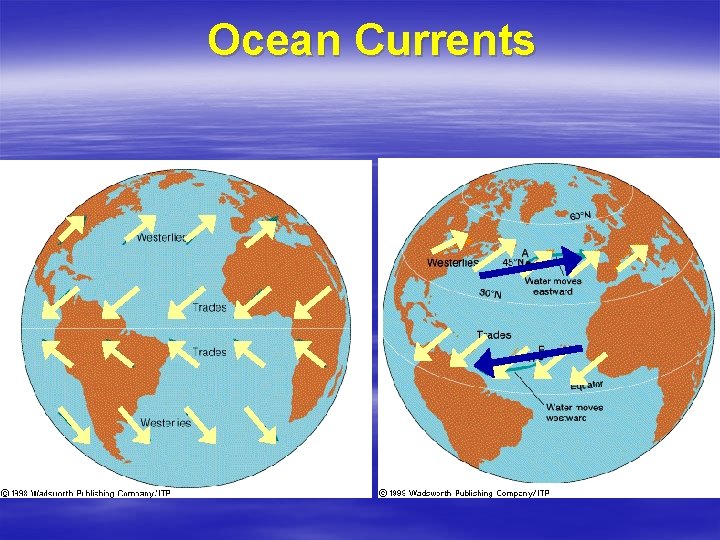
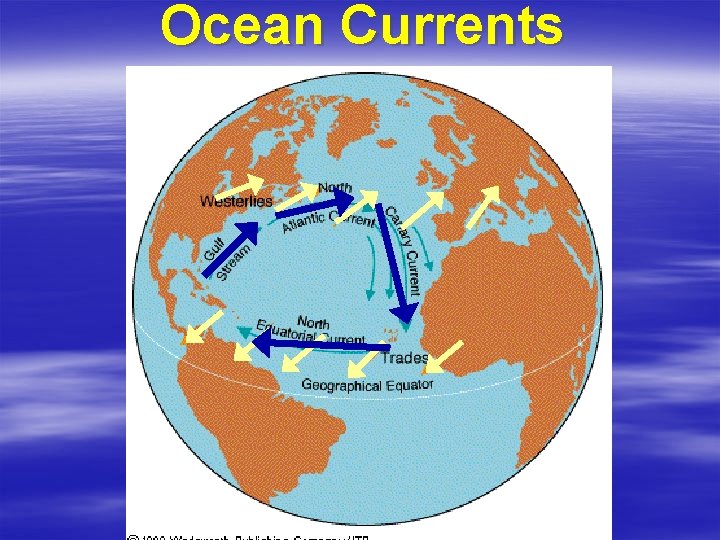
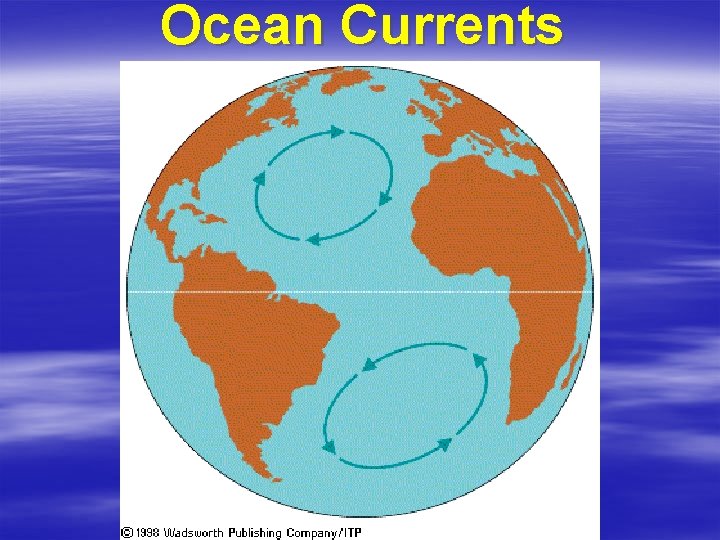
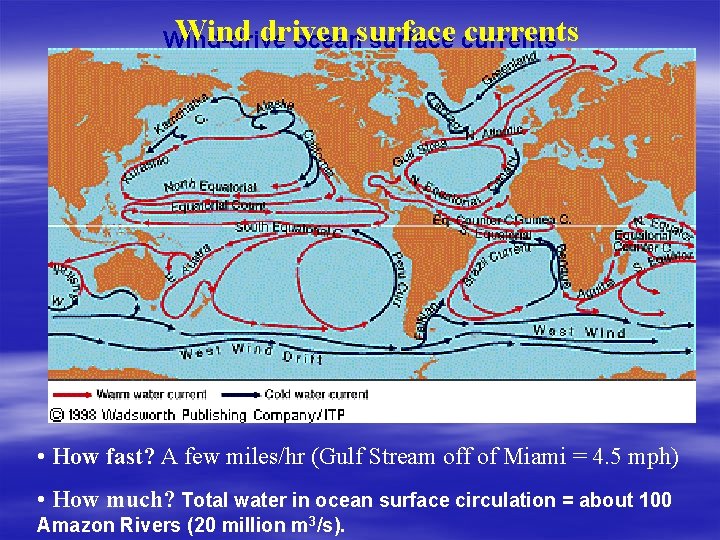
Ocean Currents § Atmospheric Currents – Depend on temperature § Ocean Surface Currents – Depend on wind
Ocean Currents
Ocean Currents
Ocean Currents
Wind driven currents Wind-drive oceansurface currents • How fast? A few miles/hr (Gulf Stream off of Miami = 4. 5 mph) • How much? Total water in ocean surface circulation = about 100 Amazon Rivers (20 million m 3/s).
Ocean Currents Illustrated § Green Peace § Today Show Investigates