
Why is the Earths surface always changing It
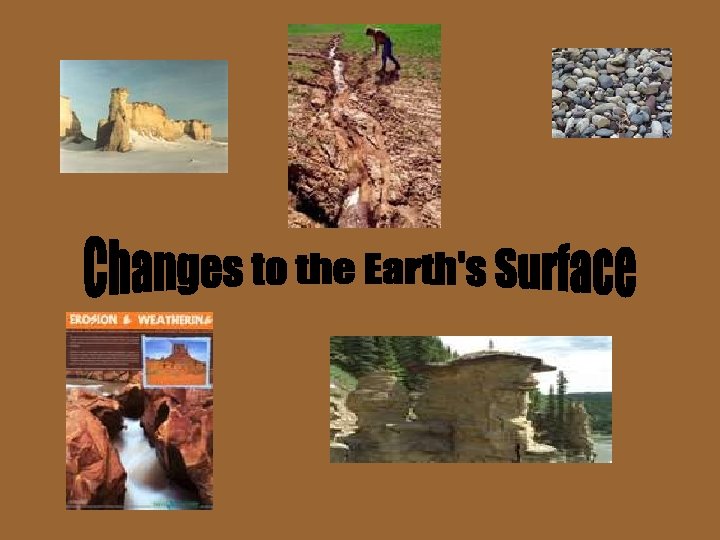
- Slides: 12
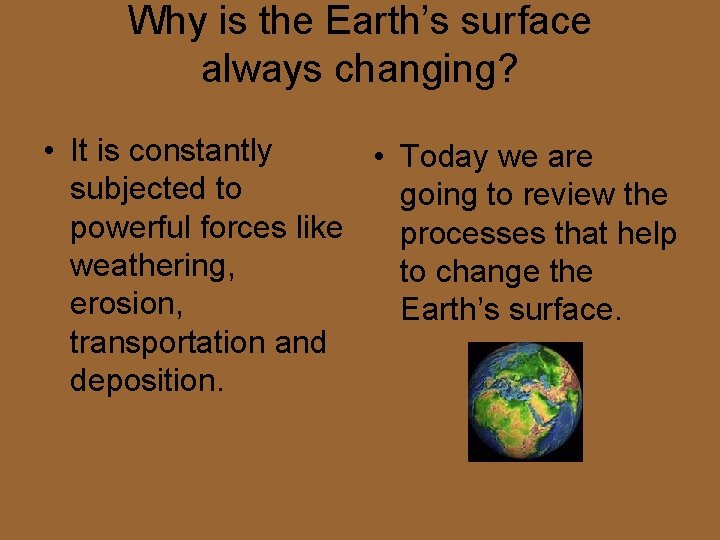
Why is the Earth’s surface always changing? • It is constantly • Today we are subjected to going to review the powerful forces like processes that help weathering, to change the erosion, Earth’s surface. transportation and deposition.
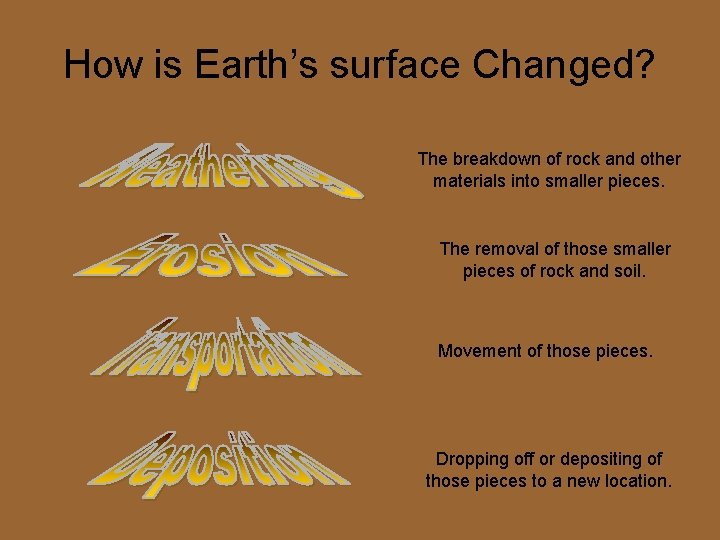
How is Earth’s surface Changed? The breakdown of rock and other materials into smaller pieces. The removal of those smaller pieces of rock and soil. Movement of those pieces. Dropping off or depositing of those pieces to a new location.
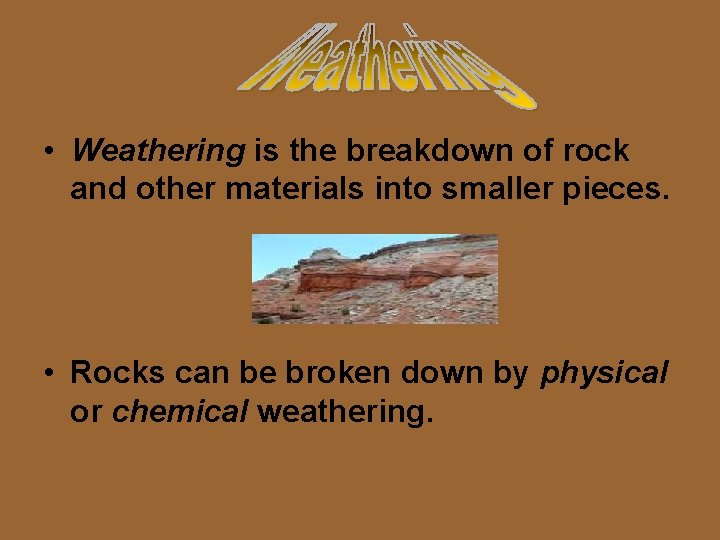
• Weathering is the breakdown of rock and other materials into smaller pieces. • Rocks can be broken down by physical or chemical weathering.
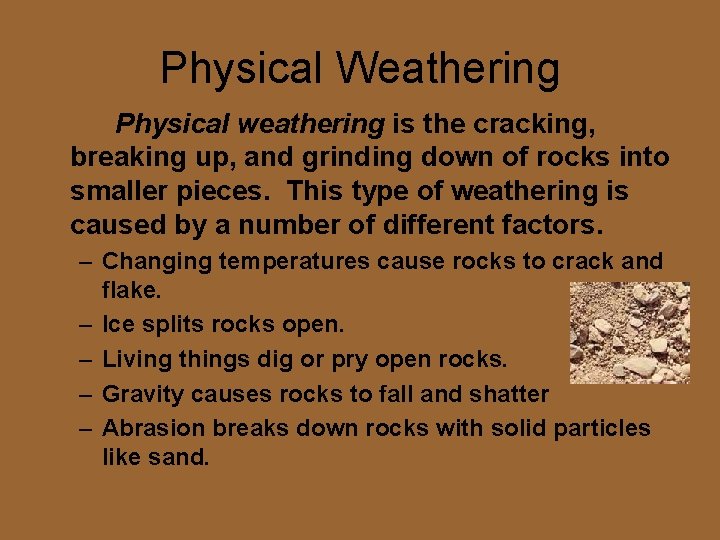
Physical Weathering Physical weathering is the cracking, breaking up, and grinding down of rocks into smaller pieces. This type of weathering is caused by a number of different factors. – Changing temperatures cause rocks to crack and flake. – Ice splits rocks open. – Living things dig or pry open rocks. – Gravity causes rocks to fall and shatter – Abrasion breaks down rocks with solid particles like sand.
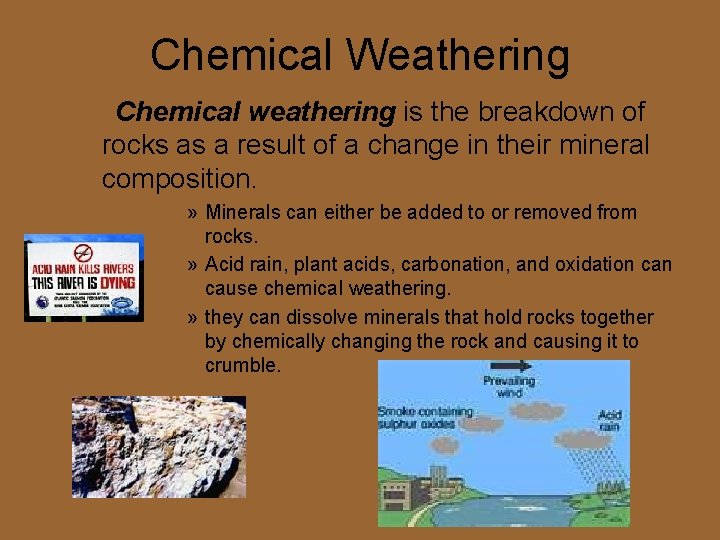
Chemical Weathering Chemical weathering is the breakdown of rocks as a result of a change in their mineral composition. » Minerals can either be added to or removed from rocks. » Acid rain, plant acids, carbonation, and oxidation cause chemical weathering. » they can dissolve minerals that hold rocks together by chemically changing the rock and causing it to crumble.
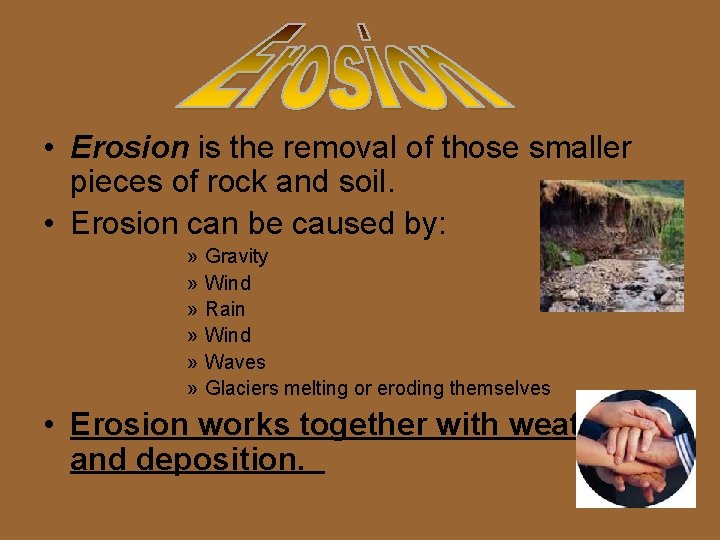
• Erosion is the removal of those smaller pieces of rock and soil. • Erosion can be caused by: » » » Gravity Wind Rain Wind Waves Glaciers melting or eroding themselves • Erosion works together with weathering and deposition.
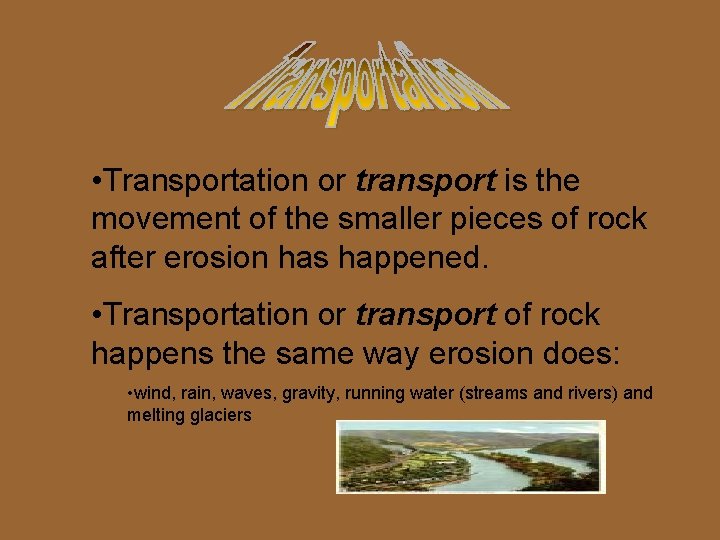
• Transportation or transport is the movement of the smaller pieces of rock after erosion has happened. • Transportation or transport of rock happens the same way erosion does: • wind, rain, waves, gravity, running water (streams and rivers) and melting glaciers
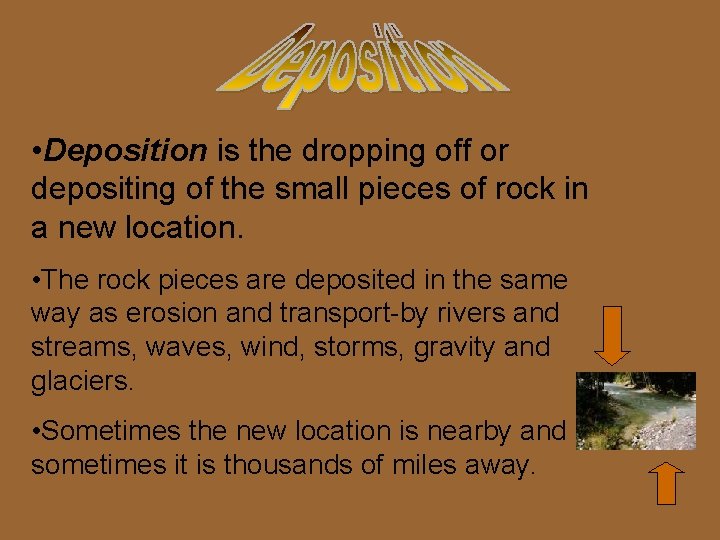
• Deposition is the dropping off or depositing of the small pieces of rock in a new location. • The rock pieces are deposited in the same way as erosion and transport-by rivers and streams, waves, wind, storms, gravity and glaciers. • Sometimes the new location is nearby and sometimes it is thousands of miles away.
Let’s review………………… • the breakdown of rock and other materials into smaller pieces • the removal of those smaller pieces of rock and soil. • the movement of the smaller pieces of rock after erosion has happened • the dropping off or depositing of the small pieces of rock in a new location.
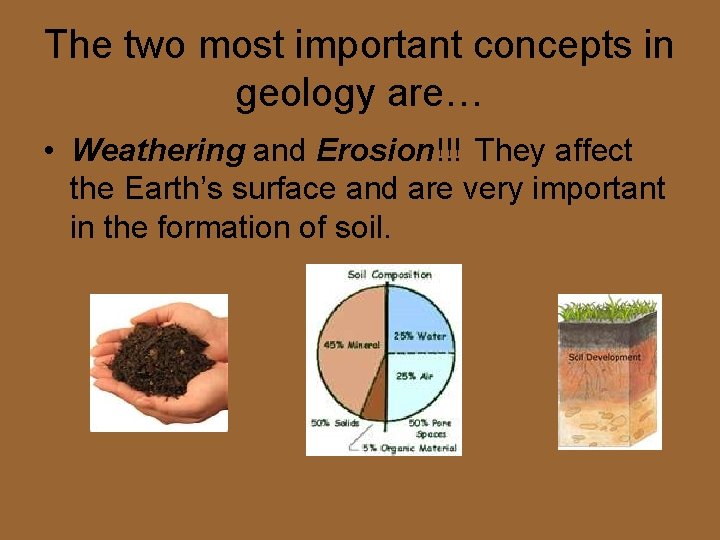
The two most important concepts in geology are… • Weathering and Erosion!!! They affect the Earth’s surface and are very important in the formation of soil.
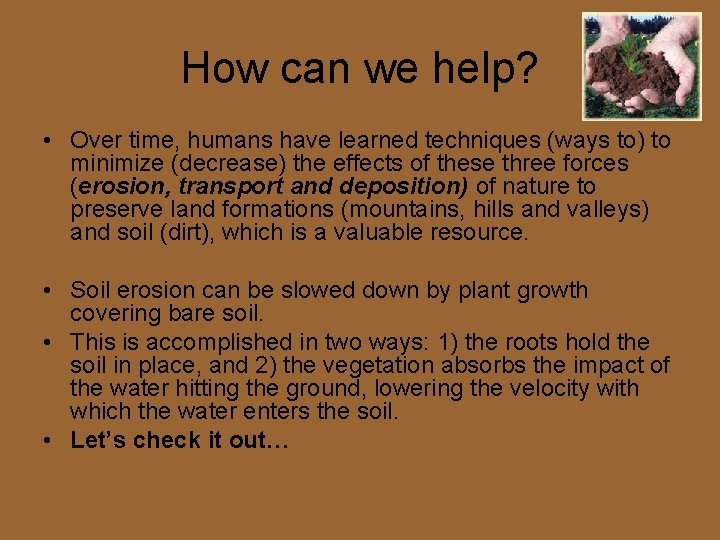
How can we help? • Over time, humans have learned techniques (ways to) to minimize (decrease) the effects of these three forces (erosion, transport and deposition) of nature to preserve land formations (mountains, hills and valleys) and soil (dirt), which is a valuable resource. • Soil erosion can be slowed down by plant growth covering bare soil. • This is accomplished in two ways: 1) the roots hold the soil in place, and 2) the vegetation absorbs the impact of the water hitting the ground, lowering the velocity with which the water enters the soil. • Let’s check it out…