
Why is communication so important in health social
- Slides: 17
Why is communication so important in health, social care and early years settings?
Types of Communication R 022: Communicating and working with individuals in health, social care and early years settings.
Learning aims… • To be able to identify and describe different forms of communication • To be able to explain what makes effective verbal and non-verbal communication
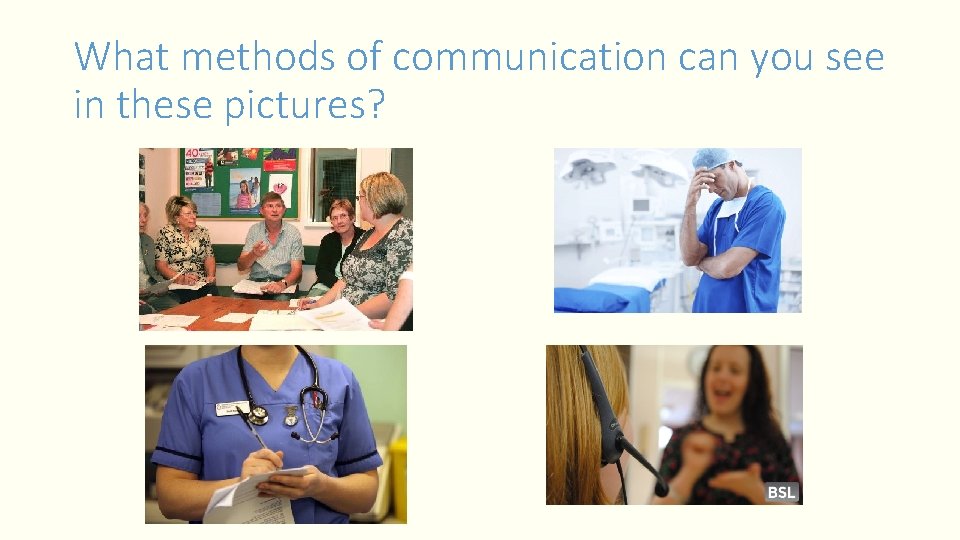
What methods of communication can you see in these pictures?
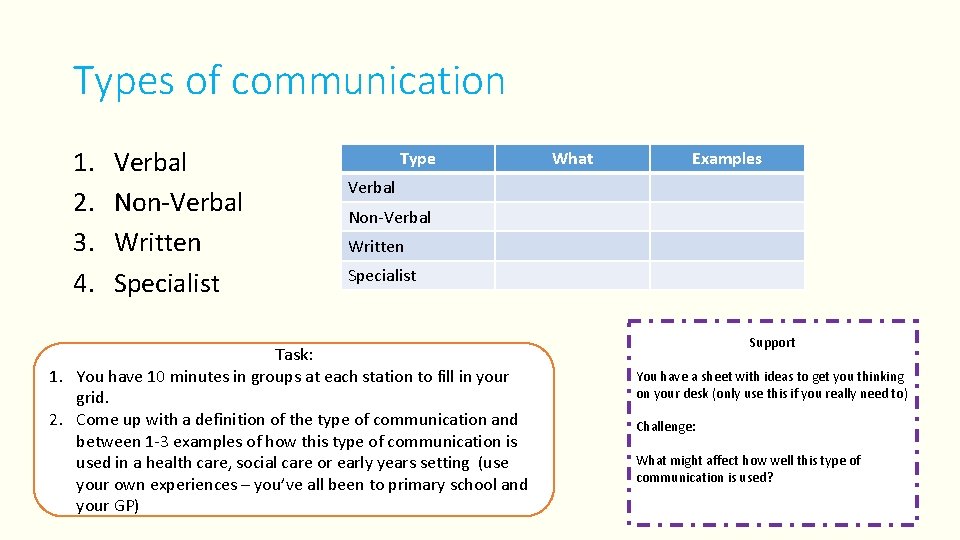
Types of communication 1. 2. 3. 4. Verbal Non-Verbal Written Specialist Type What Examples Verbal Non-Verbal Written Specialist Task: 1. You have 10 minutes in groups at each station to fill in your grid. 2. Come up with a definition of the type of communication and between 1 -3 examples of how this type of communication is used in a health care, social care or early years setting (use your own experiences – you’ve all been to primary school and your GP) Support You have a sheet with ideas to get you thinking on your desk (only use this if you really need to) Challenge: What might affect how well this type of communication is used?
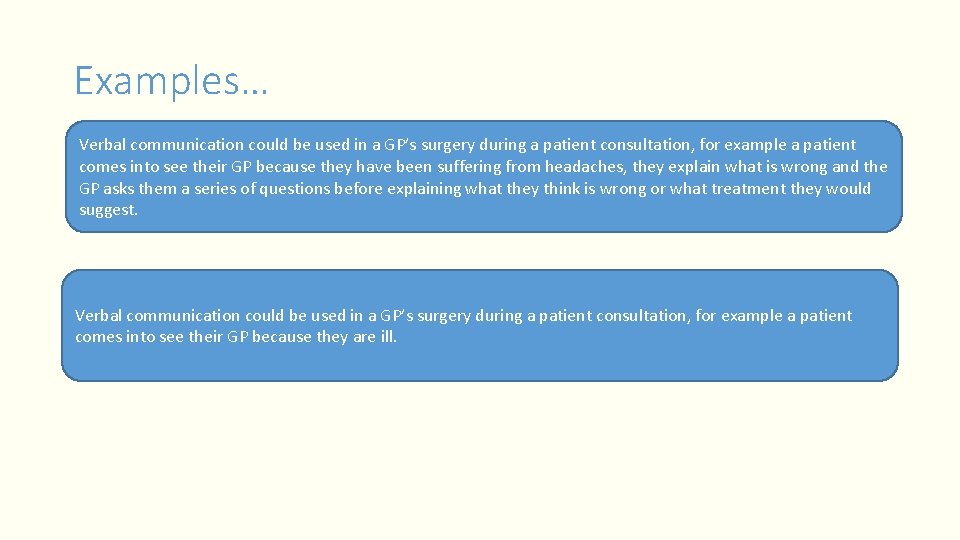
Examples… Verbal communication could be used in a GP’s surgery during a patient consultation, for example a patient comes into see their GP because they have been suffering from headaches, they explain what is wrong and the GP asks them a series of questions before explaining what they think is wrong or what treatment they would suggest. Verbal communication could be used in a GP’s surgery during a patient consultation, for example a patient comes into see their GP because they are ill.
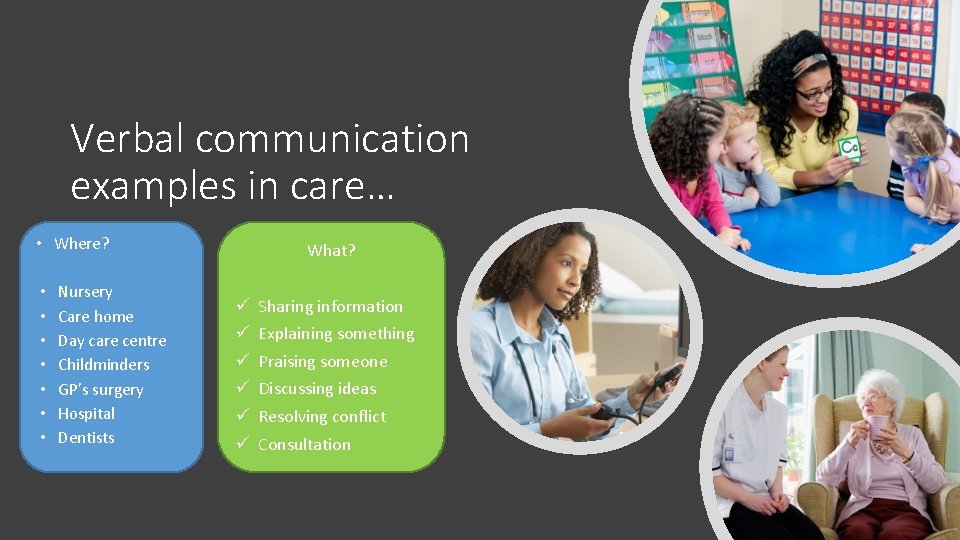
Verbal communication examples in care… • Where? • • Nursery Care home Day care centre Childminders GP’s surgery Hospital Dentists What? ü ü ü Sharing information Explaining something Praising someone Discussing ideas Resolving conflict Consultation
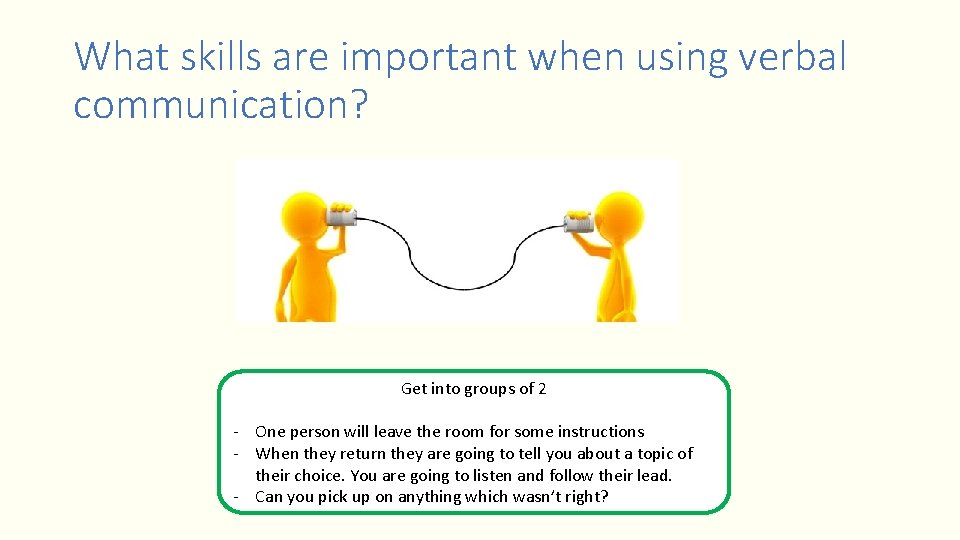
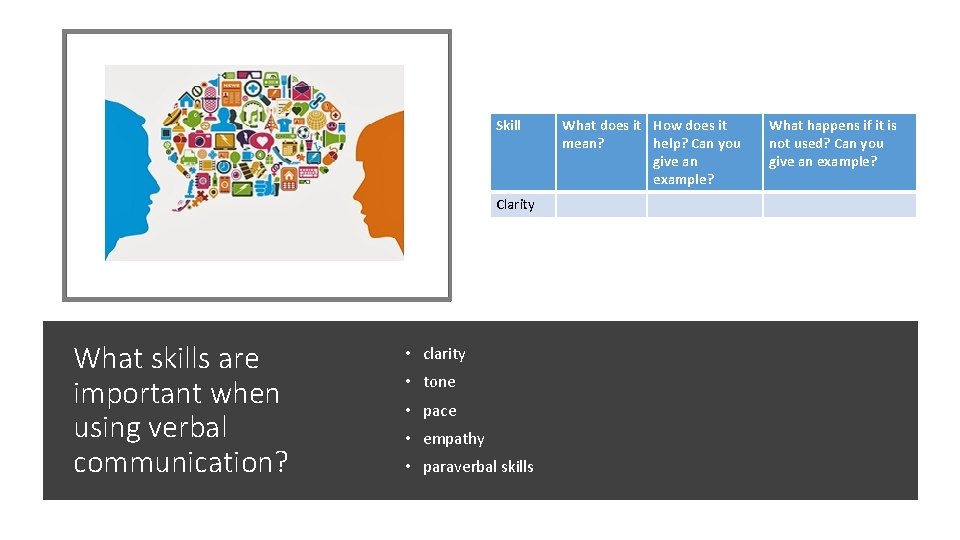
What skills are important when using verbal communication? Get into groups of 2 - One person will leave the room for some instructions - When they return they are going to tell you about a topic of their choice. You are going to listen and follow their lead. - Can you pick up on anything which wasn’t right?
Skill Clarity What skills are important when using verbal communication? • clarity • tone • pace • empathy • paraverbal skills What does it How does it mean? help? Can you give an example? What happens if it is not used? Can you give an example?
Can you see these verbal communication skills being used? 1. 2. 3. 4. 5. clarity tone pace empathy paraverbal skills • How did they use them? • Why were they important?
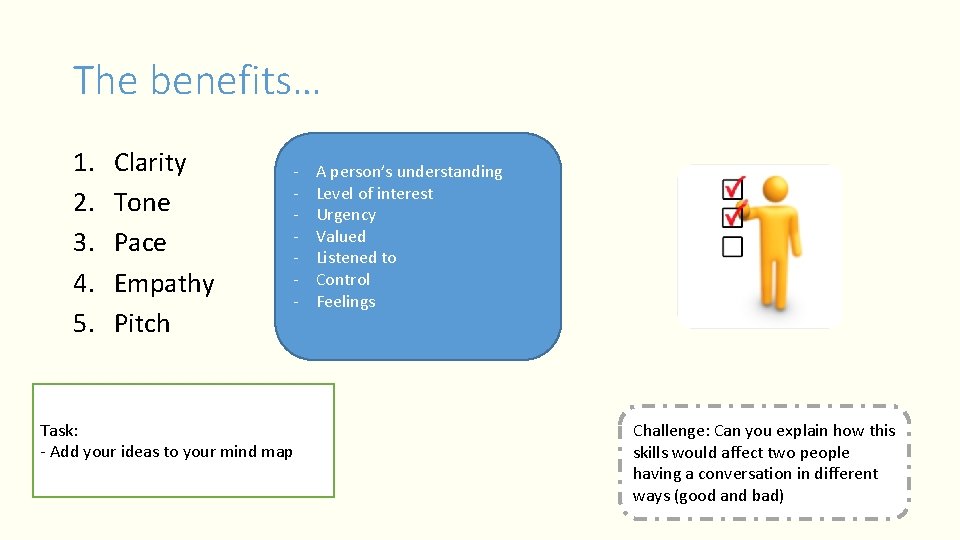
The benefits… 1. 2. 3. 4. 5. Clarity Tone Pace Empathy Pitch - Task: - Add your ideas to your mind map A person’s understanding Level of interest Urgency Valued Listened to Control Feelings Challenge: Can you explain how this skills would affect two people having a conversation in different ways (good and bad)
How much progress have you made so far? • To be able to identify and describe different forms of communication • To be able to explain what makes effective verbal and non-verbal communication
Recap: what do we mean by non-verbal communication?
How can you tell? • https: //www. youtube. com/watch? v=1 Hkqe. ORgn_U – Ross is shocked without saying anything? • https: //www. youtube. com/watch? v=r. Pi 9258 zmh 8 – Ross isn’t OK but how does he try to convince them he is? • https: //www. youtube. com/watch? v=0 Ob. AFRFhln. E – How can you tell Ross and Mike aren’t comfortable around each other?
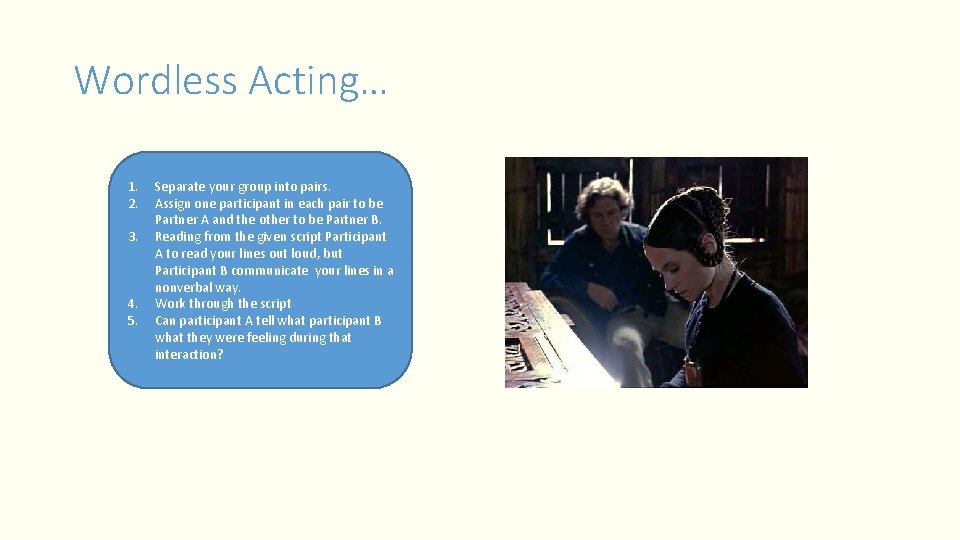
Wordless Acting… 1. 2. 3. 4. 5. Separate your group into pairs. Assign one participant in each pair to be Partner A and the other to be Partner B. Reading from the given script Participant A to read your lines out loud, but Participant B communicate your lines in a nonverbal way. Work through the script Can participant A tell what participant B what they were feeling during that interaction?
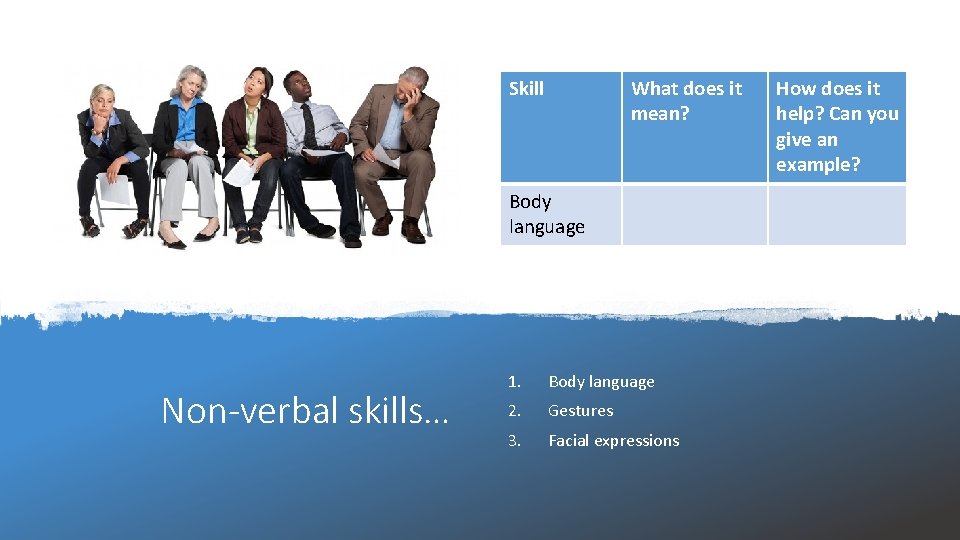
Skill What does it mean? Body language Non-verbal skills… 1. Body language 2. Gestures 3. Facial expressions How does it help? Can you give an example?
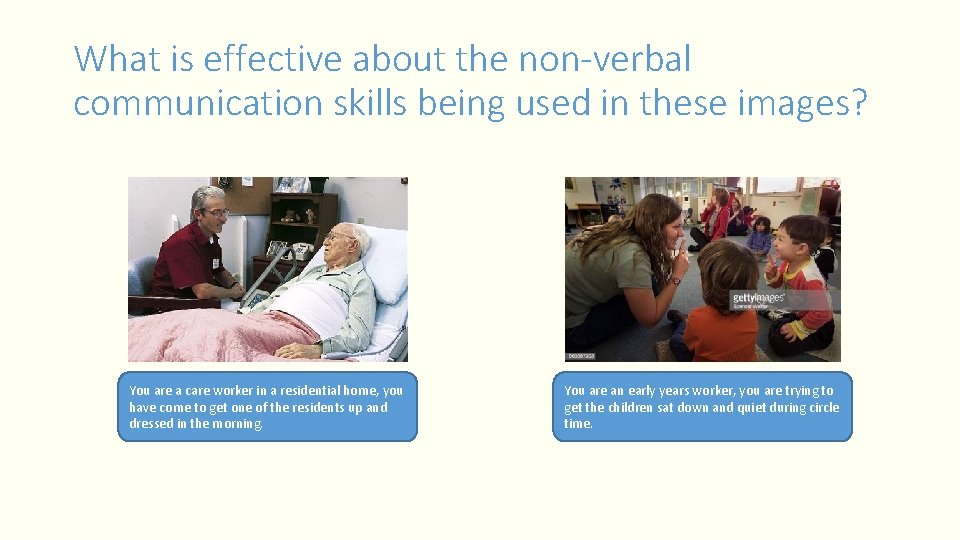
What is effective about the non-verbal communication skills being used in these images? You are a care worker in a residential home, you have come to get one of the residents up and dressed in the morning. You are an early years worker, you are trying to get the children sat down and quiet during circle time.