
Why is Child Nutrition Important Jump on Board
Why is Child Nutrition Important? Jump on Board for Healthier Students Norfolk Public Schools Primary & Secondary Students Dyani Meggett-Sowell, Ph. D. student Walden University PUBH 8165 -1 Environmental Health Winter 2010
Introduction To motivate the Norfolk Public School System, Virginia Department of Education, Virginia Board of Education, and the Child Nutritional Services to share the responsibility to improve the nutritional environment within the primary and secondary schools with the parents, students, and other community sponsors. To highlight the importance of nutrition.
Why is Nutrition Important? It is needed for adequate energy Normal growth and development Cornerstone Essential (AJCN , 2003) of preventive medicine in the management of chronic diseases
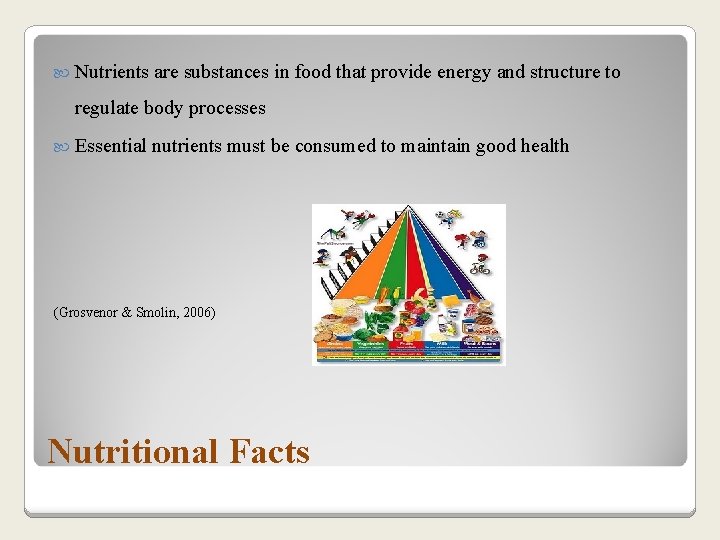
Nutrients are substances in food that provide energy and structure to regulate body processes Essential nutrients must be consumed to maintain good health (Grosvenor & Smolin, 2006) Nutritional Facts
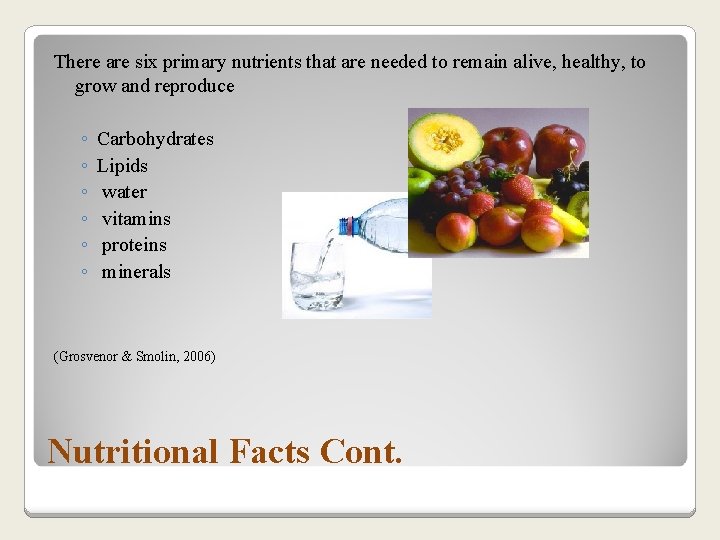
There are six primary nutrients that are needed to remain alive, healthy, to grow and reproduce ◦ ◦ ◦ Carbohydrates Lipids water vitamins proteins minerals (Grosvenor & Smolin, 2006) Nutritional Facts Cont.
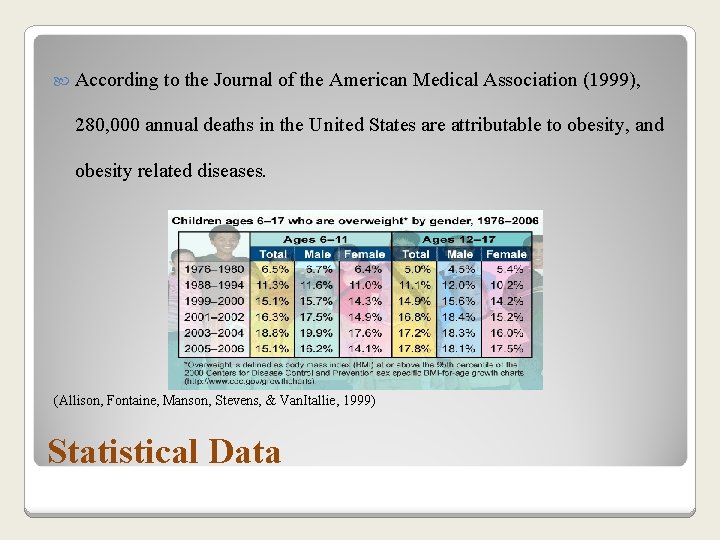
According to the Journal of the American Medical Association (1999), 280, 000 annual deaths in the United States are attributable to obesity, and obesity related diseases. (Allison, Fontaine, Manson, Stevens, & Van. Itallie, 1999) Statistical Data
Chicken fingers, French fries, and hot dogs may sound like the choices at a fast food restaurant, but they are also popular school lunch items which can lead to health problems to include: ØObesity ØChronic diseases (high blood pressure, diabetes, heart disease) ØDevelopment disparities ØLearning difficulties Health Risk
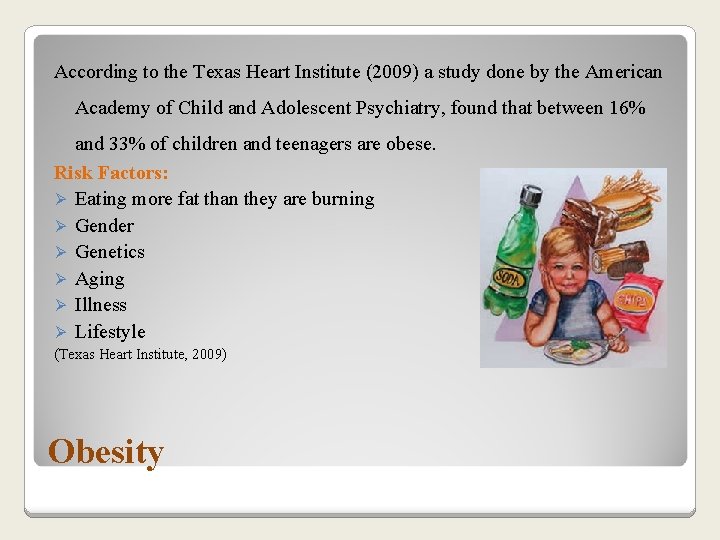
According to the Texas Heart Institute (2009) a study done by the American Academy of Child and Adolescent Psychiatry, found that between 16% and 33% of children and teenagers are obese. Risk Factors: Ø Eating more fat than they are burning Ø Gender Ø Genetics Ø Aging Ø Illness Ø Lifestyle (Texas Heart Institute, 2009) Obesity
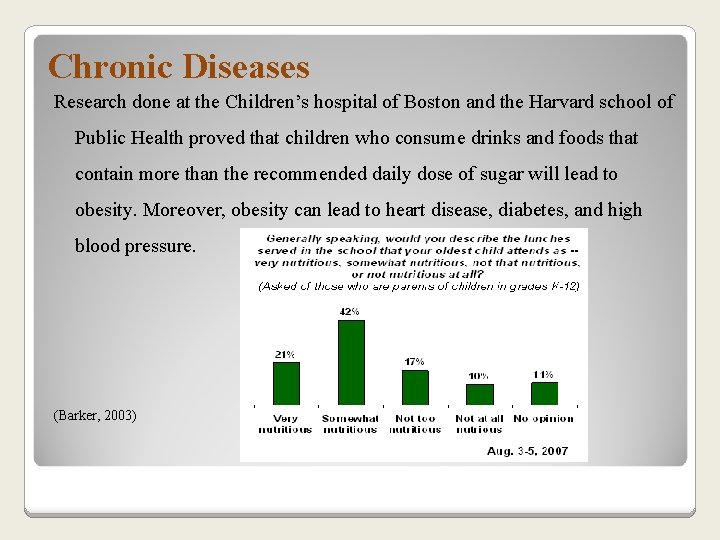
Chronic Diseases Research done at the Children’s hospital of Boston and the Harvard school of Public Health proved that children who consume drinks and foods that contain more than the recommended daily dose of sugar will lead to obesity. Moreover, obesity can lead to heart disease, diabetes, and high blood pressure. (Barker, 2003)
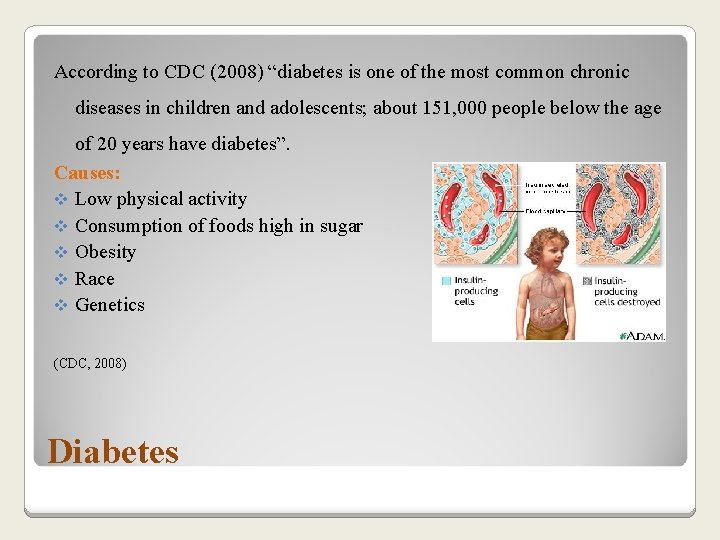
According to CDC (2008) “diabetes is one of the most common chronic diseases in children and adolescents; about 151, 000 people below the age of 20 years have diabetes”. Causes: v Low physical activity v Consumption of foods high in sugar v Obesity v Race v Genetics (CDC, 2008) Diabetes
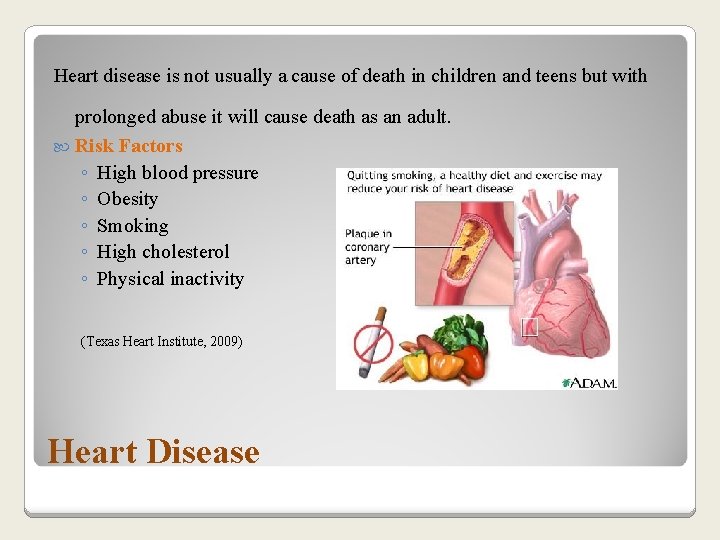
Heart disease is not usually a cause of death in children and teens but with prolonged abuse it will cause death as an adult. Risk Factors ◦ High blood pressure ◦ Obesity ◦ Smoking ◦ High cholesterol ◦ Physical inactivity (Texas Heart Institute, 2009) Heart Disease
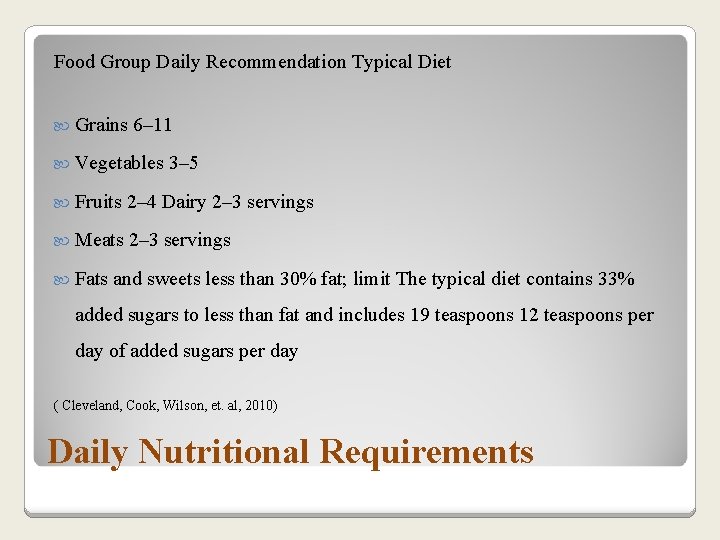
Food Group Daily Recommendation Typical Diet Grains 6– 11 Vegetables 3– 5 Fruits 2– 4 Dairy 2– 3 servings Meats 2– 3 servings Fats and sweets less than 30% fat; limit The typical diet contains 33% added sugars to less than fat and includes 19 teaspoons 12 teaspoons per day of added sugars per day ( Cleveland, Cook, Wilson, et. al, 2010) Daily Nutritional Requirements
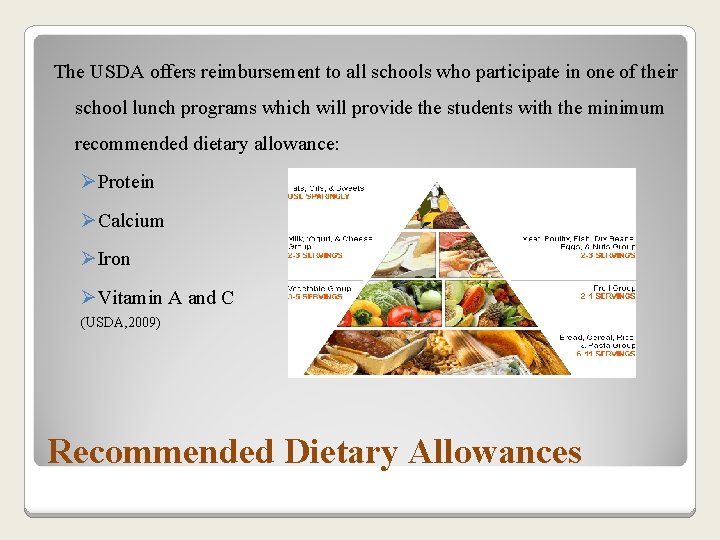
The USDA offers reimbursement to all schools who participate in one of their school lunch programs which will provide the students with the minimum recommended dietary allowance: ØProtein ØCalcium ØIron ØVitamin A and C (USDA, 2009) Recommended Dietary Allowances
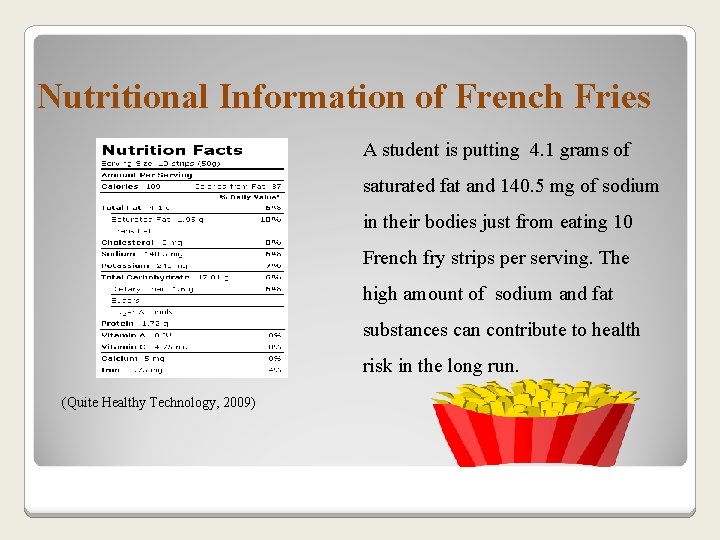
Nutritional Information of French Fries A student is putting 4. 1 grams of saturated fat and 140. 5 mg of sodium in their bodies just from eating 10 French fry strips per serving. The high amount of sodium and fat substances can contribute to health risk in the long run. (Quite Healthy Technology, 2009)
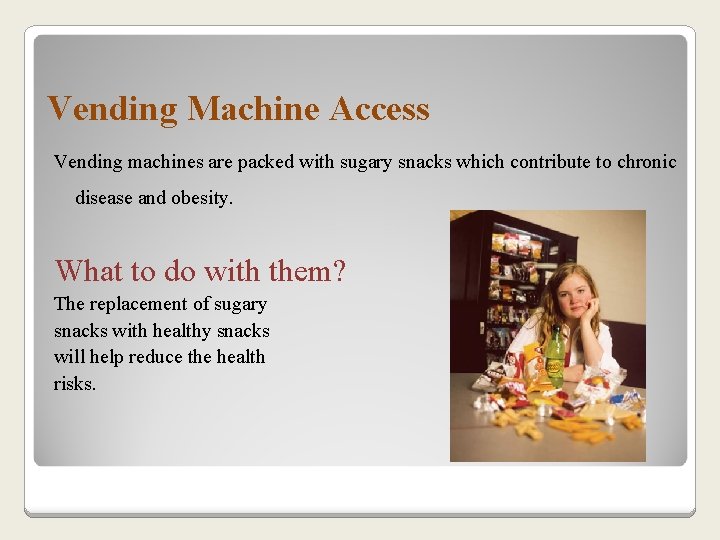
Vending Machine Access Vending machines are packed with sugary snacks which contribute to chronic disease and obesity. What to do with them? The replacement of sugary snacks with healthy snacks will help reduce the health risks.
Begin Use labeling food products with nutritional facts a Nutrient Standard Menu Plan (NSMP) Provide food safety education Purchasing Growing foods that are high in nutrients and less in fat. together as a community to learn and teach about healthy eating How Can We Help?
Suggested Sites for Additional Information WIC Program (2009). The Virginia WIC program. Retrieved January 27, 2010, from http: //www. vahealth. org/wic/General%20 Info/index. htm. This site provides information on nutrition education and how to obtain supplemental food sources. Economic Research Services (2009). Food assistance and nutrition programs. Retrieved January 25, 2010, from http: //www. ers. usda. gov/Briefing/Food. Nutrition. Assistance/background. ht m. This site provides information on the supplemental food programs available for low-income families.
Suggested Sites for Additional Information Cont. Food and Nutrition Services (2010). Nutrition assistance programs. Retrieved January 27, 2010, from http: //www. fns. usda. gov/fns/. This site provides children and low-income people access to food, a healthful diet, and nutrition education. Food and Nutrition Services (2009). School Meals. Retrieved January 27, 2010, from http: //www. fns. usda. gov/cnd/. The site provides information on different school meal plans and links to nutritional facts. Food and Nutrition Services (2009). Child and Adult Care Food Program. Retrieved January 27, 2010, from http: //www. fns. usda. gov/cnd/care/. This site provide links for nutritional programs that provide meals to children and elderly adults on a daily basis.
References AJCN (2003). What is nutrition? American Journal Clinical Nutrition, 77(5), 1093. Retrieved January 20, 2010, from http: //www. ajcn. org/cgi/reprint/77/5/1093 Allison, D. B. , Fontaine K. R. , Manson, J. E. , Stevens, J. , & Van. Itallie, T. B. (1999). Annual deaths attributable to obesity in the United States. Journal of the American Medical Association, 282(16). Retrieved January 22, 2010, from http: //www. ers. usda. gov/publications/Food. Review/ May 2001/FRV 24 I 2 c. pdf Barker, B. (2003). Junk food in schools: Vending machine sales at the expense of student health? . Retrieved January 22, 2010, from http: //www. mc. vanderbilt. edu/lens/article/? id=64
References Cont. CDC (2008). Diabetes project. National Center for Chronic Disease Prevention and Health Promotion. Retrieved January 23, 2010, from http: //www. cdc. gov/diabetes/projects/cda 2. htm Cleveland, L. E. , Cook, A. J. , Wilson, J. E. , et al (2010). Pyramid servings data, ARS Food Survey Research Group. Retrieved January 20, 2010, from www. barc. usda. gov/bhnrc/foodsurvey/home. htm. Google. com (2009). Nutrition matters, (Image). Retrieved January 19, 2010, from http: //healthcareinindia. wordpress. com/2008/06/27/intak e-of-nutrition-for healthy-living/ Grosvenor, M. & Smolin, L. (2006). Nutrition: Everyday choices. Hoboken, New Jersey: John Wiley & Sons.
References Cont. Saad, L. (2007). Parents indicate school cafeterias to do better: Though most say lunches are nutritious, two-thirds of Americans say more healthy food should be offered. Gallop. com. Retrieved January 22, 2010, from http: //www. gallup. com/poll/28402/parents-indicate-sc. . . Texas Heart Institute (2009). Heart Disease Risk Factors for Children and Teenagers. Retrieved January 23, 2010, fromhttp: //www. texasheartinstitute. org/hic/topics/hsmart/ children_risk_factors. cfm USDA (2009). Food and nutrition. Retrieved January 23, 2010, from http: //www. ers. usda. gov/Browse/view. aspx? subject=Foo d. Nutrition. Assistace
References Cont. Quite Healthy Technology(2009). French Fries, Frozen, Pan Fried, Cottage-Cut, Prepared, Heated in Oven, w/Salt. Retrieved January 22, 2010, from http: //quitehealthy. com/. . . /frenchfries/118401. html
- Slides: 22