
Why Imaging Is Mandatory for InStent Restenosis A
- Slides: 16
Why Imaging Is Mandatory for In-Stent Restenosis: A Second Chance to Get it Right! Evan Shlofmitz, DO Med. Star Washington Hospital Center
Evan Shlofmitz, DO I have the following relevant financial relationships: Consultant: Opsens Medical Abbott Vascular
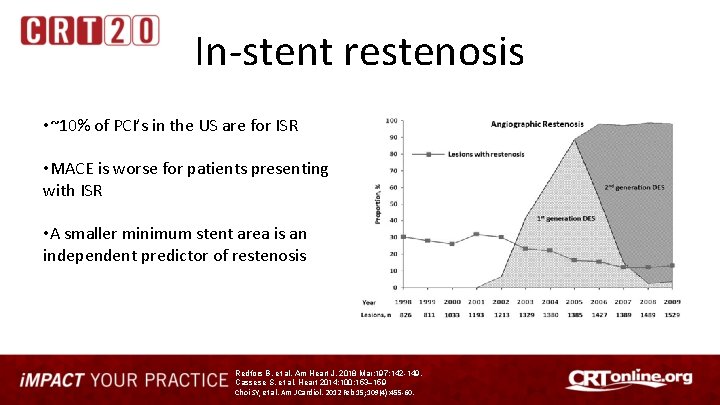
In-stent restenosis • ~10% of PCI’s in the US are for ISR • MACE is worse for patients presenting with ISR • A smaller minimum stent area is an independent predictor of restenosis Redfors B, et al. Am Heart J. 2018 Mar; 197: 142 -149. Cassese S, et al. Heart 2014; 100: 153– 159 Choi SY, et al. Am J Cardiol. 2012 Feb 15; 109(4): 455 -60.
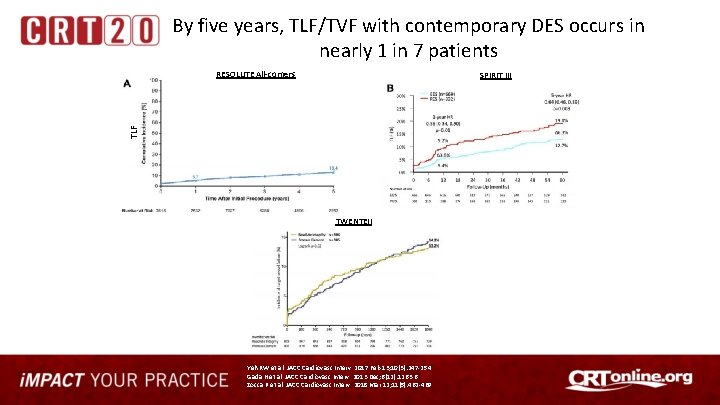
By five years, TLF/TVF with contemporary DES occurs in nearly 1 in 7 patients RESOLUTE All-comers TLF SPIRIT III TWENTEII Yeh RW et al. JACC Cardiovasc Interv. 2017 Feb 13; 10(3): 247 -254. Gada H et al. JACC Cardiovasc Interv. 2013 Dec; 6(12): 1263 -6. Zocca P et al. JACC Cardiovasc Interv. 2018 Mar 12; 11(5): 462 -469.
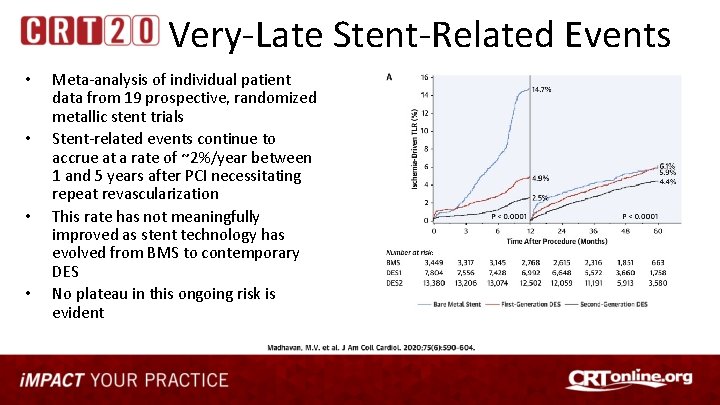
Very-Late Stent-Related Events • • Meta-analysis of individual patient data from 19 prospective, randomized metallic stent trials Stent-related events continue to accrue at a rate of ~2%/year between 1 and 5 years after PCI necessitating repeat revascularization This rate has not meaningfully improved as stent technology has evolved from BMS to contemporary DES No plateau in this ongoing risk is evident
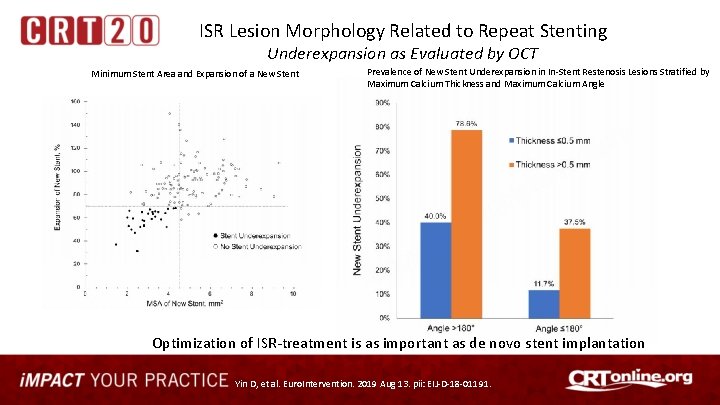
ISR Lesion Morphology Related to Repeat Stenting Underexpansion as Evaluated by OCT Minimum Stent Area and Expansion of a New Stent Prevalence of New Stent Underexpansion in In-Stent Restenosis Lesions Stratified by Maximum Calcium Thickness and Maximum Calcium Angle Optimization of ISR-treatment is as important as de novo stent implantation Yin D, et al. Euro. Intervention. 2019 Aug 13. pii: EIJ-D-18 -01191.
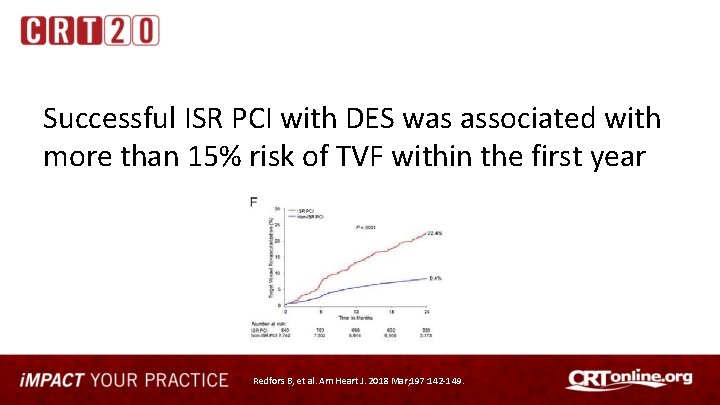
Successful ISR PCI with DES was associated with more than 15% risk of TVF within the first year Redfors B, et al. Am Heart J. 2018 Mar; 197: 142 -149.
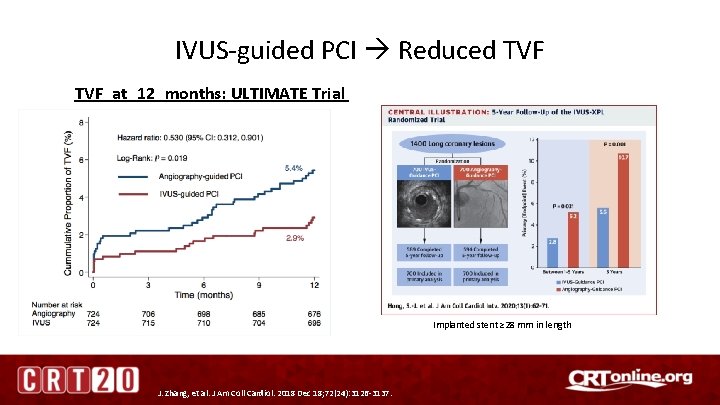
IVUS-guided PCI Reduced TVF at 12 months: ULTIMATE Trial Implanted stent ≥ 28 mm in length J. Zhang, et al. J Am Coll Cardiol. 2018 Dec 18; 72(24): 3126 -3137.
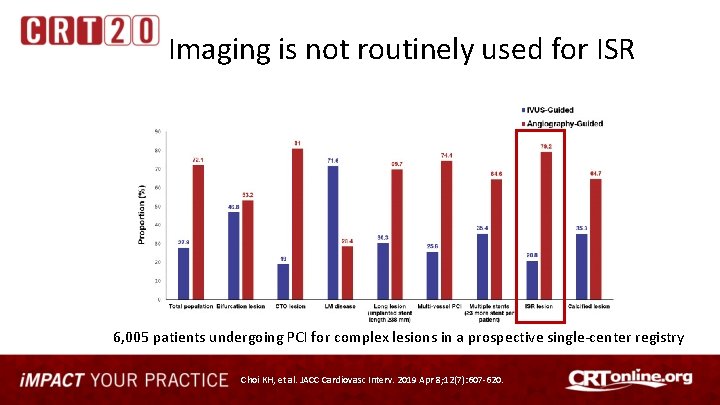
Imaging is not routinely used for ISR 6, 005 patients undergoing PCI for complex lesions in a prospective single-center registry Choi KH, et al. JACC Cardiovasc Interv. 2019 Apr 8; 12(7): 607 -620.
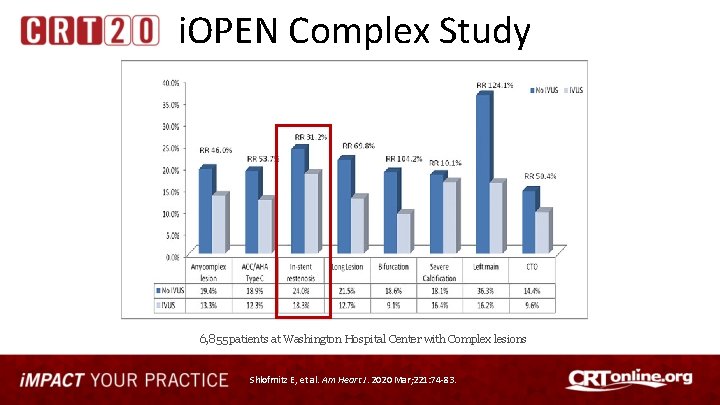
i. OPEN Complex Study 6, 855 patients at Washington Hospital Center with Complex lesions Shlofmitz E, et al. Am Heart J. 2020 Mar; 221: 74 -83.
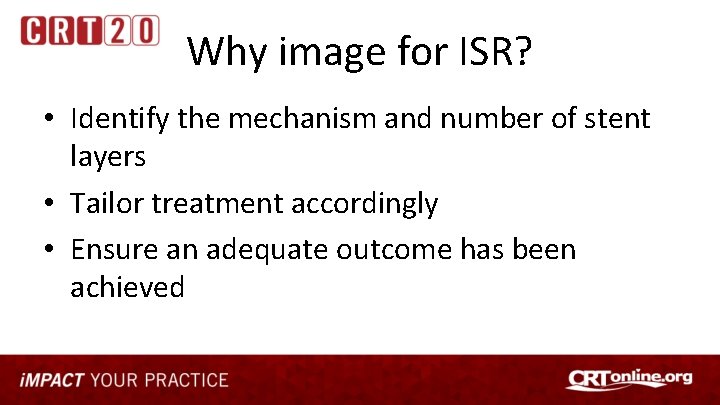
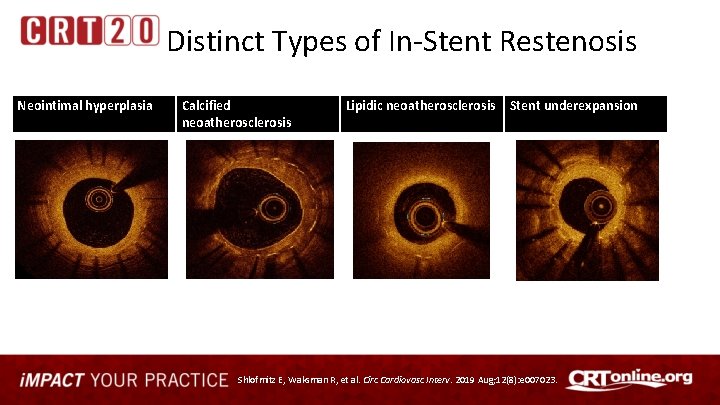
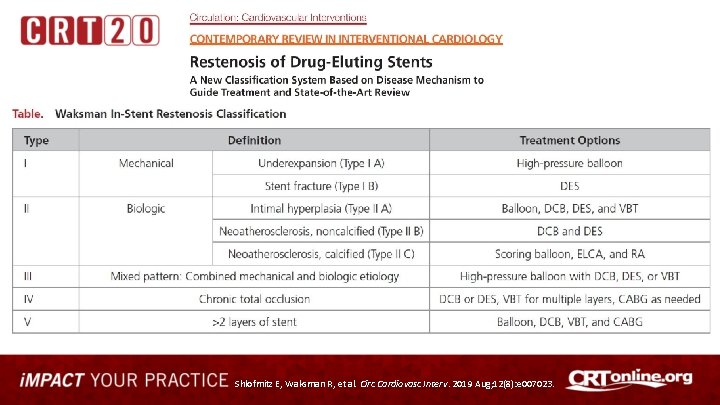
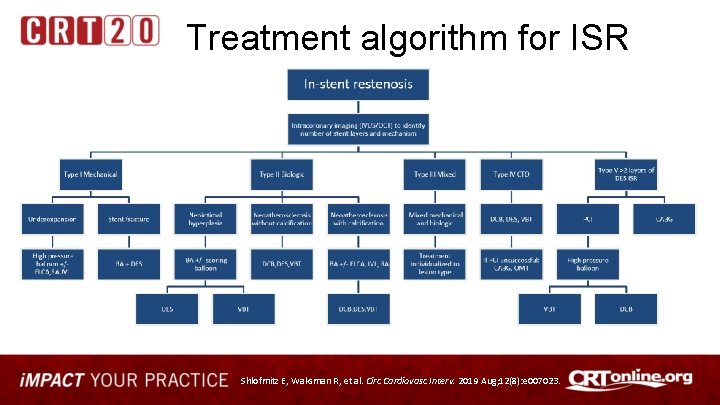
Why image for ISR? • Identify the mechanism and number of stent layers • Tailor treatment accordingly • Ensure an adequate outcome has been achieved
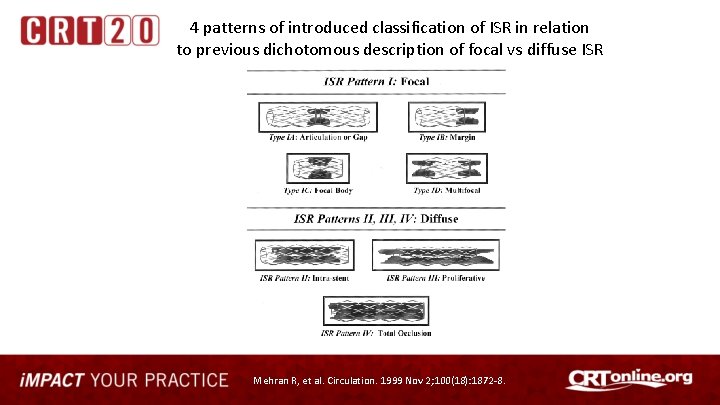
4 patterns of introduced classification of ISR in relation to previous dichotomous description of focal vs diffuse ISR Mehran R, et al. Circulation. 1999 Nov 2; 100(18): 1872 -8.
Distinct Types of In-Stent Restenosis Neointimal hyperplasia Calcified neoatherosclerosis Lipidic neoatherosclerosis Stent underexpansion Shlofmitz E, Waksman R, et al. Circ Cardiovasc Interv. 2019 Aug; 12(8): e 007023.
Shlofmitz E, Waksman R, et al. Circ Cardiovasc Interv. 2019 Aug; 12(8): e 007023.
Treatment algorithm for ISR Shlofmitz E, Waksman R, et al. Circ Cardiovasc Interv. 2019 Aug; 12(8): e 007023.
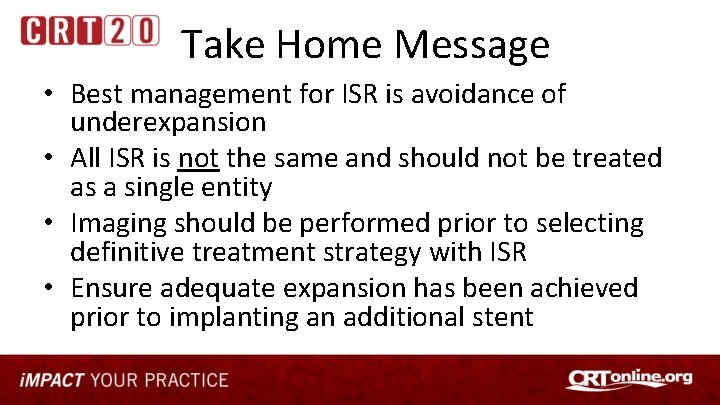
Take Home Message • Best management for ISR is avoidance of underexpansion • All ISR is not the same and should not be treated as a single entity • Imaging should be performed prior to selecting definitive treatment strategy with ISR • Ensure adequate expansion has been achieved prior to implanting an additional stent