
Why explore the production of space in geography

- Slides: 22
Why explore the ‘production of space’ in geography classrooms? GTE, January 2018 Lauren Hammond lauren. e. Hammond@ucl. ac. uk
Ph. D (working title): What do young people’s narratives reveal about their geographies and imaginations of London? Paper overview: *(Re)introducing the ‘production of space’ and considering why it’s significant in geography education *Discussing, and exemplifying, how the ‘production of space’ has been a fundamental part of my doctoral research *Considering how, and why, the ‘production of space’ can be further utilised in geography education using the example of ‘Britishness’ (a theme which emerged through the analysis of my doctorate).
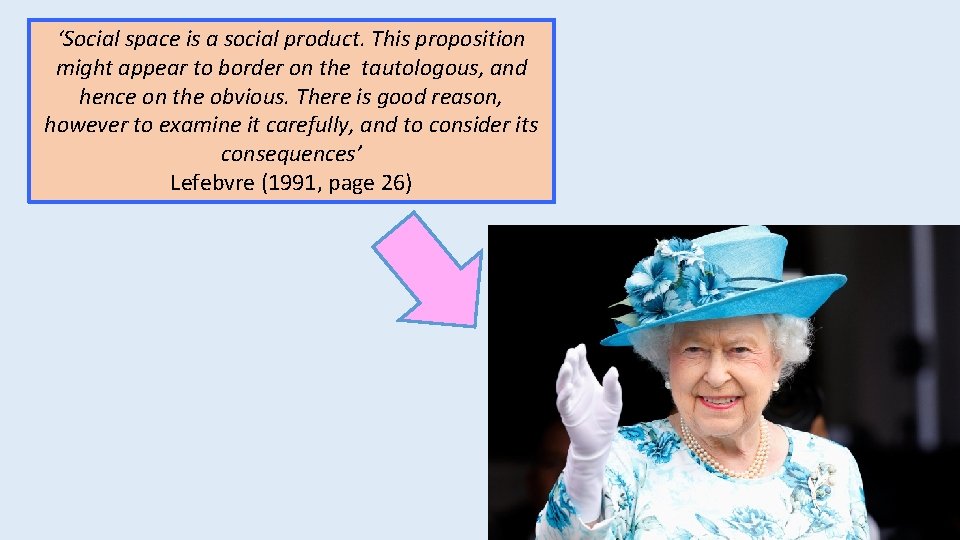
‘Social space is a social product. This proposition might appear to border on the tautologous, and hence on the obvious. There is good reason, however to examine it carefully, and to consider its consequences’ Lefebvre (1991, page 26)
Researcher: Do you think you get a good education in London? Jessica: yeah, you do, but… Tilly: We get more than any other country in the world here, I think. They actually understand that the people who are going to be ruling over the country are children, so of course they want us to succeed and I think they’ve realized now, that it doesn’t matter what background you’re from it just matters what you have to give Jack: It’s never gonna be…. Tilly: It will never be fair Jack: In America, it will never be an Indian guy ruling over the UK Tilly: You never know, they said that about Obama. They said there would never be a black president; and Margaret Thatcher, they said there would never be a woman Prime Minister Jack: No, it’s always gonna be a person from that family, you’ll see Rachel: the monarchy Jack: He is the president, and the king or queen is different Tilly: Yeah, but… Jessica: There’s never gonna be a black queen Jack: There will never be a black queen Tilly: yeah, because that would make no sense if there’s a black queen!
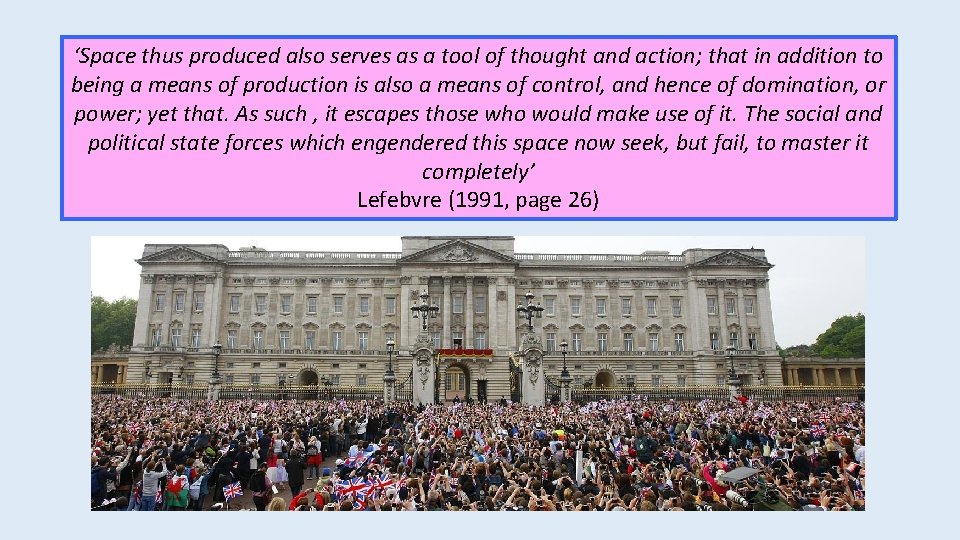
‘Space thus produced also serves as a tool of thought and action; that in addition to being a means of production is also a means of control, and hence of domination, or power; yet that. As such , it escapes those who would make use of it. The social and political state forces which engendered this space now seek, but fail, to master it completely’ Lefebvre (1991, page 26)
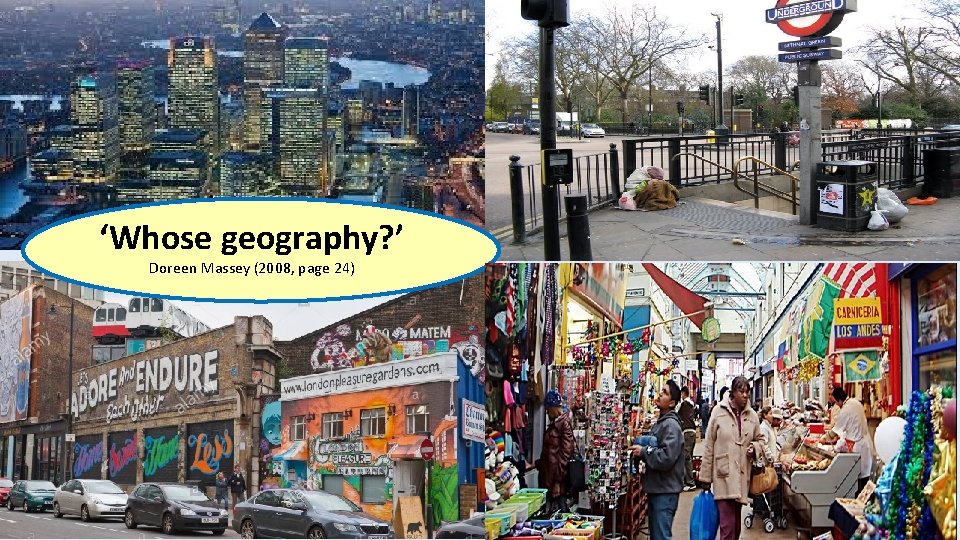
‘Whose geography? ’ Doreen Massey (2008, page 24)
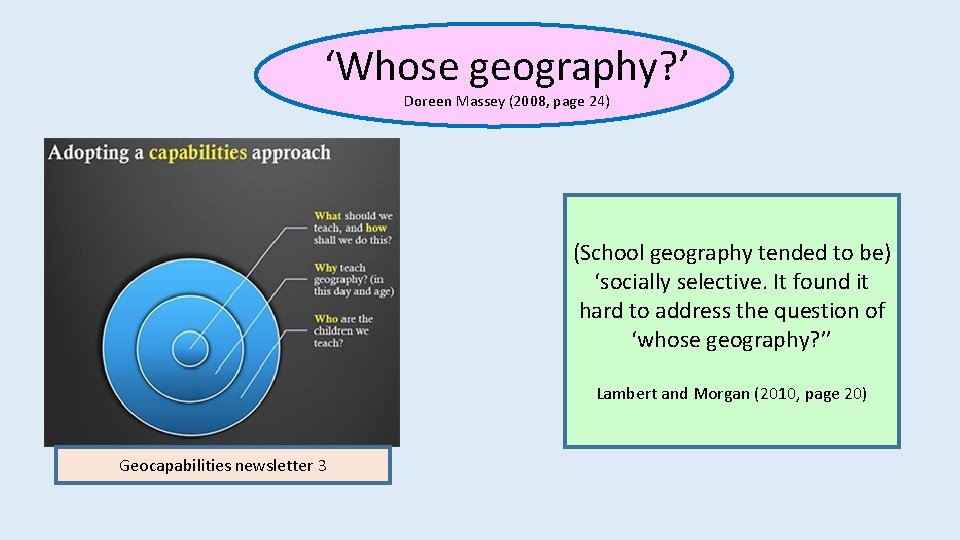
‘Whose geography? ’ Doreen Massey (2008, page 24) (School geography tended to be) ‘socially selective. It found it hard to address the question of ‘whose geography? ’’ Lambert and Morgan (2010, page 20) Geocapabilities newsletter 3
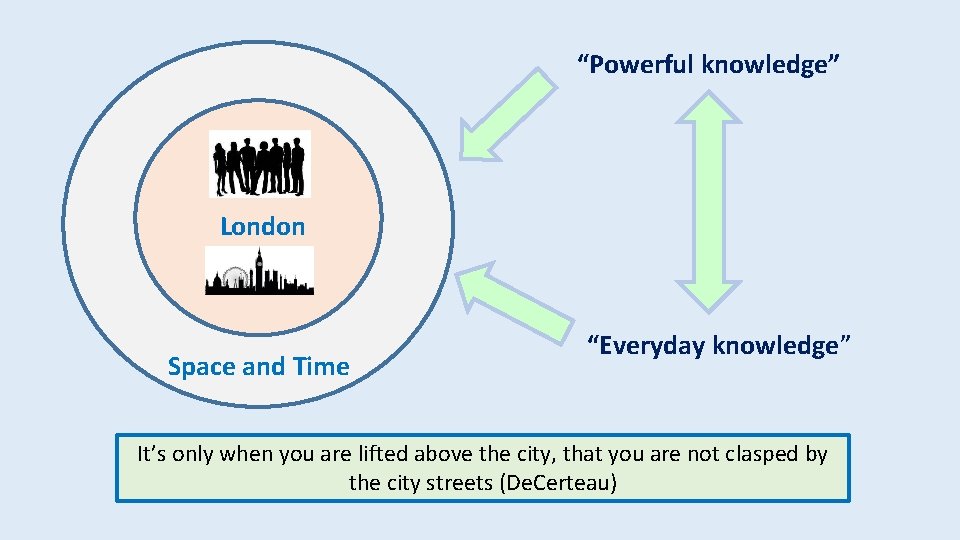
“Powerful knowledge” London Space and Time “Everyday knowledge” It’s only when you are lifted above the city, that you are not clasped by the city streets (De. Certeau)
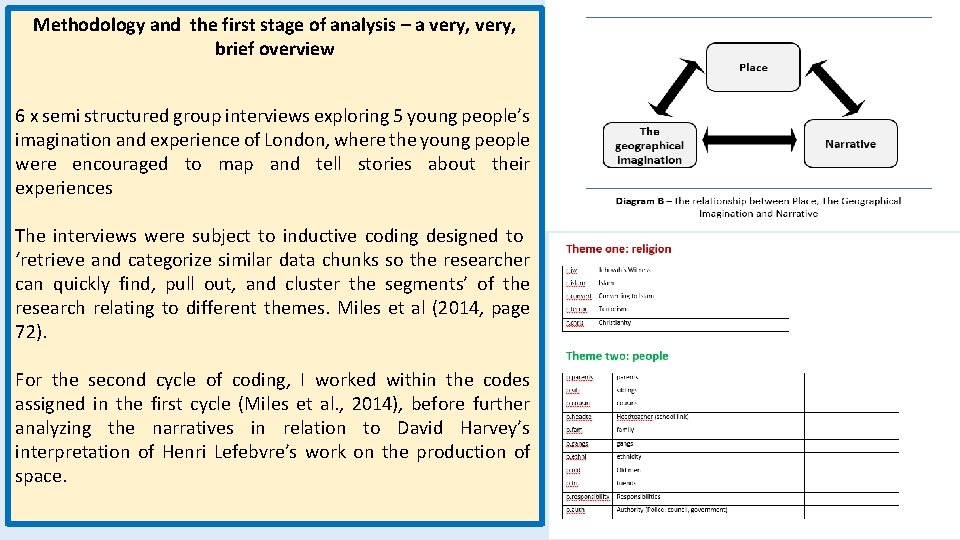
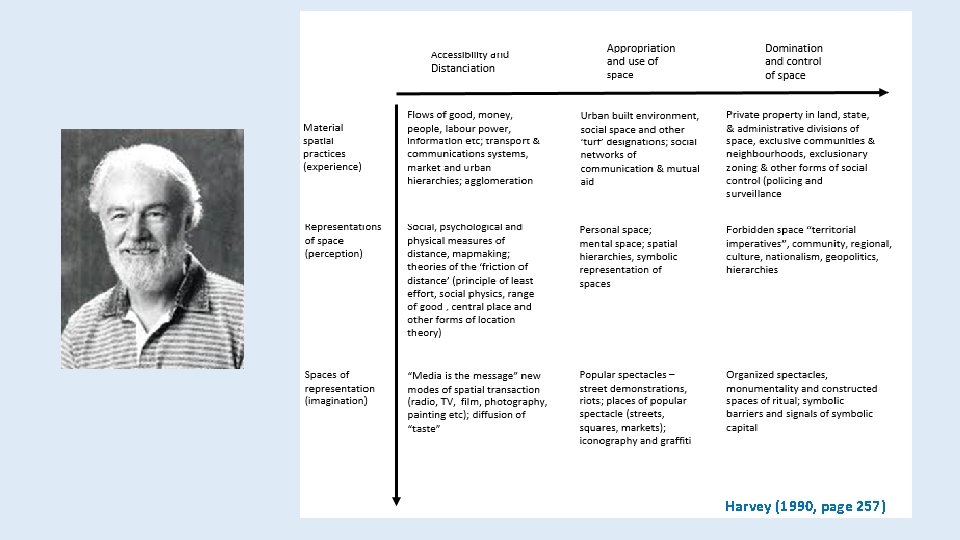
Methodology and the first stage of analysis – a very, brief overview 6 x semi structured group interviews exploring 5 young people’s imagination and experience of London, where the young people were encouraged to map and tell stories about their experiences The interviews were subject to inductive coding designed to ‘retrieve and categorize similar data chunks so the researcher can quickly find, pull out, and cluster the segments’ of the research relating to different themes. Miles et al (2014, page 72). For the second cycle of coding, I worked within the codes assigned in the first cycle (Miles et al. , 2014), before further analyzing the narratives in relation to David Harvey’s interpretation of Henri Lefebvre’s work on the production of space.
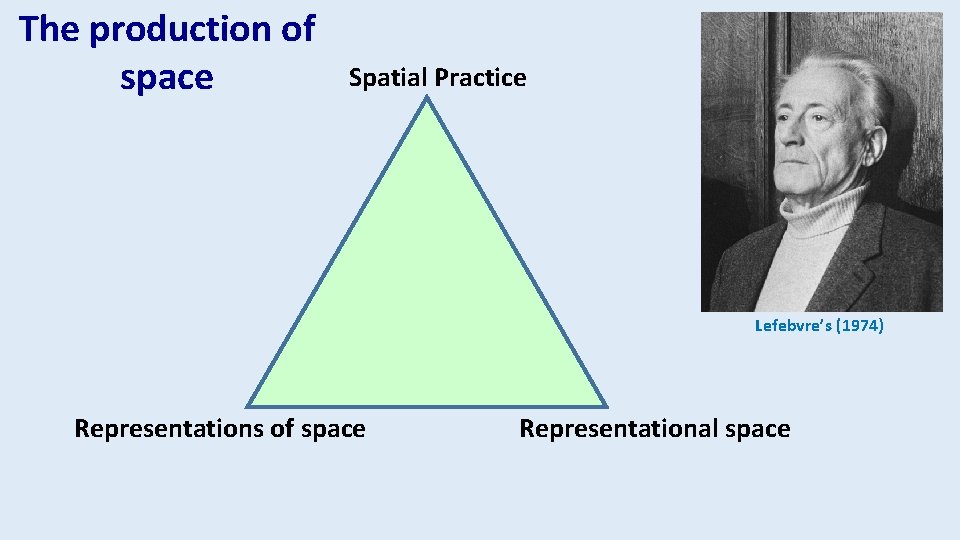
The production of space Spatial Practice Lefebvre’s (1974) Representations of space Representational space
Harvey (1990, page 257)
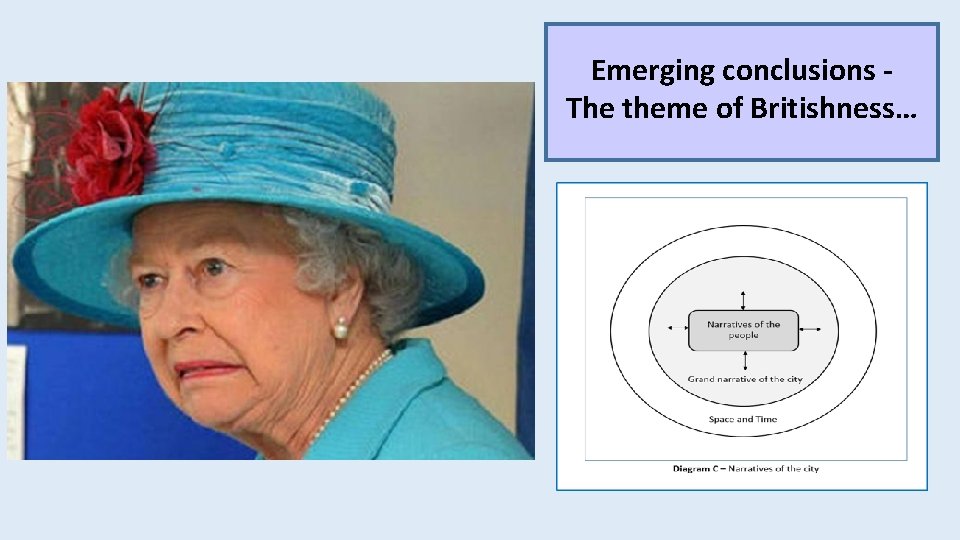
Emerging conclusions The theme of Britishness…
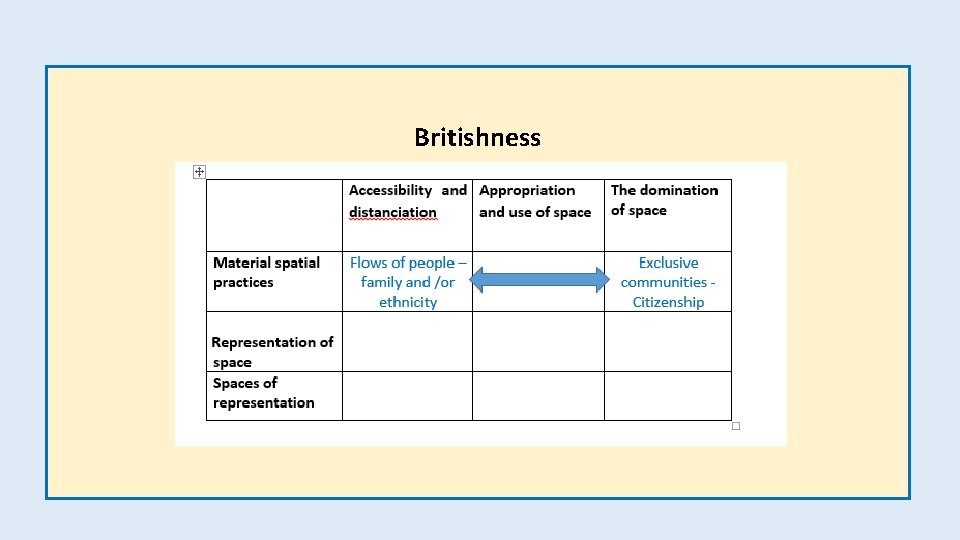
Britishness
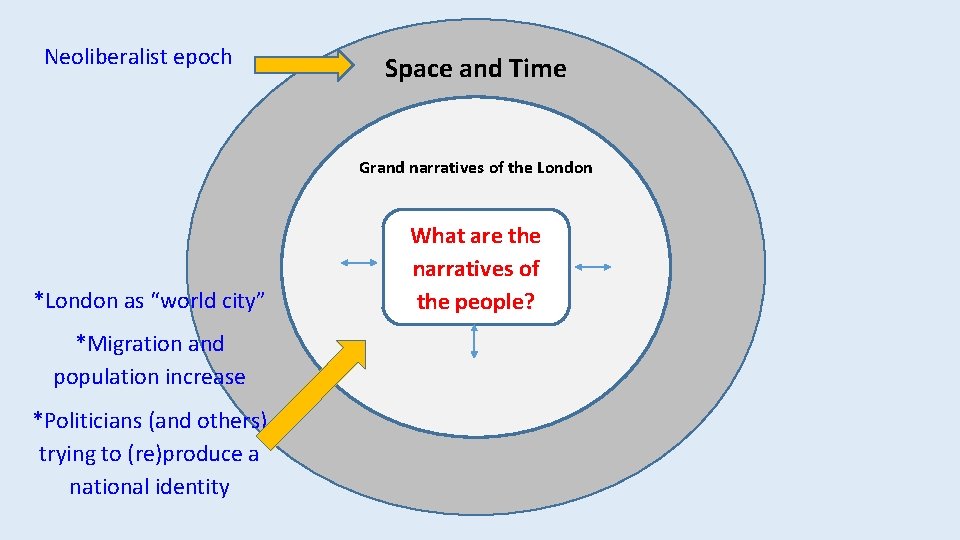
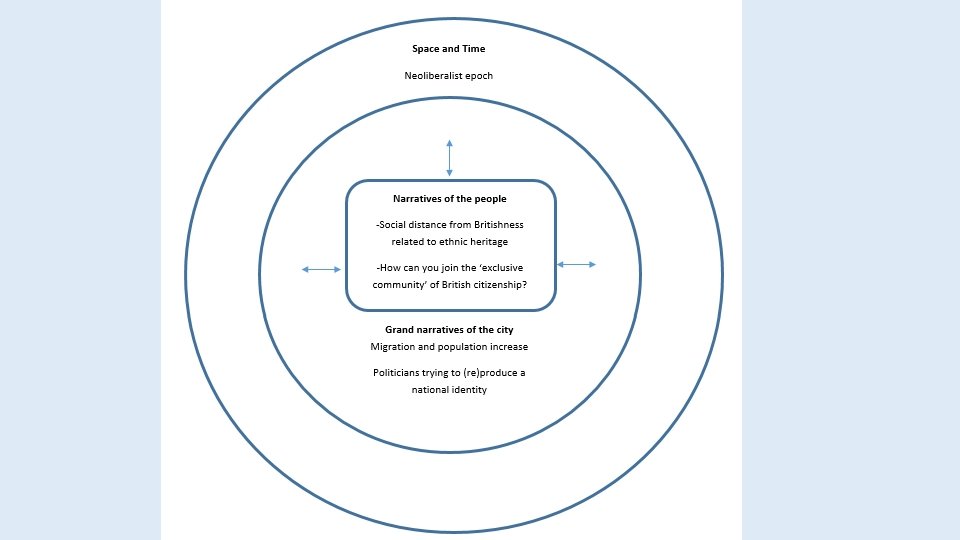
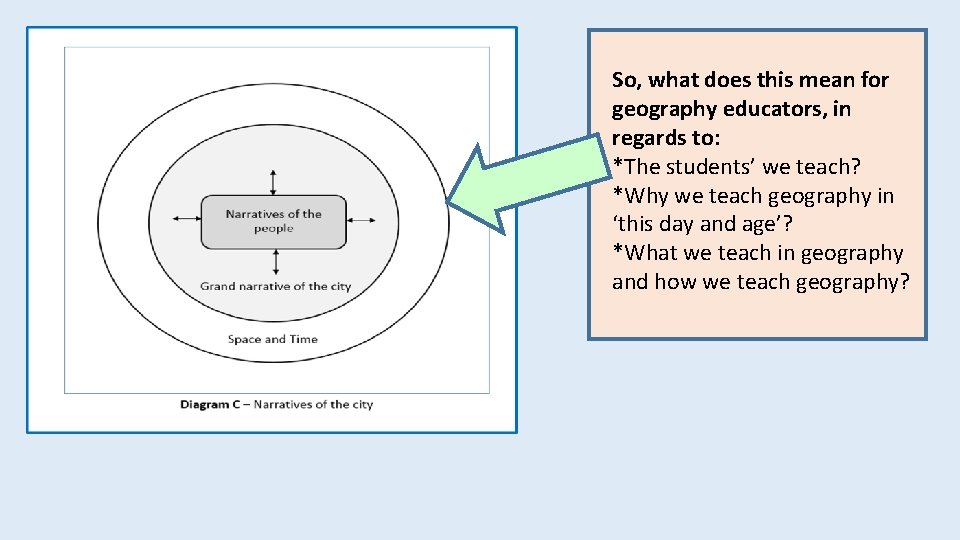
Neoliberalist epoch Space and Time Grand narratives of the London *London as “world city” *Migration and population increase *Politicians (and others) trying to (re)produce a national identity What are the narratives of the people?
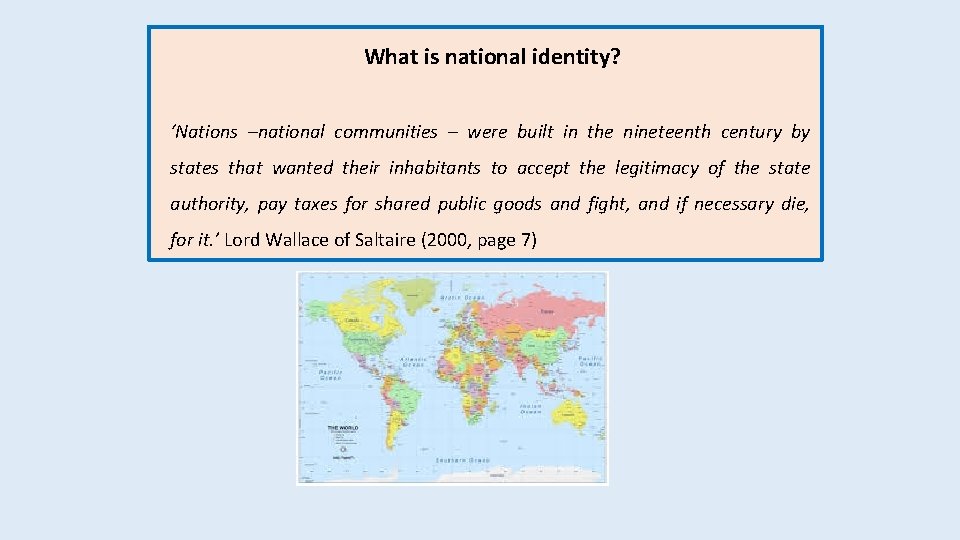
What is national identity? ‘Nations –national communities – were built in the nineteenth century by states that wanted their inhabitants to accept the legitimacy of the state authority, pay taxes for shared public goods and fight, and if necessary die, for it. ’ Lord Wallace of Saltaire (2000, page 7)
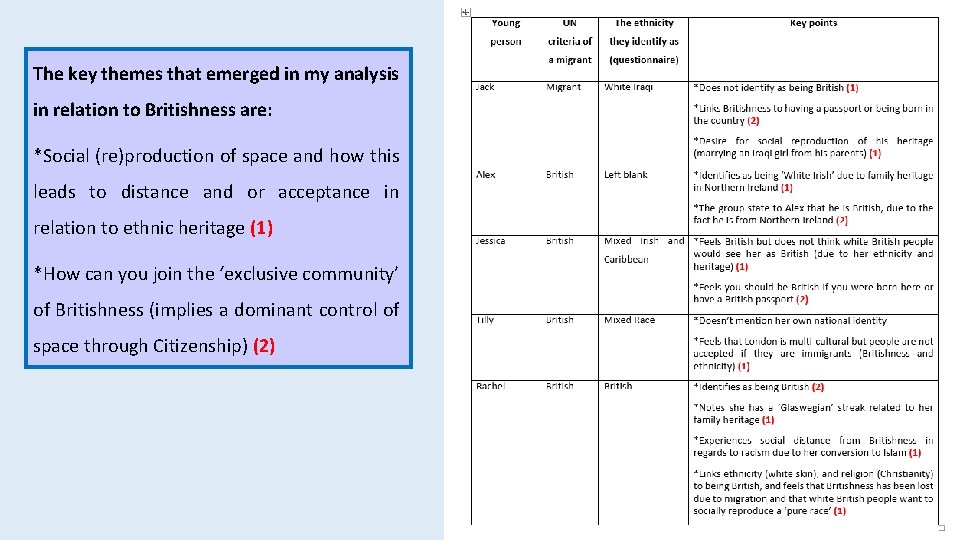
The key themes that emerged in my analysis in relation to Britishness are: *Social (re)production of space and how this leads to distance and or acceptance in relation to ethnic heritage (1) *How can you join the ‘exclusive community’ of Britishness (implies a dominant control of space through Citizenship) (2)
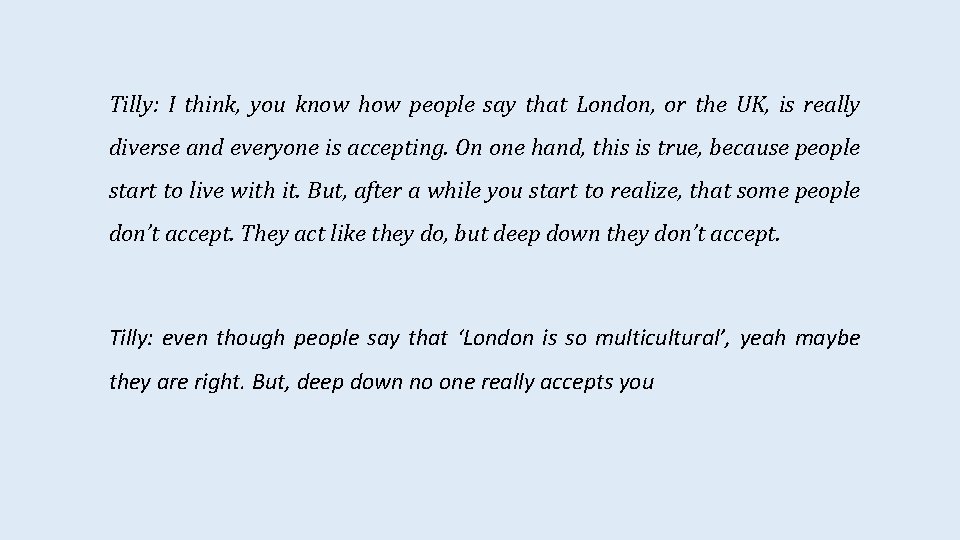
Tilly: I think, you know how people say that London, or the UK, is really diverse and everyone is accepting. On one hand, this is true, because people start to live with it. But, after a while you start to realize, that some people don’t accept. They act like they do, but deep down they don’t accept. Tilly: even though people say that ‘London is so multicultural’, yeah maybe they are right. But, deep down no one really accepts you
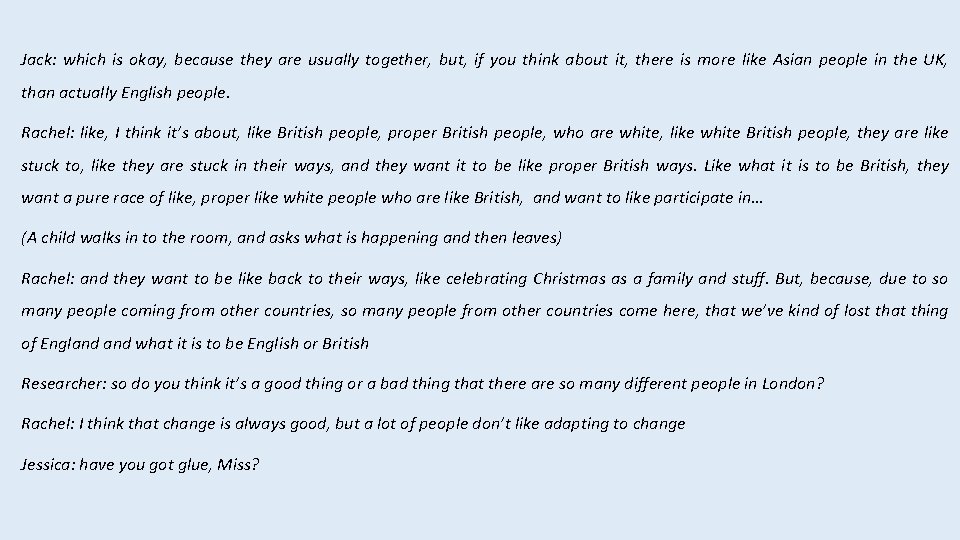
Jack: which is okay, because they are usually together, but, if you think about it, there is more like Asian people in the UK, than actually English people. Rachel: like, I think it’s about, like British people, proper British people, who are white, like white British people, they are like stuck to, like they are stuck in their ways, and they want it to be like proper British ways. Like what it is to be British, they want a pure race of like, proper like white people who are like British, and want to like participate in… (A child walks in to the room, and asks what is happening and then leaves) Rachel: and they want to be like back to their ways, like celebrating Christmas as a family and stuff. But, because, due to so many people coming from other countries, so many people from other countries come here, that we’ve kind of lost that thing of England what it is to be English or British Researcher: so do you think it’s a good thing or a bad thing that there are so many different people in London? Rachel: I think that change is always good, but a lot of people don’t like adapting to change Jessica: have you got glue, Miss?
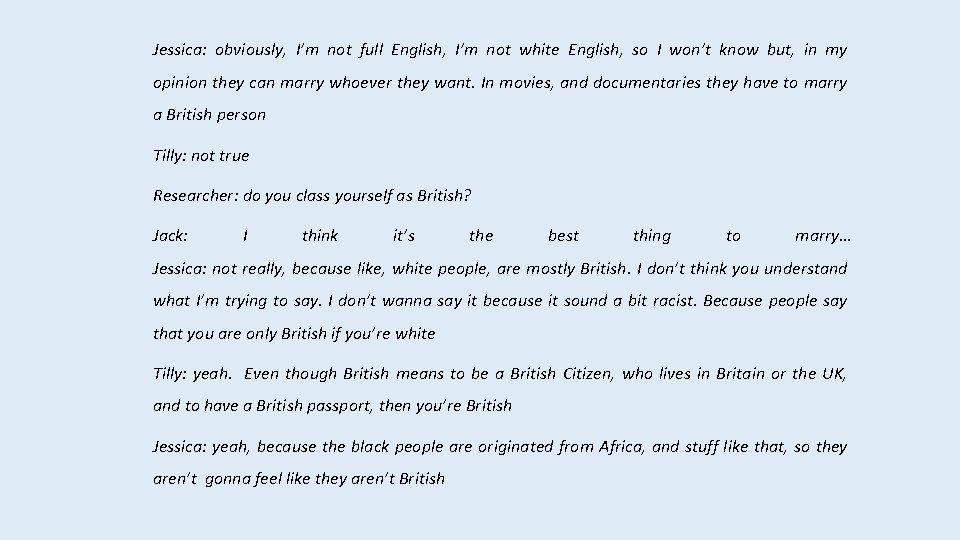
Jessica: obviously, I’m not full English, I’m not white English, so I won’t know but, in my opinion they can marry whoever they want. In movies, and documentaries they have to marry a British person Tilly: not true Researcher: do you class yourself as British? Jack: I think it’s the best thing to marry… Jessica: not really, because like, white people, are mostly British. I don’t think you understand what I’m trying to say. I don’t wanna say it because it sound a bit racist. Because people say that you are only British if you’re white Tilly: yeah. Even though British means to be a British Citizen, who lives in Britain or the UK, and to have a British passport, then you’re British Jessica: yeah, because the black people are originated from Africa, and stuff like that, so they aren’t gonna feel like they aren’t British
So, what does this mean for geography educators, in regards to: *The students’ we teach? *Why we teach geography in ‘this day and age’? *What we teach in geography and how we teach geography?
Thank you for listening! Any questions, comments, or suggestions? Lauren Hammond Lauren. e. Hammond@ucl. ac. uk