
Why do we do presentations What do you

- Slides: 22
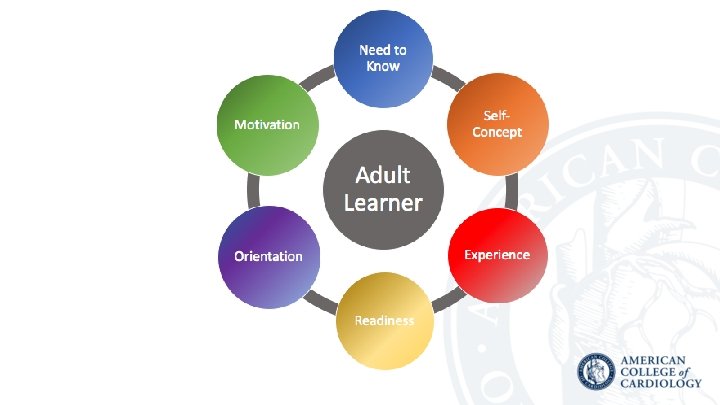
Why do we do presentations? What do you think of as a “presentation”? How are they important to us, our patients and our colleagues? What’s in it for you to be a better presenter? Emily Steffen & Nicole Woodbury
What Does Presenting Do Raises the competency level of all staff Allows us to share new ideas, techniques Creates better understanding of clinical evidence Passing on your knowledge
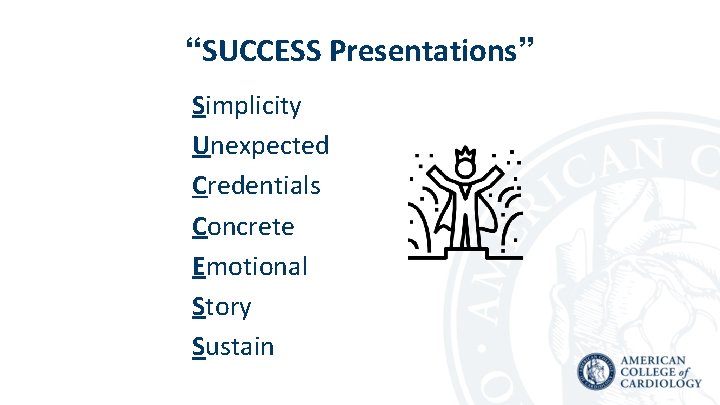
“SUCCESS Presentations” Simplicity Unexpected Credentials Concrete Emotional Story Sustain
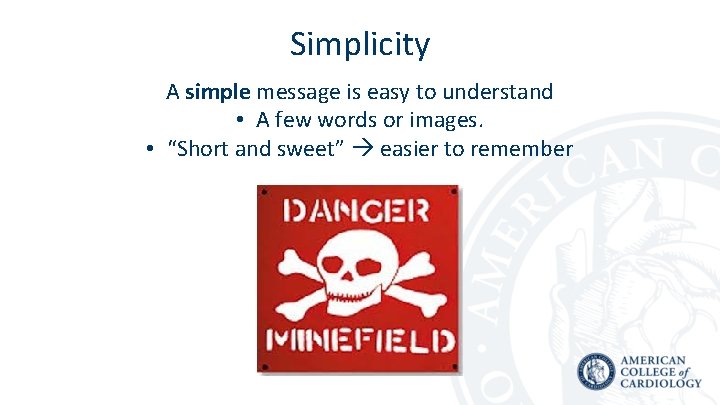
Simplicity A simple message is easy to understand • A few words or images. • “Short and sweet” easier to remember
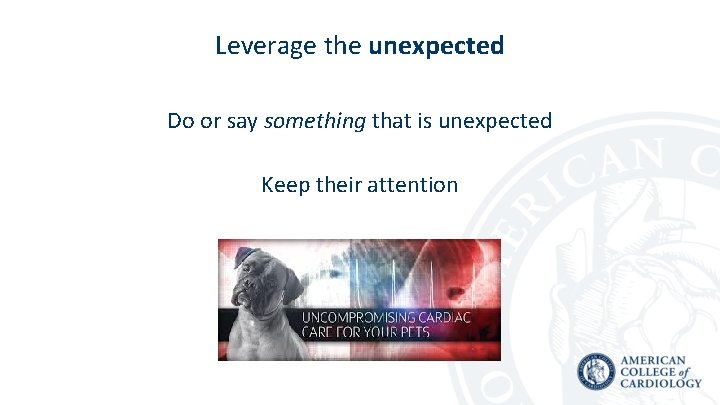
Leverage the unexpected Do or say something that is unexpected Keep their attention
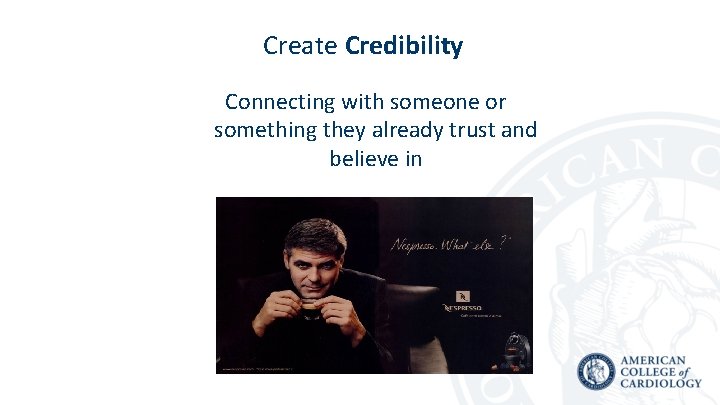
Create Credibility Connecting with someone or something they already trust and believe in
Make it concrete Give specific, real examples, analogies and comparisons. Put things into the context of your audience members’ lives and experience
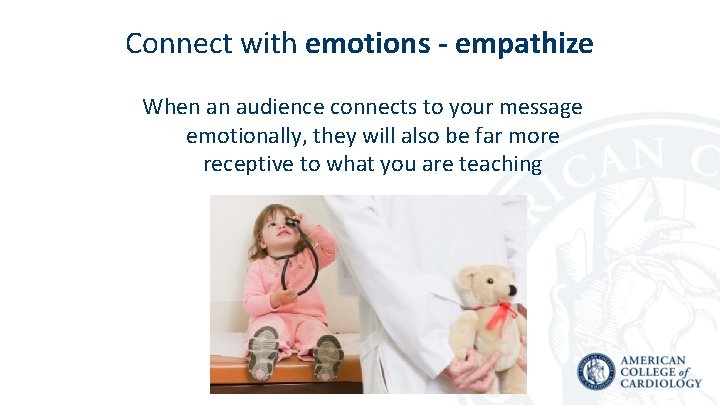
Connect with emotions - empathize When an audience connects to your message emotionally, they will also be far more receptive to what you are teaching
Storytelling Which kind of “presentation” from your childhood do you remember more vividly: • a story you were told (by your grandma, for example) • a lecture you heard in school?
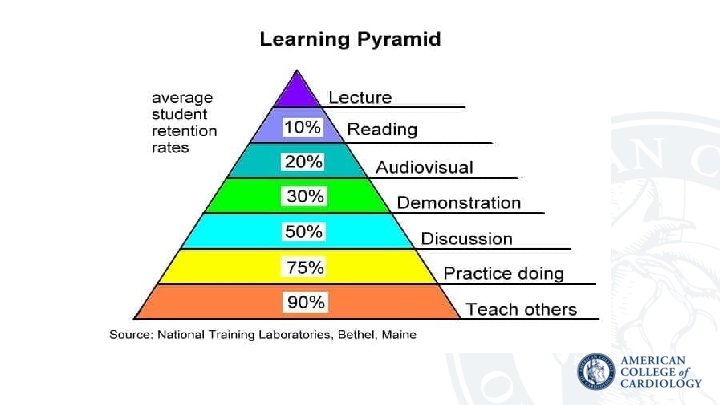
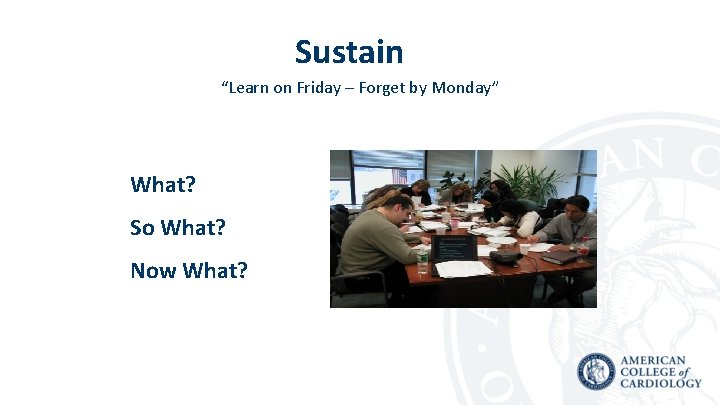
Sustain “Learn on Friday – Forget by Monday” What? So What? Now What?
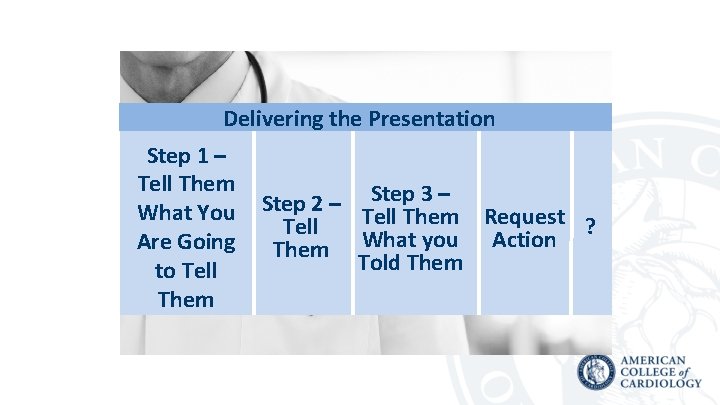
Delivering the Presentation Step 1 – Tell Them What You Are Going to Tell Them Step 2 – Step 3 – Tell Them Request ? Tell Them What you Action Told Them
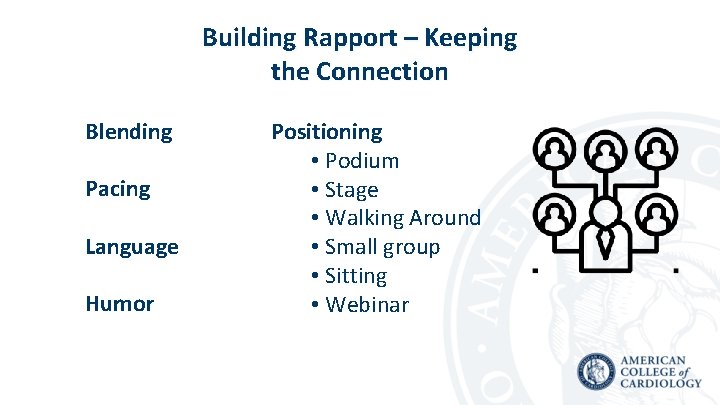
Building Rapport – Keeping the Connection Blending Pacing Language Humor Positioning • Podium • Stage • Walking Around • Small group • Sitting • Webinar
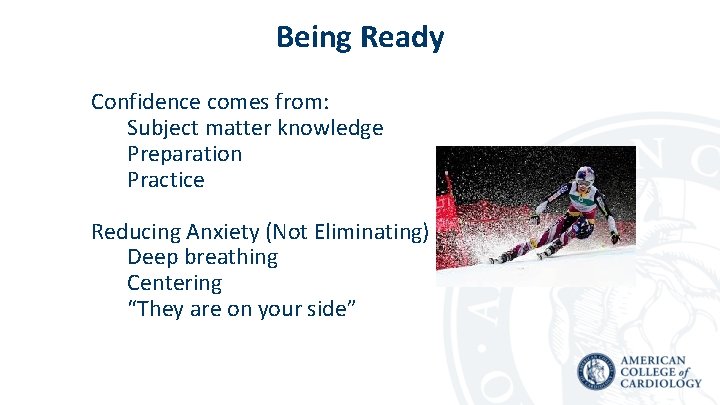
Being Ready Confidence comes from: Subject matter knowledge Preparation Practice Reducing Anxiety (Not Eliminating) Deep breathing Centering “They are on your side”
Confidence in Presentation Skills • Presenter as “Partner in Learning” – Use “we” instead of “I” – Encourage discussion from group • Keep didactic materials (and slides) simple • Preparation – Know how to address potential pitfalls
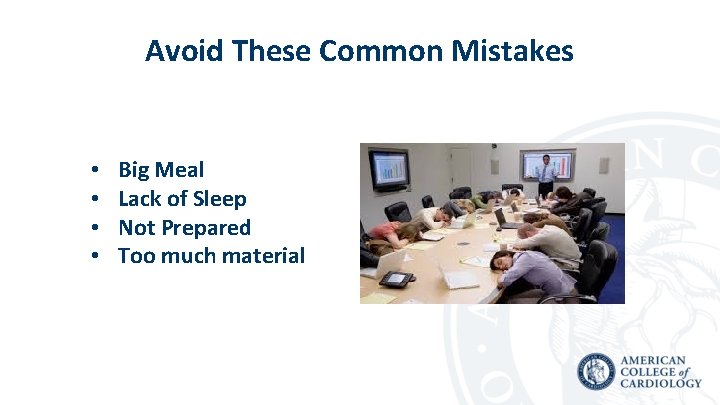
Avoid These Common Mistakes • • Big Meal Lack of Sleep Not Prepared Too much material
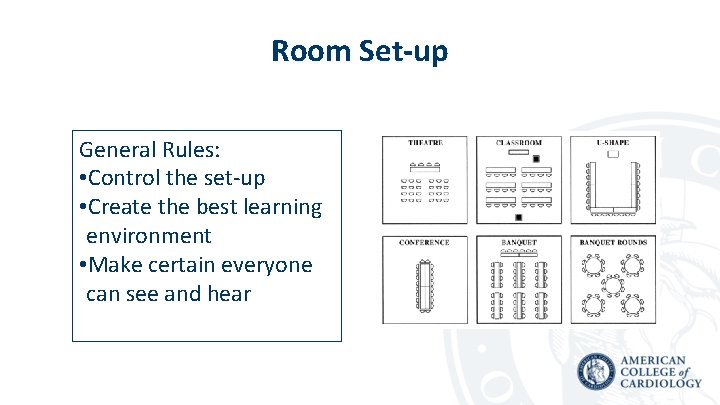
Room Set-up General Rules: • Control the set-up • Create the best learning environment • Make certain everyone can see and hear
Potential Pitfalls • Audience is not engaged (no one contributes) – Build trust – Non-threatening ask for participation – Reinforce learning together • Falling in to a “lecture” • One audience member dominates conversation – Offer thanks, ask for others to participate – Ask how others respond or differ • Conflict between audience members – Acknowledge that disagreement is ok (and common) in medicine – Focus on key facts – Offer to discuss in detail afterwards
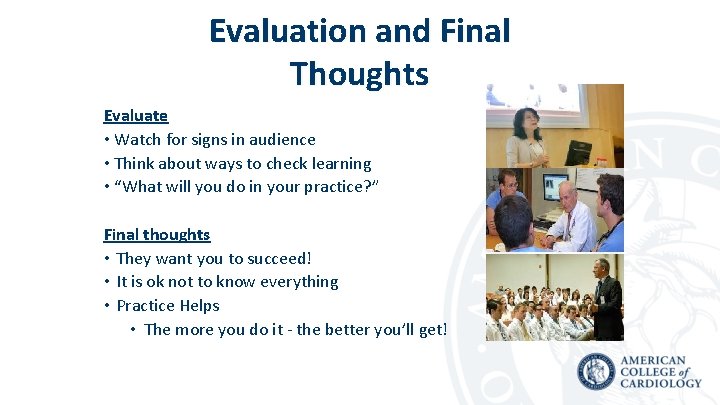
Evaluation and Final Thoughts Evaluate • Watch for signs in audience • Think about ways to check learning • “What will you do in your practice? ” Final thoughts • They want you to succeed! • It is ok not to know everything • Practice Helps • The more you do it - the better you’ll get!