
WHY DO ELEMENTS BOND When atoms are independent
WHY DO ELEMENTS BOND? • When atoms are independent and not bonded, increased potential energy! they possess _____ • Nature wants things to have _______ lower potential energy • Ex. A boulder on the edge of a cliff has a lot of potential energy – the tendency in nature is for fall that rock to ____, which causes an _______ in potential energy and a decrease Increase ________ in stability!
Sooooooo, by bonding: 1. Potential Energy Decreases 2. Stability Increases
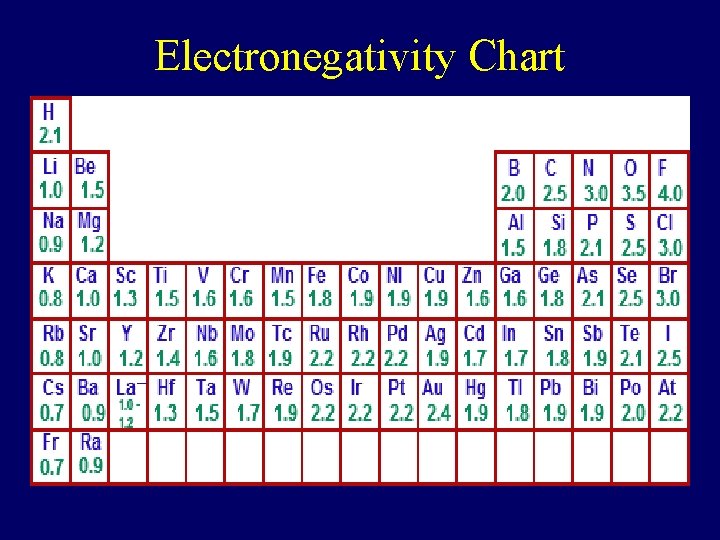
Electronegativity Chart
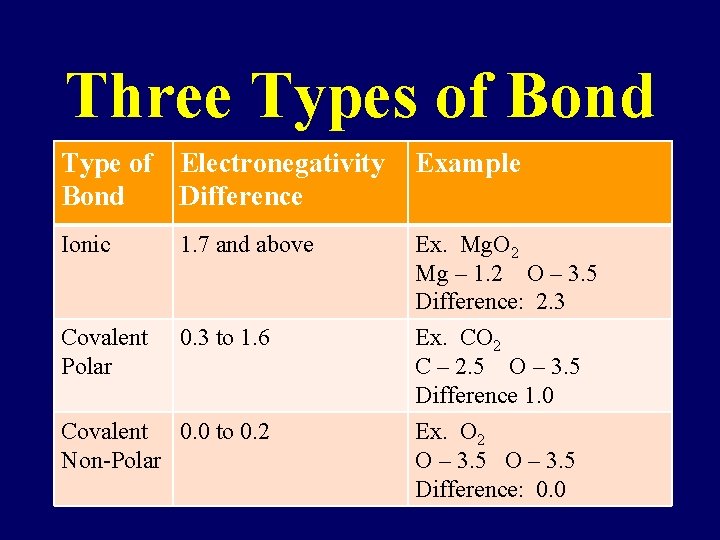
Three Types of Bond Type of Electronegativity Bond Difference Example Ionic 1. 7 and above Ex. Mg. O 2 Mg – 1. 2 O – 3. 5 Difference: 2. 3 Covalent Polar 0. 3 to 1. 6 Ex. CO 2 C – 2. 5 O – 3. 5 Difference 1. 0 Covalent 0. 0 to 0. 2 Non-Polar Ex. O 2 O – 3. 5 Difference: 0. 0
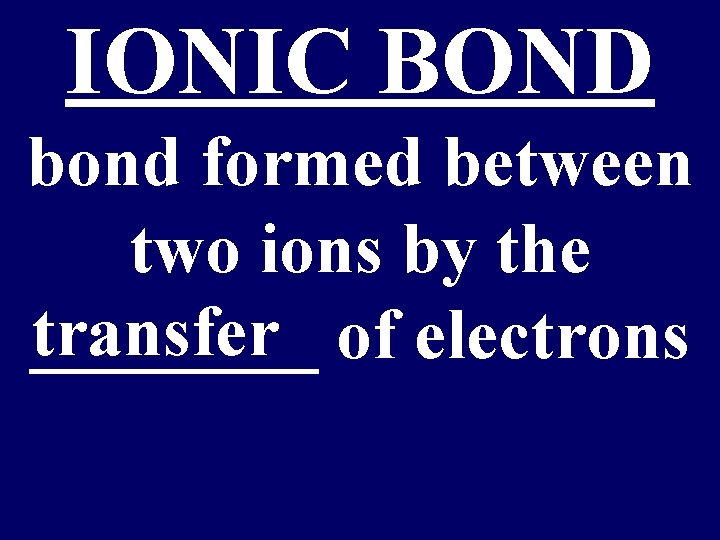
IONIC BOND bond formed between two ions by the transfer of electrons ____
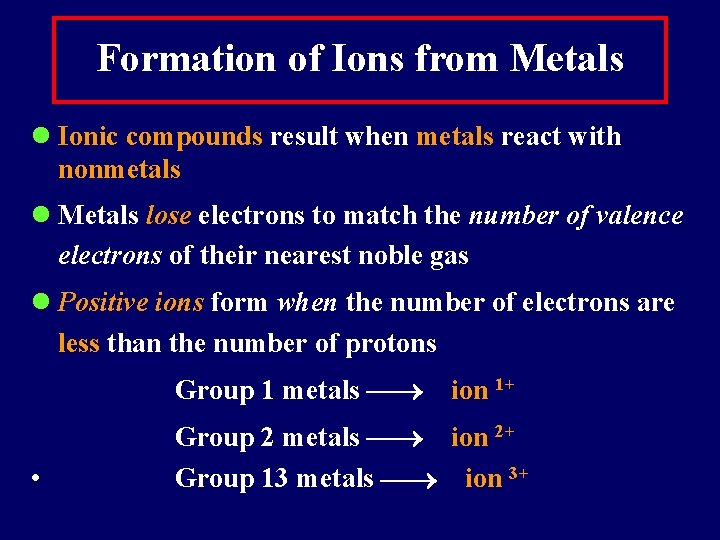
Formation of Ions from Metals l Ionic compounds result when metals react with nonmetals l Metals lose electrons to match the number of valence electrons of their nearest noble gas l Positive ions form when the number of electrons are less than the number of protons Group 1 metals • ion 1+ Group 2 metals ion 2+ Group 13 metals ion 3+
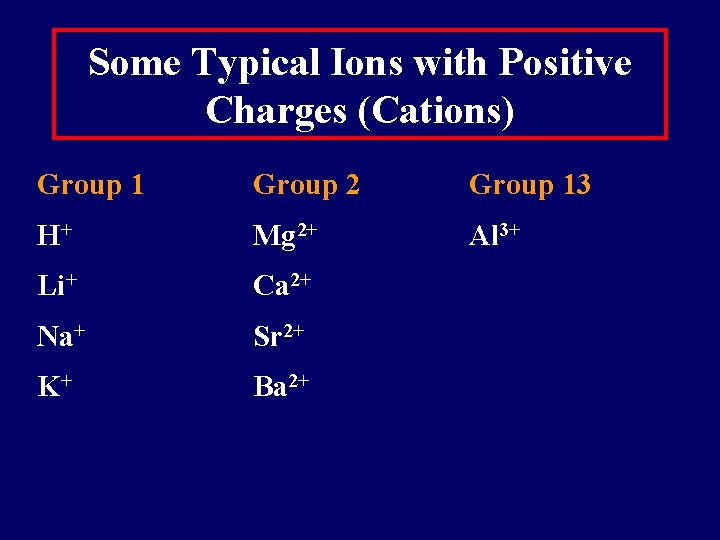
Some Typical Ions with Positive Charges (Cations) Group 1 Group 2 Group 13 H+ Mg 2+ Al 3+ Li+ Ca 2+ Na+ Sr 2+ K+ Ba 2+
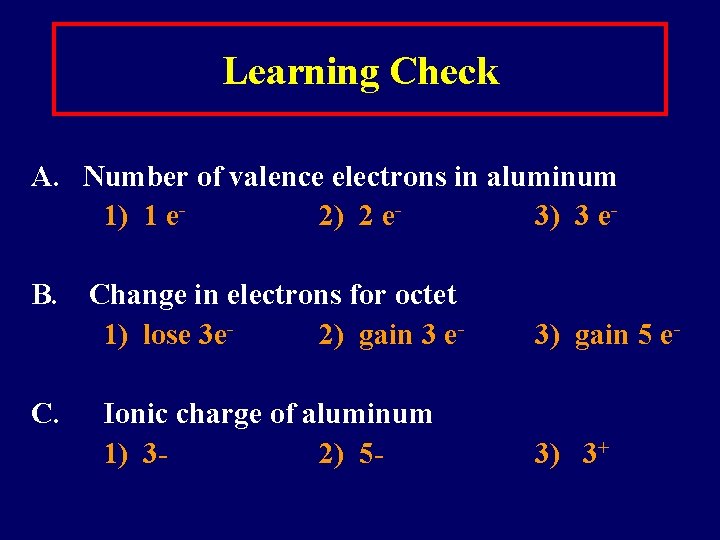
Learning Check A. Number of valence electrons in aluminum 1) 1 e 2) 2 e 3) 3 e. B. Change in electrons for octet 1) lose 3 e 2) gain 3 e. Ionic charge of aluminum 1) 32) 5 - 3) gain 5 e- 3) 3+
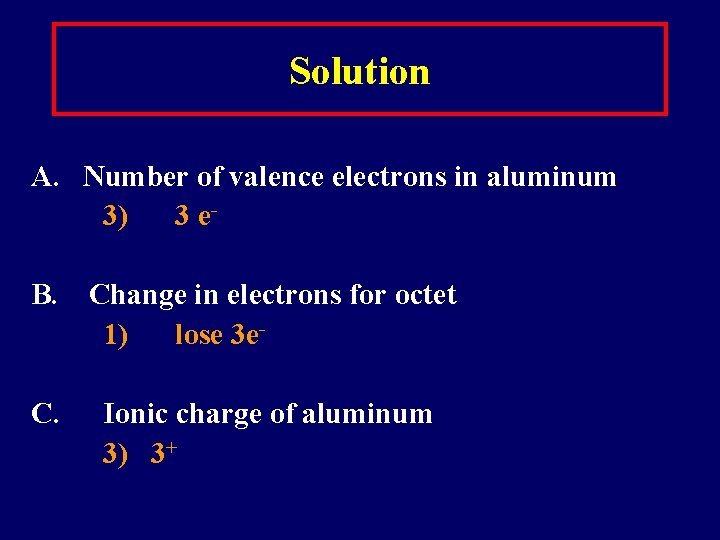
Solution A. Number of valence electrons in aluminum 3) 3 e. B. Change in electrons for octet 1) lose 3 e- C. Ionic charge of aluminum 3) 3+
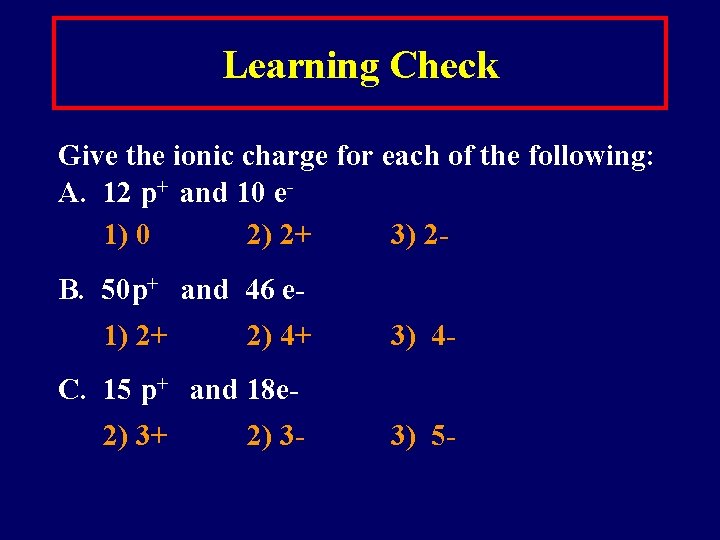
Learning Check Give the ionic charge for each of the following: A. 12 p+ and 10 e 1) 0 2) 2+ 3) 2 B. 50 p+ and 46 e 1) 2+ 2) 4+ 3) 4 - C. 15 p+ and 18 e 2) 3+ 2) 3 - 3) 5 -
Ions from Nonmetal Ions n. In ionic compounds, nonmetals in 15, 16, and 17 gain electrons from metals n. Nonmetal add electrons to achieve the octet arrangement n. Nonmetal ionic charge: 3 -, 2 -, or 1 -
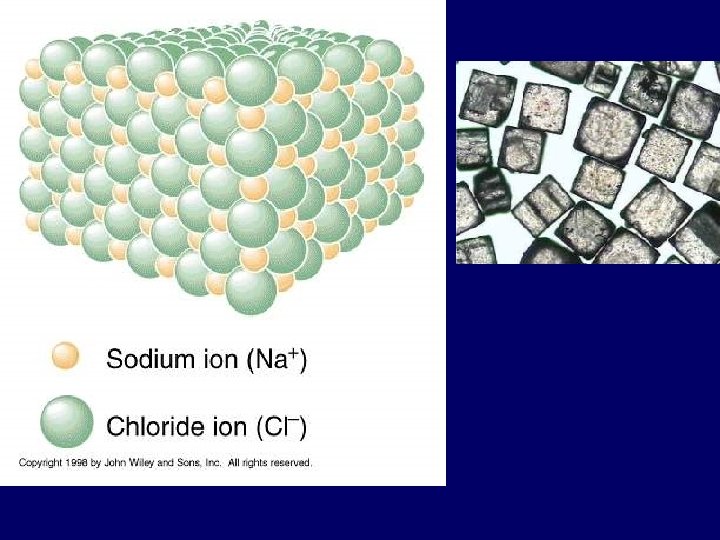
Ionic Bond • Between atoms of metals and nonmetals with very different electronegativity • Bond formed by transfer of electrons • Produce charged ions all states. Conductors and have high melting point. • Examples; Na. Cl, Ca. Cl 2, K 2 O
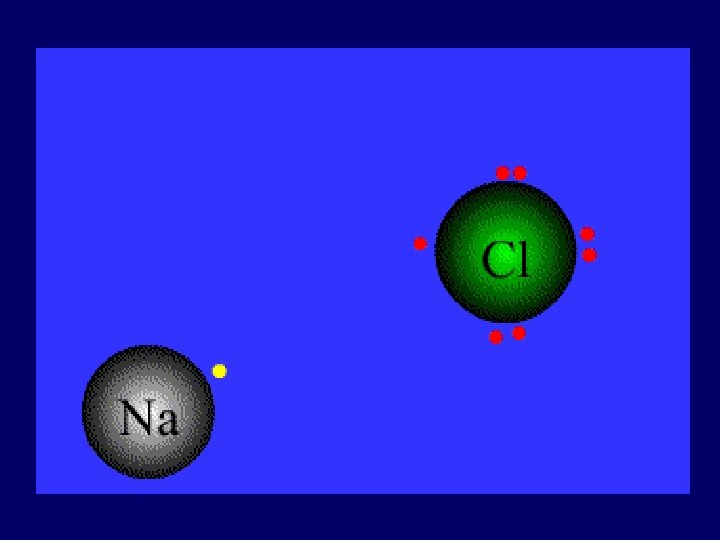

Ionic Bonds: One Big Greedy Thief Dog!
COVALENT BOND bond formed by the sharing of electrons ____
Covalent Bond • Between nonmetallic elements of similar electronegativity. • Formed by sharing electron pairs • Stable non-ionizing particles, they are not conductors at any state • Examples; O 2, C 2 H 6, H 2 O, Si. C
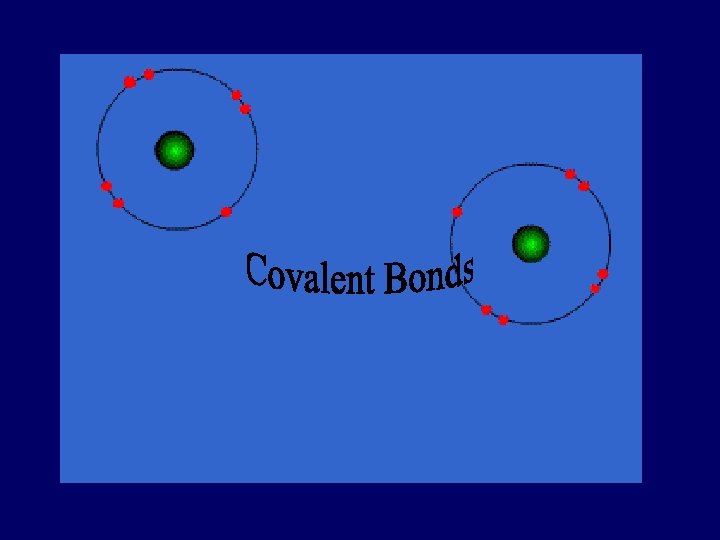
Bonds in all the polyatomic ions and diatomics are all covalent bonds
NONPOLAR COVALENT BONDS when electrons are equally shared _______ H 2 or Cl 2
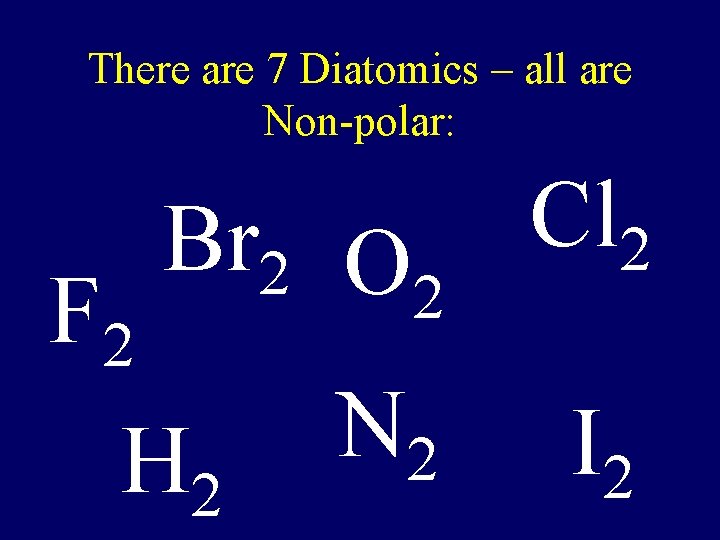
There are 7 Diatomics – all are Non-polar: Br 2 O 2 F 2 N 2 H 2 Cl 2 I 2
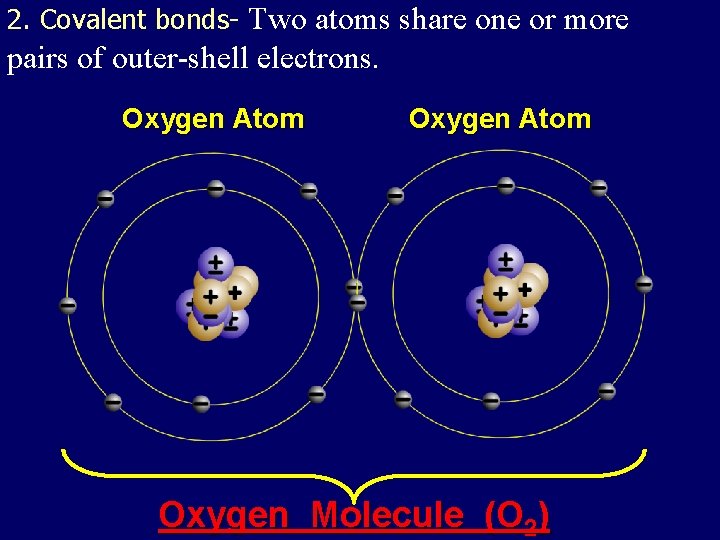
2. Covalent bonds- Two atoms share one or more pairs of outer-shell electrons. Oxygen Atom Oxygen Molecule (O 2)
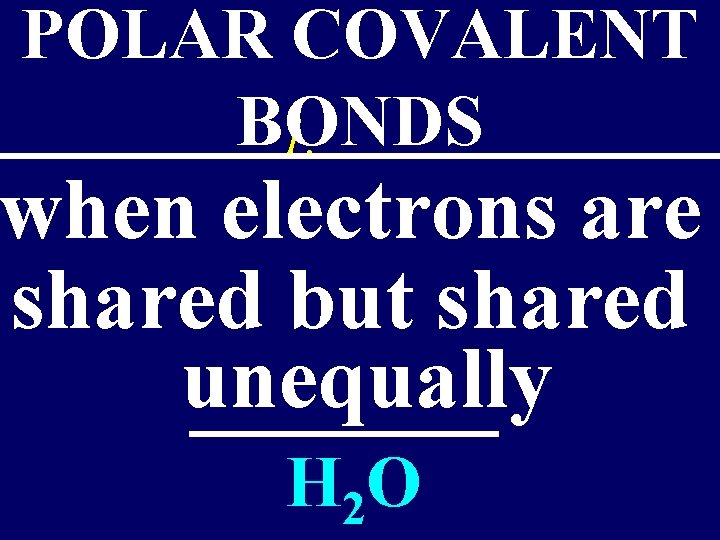
POLAR COVALENT BONDS 1. when electrons are shared but shared unequally _______ H 2 O
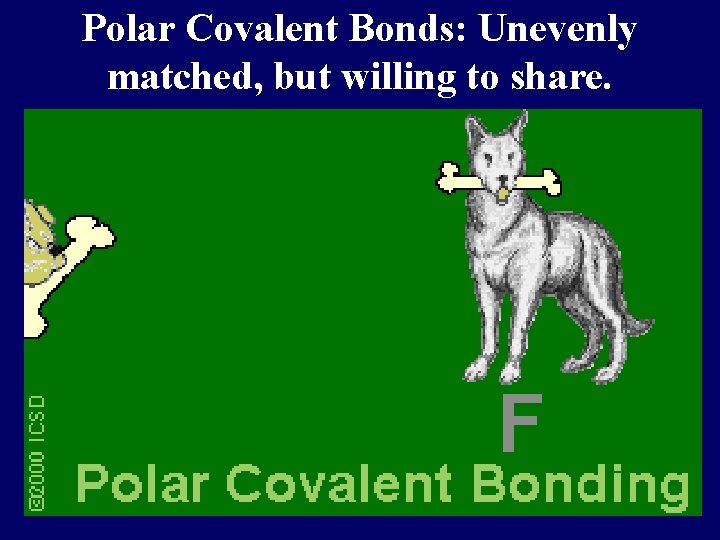
Polar Covalent Bonds: Unevenly matched, but willing to share.
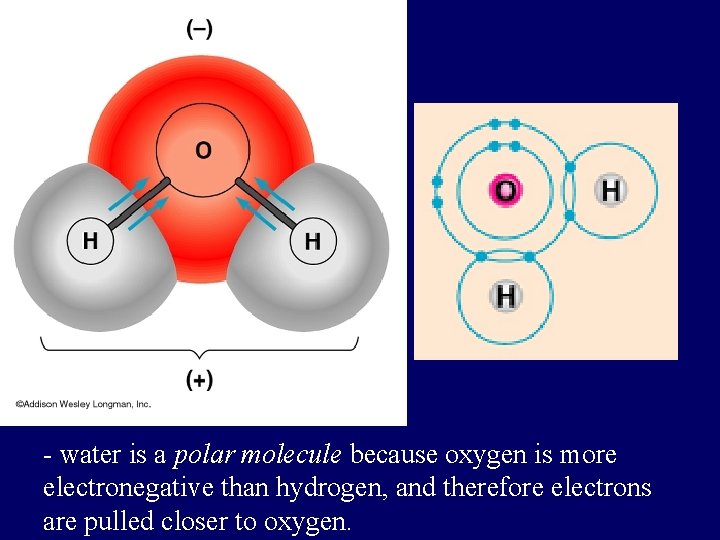
- water is a polar molecule because oxygen is more electronegative than hydrogen, and therefore electrons are pulled closer to oxygen.

- Slides: 27