
Why Do Cells Divide For growth n repair

- Slides: 26
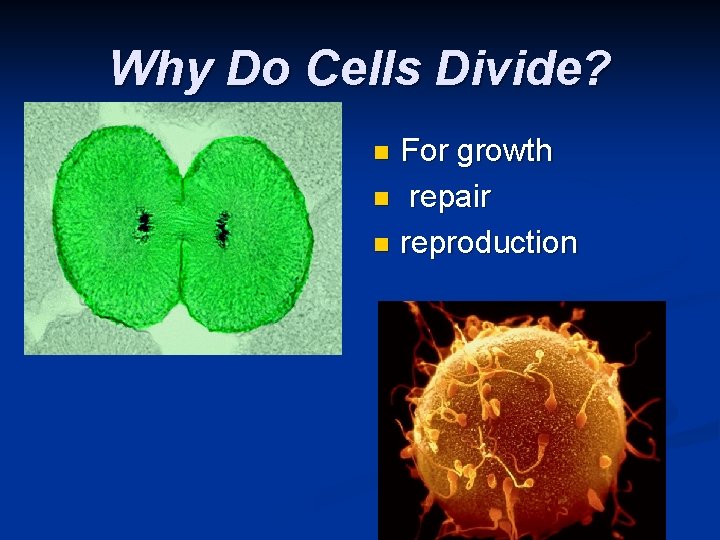
Why Do Cells Divide? For growth n repair n reproduction n
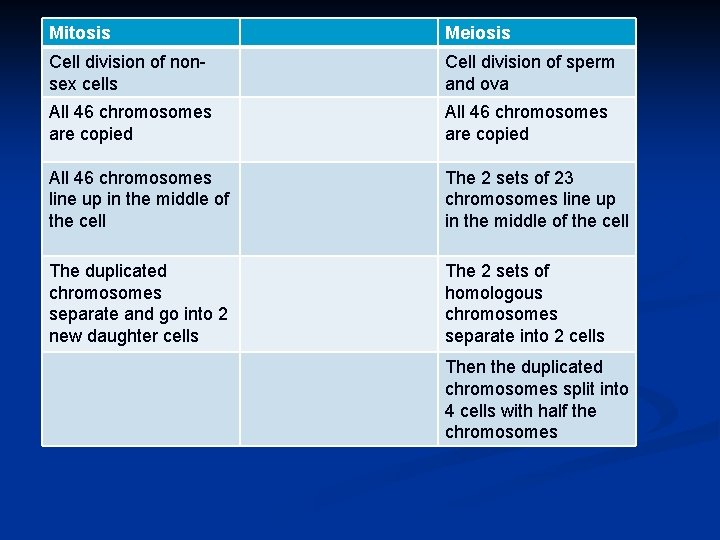
Mitosis Meiosis Cell division of nonsex cells Cell division of sperm and ova All 46 chromosomes are copied All 46 chromosomes line up in the middle of the cell The 2 sets of 23 chromosomes line up in the middle of the cell The duplicated chromosomes separate and go into 2 new daughter cells The 2 sets of homologous chromosomes separate into 2 cells Then the duplicated chromosomes split into 4 cells with half the chromosomes
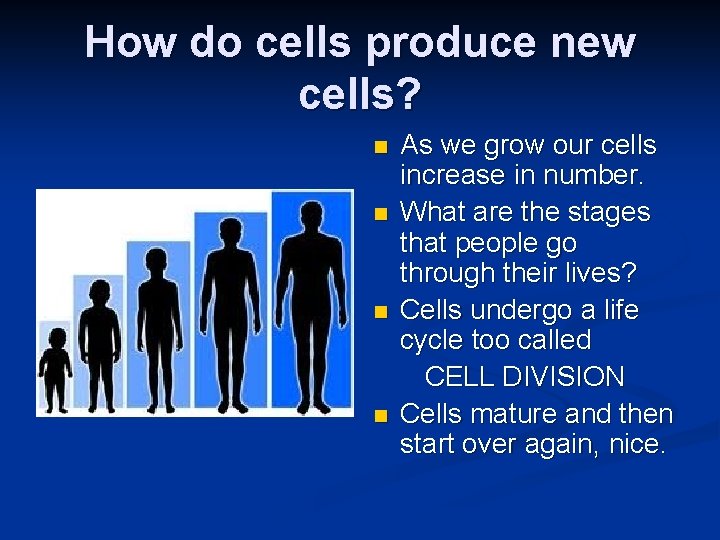
How do cells produce new cells? n n As we grow our cells increase in number. What are the stages that people go through their lives? Cells undergo a life cycle too called CELL DIVISION Cells mature and then start over again, nice.
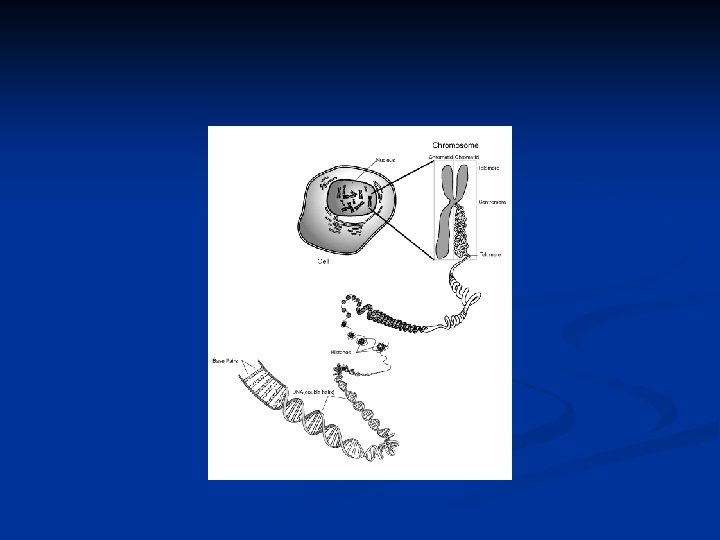
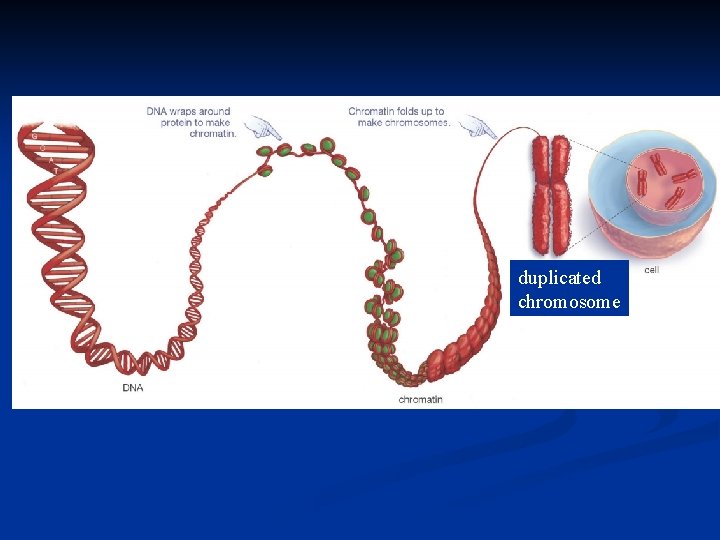
n n n The nucleus controls cell division. The nucleus contains chromosomes that determine what traits a living thing will have. Chromatin is a threadlike material that makes up a chromosome. n Chromosomes control what the cell does and the traits of the entire organism.
The Cell Cycle
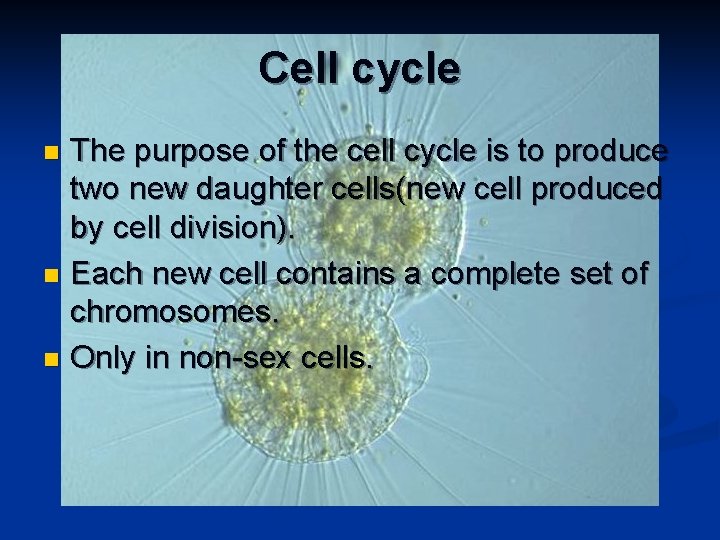
Cell cycle The purpose of the cell cycle is to produce two new daughter cells(new cell produced by cell division). n Each new cell contains a complete set of chromosomes. n Only in non-sex cells. n
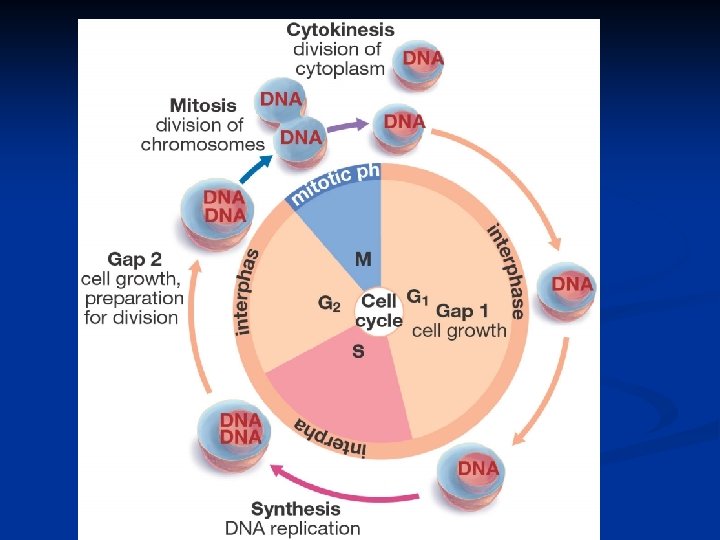
Three stages of the cell cycle n Interphase n Mitosis n Cytokinesis
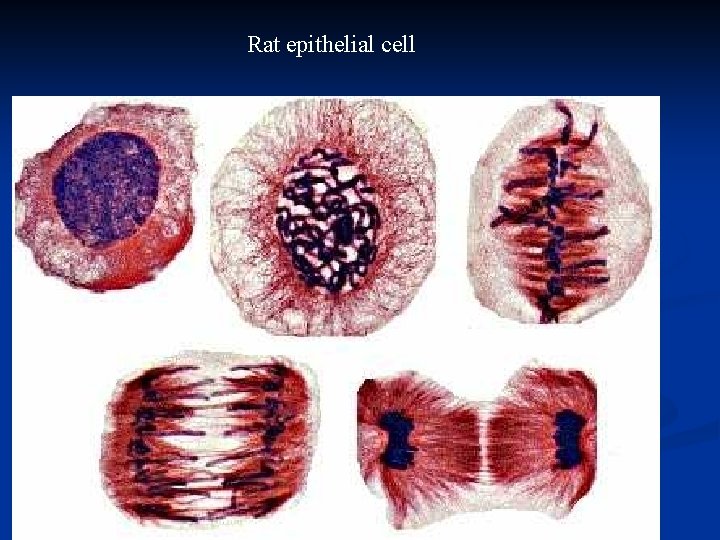
Rat epithelial cell
Stage 1: Interphase n Cell grows to its mature size n Makes a copy of its DNA n DNA is in the form of chromatin, not in the chromosome shape. n Prepares to divide into two cells.
Stage 2: Mitosiswhen the cell’s nucleus divides into two new nuclei. n Prophase n Metaphase n Anaphase n Telophase
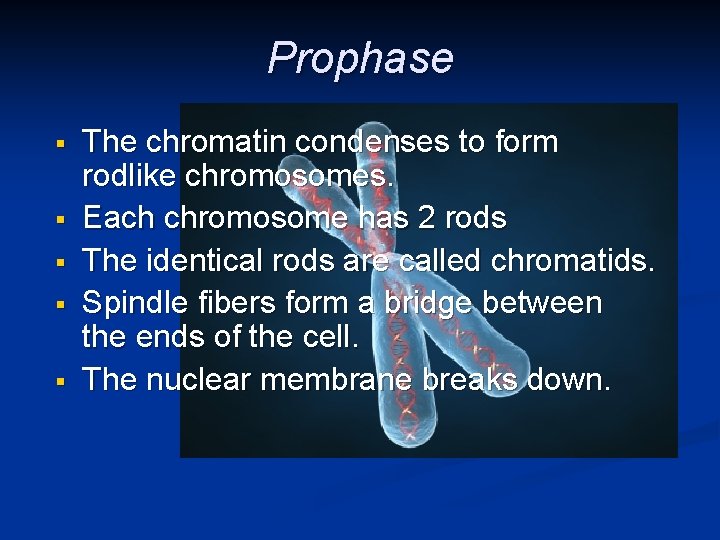
Prophase § § § The chromatin condenses to form rodlike chromosomes. Each chromosome has 2 rods The identical rods are called chromatids. Spindle fibers form a bridge between the ends of the cell. The nuclear membrane breaks down.
duplicated chromosome chromatin
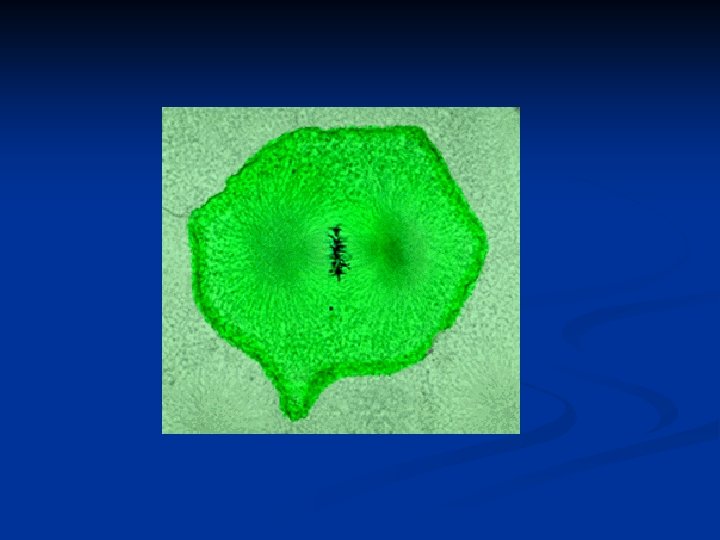
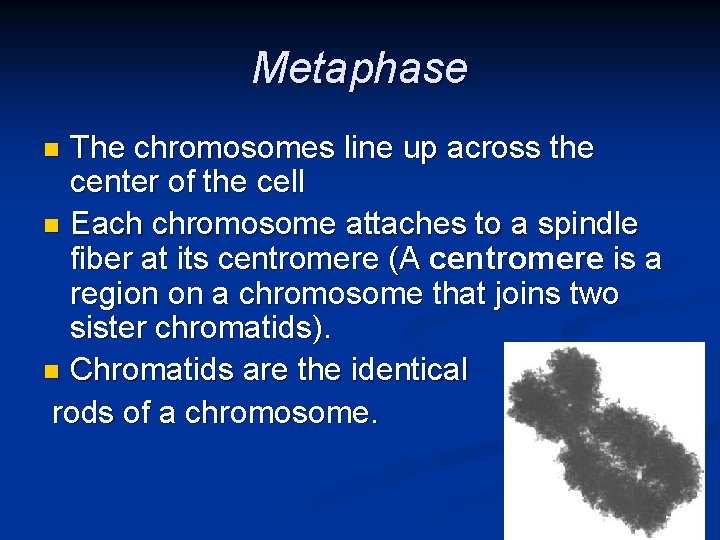
Metaphase The chromosomes line up across the center of the cell n Each chromosome attaches to a spindle fiber at its centromere (A centromere is a region on a chromosome that joins two sister chromatids). n Chromatids are the identical rods of a chromosome. n
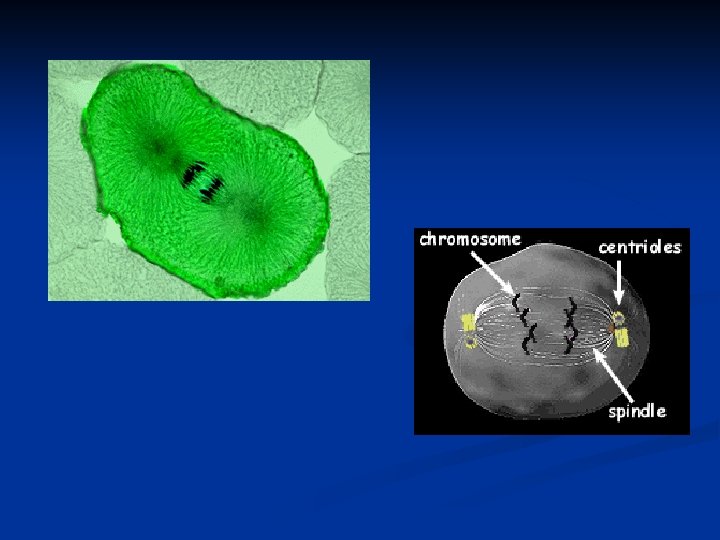
Anaphase n The centromeres split n Two chromatids separate n One chromatid moves along the spindle fiber to one end of the cell n The other chromatid moves to the opposite end n The cell becomes stretched out as the opposite ends pull apart
Telophase The chromosomes begin to stretch out and lose their rodlike appearance n This occurs in the two regions at the ends of the cell n A new nuclear membrane forms around each region of chromosomes n
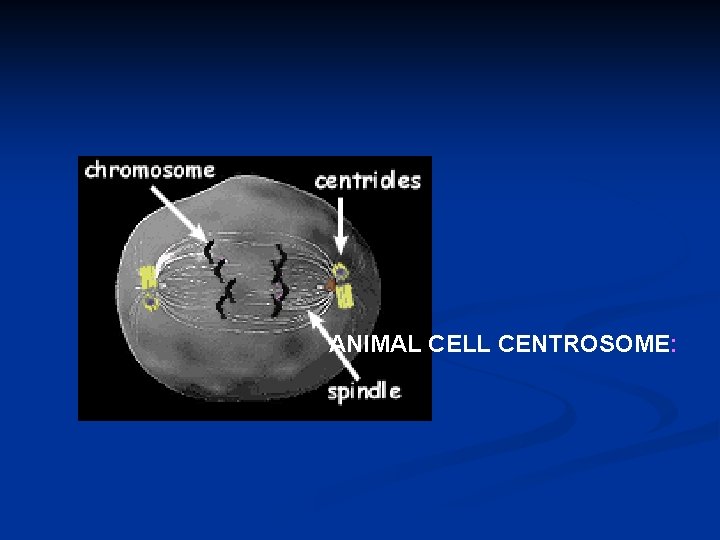
ANIMAL CELL CENTROSOME:
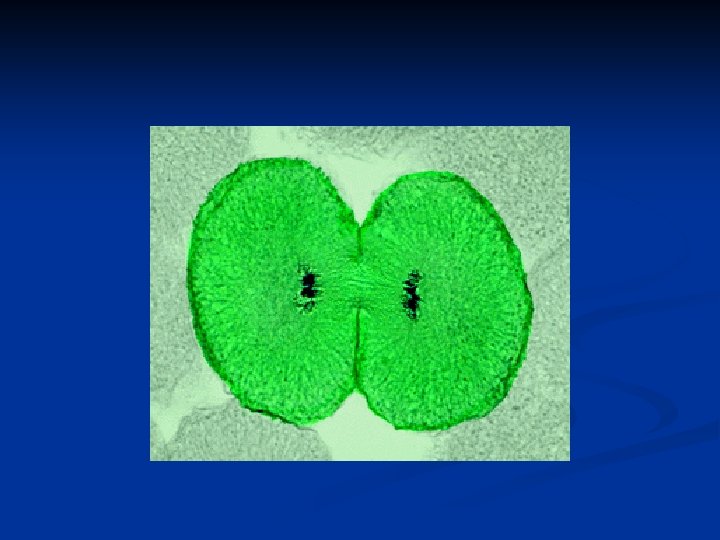
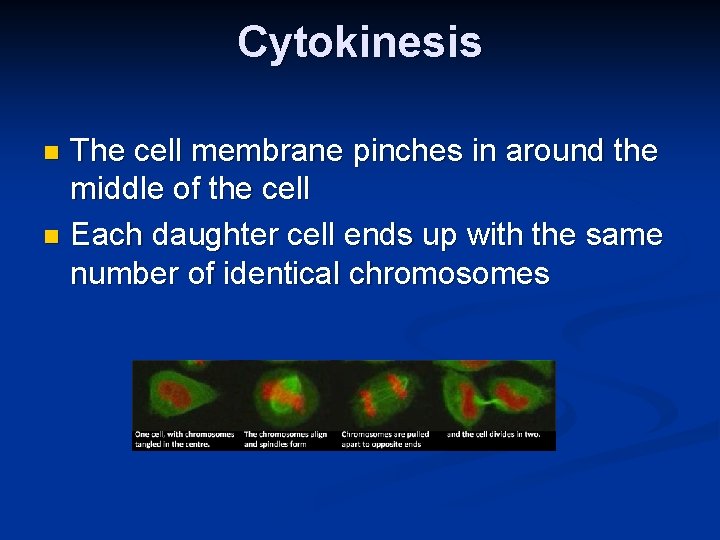
Cytokinesis The cell membrane pinches in around the middle of the cell n Each daughter cell ends up with the same number of identical chromosomes n
Length of the Cell Cycle Depends on the type of cell n A human liver cell completes the cycle in 22 hours n Each cycle also varies from cell to cell n Human brain cells never divide, they stay at interphase n
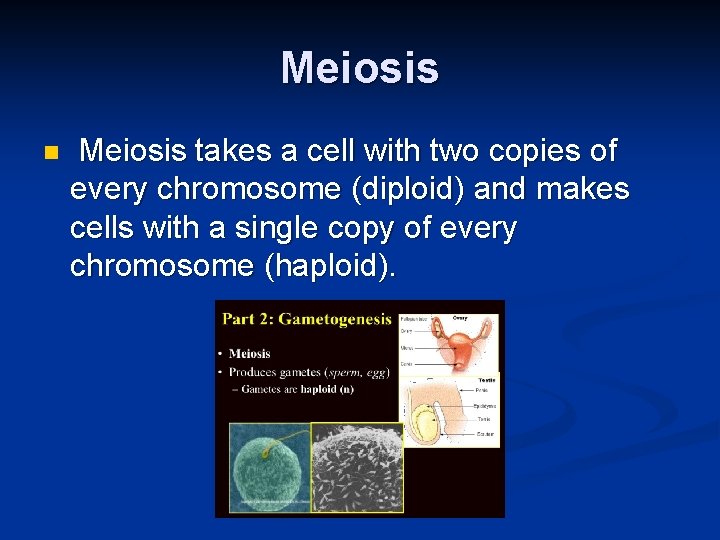
Meiosis n Meiosis takes a cell with two copies of every chromosome (diploid) and makes cells with a single copy of every chromosome (haploid).