
WHY DID THE SOVIET ECONOMY DECLINE Previous reform
- Slides: 14
WHY DID THE SOVIET ECONOMY DECLINE?
Previous reform attempts Khrushchev didn’t have the support for making major structural changes and the reforms he did attempt couldn’t radically change the situation. Part of the problem was the history of the Soviet economy. The 5 year plans had increased output and quantity had increased, but not quality. Fear was a great incentive used to great effect by Stalin – It helped make the economy work. His successors however, lacked the will (or perhaps immorality) to carry out persecutions to such an extent. However, as Machiavelli said « It is better to be feared than loved, if you cannot be both”.
Structural issues In the Soviet Union, the managers at various production plants were protected from international competition, and they had no competition from within the Soviet Union. Their thinking was not geared to consumer choice, and without a free market they had little notion of what was in demand what was not.
Structural issues Rather than consumers, bureaucrats were deciding what was to be manufactured. And at the center of the Soviet economy, planners could not keep up with the changing needs of various areas, which resulted in poor economic co-ordination, sometimes seen in the form of metal goods rusting away at railway sidings.
A stagnating economy By the 1970 s, low morale of the Soviet Union's work force was hurting its economy. Workers were given goals that seemed abstract or remote from tangible benefits. Common people were criticizing people in power for not responding to their needs. Common people still lived in cramped housing and were seeing little material progress for themselves. Cynicism was high among Soviet workers and alcoholism prevalent. People were taking less pride in their work than people did in some other nations.
A stagnating economy Russians would work under the Communist system with degrees of enthusiasm, but certainly by the 1970’s enthusiasm for the Soviet regime was flagging. Propaganda couldn’t cover the shortages, the queues, the poor quality (BMW vs Trabant!!) There was little desire for Brezhnev and the nomenklatura to reform as they were the bureaucrats who benefitted from this system. It was a heavily bureaucratic and inefficient system.
Failed targets The targets set by the ninth 5 year plan 19711975 were not met for several reasons: Pressure from the defence industry An inefficient and unproductive workforce (half as effective as the American equivalent) Shortages of labour
The Black market By the time of Brezhnev’s death it accounted for up to 25% of the Soviet GDP. It encouraged an atmosphere of corruption and nepotism.
Gorbachev comes to power Gorbachev had no desire to see Communism in Russia end. However, he did believe that it could be made to become more competitive and productive.
Alcohol To improve the Soviet work force he began a crackdown against alcohol, and orders were given that embassy receptions and parties had to be alcohol free. He raised the price of alcohol, reduced supplies and the hours of sales. Gorbachev's policy on alcohol was of little help. People were now waiting in longer lines for the diminished supply of drink. Retail stores were selling less alcohol, the government was receiving less from sales taxes, and brewing booze at home was increasing.
Military expenditures Defence spending (in 1987 it was up to 40 % GDP) Manufacturing for the military continued to use the Soviet Union's most skilled people, to the detriment of production for civilians.
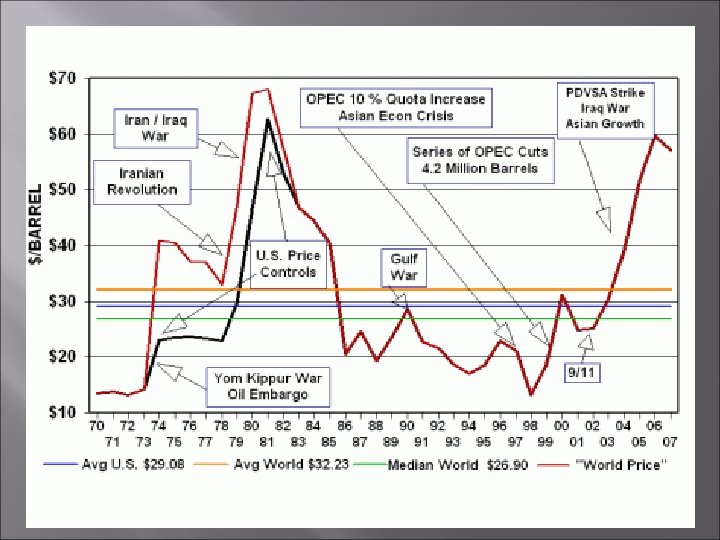
Oil Discovered in Siberia in 1964 Massive mineral resources Vast reserves of coal and gas These resources probably did more to keep the Soviet economy afloat during the 70’s, but fluctuations in prices meant that the Soviets were benefitting less from their reserves by the 1980’s.