
Why did Latin American colonies want independence Creoles
- Slides: 44
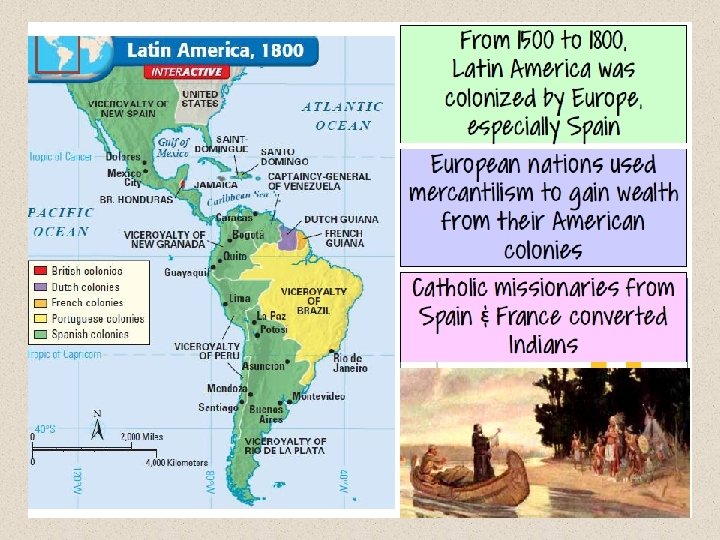
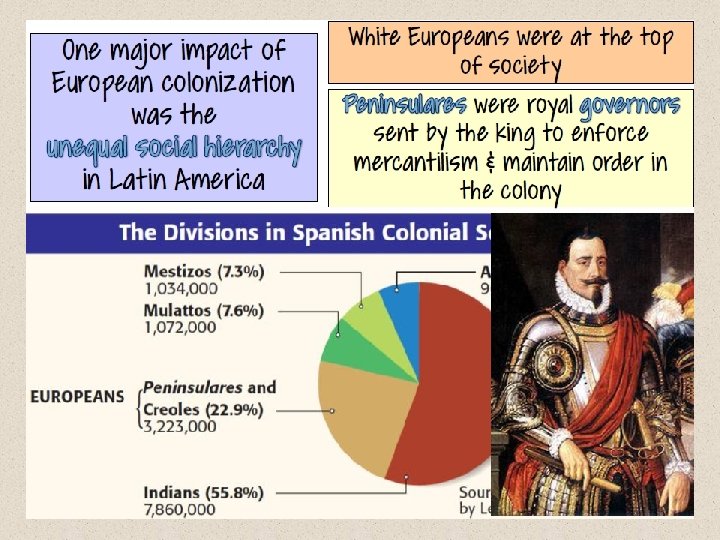
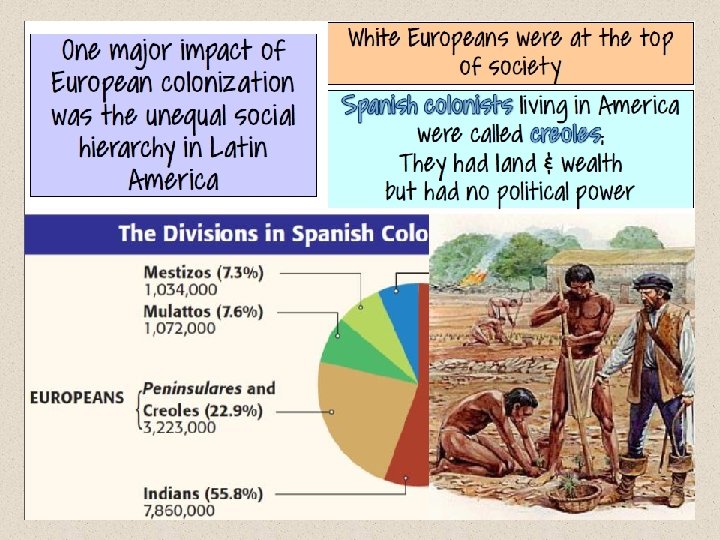
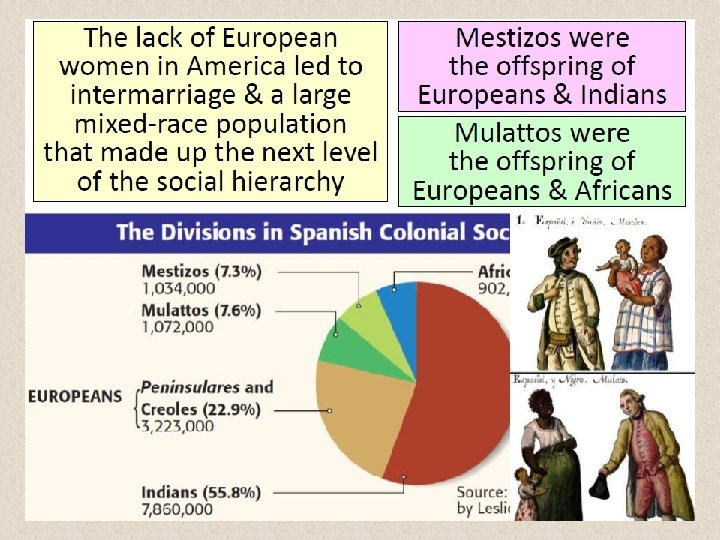
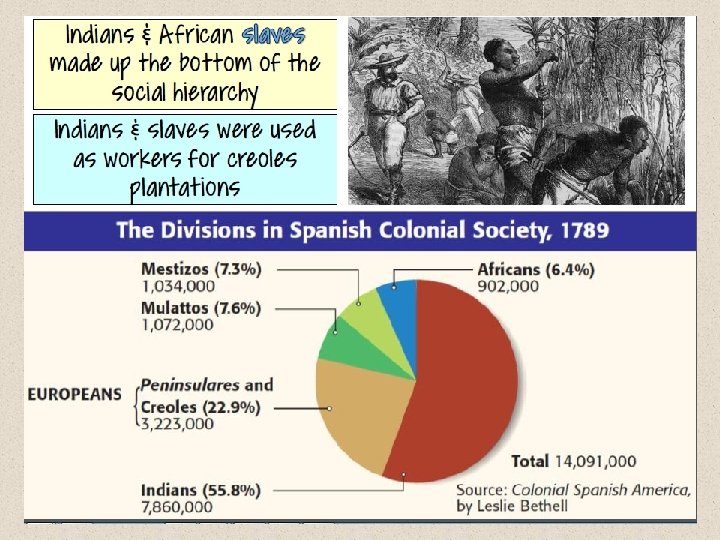
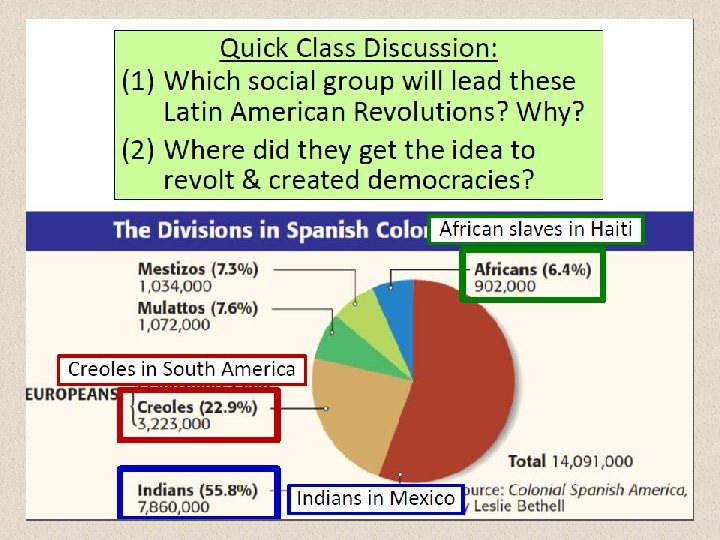
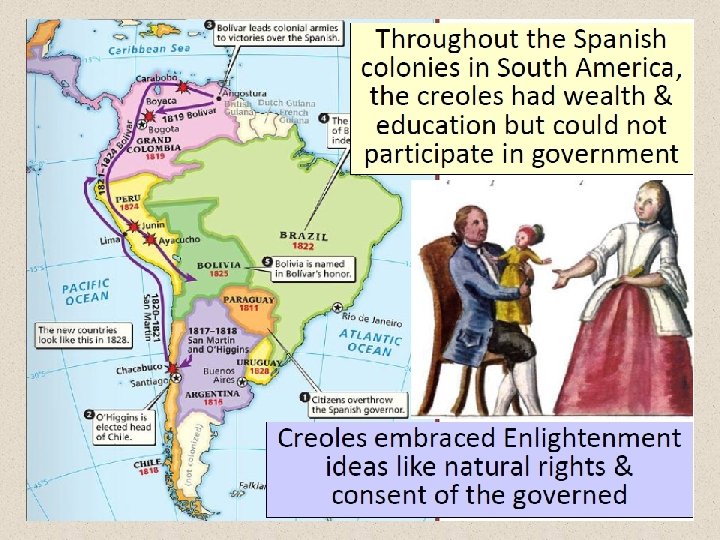
Why did Latin American colonies want independence? • Creoles (American born whites in colonies) began to question European colonial policies. • The non-Creole, non-European majority resented European colonial government. • But due to class differences, actual movements in Latin America do not begin until movements in Europe prompt action in the colonies.
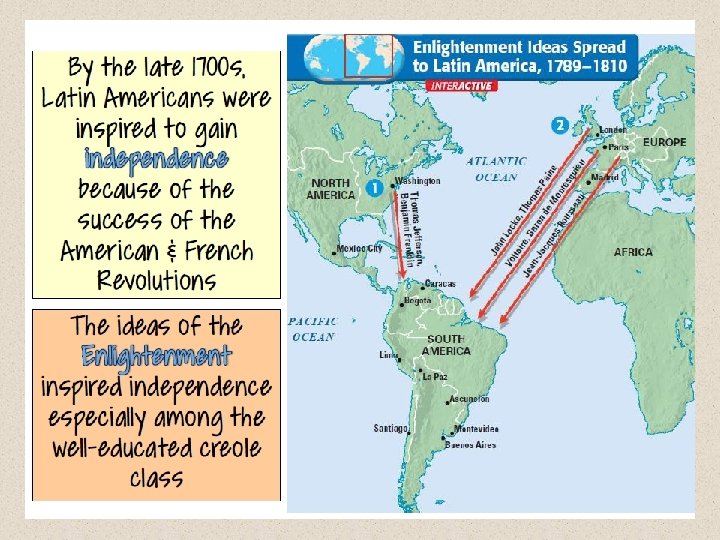
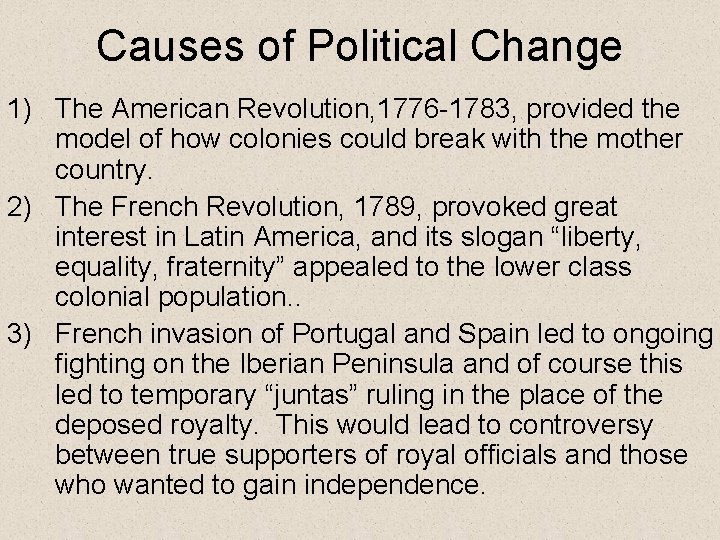
Causes of Political Change 1) The American Revolution, 1776 -1783, provided the model of how colonies could break with the mother country. 2) The French Revolution, 1789, provoked great interest in Latin America, and its slogan “liberty, equality, fraternity” appealed to the lower class colonial population. . 3) French invasion of Portugal and Spain led to ongoing fighting on the Iberian Peninsula and of course this led to temporary “juntas” ruling in the place of the deposed royalty. This would lead to controversy between true supporters of royal officials and those who wanted to gain independence.
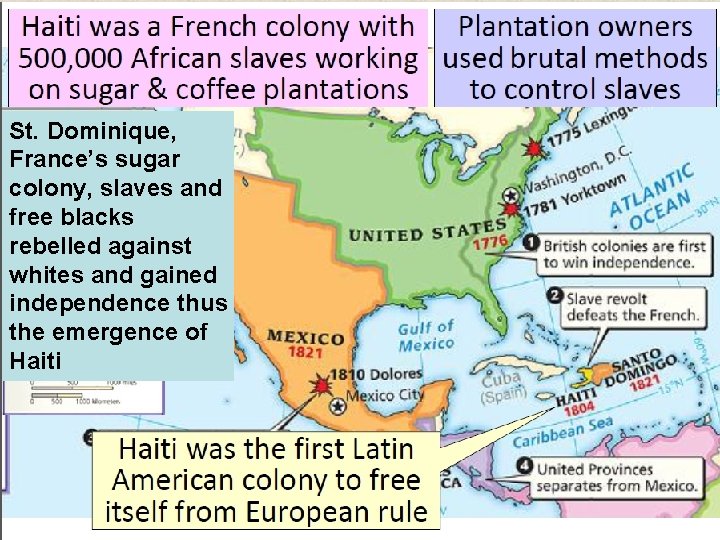
St. Dominique, France’s sugar colony, slaves and free blacks rebelled against whites and gained independence thus the emergence of Haiti
Haiti • St. Dominique was a sugar plantation island in the Caribbean controlled by France • Internal turmoil mirrored the conflict in going on in France and led to slave rebellion in 1791 • Under the leadership of Toussaint L’Overture and others, attempts by French elites to regain control of the island failed.
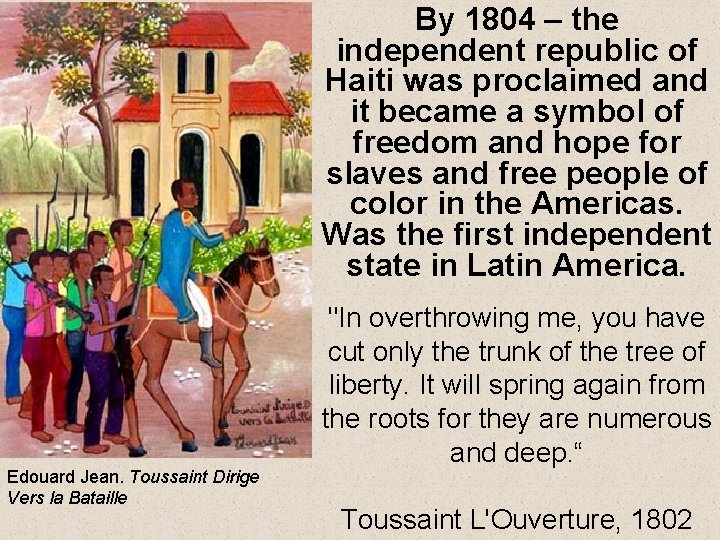
By 1804 – the independent republic of Haiti was proclaimed and it became a symbol of freedom and hope for slaves and free people of color in the Americas. Was the first independent state in Latin America. Edouard Jean. Toussaint Dirige Vers la Bataille "In overthrowing me, you have cut only the trunk of the tree of liberty. It will spring again from the roots for they are numerous and deep. “ Toussaint L'Ouverture, 1802
Toussaint L’ouverture A former slave, he became a brilliant general and capable administrator, defeating British, Spanish, and French troops, emancipating the slave population, and overseeing the country's initial attempts at reforming its political and social structure. • •
Similarities of Spanish American Revolution and Haitian Revolution • People of color were oppressed by the White class superior elite rulers • The revolutionary movement began when a leader called upon the social minorities to unite against the foreign rule, be it Spanish or French rule • First leaders, Toussaint Louverture and Father Hidalgo were killed by the leaders of the country that had control of the colony • Helped by the fact that Spain was having trouble fighting against Portugal, Haitians helped by French seeking foreign territory, fight British
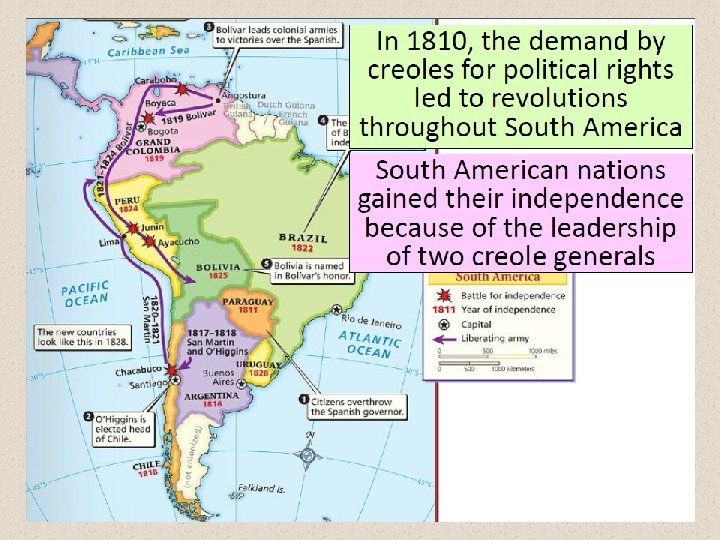
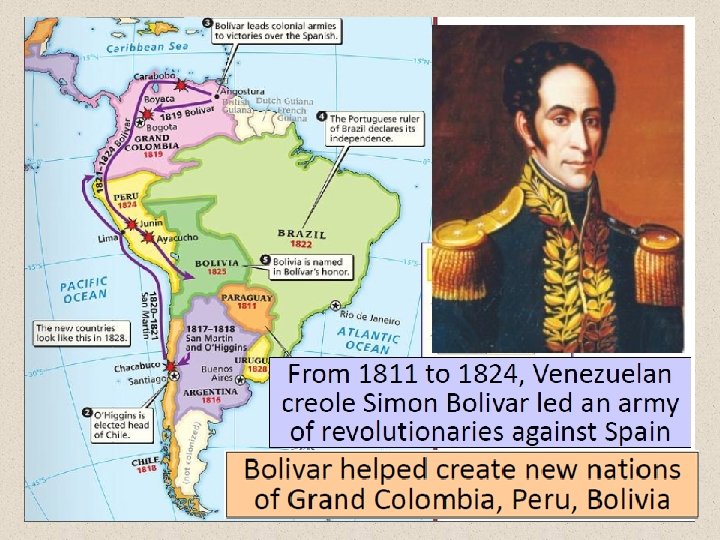
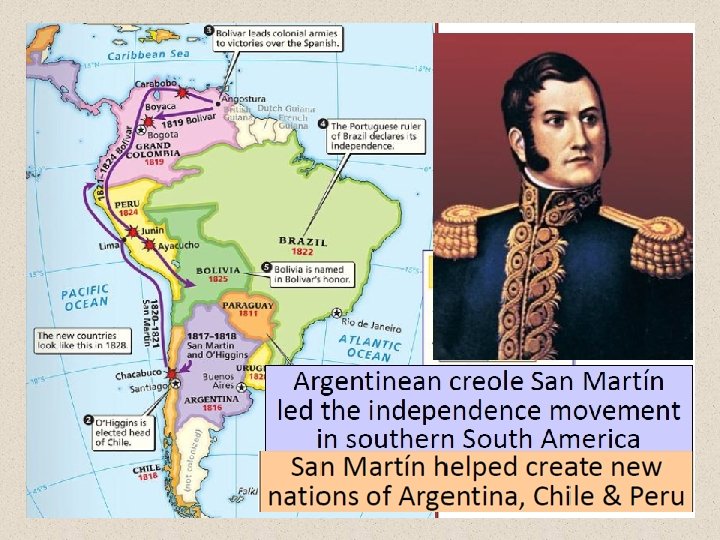
Simon Bolivar • Government and military figurehead that sought to lead Venezuelan independence and combine six South American countries into the Gran Columbia
Francesco de Miranda • Venezuelan general that traveled and brought Enlightenment ideas to Latin America, led creation of First Venezuelan Republic, but tried to flee and was turned into Spanish
Goals of the Venezuelan Revolutionaries • • • To abolish the restrictive mercantilism laws by the monarch To revolt against the French acquisition of the crown by Joseph Bonaparte To unite the factions created by the power vacuum caused by the dissolution of the Spanish monarch
Results of the Venezuelan Revolution • • • 800, 000 Venezuelans were killed The formation of the Gran Columbia gave suit to the Republic of Venezuela after two Republics of Venezuela were created The resulting government still lent itself to dictatorships by elected presidents, which lead to more conflict
• • • Similarities between Venezuelan Revolution and American Revolution Formed a union of many nations (Gran Columbia) and then received pressure to split. Fought against Spain with the mentality that all of them were Venezuelans and not Spanish, similar to what the American colonists practiced. Did not grant equal rights to women, like the American revolution.
• • • Differences between Venezuelan Revolution and American Revolution Broke up from the Gran Columbia to the several nations, including the independent Venezuela. Deep political instability in Venezuela after the war, unlike the Us. The Venezuelan Republic had fallen multiple times before declaring its final independence, while America did not.
Brazil • After France invaded Portugal, the Portuguese royal family fled the country and sailed to Rio de Janeiro and set up court. • Brazil was raised to equal status as Portugal with all government functions emanating from the colony. • Ports of Brazil opened up to world commerce via trade with England – pleasing Brazilian elites. • After a period of reinforced colonial relationship, the son of the King was left in control. Ultimately, he declared Brazil independent from Portugal and became the constitutional emperor in 1822. • Brazil’s independence did not upset existing social organization nor radically change the political structure.
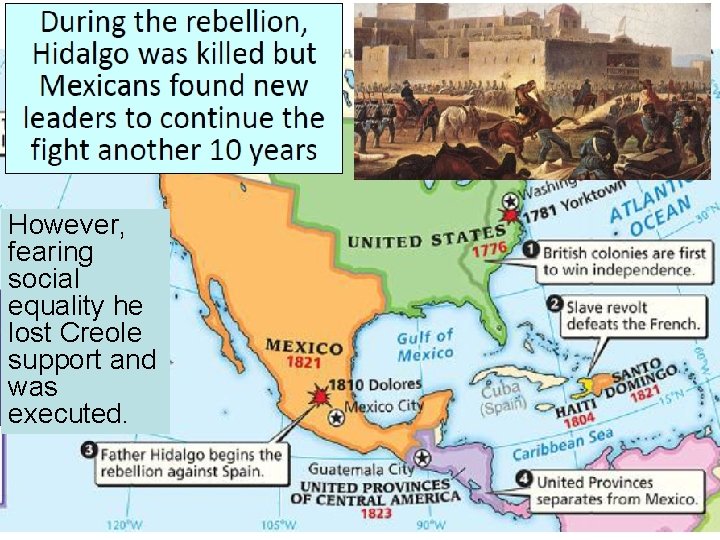
However, fearing social equality he lost Creole support and was executed.
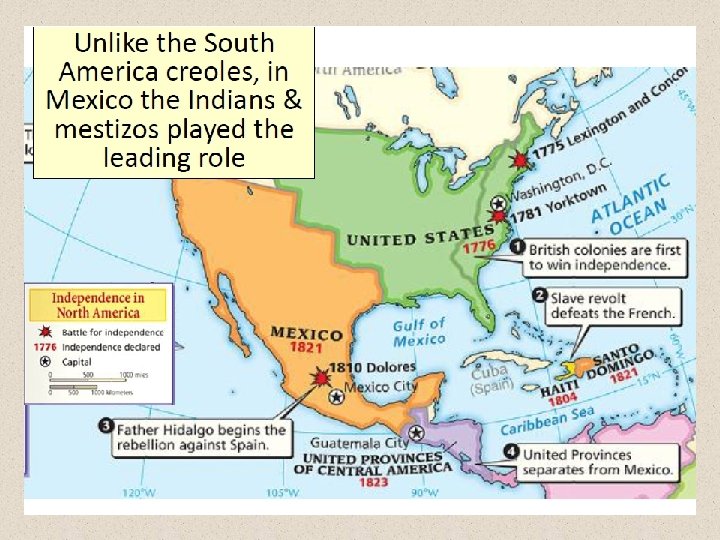
Mexico • By 1820 Creoles were willing to work for independence with remnants of the revolutionary forces. Under the leadership of Augustin de Inturbide, combined forces gained control of Mexico City by 1821 and declared independence. • Starting as a monarchy, Mexico would eventually become a republic in 1824.
Mexican Independence
Results of Mexican Revolution • King Iturbide was ousted as King of Mexico, and a Republic was created one year after he took the throne. • Popular sovereignty was victorious over the monarch, but it did not extend to the peasants or the other lower class citizens. • While women did help Mexico win its independence, women still were disenfranchised. • 500, 000 to 1, 000 people were killed as a result • There were still many conflicts and wars even after the revolution was won.
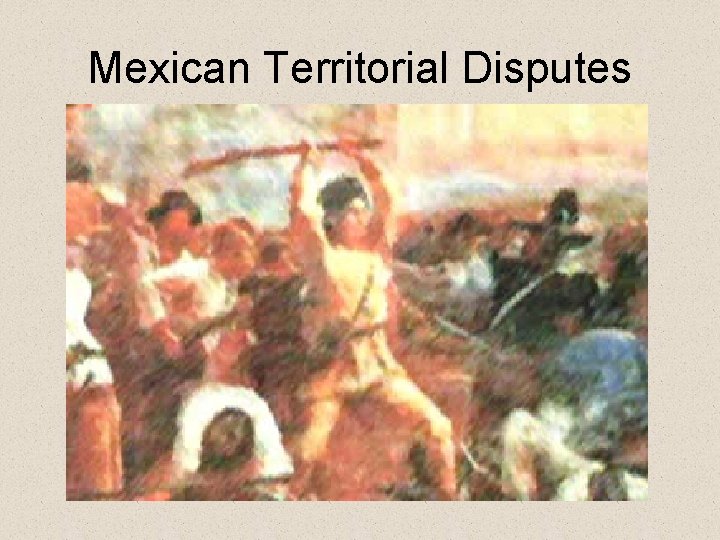
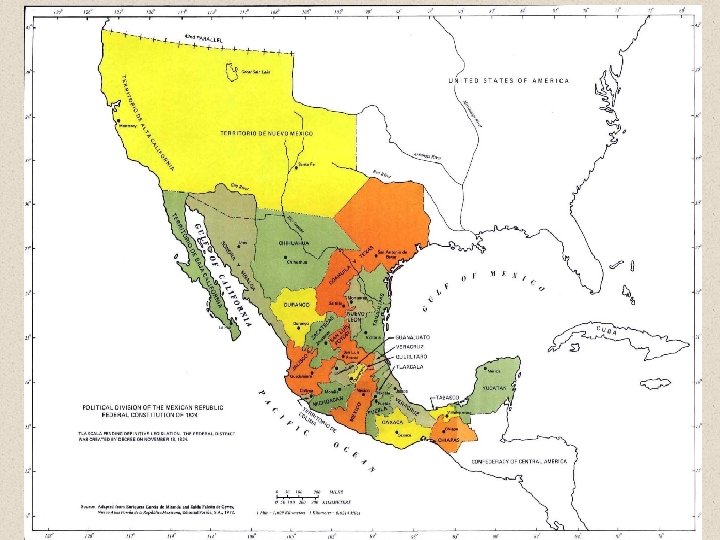
Mexican Territorial Disputes
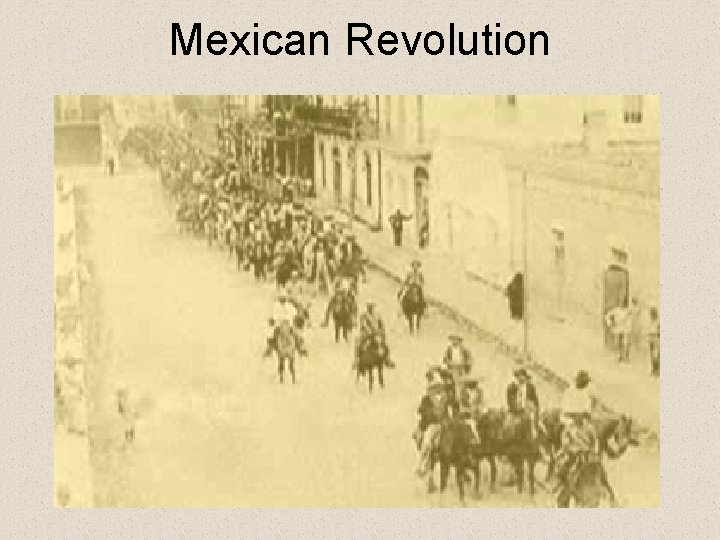
Mexican Revolution
Similarities between Mexican Revolution and American Revolution • • Both fought against high taxes Both did not grant women equal rights Both did create a Republic Both feared common citizens from ruling, only property owning men could vote.
Differences between Mexican Revolution and American Revolution • Mexico did not weaken the power of the church, leaving the Catholic church a prominent power in government • The US had already created a shadow government before the start or the end of the war, while Mexico had to oust its new King of Mexico • Rather than diminishing its tax on mixed race people and Native Americans, Mexico continues to tax them for revenue, as the US removed the government’s ability to tax in the beginning.
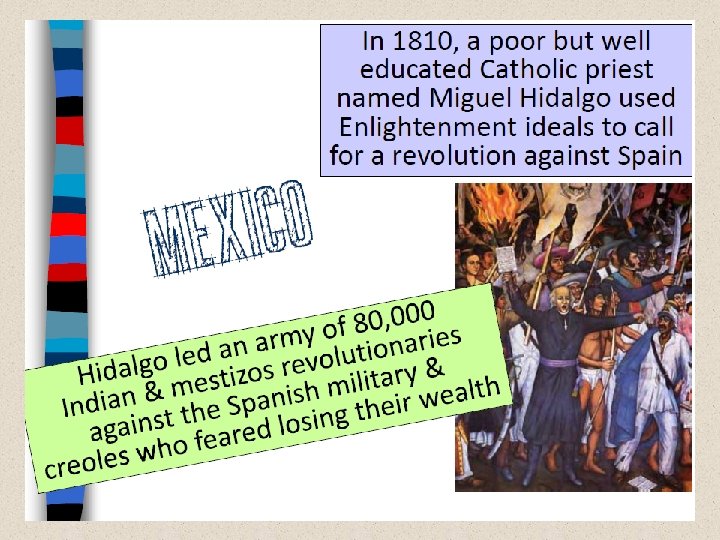
Differences between Spanish American Revolution and Haitian Revolution • Haitians fought against French rule, South American revolutions were fought against Spanish rule • Bolivar and the Spanish American revolutions did not just free Venezuela, but five other countries, did not unite together like the groups in the Haitian revolution • Haitian revolution was primarily a slave revolt, Spanish American revolts were from the lower classes of society, such as African Americans and Native Americans • Hidalgo and Mexican revolution also meant to achieve land lost by forefathers to Spanish, Haitians were slaves that wanted freedom
Similarities of Spanish American Revolution and French Revolution • The lower classes were of peasants were suppressed by taxes • Both inspired by the ideals of the American Revolution and Enlightenment • Third Estate resented the upper Estates of social class in France, while African Americans, Mulattos, and Native Americans had little social status in Latin America • Leaders of rebellion were killed during the revolution
Differences between Spanish American Revolutions and French Revolution • French Revolution was internal disagreement over leadership of the country, decide course of country’s policy, while Spanish American Revolutions were against foreign rule • Initial leaders of the French Revolution were killed or replaced by further generations of French Revolutionaries, while Spanish American Revolution only sought to remove the Spanish from power • France was strengthened by revolution, Spain was weakened by revolution
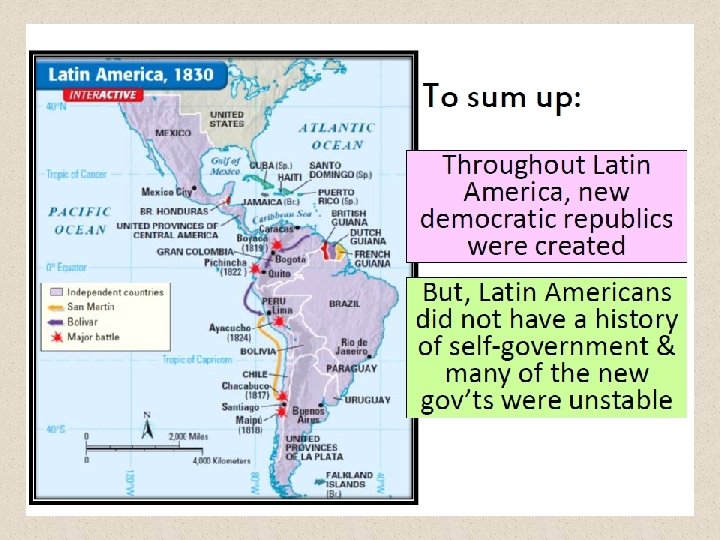
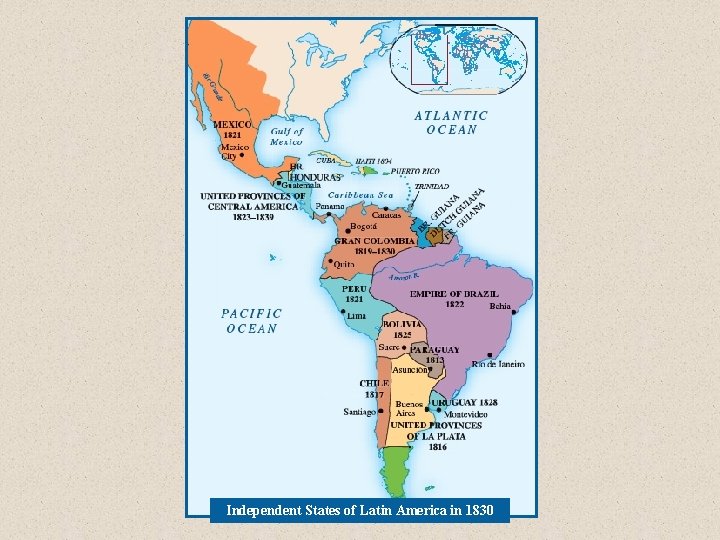
Problems facing the New Nations • Social Inequalities – Creoles, Indians, • • • Mestizos, Mulattoes, Slaves all equal? Women? The role of the Catholic Church – Inclusion of other religions? Control of church over society? Political Representation – Republic or not? Centralists, Federalists, Liberal, Conservative? Regionalism – 18 Separate Nations Economic Stagnation – Dependency upon foreign markets reinforcing colonial dependency? Foreign Intervention – Europeans and the United States? What were their reasons?
Independent States of Latin America in 1830
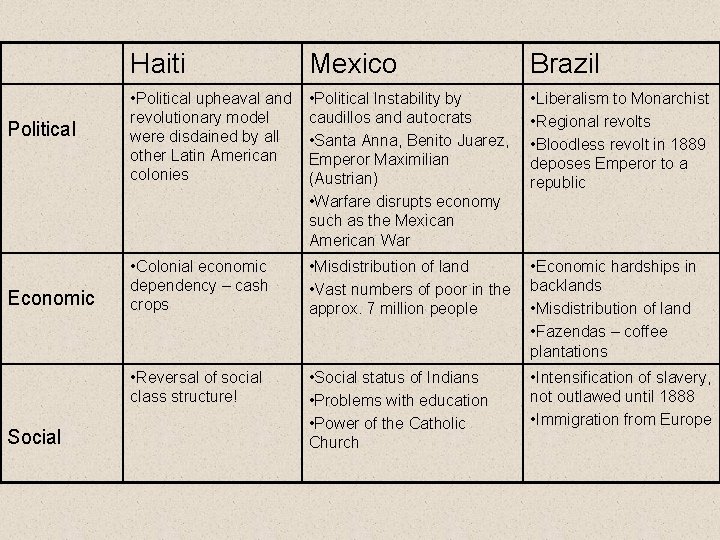
Political Economic Social Haiti Mexico Brazil • Political upheaval and revolutionary model were disdained by all other Latin American colonies • Political Instability by caudillos and autocrats • Santa Anna, Benito Juarez, Emperor Maximilian (Austrian) • Warfare disrupts economy such as the Mexican American War • Liberalism to Monarchist • Regional revolts • Bloodless revolt in 1889 deposes Emperor to a republic • Colonial economic dependency – cash crops • Misdistribution of land • Vast numbers of poor in the approx. 7 million people • Economic hardships in backlands • Misdistribution of land • Fazendas – coffee plantations • Reversal of social class structure! • Social status of Indians • Problems with education • Power of the Catholic Church • Intensification of slavery, not outlawed until 1888 • Immigration from Europe