
Why Are There So Many Different Species Definition
- Slides: 10
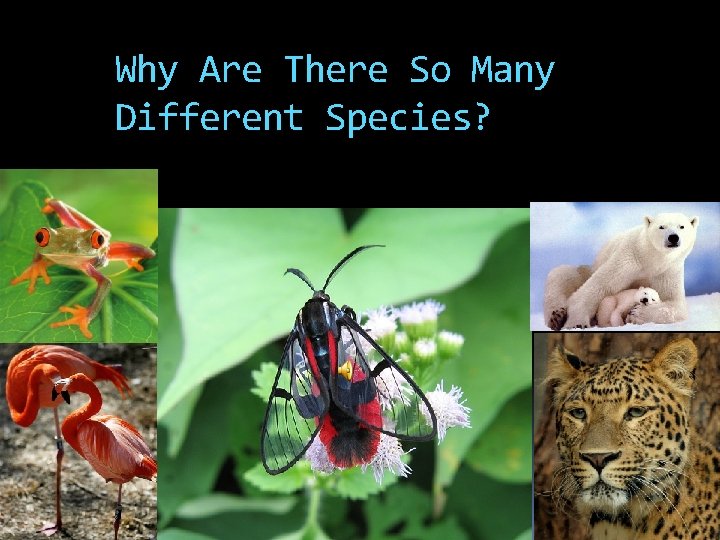
Why Are There So Many Different Species?
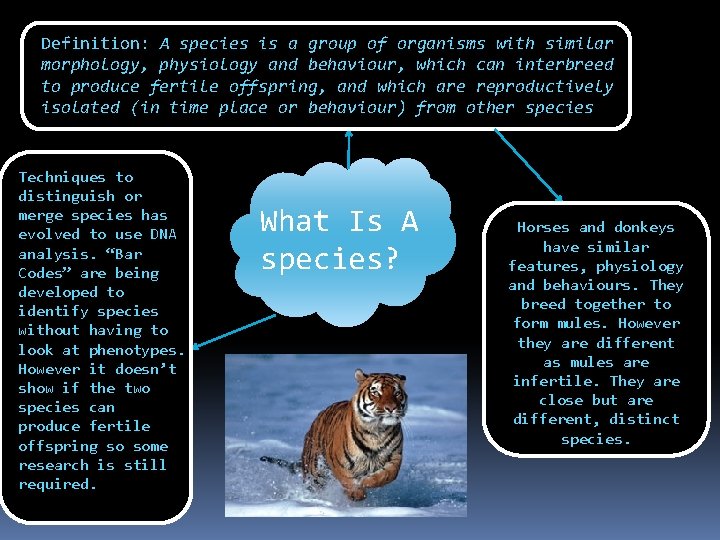
Definition: A species is a group of organisms with similar morphology, physiology and behaviour, which can interbreed to produce fertile offspring, and which are reproductively isolated (in time place or behaviour) from other species Techniques to distinguish or merge species has evolved to use DNA analysis. “Bar Codes” are being developed to identify species without having to look at phenotypes. However it doesn’t show if the two species can produce fertile offspring so some research is still required. What Is A species? Horses and donkeys have similar features, physiology and behaviours. They breed together to form mules. However they are different as mules are infertile. They are close but are different, distinct species.
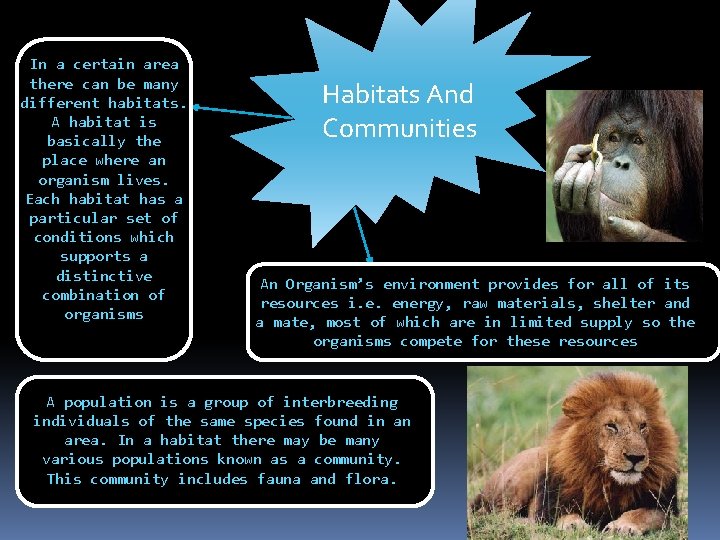
In a certain area there can be many different habitats. A habitat is basically the place where an organism lives. Each habitat has a particular set of conditions which supports a distinctive combination of organisms Habitats And Communities An Organism’s environment provides for all of its resources i. e. energy, raw materials, shelter and a mate, most of which are in limited supply so the organisms compete for these resources A population is a group of interbreeding individuals of the same species found in an area. In a habitat there may be many various populations known as a community. This community includes fauna and flora.
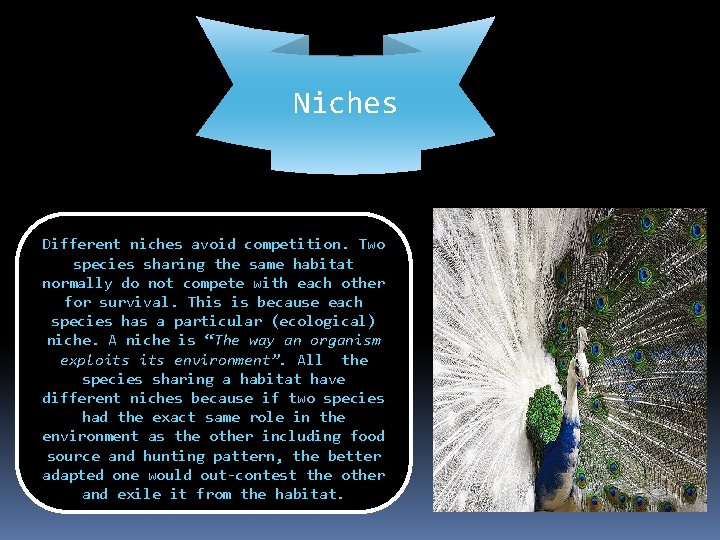
Niches Different niches avoid competition. Two species sharing the same habitat normally do not compete with each other for survival. This is because each species has a particular (ecological) niche. A niche is “The way an organism exploits environment”. All the species sharing a habitat have different niches because if two species had the exact same role in the environment as the other including food source and hunting pattern, the better adapted one would out-contest the other and exile it from the habitat.
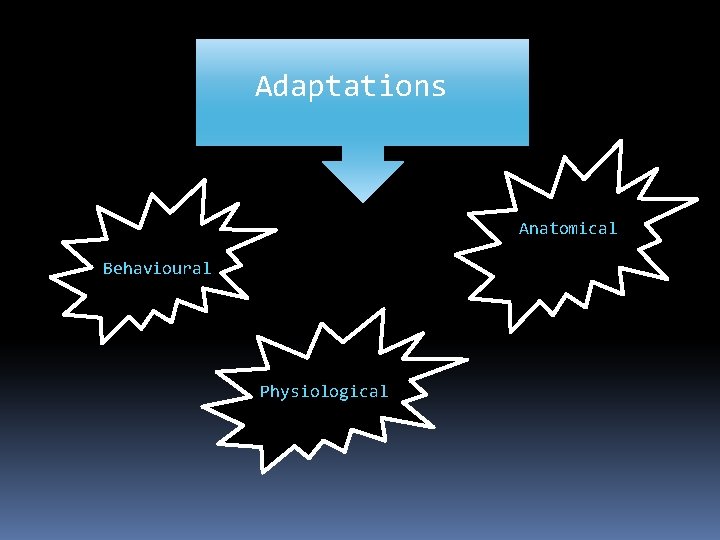
Adaptations Anatomical Behavioural Physiological
Behavioural Adaptations Behavioural adaptations are any actions by an organism which is beneficial to their survival or to continue their species (reproduction). Fauna and flora express these adaptations such as agoutis bury brazil nuts to provide a future food source, and the explosive dispersal of plant seeds in balsam and bitter cress plants. There are many, many behavioural adaptations. Question Q 1. For each of the behaviours described below, suggest how the behaviour helps it survive: a. A gull chick pecks at the red spot on the parent’s beak causing it to regurgitate food. b. In drier conditions woodlice move around more. In humid conditions they move about much less.
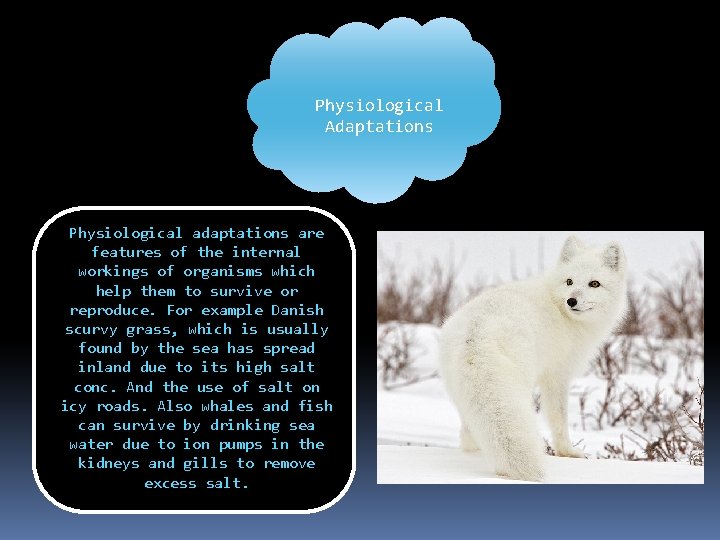
Physiological Adaptations Physiological adaptations are features of the internal workings of organisms which help them to survive or reproduce. For example Danish scurvy grass, which is usually found by the sea has spread inland due to its high salt conc. And the use of salt on icy roads. Also whales and fish can survive by drinking sea water due to ion pumps in the kidneys and gills to remove excess salt.
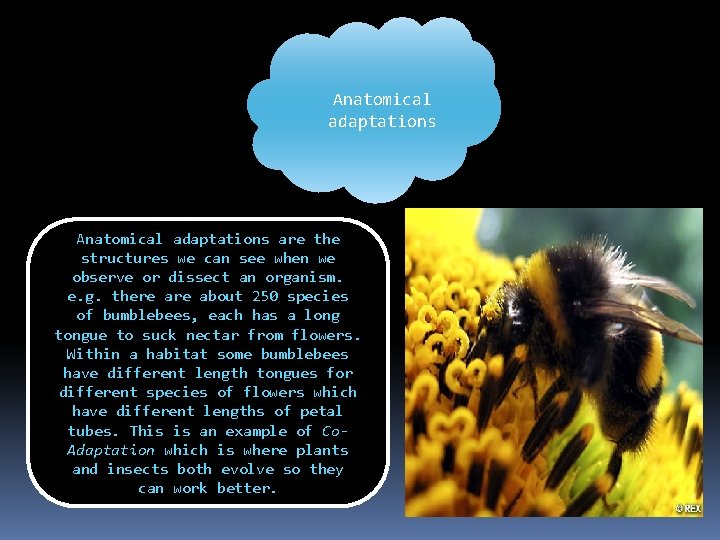
Anatomical adaptations are the structures we can see when we observe or dissect an organism. e. g. there about 250 species of bumblebees, each has a long tongue to suck nectar from flowers. Within a habitat some bumblebees have different length tongues for different species of flowers which have different lengths of petal tubes. This is an example of Co. Adaptation which is where plants and insects both evolve so they can work better.
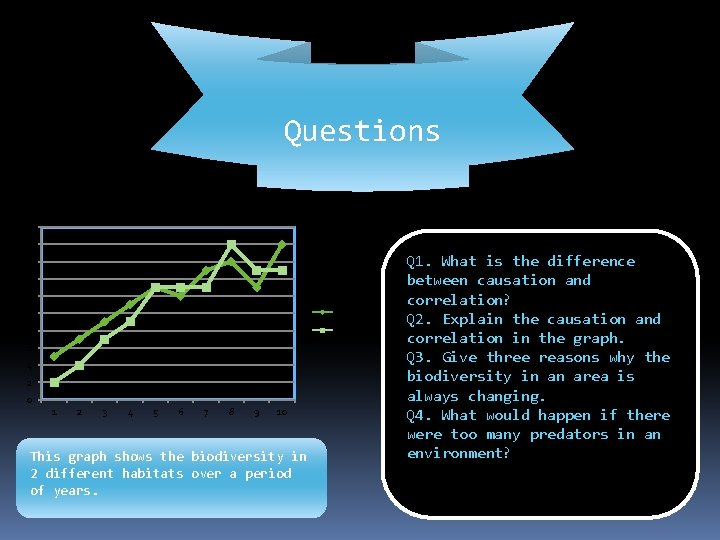
Questions 20 18 16 14 12 10 Series 1 8 Series 2 6 4 2 0 1 2 3 4 5 6 7 8 9 10 This graph shows the biodiversity in 2 different habitats over a period of years. Q 1. What is the difference between causation and correlation? Q 2. Explain the causation and correlation in the graph. Q 3. Give three reasons why the biodiversity in an area is always changing. Q 4. What would happen if there were too many predators in an environment?