
Why are microbes so fascinating Lecture Lab Why

Why are microbes so fascinating? Lecture Lab Why study microbes? Introduction Naming and categorization Microscopes and measurements Pre-lab Aseptic technique Microbes in the environment
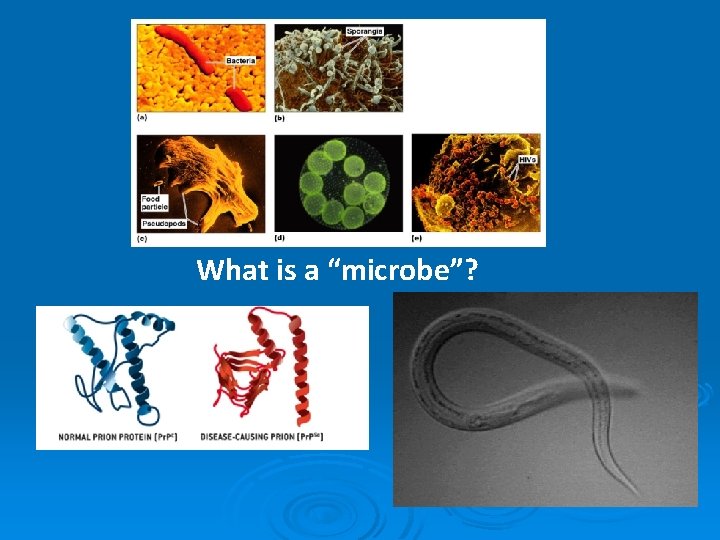
What is a “microbe”?
Why study them?
Why study them? #1 INFECTIOUS DISEASE
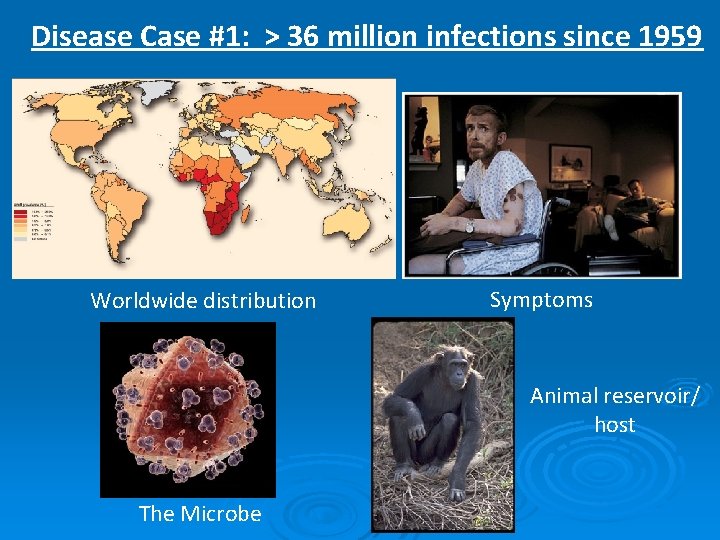
Disease Case #1: > 36 million infections since 1959 Worldwide distribution Symptoms Animal reservoir/ host The Microbe
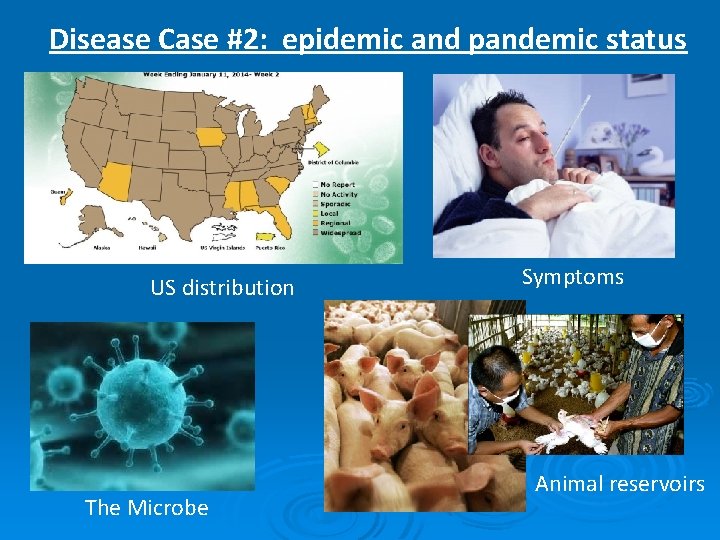
Disease Case #2: epidemic and pandemic status US distribution The Microbe Symptoms Animal reservoirs
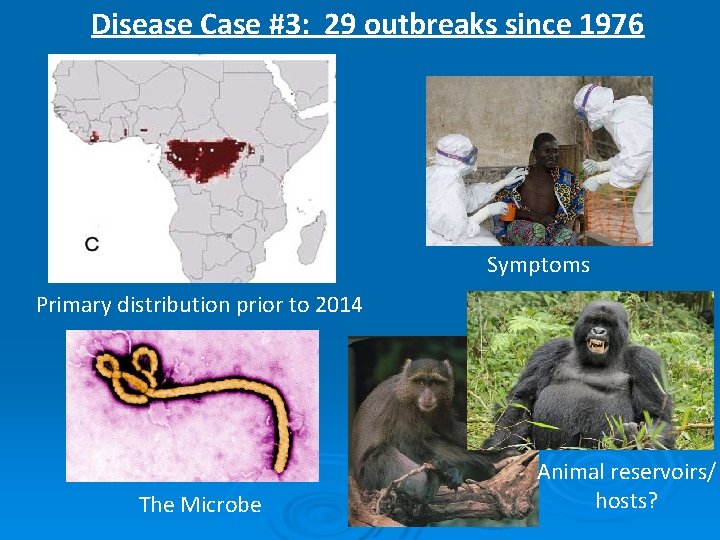
Disease Case #3: 29 outbreaks since 1976 Symptoms Primary distribution prior to 2014 The Microbe Animal reservoirs/ hosts?
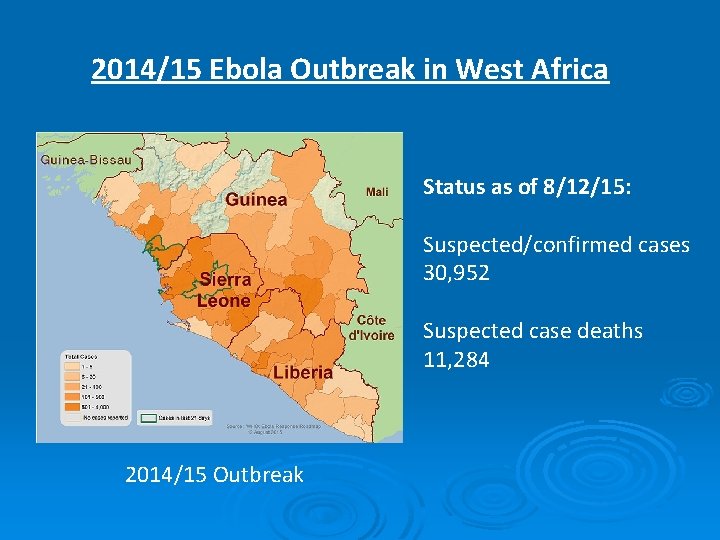
2014/15 Ebola Outbreak in West Africa Status as of 8/12/15: Suspected/confirmed cases 30, 952 Suspected case deaths 11, 284 2014/15 Outbreak
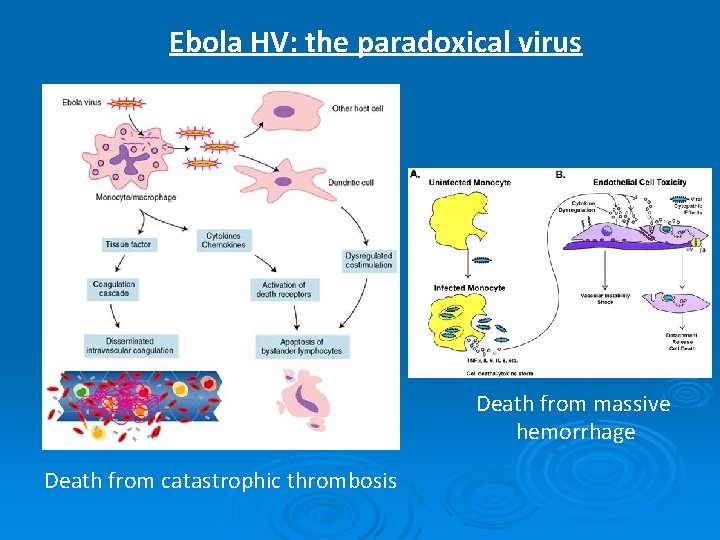
Ebola HV: the paradoxical virus Death from massive hemorrhage Death from catastrophic thrombosis
Similarities? - All are viruses - All are zoonoses: diseases transmitted through an animal reservoir - All have occurred with alarming frequency in the past 50 years and represent…
Emerging infectious diseases (EIDs) -Definition: New or changing diseases that are increasing in incidence or have potential to increase in the near future: For example: - Avian influenza A (H 5 N 1) and swine flu (H 1 N 1) - Invasive Group A Streptococcus- “flesh eating” bacteria - Methicillin-resistant Staphylococcus aureus (MRSA) - Hypervirulent drug-resistant Clostridium difficile Why are we seeing so many EIDs in the past half century? (APO-1)
How do we study and keep track of all these diseases? -Epidemiology: the branch of science that deals with the incidence, distribution, and possible control of diseases and other factors relating to health (CDC, MMWR, ISID, etc. )
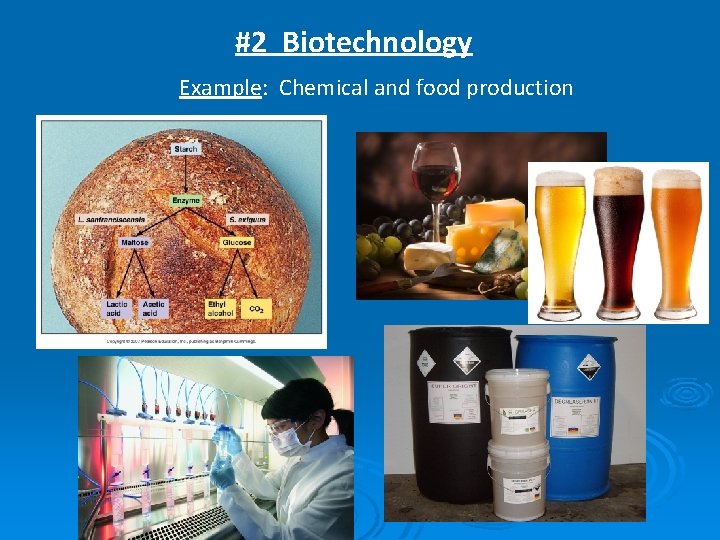
#2 Biotechnology Example: Chemical and food production
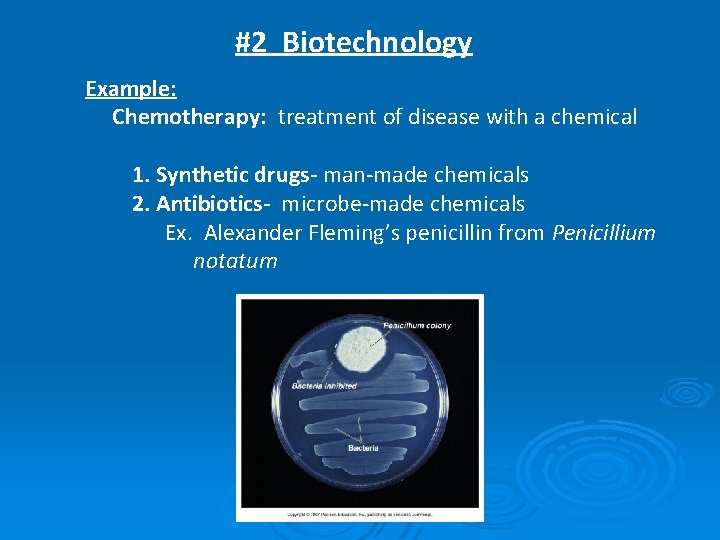
#2 Biotechnology Example: Chemotherapy: treatment of disease with a chemical 1. Synthetic drugs- man-made chemicals 2. Antibiotics- microbe-made chemicals Ex. Alexander Fleming’s penicillin from Penicillium notatum
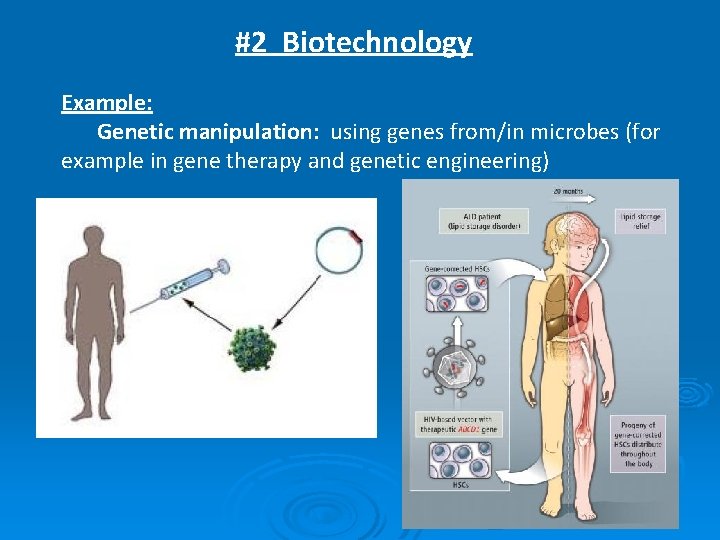
#2 Biotechnology Example: Genetic manipulation: using genes from/in microbes (for example in gene therapy and genetic engineering)
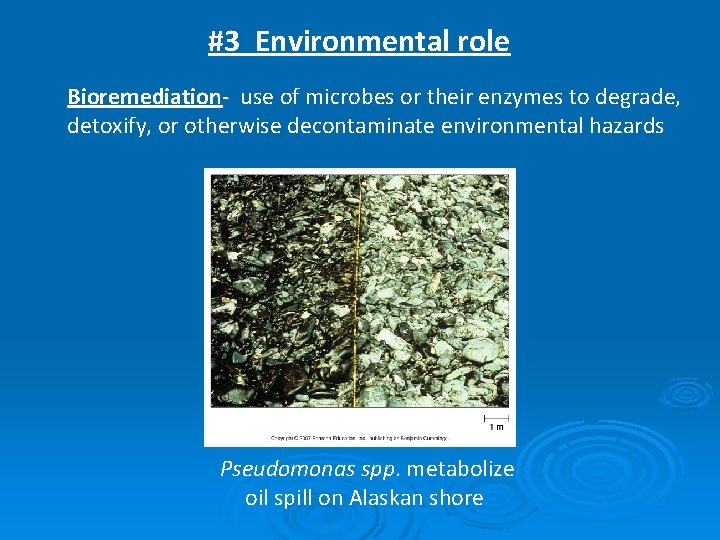
#3 Environmental role Bioremediation- use of microbes or their enzymes to degrade, detoxify, or otherwise decontaminate environmental hazards Pseudomonas spp. metabolize oil spill on Alaskan shore
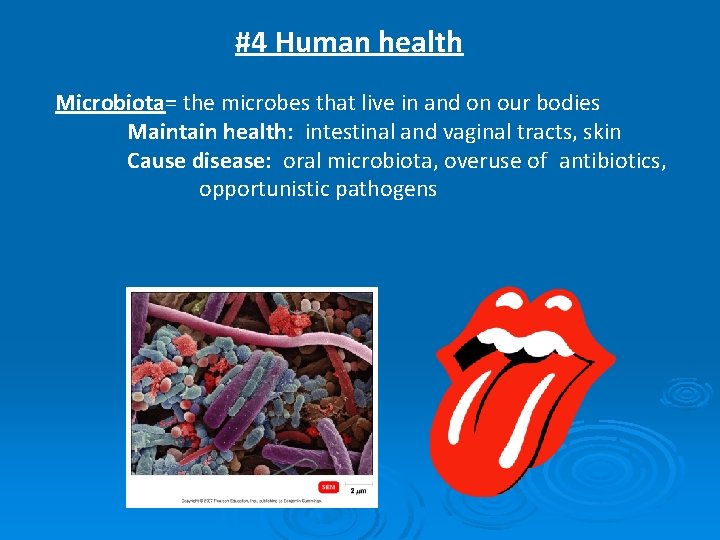
#4 Human health Microbiota= the microbes that live in and on our bodies Maintain health: intestinal and vaginal tracts, skin Cause disease: oral microbiota, overuse of antibiotics, opportunistic pathogens
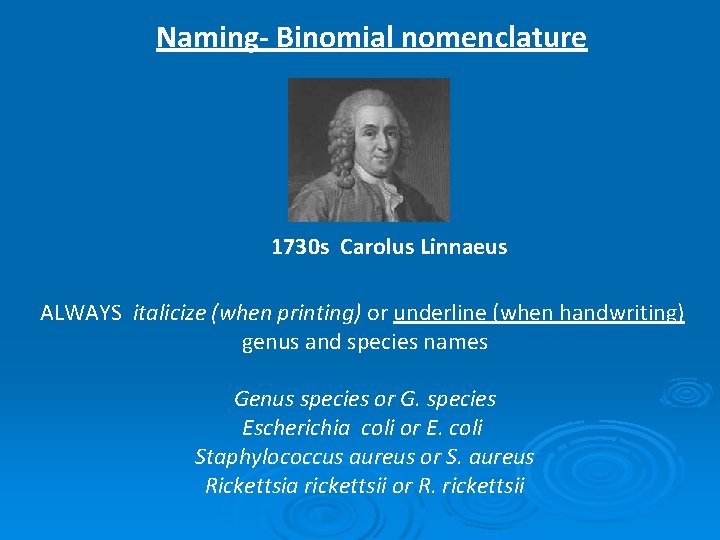
Naming- Binomial nomenclature 1730 s Carolus Linnaeus ALWAYS italicize (when printing) or underline (when handwriting) genus and species names Genus species or G. species Escherichia coli or E. coli Staphylococcus aureus or S. aureus Rickettsia rickettsii or R. rickettsii
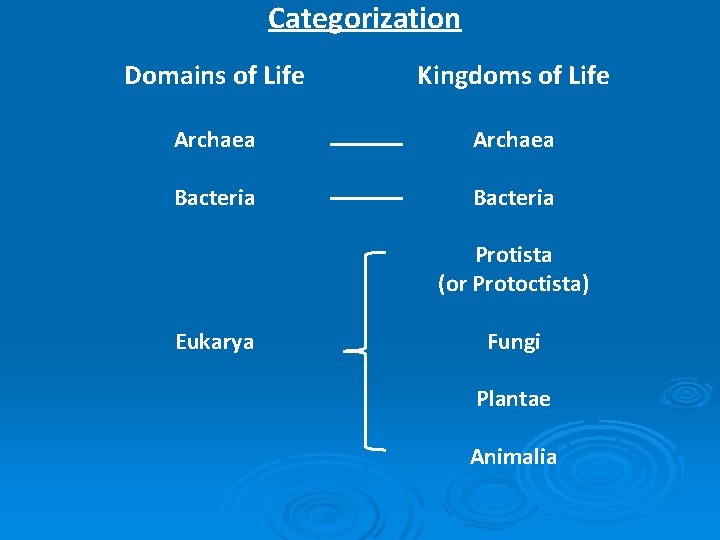
Categorization Domains of Life Kingdoms of Life Archaea Bacteria Protista (or Protoctista) Eukarya Fungi Plantae Animalia
Independent Learning 1. Complete “APO-1: Microbiology- past and present” and turn in on Thursday, 8/27. This is the first Additional Point Opportunity (APO) and is an individual assignment. You can access APO-1 on my website: http: //faculty. sdmiramar. edu/faculty/sdccd/lmurphy/microindex. htm 2. Review Chapters 2 and 4 for the basic chemistry and biology principles you would have learned in your pre-requisite courses. Pre-requisite quiz is on Thursday.
- Slides: 21