
WHY ARE COSTS SO HIGH CHAPTER 12 Code





- Slides: 23
WHY ARE COSTS SO HIGH? CHAPTER 12 Code Blue Health Science Edition 4
Chapter 12 In chapter 12, David Brannan is struggling with a reversal in the family’s financial situation. n Financial problems are not unusual in the United States. Each year thousands of people declare bankruptcy. n
Financial Difficulties n Individuals facing financial difficulties have one of two choices: n Increase income, or n Decrease expenses
Financial Difficulties n Individuals should figure out what decisions and actions have got them into difficulties they are facing.
Brannan Community Hospital n Brannan Community Hospital is also suffering from financial difficulties.
Brannan Community Hospital n Unless the situations changes, the hospital will close, throwing over a hundred employees out of work and decreasing access to hospital care in the community.
Brannan Community Hospital Initially Wes Douglas realizes that he has three options: increase revenues, decrease costs, or both. n Before he decides whether he should tackle the problem of revenues or costs first, he realizes that he needs to understand a little more about the industry. n
Healthcare Costs In the next four chapters, we are going to discuss a crisis in the healthcare delivery system caused by out of control costs. n We will look at the cause of the problem, and some solutions being offered—solutions that will dramatically impact the lives of future healthcare professionals. n
Major National Problem n Increasing healthcare costs are a major problem for most companies and their employees.
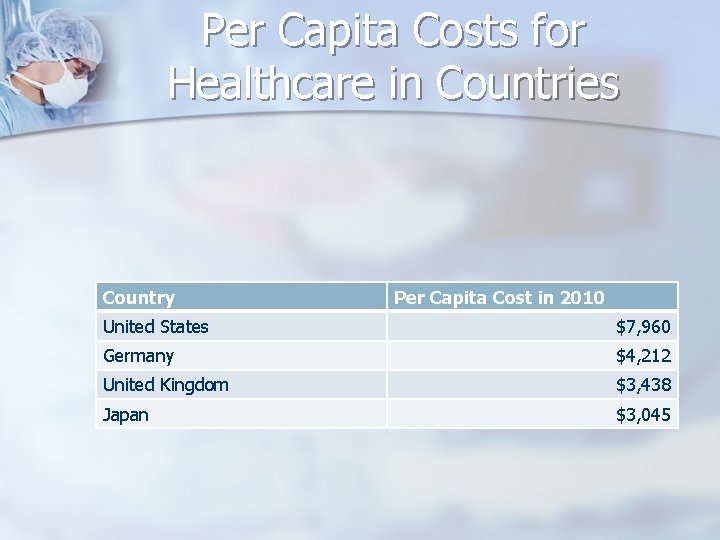
Per Capita Costs for Healthcare in Countries Country Per Capita Cost in 2010 United States $7, 960 Germany $4, 212 United Kingdom $3, 438 Japan $3, 045
Major National Problem n Many companies are finding that they can no longer afford to provide coverage for their employees. n n Some are dropping health insurance as a benefit. Others are moving jobs overseas where healthcare costs are less.
Major National Problem This has led to the enactment by Congress of the Patient Protection and Affordable Care Act n We will be discussing this further later. n
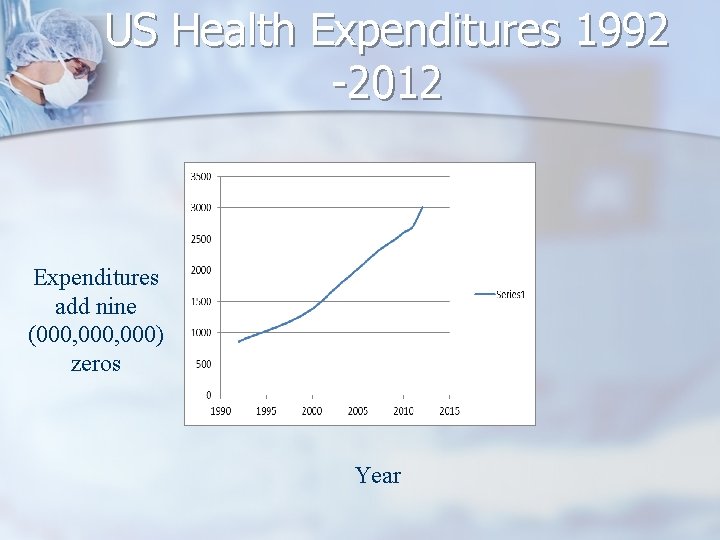
Health Expenditures In 2013 it is estimated that the country will spend $3 trillion on healthcare. n It is estimated this expenditure will double in the next seven to ten years. n If this occurs, many Americans will be unable to afford the cost of basic care. n
US Health Expenditures 1992 -2012 Expenditures add nine (000, 000) zeros Year
Chapters 13 through 16 n Why are healthcare costs so high? n Technology n Unreimbursed care n An aging American population n Lack of adequate incentives for cost control
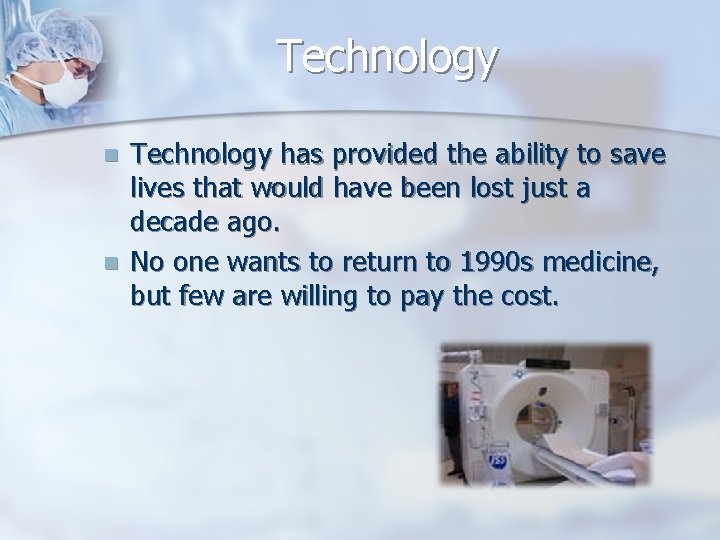
Technology n n Technology has provided the ability to save lives that would have been lost just a decade ago. No one wants to return to 1990 s medicine, but few are willing to pay the cost.
Unreimbursed Care n Much of the care hospitals provide is not paid for by the individuals receiving it. n Some hospitals collect less than 50% of billed charges. n These costs must be paid by those patients who do pay.
Unreimbursed Care n Reasons for Unreimbursed Care n Underpayment by government programs such as Medicare and Medicaid n Discounts negotiated by large insurance companies n Uninsured patients who receive care, but cannot or do not pay for the services they received n Charity care
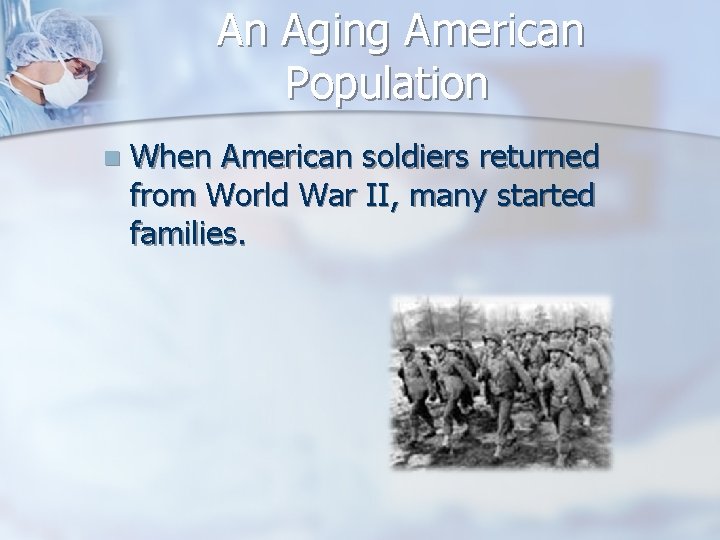
An Aging American Population n When American soldiers returned from World War II, many started families.
An Aging American Population The children of these soldiers were known as the “baby boomers, ” due to a rapid increase in births in the late 1940 s and early 1950 s. n These baby boomers are now becoming senior citizens. n Older people have significantly higher healthcare costs per year than younger people. n
An Aging American Population n In addition, people are living longer!
Lack of Incentives for Cost Control n To be discussed in the next chapter
The End