
Why a Multiphase Flowmeter can significantly reduce the



- Slides: 26
Why a Multiphase Flowmeter can significantly reduce the Rejection Rate of Well Test versus Separator Bruno PINGUET & Samia BIFOUT May 2013 BP 1
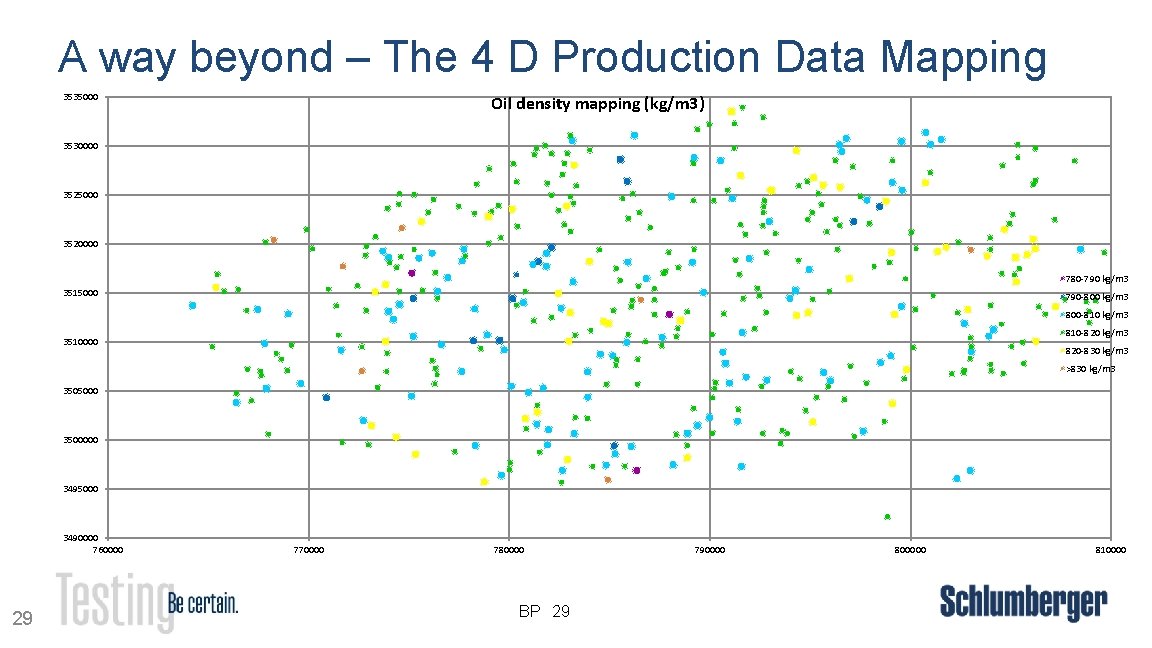
Contents n Why Well Testing? n History & Vx Technology Data Principle n How to set a multiphase flow meter (Vx technology) n New Model Development for faster and better measurement in Periodic Testing n Conclusion n Surface mapping of production data: the 4 -D model for large field. BP 5
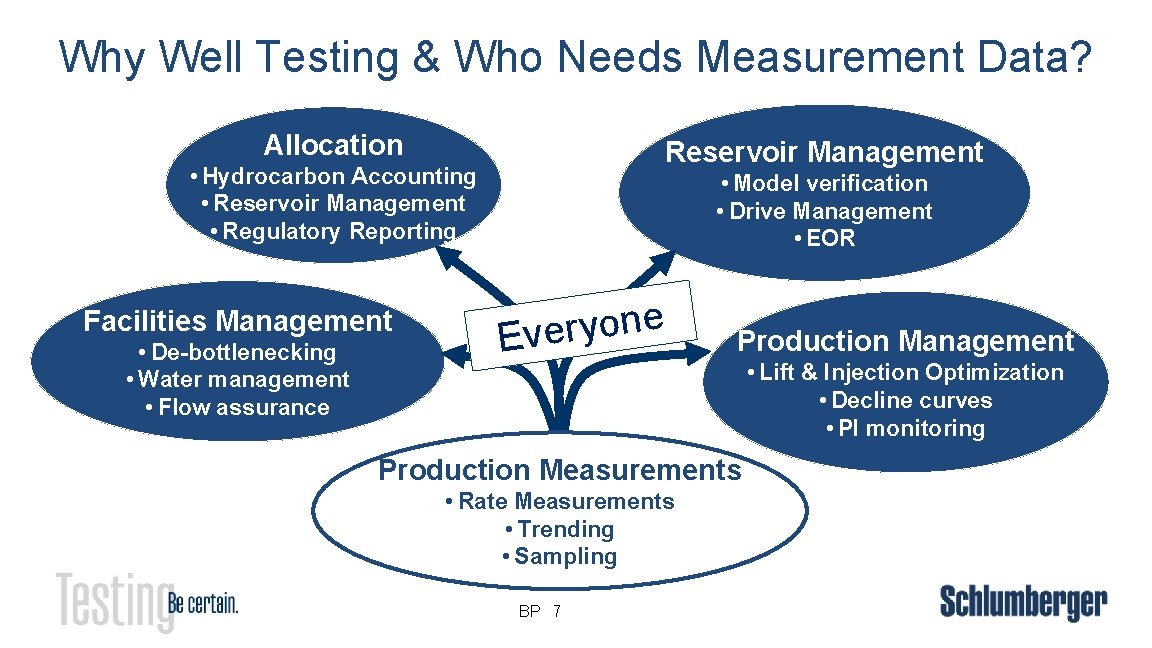
Why Well Testing & Who Needs Measurement Data? Allocation Reservoir Management • Hydrocarbon Accounting • Reservoir Management • Regulatory Reporting Facilities Management • De-bottlenecking • Water management • Flow assurance • Model verification • Drive Management • EOR e n o y r Eve Production Management Production Measurements • Rate Measurements • Trending • Sampling BP 7 • Lift & Injection Optimization • Decline curves • PI monitoring
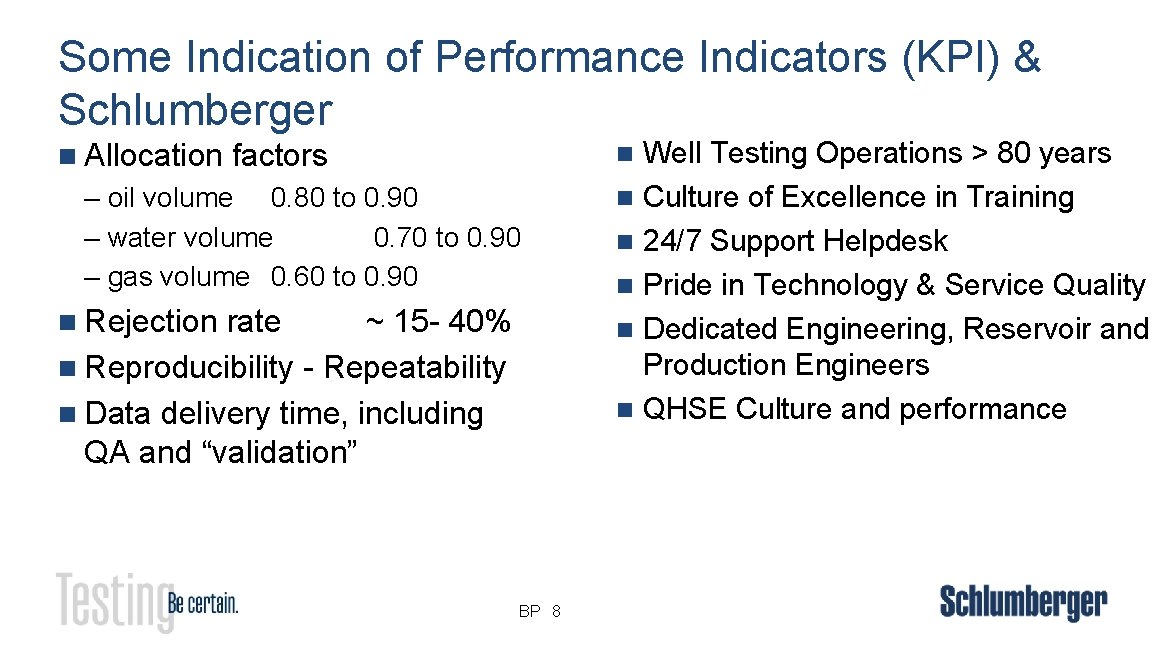
Some Indication of Performance Indicators (KPI) & Schlumberger n Allocation factors Well Testing Operations > 80 years n Culture of Excellence in Training n 24/7 Support Helpdesk n Pride in Technology & Service Quality n Dedicated Engineering, Reservoir and Production Engineers n QHSE Culture and performance n – oil volume 0. 80 to 0. 90 – water volume 0. 70 to 0. 90 – gas volume 0. 60 to 0. 90 n Rejection rate ~ 15 - 40% n Reproducibility - Repeatability n Data delivery time, including QA and “validation” BP 8
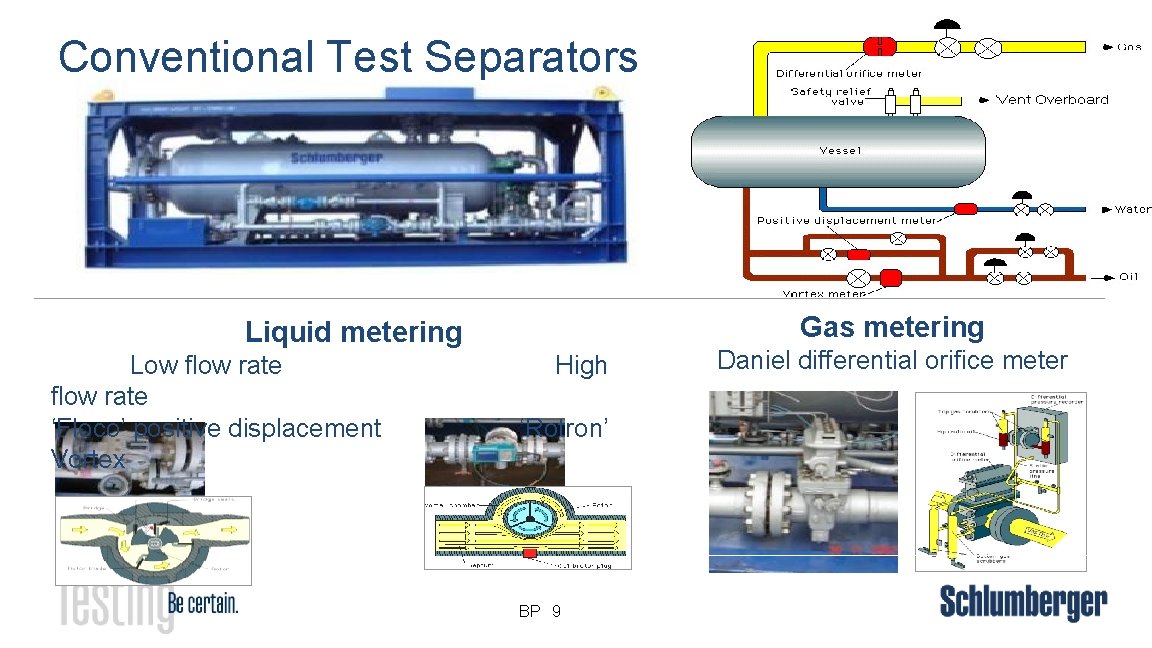
Conventional Test Separators Gas metering Liquid metering Low flow rate ‘Floco’ positive displacement Vortex High ‘Rotron’ BP 9 Daniel differential orifice meter
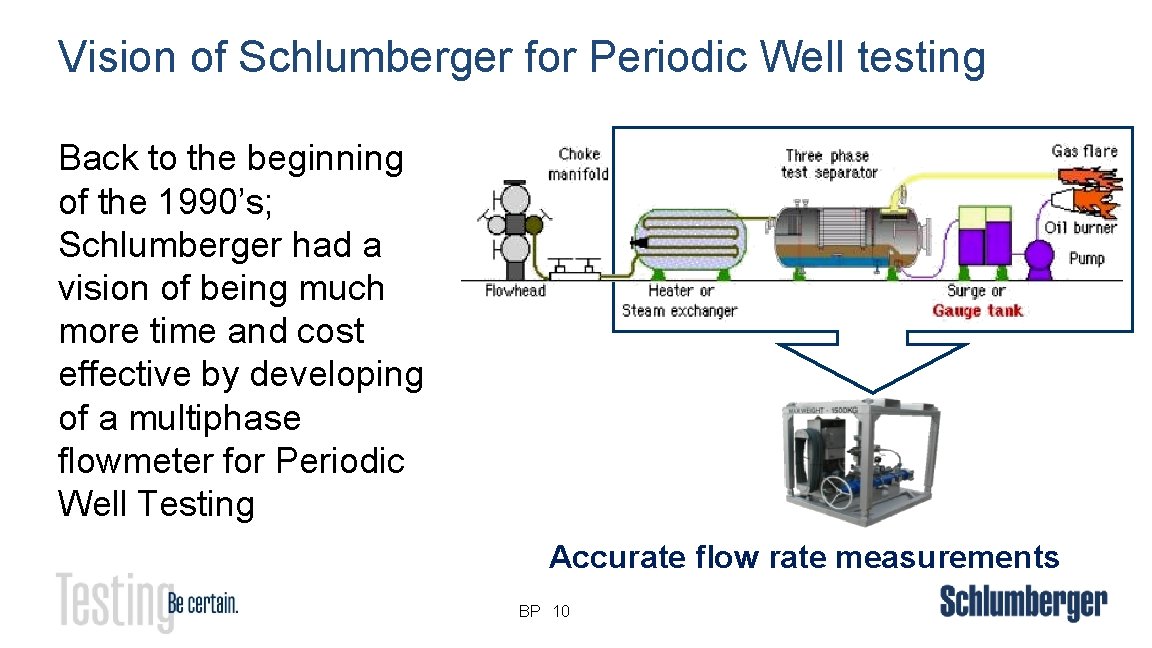
Vision of Schlumberger for Periodic Well testing Back to the beginning of the 1990’s; Schlumberger had a vision of being much more time and cost effective by developing of a multiphase flowmeter for Periodic Well Testing Accurate flow rate measurements BP 10
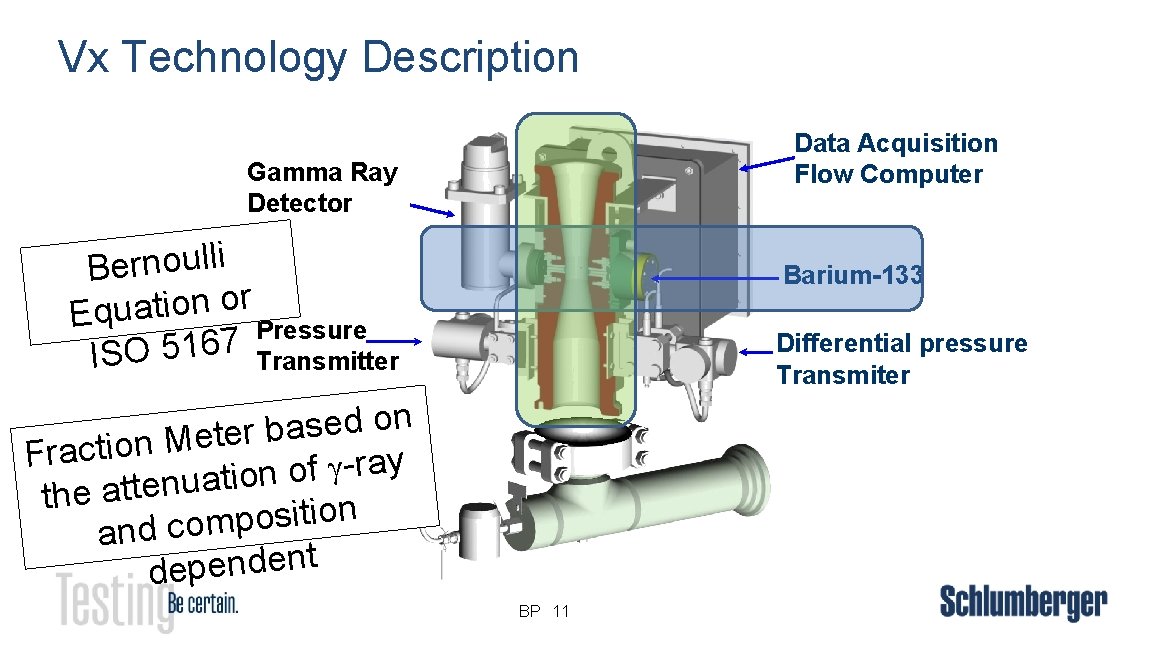
Vx Technology Description Data Acquisition Flow Computer Gamma Ray Detector i l l u o n r e B r o n o i t a u Eq Pressure ISO 5167 Transmitter Barium-133 Differential pressure Transmiter n o d e s a b r e t e M n o i t Frac y a r g f o n o i t a u n e t t a the n o i t i s o p m and co t n e dep BP 11
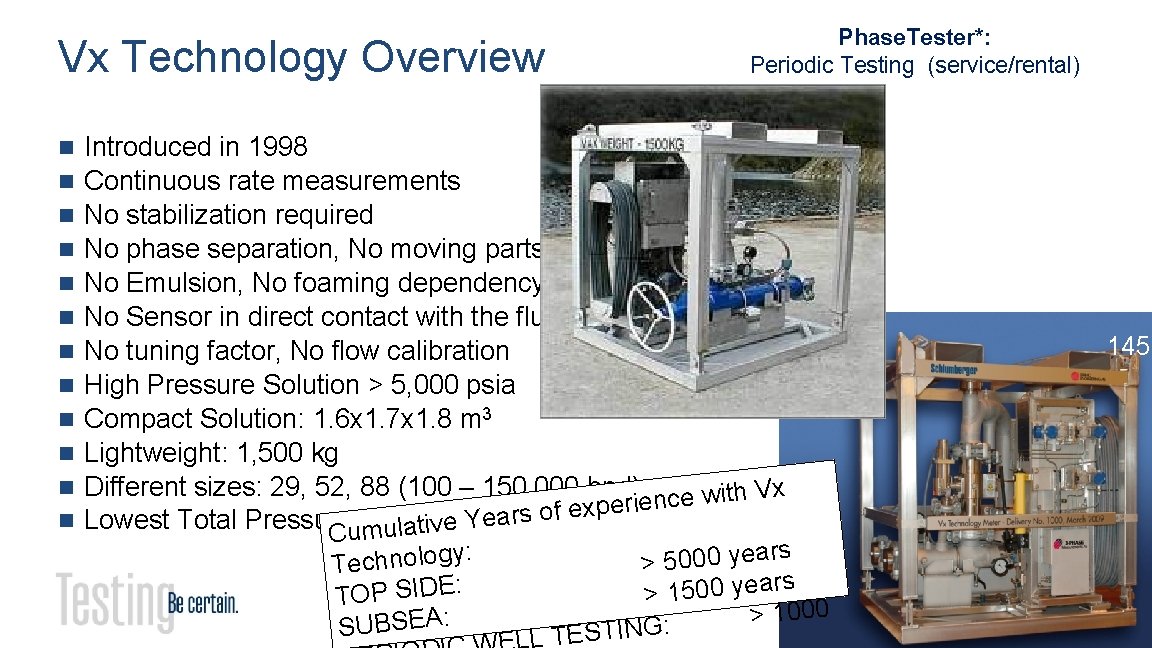
Vx Technology Overview n n n Phase. Tester*: Periodic Testing (service/rental) Introduced in 1998 Continuous rate measurements No stabilization required No phase separation, No moving parts No Emulsion, No foaming dependency No Sensor in direct contact with the fluid No tuning factor, No flow calibration High Pressure Solution > 5, 000 psia Compact Solution: 1. 6 x 1. 7 x 1. 8 m 3 Lightweight: 1, 500 kg Different sizes: 29, 52, 88 (100 – 150, 000 bpd) ce with Vx en i r e p x e f o s Year Lowest Total Pressureu. Lost e v i t a l u m C rs : a y e g y o l 0 o 0 n 0 h 5 c > Te rs a : e E y D I 0 0 S 5 P 1 O > T BP 12 00 0 1 > : A E S : SUB L TESTING 145
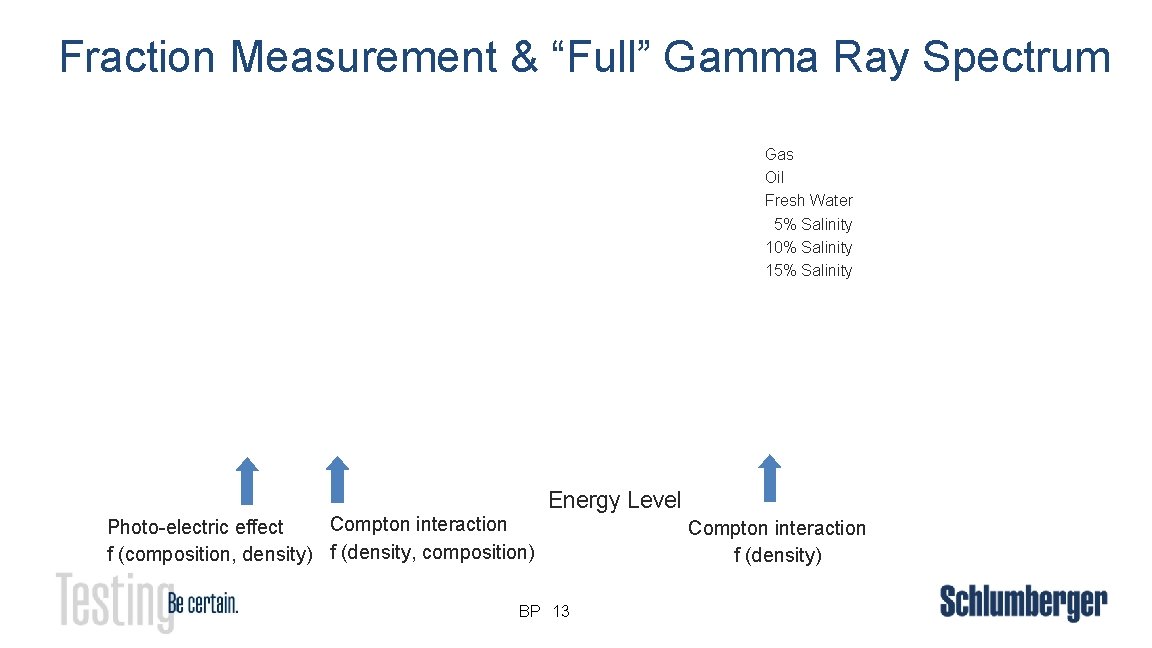
Fraction Measurement & “Full” Gamma Ray Spectrum Gas Oil Fresh Water 5% Salinity 10% Salinity 15% Salinity Energy Level Compton interaction Photo-electric effect f (composition, density) f (density, composition) BP 13 Compton interaction f (density)
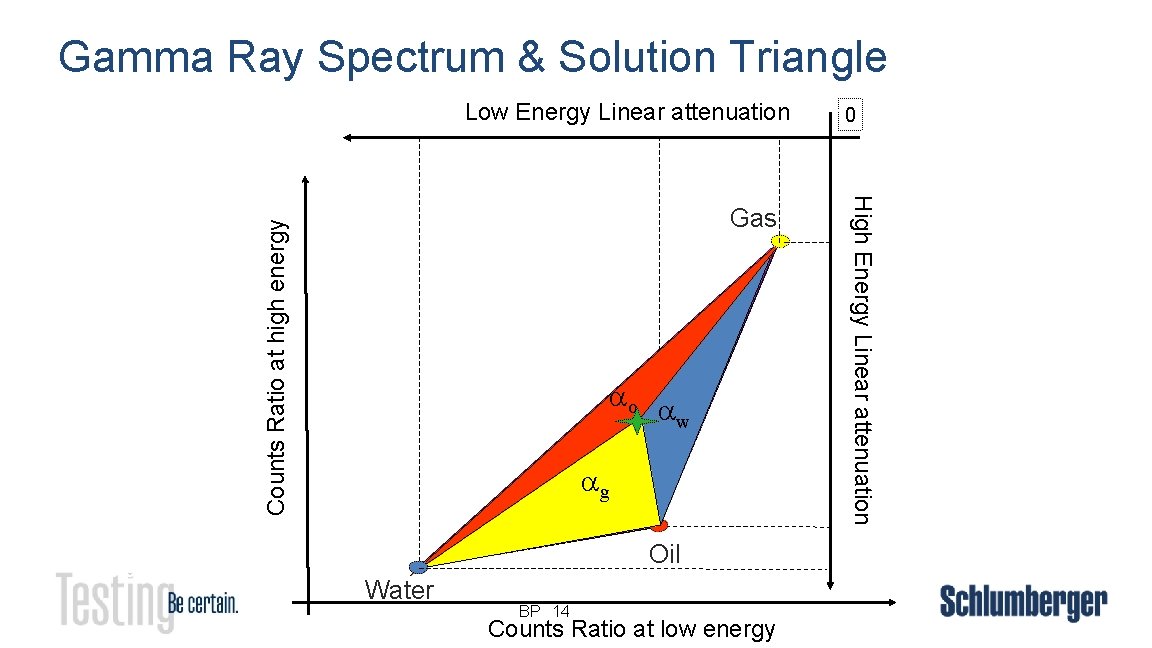
Gamma Ray Spectrum & Solution Triangle Low Energy Linear attenuation Counts Ratio at high energy ao a w ag Photo-electric effect Compton interaction f (composition, density) f (density, composition) Water BP 14 Oil Counts Ratio at low energy High Energy Linear attenuation Gas 0
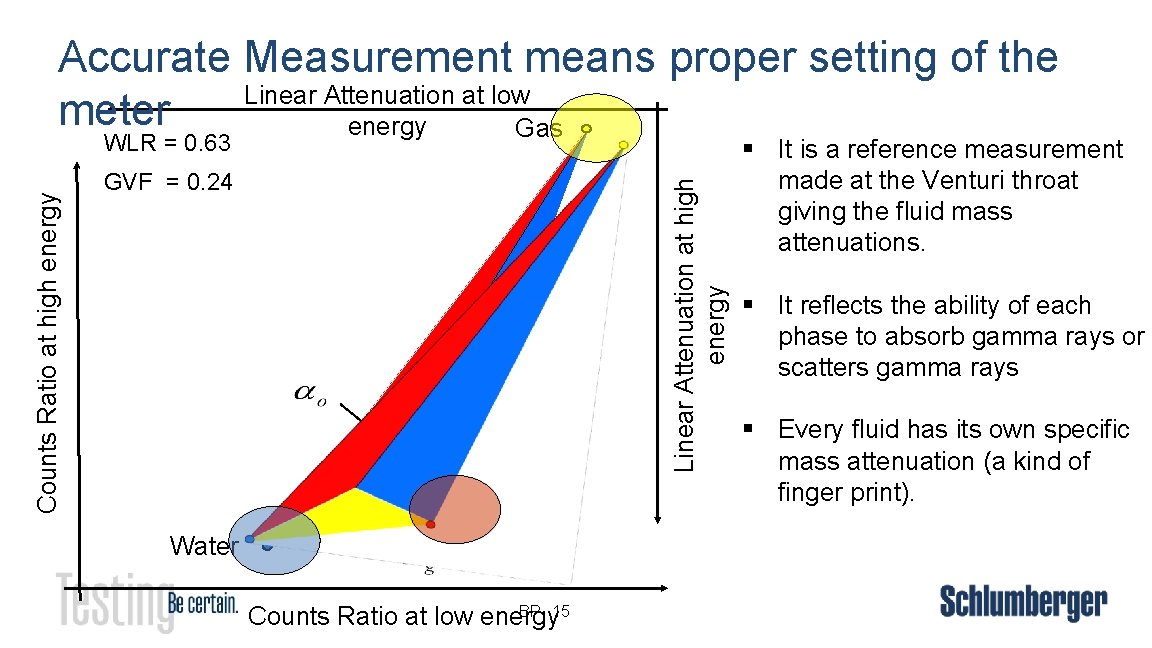
Accurate Measurement means proper setting of the Linear Attenuation at low meter energy Gas GVF = 0. 24 Linear Attenuation at high energy Counts Ratio at high energy WLR = 0. 63 Oil Water BP 15 Counts Ratio at low energy § It is a reference measurement made at the Venturi throat giving the fluid mass attenuations. § It reflects the ability of each phase to absorb gamma rays or scatters gamma rays § Every fluid has its own specific mass attenuation (a kind of finger print).
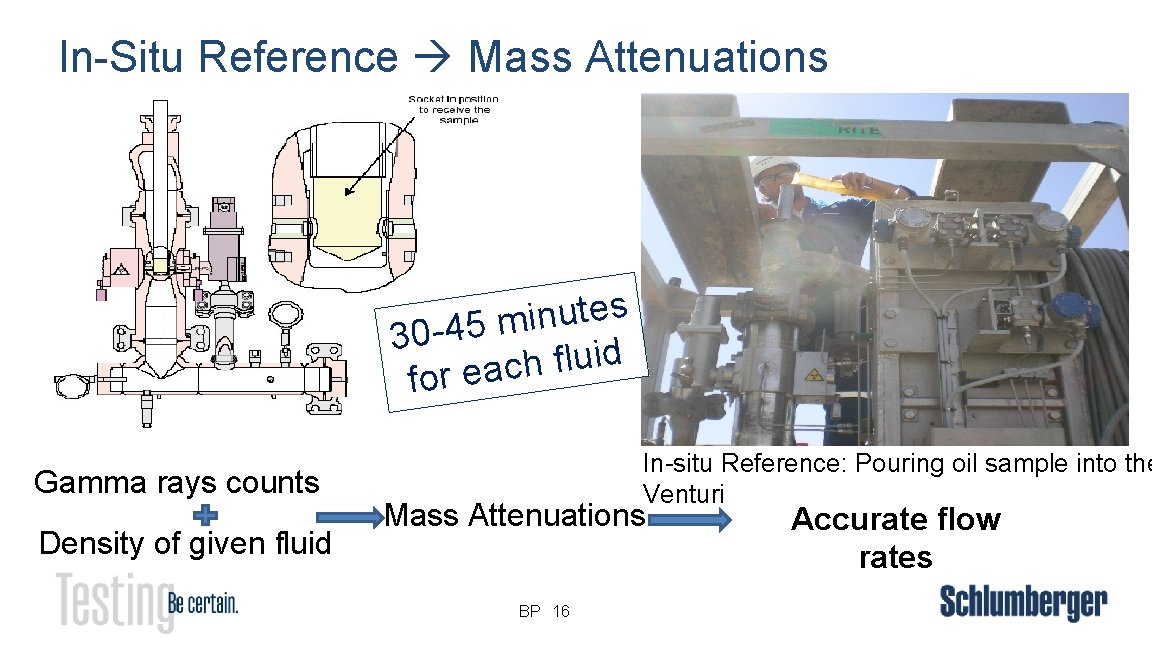
In-Situ Reference Mass Attenuations s e t u n i m 5 4 0 3 d i u l f h c for ea Gamma rays counts Density of given fluid In-situ Reference: Pouring oil sample into the Venturi Mass Attenuations BP 16 Accurate flow rates
Production Testing with Phase. Tester Truck mounted Phase. Tester e m i T e c u d e Unit R o t h is How to be more efficient? ty i The W l a u Q e & Improv ge n e l l a How to improve Quality Measurement? h c a s y a w l a is 17 BP 17
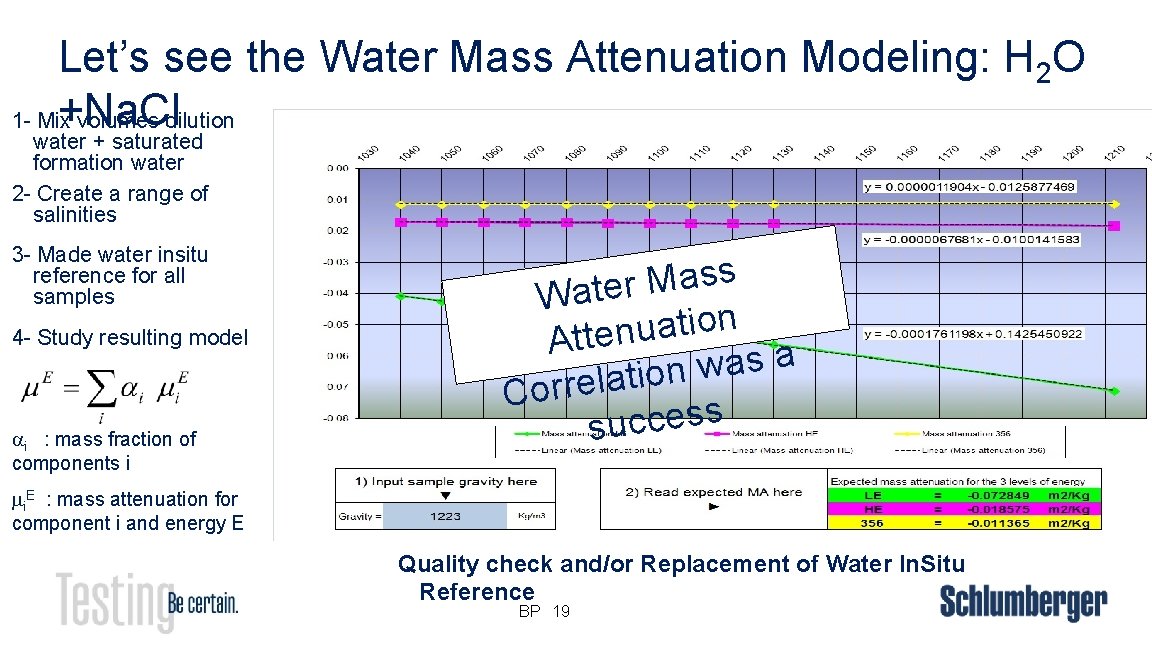
Let’s see the Water Mass Attenuation Modeling: H 2 O +Na. Cl 1 - Mix volumes dilution water + saturated formation water 2 - Create a range of salinities 3 - Made water insitu reference for all samples 4 - Study resulting model ai : mass fraction of components i s s a M r Wate n o i t a u Atten a s a w n o i t a l e r r Co s s e c c u s mi. E : mass attenuation for component i and energy E Quality check and/or Replacement of Water In. Situ Reference BP 19
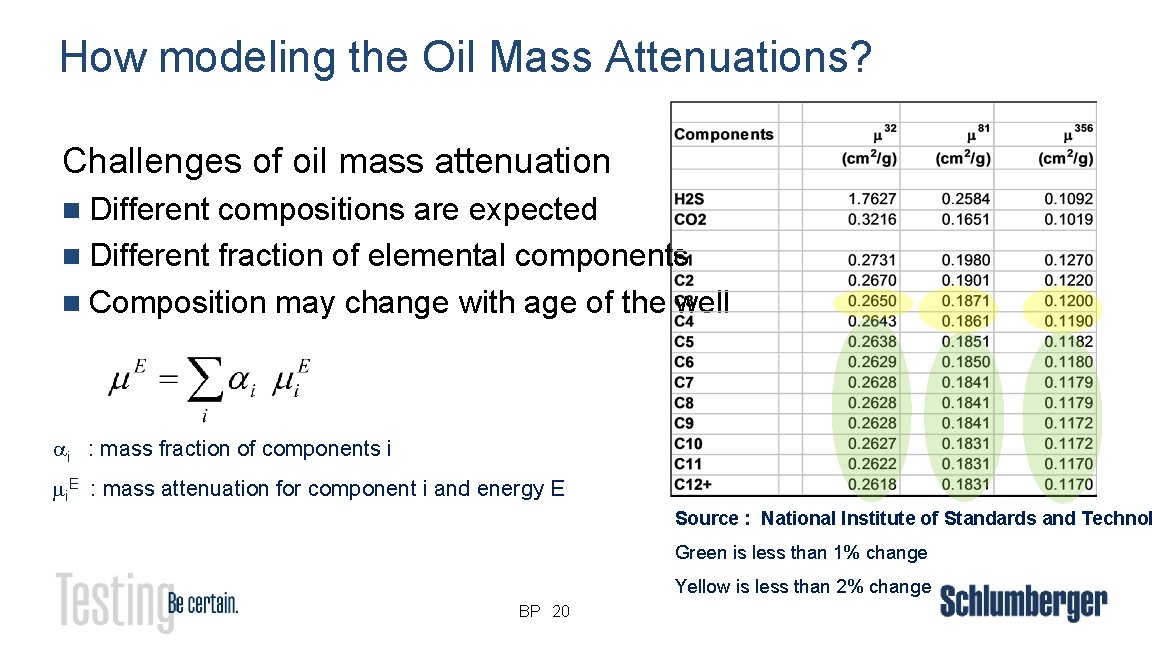
How modeling the Oil Mass Attenuations? Challenges of oil mass attenuation n Different compositions are expected n Different fraction of elemental components n Composition may change with age of the well ai : mass fraction of components i mi. E : mass attenuation for component i and energy E Source : National Institute of Standards and Technol Green is less than 1% change Yellow is less than 2% change BP 20
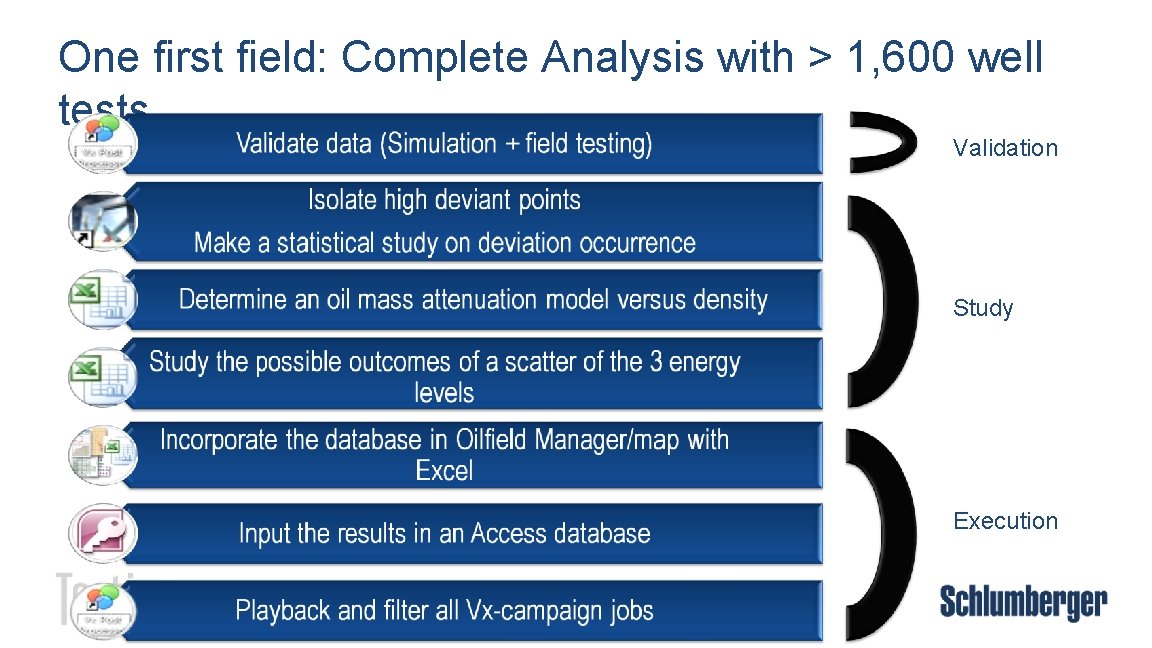
One first field: Complete Analysis with > 1, 600 well tests Validation Study Execution BP 21
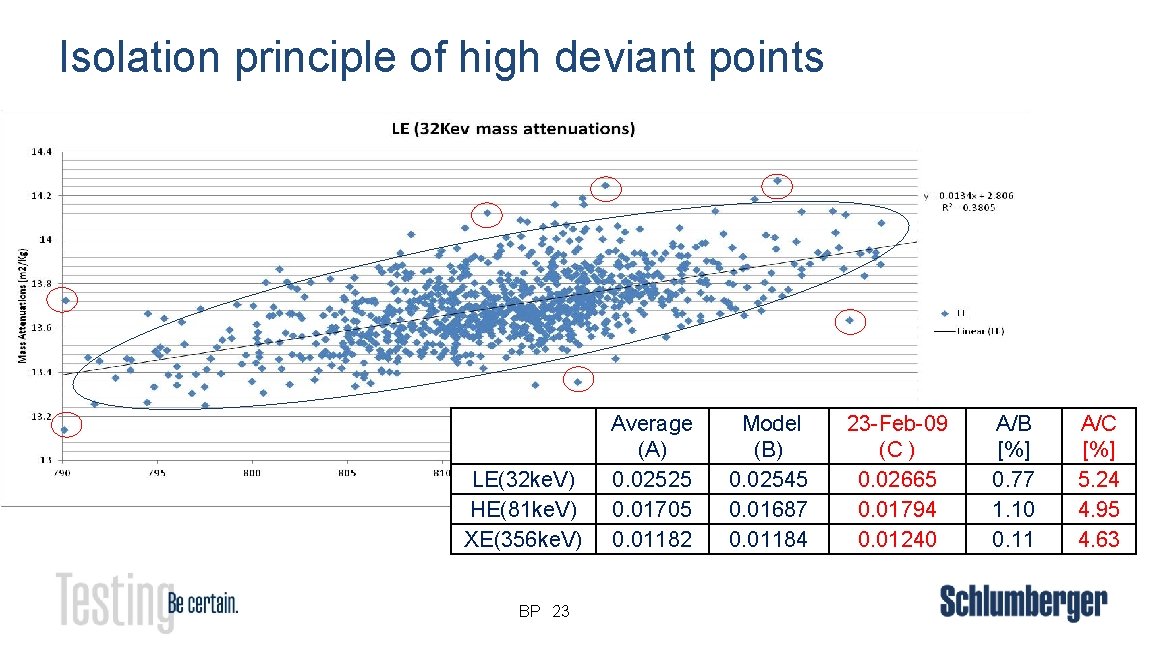
Isolation principle of high deviant points LE(32 ke. V) HE(81 ke. V) XE(356 ke. V) BP 23 Average (A) 0. 02525 0. 01705 0. 01182 Model (B) 0. 02545 0. 01687 0. 01184 23 -Feb-09 (C ) 0. 02665 0. 01794 0. 01240 A/B [%] 0. 77 1. 10 0. 11 A/C [%] 5. 24 4. 95 4. 63
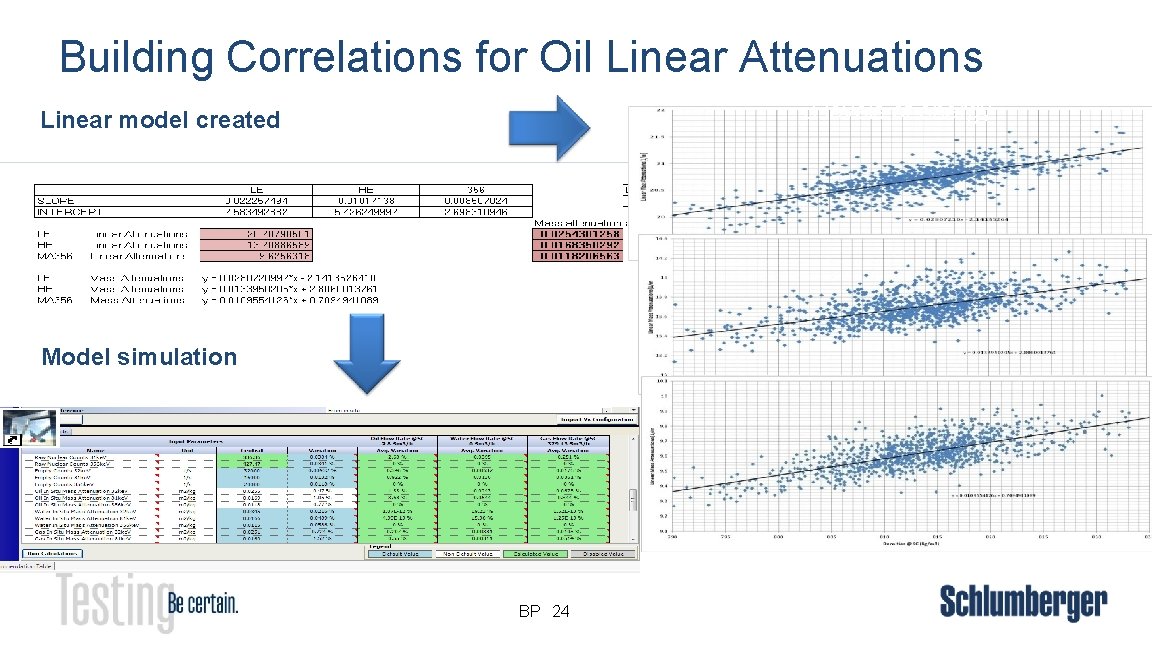
Building Correlations for Oil Linear Attenuations 3 levels of energy Linear model created Model simulation BP 24
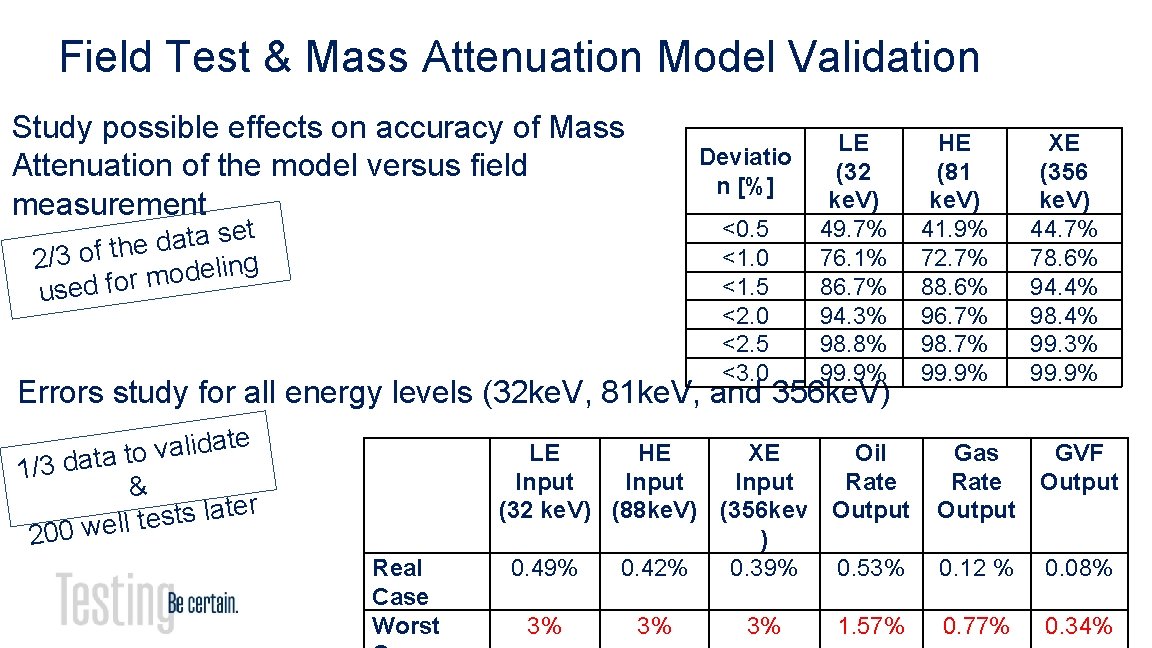
Field Test & Mass Attenuation Model Validation Study possible effects on accuracy of Mass Attenuation of the model versus field measurement Deviatio n [%] t e s a t a d e h t f o 3 / 2 g n i l e d o m used for <0. 5 <1. 0 <1. 5 <2. 0 <2. 5 <3. 0 LE (32 ke. V) 49. 7% 76. 1% 86. 7% 94. 3% 98. 8% 99. 9% Errors study for all energy levels (32 ke. V, 81 ke. V, and 356 ke. V) ate d i l a v o t 1/3 data & r e t a l s te l l e w 0 0 2 Real Case Worst LE HE XE Oil Input Rate (32 ke. V) (88 ke. V) (356 kev Output ) 0. 49% 0. 42% 0. 39% 0. 53% BP 25 3% 3% 3% 1. 57% HE (81 ke. V) 41. 9% 72. 7% 88. 6% 96. 7% 98. 7% 99. 9% XE (356 ke. V) 44. 7% 78. 6% 94. 4% 98. 4% 99. 3% 99. 9% Gas Rate Output GVF Output 0. 12 % 0. 08% 0. 77% 0. 34%
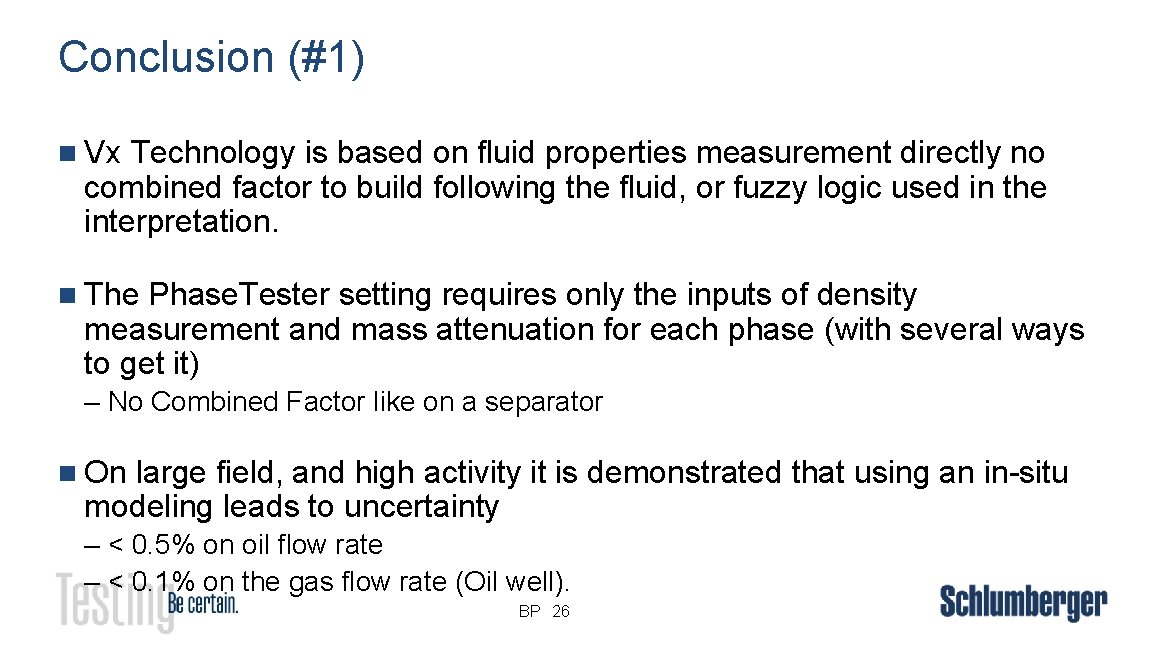
Conclusion (#1) n Vx Technology is based on fluid properties measurement directly no combined factor to build following the fluid, or fuzzy logic used in the interpretation. n The Phase. Tester setting requires only the inputs of density measurement and mass attenuation for each phase (with several ways to get it) – No Combined Factor like on a separator n On large field, and high activity it is demonstrated that using an in-situ modeling leads to uncertainty – < 0. 5% on oil flow rate – < 0. 1% on the gas flow rate (Oil well). 2 6 BP 26
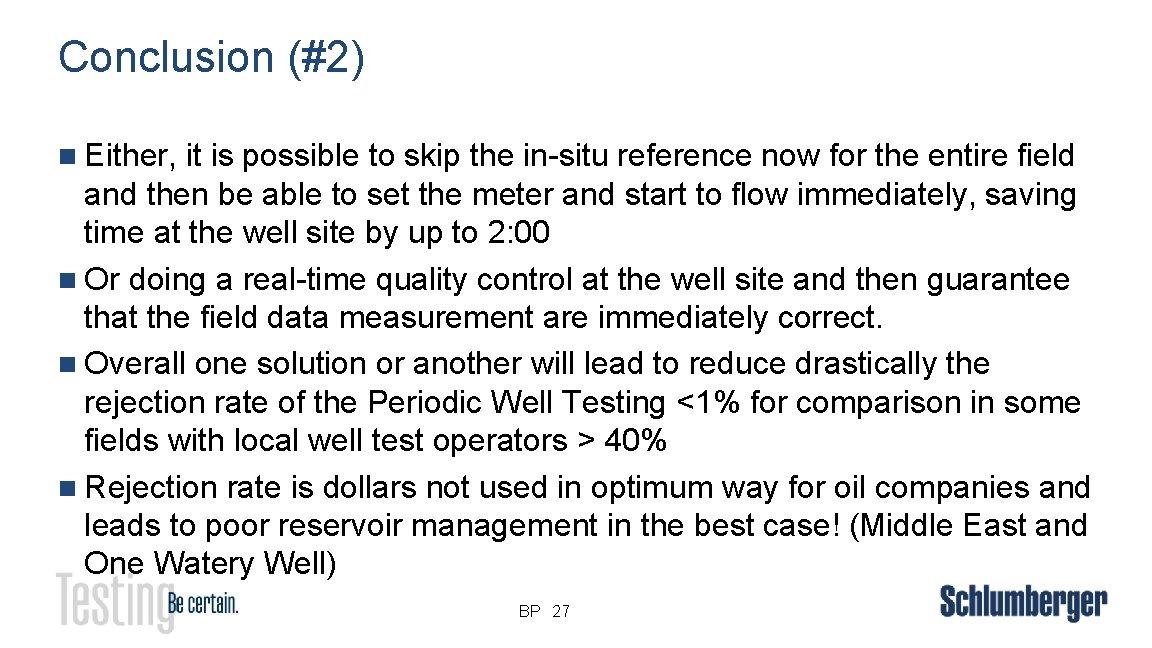
Conclusion (#2) n Either, it is possible to skip the in-situ reference now for the entire field and then be able to set the meter and start to flow immediately, saving time at the well site by up to 2: 00 n Or doing a real-time quality control at the well site and then guarantee that the field data measurement are immediately correct. n Overall one solution or another will lead to reduce drastically the rejection rate of the Periodic Well Testing <1% for comparison in some fields with local well test operators > 40% n Rejection rate is dollars not used in optimum way for oil companies and leads to poor reservoir management in the best case! (Middle East and One Watery Well) 2 7 BP 27
Any question? Bruno Pinguet Marketing & Technical Manager One. Subsea & Schlumberger Testing pinguet 1@email. com BP 28
A way beyond – The 4 D Production Data Mapping 3535000 Oil density mapping (kg/m 3) 3530000 3525000 3520000 780 -790 kg/m 3 3515000 790 -800 kg/m 3 800 -810 kg/m 3 810 -820 kg/m 3 3510000 820 -830 kg/m 3 >830 kg/m 3 3505000 3500000 3495000 3490000 760000 29 770000 780000 BP 29 790000 800000 810000
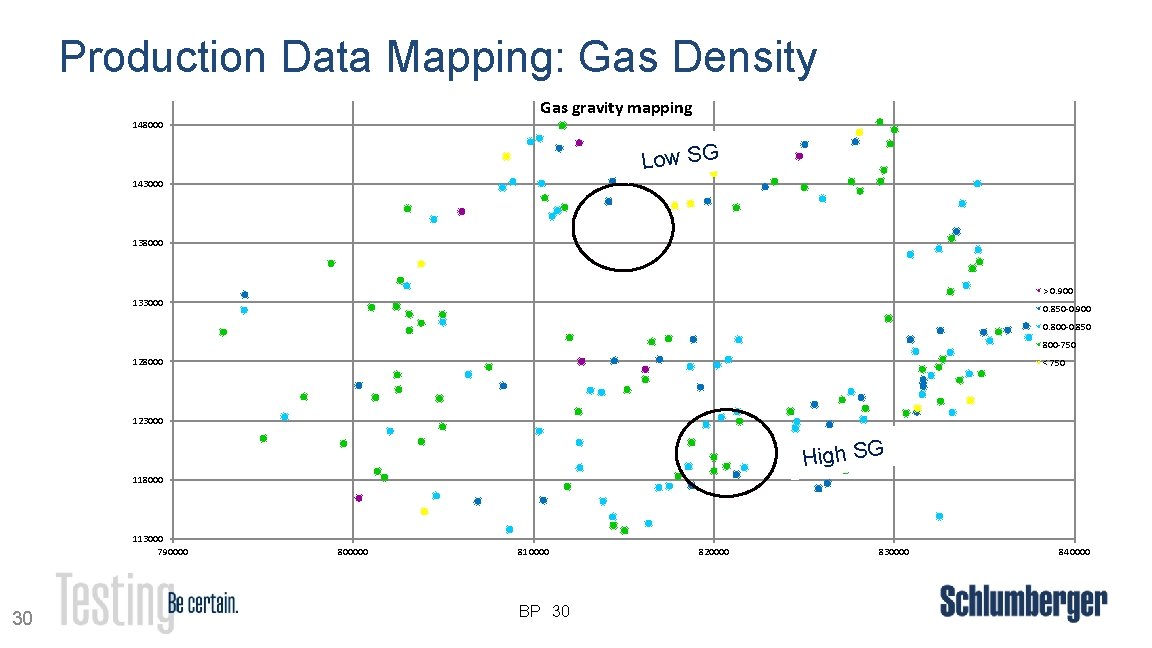
Production Data Mapping: Gas Density Gas gravity mapping 148000 Low SG 143000 138000 > 0. 900 133000 0. 850 -0. 900 0. 800 -0. 850 800 -750 128000 < 750 123000 High SG 118000 113000 790000 30 800000 810000 BP 30 820000 830000 840000
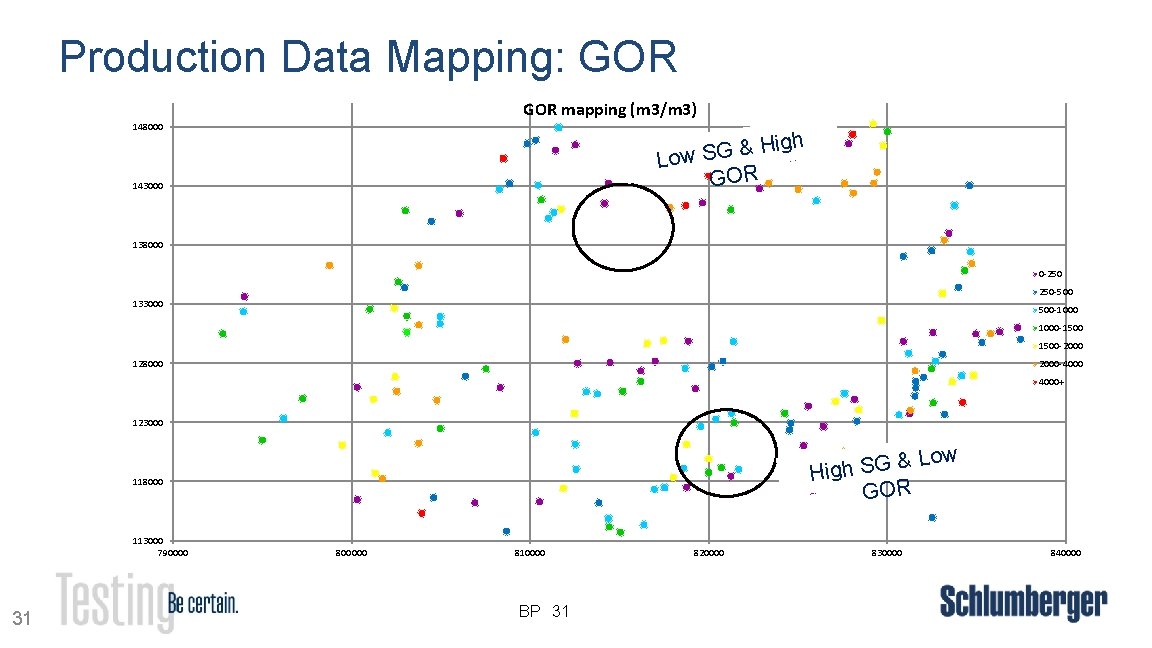
Production Data Mapping: GOR mapping (m 3/m 3) 148000 High & G S Low GOR 143000 138000 0 -250 250 -500 133000 500 -1000 -1500 -2000 128000 2000 -4000+ 123000 ow L & G S High GOR 118000 113000 790000 31 800000 810000 BP 31 820000 830000 840000
Any question? Bruno Pinguet Marketing & Technical Manager One. Subsea & Schlumberger Testing pinguet 1@email. com BP 32