
WHS AP Psychology Unit 4 Sensation Perception and

- Slides: 19
WHS AP Psychology Unit 4: Sensation, Perception and States of Consciousness Essential Task 4 -2: Describe the sensory process of vision including the specific nature of energy transduction (rods and cones and the trichromatic theory of color vision), relevant anatomical structures (cornea, pupil, iris, lens, retina, optic nerve, blind spot and fovea) and specialized pathways in the brain (opponent process theory of color vision and the occipital lobe).
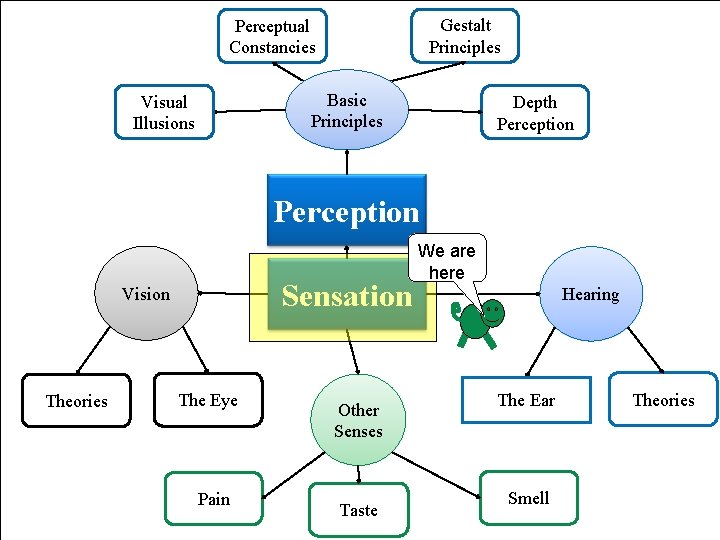
Gestalt Principles Perceptual Constancies Basic Principles Visual Illusions Depth Perception Sensation Vision Theories The Eye Pain Other Senses Taste We are here Hearing The Ear Smell Theories
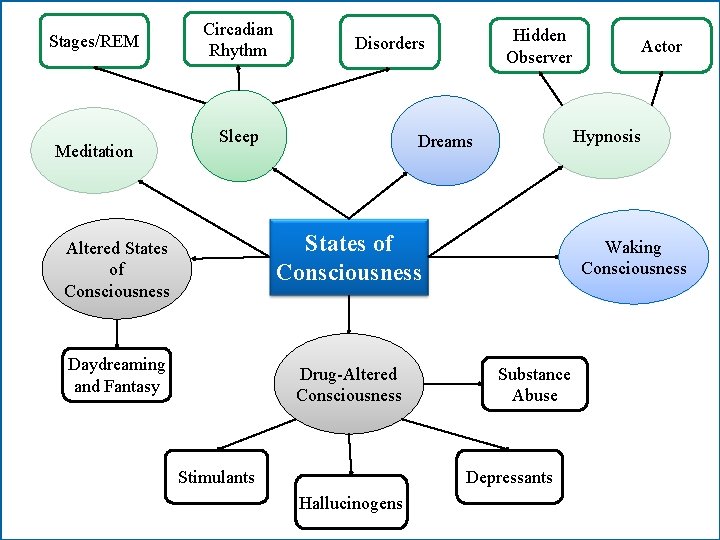
Stages/REM Meditation Circadian Rhythm Hidden Observer Disorders Sleep Hypnosis Dreams States of Consciousness Altered States of Consciousness Daydreaming and Fantasy Drug-Altered Consciousness Stimulants Waking Consciousness Substance Abuse Depressants Hallucinogens Actor
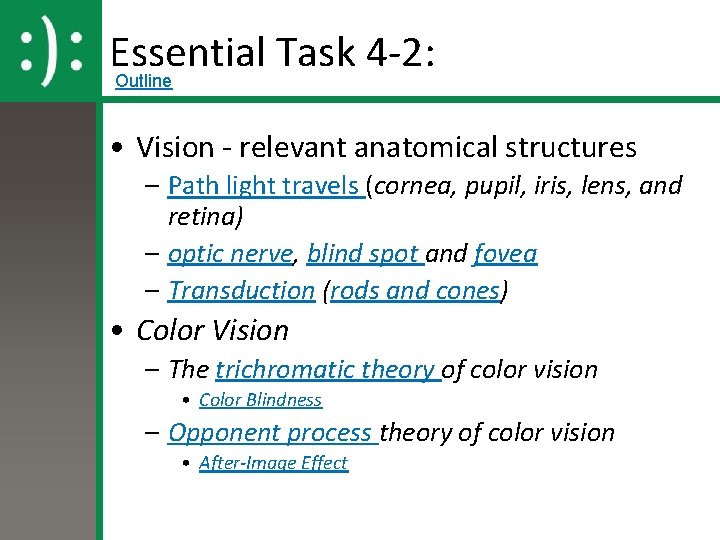
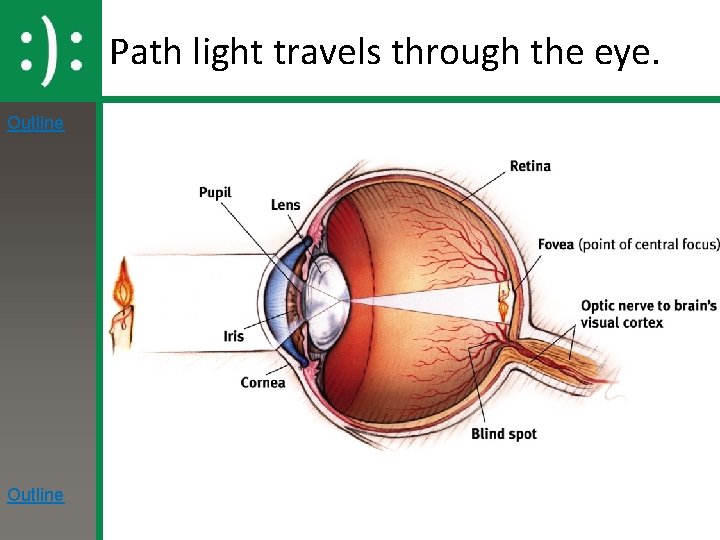
Essential Task 4 -2: Outline • Vision - relevant anatomical structures – Path light travels (cornea, pupil, iris, lens, and retina) – optic nerve, blind spot and fovea – Transduction (rods and cones) • Color Vision – The trichromatic theory of color vision • Color Blindness – Opponent process theory of color vision • After-Image Effect
Path light travels through the eye. Outline
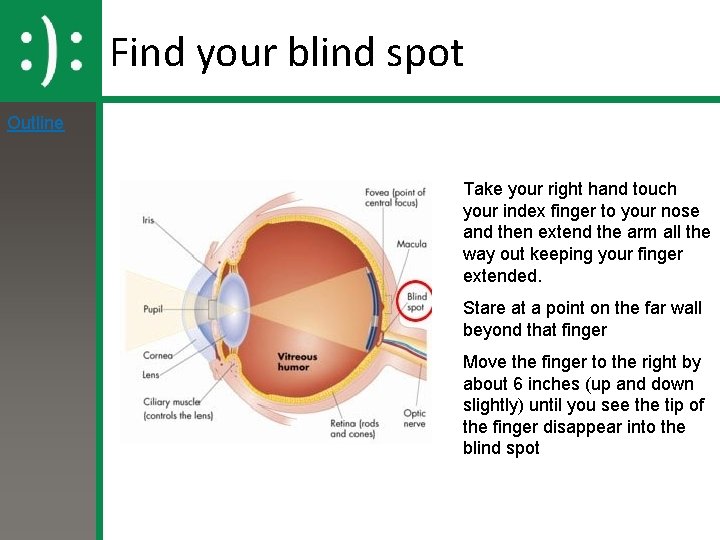
Find your blind spot Outline Take your right hand touch your index finger to your nose and then extend the arm all the way out keeping your finger extended. Stare at a point on the far wall beyond that finger Move the finger to the right by about 6 inches (up and down slightly) until you see the tip of the finger disappear into the blind spot
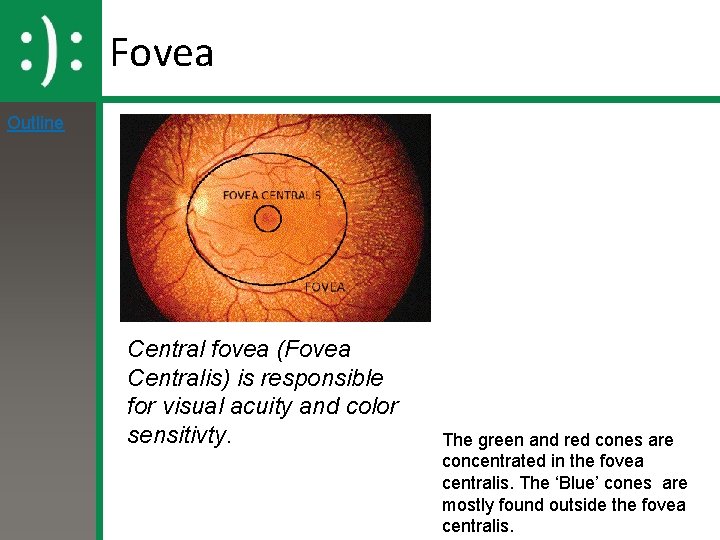
Fovea Outline Central fovea (Fovea Centralis) is responsible for visual acuity and color sensitivty. The green and red cones are concentrated in the fovea centralis. The ‘Blue’ cones are mostly found outside the fovea centralis.
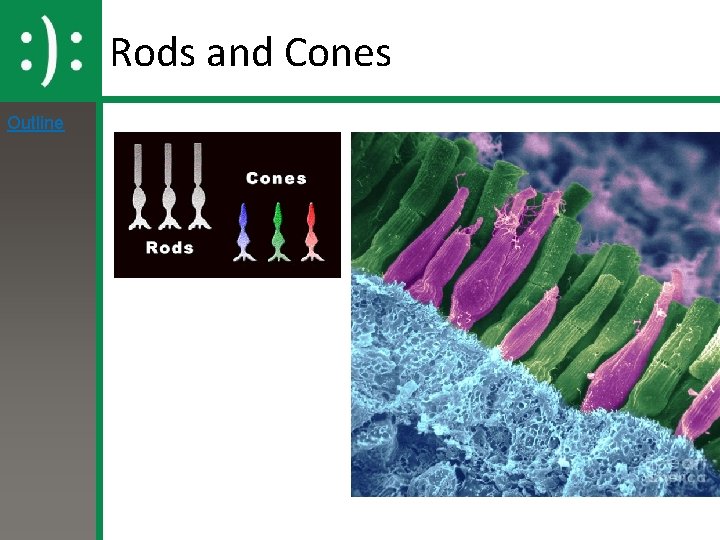
Transduction occurs in the Retina Outline
Rods and Cones Outline
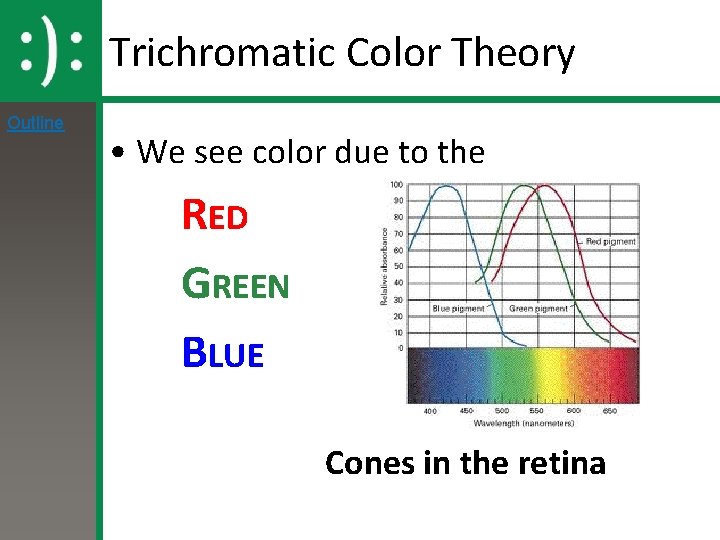
Trichromatic Color Theory Outline • We see color due to the RED GREEN BLUE Cones in the retina
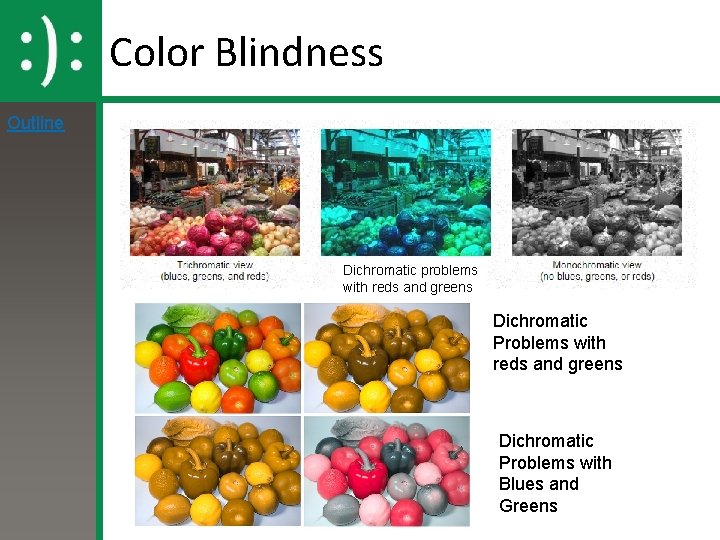
Color Blindness Outline Dichromatic problems with reds and greens Dichromatic Problems with Blues and Greens
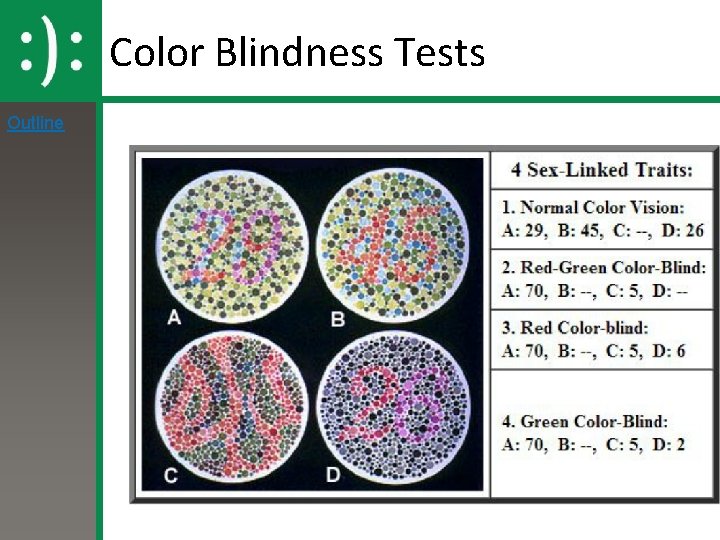
Color Blindness Tests Outline
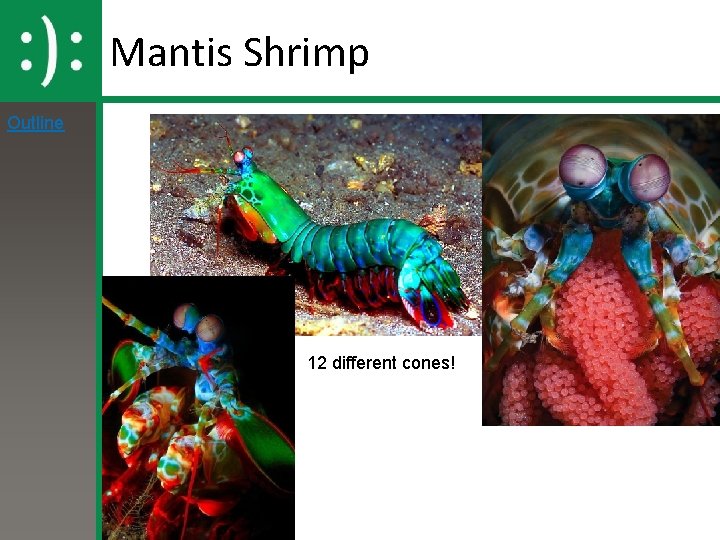
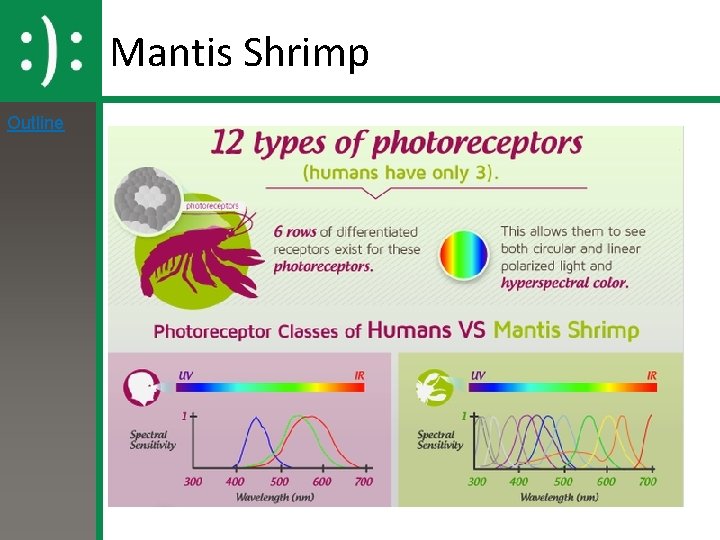
Mantis Shrimp Outline 12 different cones!
Mantis Shrimp Outline
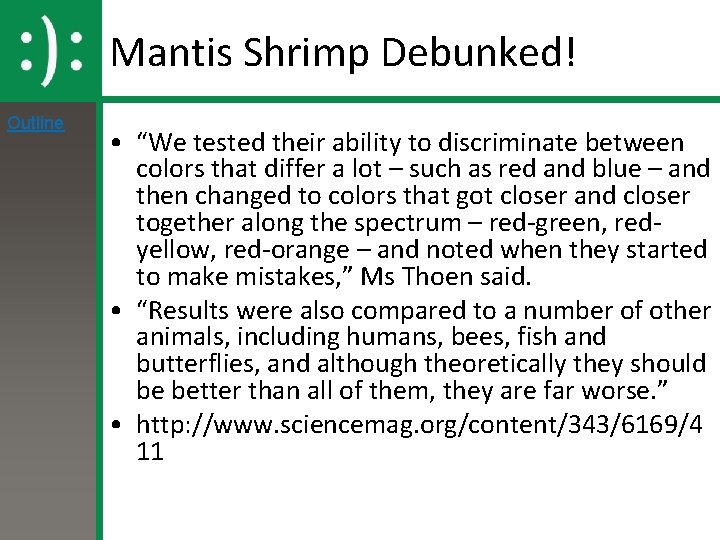
Mantis Shrimp Debunked! Outline • “We tested their ability to discriminate between colors that differ a lot – such as red and blue – and then changed to colors that got closer and closer together along the spectrum – red-green, redyellow, red-orange – and noted when they started to make mistakes, ” Ms Thoen said. • “Results were also compared to a number of other animals, including humans, bees, fish and butterflies, and although theoretically they should be better than all of them, they are far worse. ” • http: //www. sciencemag. org/content/343/6169/4 11
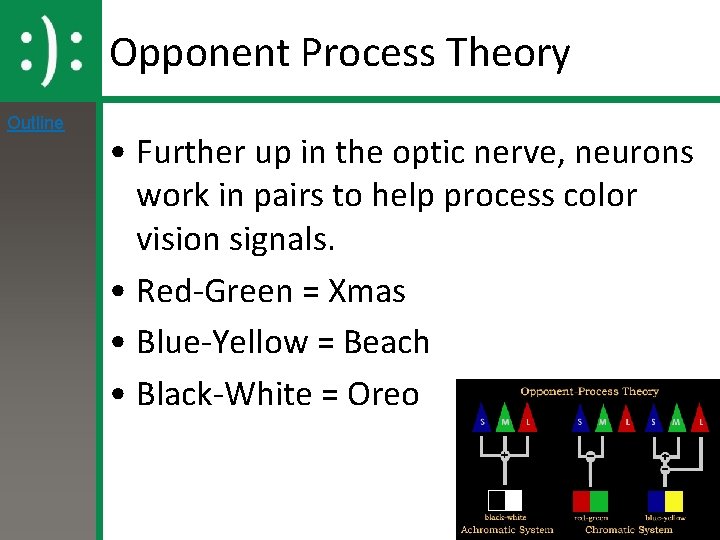
Opponent Process Theory Outline • Further up in the optic nerve, neurons work in pairs to help process color vision signals. • Red-Green = Xmas • Blue-Yellow = Beach • Black-White = Oreo
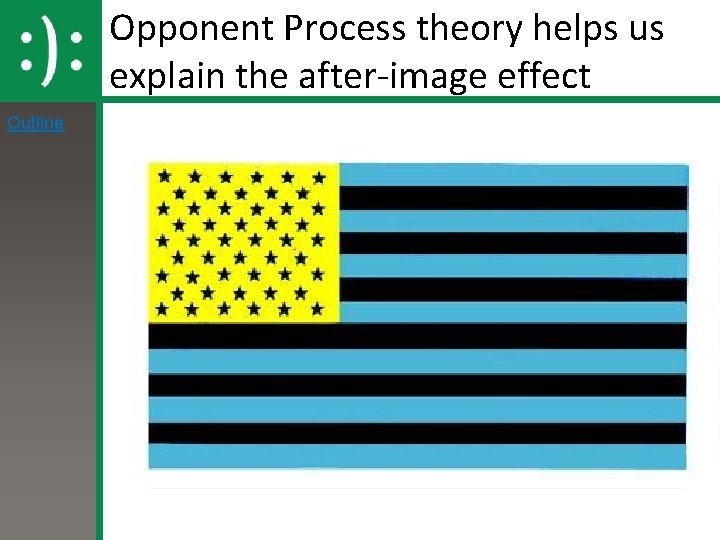
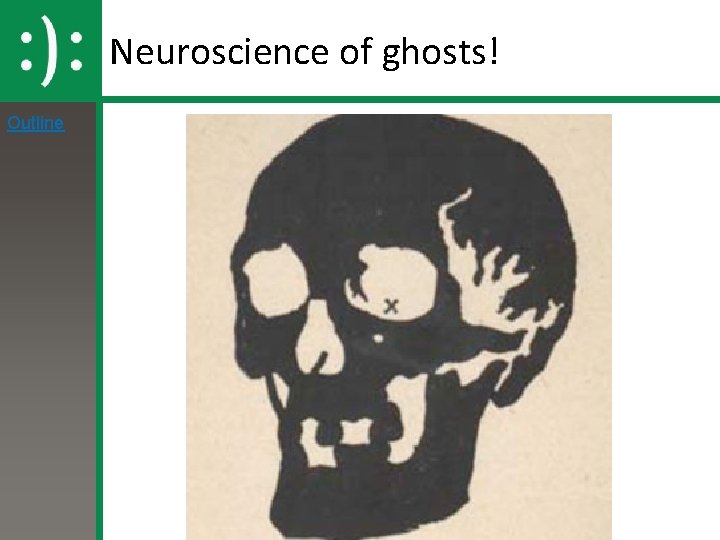
Opponent Process theory helps us explain the after-image effect Outline
Neuroscience of ghosts! Outline
Alas poor Yorick it was an afterimage! Outline