
Whos right The difference is between an What
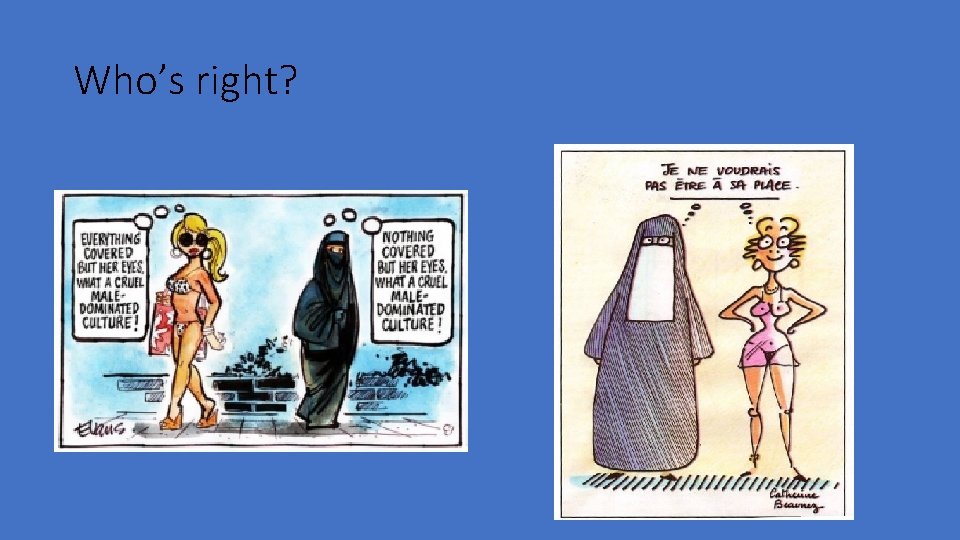
Who’s right?
• The difference is between an • What might be examples of “open” approach to gender these two systems? relations and a “covered” one, both terms referring to the treatment of the sexed body. In • Which prevails at Knox? a “covered” system, gender relations are regulated by codes • Is one system more compatible of modesty. …In contrast, with democracy and liberty? “open” systems are those which don’t see the exposure of the body, its visibility, as detrimental. (155)
What do these quotes mean? Do you agree with what the author is saying? • 1. There was something sexually amiss about girls in headscarves; it was as if both too little and too much were being revealed. (152) • 2. For Muslims, the veil is a declaration of the need to curb the dangerous sexuality of women (and also of men), a response, as Hammoudi puts it, “to the risks associated with [our] vital impulses. ” It is a recognition of the threat that sex poses for society and politics. (154) • 3. We might say then, paradoxically, that the objectification of women’s sexuality serves to veil a constitutive contradiction of French Republicanism. (170)
• For Fourest and Venner, religious extremism was the most virulent form patriarchy could take, and they felt combating must be a first priority. (175) • Are Fourest and Venner right? Is failure to criticize illiberal religious fundamentalism a sign of “multiculturalism run amok” or what Maajid Nawaz would call the “regressive left? ” • Democracy requires a recognition of difference if some kind of commonality is to be achieved. “A full democratic politics should seek not only agreement, but also the democratic treatment of continuing disagreement. ” It is not, as French lawmakers assumed, the sameness of all individuals that defines commonality, but recognition of their difference…. . the issue is not common being, but being in common. (183) • What might this mean in practice? Do you agree?
- Slides: 4