
WHOs Managing Complications in Pregnancy and Childbirth MCPC
WHO’s “Managing Complications in Pregnancy and Childbirth” (MCPC): What’s New in the Second Edition? April 2018

Presentation Outline • Dissemination of the 2 nd edition MCPC • MCPC background and overview of revision process • Review of updates on: ØRespectful maternity care (RMC) for mother and newborn ØPre-eclampsia/eclampsia (PE/E) ØBleeding in early pregnancy and postpartum haemorrhage (PPH) ØImmediate newborn problems ØPrevention and management of infection in pregnancy and childbirth 2
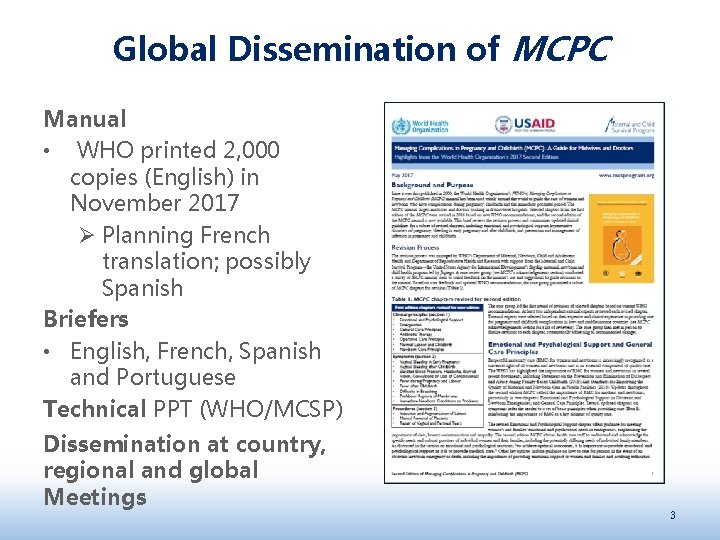
Global Dissemination of MCPC Manual • WHO printed 2, 000 copies (English) in November 2017 Ø Planning French translation; possibly Spanish Briefers • English, French, Spanish and Portuguese Technical PPT (WHO/MCSP) Dissemination at country, regional and global Meetings 3
MCPC Background • Reference manual for midwives and doctors working at district hospital level • Uses symptom/sign-based, stepby-step approach (e. g. , vaginal bleeding in early pregnancy) § Section 1: Clinical principles § Section 2: Symptoms § Section 3: Procedures • First edition published in 2000 (reprinted 2007) 4
MCPC Revision Process • User survey conducted in 2015 to solicit stakeholder feedback to inform revisions • Core team of WHO, partners and external experts prioritized 18 chapters for revision • WHO and MCSP members assigned as technical coleads for each chapter targeted for revision • Revisions had to be consistent with previously updated WHO guidelines and recommendations • WHO Guideline Review Committee (GRC) requirement: two expert external reviewers for each revised chapter • Every revision tracked in master list of 2 nd edition MCPC changes 5
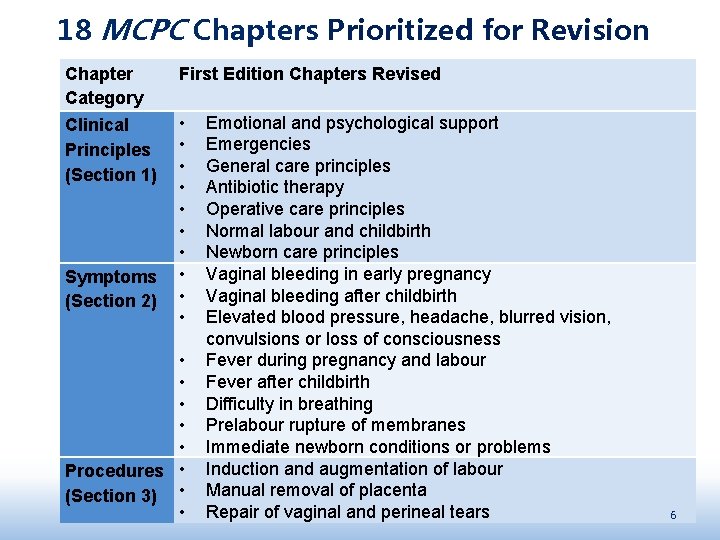
18 MCPC Chapters Prioritized for Revision Chapter Category Clinical Principles (Section 1) Symptoms (Section 2) First Edition Chapters Revised • • • • Procedures • (Section 3) • • Emotional and psychological support Emergencies General care principles Antibiotic therapy Operative care principles Normal labour and childbirth Newborn care principles Vaginal bleeding in early pregnancy Vaginal bleeding after childbirth Elevated blood pressure, headache, blurred vision, convulsions or loss of consciousness Fever during pregnancy and labour Fever after childbirth Difficulty in breathing Prelabour rupture of membranes Immediate newborn conditions or problems Induction and augmentation of labour Manual removal of placenta Repair of vaginal and perineal tears 6
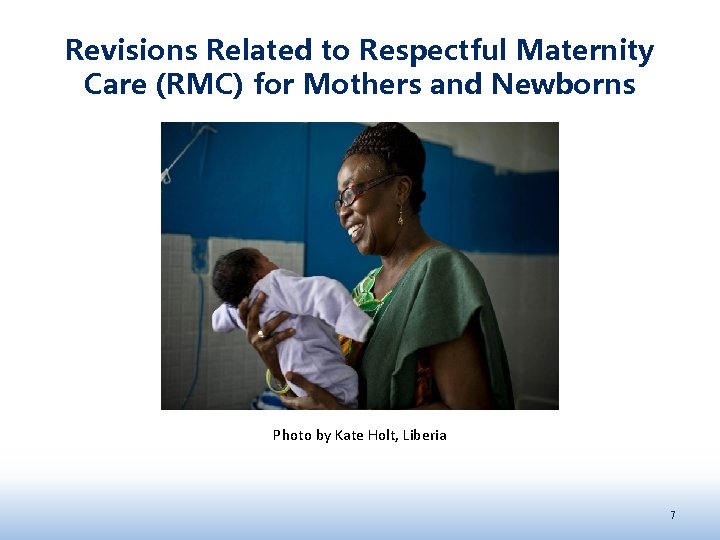
Revisions Related to Respectful Maternity Care (RMC) for Mothers and Newborns Photo by Kate Holt, Liberia 7
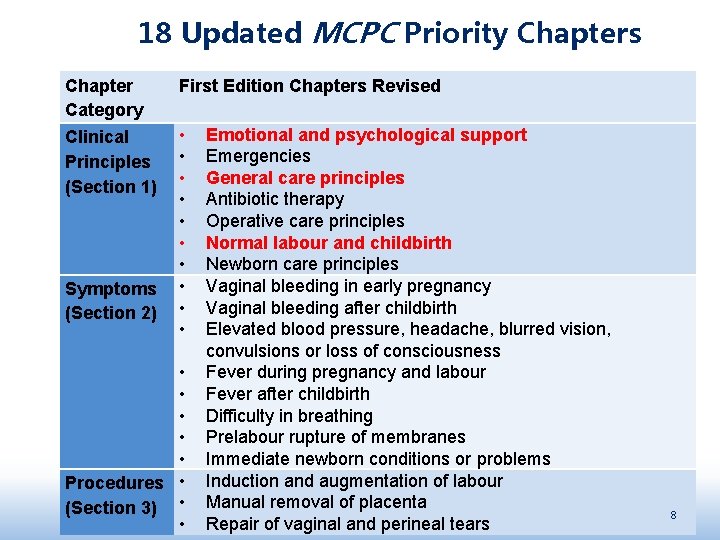
18 Updated MCPC Priority Chapters Chapter Category Clinical Principles (Section 1) Symptoms (Section 2) First Edition Chapters Revised • • • • Procedures • (Section 3) • • Emotional and psychological support Emergencies General care principles Antibiotic therapy Operative care principles Normal labour and childbirth Newborn care principles Vaginal bleeding in early pregnancy Vaginal bleeding after childbirth Elevated blood pressure, headache, blurred vision, convulsions or loss of consciousness Fever during pregnancy and labour Fever after childbirth Difficulty in breathing Prelabour rupture of membranes Immediate newborn conditions or problems Induction and augmentation of labour Manual removal of placenta Repair of vaginal and perineal tears 8
Respectful Maternity Care (RMC) for Mothers and Newborns • RMC is recognized as a universal right of all women and newborns and an essential component of quality care. • The MCPC updates reflect this importance. • Emotional and Psychological Support chapter offers guidance on meeting women’s and families’ emotional and psychosocial needs in emergencies, emphasizing the importance of clear, honest communication and empathy. 9
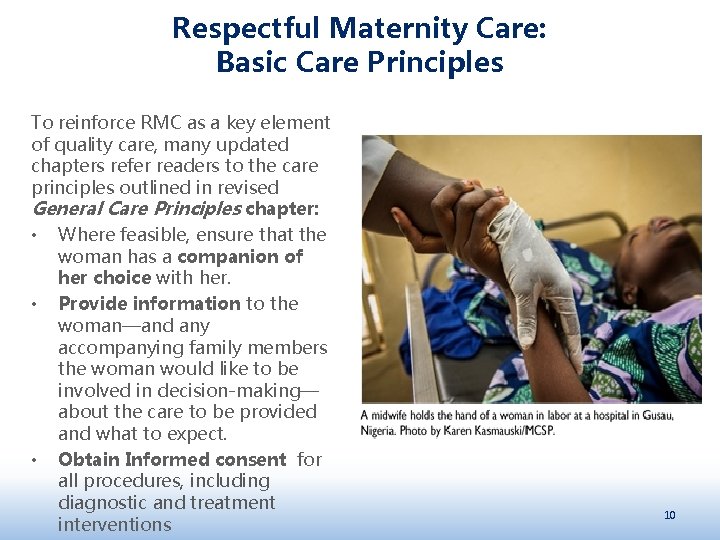
Respectful Maternity Care: Basic Care Principles To reinforce RMC as a key element of quality care, many updated chapters refer readers to the care principles outlined in revised General Care Principles chapter: • Where feasible, ensure that the woman has a companion of her choice with her. • Provide information to the woman—and any accompanying family members the woman would like to be involved in decision-making— about the care to be provided and what to expect. • Obtain Informed consent for all procedures, including diagnostic and treatment interventions 10
Revisions Related to Pre-Eclampsia and Eclampsia (PE/E) Revised chapter reflects WHO 2011 Recommendations for Prevention and Treatment of Pre-eclampsia and Eclampsia 11
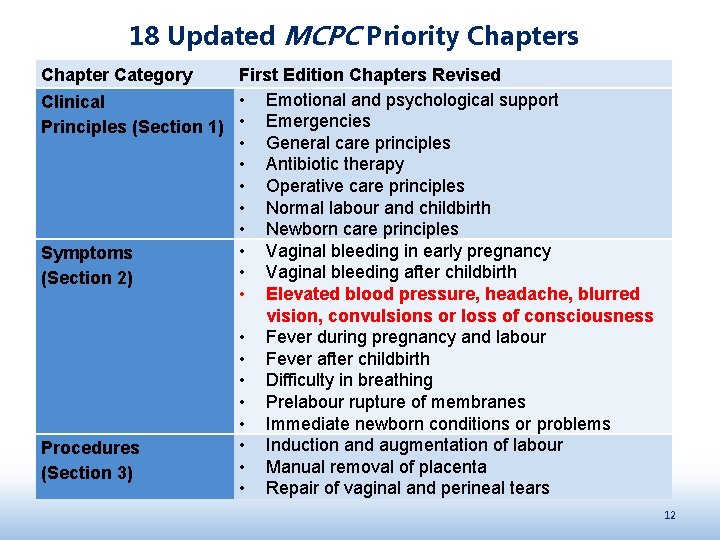
18 Updated MCPC Priority Chapters Chapter Category First Edition Chapters Revised • Emotional and psychological support Clinical Principles (Section 1) • Emergencies • General care principles • Antibiotic therapy • Operative care principles • Normal labour and childbirth • Newborn care principles • Vaginal bleeding in early pregnancy Symptoms • Vaginal bleeding after childbirth (Section 2) • Elevated blood pressure, headache, blurred vision, convulsions or loss of consciousness • Fever during pregnancy and labour • Fever after childbirth • Difficulty in breathing • Prelabour rupture of membranes • Immediate newborn conditions or problems • Induction and augmentation of labour Procedures • Manual removal of placenta (Section 3) • Repair of vaginal and perineal tears 12
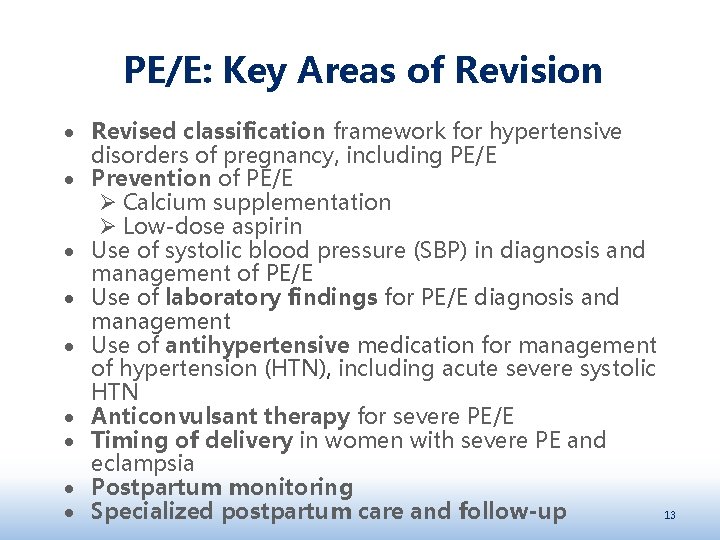
PE/E: Key Areas of Revision Revised classification framework for hypertensive disorders of pregnancy, including PE/E Prevention of PE/E Ø Calcium supplementation Ø Low-dose aspirin Use of systolic blood pressure (SBP) in diagnosis and management of PE/E Use of laboratory findings for PE/E diagnosis and management Use of antihypertensive medication for management of hypertension (HTN), including acute severe systolic HTN Anticonvulsant therapy for severe PE/E Timing of delivery in women with severe PE and eclampsia Postpartum monitoring 13 Specialized postpartum care and follow-up
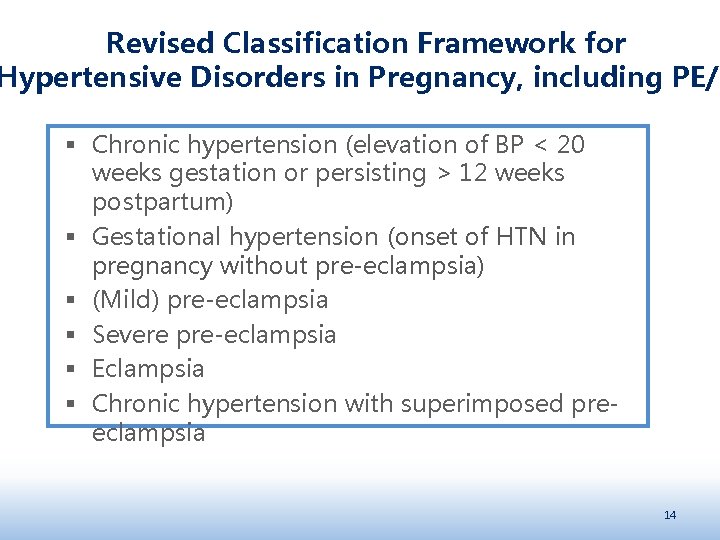
Revised Classification Framework for Hypertensive Disorders in Pregnancy, including PE/E § Chronic hypertension (elevation of BP < 20 weeks gestation or persisting > 12 weeks postpartum) § Gestational hypertension (onset of HTN in pregnancy without pre-eclampsia) § (Mild) pre-eclampsia § Severe pre-eclampsia § Eclampsia § Chronic hypertension with superimposed preeclampsia 14
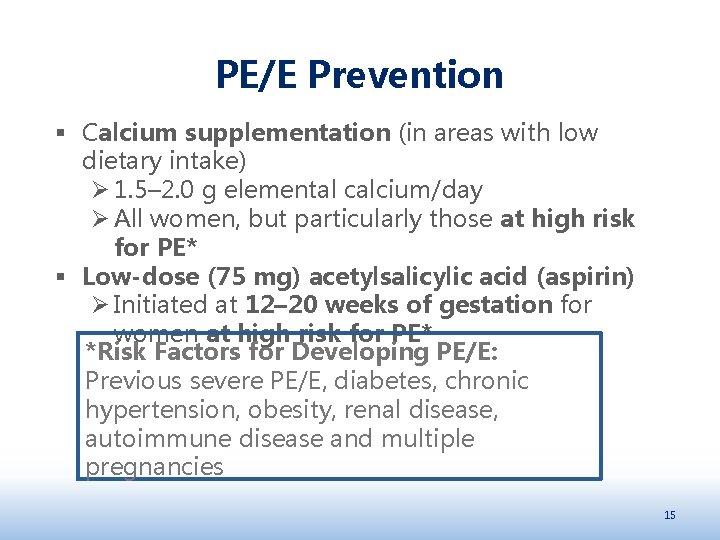
PE/E Prevention § Calcium supplementation (in areas with low dietary intake) Ø 1. 5– 2. 0 g elemental calcium/day Ø All women, but particularly those at high risk for PE* § Low-dose (75 mg) acetylsalicylic acid (aspirin) Ø Initiated at 12‒ 20 weeks of gestation for women at high risk for PE* *Risk Factors for Developing PE/E: Previous severe PE/E, diabetes, chronic hypertension, obesity, renal disease, autoimmune disease and multiple pregnancies 15
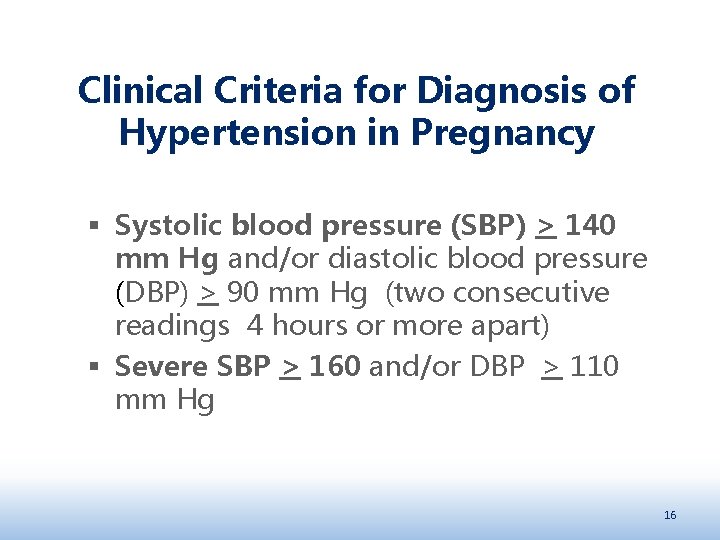
Clinical Criteria for Diagnosis of Hypertension in Pregnancy § Systolic blood pressure (SBP) > 140 mm Hg and/or diastolic blood pressure (DBP) > 90 mm Hg (two consecutive readings 4 hours or more apart) § Severe SBP > 160 and/or DBP > 110 mm Hg 16
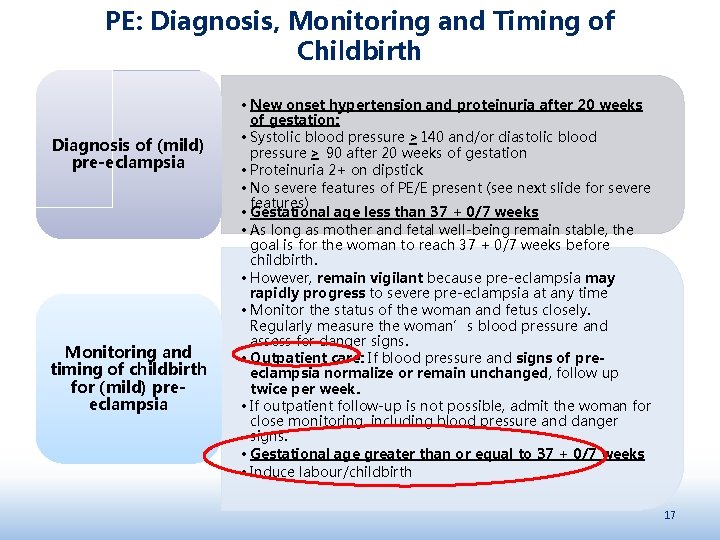
PE: Diagnosis, Monitoring and Timing of Childbirth Diagnosis of (mild) pre-eclampsia Monitoring and timing of childbirth for (mild) preeclampsia • New onset hypertension and proteinuria after 20 weeks of gestation: • Systolic blood pressure > 140 and/or diastolic blood pressure > 90 after 20 weeks of gestation • Proteinuria 2+ on dipstick • No severe features of PE/E present (see next slide for severe features) • Gestational age less than 37 + 0/7 weeks • As long as mother and fetal well-being remain stable, the goal is for the woman to reach 37 + 0/7 weeks before childbirth. • However, remain vigilant because pre-eclampsia may rapidly progress to severe pre-eclampsia at any time • Monitor the status of the woman and fetus closely. Regularly measure the woman’s blood pressure and assess for danger signs. • Outpatient care: If blood pressure and signs of preeclampsia normalize or remain unchanged, follow up twice per week. • If outpatient follow-up is not possible, admit the woman for close monitoring, including blood pressure and danger signs. • Gestational age greater than or equal to 37 + 0/7 weeks • Induce labour/childbirth 17
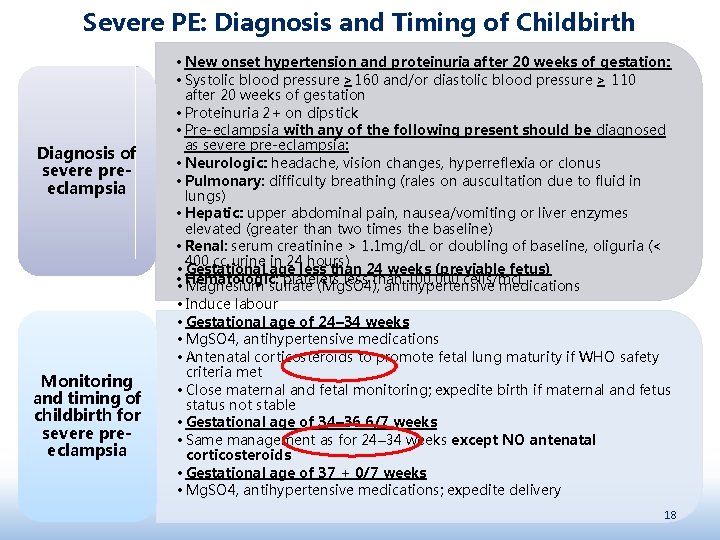
Severe PE: Diagnosis and Timing of Childbirth Diagnosis of severe preeclampsia Monitoring and timing of childbirth for severe preeclampsia • New onset hypertension and proteinuria after 20 weeks of gestation: • Systolic blood pressure > 160 and/or diastolic blood pressure > 110 after 20 weeks of gestation • Proteinuria 2+ on dipstick • Pre-eclampsia with any of the following present should be diagnosed as severe pre-eclampsia: • Neurologic: headache, vision changes, hyperreflexia or clonus • Pulmonary: difficulty breathing (rales on auscultation due to fluid in lungs) • Hepatic: upper abdominal pain, nausea/vomiting or liver enzymes elevated (greater than two times the baseline) • Renal: serum creatinine > 1. 1 mg/d. L or doubling of baseline, oliguria (< 400 cc urine in 24 hours) • Gestational age less than 24 weeks (previable fetus) • Hematologic: platelets less than 100, 000 cells/mc. L • Magnesium sulfate (Mg. SO 4), antihypertensive medications • Induce labour • Gestational age of 24‒ 34 weeks • Mg. SO 4, antihypertensive medications • Antenatal corticosteroids to promote fetal lung maturity if WHO safety criteria met • Close maternal and fetal monitoring; expedite birth if maternal and fetus status not stable • Gestational age of 34‒ 36 6/7 weeks • Same management as for 24‒ 34 weeks except NO antenatal corticosteroids • Gestational age of 37 + 0/7 weeks • Mg. SO 4, antihypertensive medications; expedite delivery 18
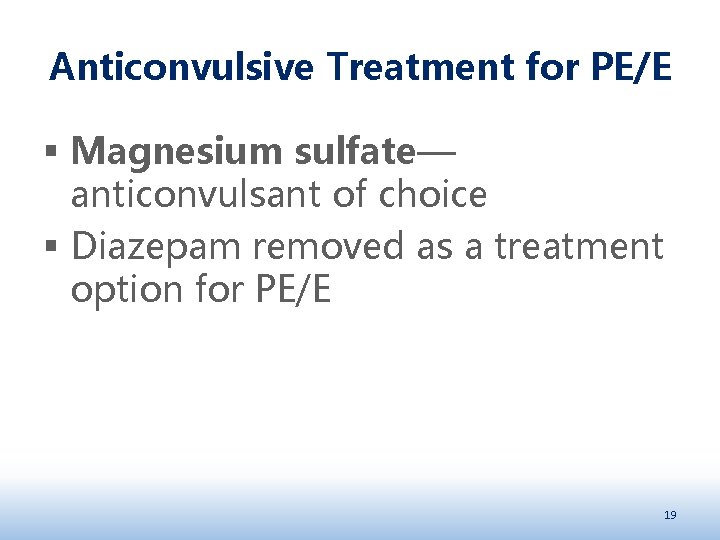
Anticonvulsive Treatment for PE/E § Magnesium sulfate— anticonvulsant of choice § Diazepam removed as a treatment option for PE/E 19
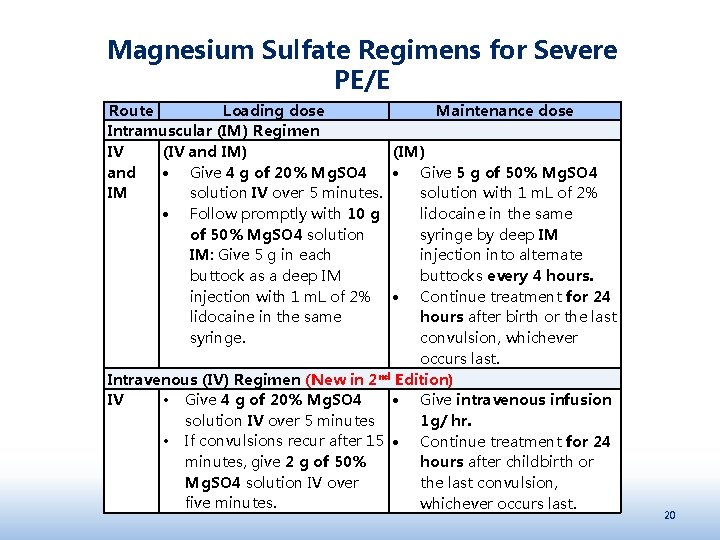
Magnesium Sulfate Regimens for Severe PE/E Route Loading dose Maintenance dose Intramuscular (IM) Regimen IV (IV and IM) (IM) and Give 4 g of 20% Mg. SO 4 Give 5 g of 50% Mg. SO 4 IM solution IV over 5 minutes. solution with 1 m. L of 2% Follow promptly with 10 g lidocaine in the same of 50% Mg. SO 4 solution syringe by deep IM IM: Give 5 g in each injection into alternate buttock as a deep IM buttocks every 4 hours. injection with 1 m. L of 2% Continue treatment for 24 lidocaine in the same hours after birth or the last syringe. convulsion, whichever occurs last. Intravenous (IV) Regimen (New in 2 nd Edition) IV • Give 4 g of 20% Mg. SO 4 Give intravenous infusion solution IV over 5 minutes 1 g/ hr. • If convulsions recur after 15 Continue treatment for 24 minutes, give 2 g of 50% hours after childbirth or Mg. SO 4 solution IV over the last convulsion, five minutes. whichever occurs last. 20
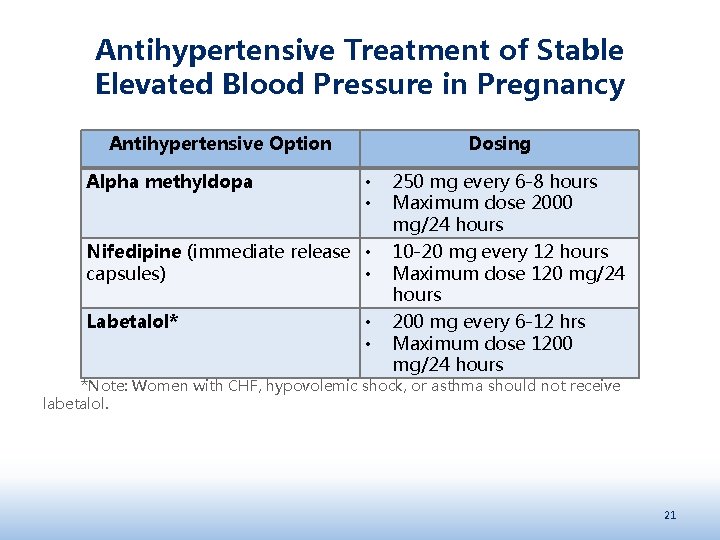
Antihypertensive Treatment of Stable Elevated Blood Pressure in Pregnancy Antihypertensive Option Alpha methyldopa Dosing • • Nifedipine (immediate release • capsules) • Labetalol* • • 250 mg every 6 -8 hours Maximum dose 2000 mg/24 hours 10 -20 mg every 12 hours Maximum dose 120 mg/24 hours 200 mg every 6 -12 hrs Maximum dose 1200 mg/24 hours *Note: Women with CHF, hypovolemic shock, or asthma should not receive labetalol. 21
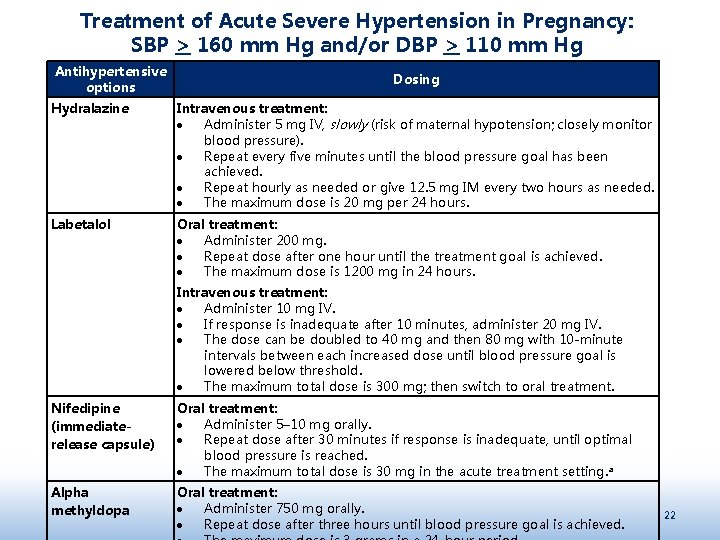
Treatment of Acute Severe Hypertension in Pregnancy: SBP > 160 mm Hg and/or DBP > 110 mm Hg Antihypertensive options Dosing Hydralazine Intravenous treatment: Administer 5 mg IV, slowly (risk of maternal hypotension; closely monitor blood pressure). Repeat every five minutes until the blood pressure goal has been achieved. Repeat hourly as needed or give 12. 5 mg IM every two hours as needed. The maximum dose is 20 mg per 24 hours. Labetalol Oral treatment: Administer 200 mg. Repeat dose after one hour until the treatment goal is achieved. The maximum dose is 1200 mg in 24 hours. Intravenous treatment: Administer 10 mg IV. If response is inadequate after 10 minutes, administer 20 mg IV. The dose can be doubled to 40 mg and then 80 mg with 10 -minute intervals between each increased dose until blood pressure goal is lowered below threshold. The maximum total dose is 300 mg; then switch to oral treatment. Nifedipine (immediaterelease capsule) Oral treatment: Administer 5– 10 mg orally. Repeat dose after 30 minutes if response is inadequate, until optimal blood pressure is reached. The maximum total dose is 30 mg in the acute treatment setting. a Alpha methyldopa Oral treatment: Administer 750 mg orally. Repeat dose after three hours until blood pressure goal is achieved. 22
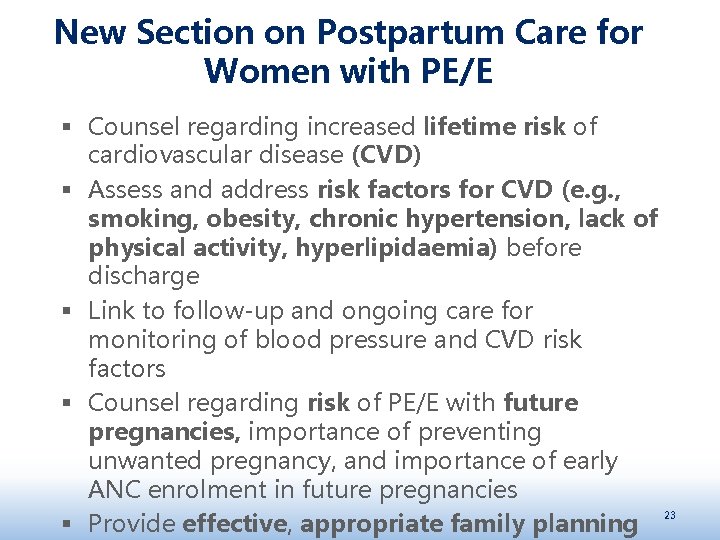
New Section on Postpartum Care for Women with PE/E § Counsel regarding increased lifetime risk of cardiovascular disease (CVD) § Assess and address risk factors for CVD (e. g. , smoking, obesity, chronic hypertension, lack of physical activity, hyperlipidaemia) before discharge § Link to follow-up and ongoing care for monitoring of blood pressure and CVD risk factors § Counsel regarding risk of PE/E with future pregnancies, importance of preventing unwanted pregnancy, and importance of early ANC enrolment in future pregnancies 23 § Provide effective, appropriate family planning
Revisions Related to Obstetric Haemorrhage: Bleeding in Early Pregnancy and Postpartum Haemorrhage (PPH) 24
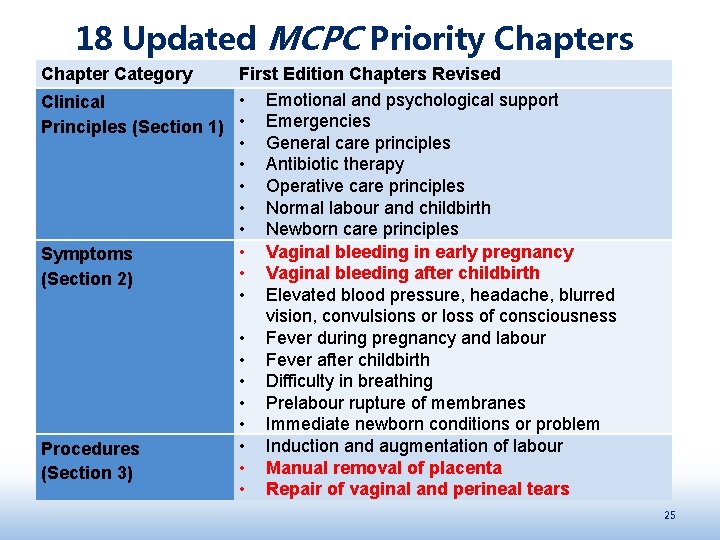
18 Updated MCPC Priority Chapters Chapter Category First Edition Chapters Revised • Emotional and psychological support Clinical Principles (Section 1) • Emergencies • General care principles • Antibiotic therapy • Operative care principles • Normal labour and childbirth • Newborn care principles • Vaginal bleeding in early pregnancy Symptoms • Vaginal bleeding after childbirth (Section 2) • Elevated blood pressure, headache, blurred vision, convulsions or loss of consciousness • Fever during pregnancy and labour • Fever after childbirth • Difficulty in breathing • Prelabour rupture of membranes • Immediate newborn conditions or problem • Induction and augmentation of labour Procedures • Manual removal of placenta (Section 3) • Repair of vaginal and perineal tears 25
Bleeding in Early Pregnancy • Updates to differential diagnosis and management of threatened, inevitable and incomplete abortion, ectopic pregnancy, and molar pregnancy • Updated guidance on management of inevitable and incomplete abortion, including surgical, medical and expectant management options; new table summarizing medical management drugs and protocol • Updated section on management of abortion-related infection/sepsis: clindamycin and ampicillin as first-line drugs; gentamycin and ampicillin as second-line drugs; both regimens without metronidazole • Updated guidance on postabortion counselling and immediate initiation of contraception after an abortion 26
Definition and Classification of Postpartum Haemorrhage (PPH) Definition Classification of PPH • Increased vaginal • PPH is commonly bleeding within the defined as blood loss first 24 hours after in excess of 500 m. L childbirth is primary • Severe PPH is defined PPH as blood loss of 1000 m. L or more or change • Increased vaginal bleeding following in vital signs with any the first 24 hours after blood loss childbirth is secondary PPH (delayed PPH) 27
Active Management of Third Stage of Labour (AMTSL) • The main component of active management of the third stage of labour is immediate postpartum uterotonic medication. ØOxytocin is preferred because it is effective 2 to 3 minutes after injection, has minimal side effects and can be used in all women. • If oxytocin, if not available give: ØOral misoprostol 600 mcg; or ØErgometrine (0. 2 mg IM) or methylergometrine; or ØFixed drug combination of oxytocin and ergometrine. • Placenta may be allowed to deliver physiologically 28 (controlled cord traction is contraindicated in
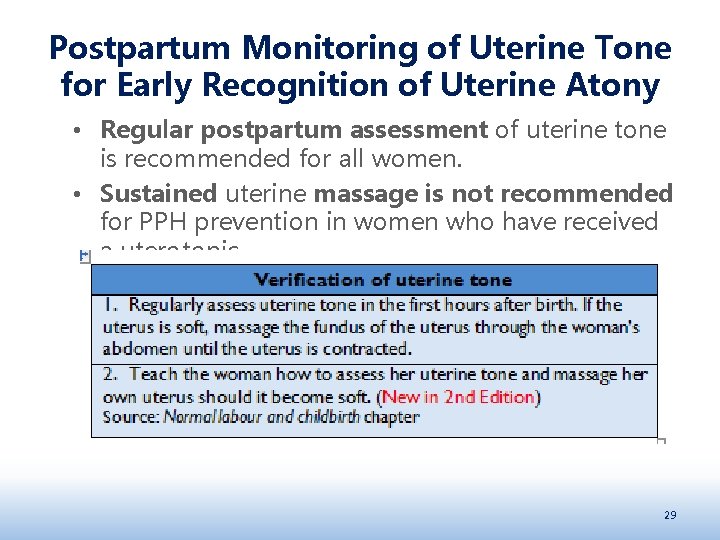
Postpartum Monitoring of Uterine Tone for Early Recognition of Uterine Atony • Regular postpartum assessment of uterine tone is recommended for all women. • Sustained uterine massage is not recommended for PPH prevention in women who have received a uterotonic. 29
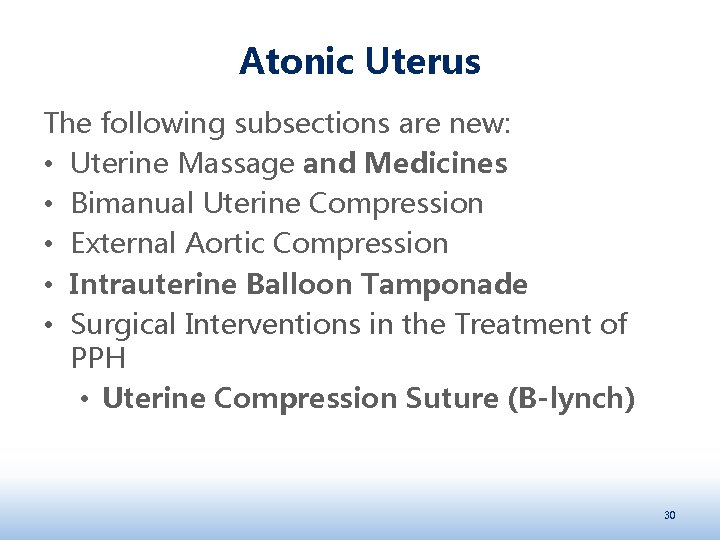
Atonic Uterus The following subsections are new: • Uterine Massage and Medicines • Bimanual Uterine Compression • External Aortic Compression • Intrauterine Balloon Tamponade • Surgical Interventions in the Treatment of PPH • Uterine Compression Suture (B-lynch) 30
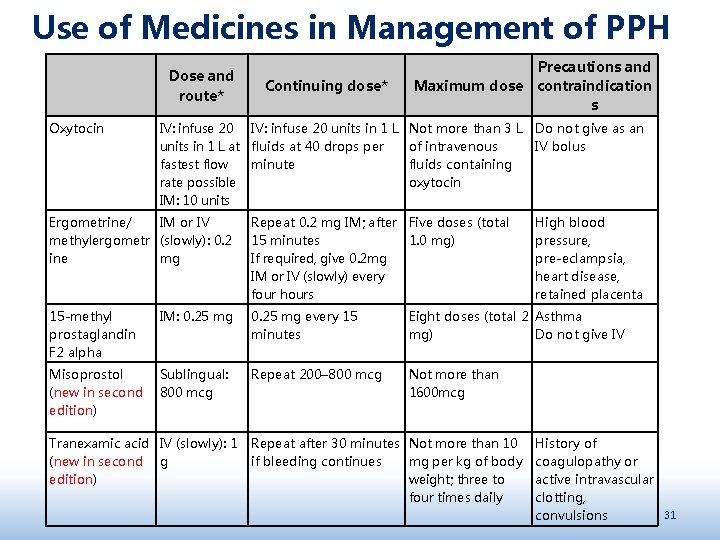
Use of Medicines in Management of PPH Oxytocin Dose and route* Continuing dose* Maximum dose Precautions and contraindication s IV: infuse 20 units in 1 L Not more than 3 L Do not give as an units in 1 L at fluids at 40 drops per of intravenous IV bolus fastest flow minute fluids containing rate possible oxytocin IM: 10 units Ergometrine/ IM or IV methylergometr (slowly): 0. 2 ine mg Repeat 0. 2 mg IM; after Five doses (total 15 minutes 1. 0 mg) If required, give 0. 2 mg IM or IV (slowly) every four hours 15 -methyl prostaglandin F 2 alpha 0. 25 mg every 15 minutes Eight doses (total 2 Asthma mg) Do not give IV Repeat 200– 800 mcg Not more than 1600 mcg IM: 0. 25 mg Misoprostol Sublingual: (new in second 800 mcg edition) Tranexamic acid IV (slowly): 1 Repeat after 30 minutes Not more than 10 (new in second g if bleeding continues mg per kg of body edition) weight; three to four times daily High blood pressure, pre-eclampsia, heart disease, retained placenta History of coagulopathy or active intravascular clotting, 31 convulsions
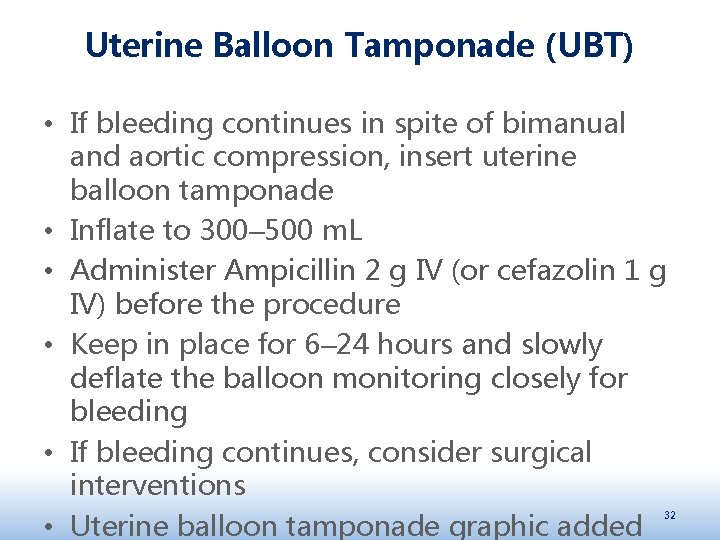
Uterine Balloon Tamponade (UBT) • If bleeding continues in spite of bimanual and aortic compression, insert uterine balloon tamponade • Inflate to 300‒ 500 m. L • Administer Ampicillin 2 g IV (or cefazolin 1 g IV) before the procedure • Keep in place for 6‒ 24 hours and slowly deflate the balloon monitoring closely for bleeding • If bleeding continues, consider surgical interventions • Uterine balloon tamponade graphic added 32

33

Non-Pneumatic Anti-Shock Garment • Newly included in MCPC as temporizing measure for PPH • Guidance on application and removal 34
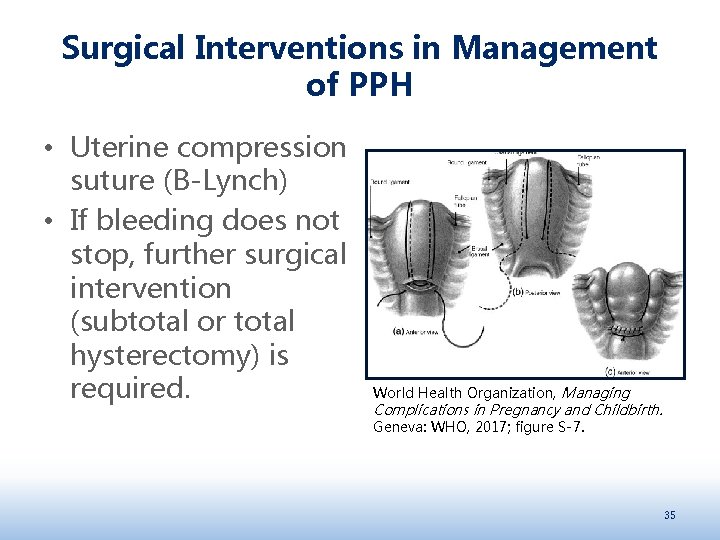
Surgical Interventions in Management of PPH • Uterine compression suture (B-Lynch) • If bleeding does not stop, further surgical intervention (subtotal or total hysterectomy) is required. World Health Organization, Managing Complications in Pregnancy and Childbirth. Geneva: WHO, 2017; figure S-7. 35
Vaginal and Perineal Tears • Single oral dose of prophylactic antibiotic (ampicillin 500 mg) should be administered before beginning repair of third and fourth degree tears (but not first and second degree tears). 36
Retained Placenta with Bleeding • Manual removal of the placenta should be attempted after administration of a prophylactic antibiotic (single dose, ampicillin 2 gm IV or cefazolin 1 gm IV). 37
Care after PPH • Updated guidance on postpartum care, including: counselling on self-care, nutrition, iron supplementation, postpartum family planning, warning signs/care-seeking 38
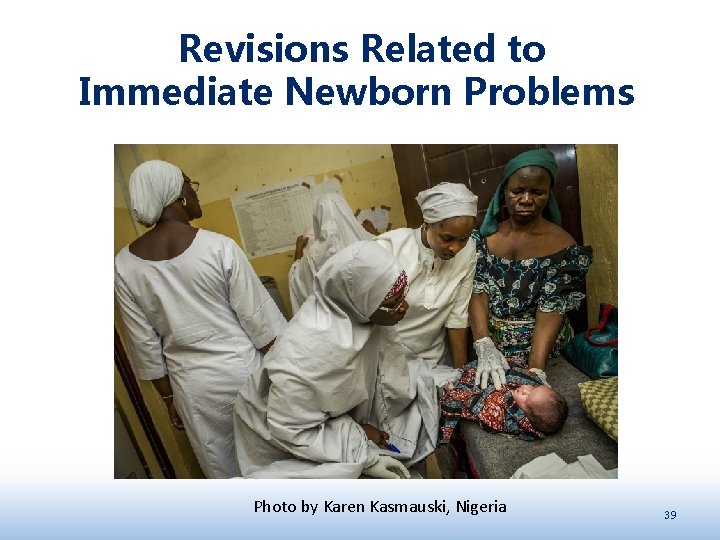
Revisions Related to Immediate Newborn Problems Photo by Karen Kasmauski, Nigeria 39
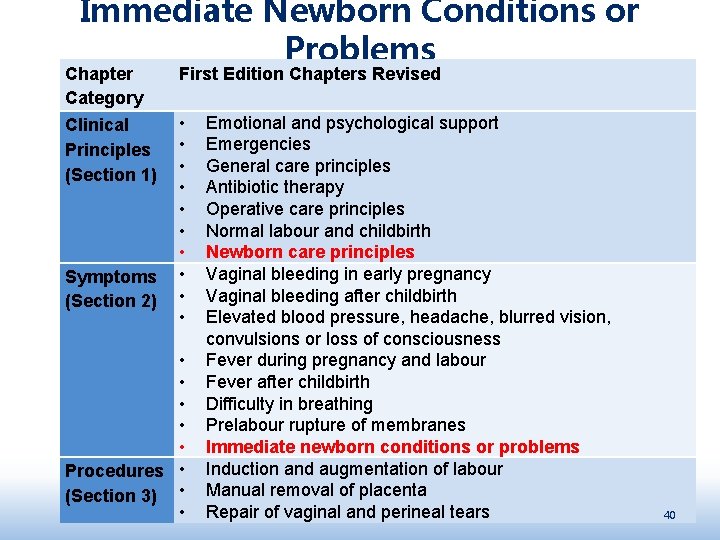
Immediate Newborn Conditions or Problems Chapter Category Clinical Principles (Section 1) Symptoms (Section 2) First Edition Chapters Revised • • • • Procedures • (Section 3) • • Emotional and psychological support Emergencies General care principles Antibiotic therapy Operative care principles Normal labour and childbirth Newborn care principles Vaginal bleeding in early pregnancy Vaginal bleeding after childbirth Elevated blood pressure, headache, blurred vision, convulsions or loss of consciousness Fever during pregnancy and labour Fever after childbirth Difficulty in breathing Prelabour rupture of membranes Immediate newborn conditions or problems Induction and augmentation of labour Manual removal of placenta Repair of vaginal and perineal tears 40
Immediate Recognition and Management of Signs of Serious Illness in a Newborn • Signs of serious illness in a newborn expanded in 2 nd edition (e. g. , lethargy, movement only when stimulated, hyperthermia in addition to hypothermia) • Also updated initial antibiotic treatment and communication with family of newborn: • Administer first dose of ampicillin (50 mg/kg body weight) and gentamycin (5 mg/kg body weight) IM for signs of serious illness; refer without delay. • Inform mother and companion/family about what is happening and keep them updated as care is 41
Management of Breathing Difficulty • Drying, additional stimulation, and ventilation (if needed) in first minute • Suctioning only if amniotic fluid is meconiumstained or mouth/nose is full of secretions (no routine suctioning) • Resuscitation illustrations added and revised (new graphic demonstrating correct fit of mask; use of size 0 for small infants < 2. 5 kg) • Added guidance on continuous positive airway pressure (CPAP) and safe use of oxygen in neonate (delivery method/nasal prongs; safe oxygen limit; risks) 42
New Section: Management of Asymptomatic Newborns Exposed to Infection Treat with prophylactic antibiotics—ampicillin and gentamycin IM—for at least 2 days while infection is ruled out. Key indications for prophylactic antibiotics: • Preterm prelabour rupture of membranes • Membranes ruptured > 18 hours before birth • Mother is being treated with antibiotics for chorioamnionitis • Mother had fever greater than 38ºC before childbirth or during labour • Amniotic fluid was foul-smelling or purulent • Mother had Group B streptococcus colonization without adequate antibiotic therapy during labour 43
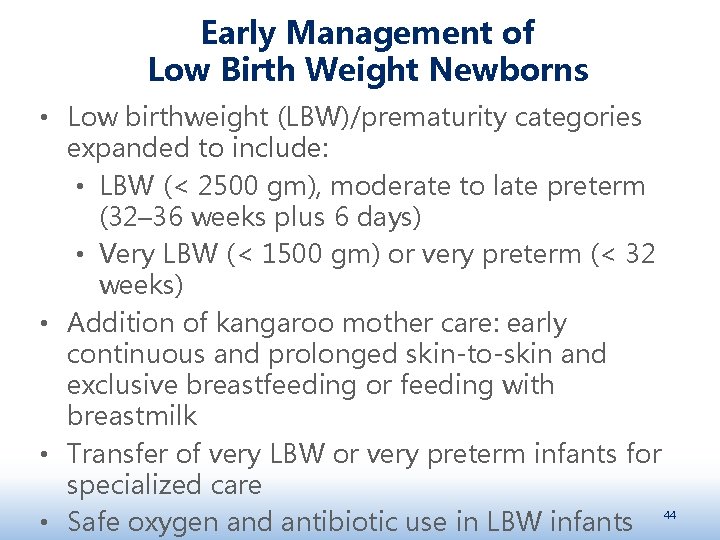
Early Management of Low Birth Weight Newborns • Low birthweight (LBW)/prematurity categories expanded to include: • LBW (< 2500 gm), moderate to late preterm (32‒ 36 weeks plus 6 days) • Very LBW (< 1500 gm) or very preterm (< 32 weeks) • Addition of kangaroo mother care: early continuous and prolonged skin-to-skin and exclusive breastfeeding or feeding with breastmilk • Transfer of very LBW or very preterm infants for specialized care • Safe oxygen and antibiotic use in LBW infants 44
Revisions Related to Prevention and Management of Infection in Pregnancy and Childbirth 45
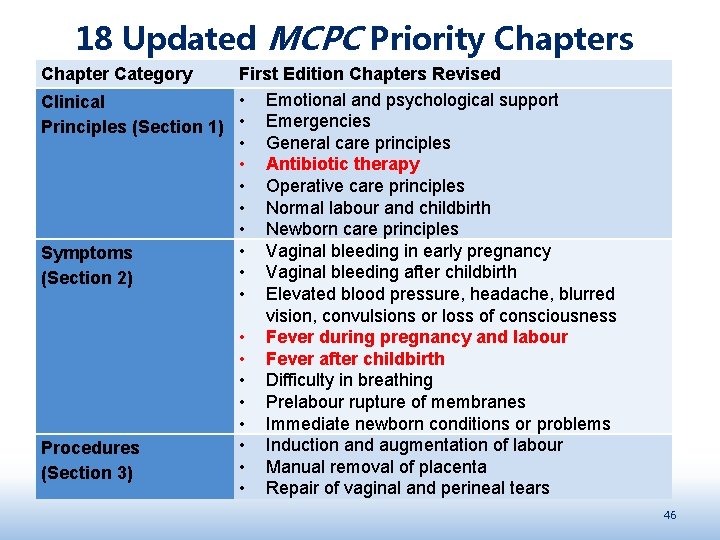
18 Updated MCPC Priority Chapters Chapter Category First Edition Chapters Revised • Emotional and psychological support Clinical Principles (Section 1) • Emergencies • General care principles • Antibiotic therapy • Operative care principles • Normal labour and childbirth • Newborn care principles • Vaginal bleeding in early pregnancy Symptoms • Vaginal bleeding after childbirth (Section 2) • Elevated blood pressure, headache, blurred vision, convulsions or loss of consciousness • Fever during pregnancy and labour • Fever after childbirth • Difficulty in breathing • Prelabour rupture of membranes • Immediate newborn conditions or problems • Induction and augmentation of labour Procedures • Manual removal of placenta (Section 3) • Repair of vaginal and perineal tears 46
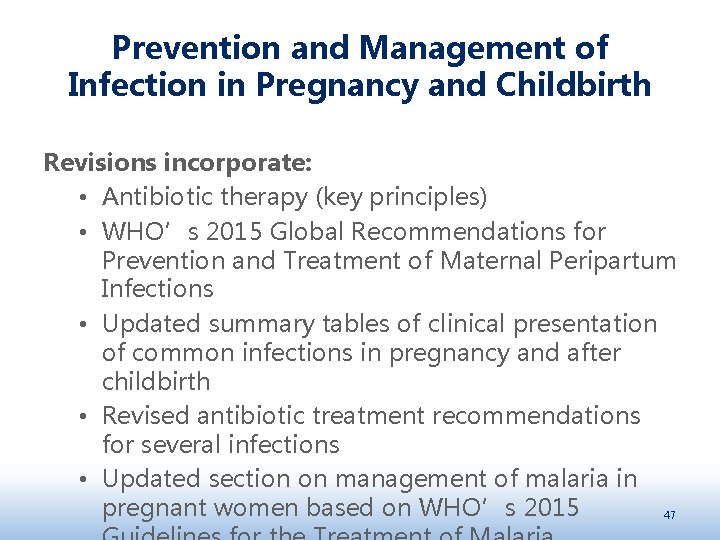
Prevention and Management of Infection in Pregnancy and Childbirth Revisions incorporate: • Antibiotic therapy (key principles) • WHO’s 2015 Global Recommendations for Prevention and Treatment of Maternal Peripartum Infections • Updated summary tables of clinical presentation of common infections in pregnancy and after childbirth • Revised antibiotic treatment recommendations for several infections • Updated section on management of malaria in pregnant women based on WHO’s 2015 47
Prevention and Management of Infection in Pregnancy and Childbirth (cont. ) Antibiotic therapy principles: • Appropriate and inappropriate use of antibiotics for infection prevention and treatment • Judicious use of antibiotics to reduce antimicrobial resistance (narrow spectrum antibiotic, correct dosing and duration) • Monitoring local bacteria, antibiotic susceptibility and resistance patterns to inform antibiotic selection, where feasible • Avoiding and managing antibiotic allergies, including anaphylaxis 48
When Prophylactic Antibiotics Are Not Recommended Prophylactic antibiotics are not recommended under these conditions: • Uncomplicated vaginal birth • Operative vaginal birth • Episiotomy • First- or second-degree lacerations 49
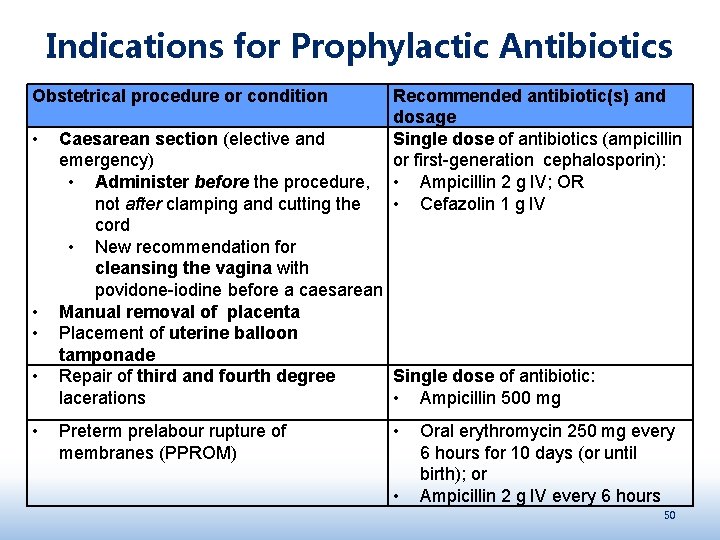
Indications for Prophylactic Antibiotics Obstetrical procedure or condition • • • Recommended antibiotic(s) and dosage Single dose of antibiotics (ampicillin or first-generation cephalosporin): • Ampicillin 2 g IV; OR • Cefazolin 1 g IV Caesarean section (elective and emergency) • Administer before the procedure, not after clamping and cutting the cord • New recommendation for cleansing the vagina with povidone-iodine before a caesarean Manual removal of placenta Placement of uterine balloon tamponade Repair of third and fourth degree Single dose of antibiotic: lacerations • Ampicillin 500 mg Preterm prelabour rupture of membranes (PPROM) • • Oral erythromycin 250 mg every 6 hours for 10 days (or until birth); or Ampicillin 2 g IV every 6 hours 50
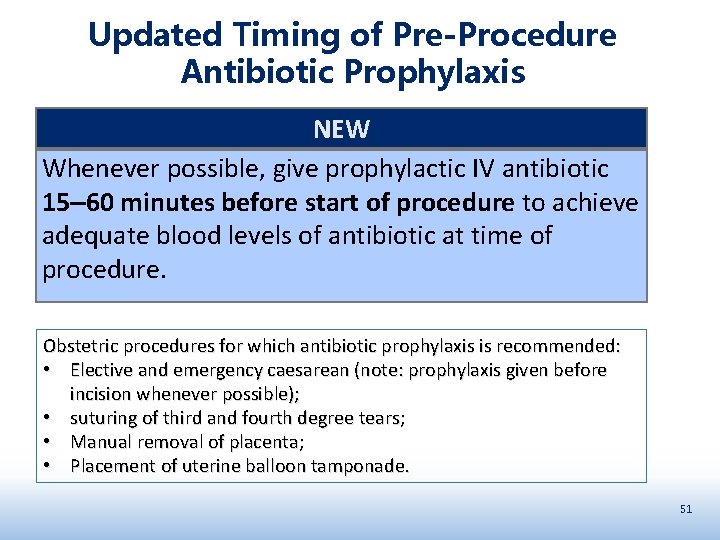
Updated Timing of Pre-Procedure Antibiotic Prophylaxis NEW Whenever possible, give prophylactic IV antibiotic 15‒ 60 minutes before start of procedure to achieve adequate blood levels of antibiotic at time of procedure. Obstetric procedures for which antibiotic prophylaxis is recommended: • Elective and emergency caesarean (note: prophylaxis given before incision whenever possible); • suturing of third and fourth degree tears; • Manual removal of placenta; • Placement of uterine balloon tamponade. 51
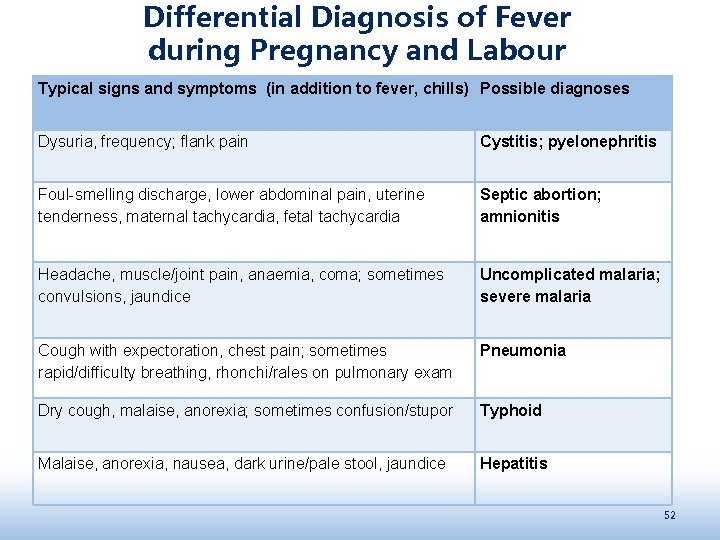
Differential Diagnosis of Fever during Pregnancy and Labour Typical signs and symptoms (in addition to fever, chills) Possible diagnoses Dysuria, frequency; flank pain Cystitis; pyelonephritis Foul-smelling discharge, lower abdominal pain, uterine tenderness, maternal tachycardia, fetal tachycardia Septic abortion; amnionitis Headache, muscle/joint pain, anaemia, coma; sometimes convulsions, jaundice Uncomplicated malaria; severe malaria Cough with expectoration, chest pain; sometimes rapid/difficulty breathing, rhonchi/rales on pulmonary exam Pneumonia Dry cough, malaise, anorexia; sometimes confusion/stupor Typhoid Malaise, anorexia, nausea, dark urine/pale stool, jaundice Hepatitis 52
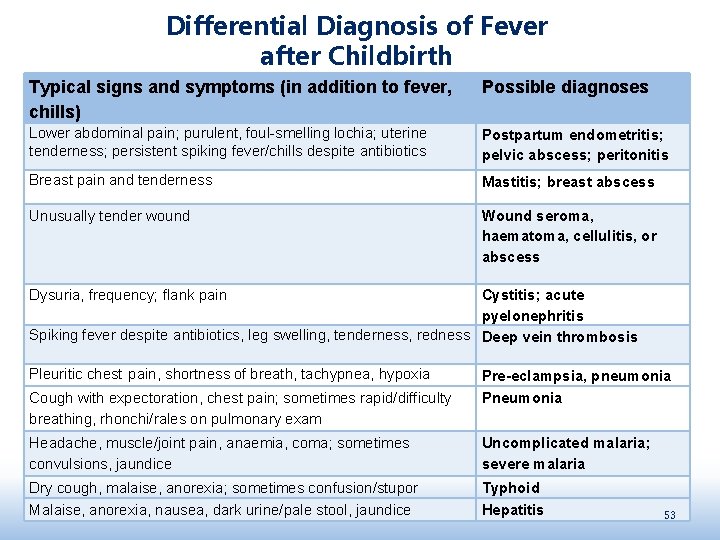
Differential Diagnosis of Fever after Childbirth Typical signs and symptoms (in addition to fever, chills) Possible diagnoses Lower abdominal pain; purulent, foul-smelling lochia; uterine tenderness; persistent spiking fever/chills despite antibiotics Postpartum endometritis; pelvic abscess; peritonitis Breast pain and tenderness Mastitis; breast abscess Unusually tender wound Wound seroma, haematoma, cellulitis, or abscess Dysuria, frequency; flank pain Cystitis; acute pyelonephritis Spiking fever despite antibiotics, leg swelling, tenderness, redness Deep vein thrombosis Pleuritic chest pain, shortness of breath, tachypnea, hypoxia Cough with expectoration, chest pain; sometimes rapid/difficulty breathing, rhonchi/rales on pulmonary exam Pre-eclampsia, pneumonia Pneumonia Headache, muscle/joint pain, anaemia, coma; sometimes convulsions, jaundice Uncomplicated malaria; severe malaria Dry cough, malaise, anorexia; sometimes confusion/stupor Malaise, anorexia, nausea, dark urine/pale stool, jaundice Typhoid Hepatitis 53
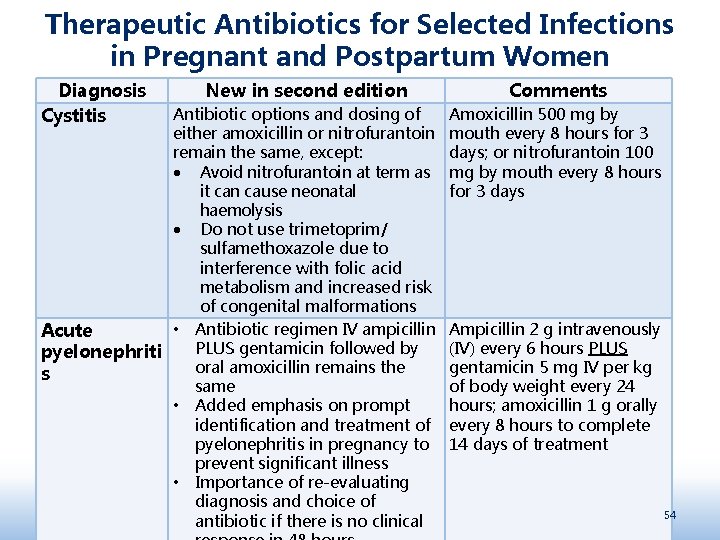
Therapeutic Antibiotics for Selected Infections in Pregnant and Postpartum Women Diagnosis Cystitis New in second edition Antibiotic options and dosing of either amoxicillin or nitrofurantoin remain the same, except: Avoid nitrofurantoin at term as it can cause neonatal haemolysis Do not use trimetoprim/ sulfamethoxazole due to interference with folic acid metabolism and increased risk of congenital malformations • Antibiotic regimen IV ampicillin Acute PLUS gentamicin followed by pyelonephriti oral amoxicillin remains the s same • Added emphasis on prompt identification and treatment of pyelonephritis in pregnancy to prevent significant illness • Importance of re-evaluating diagnosis and choice of antibiotic if there is no clinical Comments Amoxicillin 500 mg by mouth every 8 hours for 3 days; or nitrofurantoin 100 mg by mouth every 8 hours for 3 days Ampicillin 2 g intravenously (IV) every 6 hours PLUS gentamicin 5 mg IV per kg of body weight every 24 hours; amoxicillin 1 g orally every 8 hours to complete 14 days of treatment 54
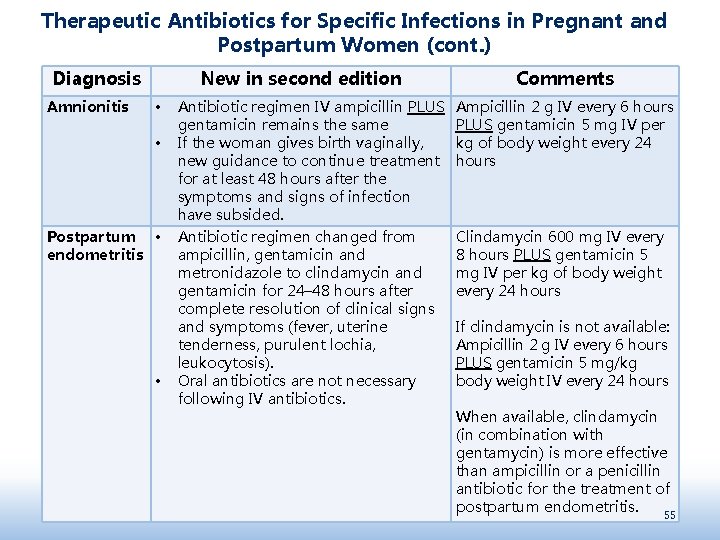
Therapeutic Antibiotics for Specific Infections in Pregnant and Postpartum Women (cont. ) Diagnosis Amnionitis New in second edition • • Postpartum • endometritis • Antibiotic regimen IV ampicillin PLUS gentamicin remains the same If the woman gives birth vaginally, new guidance to continue treatment for at least 48 hours after the symptoms and signs of infection have subsided. Antibiotic regimen changed from ampicillin, gentamicin and metronidazole to clindamycin and gentamicin for 24– 48 hours after complete resolution of clinical signs and symptoms (fever, uterine tenderness, purulent lochia, leukocytosis). Oral antibiotics are not necessary following IV antibiotics. Comments Ampicillin 2 g IV every 6 hours PLUS gentamicin 5 mg IV per kg of body weight every 24 hours Clindamycin 600 mg IV every 8 hours PLUS gentamicin 5 mg IV per kg of body weight every 24 hours If clindamycin is not available: Ampicillin 2 g IV every 6 hours PLUS gentamicin 5 mg/kg body weight IV every 24 hours When available, clindamycin (in combination with gentamycin) is more effective than ampicillin or a penicillin antibiotic for the treatment of postpartum endometritis. 55
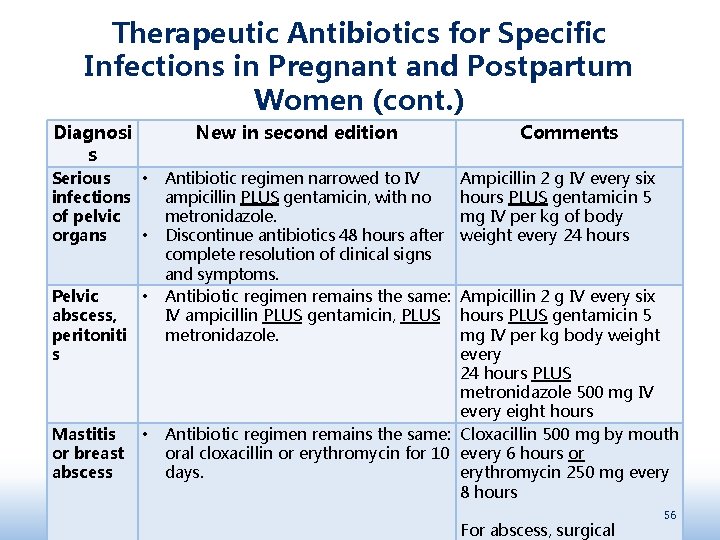
Therapeutic Antibiotics for Specific Infections in Pregnant and Postpartum Women (cont. ) Diagnosi s Serious • infections of pelvic organs • Pelvic • abscess, peritoniti s Mastitis • or breast abscess New in second edition Comments Antibiotic regimen narrowed to IV Ampicillin 2 g IV every six ampicillin PLUS gentamicin, with no hours PLUS gentamicin 5 metronidazole. mg IV per kg of body Discontinue antibiotics 48 hours after weight every 24 hours complete resolution of clinical signs and symptoms. Antibiotic regimen remains the same: Ampicillin 2 g IV every six IV ampicillin PLUS gentamicin, PLUS hours PLUS gentamicin 5 metronidazole. mg IV per kg body weight every 24 hours PLUS metronidazole 500 mg IV every eight hours Antibiotic regimen remains the same: Cloxacillin 500 mg by mouth oral cloxacillin or erythromycin for 10 every 6 hours or days. erythromycin 250 mg every 8 hours For abscess, surgical 56
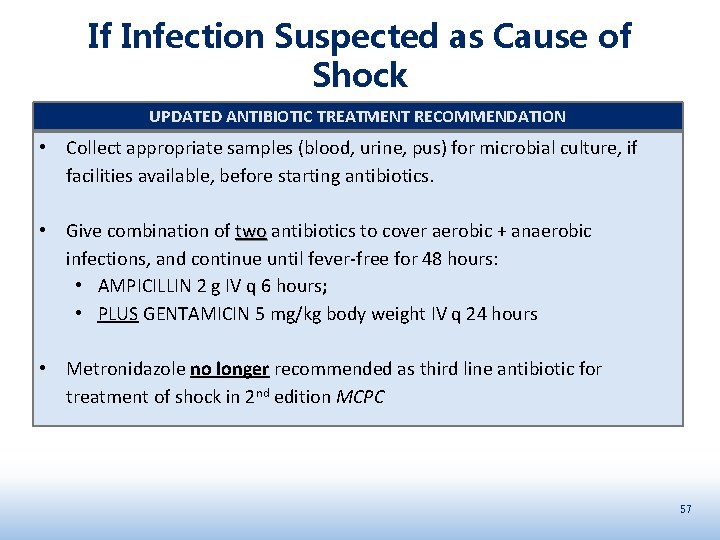
If Infection Suspected as Cause of Shock UPDATED ANTIBIOTIC TREATMENT RECOMMENDATION • Collect appropriate samples (blood, urine, pus) for microbial culture, if facilities available, before starting antibiotics. • Give combination of two antibiotics to cover aerobic + anaerobic infections, and continue until fever-free for 48 hours: • AMPICILLIN 2 g IV q 6 hours; • PLUS GENTAMICIN 5 mg/kg body weight IV q 24 hours • Metronidazole no longer recommended as third line antibiotic for treatment of shock in 2 nd edition MCPC 57
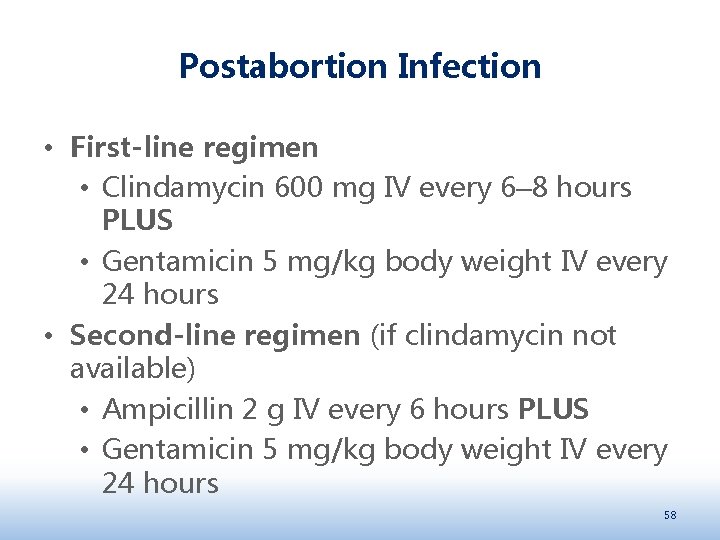
Postabortion Infection • First-line regimen • Clindamycin 600 mg IV every 6‒ 8 hours PLUS • Gentamicin 5 mg/kg body weight IV every 24 hours • Second-line regimen (if clindamycin not available) • Ampicillin 2 g IV every 6 hours PLUS • Gentamicin 5 mg/kg body weight IV every 24 hours 58
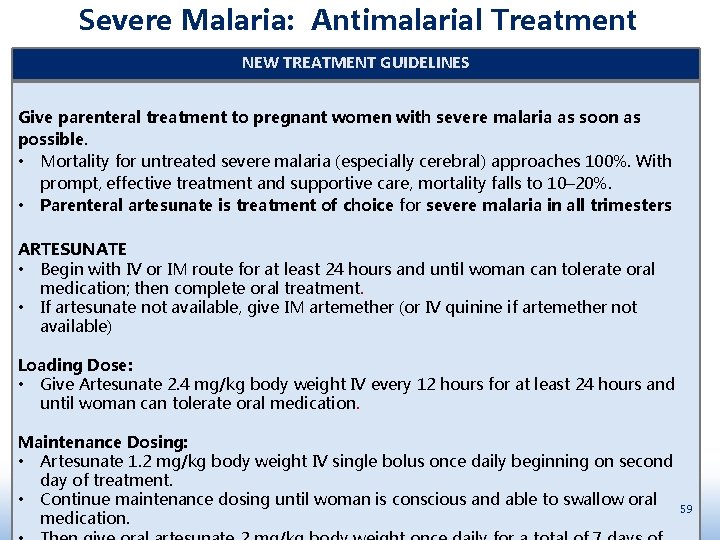
Severe Malaria: Antimalarial Treatment NEW TREATMENT GUIDELINES Give parenteral treatment to pregnant women with severe malaria as soon as possible. • Mortality for untreated severe malaria (especially cerebral) approaches 100%. With prompt, effective treatment and supportive care, mortality falls to 10– 20%. • Parenteral artesunate is treatment of choice for severe malaria in all trimesters ARTESUNATE • Begin with IV or IM route for at least 24 hours and until woman can tolerate oral medication; then complete oral treatment. • If artesunate not available, give IM artemether (or IV quinine if artemether not available) Loading Dose: • Give Artesunate 2. 4 mg/kg body weight IV every 12 hours for at least 24 hours and until woman can tolerate oral medication. Maintenance Dosing: • Artesunate 1. 2 mg/kg body weight IV single bolus once daily beginning on second day of treatment. • Continue maintenance dosing until woman is conscious and able to swallow oral 59 medication.
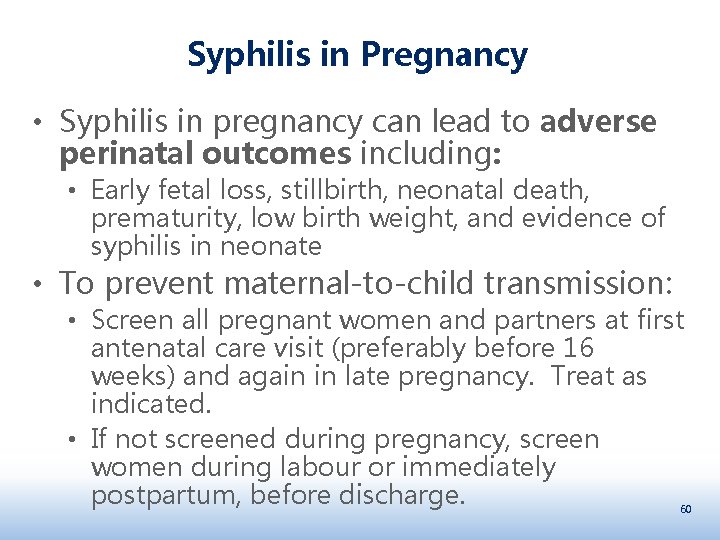
Syphilis in Pregnancy • Syphilis in pregnancy can lead to adverse perinatal outcomes including: • Early fetal loss, stillbirth, neonatal death, prematurity, low birth weight, and evidence of syphilis in neonate • To prevent maternal-to-child transmission: • Screen all pregnant women and partners at first antenatal care visit (preferably before 16 weeks) and again in late pregnancy. Treat as indicated. • If not screened during pregnancy, screen women during labour or immediately postpartum, before discharge. 60
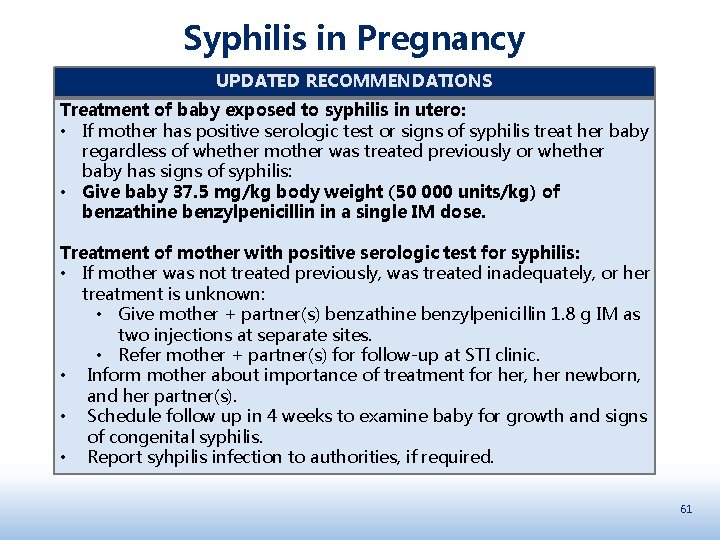
Syphilis in Pregnancy UPDATED RECOMMENDATIONS Treatment of baby exposed to syphilis in utero: • If mother has positive serologic test or signs of syphilis treat her baby regardless of whether mother was treated previously or whether baby has signs of syphilis: • Give baby 37. 5 mg/kg body weight (50 000 units/kg) of benzathine benzylpenicillin in a single IM dose. Treatment of mother with positive serologic test for syphilis: • If mother was not treated previously, was treated inadequately, or her treatment is unknown: • Give mother + partner(s) benzathine benzylpenicillin 1. 8 g IM as two injections at separate sites. • Refer mother + partner(s) for follow-up at STI clinic. • Inform mother about importance of treatment for her, her newborn, and her partner(s). • Schedule follow up in 4 weeks to examine baby for growth and signs of congenital syphilis. • Report syhpilis infection to authorities, if required. 61
© World Health Organization [2018] Some rights reserved. This work is available under the Creative Commons Attribution. Non. Commercial-Share. Alike 3. 0 IGO licence (CC BY-NC-SA 3. 0 IGO; https: //creativecommons. org/licenses/by-nc-sa/3. 0/igo). Under the terms of this licence, you may copy, redistribute and adapt the work for non-commercial purposes, provided the work is appropriately cited, as indicated below. In any use of this work, there should be no suggestion that WHO endorses any specific organization, products or services Suggested citation. World Health Organization, Managing Complications in Pregnancy and Childbirth. Geneva: , Switzerland: ; WHO, 2017; Licence: CC BY-NC-SA 3. 0 IGO. All reasonable precautions have been taken by WHO, MCSP and USAID to verify the information contained in this publication. However, the published material is being distributed without warranty of any kind, either expressed or implied. The responsibility for the interpretation and use of the material lies with the reader. In no event shall the WHO be liable for damages arising from its use. The contents do not necessarily reflect the views of WHO, MCSP, USAID, or the United States government. This resource is made possible by the generous support of the American people through the United States Agency for International Development (USAID) under the terms of the Cooperative Agreement AID-OAA-A-14 -00028. For further information on the WHO guidelines, please contact reproductivehealth@who. int or mncah@who. int. 62
Thank You! • The Second edition MCPC and a corresponding brief on key highlights can be found at the link below: http: //www. who. int/maternal_child_adolesce nt/documents/managing-complicationspregnancy-childbirth/en/ • Requests for further information on this Power. Point should be addressed to MCSP Communications, e-mail: info@mcsprogram. org 63
- Slides: 63