
Whole School Wellbeing Reviewing Wellness Practices for Students
Whole School Well-being: Reviewing Wellness Practices for Students and School Personnel Sarah A. Wollersheim Shervey University of Wisconsin-Stout MSPA 2020
Overview What is well-being? How can we measure well-being and burn out? How can we increase well-being in students? How can we increase well-being in school personnel? What are some general strategies that may help anyone increase their well-being?
How do you define wellbeing and/or mental health?
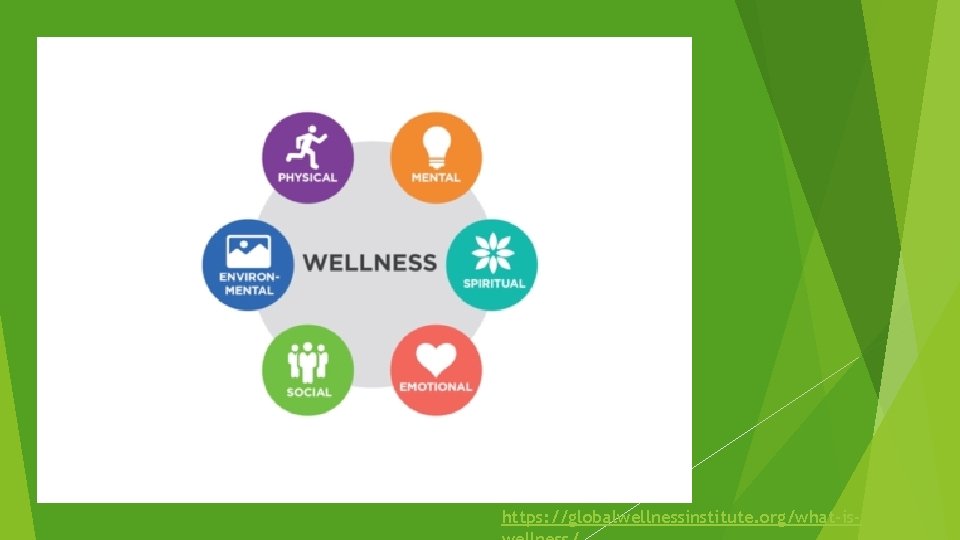
https: //globalwellnessinstitute. org/what-is-
![https: //www. ferrum. edu/campus-engagement 1/campuswellness/definition-of-wellness/#i. Lightbox[postimages]/0](http://slidetodoc.com/presentation_image_h2/c082ed190817f93f7394f4b4acf01e42/image-5.jpg "https: //www. ferrum. edu/campus-engagement 1/campuswellness/definition-of-wellness/#i. Lightbox[postimages]/0")
https: //www. ferrum. edu/campus-engagement 1/campuswellness/definition-of-wellness/#i. Lightbox[postimages]/0
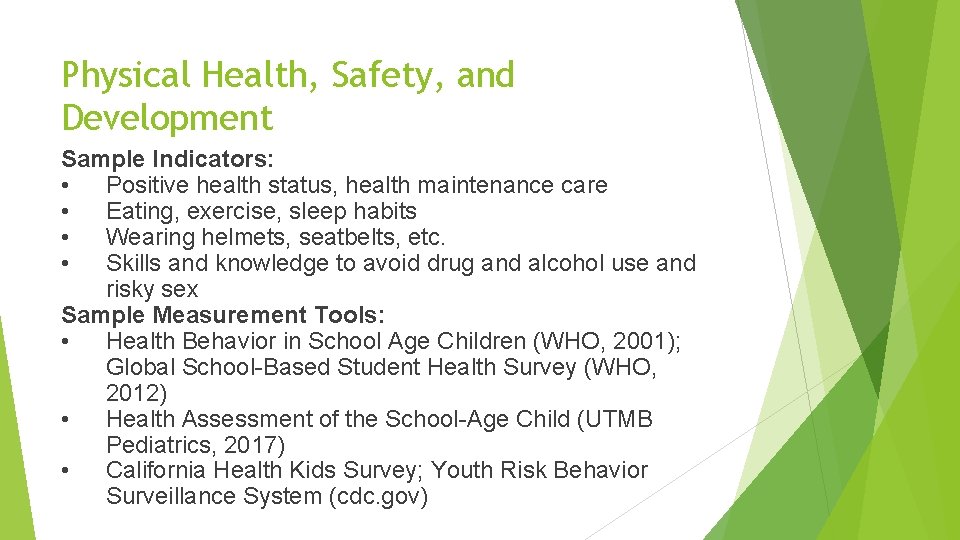
Physical Health, Safety, and Development Sample Indicators: • Positive health status, health maintenance care • Eating, exercise, sleep habits • Wearing helmets, seatbelts, etc. • Skills and knowledge to avoid drug and alcohol use and risky sex Sample Measurement Tools: • Health Behavior in School Age Children (WHO, 2001); Global School-Based Student Health Survey (WHO, 2012) • Health Assessment of the School-Age Child (UTMB Pediatrics, 2017) • California Health Kids Survey; Youth Risk Behavior Surveillance System (cdc. gov)
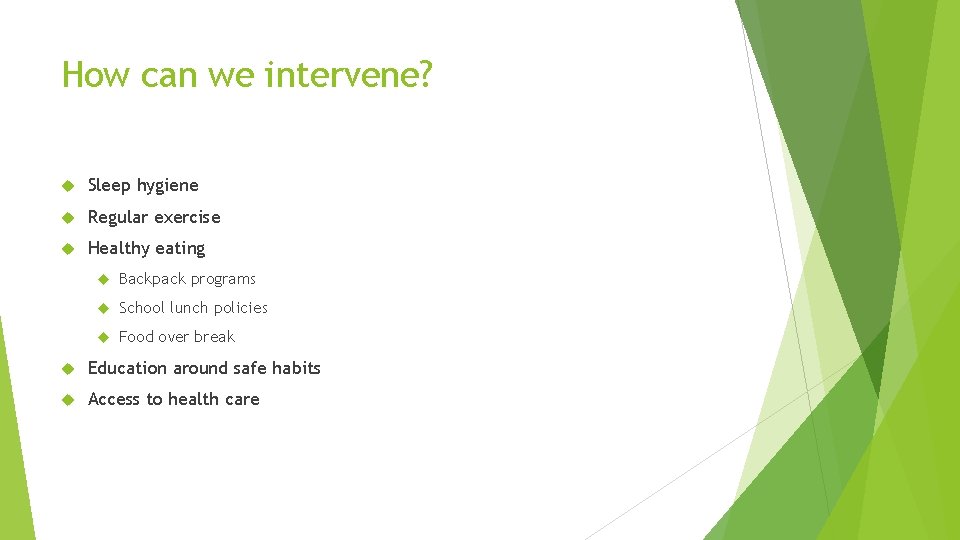
How can we intervene? Sleep hygiene Regular exercise Healthy eating Backpack programs School lunch policies Food over break Education around safe habits Access to health care
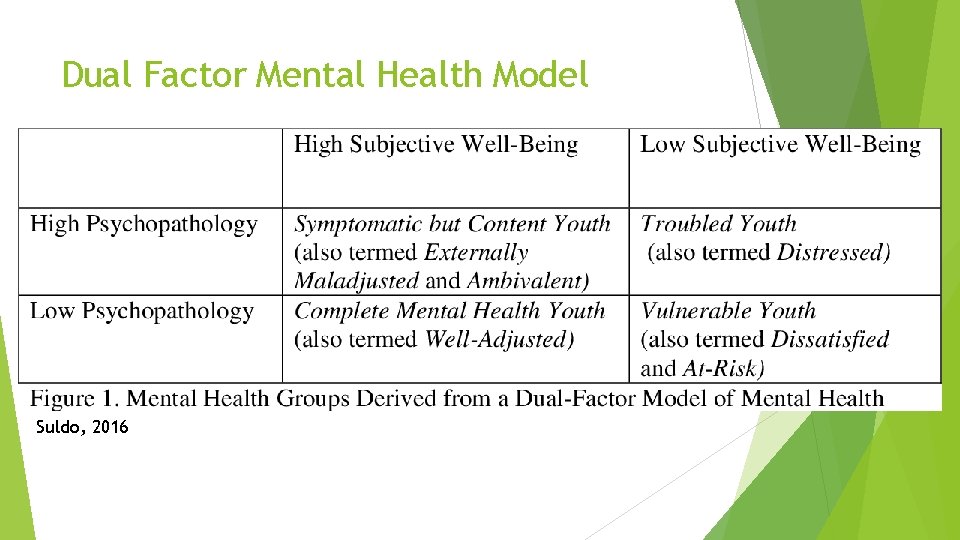
Dual Factor Mental Health Model S Suldo, 2016
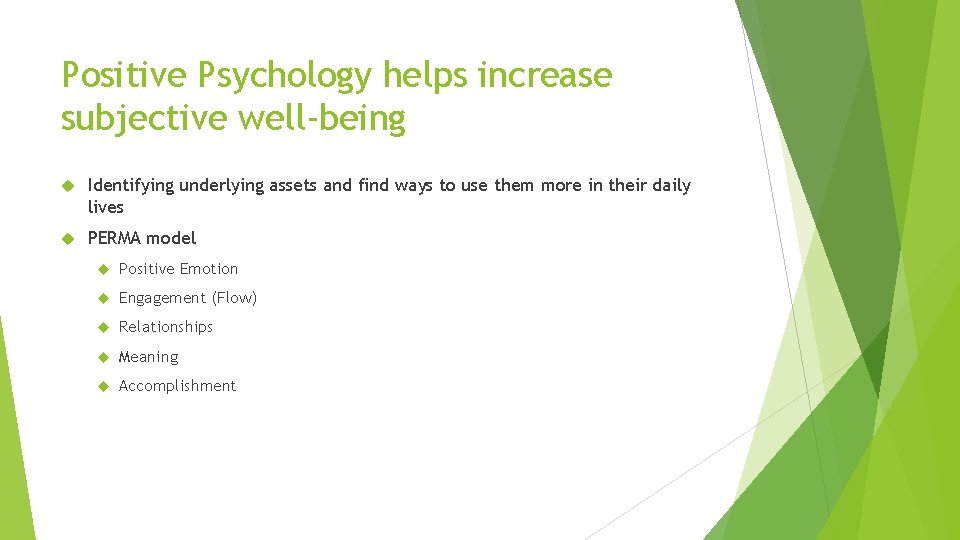
Positive Psychology helps increase subjective well-being Identifying underlying assets and find ways to use them more in their daily lives PERMA model Positive Emotion Engagement (Flow) Relationships Meaning Accomplishment
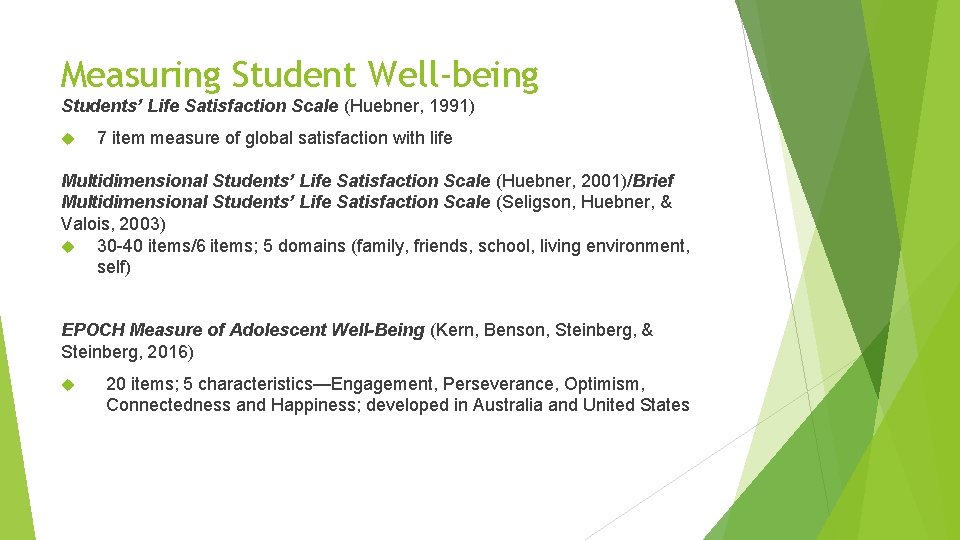
Measuring Student Well-being Students’ Life Satisfaction Scale (Huebner, 1991) 7 item measure of global satisfaction with life Multidimensional Students’ Life Satisfaction Scale (Huebner, 2001)/Brief Multidimensional Students’ Life Satisfaction Scale (Seligson, Huebner, & Valois, 2003) 30 -40 items/6 items; 5 domains (family, friends, school, living environment, self) EPOCH Measure of Adolescent Well-Being (Kern, Benson, Steinberg, & Steinberg, 2016) 20 items; 5 characteristics—Engagement, Perseverance, Optimism, Connectedness and Happiness; developed in Australia and United States
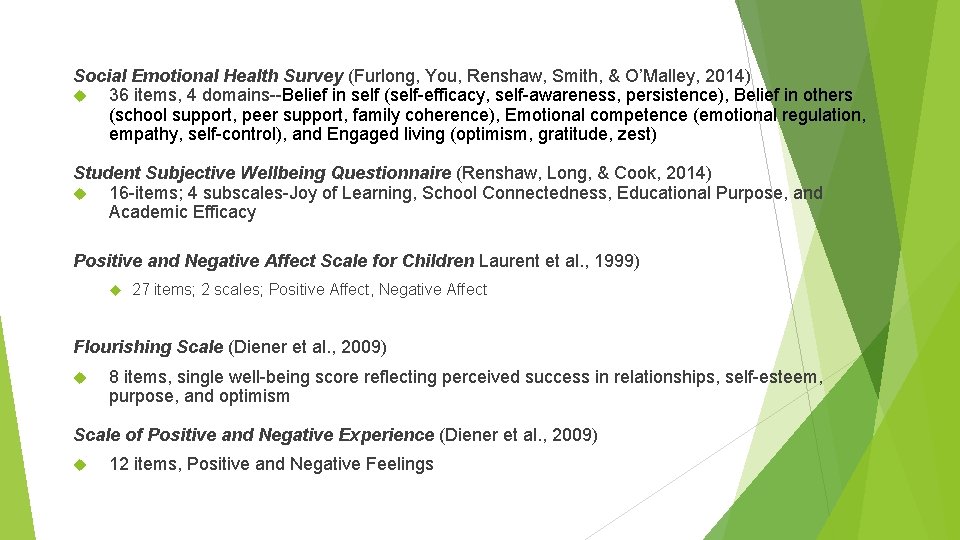
Social Emotional Health Survey (Furlong, You, Renshaw, Smith, & O’Malley, 2014) 36 items, 4 domains--Belief in self (self-efficacy, self-awareness, persistence), Belief in others (school support, peer support, family coherence), Emotional competence (emotional regulation, empathy, self-control), and Engaged living (optimism, gratitude, zest) Student Subjective Wellbeing Questionnaire (Renshaw, Long, & Cook, 2014) 16 -items; 4 subscales-Joy of Learning, School Connectedness, Educational Purpose, and Academic Efficacy Positive and Negative Affect Scale for Children Laurent et al. , 1999) 27 items; 2 scales; Positive Affect, Negative Affect Flourishing Scale (Diener et al. , 2009) 8 items, single well-being score reflecting perceived success in relationships, self-esteem, purpose, and optimism Scale of Positive and Negative Experience (Diener et al. , 2009) 12 items, Positive and Negative Feelings

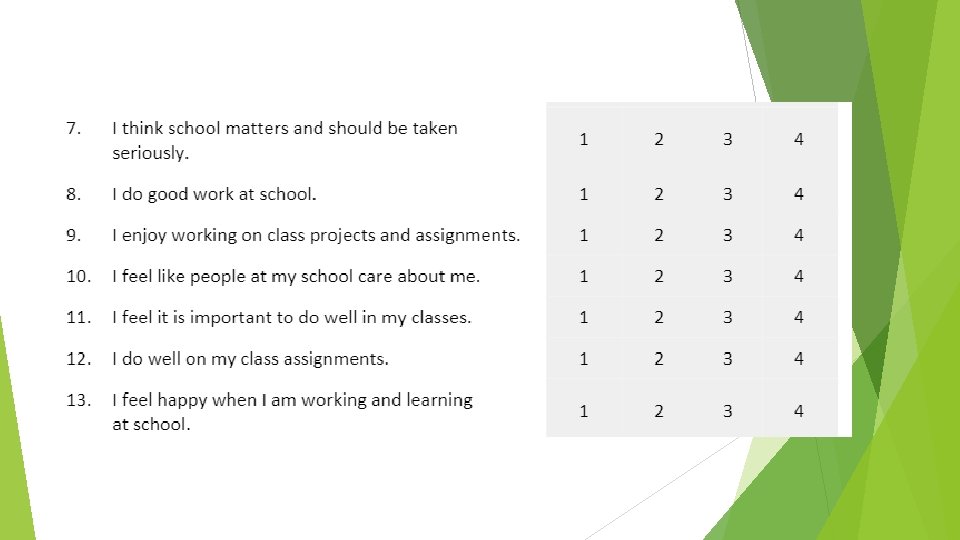
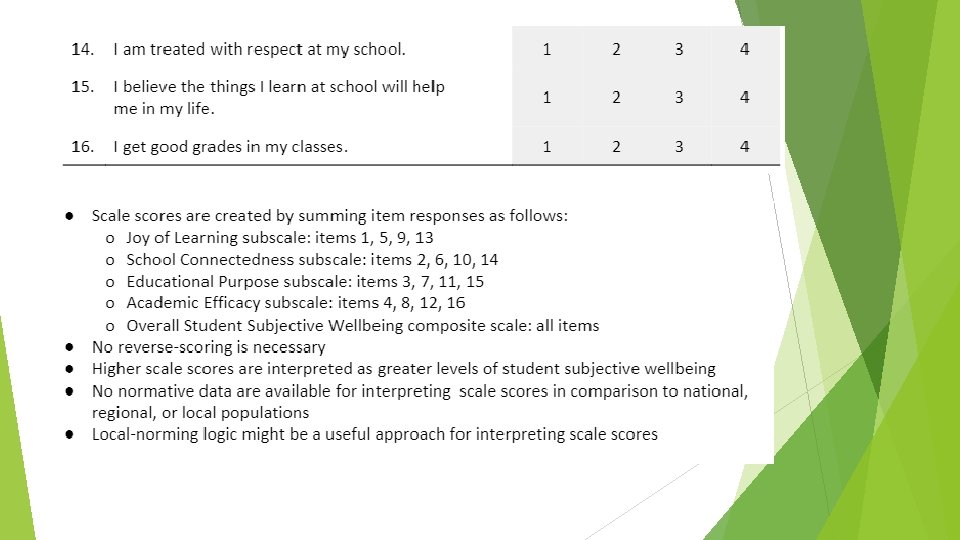
Student Subjective Wellbeing Questionnaire (Renshaw, 2019; https: //osf. io/48 av 7/)
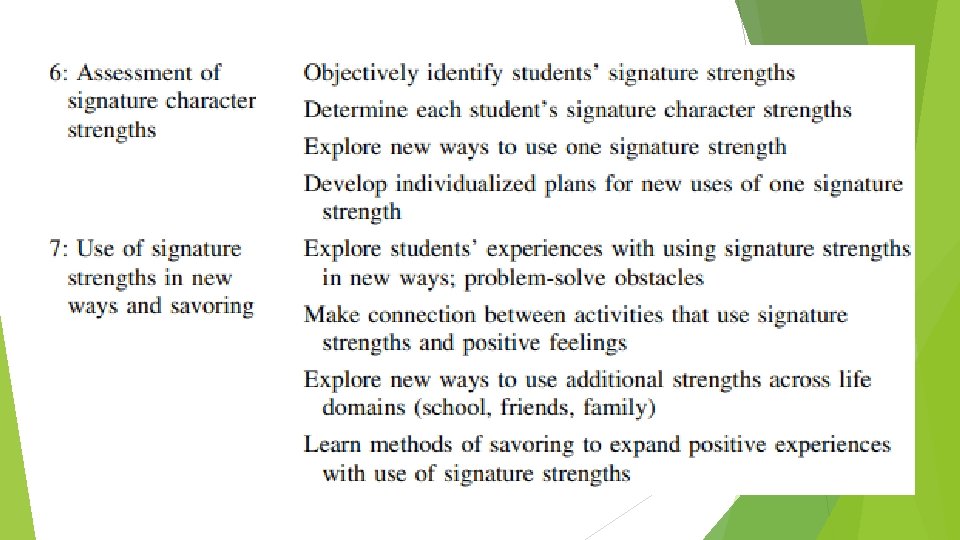
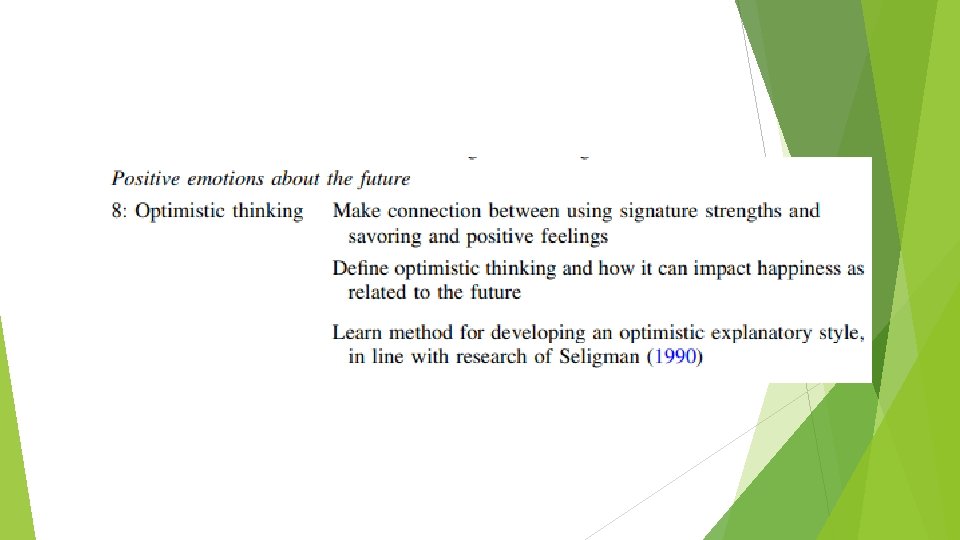
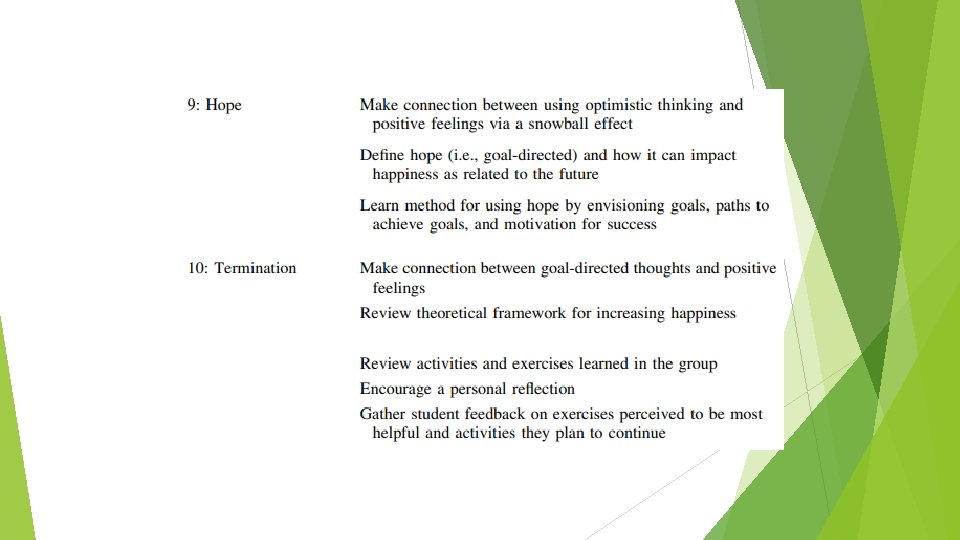
Research Based Interventions for SWB Focus On Gratitude Kindness Personal Identification of Strengths Use of Character Strengths Hope and Goal Directed Thinking Optimistic Thinking Style Serenity
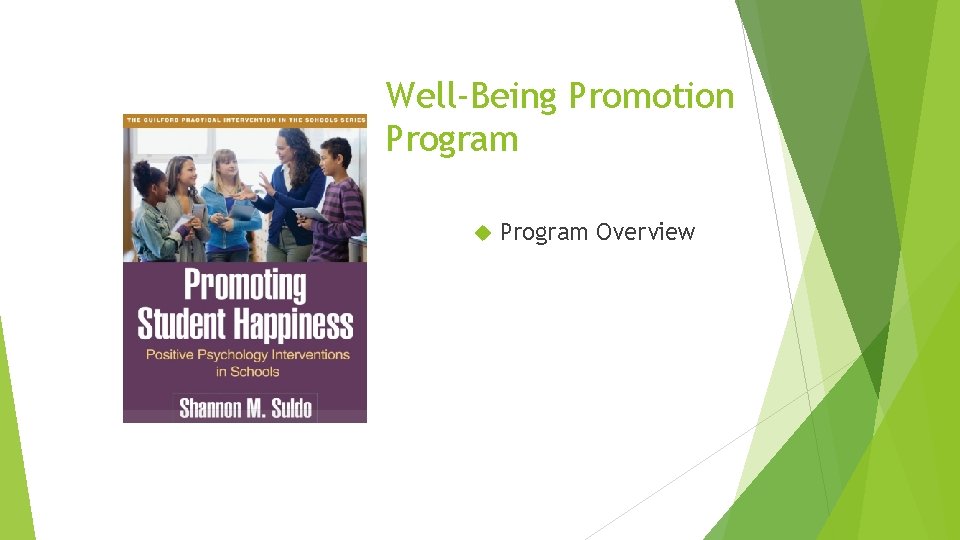
Well-Being Promotion Program Overview
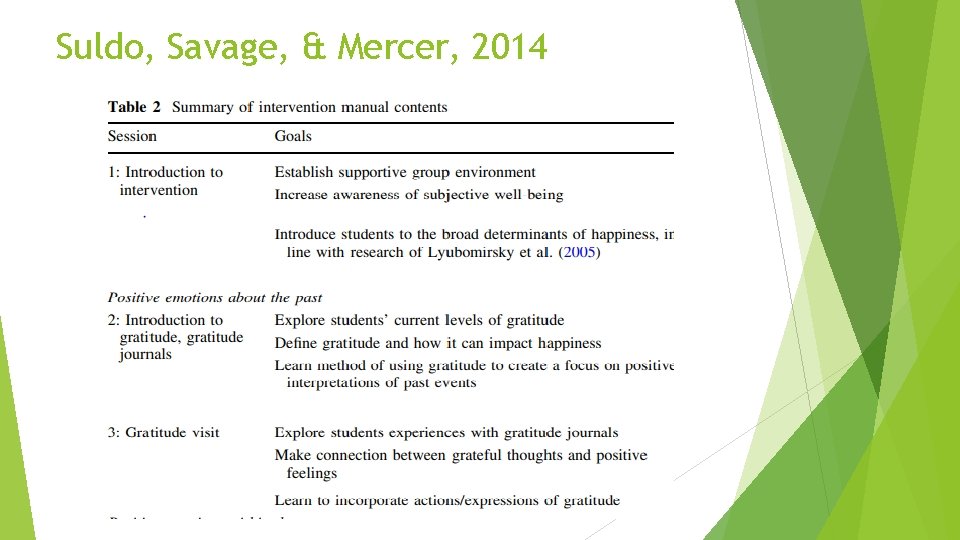
Suldo, Savage, & Mercer, 2014
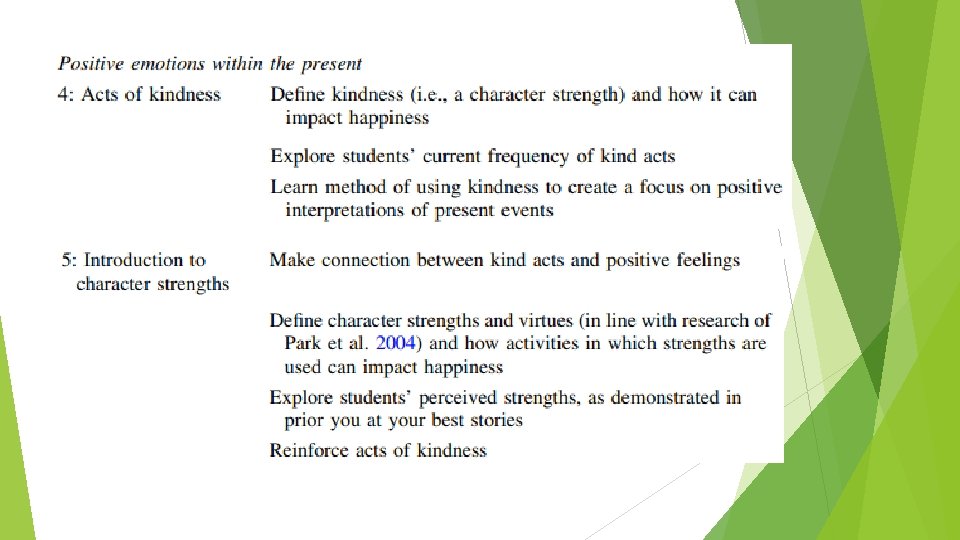
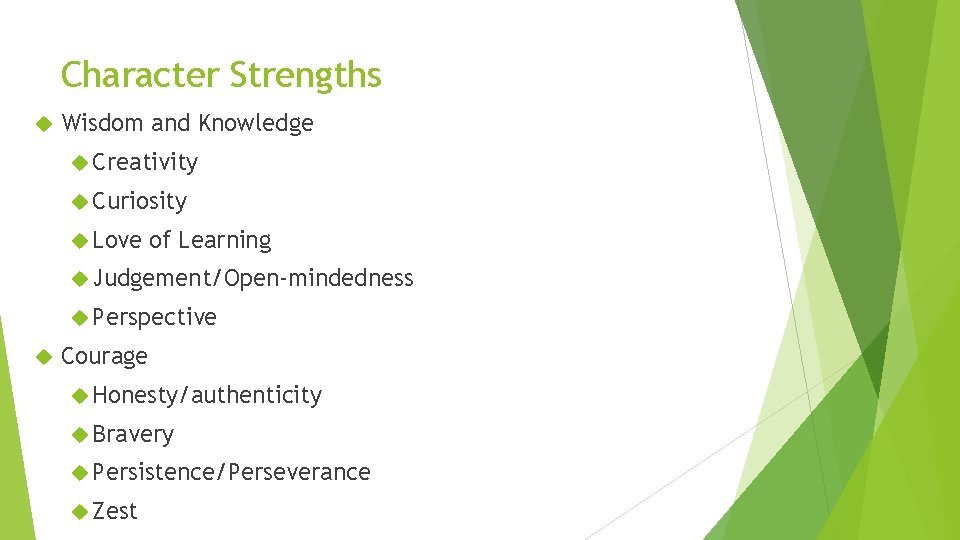
Character Strengths Wisdom and Knowledge Creativity Curiosity Love of Learning Judgement/Open-mindedness Perspective Courage Honesty/authenticity Bravery Persistence/Perseverance Zest
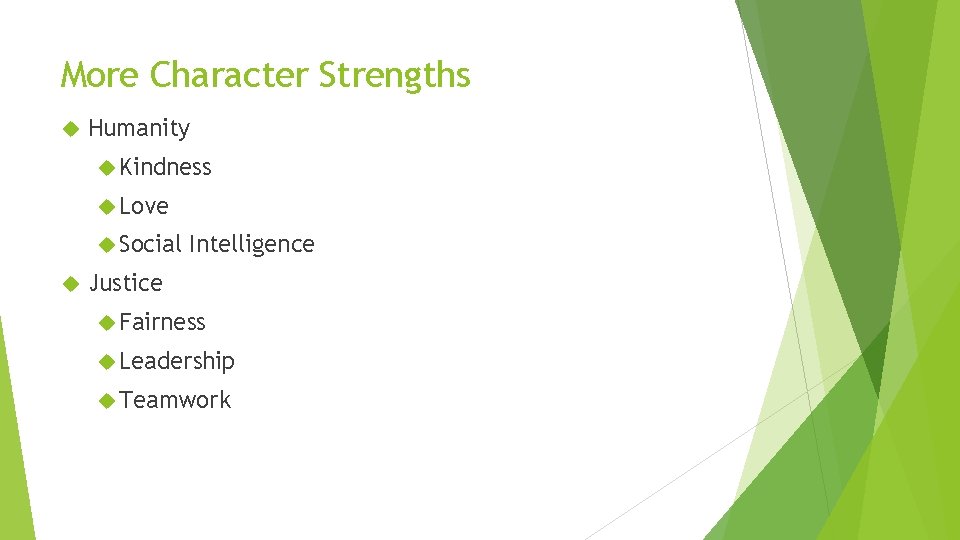
More Character Strengths Humanity Kindness Love Social Intelligence Justice Fairness Leadership Teamwork
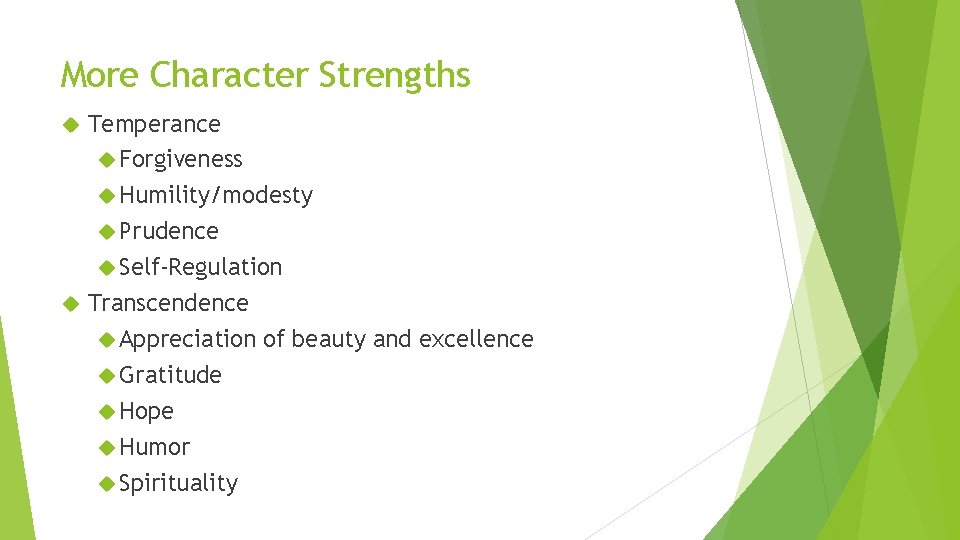
More Character Strengths Temperance Forgiveness Humility/modesty Prudence Self-Regulation Transcendence Appreciation of beauty and excellence Gratitude Hope Humor Spirituality
Why do we need to enhance wellbeing of school personnel? (Gill Lopez. 2019) Ethical (Gill Lopez, 2019) Prevents Burn Out Models helpful coping and wellbeing for students Improves Learning Environment (Herman, Prewitt, Eddy, Savale, & Reinke, 2020) Parent involvement Teacher-Student relationships Engagement Improvement in social emotional behaviors
Measuring teacher Wellbeing and Burn Out Teacher Stress Inventory (TSI; Fimian & Fasteneau, 1990) Teacher Self-Efficacy Scale (TSES; Tschannen-Moran & Hoy, 2001) Measure of Stressors and Supports for Teachers (MOST; Sandilos & Di. Perna, 2019) Maslach Burnout Inventory-Educator Survey (MBI-ES; Malach, Jackson, & Schwabb, 1996) Teacher Subjective Wellbeing Questionnaire (Renshaw, 2019)
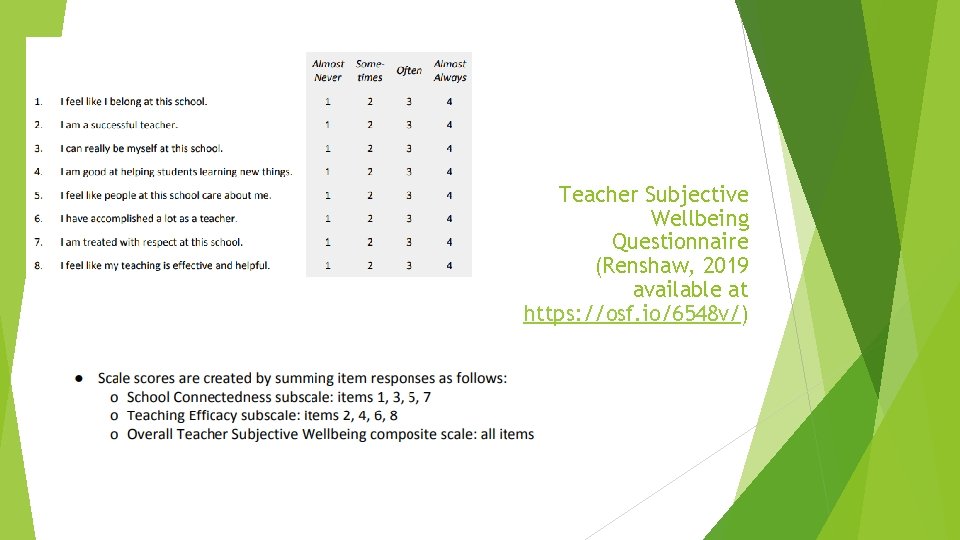
Teacher Subjective Wellbeing Questionnaire (Renshaw, 2019 available at https: //osf. io/6548 v/)
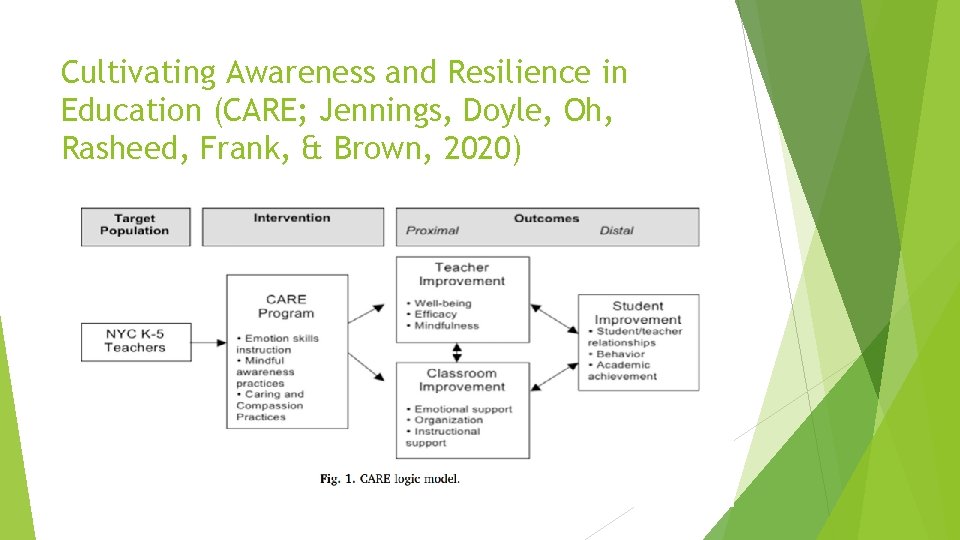
Cultivating Awareness and Resilience in Education (CARE; Jennings, Doyle, Oh, Rasheed, Frank, & Brown, 2020)
Teacher Student Relationship Building Close student-teacher relationships related to higher levels of personal accomplishment Conflictual-student teacher relationships related to increased emotional exhaustion (Corbin, Alamos, Lowenstein, Downer, & Brown, 2020) Professional development around stressors (trauma, behavior, etc. ) Interventions to help enhance classroom management Conversation, Help, Activity, Movement, Participation, Success (CHAMPS; Herman & Reinke) incredible Years Classroom Management Curriculum (Webster-Stratton, 1994)
Interventions Continued Mindfulness Meta analysis showed medium treatment effect on teacher outcomes (Klingbeil & Renshaw, 2018) reduction in stress levels and an increase in subjective well-being, mindfulness, and self-compassion for secondary school teachers (Beshai, Mc. Alpine, Weare, & Kuyken, 2015) Mindfulness and Yoga Community Approaches to Learning Mindfully (CALM, Harris, Jennings, Katz, Abenavoli, & Greenberg, 2016) increase in mindfulness observation, distress tolerance, positive affect, and classroom management efficacy
General Wellbeing Strategies Connect to others socially Overcommitting-SAY NO! One thing at a time Turn off Social Media Simplify and Declutter Ask for Help Sleep Stretch/Move Do something that brings you joy Mindfulness Self-Compassion
Mindfulness “Anything you can do to bring your full attention to the moment is mindfulness”-Gill Lopez, 2019 The goal is to be able to access your prefrontal cortex rather than your amygdala Guided meditation Apps Focusing on what you are doing
What to do when you feel stressed (Mc. Manis, 2018) Know your triggers (mental, physical, emotional) Pay attention to your body Write these down and come up with a plan: Count Use humor Try to see it from their perspective Take a drink of water Connect to your sensory environment (3 things I see, smell, hear, taste, and/or feel)
Self-Compassion-Dr. Kristin Neff (selfcompassion. org) Kind and understanding of self when faced with personal failings Ask your self the question, what would I say to a good friend who this happened to and say it to yourself Movement toward: Self-kindness Common over self-judgement humanity over isolation Mindfulness instead of over identification
Developing a Wellness Plan Thinking about a person or group of people in my school, start to think about developing a wellness plan. Consider: 1. Who am I targeting? 2. Needs Assessment (how will I know what they need)? 3. What do we want to work on first? 4. What intervention(s) could we do to work on this? 5. What does the person or group need to be successful? 6. How could the environment be adjusted for better success? 7. What ins)? would enhance participation (coaching, check
What strategies am I already doing personally and/or in my professional environment? What strategies do I want to try personally and/or my professional environment? This Photo by Unknown Author is licensed under CC BY-SA
Additional Resources and References Calm Classroom (https: //calmclassroom. com/pages/research) Positive Psychology Classrooms (https: //wholebeinginstitute. com/positivepsychology-classroom/) Please email me for a complete list of references wollersheims@uwstout. edu
- Slides: 37