
Who Rules Autocracy Autocracya government in which one
- Slides: 13
Who Rules?
Autocracy • Autocracy-a government in which one person has all the power • Two main types of autocracy: a monarchy and a dictatorship
Monarchy • Monarchy-a king or queen rules the country (known as a monarch) • How do they come to power? – Usually through birth – In some monarchies (particularly in historical times), the monarch had all the power and had final say over all aspects of government. • Today, monarchs typically share power with other parts of the government. Usually they are subject to the country’s constitution.
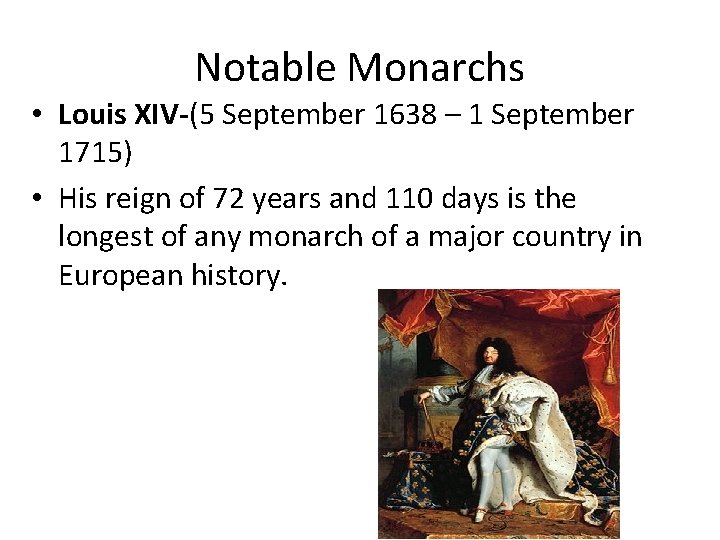
Notable Monarchs • Louis XIV-(5 September 1638 – 1 September 1715) • His reign of 72 years and 110 days is the longest of any monarch of a major country in European history.
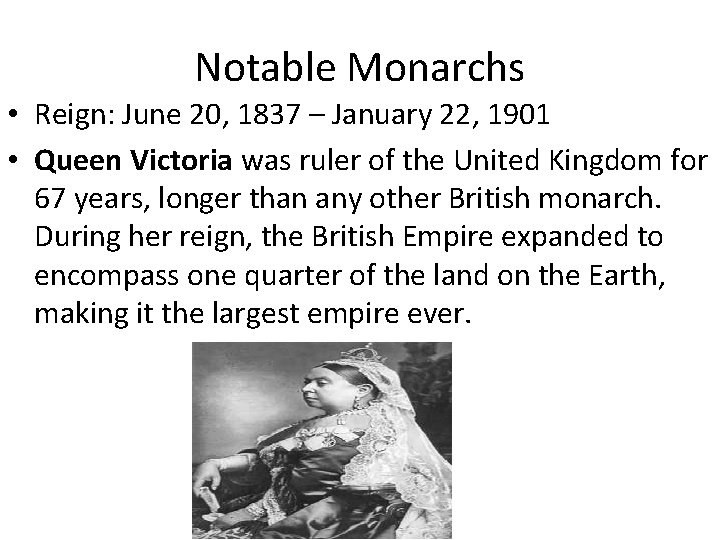
Notable Monarchs • Reign: June 20, 1837 – January 22, 1901 • Queen Victoria was ruler of the United Kingdom for 67 years, longer than any other British monarch. During her reign, the British Empire expanded to encompass one quarter of the land on the Earth, making it the largest empire ever.
Dictatorship • Dictatorship-a form of government where one leader has absolute control over citizens’ lives
Notable Dictators • Adolf Hitler (Ruled: August 2, 1934 -April 30, 1945) • Joseph Stalin (Ruled: April 3, 1922 -October 16, 1952)
Democracies • In democracies, citizens hold political power. • There are two fundamental types of democracy: – Representative democracy – Direct democracy
Representative Democracy • Citizens elect leaders to represent their rights and interests in government. – Representatives do the day-to-day governing BUT, citizens hold the ultimate power.
Direct Democracy • There are no representatives • Citizens are involved in the day-to-day work of governing the country • Example: The Ancient city-state of Athens • Most modern countries are too large for a direct democracy to work
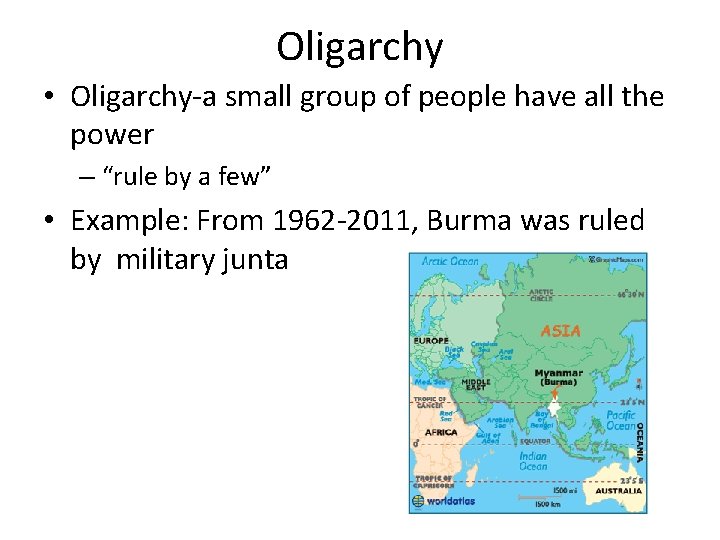
Oligarchy • Oligarchy-a small group of people have all the power – “rule by a few” • Example: From 1962 -2011, Burma was ruled by military junta
Theocracy • Religious rule • Theocracy-recognizes God or a divine being as the ultimate authority • A theocracy can also be a democracy, dictatorship, monarchy or any other kind of government. • Example: The Republic of Iran recognizes Islamic law, but Iran’s citizens vote to elect their leaders. – Modern theocracies are usually found in countries where the population is strongly religious.
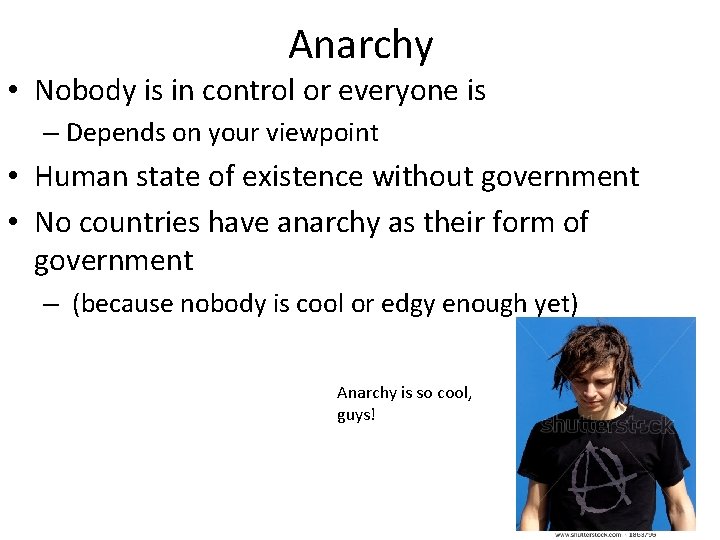
Anarchy • Nobody is in control or everyone is – Depends on your viewpoint • Human state of existence without government • No countries have anarchy as their form of government – (because nobody is cool or edgy enough yet) Anarchy is so cool, guys!