
WHO Operational Plan for RSV Surveillance Pilot WHO
- Slides: 13
WHO Operational Plan for RSV Surveillance Pilot WHO Global Influenza Program WHO HQ May 10, 2016 1
RSV surveillance: WHY? RSV in children <5 years of age (estimates 2005) l Annual global number of non-severe cases = 33. 8 million – 96 % in developing countries l Annual global number of severe cases = 3. 4 million – 91 % in developing countries l Annual global number of RSV-associated deaths = 66. 000 – 199. 000 – 99 % in developing countries Harish Nair et al. 2010; The Lancet 375(9725): 1545 - 1555 2
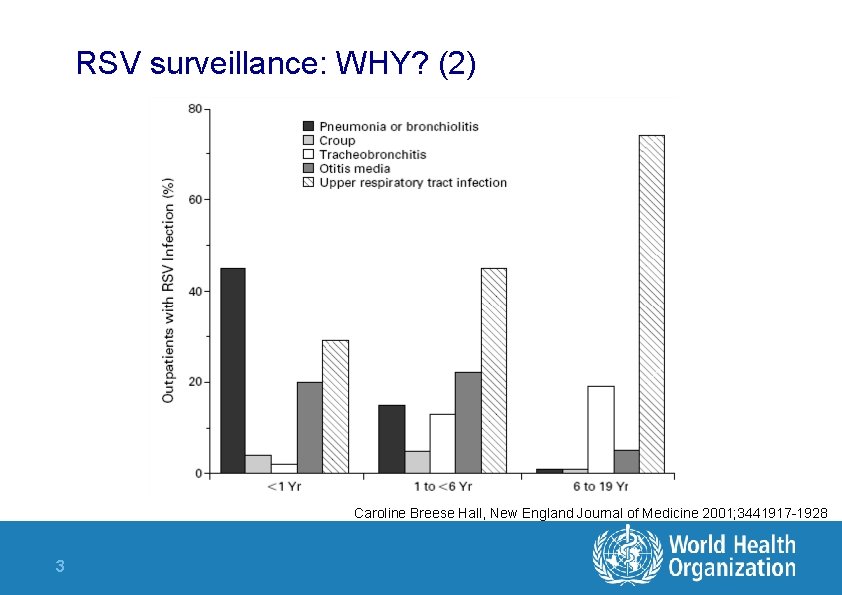
RSV surveillance: WHY? (2) Caroline Breese Hall, New England Journal of Medicine 2001; 3441917 -1928 3
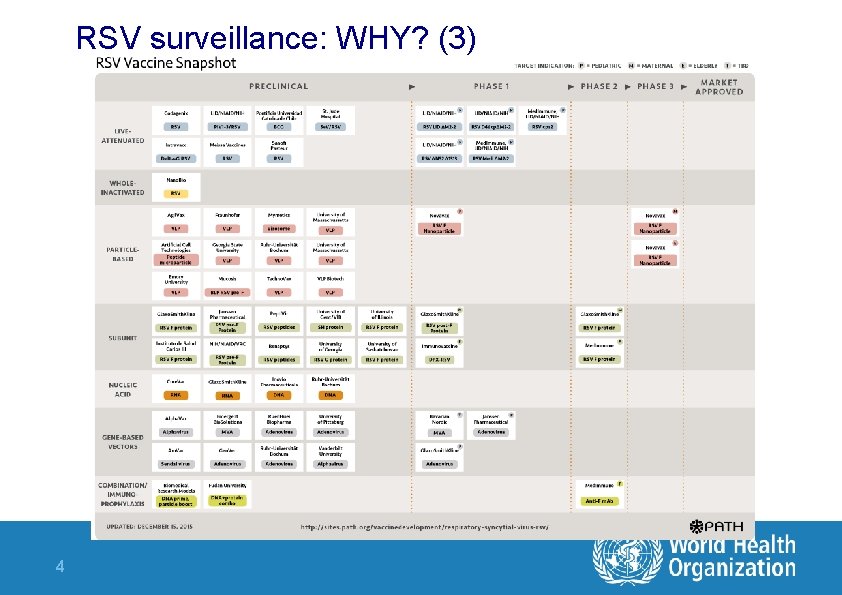
RSV surveillance: WHY? (3) 4
RSV Surveillance Pilot: OBJECTIVES • Feasibility of RSV surveillance built on GISRS platform • Evaluation of optimal RSV case definitions • Evaluation of optimal sampling strategies • Evaluation of testing algorithms • Build laboratory capacity for RSV testing in pilot countries • Identification of RSV seasonality • Evaluate reporting strategies • Identification of age and risk groups for severe RSV disease • Assess additional costs caused by RSV surveillance • Study evolution of RSV by subtype and genotype 5
RSV Surveillance Pilot: OBJECTIVES (continued) • Provide platform for future studies such as: • Global RSV surveillance • Vaccine studies • Cost-effectiveness and impact analyses of vaccines • Broader respiratory virus surveillance 6
RSV Surveillance Pilot WILL NOT PROVIDE Data on population-based RSV disease burden • Specific data for assessment of RSV vaccine effectiveness • Data on economic burden due to RSV disease • Complete clinical description of RSV disease in risk- and age-groups • Data on validity of different case definitions • 7
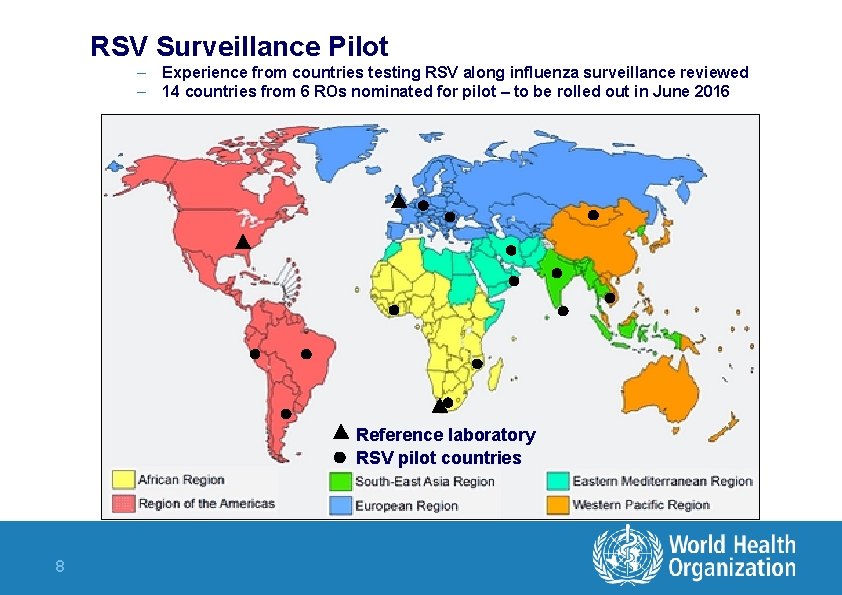
RSV Surveillance Pilot – Experience from countries testing RSV along influenza surveillance reviewed – 14 countries from 6 ROs nominated for pilot – to be rolled out in June 2016 Reference laboratory RSV pilot countries 8
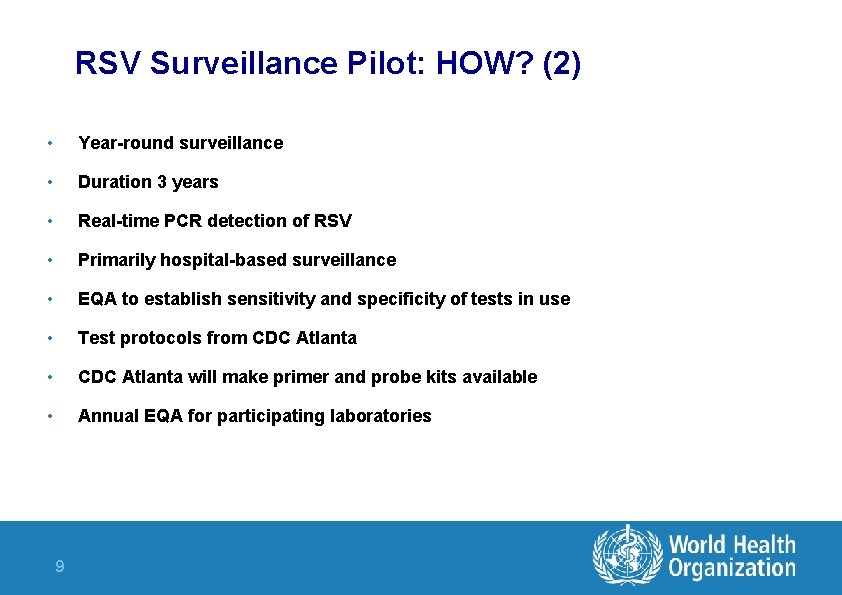
RSV Surveillance Pilot: HOW? (2) • Year-round surveillance • Duration 3 years • Real-time PCR detection of RSV • Primarily hospital-based surveillance • EQA to establish sensitivity and specificity of tests in use • Test protocols from CDC Atlanta • CDC Atlanta will make primer and probe kits available • Annual EQA for participating laboratories 9
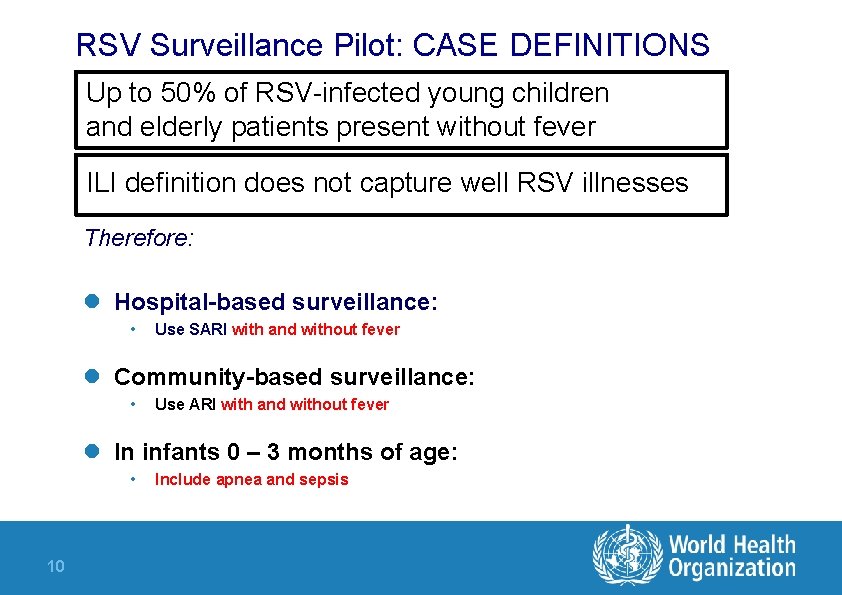
RSV Surveillance Pilot: CASE DEFINITIONS Up to 50% of RSV-infected young children and elderly patients present without fever ILI definition does not capture well RSV illnesses Therefore: l Hospital-based surveillance: • Use SARI with and without fever l Community-based surveillance: • Use ARI with and without fever l In infants 0 – 3 months of age: • 10 Include apnea and sepsis
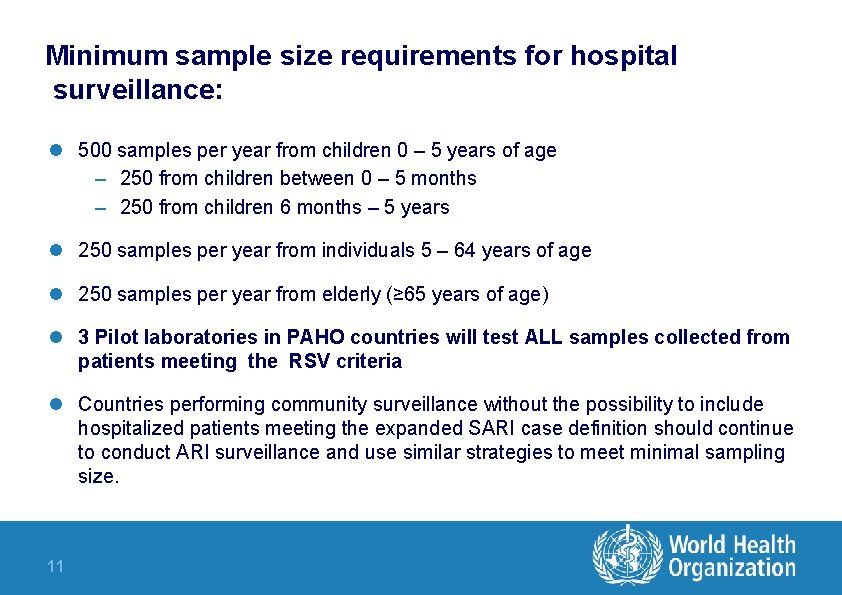
Minimum sample size requirements for hospital surveillance: l 500 samples per year from children 0 – 5 years of age – 250 from children between 0 – 5 months – 250 from children 6 months – 5 years l 250 samples per year from individuals 5 – 64 years of age l 250 samples per year from elderly (≥ 65 years of age) l 3 Pilot laboratories in PAHO countries will test ALL samples collected from patients meeting the RSV criteria l Countries performing community surveillance without the possibility to include hospitalized patients meeting the expanded SARI case definition should continue to conduct ARI surveillance and use similar strategies to meet minimal sampling size. 11
RSV laboratory testing algorithm l Samples meeting the RSV criteria will be submitted to the Pilot NIC for testing 12
RSV Surveillance Pilot: Data Reporting l Laboratory data – Reported as aggregated data set through the Flu. Net l Case-based data – Collected on RSV standardized forms – Reported through separate data collection mechanism 13