
Who Murdered Franz Ferdinand Why Militarism Glorification of
- Slides: 22
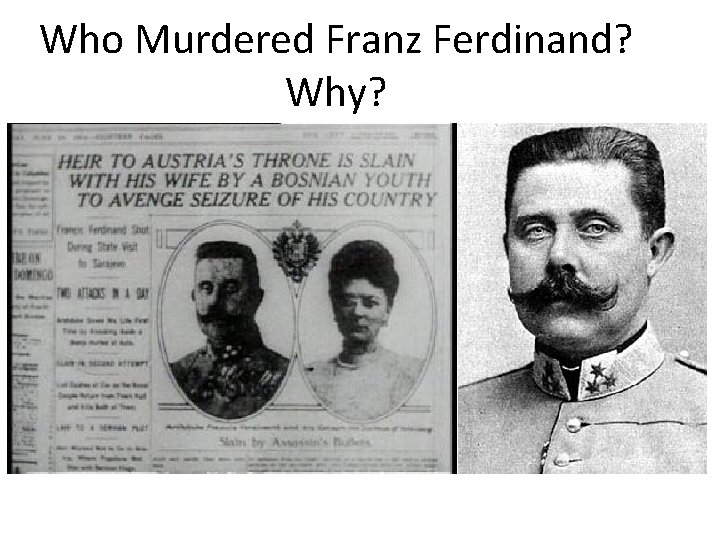
Who Murdered Franz Ferdinand? Why?
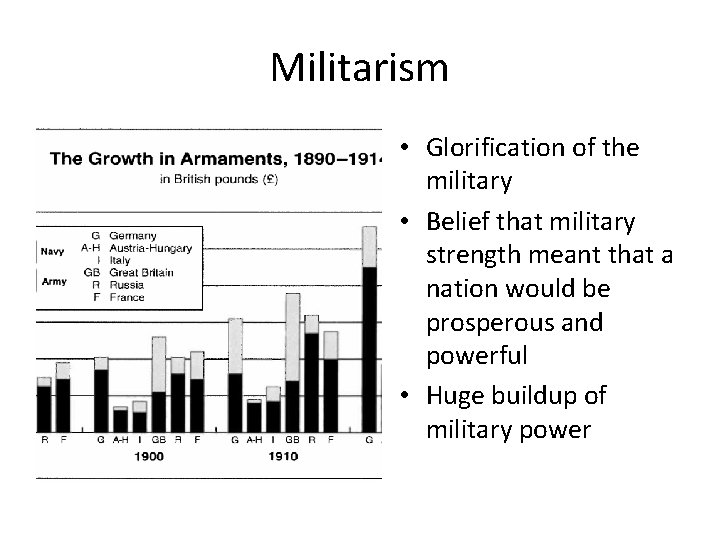
Militarism • Glorification of the military • Belief that military strength meant that a nation would be prosperous and powerful • Huge buildup of military power
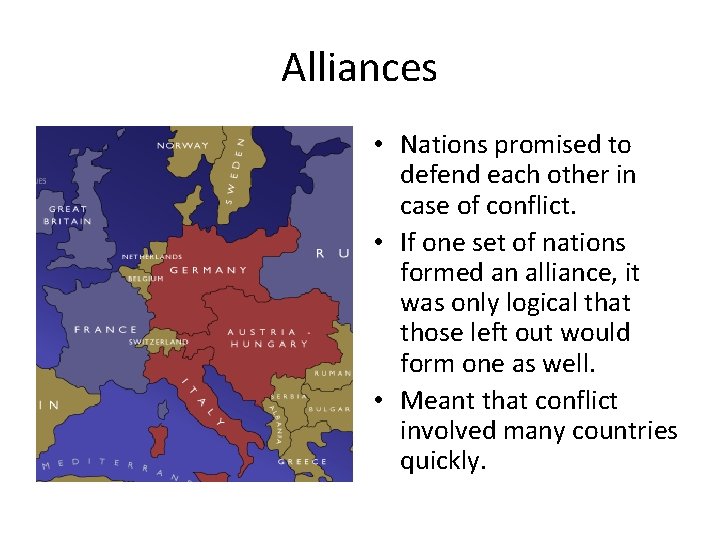
Alliances • Nations promised to defend each other in case of conflict. • If one set of nations formed an alliance, it was only logical that those left out would form one as well. • Meant that conflict involved many countries quickly.
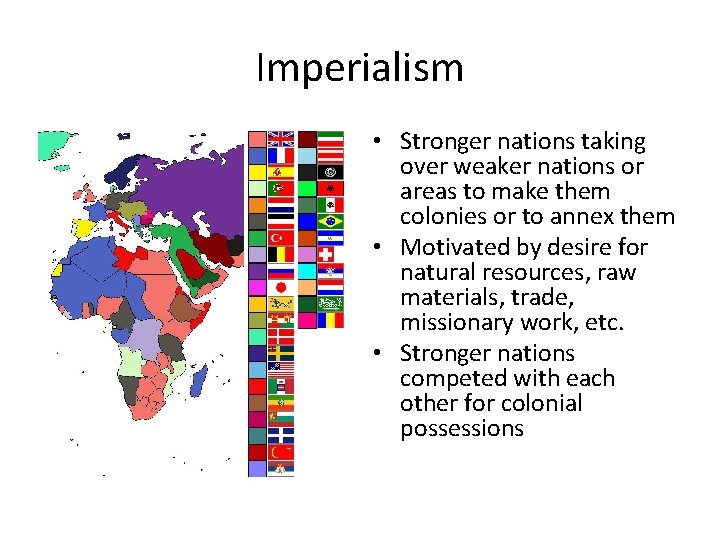
Imperialism • Stronger nations taking over weaker nations or areas to make them colonies or to annex them • Motivated by desire for natural resources, raw materials, trade, missionary work, etc. • Stronger nations competed with each other for colonial possessions
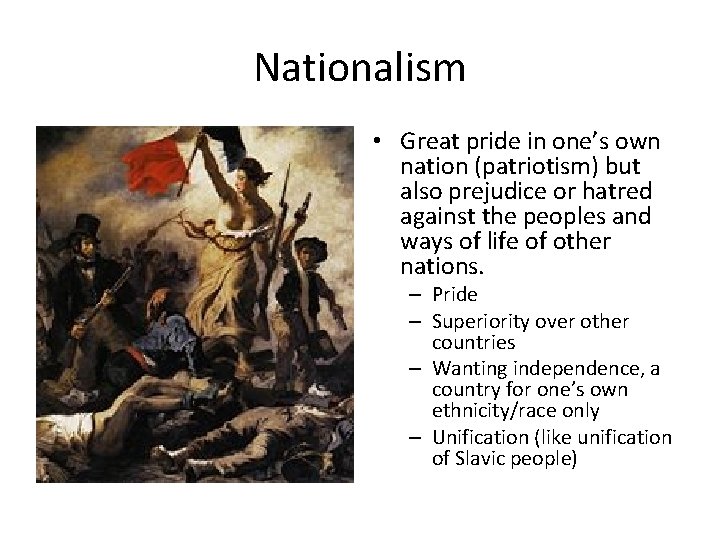
Nationalism • Great pride in one’s own nation (patriotism) but also prejudice or hatred against the peoples and ways of life of other nations. – Pride – Superiority over other countries – Wanting independence, a country for one’s own ethnicity/race only – Unification (like unification of Slavic people)
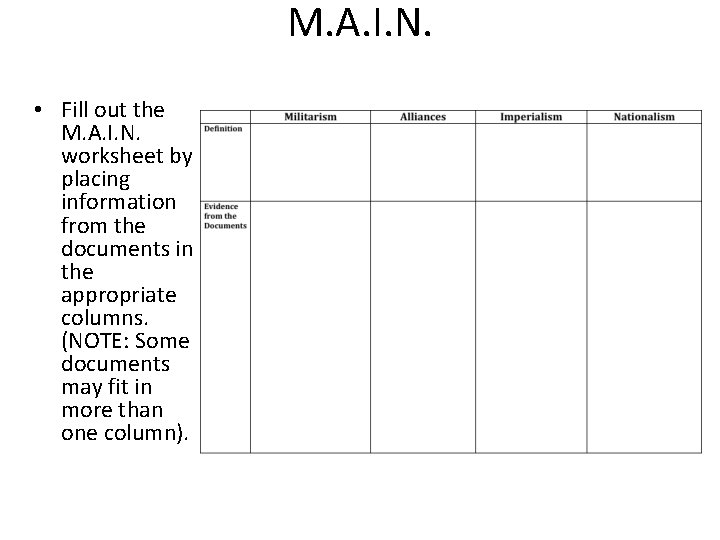
M. A. I. N. • Fill out the M. A. I. N. worksheet by placing information from the documents in the appropriate columns. (NOTE: Some documents may fit in more than one column).
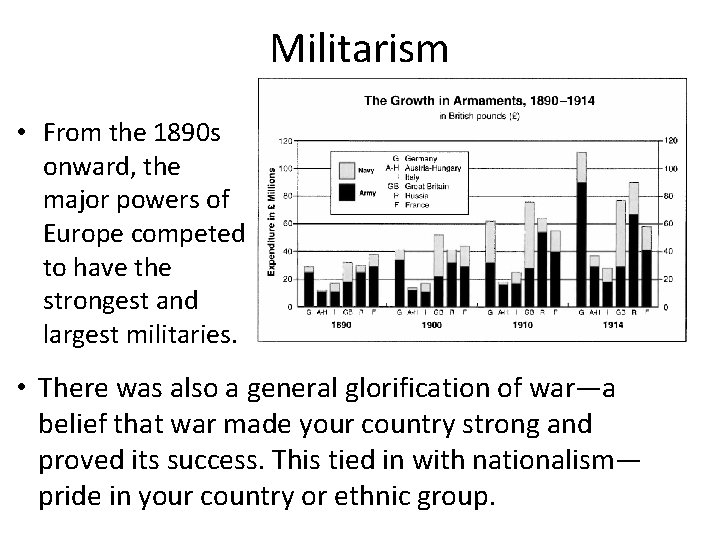
Militarism • From the 1890 s onward, the major powers of Europe competed to have the strongest and largest militaries. • There was also a general glorification of war—a belief that war made your country strong and proved its success. This tied in with nationalism— pride in your country or ethnic group.
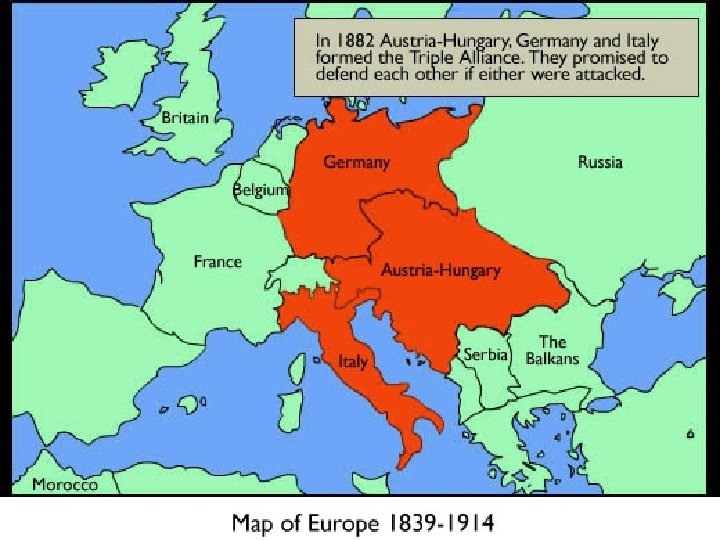
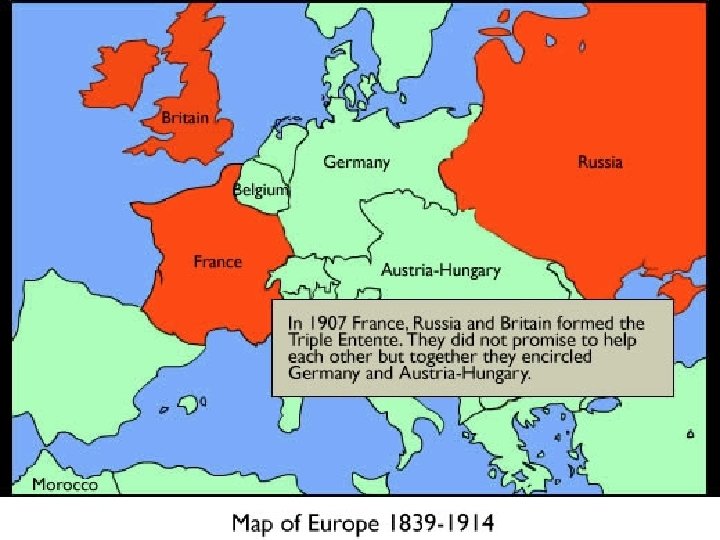
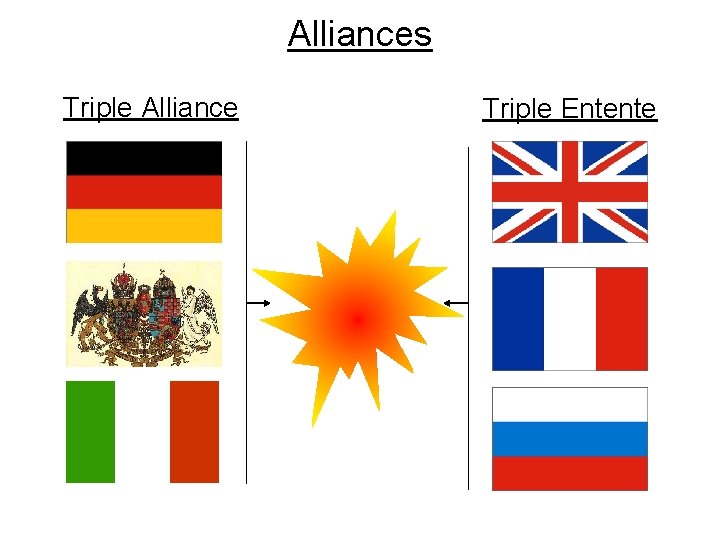
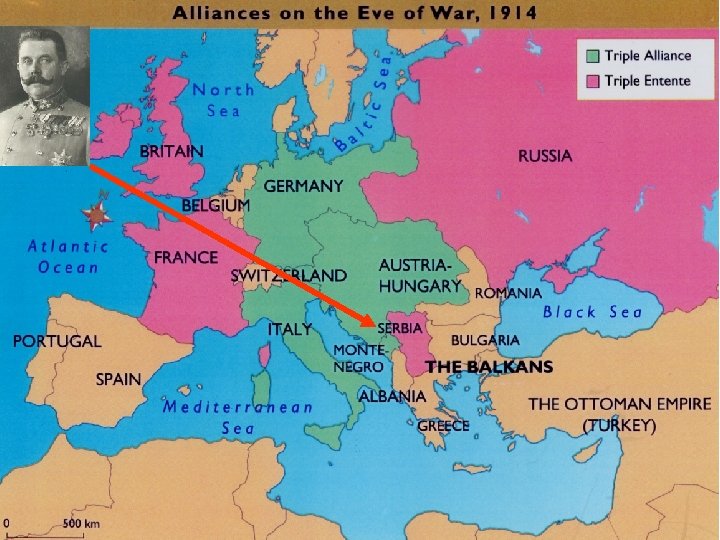
Alliances • Beginning in the 1870 s, European nations formed alliances to protect each other from perceived threats • By 1907, the major powers of Europe were divided into two alliances that were rapidly building up their armies. The Triple Alliance of Germany, Austria. Hungary, and Italy was counter-balanced by The Triple Entente of France, Russia, and Great Britain.
Alliances Triple Alliance Triple Entente
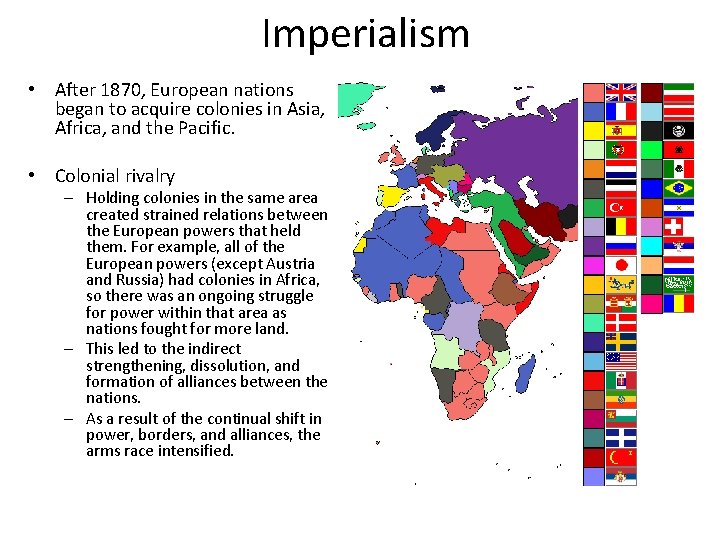
Imperialism • After 1870, European nations began to acquire colonies in Asia, Africa, and the Pacific. • Colonial rivalry – Holding colonies in the same area created strained relations between the European powers that held them. For example, all of the European powers (except Austria and Russia) had colonies in Africa, so there was an ongoing struggle for power within that area as nations fought for more land. – This led to the indirect strengthening, dissolution, and formation of alliances between the nations. – As a result of the continual shift in power, borders, and alliances, the arms race intensified.
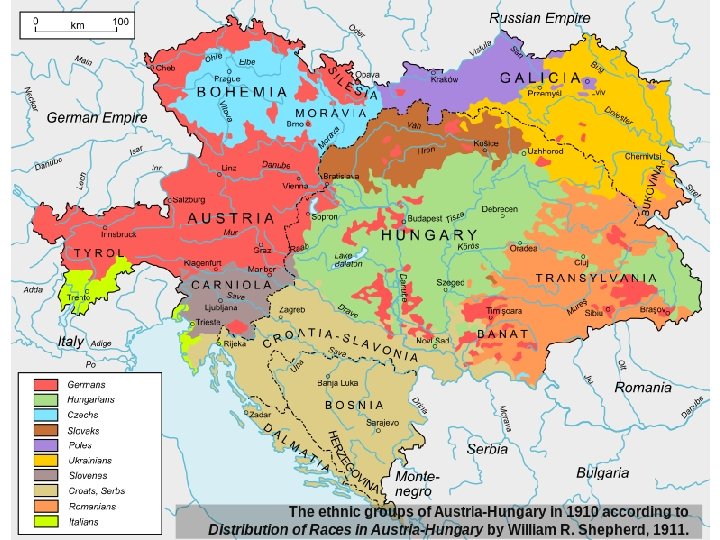
Nationalism • Nationalism means two things: – Pride and patriotism for one’s nation, which translated to European powers wanting to be the most powerful (biggest military, most money, and biggest empire) at the expense of the other European powers – The idea that people with the same ethnic origins, language, and/or political beliefs had the right to form independent countries of their own
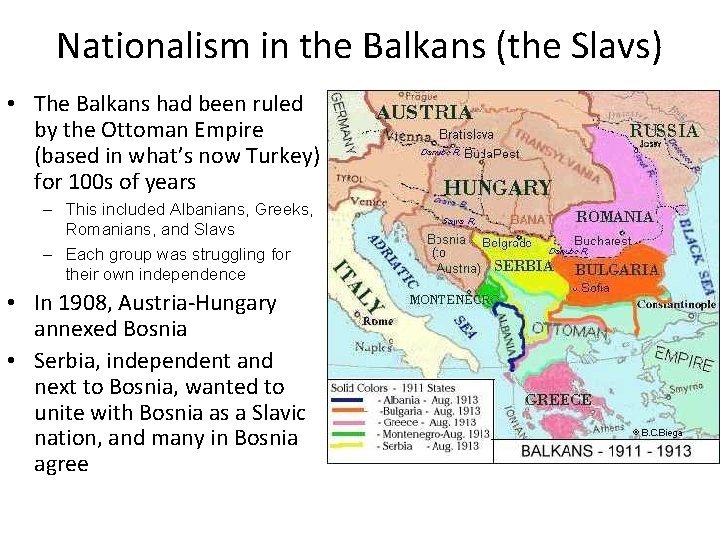
Nationalism in the Balkans (the Slavs) • The Balkans had been ruled by the Ottoman Empire (based in what’s now Turkey) for 100 s of years – This included Albanians, Greeks, Romanians, and Slavs – Each group was struggling for their own independence • In 1908, Austria-Hungary annexed Bosnia • Serbia, independent and next to Bosnia, wanted to unite with Bosnia as a Slavic nation, and many in Bosnia agree
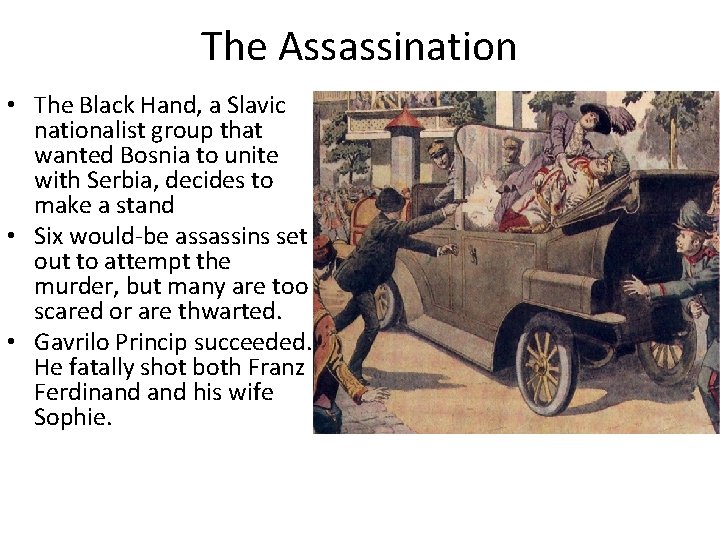
The Assassination • The Black Hand, a Slavic nationalist group that wanted Bosnia to unite with Serbia, decides to make a stand • Six would-be assassins set out to attempt the murder, but many are too scared or are thwarted. • Gavrilo Princip succeeded. He fatally shot both Franz Ferdinand his wife Sophie.
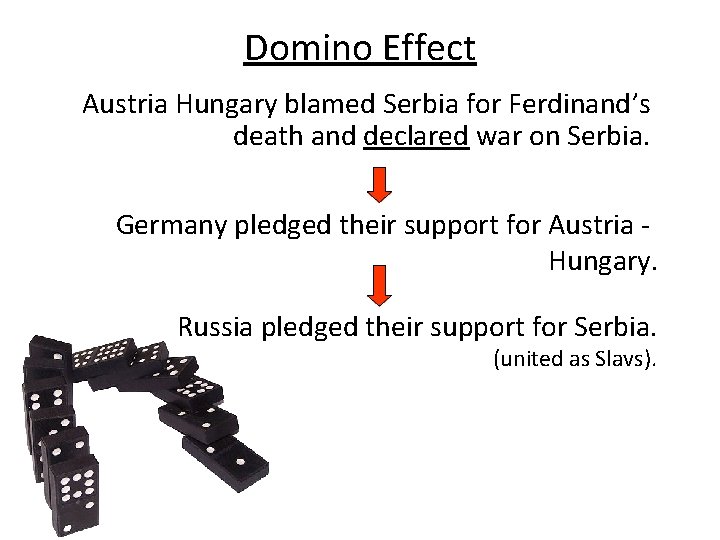
Domino Effect Austria Hungary blamed Serbia for Ferdinand’s death and declared war on Serbia. Germany pledged their support for Austria Hungary. Russia pledged their support for Serbia. (united as Slavs).
Domino Effect Germany declares war on Russia. France pledges their support for Russia. Germany declares war on France. Germany invades Belgium on the way to France. Great Britain supports Belgium and declares war on Germany.
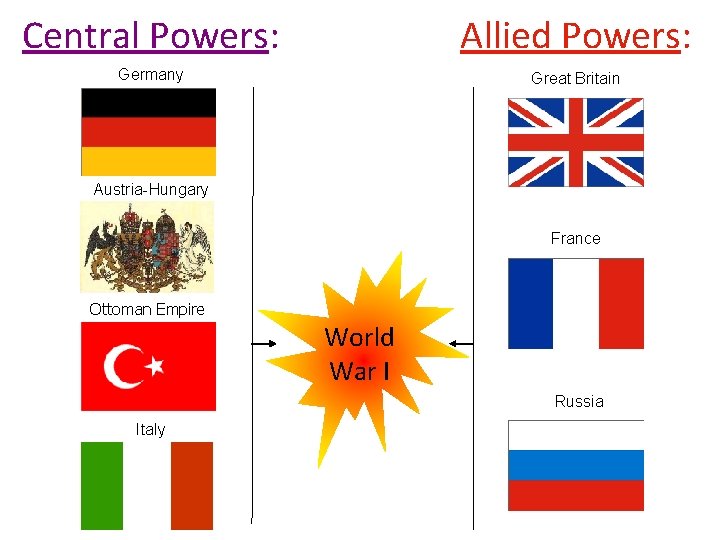
Central Powers: Allied Powers: Germany Great Britain Austria-Hungary France Ottoman Empire World War I Russia Italy
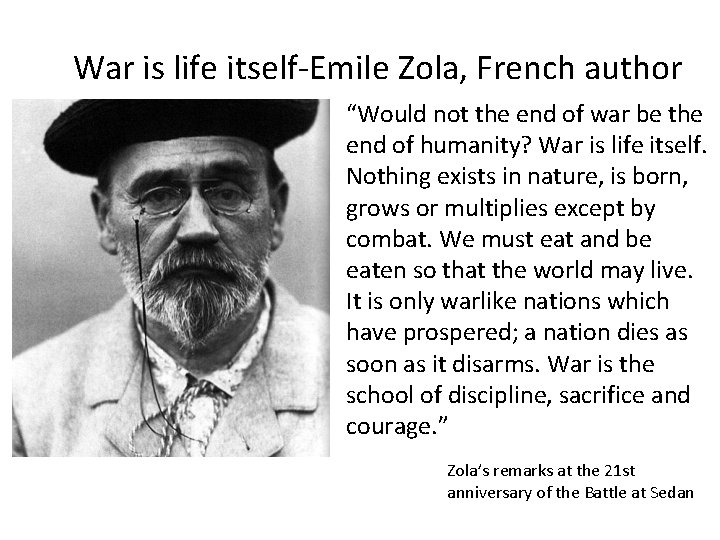
War is life itself-Emile Zola, French author “Would not the end of war be the end of humanity? War is life itself. Nothing exists in nature, is born, grows or multiplies except by combat. We must eat and be eaten so that the world may live. It is only warlike nations which have prospered; a nation dies as soon as it disarms. War is the school of discipline, sacrifice and courage. ” Zola’s remarks at the 21 st anniversary of the Battle at Sedan
Four Corners World War I was an inevitable result of European nations’ prosperity.