
Who is MRS NERG The 7 life processes
- Slides: 11
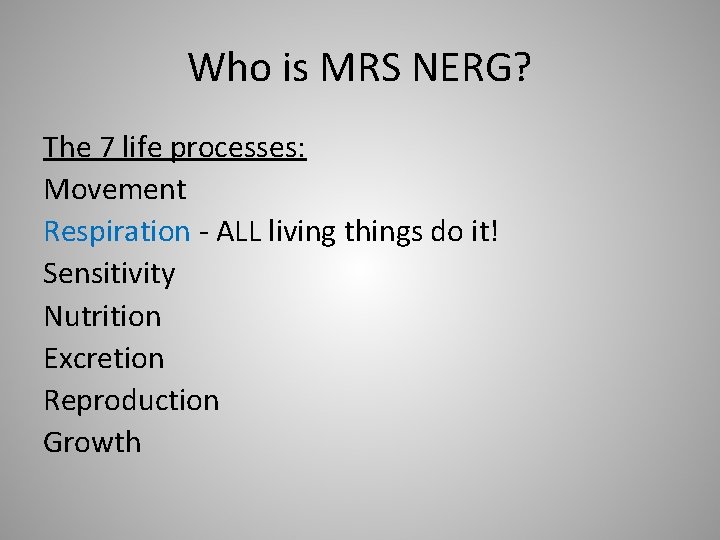
Who is MRS NERG? The 7 life processes: Movement Respiration - ALL living things do it! Sensitivity Nutrition Excretion Reproduction Growth
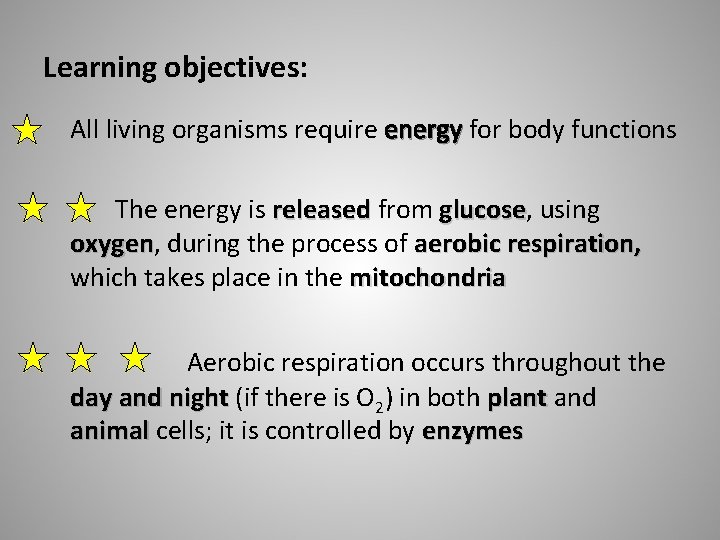
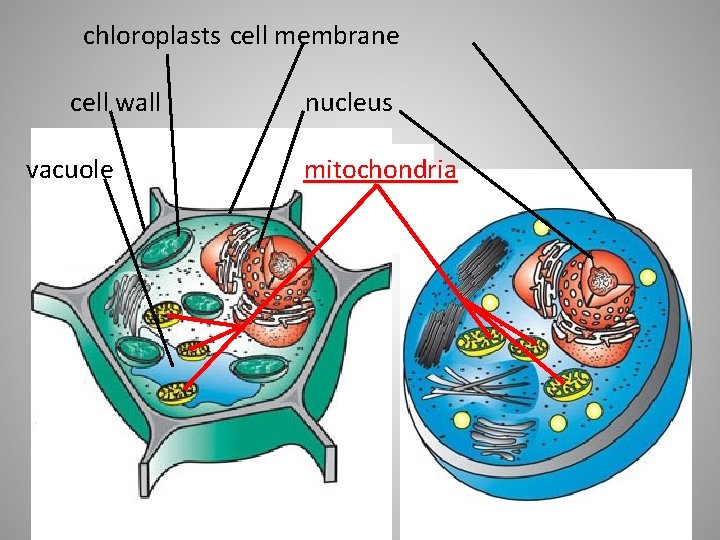
Learning objectives: All living organisms require energy for body functions The energy is released from glucose, glucose using oxygen, oxygen during the process of aerobic respiration, which takes place in the mitochondria Aerobic respiration occurs throughout the day and night (if there is O 2) in both plant and animal cells; it is controlled by enzymes
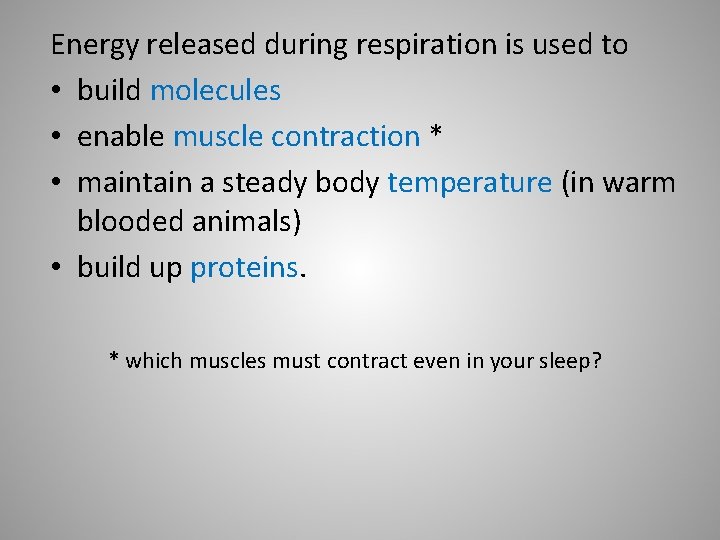
Energy released during respiration is used to • build molecules • enable muscle contraction * • maintain a steady body temperature (in warm blooded animals) • build up proteins. * which muscles must contract even in your sleep?
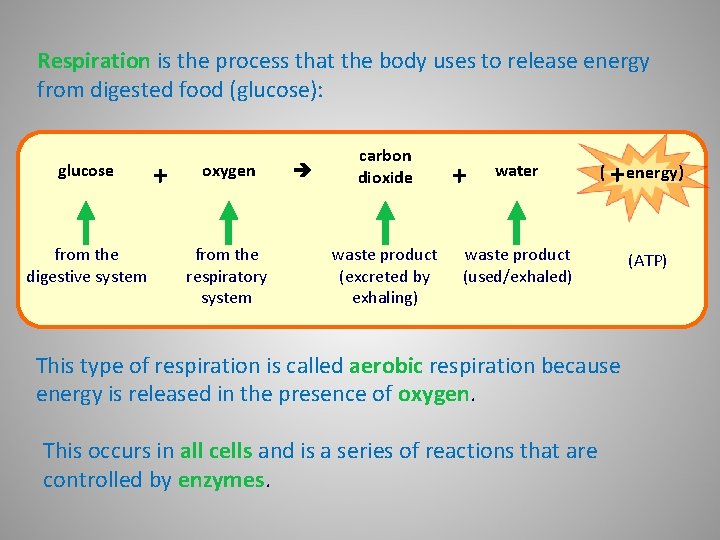
Respiration is the process that the body uses to release energy from digested food (glucose): glucose from the digestive system + oxygen from the respiratory system carbon dioxide waste product (excreted by exhaling) + water ( + energy) waste product (used/exhaled) This type of respiration is called aerobic respiration because energy is released in the presence of oxygen. This occurs in all cells and is a series of reactions that are controlled by enzymes. (ATP)
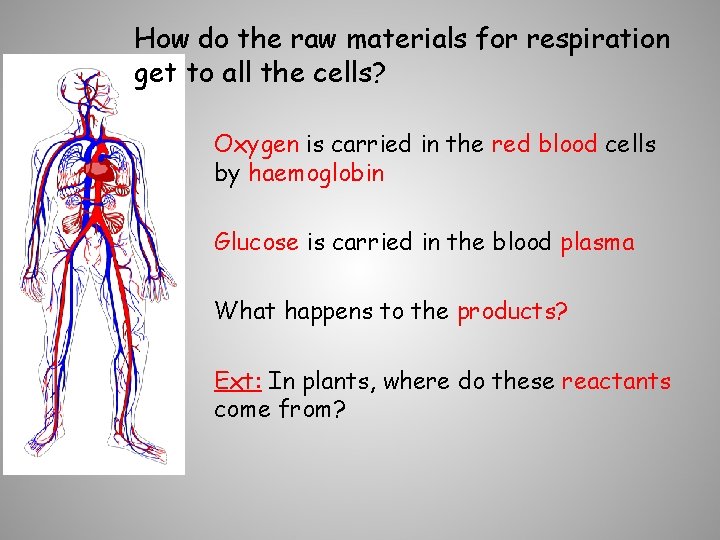
How do the raw materials for respiration get to all the cells? Oxygen is carried in the red blood cells by haemoglobin Glucose is carried in the blood plasma What happens to the products? Ext: In plants, where do these reactants come from?
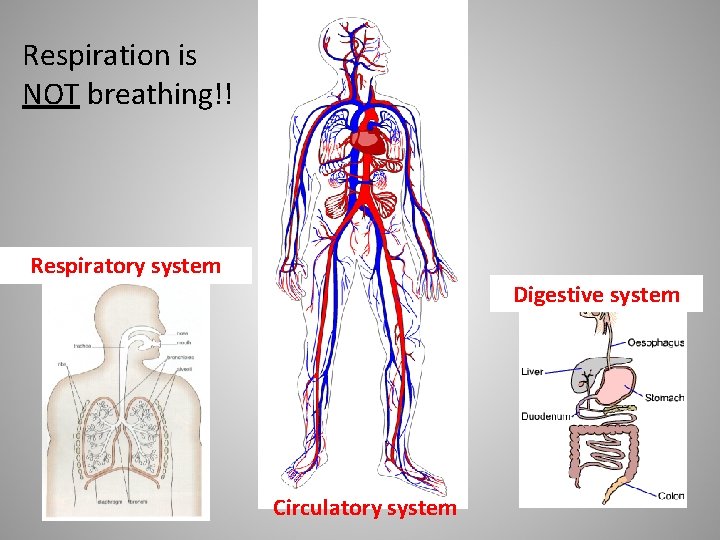
Respiration is NOT breathing!! Respiratory system Digestive system Circulatory system
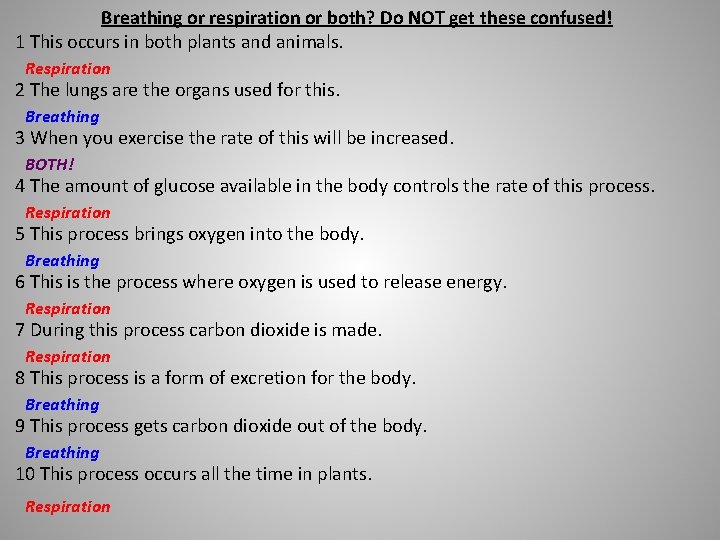
Breathing or respiration or both? Do NOT get these confused! 1 This occurs in both plants and animals. Respiration 2 The lungs are the organs used for this. Breathing 3 When you exercise the rate of this will be increased. BOTH! 4 The amount of glucose available in the body controls the rate of this process. Respiration 5 This process brings oxygen into the body. Breathing 6 This is the process where oxygen is used to release energy. Respiration 7 During this process carbon dioxide is made. Respiration 8 This process is a form of excretion for the body. Breathing 9 This process gets carbon dioxide out of the body. Breathing 10 This process occurs all the time in plants. Respiration
chloroplasts cell membrane cell wall vacuole nucleus mitochondria
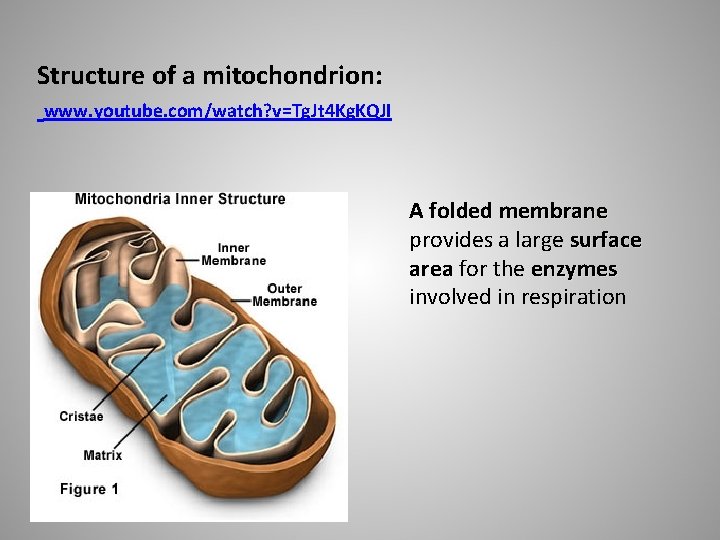
Structure of a mitochondrion: www. youtube. com/watch? v=Tg. Jt 4 Kg. KQJI A folded membrane provides a large surface area for the enzymes involved in respiration
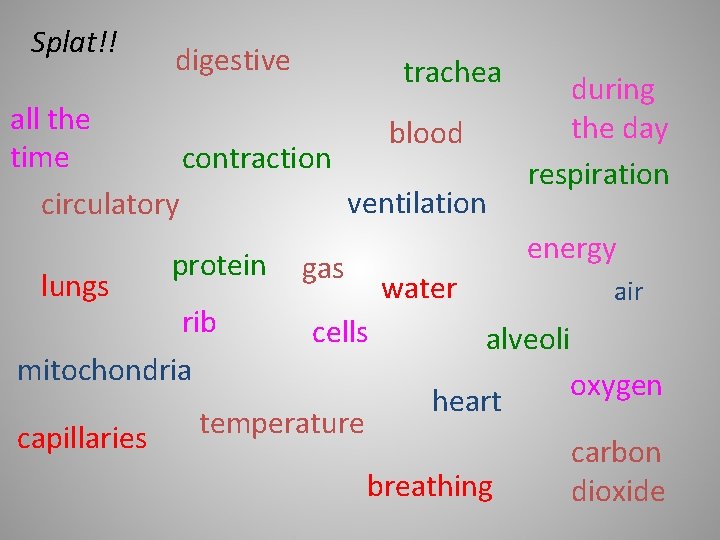
Splat!! digestive trachea all the blood time contraction ventilation circulatory lungs protein rib mitochondria capillaries energy gas water cells temperature during the day respiration air alveoli oxygen heart breathing carbon dioxide
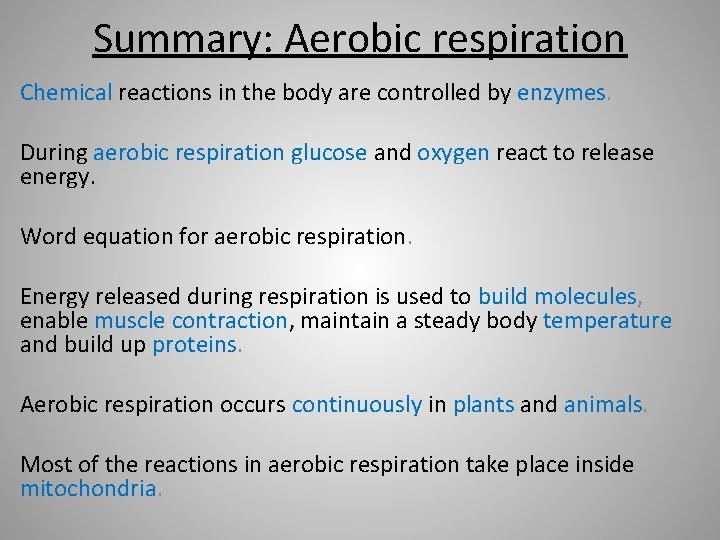
Summary: Aerobic respiration Chemical reactions in the body are controlled by enzymes. During aerobic respiration glucose and oxygen react to release energy. Word equation for aerobic respiration. Energy released during respiration is used to build molecules, enable muscle contraction, maintain a steady body temperature and build up proteins. Aerobic respiration occurs continuously in plants and animals. Most of the reactions in aerobic respiration take place inside mitochondria.