
Who Am I PBIS Strategies Portland Public Schools
Who Am I? PBIS Strategies Portland Public Schools 2015 Amy Ruona – Mental Health Coordination Lavell Wood – School Climate Coach 1
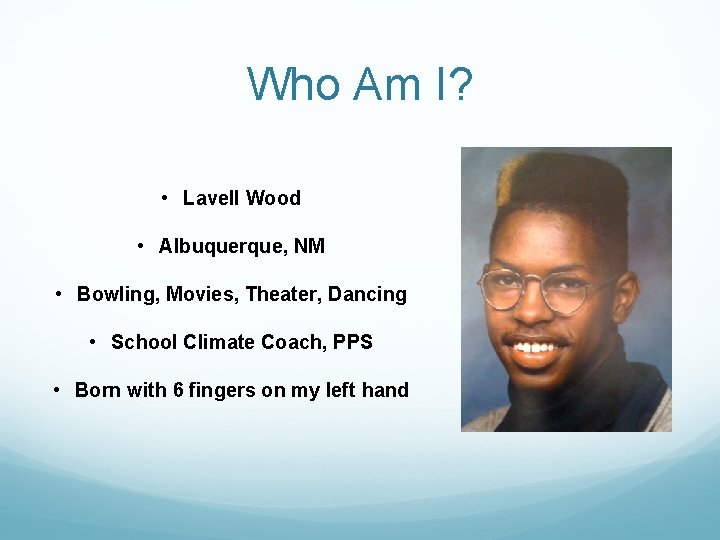
Who Am I? • Lavell Wood • Albuquerque, NM • Bowling, Movies, Theater, Dancing • School Climate Coach, PPS • Born with 6 fingers on my left hand
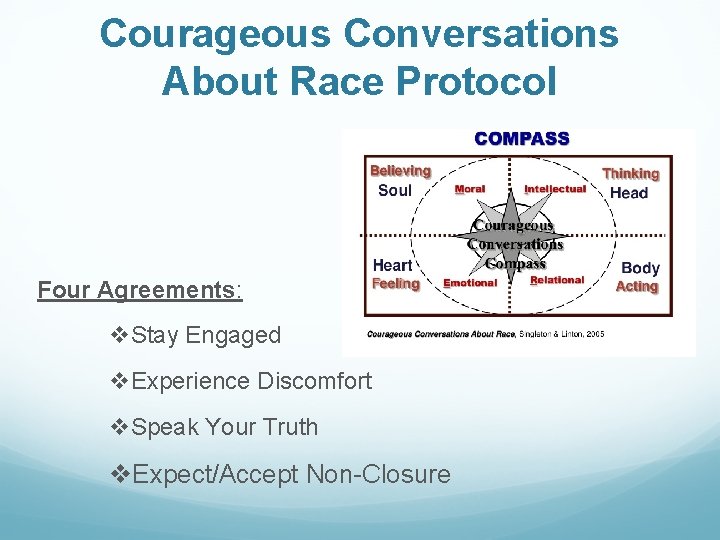
Courageous Conversations About Race Protocol Four Agreements: Stay Engaged Experience Discomfort Speak Your Truth Expect/Accept Non-Closure
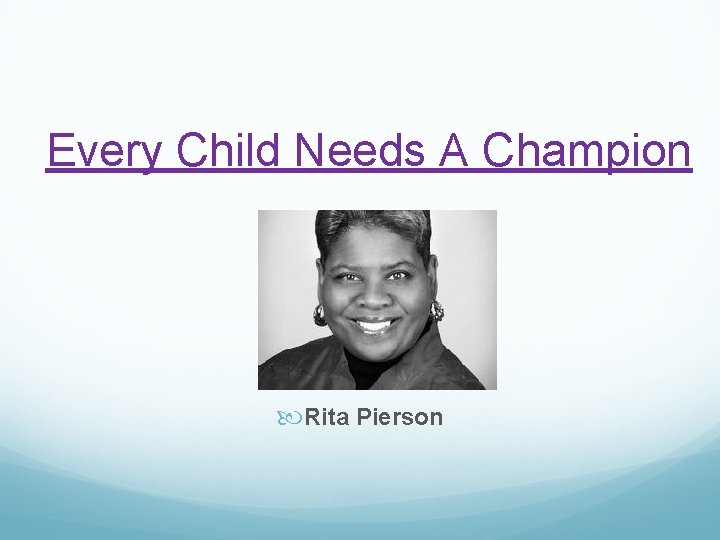
Every Child Needs A Champion Rita Pierson

Grounding Believing Thinking Courageous Conversations Compass Feeling Acting
PBIS Positive Behavior Interventions & Supports 6
PBIS IS… An approach to understanding and influencing student behavior A system to establish a positive climate in a classroom, school, or district 7
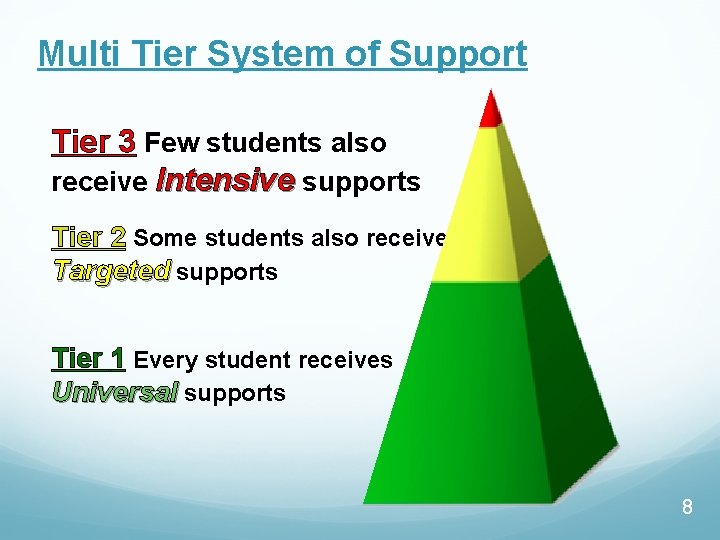
Multi Tier System of Support Tier 3 Few students also receive Intensive supports Tier 2 Some students also receive Targeted supports Tier 1 Every student receives Universal supports 8
Students Misbehave Because they: Don’t know what is expected Forget what is expected Don’t have the skill to do what is expected Don’t value what is expected Are processing other material “Get something” from their misbehavior 9
Positive Approach to Behavior “Behavior” can be taught Feedback is an essential part of learning and mastering skills Instruction, Feedback, Consistency, and Relationship 10
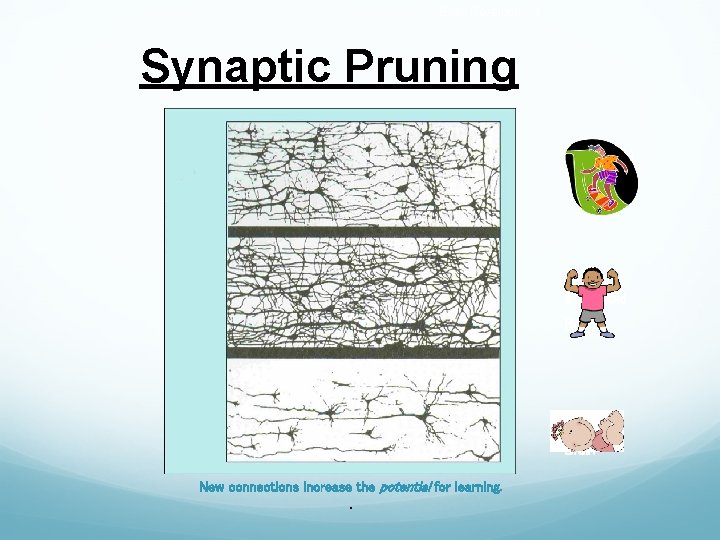
Brain Development Synaptic Pruning 14 Year Old Brain 6 Year Old Brain Newborn Brain New connections increase the potential for learning. .
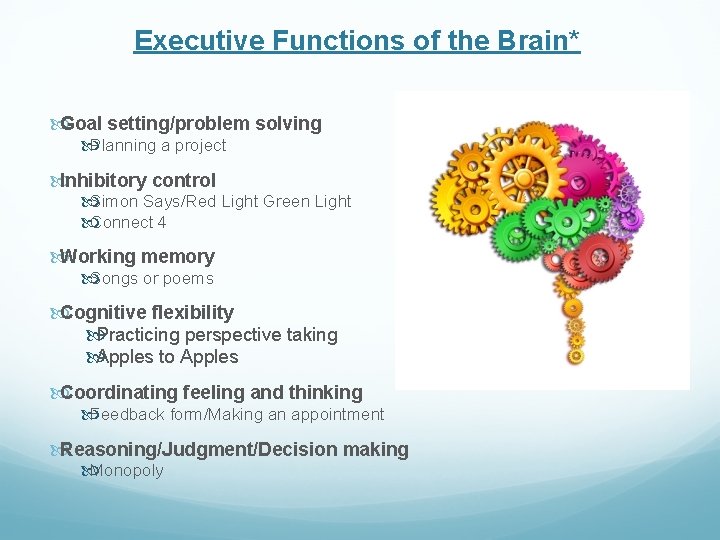
Executive Functions of the Brain* Goal setting/problem solving Planning a project Inhibitory control Simon Says/Red Light Green Light Connect 4 Working memory Songs or poems Cognitive flexibility Practicing perspective taking Apples to Apples Coordinating feeling and thinking Feedback form/Making an appointment Reasoning/Judgment/Decision making Monopoly
How do we keep it positive? * Engage Connect and Redirect Name it To Tame it *From the work of Dan Siegel
What Do Our Older Students Want? Fun Power Choices Freedom Leadership opportunities Space/Peace To be understood Separation/Distinction Different acknowledgement system Different snack table Different Clubs Different responsibilities
Ways to Engage Our Older Students Acknowledgement of developmental differences Leadership Activities “Leadership Club”/“Leadership Squad” Intentional Meetings Opportunities to make decisions Concept of responsibility & consequences Separate Space Different roles/jobs Balance of enrichment, recreation, & academics Special Interest Clubs
Leadership Skill Building Model leadership behaviors What are you doing and why are you doing it Build up slowly Small opportunities with room for growth Lots of Cooperative Games Distinct Day of the Week Explore interests Role Plays/Problem Solving Scenarios Skill Building Teaching a lesson Reading to a younger child Leading a game
Student jobs that have worked Ball Collector Snack Helper Eyes and Ears Ref-ing Leading Circle Assistant teacher during lesson plan Game Leader Recess Helper Student Voice at Monthly Staff meeting

Specific Projects that have worked… Bike Project (Beverly Cleary) Community Volunteering (BC) Re-teaching favorite lesson plans (Sunnyside) Fundraising for specific organizations (Hill-Glencoe) Monthly craft project Reading Buddies (Abby) Teacher /Sports Assistant Scavenger Hunt (Mike-KCLC) Clubs Action Hero Adventure Club (Maia-F House)

Potential Barriers Rigidity of Grown-ups Has to be a priority for the adults Staying within ratio Floater 1 day of week Sight and sound for compliance Shared space Separate table/Separate corner Transitioning staff Students can help train new staff
How To Get Support Site Supervisor Teacher Principal Parent Peers 20
Teaching Expectations When your expectations are clear, students never have to guess how you expect them to behave. R. Sprick 21
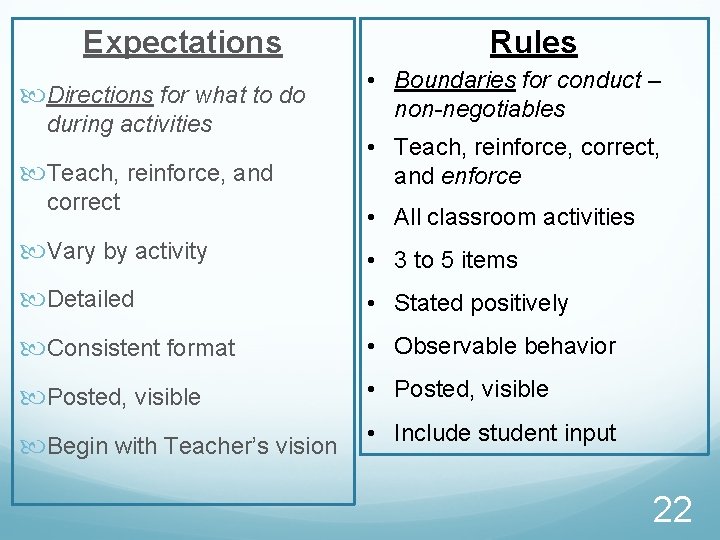
Expectations Directions for what to do during activities Teach, reinforce, and correct Rules • Boundaries for conduct – non-negotiables • Teach, reinforce, correct, and enforce • All classroom activities Vary by activity • 3 to 5 items Detailed • Stated positively Consistent format • Observable behavior Posted, visible • Posted, visible Begin with Teacher’s vision • Include student input 22

Expectations? or Rules? 1. Keep hands, feet, and objects to yourself 2. Follow directions the first time they are given 3. Follow Expectations during all activity times

“MAC” MOVEMENT How do student’s move around? ACTIVITY Structured? Unstructured? Clear Expectations? COMMUNICATION How to request help? Who can they talk to? Voice Levels taught? 24
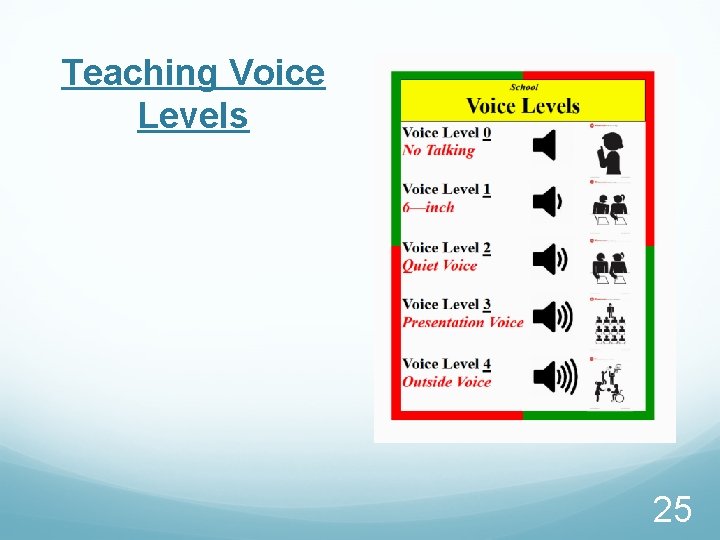
Teaching Voice Levels 25
o Setting The Tone o Student Behavior Gone Bad o Clear Expectations
Weave it in Teach and re-teach (watch calendar!) Reinforce and correct (instructional correction) Make behavior and expectations part of your activity fabric – before, during, and after activities Celebrate! Consider collaborating with a colleague around implementing this practice with your students 27
Program-Wide Positive Feedback Tickets or tokens “Keeping score” on board School system Your own system 28
Positive Feedback Instruction does much, but encouragement does everything. Goethe 29
Effective Feedback: Specific and descriptive Addresses observable behavior and not a person’s worth (not about us either) Contingent: student connects Teacher attention to appropriate behavior Age-appropriate Immediate Fits the teacher’s style Sensitive to student response 30
Positive feedback: Happens a lot! 3: 1 positive to negative ratios Defined by what the student is doing at the moment of interaction 31
3 Glows and 1 Grow 3: 1 32
Rules For Corrections: • Respectful • Instructional • Less disruptive than what we are correcting • Clear, effective language • Brief • Consistent, predictable 33
Redirect Behavior • • • Pre-correct Proximity Non-verbal correction Verbal correction Possible humor (careful!) Praise those behaving responsibly 34
Respectful Verbal Redirect State expected behavior (instructional) 1 or 2 words or very short sentences Cause only a brief interruption of lesson Given when you are near the student Tone and content are respectful Tone and content culturally appropriate Clear and understandable (note language) 35
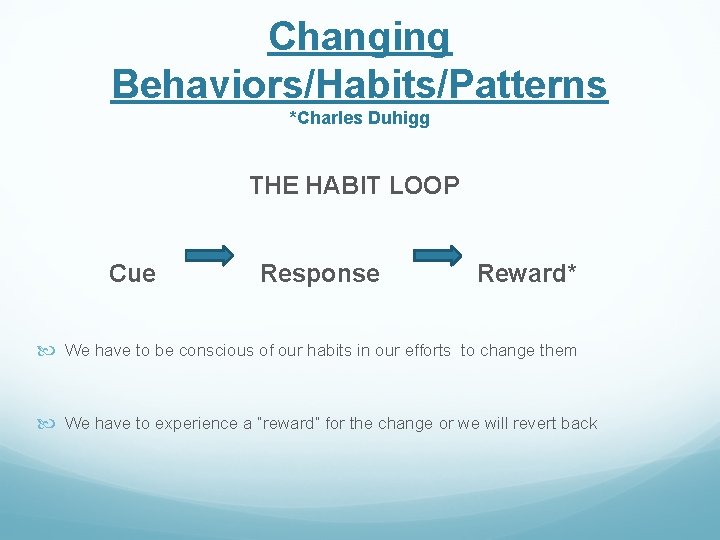
Changing Behaviors/Habits/Patterns *Charles Duhigg THE HABIT LOOP Cue Response Reward* We have to be conscious of our habits in our efforts to change them We have to experience a “reward” for the change or we will revert back
Approach to intervention 37
Axioms Don’t take it personally Kids (people) do well if they can We change the environment before we change student behavior Behavior that is repeated is motivated … or being reinforced 38
Expect… Intervention to take some extra time and effort Some expectations will be different for students presenting challenging behavior Student behavior will not change quickly 39
Know the student Learn what is seen and unseen Cultural Competence Skills are important Academic Cognitive Below The Line Information 40
Students of color Have frequently: Felt unwelcome in our schools Been misunderstood across a cultural communication gap Have not been supported in recognizing their potential Been targeted disproportionately in discipline measures 41
A result of Many people with good intentions The development of policies and procedures by people who do not have a deep understanding of the role of race in our educational institutions Historical practice derived from a culturally narrow lens 42

Asking us to Develop our own knowledge of race and culture – our own, and that of our students Understand the ways in which race influences all educational outcomes Change the way we think and act Take actions that make our school welcoming to students and families of color Take action to employ academic and behavioral practices that support the success of all students 43

REFLECTION
- Slides: 44