
WHMIS Workplace Hazardous Materials Information System Product Labels
WHMIS Workplace Hazardous Materials Information System
Product Labels Part 1

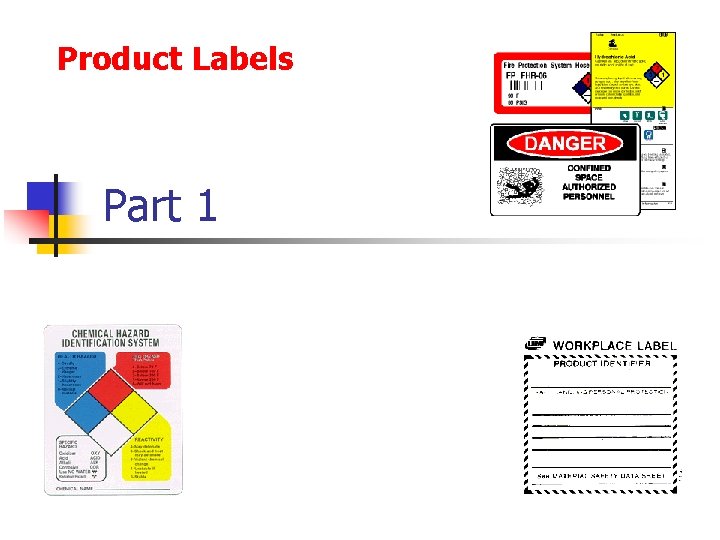
Product Labels n All materials in the workplace are required to have a label. Labels are an important source of information that may include: n n The name of the material Part number
Product Labels (Cont’d) n n n Possible hazards when using the material Hazard symbols A statement that the MSDS is available How to safely handle the material Suggestions for first aid treatment The manufacturer’s name, address, and emergency telephone number The intended use of the product

Minimum Label Requirements n Labels for hazardous materials are required to provide: n n n A product identifier or name. Hazard warnings. A statement that the MSDS is available.
What If There Is No Label? n n n Do not handle the product. Determine the nature of the material from the shop manager. Place a label on the container once the material has been identified.
Hazard Symbols n Hazard symbols on product labels are in picture form so they can be read in any language. The symbols show an immediate hazard warning about the contents of the container. Examples are: n n Cylinder Flame Skull and crossbones inside a circle Hand being corroded by a chemical
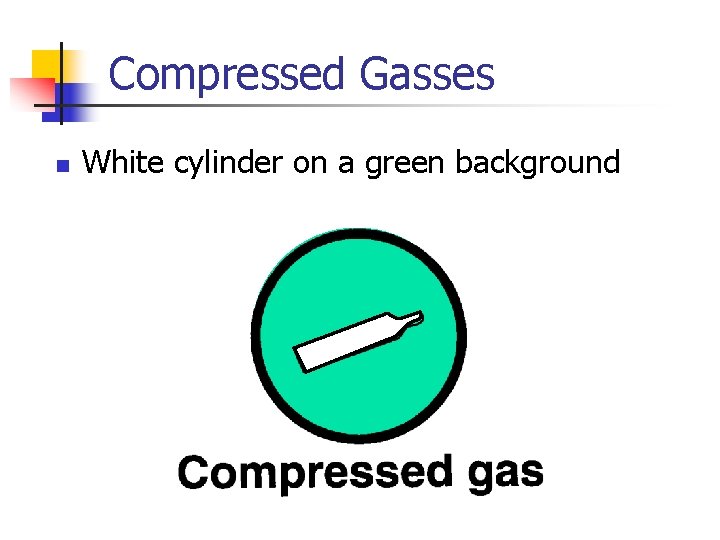
Compressed Gasses n White cylinder on a green background
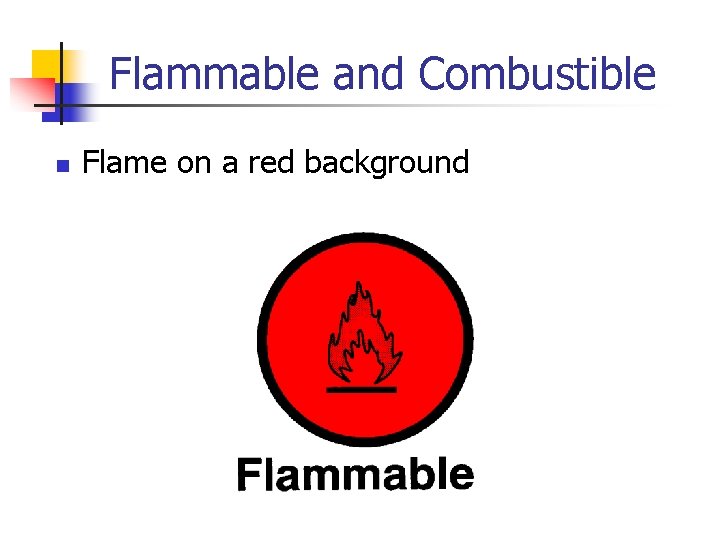
Flammable and Combustible n Flame on a red background
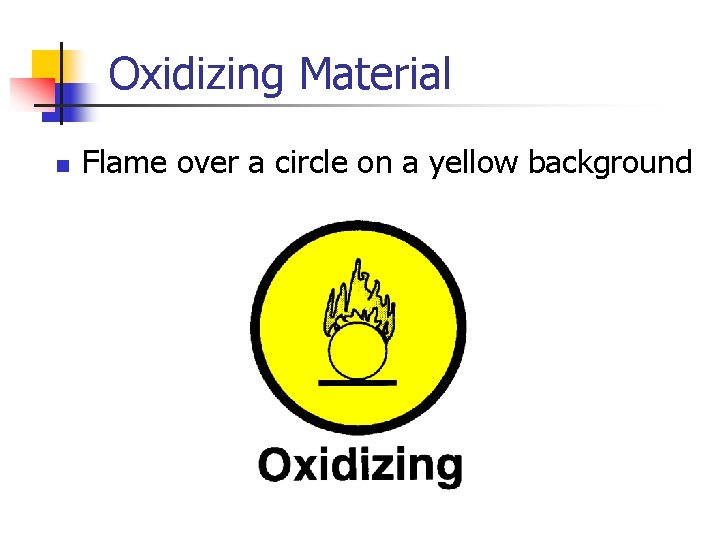
Oxidizing Material n Flame over a circle on a yellow background
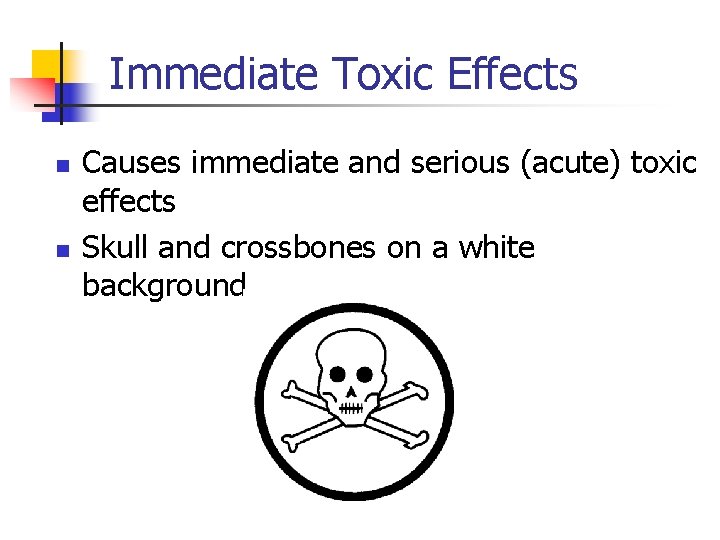
Immediate Toxic Effects n n Causes immediate and serious (acute) toxic effects Skull and crossbones on a white background

Other Toxic Effects n n Causes other toxic effects. Letter ‘T’ with a dot below it.
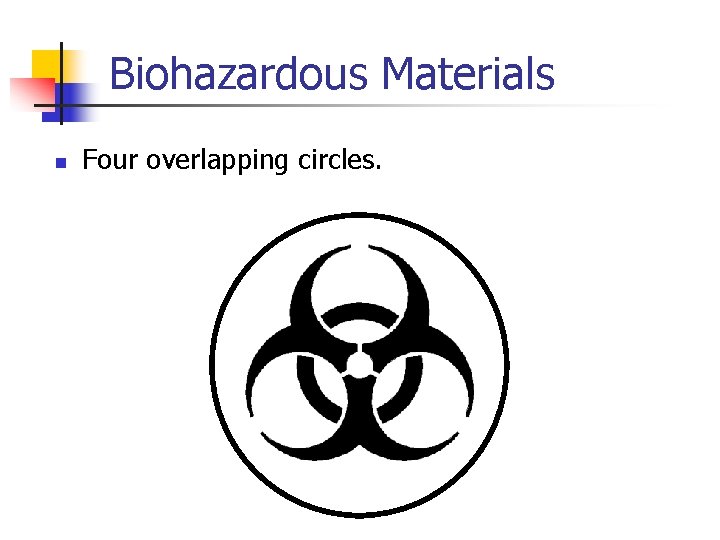
Biohazardous Materials n Four overlapping circles.
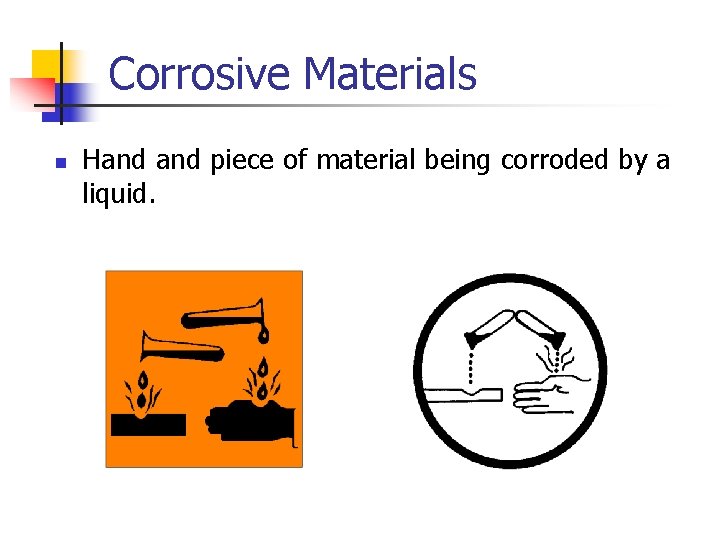
Corrosive Materials n Hand piece of material being corroded by a liquid.

Dangerously Reactive Materials n Letter ‘R’ with a test tube in the middle.

Types of Labels n There are 3 types of labels commonly used for identifying hazardous materials. These are: n n n Supplier labels Workplace labels “Other Means” of identification labels

Supplier Labels n Must contain: n n n n Product name Supplier identifier Statement of MSDS availability Hazard symbols Handling, use & storage instructions First aid measures Risk phrases explaining possible dangers of the material
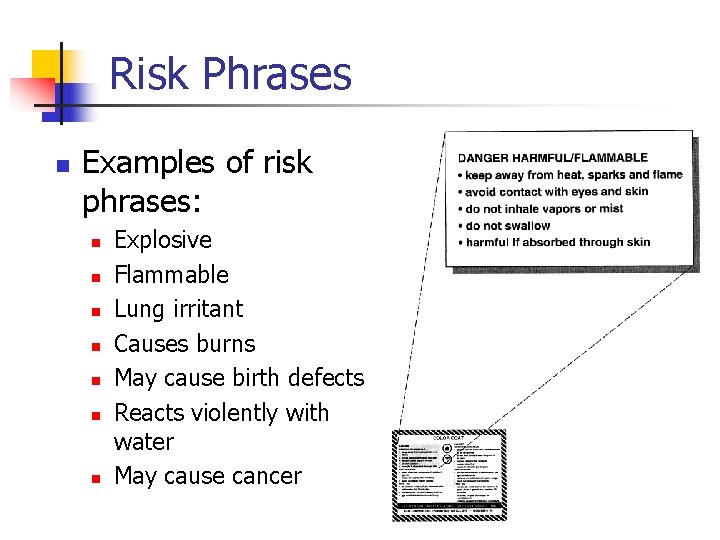
Risk Phrases n Examples of risk phrases: n n n n Explosive Flammable Lung irritant Causes burns May cause birth defects Reacts violently with water May cause cancer
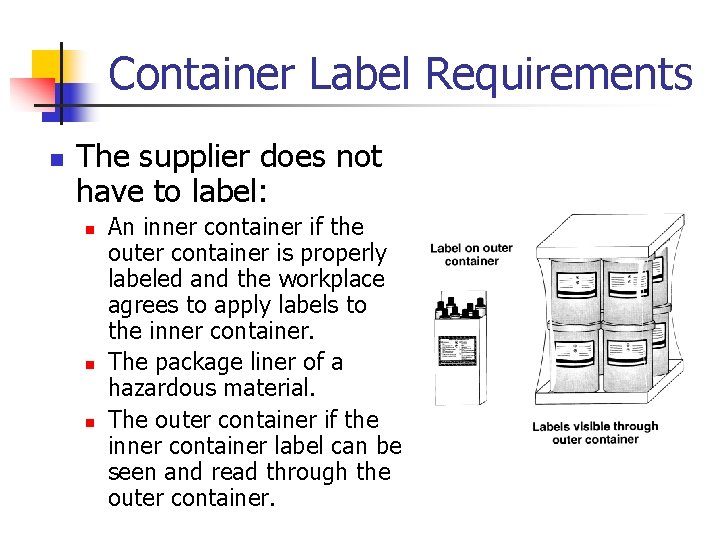
Container Label Requirements n The supplier does not have to label: n n n An inner container if the outer container is properly labeled and the workplace agrees to apply labels to the inner container. The package liner of a hazardous material. The outer container if the inner container label can be seen and read through the outer container.
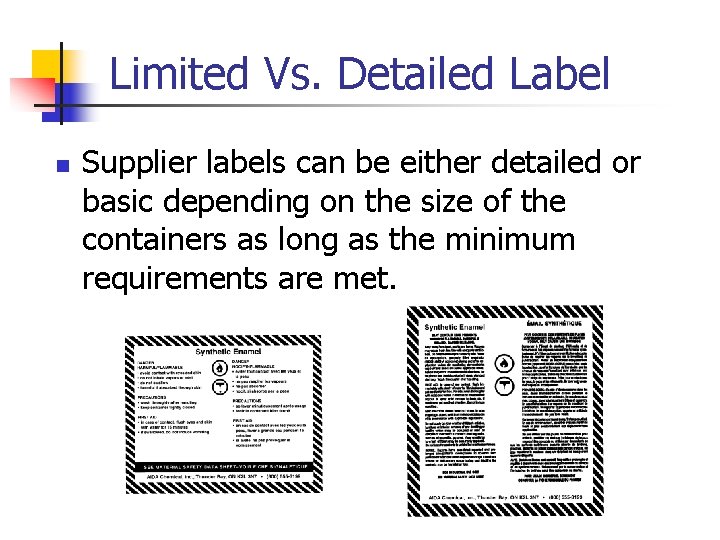
Limited Vs. Detailed Label n Supplier labels can be either detailed or basic depending on the size of the containers as long as the minimum requirements are met.

Workplace Labels n Labels created and attached in the workplace. n Usually a result of pouring material into a smaller container. n n Example of mixing paint using a mixing system Only 3 items required on the label: n n n Product identifier Hazard warning information Reference to MSDS

Workplace Label Format n Can be a premade format or something as simple as masking tape.

Personal Protection Symbols n Some workplace labels include personal protection symbols that can be checked.
Code Symbols n n Some workplace labels may also have a system of codes to show the level of certain elements in a hazardous material. The system measures: n n Health hazards Flammability Reactivity Personal protection required
Code Symbols n n Code system has 5 numbers (0 -4). The higher the number, the higher the danger level. n n n 0 1 2 3 4 is is is very low danger slightly dangerous moderately dangerous seriously dangerous severely dangerous
Code Symbols n For example, a material with a: n n Flammability of 0 is not likely to catch fire. Flammability of 4 will catch fire very easily. Health hazard of 2 is moderately hazardous to your health. The code numbers can usually be found on the MSDS.
Code Symbols n Codes are shown in different colored boxes. n n n Blue for health hazard Red for flammability hazard Yellow for a reactivity hazard White for personal protection information The 4 categories are usually shown in the form of a diamond.
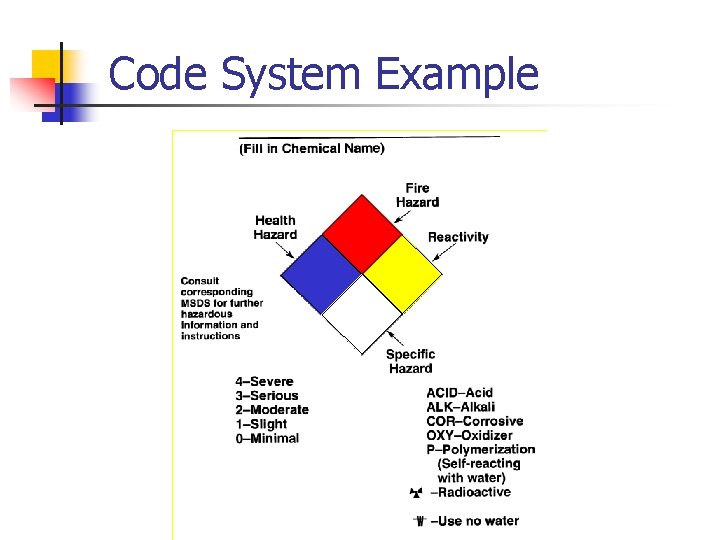
Code System Example
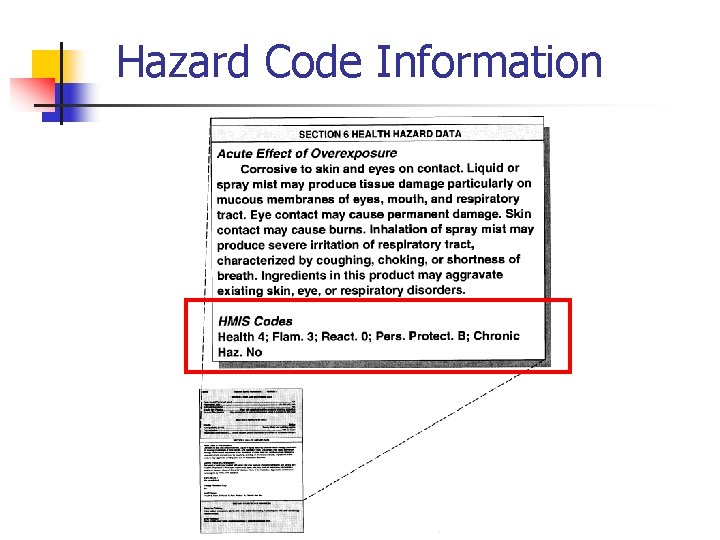
Hazard Code Information
“Other Means” Label n Used when labels are not visible due to something covering the labels n n n Labels covered in paint Large storage containers where labels are hidden from view Examples: n n n A mark or symbol on the container Special colour coded area A sign or placard above or off to one side that indicates what the material is
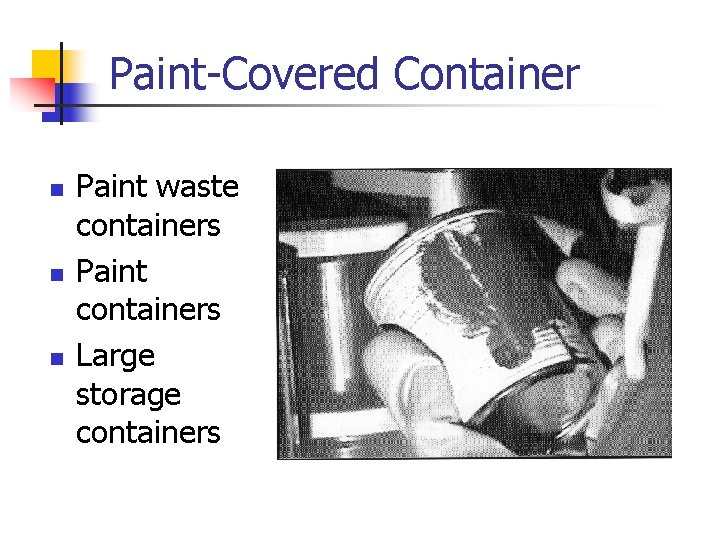
Paint-Covered Container n n n Paint waste containers Paint containers Large storage containers

Review Exercise
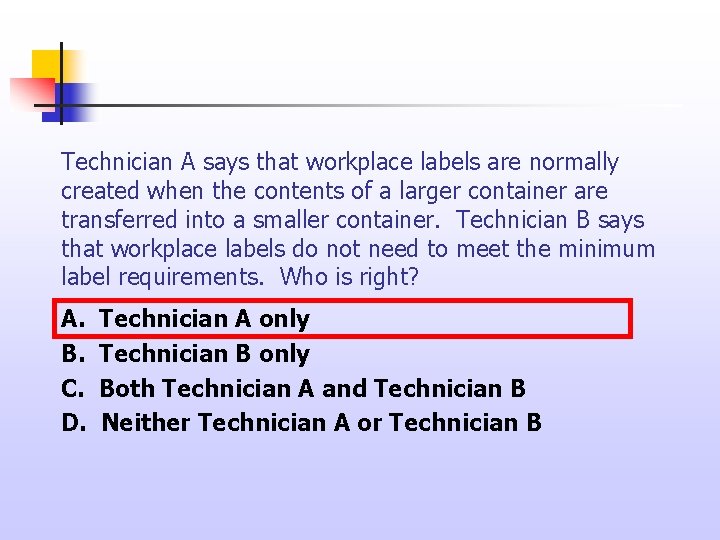
Technician A says that workplace labels are normally created when the contents of a larger container are transferred into a smaller container. Technician B says that workplace labels do not need to meet the minimum label requirements. Who is right? A. B. C. D. Technician A only Technician B only Both Technician A and Technician B Neither Technician A or Technician B
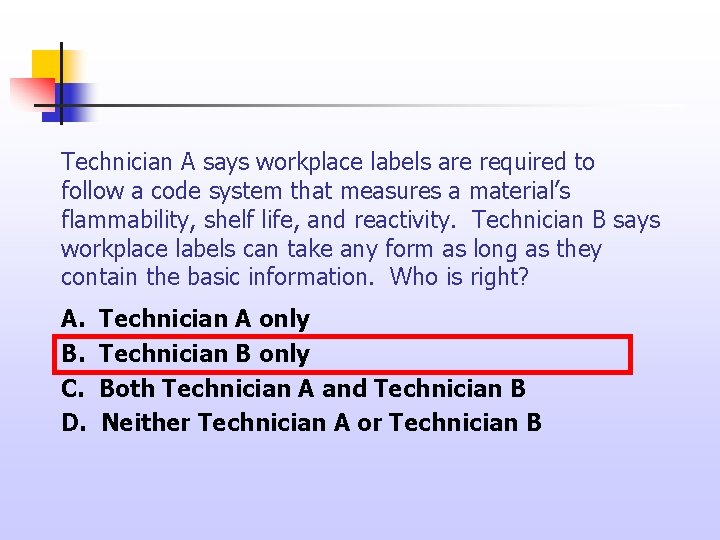
Technician A says workplace labels are required to follow a code system that measures a material’s flammability, shelf life, and reactivity. Technician B says workplace labels can take any form as long as they contain the basic information. Who is right? A. B. C. D. Technician A only Technician B only Both Technician A and Technician B Neither Technician A or Technician B
The supplier label: A. Must be attached to any hazardous material that comes into the shop. B. Needs only to contain the product name, statement that a MSDS is available, and risk phrases. C. Needs to have black text over a white background. D. All of the above.
The blue section of the code system indicates: A. B. C. D. Fire hazards. Reactivity. Specific hazards. Health hazards.
Examples of “other means of identification” labels include: A. Marks or symbols. B. Special color coded areas. C. Signs or placards above or off to the side of the material. D. All of the above.
- Slides: 37