
WHMIS and Scientific Method Steps or Inferences Quantitative
- Slides: 33
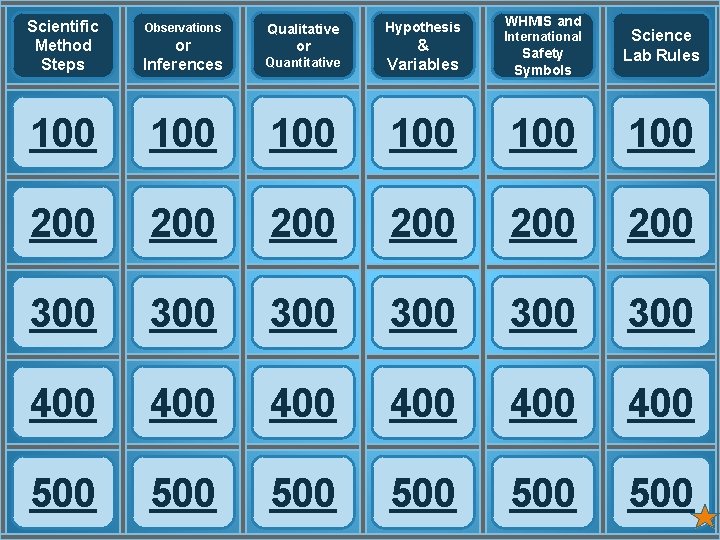
WHMIS and Scientific Method Steps or Inferences Quantitative & Variables 100 100 100 200 200 200 300 300 300 400 400 400 500 500 500 Observations Qualitative or Hypothesis International Safety Symbols Science Lab Rules
Example A public institution in the Pacific Northwest with a Husky named “Dubs” as its mascot What is the University of Washington?
100 What do all scientific experiments begin with? A Problem or Question
200 The part of the scientific method where the experimenter makes an “Educated Guess”. The Hypothesis
300 The part of the scientific method that includes sharing the findings and results of the experiment with others. Conclusion- or Report Results
400 The 3 steps that occur during the “analyze information” step Background knowledge, Make observations, make inferences
500 These are the steps of the scientific method. Problem, Analyze Information, Make a hypothesis, Conduct experiment, collect/analyze data, report results
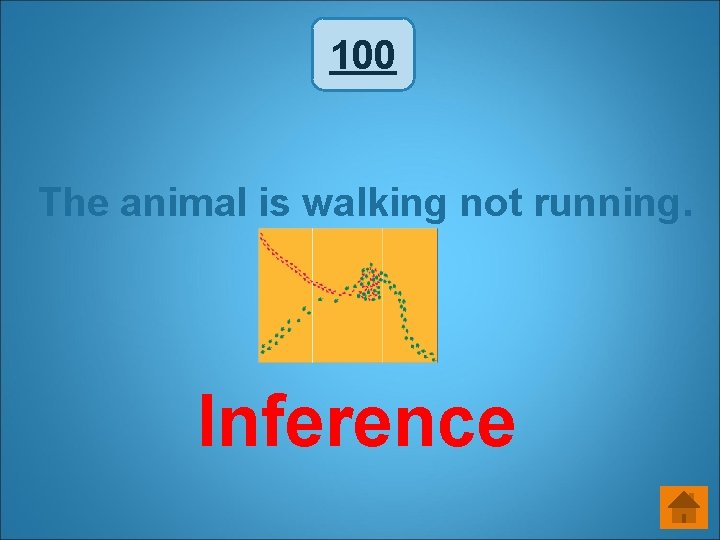
100 The animal is walking not running. Inference
200 You see steam rising off a cup of coffee. Observation or Inference? Observation
300 What is the definition of an observation? Carefully using your 5 senses to describe what is happening in front of you
400 What is the definition of an inference? Using background knowledge and observations to come to a conclusion/opinion
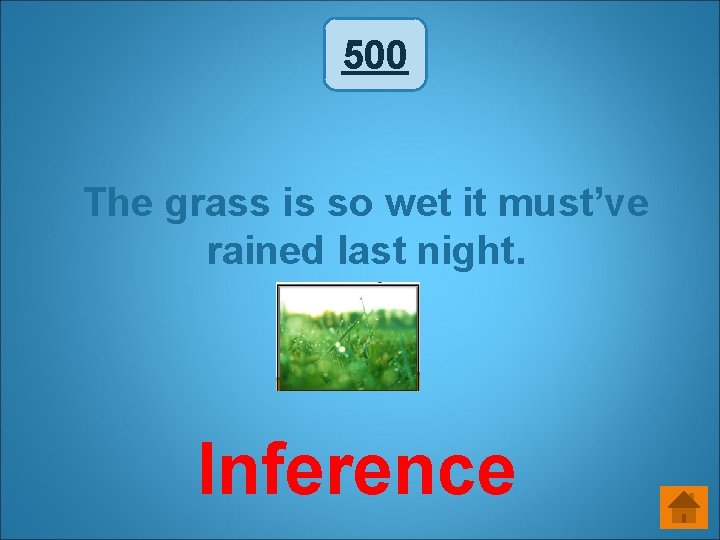
500 The grass is so wet it must’ve rained last night. Inference
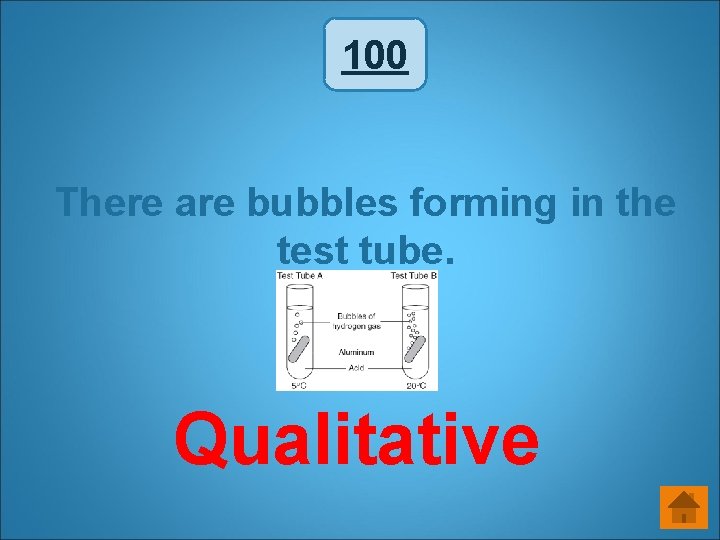
100 There are bubbles forming in the test tube. Qualitative
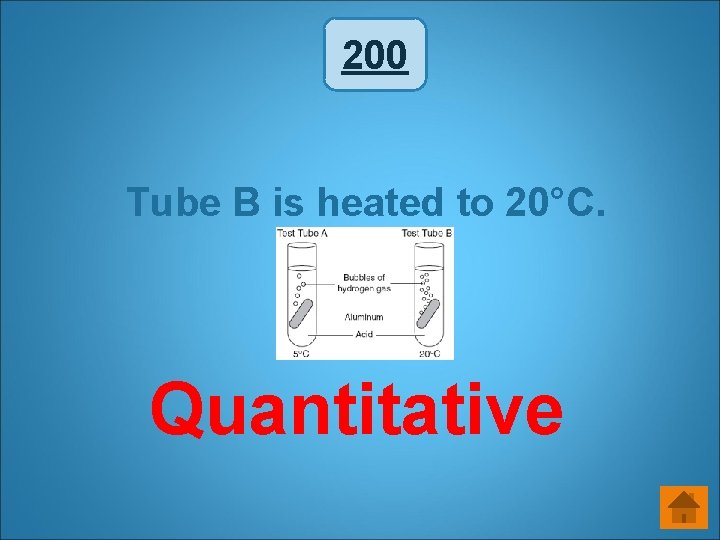
200 Tube B is heated to 20°C. Quantitative
300 What are qualitative observations? Any observation that uses the 5 senses
400 What are Quantitative Observations? Any observation that uses numbers to describe something
500 How can we remember the difference between Qualitative and Quantitative Observations? Qua. Litative= L for looks Qua. Ntitative= N for numbers
100 What is the standard format for writing a Hypothesis? If______then____ because______
200 What is an independent variable? Any variable that is intentionally manipulated or controlled by the experimenter
300 What is a dependent variable? Any variable that changes or depends on the manipulation of the independent variable. Not Controlled.
400 What is a controlled variable? Any variable that an experimenter must keep constant to prevent it from having an effect on the dependent variable.
500 Homer was told that a certain itching powder was the newest best thing on the market. It even claims to decrease itching by 50 % because it contains caffeine. Interested in this product, he buys the itching powder and compares it to his usual product, which contains aloe vera. On one itching spot, he puts the new powder. On another itching spot, he puts his old cream. He then times how long it takes for the products to stop his itch. What is the independent variable? The Dependent Variable? Controlled Variables? Independent: Type of cream he uses Dependent: How quickly the cream stops the itch Controlled variables: amount of cream used, size of itch etc
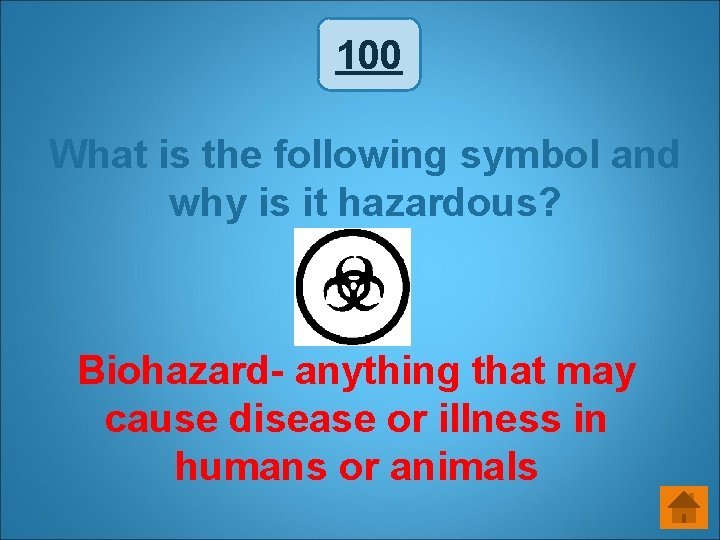
100 What is the following symbol and why is it hazardous? Biohazard- anything that may cause disease or illness in humans or animals
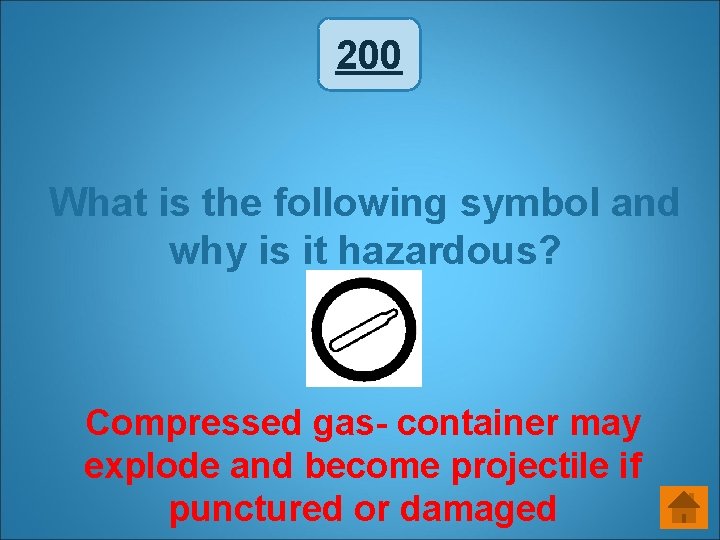
200 What is the following symbol and why is it hazardous? Compressed gas- container may explode and become projectile if punctured or damaged
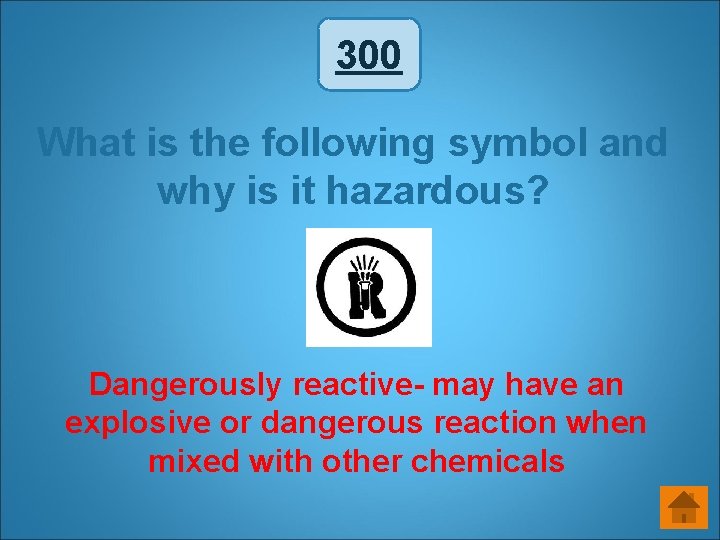
300 What is the following symbol and why is it hazardous? Dangerously reactive- may have an explosive or dangerous reaction when mixed with other chemicals
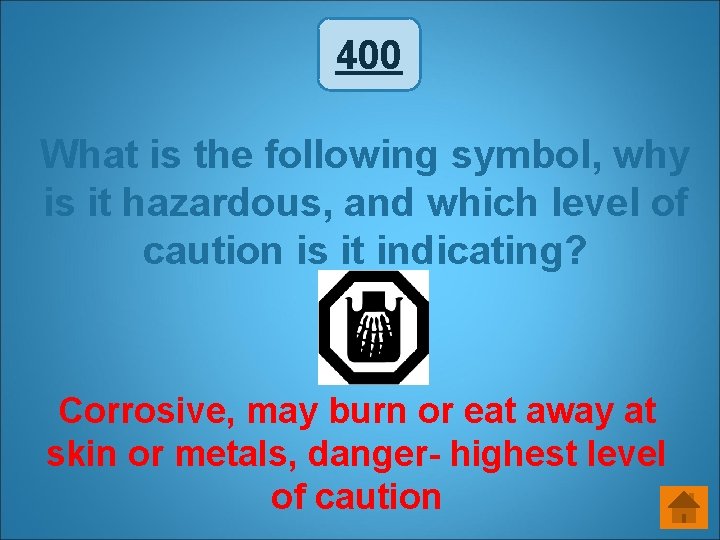
400 What is the following symbol, why is it hazardous, and which level of caution is it indicating? Corrosive, may burn or eat away at skin or metals, danger- highest level of caution
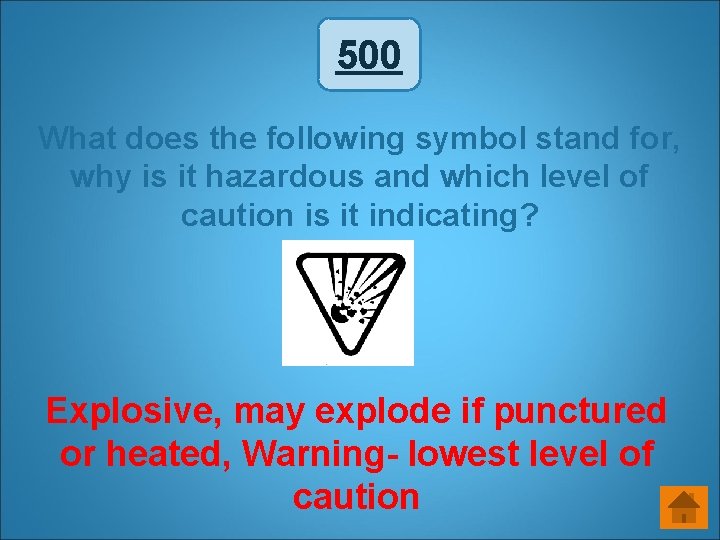
500 What does the following symbol stand for, why is it hazardous and which level of caution is it indicating? Explosive, may explode if punctured or heated, Warning- lowest level of caution
100 What are things that should not be worn in the science lab? Baggy clothing, open toed shoes, jewelry
200 How do you safely test the odor of a chemical? Wafting technique
300 What should a person do to their hair before conducting an experiment? Pull it back
400 What should you do if you break a piece of glass or spill a chemical? Report it to the teacher.
500 When should you begin your experiment? After you have read the instructions, listened to directions, and the teacher has told you to do so.
FINAL JEOPARDY What is the scientific method used for? Process of solving scientific problems. (A way of thinking and gathering knowledge that is both accurate and reliable)