
Whitney Wharton Ph D Cognitive Neuroscientist Assistant Professor

- Slides: 34
Whitney Wharton, Ph. D Cognitive Neuroscientist Assistant Professor Department of Neurology Emory University
Learning Objectives • • • Alzheimer’s Defined Social and Economic Impact Risk Factors Neuropathology and Disease Trajectory AD Diagnosis, Treatment and Management Healthy Brain Tips
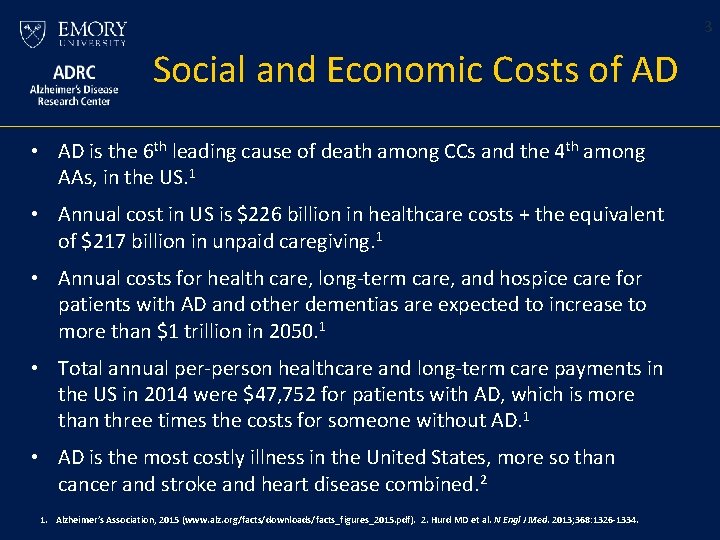
3 Social and Economic Costs of AD • AD is the 6 th leading cause of death among CCs and the 4 th among AAs, in the US. 1 • Annual cost in US is $226 billion in healthcare costs + the equivalent of $217 billion in unpaid caregiving. 1 • Annual costs for health care, long-term care, and hospice care for patients with AD and other dementias are expected to increase to more than $1 trillion in 2050. 1 • Total annual per-person healthcare and long-term care payments in the US in 2014 were $47, 752 for patients with AD, which is more than three times the costs for someone without AD. 1 • AD is the most costly illness in the United States, more so than cancer and stroke and heart disease combined. 2 1. Alzheimer’s Association, 2015 (www. alz. org/facts/downloads/facts_figures_2015. pdf). 2. Hurd MD et al. N Engl J Med. 2013; 368: 1326 -1334.
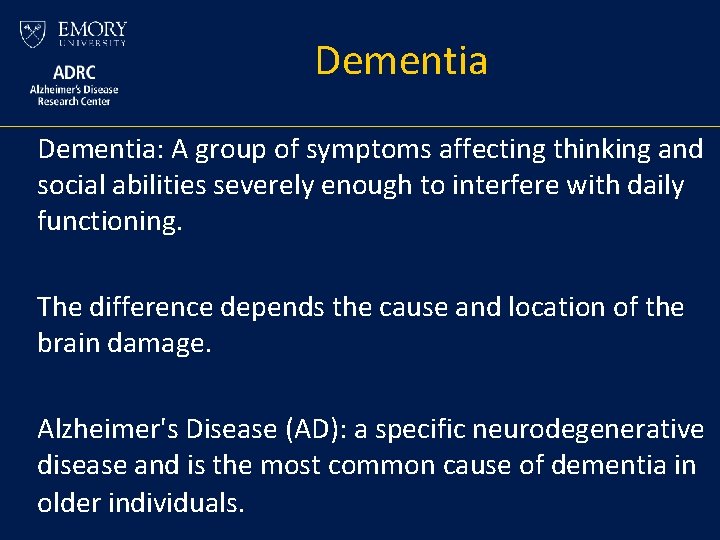
Dementia: A group of symptoms affecting thinking and social abilities severely enough to interfere with daily functioning. The difference depends the cause and location of the brain damage. Alzheimer's Disease (AD): a specific neurodegenerative disease and is the most common cause of dementia in older individuals.
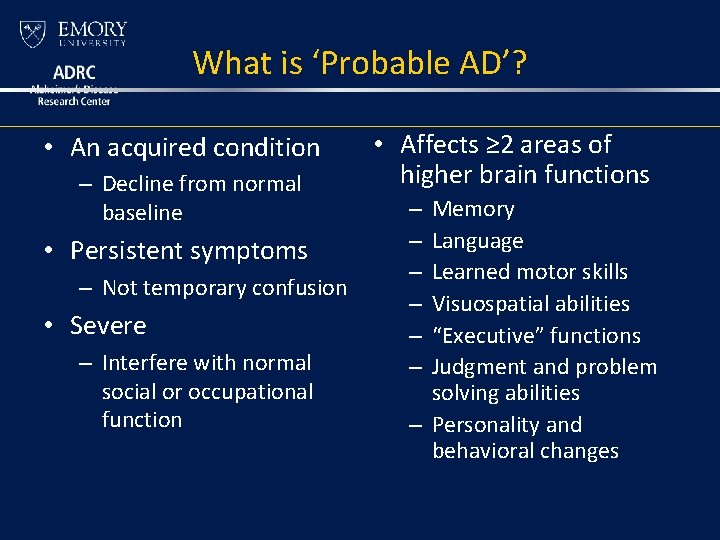
What is ‘Probable AD’? • An acquired condition – Decline from normal baseline • Persistent symptoms – Not temporary confusion • Severe – Interfere with normal social or occupational function • Affects ≥ 2 areas of higher brain functions Memory Language Learned motor skills Visuospatial abilities “Executive” functions Judgment and problem solving abilities – Personality and behavioral changes – – –
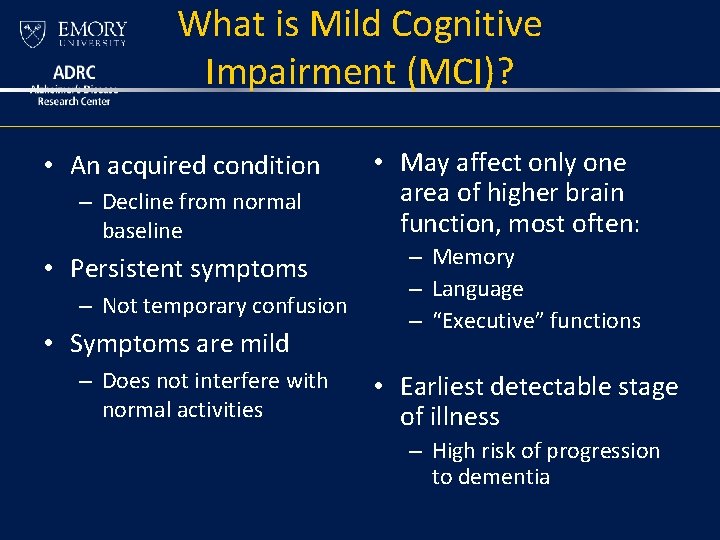
What is Mild Cognitive Impairment (MCI)? • An acquired condition – Decline from normal baseline • Persistent symptoms – Not temporary confusion • Symptoms are mild – Does not interfere with normal activities • May affect only one area of higher brain function, most often: – Memory – Language – “Executive” functions • Earliest detectable stage of illness – High risk of progression to dementia
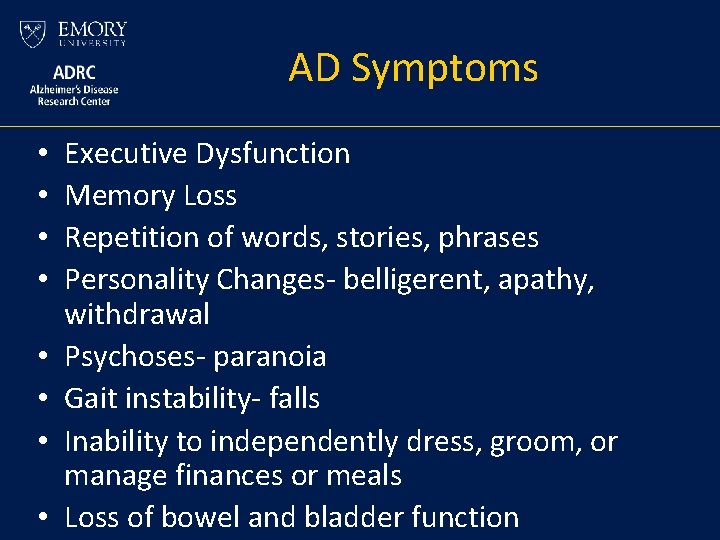
AD Symptoms • • Executive Dysfunction Memory Loss Repetition of words, stories, phrases Personality Changes- belligerent, apathy, withdrawal Psychoses- paranoia Gait instability- falls Inability to independently dress, groom, or manage finances or meals Loss of bowel and bladder function
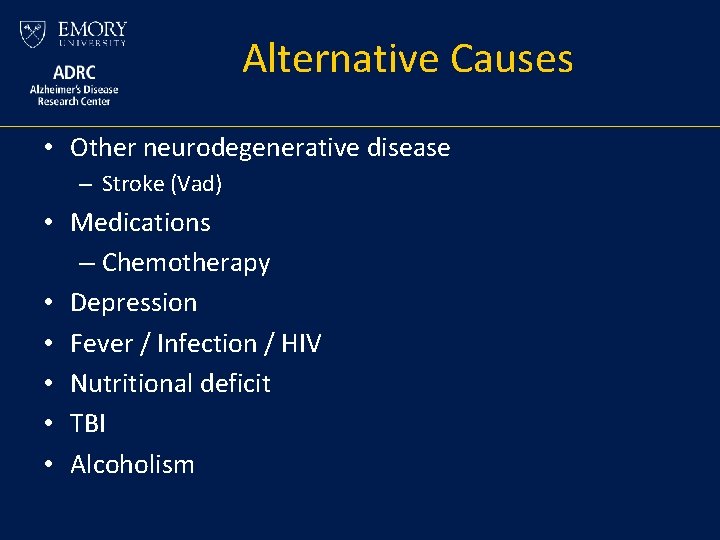
Alternative Causes • Other neurodegenerative disease – Stroke (Vad) • Medications – Chemotherapy • Depression • Fever / Infection / HIV • Nutritional deficit • TBI • Alcoholism
Why the Need to Correctly Diagnose? • Different projected path • Different Medications • Family Planning / Caregiving
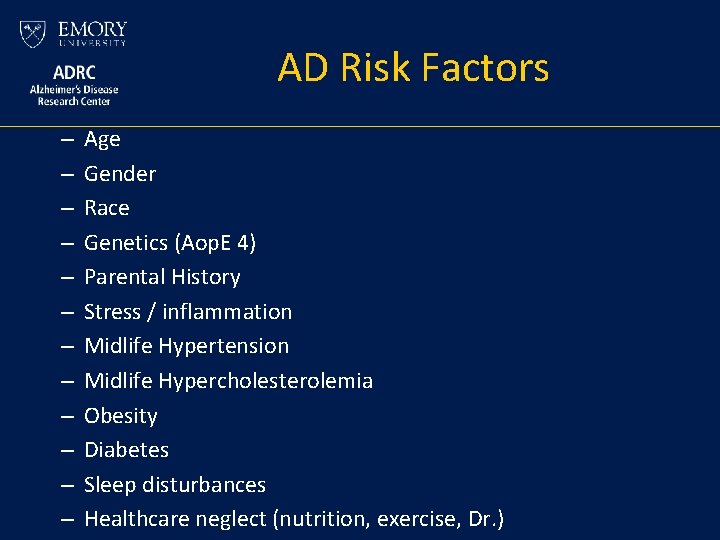
AD Risk Factors – – – Age Gender Race Genetics (Aop. E 4) Parental History Stress / inflammation Midlife Hypertension Midlife Hypercholesterolemia Obesity Diabetes Sleep disturbances Healthcare neglect (nutrition, exercise, Dr. )
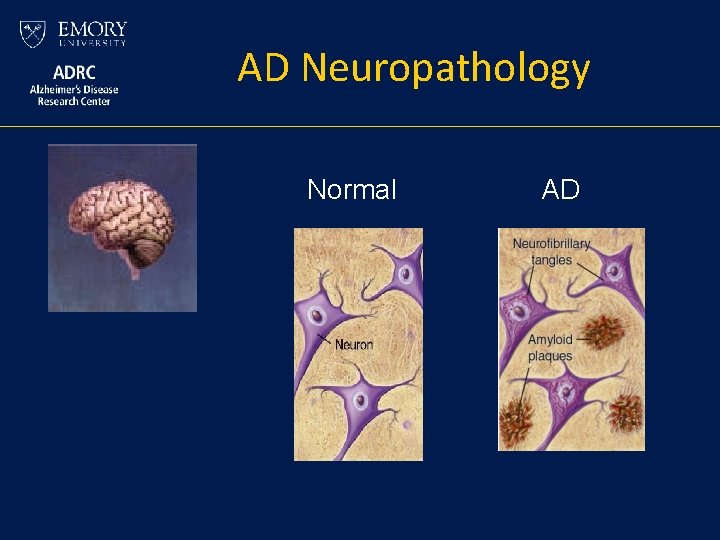
AD Neuropathology Normal AD
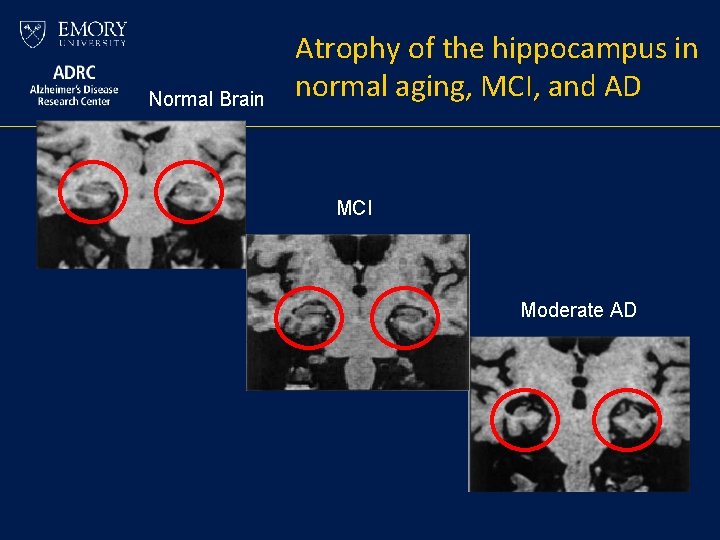
Normal Brain Atrophy of the hippocampus in normal aging, MCI, and AD MCI Moderate AD
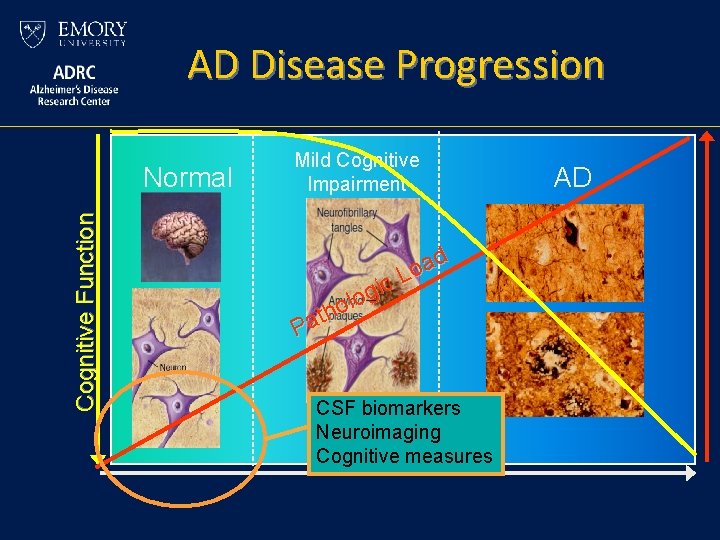
AD Disease Progression Cognitive Function Normal Mild Cognitive Impairment d a o L c i og l o th a P CSF biomarkers Neuroimaging Cognitive measures AD
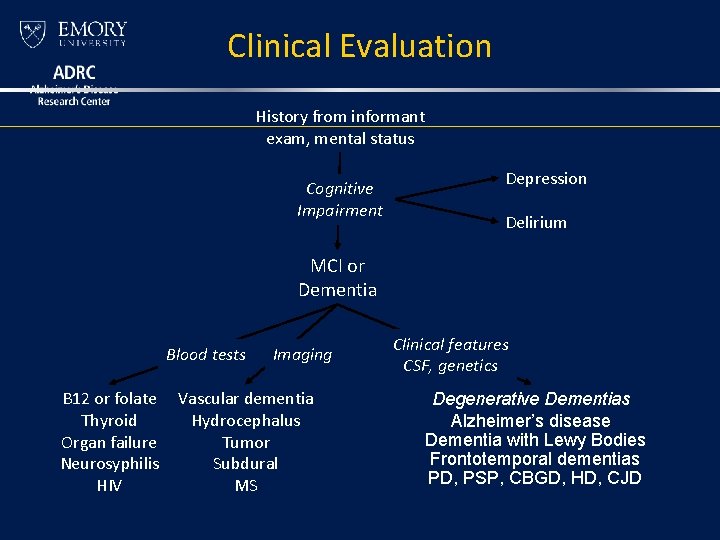
Clinical Evaluation History from informant exam, mental status Cognitive Impairment Depression Delirium MCI or Dementia Blood tests B 12 or folate Thyroid Organ failure Neurosyphilis HIV Imaging Vascular dementia Hydrocephalus Tumor Subdural MS Clinical features CSF, genetics Degenerative Dementias Alzheimer’s disease Dementia with Lewy Bodies Frontotemporal dementias PD, PSP, CBGD, HD, CJD
Treatment There is no known cure for AD Medications prescribed are used to treat symptoms
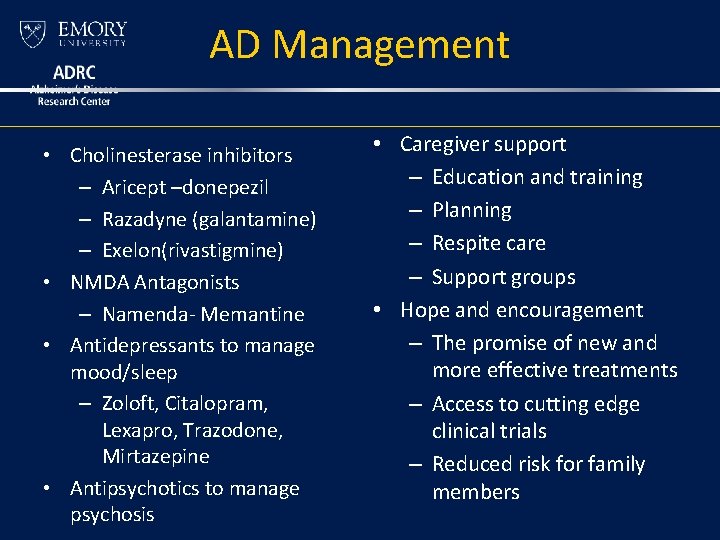
AD Management • Cholinesterase inhibitors – Aricept –donepezil – Razadyne (galantamine) – Exelon(rivastigmine) • NMDA Antagonists – Namenda- Memantine • Antidepressants to manage mood/sleep – Zoloft, Citalopram, Lexapro, Trazodone, Mirtazepine • Antipsychotics to manage psychosis • Caregiver support – Education and training – Planning – Respite care – Support groups • Hope and encouragement – The promise of new and more effective treatments – Access to cutting edge clinical trials – Reduced risk for family members
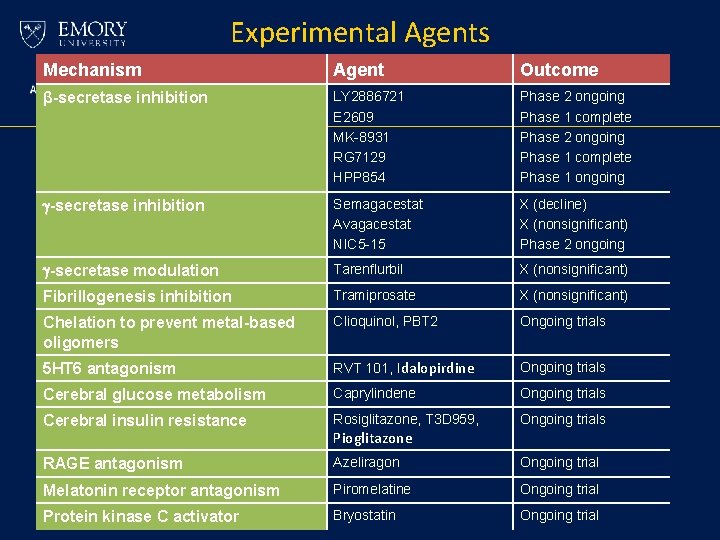
Experimental Agents Mechanism Agent Outcome β-secretase inhibition LY 2886721 E 2609 MK-8931 RG 7129 HPP 854 Phase 2 ongoing Phase 1 complete Phase 1 ongoing -secretase inhibition Semagacestat Avagacestat NIC 5 -15 X (decline) X (nonsignificant) Phase 2 ongoing -secretase modulation Tarenflurbil X (nonsignificant) Fibrillogenesis inhibition Tramiprosate X (nonsignificant) Chelation to prevent metal-based oligomers Clioquinol, PBT 2 Ongoing trials 5 HT 6 antagonism RVT 101, Idalopirdine Ongoing trials Cerebral glucose metabolism Caprylindene Ongoing trials Cerebral insulin resistance Rosiglitazone, T 3 D 959, Ongoing trials RAGE antagonism Azeliragon Ongoing trial Melatonin receptor antagonism Piromelatine Ongoing trial Protein kinase C activator Bryostatin Ongoing trial Pioglitazone
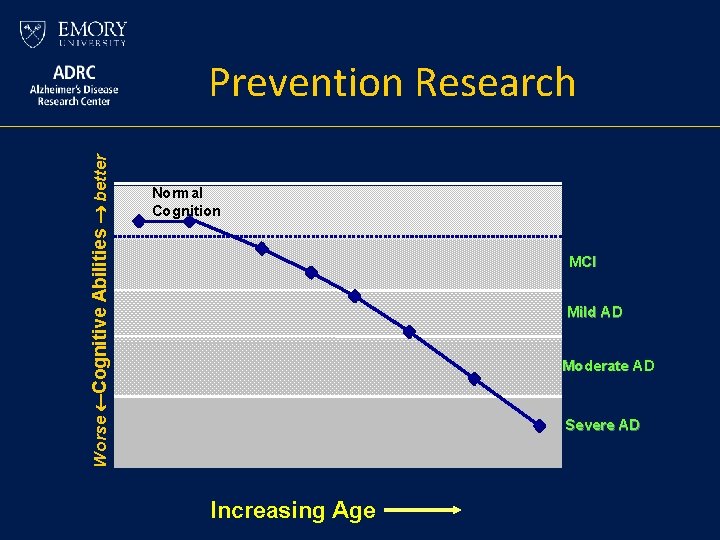
Worse Cognitive Abilities better Prevention Research Normal Cognition MCI Mild AD Moderate AD Severe AD Increasing Age
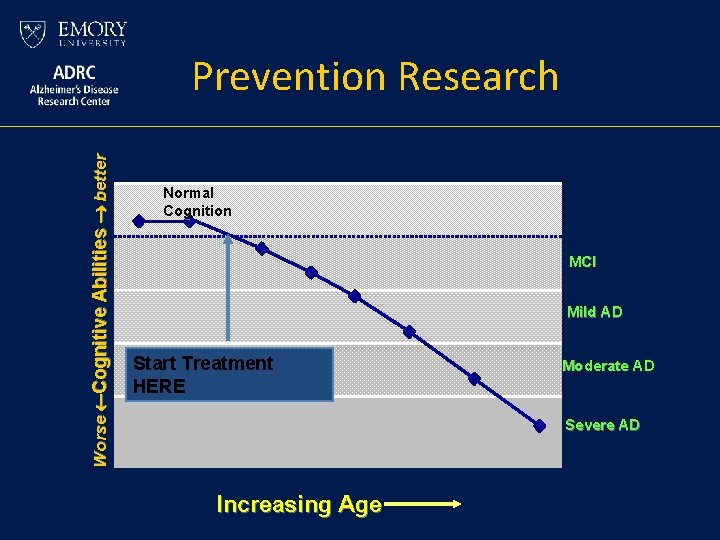
Worse Cognitive Abilities better Prevention Research Normal Cognition MCI Mild AD Start Treatment HERE Moderate AD Severe AD Increasing Age
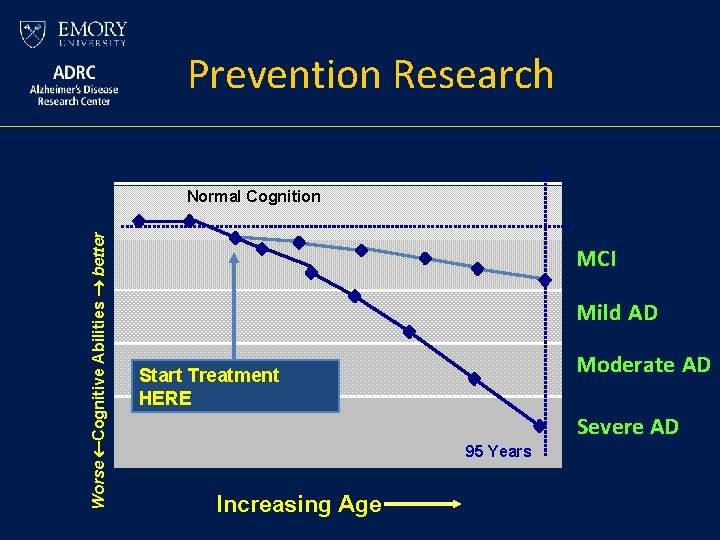
Prevention Research Worse Cognitive Abilities better Normal Cognition MCI Mild AD Moderate AD Start Treatment HERE Severe AD 95 Years Increasing Age
How do we clinically shift the curve? ? ? • What factors do we know that…. – Are linked to cognitive decline and AD symptomatology – Are linked to the pathological hallmarks of AD (plaques and tangles) – Occur during Midlife – TREATABLE / REVERSIBLE
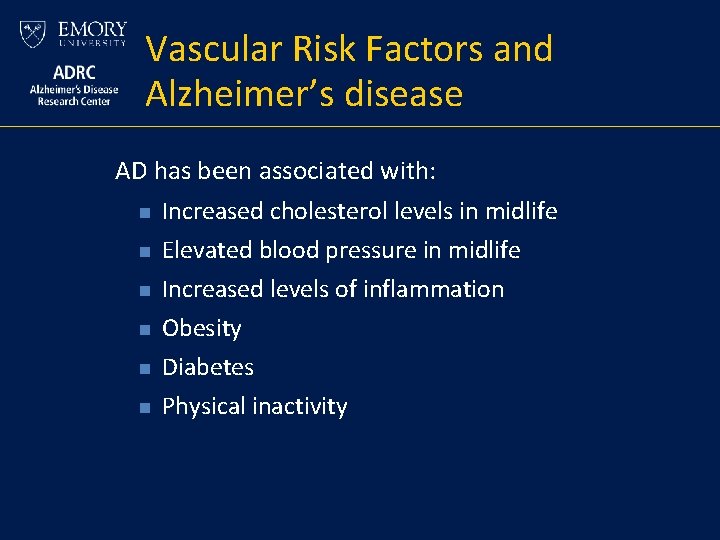
Vascular Risk Factors and Alzheimer’s disease AD has been associated with: n Increased cholesterol levels in midlife n Elevated blood pressure in midlife n Increased levels of inflammation n Obesity n Diabetes n Physical inactivity
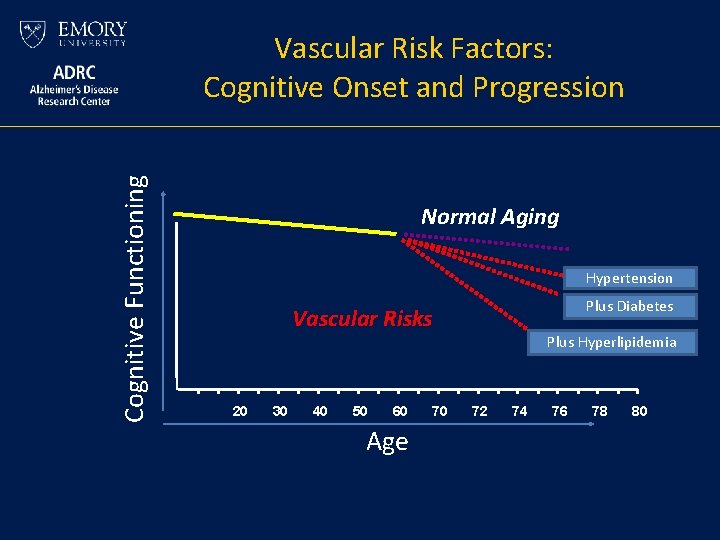
Cognitive Functioning Vascular Risk Factors: Cognitive Onset and Progression Normal Aging Hypertension Plus Diabetes Vascular Risks 20 30 40 50 60 Age 70 Plus Hyperlipidemia 72 74 76 78 80
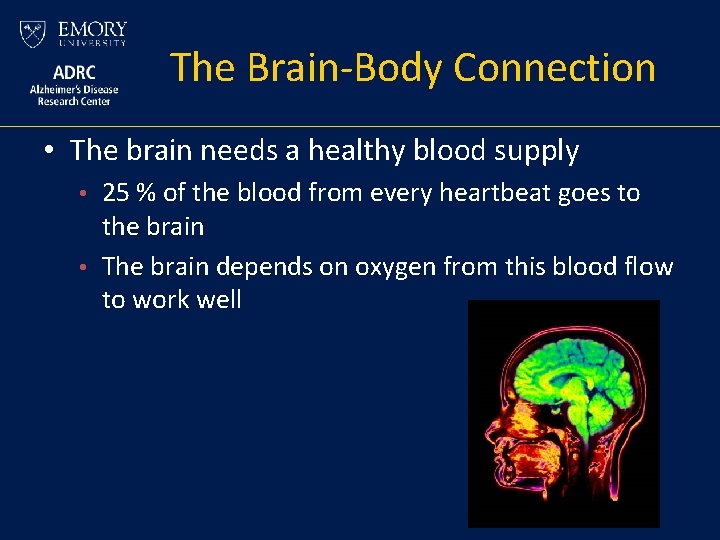
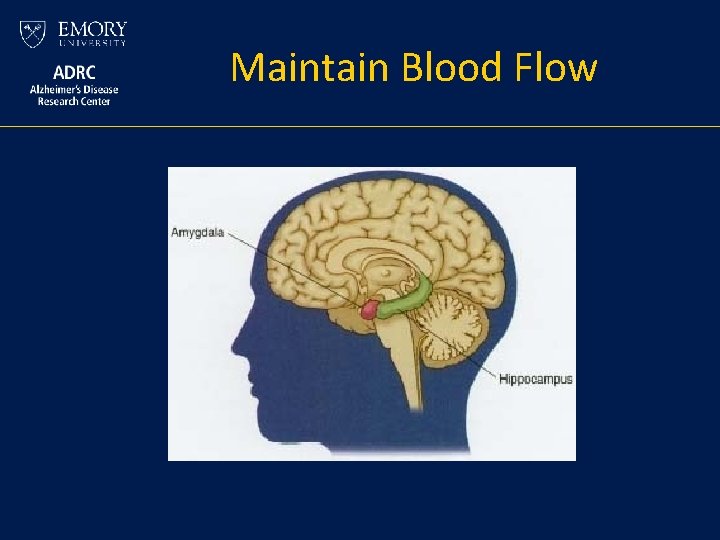
The Brain-Body Connection • The brain needs a healthy blood supply 25 % of the blood from every heartbeat goes to the brain • The brain depends on oxygen from this blood flow to work well •
Maintain Blood Flow
Blood Pressure Meds and AD • Certain meds = reduced risk (55%), progression and conversion from MCI to AD. • ACE-Is and ARBs Not commonly prescribed to African Americans
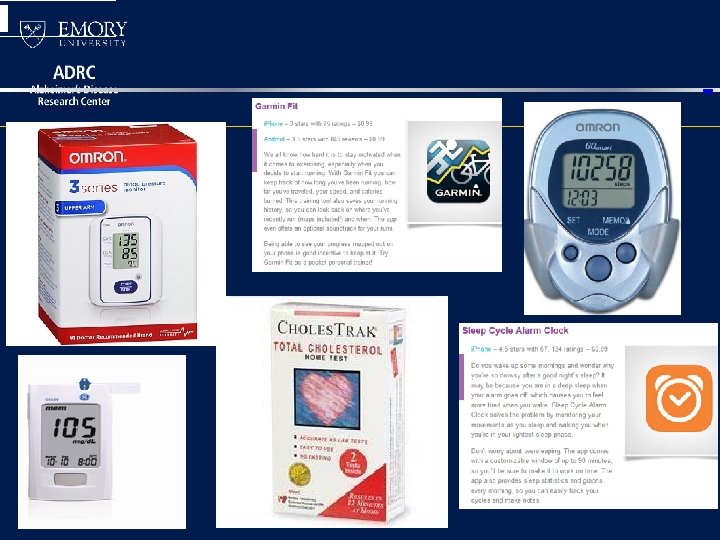
Strategy • Be Aware. Pubmed, Medscape, Google Scholar • Start EARLY • Ensure good control is achieved – Only 36% of adults taking antihypertensive medication had good BP control (less than 140/90 mm Hg)
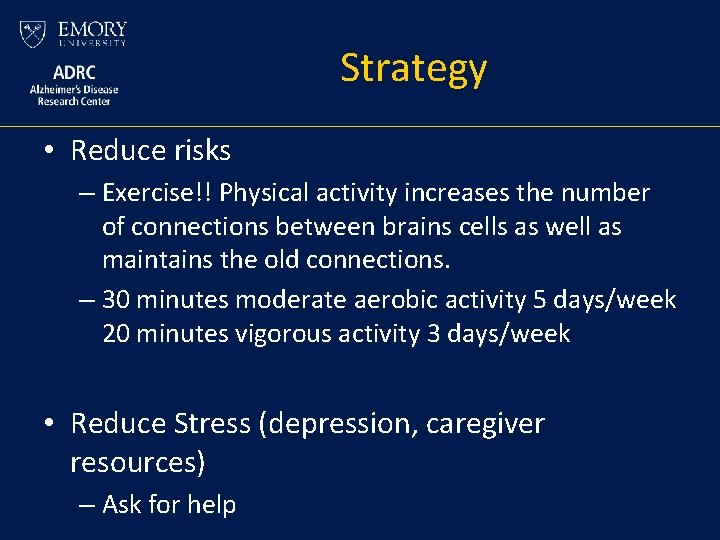
Strategy • Reduce risks – Exercise!! Physical activity increases the number of connections between brains cells as well as maintains the old connections. – 30 minutes moderate aerobic activity 5 days/week 20 minutes vigorous activity 3 days/week • Reduce Stress (depression, caregiver resources) – Ask for help
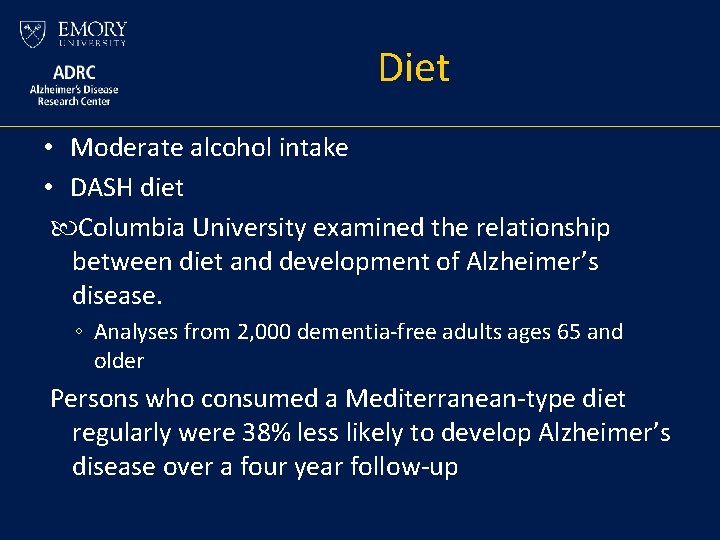
Diet • Moderate alcohol intake • DASH diet Columbia University examined the relationship between diet and development of Alzheimer’s disease. ◦ Analyses from 2, 000 dementia-free adults ages 65 and older Persons who consumed a Mediterranean-type diet regularly were 38% less likely to develop Alzheimer’s disease over a four year follow-up
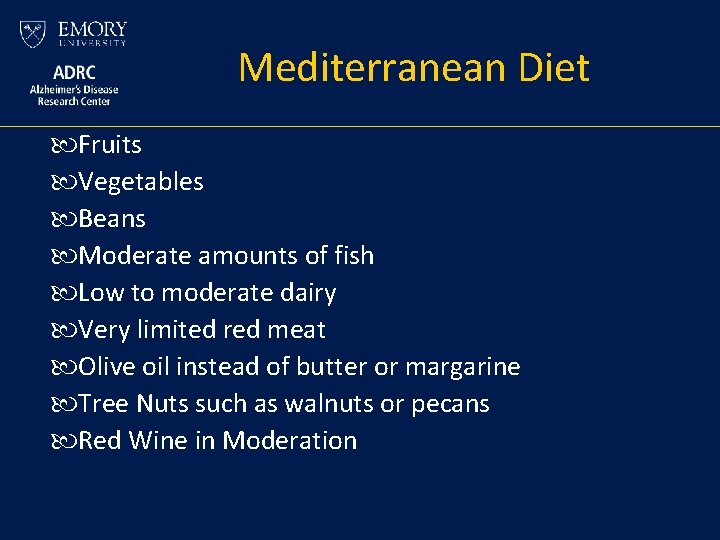
Mediterranean Diet Fruits Vegetables Beans Moderate amounts of fish Low to moderate dairy Very limited red meat Olive oil instead of butter or margarine Tree Nuts such as walnuts or pecans Red Wine in Moderation
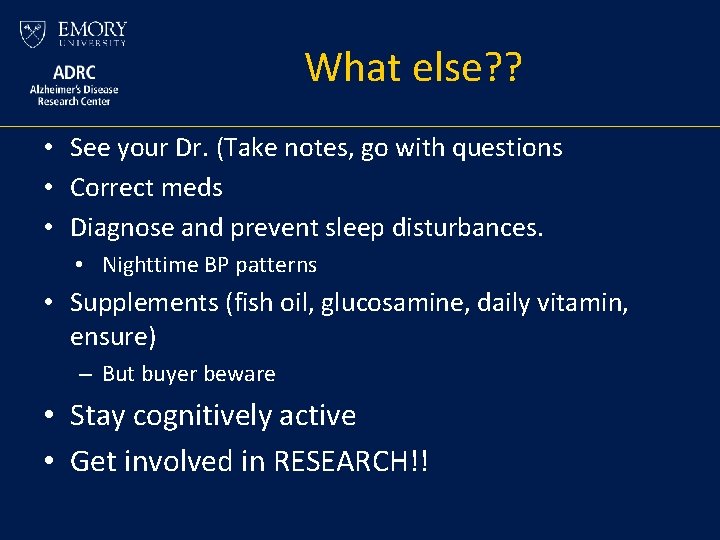
What else? ? • See your Dr. (Take notes, go with questions • Correct meds • Diagnose and prevent sleep disturbances. • Nighttime BP patterns • Supplements (fish oil, glucosamine, daily vitamin, ensure) – But buyer beware • Stay cognitively active • Get involved in RESEARCH!!
Summary AD is not a normal part of aging Medications, in use, treat symptoms only Vascular risk factors are linked to AD risk Slowing disease progression will significantly improve quality of life for patients and caregivers • Prevention studies, in conjunction with treatment studies, are needed to help better define the disease process and find effective treatments • •
Thank You! 404. 712. 7085 w. wharton@emory. edu