
WHITEWATER UNIFIED SCHOOL DISTRICT SUPPORTING THE EMOTIONAL NEEDS


- Slides: 29
WHITEWATER UNIFIED SCHOOL DISTRICT SUPPORTING THE EMOTIONAL NEEDS OF OUR STUDENTS: A K 12 PERSPECTIVE Lanora Heim, Ph. D. Director of Pupil Services
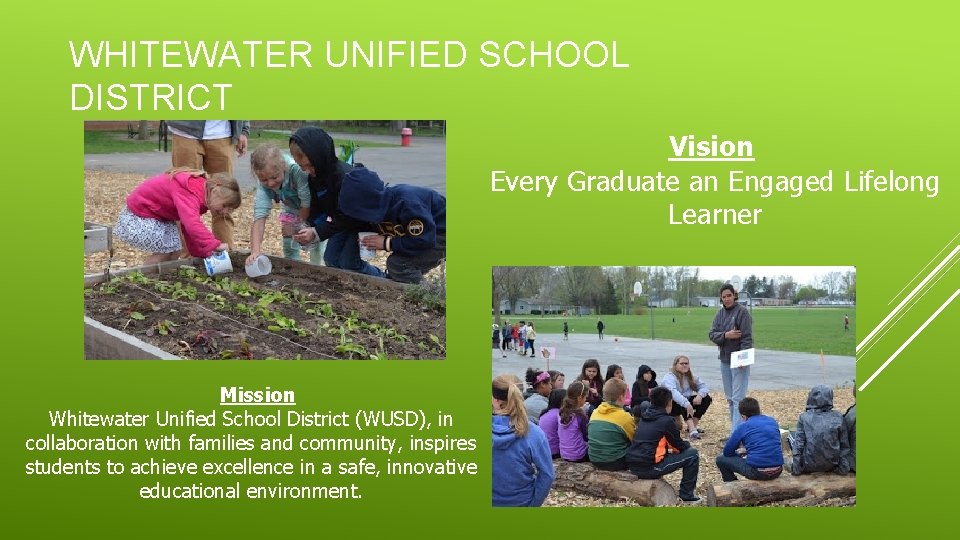
WHITEWATER UNIFIED SCHOOL DISTRICT Vision Every Graduate an Engaged Lifelong Learner Mission Whitewater Unified School District (WUSD), in collaboration with families and community, inspires students to achieve excellence in a safe, innovative educational environment.
PAIR SHARE: NAME EVERYTHING THAT CAUSES STUDENTS TRAUMA.
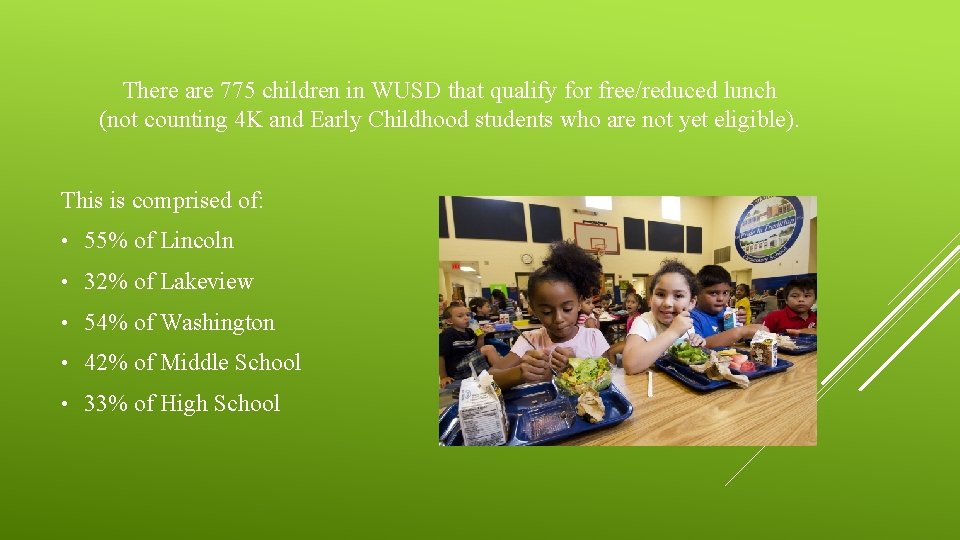
There are 775 children in WUSD that qualify for free/reduced lunch (not counting 4 K and Early Childhood students who are not yet eligible). This is comprised of: • 55% of Lincoln • 32% of Lakeview • 54% of Washington • 42% of Middle School • 33% of High School
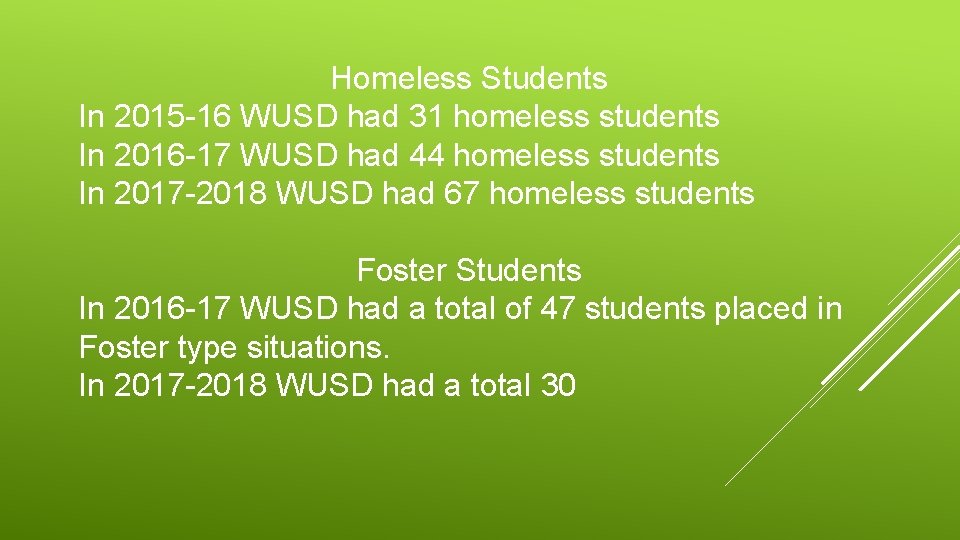
Homeless Students In 2015 -16 WUSD had 31 homeless students In 2016 -17 WUSD had 44 homeless students In 2017 -2018 WUSD had 67 homeless students Foster Students In 2016 -17 WUSD had a total of 47 students placed in Foster type situations. In 2017 -2018 WUSD had a total 30
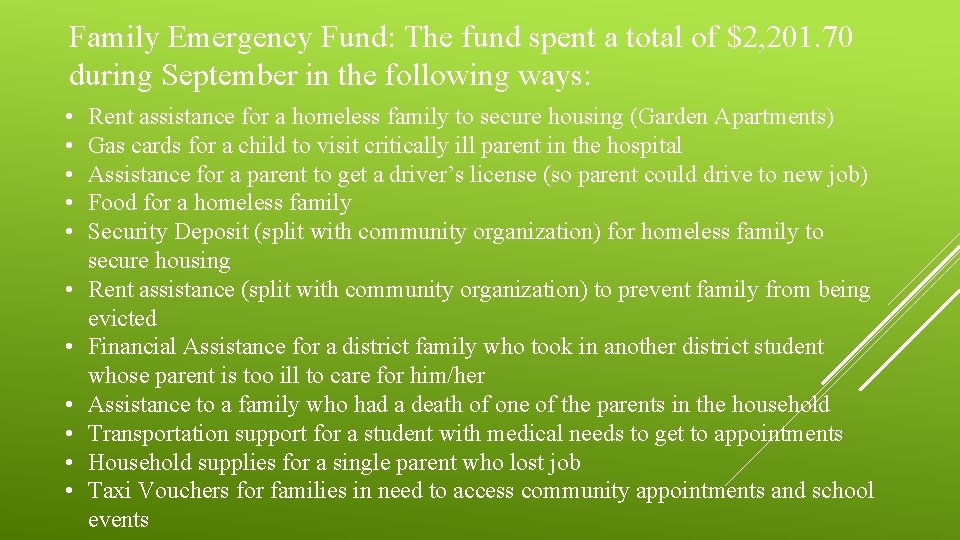
Family Emergency Fund: The fund spent a total of $2, 201. 70 during September in the following ways: • • • Rent assistance for a homeless family to secure housing (Garden Apartments) Gas cards for a child to visit critically ill parent in the hospital Assistance for a parent to get a driver’s license (so parent could drive to new job) Food for a homeless family Security Deposit (split with community organization) for homeless family to secure housing Rent assistance (split with community organization) to prevent family from being evicted Financial Assistance for a district family who took in another district student whose parent is too ill to care for him/her Assistance to a family who had a death of one of the parents in the household Transportation support for a student with medical needs to get to appointments Household supplies for a single parent who lost job Taxi Vouchers for families in need to access community appointments and school events
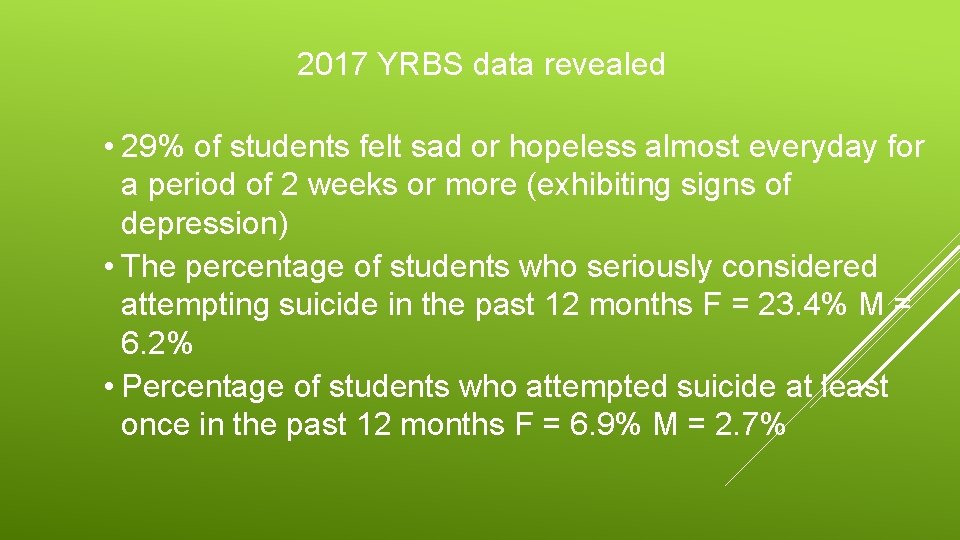
2017 YRBS data revealed • 29% of students felt sad or hopeless almost everyday for a period of 2 weeks or more (exhibiting signs of depression) • The percentage of students who seriously considered attempting suicide in the past 12 months F = 23. 4% M = 6. 2% • Percentage of students who attempted suicide at least once in the past 12 months F = 6. 9% M = 2. 7%
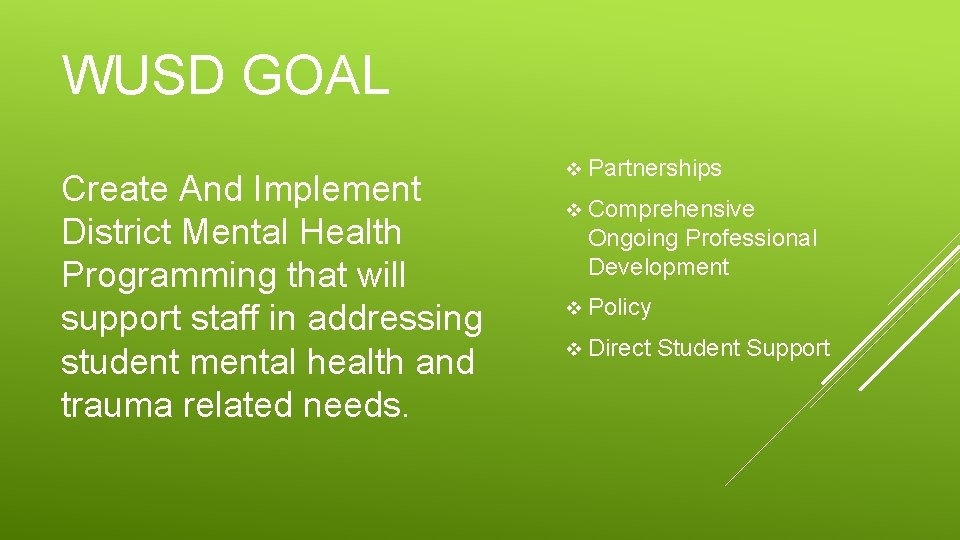
WUSD GOAL Create And Implement District Mental Health Programming that will support staff in addressing student mental health and trauma related needs. v Partnerships v Comprehensive Ongoing Professional Development v Policy v Direct Student Support
CREATE A MOVEMENT
PARTNERSHIPS v. Collaborating with Walworth, Jefferson and Rock Counties v. Fort Health Care/Rogers Memorial Hospital v. UW-Whitewater (Winther Counseling Lab) v. Wisconsin Department of Public Instruction (mental health framework) v. Community Partnerships (Civic Groups) v. Area Law Enforcement and Crisis Response Teams
COMPREHENSIVE ONGOING PROFESSIONAL DEVELOPMENT County Supports DPI Supports Attendance at Monthly Pupil Service Team Meetings Mental Health Framework intensive training (building teams) Tier I, II, and III training with Jefferson County. Trauma Modules Endless Possibilities Conference (CESA #1) Emotional Regulation Plans Mental Health First Aid Certification (Kim Propp) Wisconsin Trauma Project with Walworth County
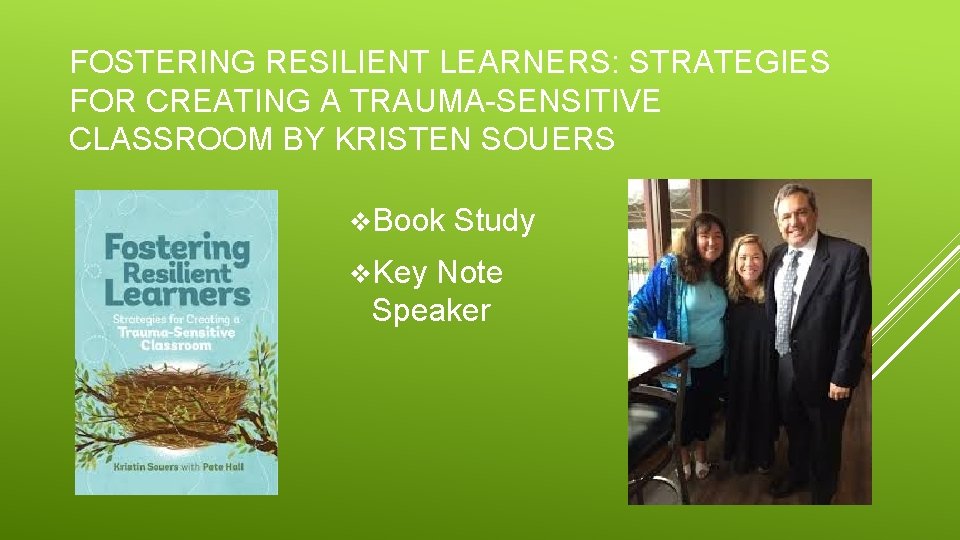
FOSTERING RESILIENT LEARNERS: STRATEGIES FOR CREATING A TRAUMA-SENSITIVE CLASSROOM BY KRISTEN SOUERS v. Book Study v. Key Note Speaker
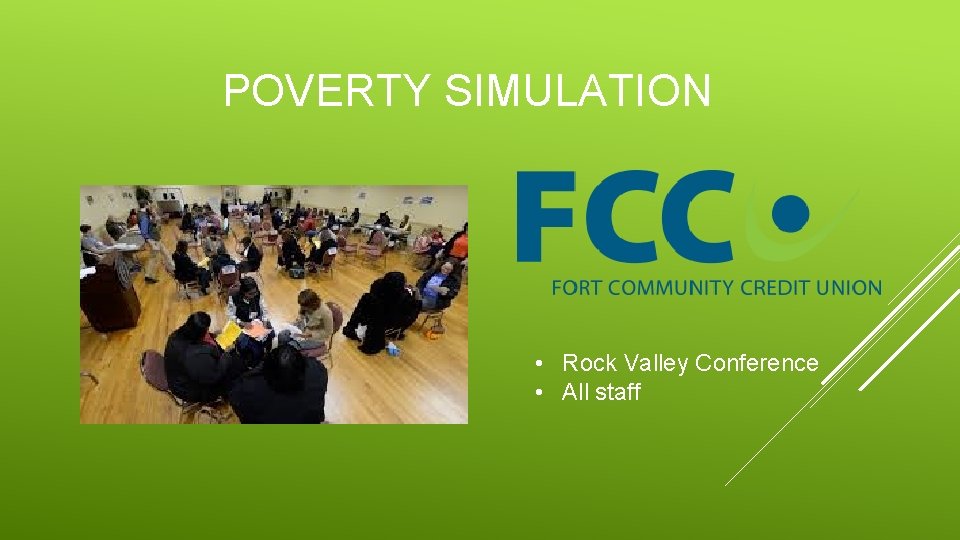
POVERTY SIMULATION • Rock Valley Conference • All staff
November 10 PD District Supports Non Violent Crisis Intervention Training The Effects of Trauma on the Brain Two Half Days of Professional Development Monthly Staff Meetings Monthly Emails Staff Wellness DBT in Schools Heartmath Room Incredible Years DBT Tip Skills Room Coping Cat Room Mindfullness for MS, HS and Elem kids Project Yes Mindfullness/Brain Based Learning COMPREHENSIVE ONGOING PROFESSIONAL DEVELOPMENT
DOES YOUR SCHOOL NEED ADVICE NOW? Contact us at 877 -53 -NCSCB (877 -536 -2722) or info@grievingstudents. org
POLICY v. Awareness v. Roadmap v. Examples: Suicide Intervention, Prevention, and Postvention, Code of Conduct
DIRECT STUDENT SUPPORTS Ø YRBS Ø Collaborating with Walworth, Jefferson, and Rock Counties (training) Ø Developmental Guidance Lessons Ø Counseling in schools (add. 5 social worker) Ø Winther Counseling Lab Ø Mental Health Counseling at WHS and WMS Ø Support groups at high school Ø Family Emergency Fund/Funds for Families Ø Lunch Buddies, Fast Friends (Mentors) Ø Securley: �Urgent: Potential Self Harm/Grief Activity Detected
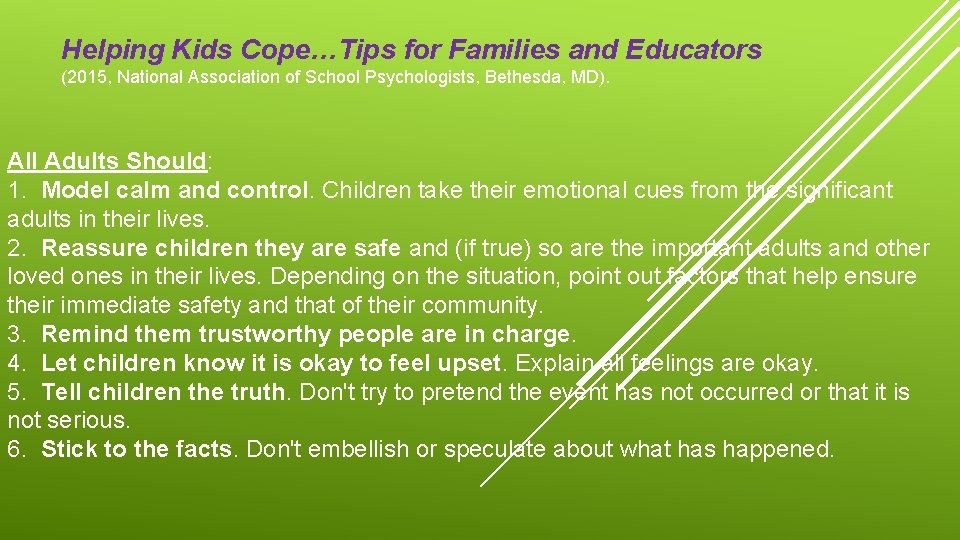
Helping Kids Cope…Tips for Families and Educators (2015, National Association of School Psychologists, Bethesda, MD). All Adults Should: 1. Model calm and control. Children take their emotional cues from the significant adults in their lives. 2. Reassure children they are safe and (if true) so are the important adults and other loved ones in their lives. Depending on the situation, point out factors that help ensure their immediate safety and that of their community. 3. Remind them trustworthy people are in charge. 4. Let children know it is okay to feel upset. Explain all feelings are okay. 5. Tell children the truth. Don't try to pretend the event has not occurred or that it is not serious. 6. Stick to the facts. Don't embellish or speculate about what has happened.
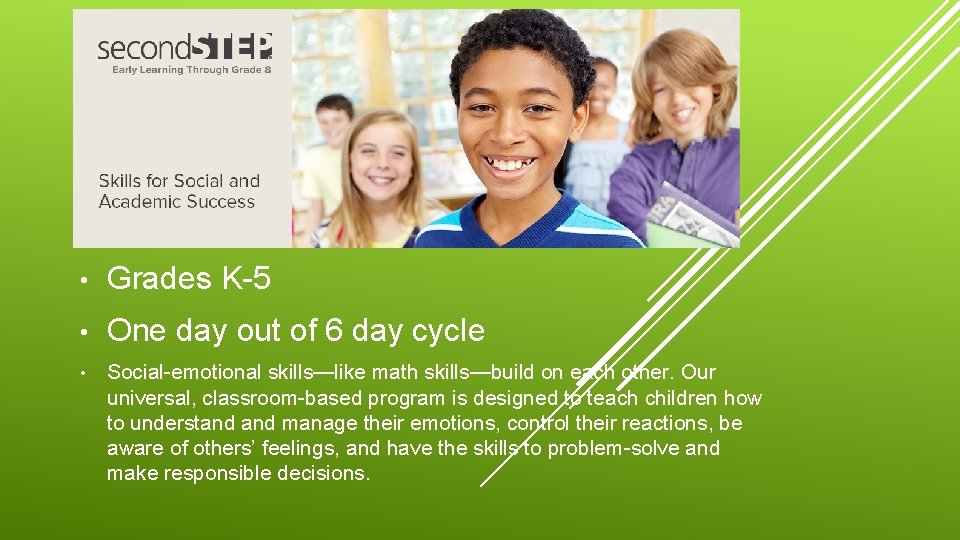
SECOND STEP • Grades K-5 • One day out of 6 day cycle • Social-emotional skills—like math skills—build on each other. Our universal, classroom-based program is designed to teach children how to understand manage their emotions, control their reactions, be aware of others’ feelings, and have the skills to problem-solve and make responsible decisions.
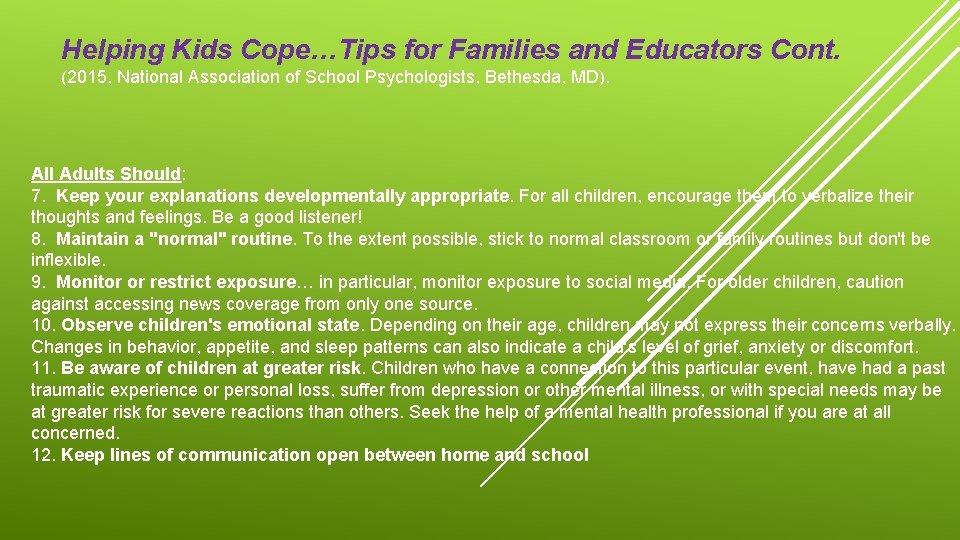
Helping Kids Cope…Tips for Families and Educators Cont. (2015, National Association of School Psychologists, Bethesda, MD). All Adults Should: 7. Keep your explanations developmentally appropriate. For all children, encourage them to verbalize their thoughts and feelings. Be a good listener! 8. Maintain a "normal" routine. To the extent possible, stick to normal classroom or family routines but don't be inflexible. 9. Monitor or restrict exposure… in particular, monitor exposure to social media. For older children, caution against accessing news coverage from only one source. 10. Observe children's emotional state. Depending on their age, children may not express their concerns verbally. Changes in behavior, appetite, and sleep patterns can also indicate a child's level of grief, anxiety or discomfort. 11. Be aware of children at greater risk. Children who have a connection to this particular event, have had a past traumatic experience or personal loss, suffer from depression or other mental illness, or with special needs may be at greater risk for severe reactions than others. Seek the help of a mental health professional if you are at all concerned. 12. Keep lines of communication open between home and school
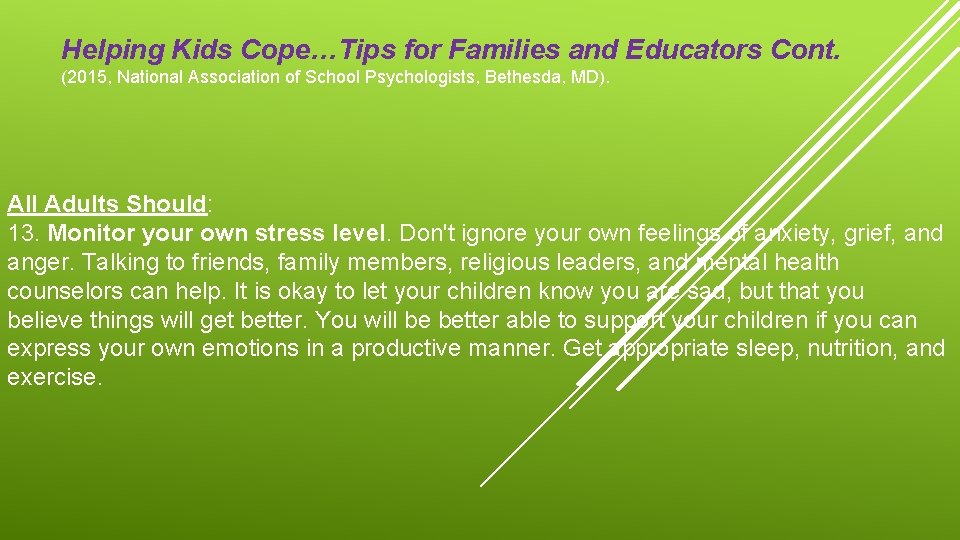
Helping Kids Cope…Tips for Families and Educators Cont. (2015, National Association of School Psychologists, Bethesda, MD). All Adults Should: 13. Monitor your own stress level. Don't ignore your own feelings of anxiety, grief, and anger. Talking to friends, family members, religious leaders, and mental health counselors can help. It is okay to let your children know you are sad, but that you believe things will get better. You will be better able to support your children if you can express your own emotions in a productive manner. Get appropriate sleep, nutrition, and exercise.
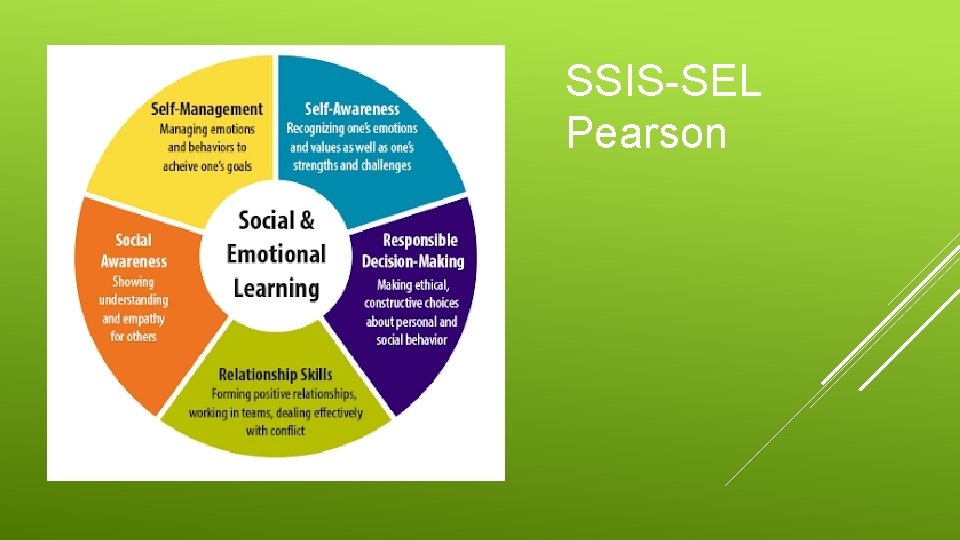
SSIS-SEL Pearson
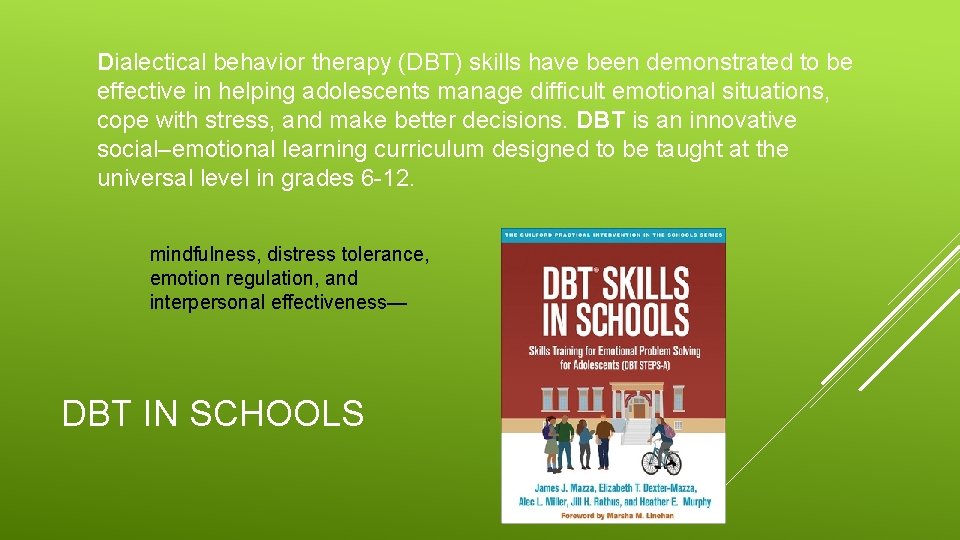
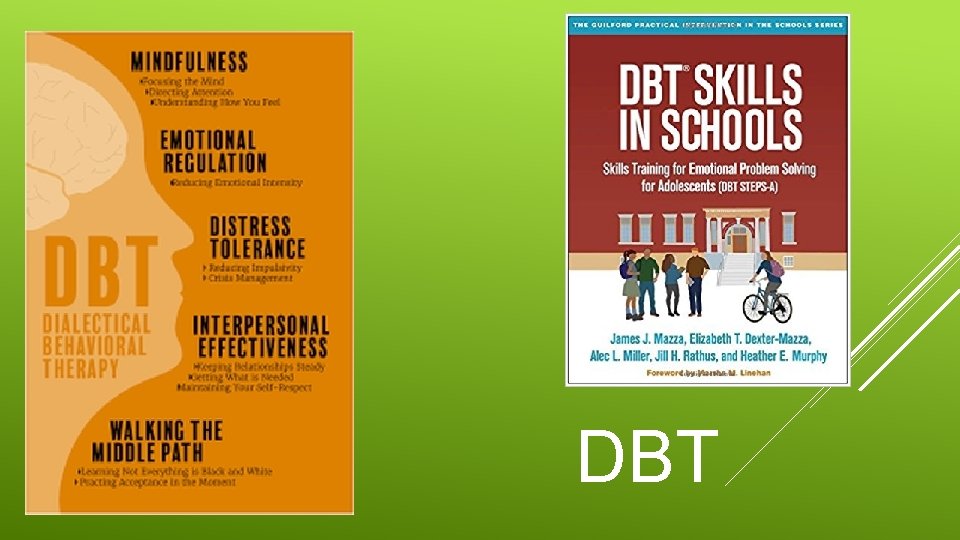
Dialectical behavior therapy (DBT) skills have been demonstrated to be effective in helping adolescents manage difficult emotional situations, cope with stress, and make better decisions. DBT is an innovative social–emotional learning curriculum designed to be taught at the universal level in grades 6 -12. mindfulness, distress tolerance, emotion regulation, and interpersonal effectiveness— DBT IN SCHOOLS
DBT
SOS – SIGNS OF SUICIDE Prevention Program including: Video with real-life scenarios Small group discussion w/ trained leader Brief screen for depression
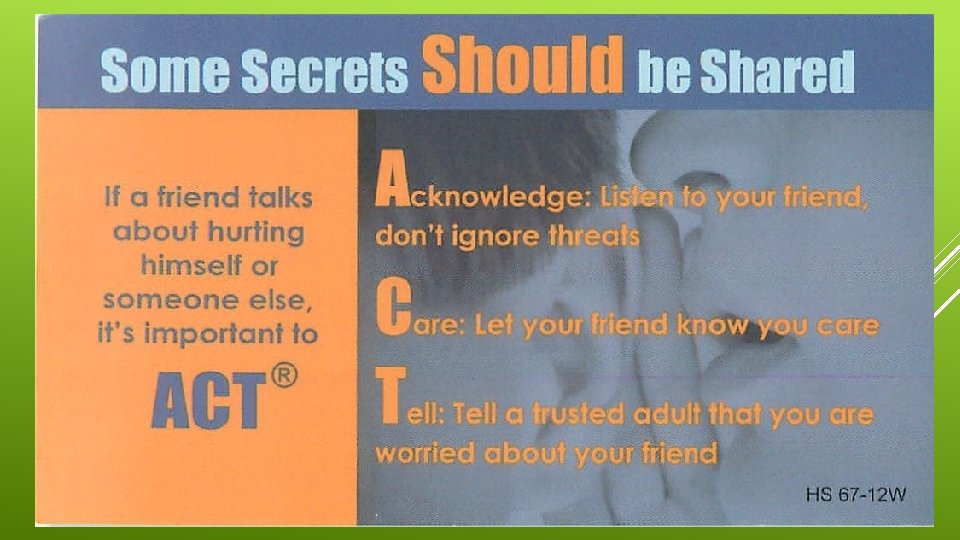
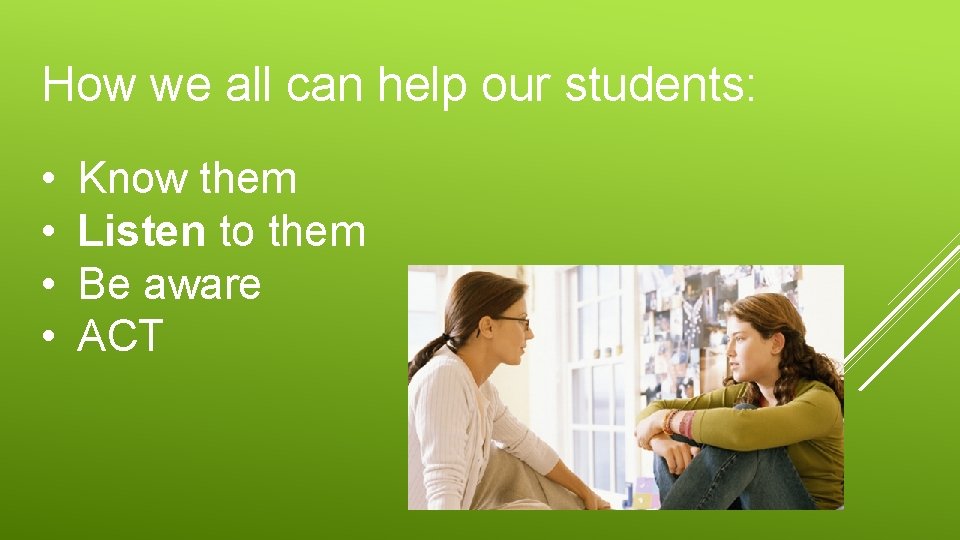
How we all can help our students: • • Know them Listen to them Be aware ACT
DREAMS FOR FUTURE • Expand to other schools • Continuation over the summer • Involve families more • Access to bilingual support