
Whiteshill and Ruscombe ANPR camera Background For some

Whiteshill and Ruscombe ANPR camera
Background For some years Whiteshill and Ruscombe Parish Council (WRPC) have been looking at ways to reduce the speeding element through the parish. One of the main campaigns was the official reduction of the speed limit from 30 mph to 20 mph in 2014. This did result in a slowing of traffic generally, but there was still concerns of some drivers who still drove at excessive speed through the parish. WRPC felt that more could be done and so looked at other traffic calming options. The option settled on was a system which should not only discourage drivers from speeding, but would also record those vehicles that continued to speed identifying the persistent offending vehicles. The evidence could then be presented to the police for action. This was the ANPR camera.
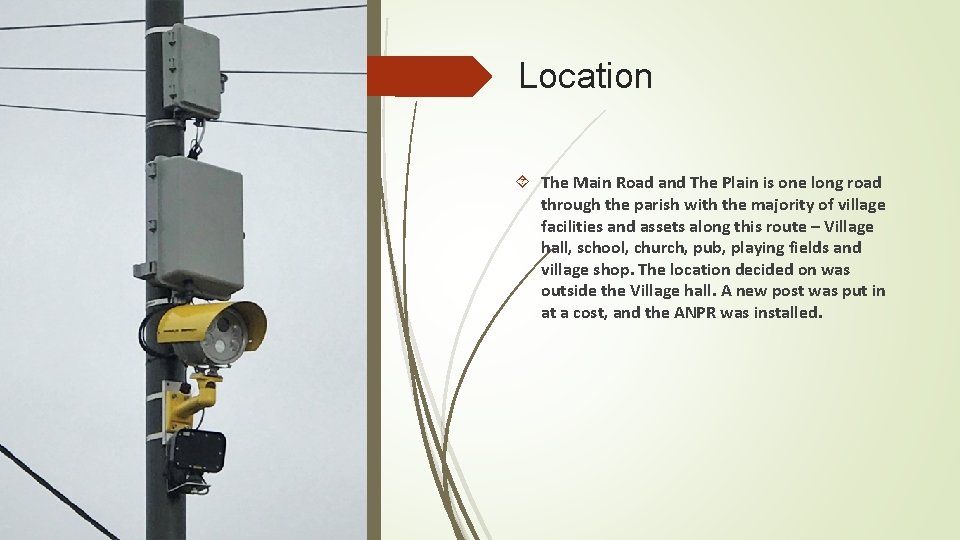
Location The Main Road and The Plain is one long road through the parish with the majority of village facilities and assets along this route – Village hall, school, church, pub, playing fields and village shop. The location decided on was outside the Village hall. A new post was put in at a cost, and the ANPR was installed.
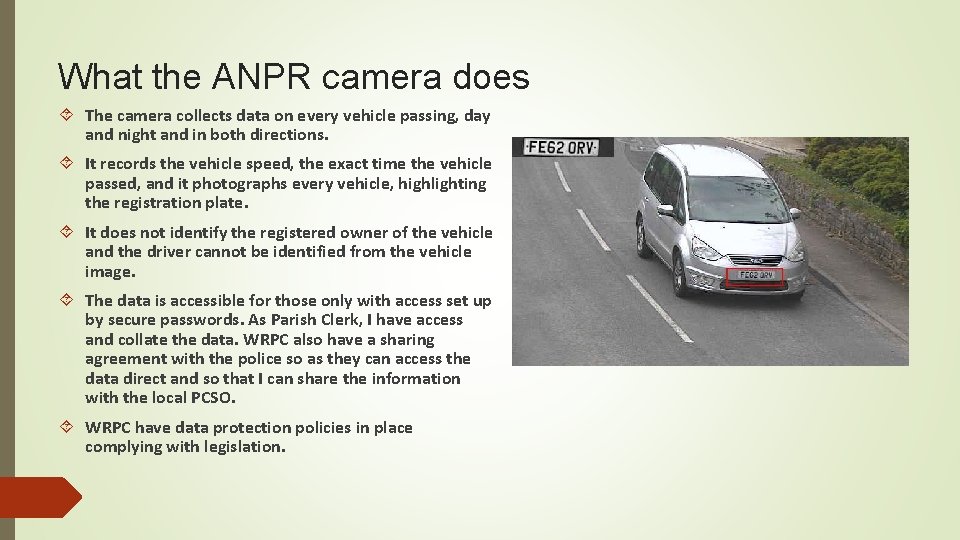
What the ANPR camera does The camera collects data on every vehicle passing, day and night and in both directions. It records the vehicle speed, the exact time the vehicle passed, and it photographs every vehicle, highlighting the registration plate. It does not identify the registered owner of the vehicle and the driver cannot be identified from the vehicle image. The data is accessible for those only with access set up by secure passwords. As Parish Clerk, I have access and collate the data. WRPC also have a sharing agreement with the police so as they can access the data direct and so that I can share the information with the local PCSO. WRPC have data protection policies in place complying with legislation.
Results from the ANPR so far Since the camera has been installed in October 2017 it has recorded between 90, 000 and 100, 000 vehicle transits in a 30 day period – a large amount of traffic to go through a rural village (This is due to the road being an alternative route from Stroud to Gloucester). In November 2017 it was recorded that approximately a quarter (23. 49%) of drivers were going above 24 mph, compared to figures now at around 12% going above 24 mph The number of high speed incidents above 40 mph have been reduced, but we still have a small number doing this monthly. As Parish Clerk, I have regular monthly meeting with the local PCSO Gary Lynch where I provide him with all the details of those going over 40 mph and also the top 10 frequent offenders. This is then followed up with letters or visits carried out, with the occasional S 59 being issued too (this means if the vehicle speeds again within 12 months it can be taken and crushed!)
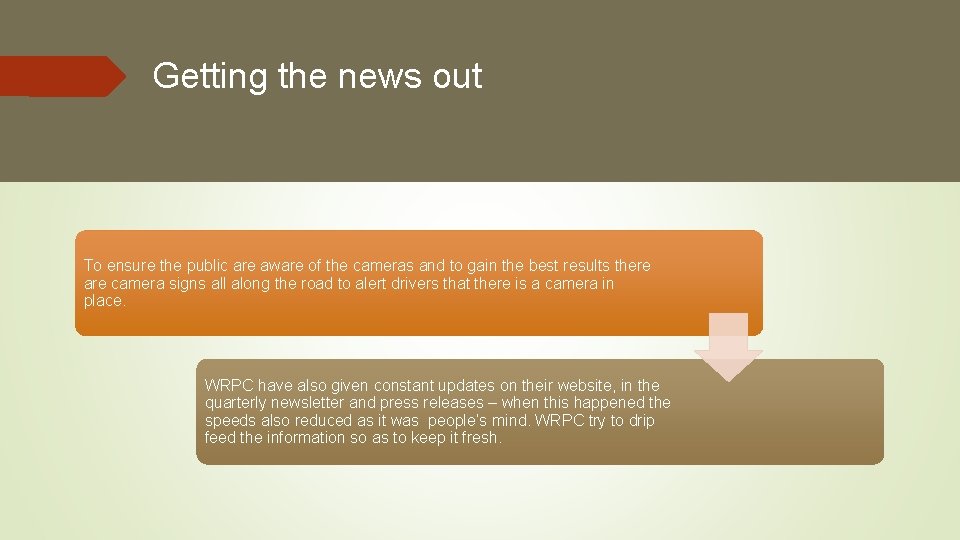
Getting the news out To ensure the public are aware of the cameras and to gain the best results there are camera signs all along the road to alert drivers that there is a camera in place. WRPC have also given constant updates on their website, in the quarterly newsletter and press releases – when this happened the speeds also reduced as it was people’s mind. WRPC try to drip feed the information so as to keep it fresh.
Enforcements An initiative supported by Martin Surl (Police and Crime Commissioner) has seen Police being recruited as additional community safety camera officers to deal specifically with data provided from the ANPR cameras. These officers are active in rural areas with Police speed cameras, recording and dealing with persistent speeding vehicles. We have had checks carried out in October last year with follow up checks done in December and January, with a small number of fines sent out.
Where we are now and what next I have a number of printed sheets demonstrating data from our ANPR camera to show it performs. Overall the ANPR is working, we are reducing speed in the parish, but this is down to collaboration of professionals working together with regular meetings and following up on information. Next WRPC are looking at moving the camera to a different location up the road to where reports of speeding is higher than 20 mph, yet the cars seem to be at the correct speed by the camera. It may be becoming familiar. Once moved, speeds will be monitored by the original location (hopefully using the VAS supplied by SDRSG) to assess if they creep up. Potential to look at second camera if needed, although WRPC are keen to look at what technology brings forward such as average speed cameras or home office approved cameras.
- Slides: 8