
WHITENOSE SYNDROME RESPONSE Photo M Marsh Washington Department
- Slides: 21
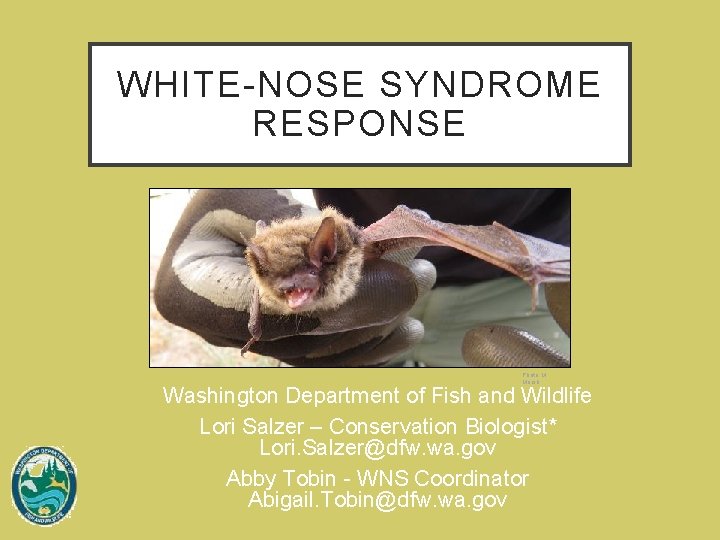
WHITE-NOSE SYNDROME RESPONSE Photo: M. Marsh Washington Department of Fish and Wildlife Lori Salzer – Conservation Biologist* Lori. Salzer@dfw. wa. gov Abby Tobin - WNS Coordinator Abigail. Tobin@dfw. wa. gov
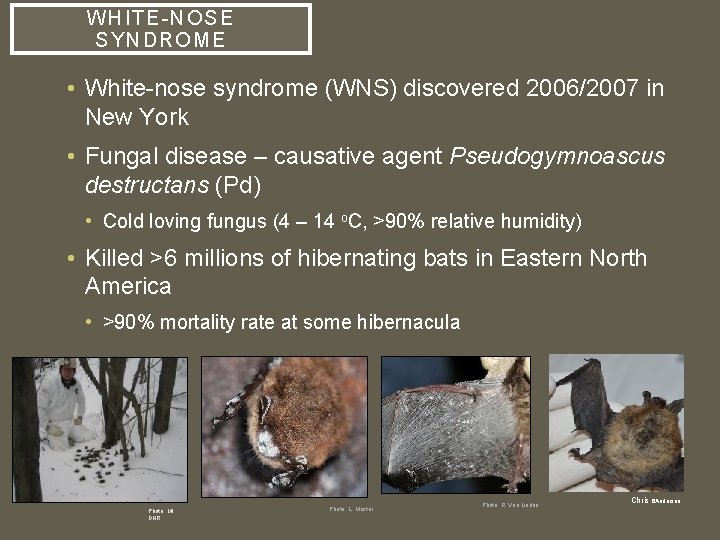
WHI TE-NOSE SYNDROME • White-nose syndrome (WNS) discovered 2006/2007 in New York • Fungal disease – causative agent Pseudogymnoascus destructans (Pd) • Cold loving fungus (4 – 14 o. C, >90% relative humidity) • Killed >6 millions of hibernating bats in Eastern North America • >90% mortality rate at some hibernacula Photo: MI DNR Photo: L. Master Photo: R. Von Linden Chris 6 Anderson
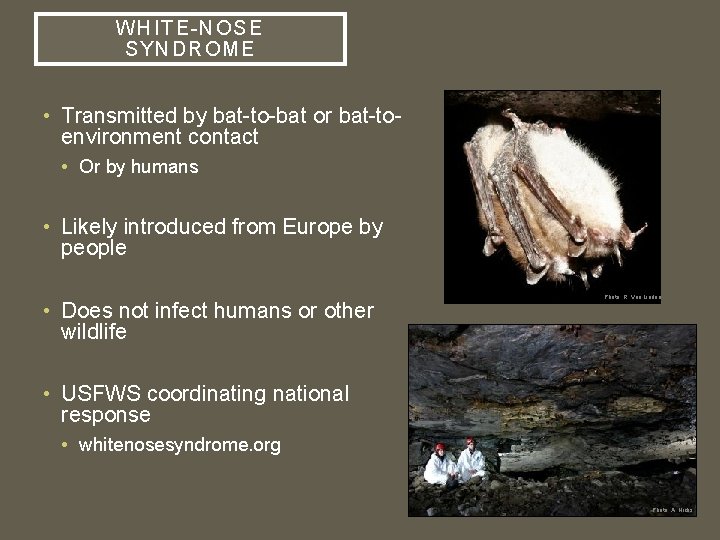
W HIT E-NOSE SYNDROME • Transmitted by bat-to-bat or bat-toenvironment contact • Or by humans • Likely introduced from Europe by people • Does not infect humans or other wildlife Photo: R. Von Linden • USFWS coordinating national response • whitenosesyndrome. org Photo: A. Hicks
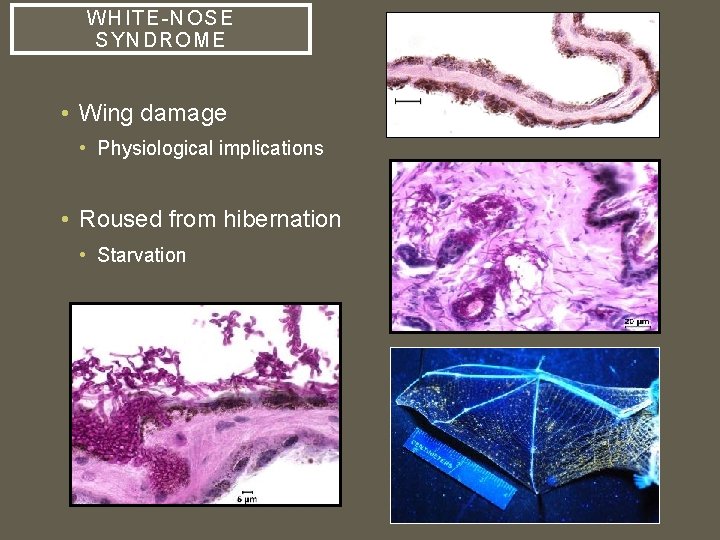
WHI TE-NOSE SYNDROME • Wing damage • Physiological implications • Roused from hibernation • Starvation
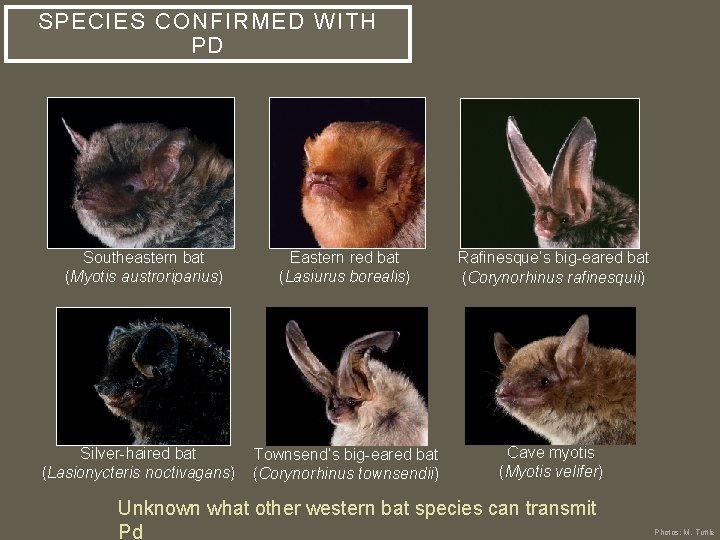
SPECIES CONFIRMED WITH PD Southeastern bat (Myotis austroriparius) Silver-haired bat (Lasionycteris noctivagans) Eastern red bat (Lasiurus borealis) Rafinesque’s big-eared bat (Corynorhinus rafinesquii) Townsend’s big-eared bat (Corynorhinus townsendii) Cave myotis (Myotis velifer) Unknown what other western bat species can transmit Pd Photos: M. Tuttle
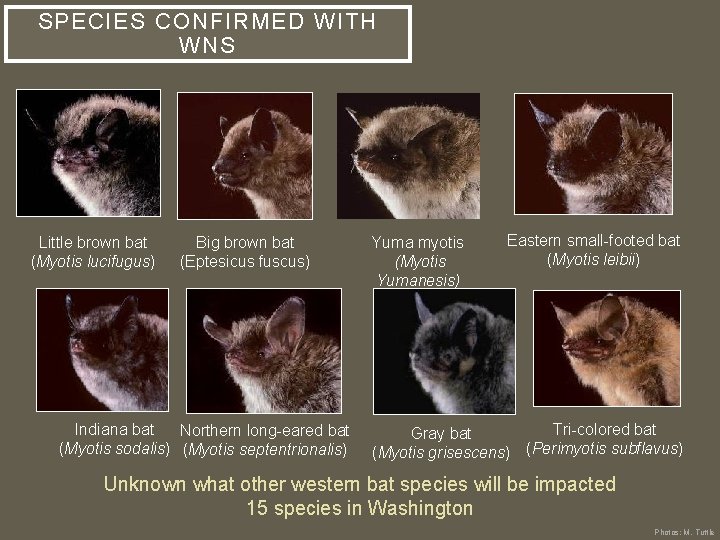
SPECIES CONFIRMED WITH WNS Little brown bat (Myotis lucifugus) Big brown bat (Eptesicus fuscus) Indiana bat Northern long-eared bat (Myotis sodalis) (Myotis septentrionalis) Yuma myotis (Myotis Yumanesis) Eastern small-footed bat (Myotis leibii) Gray bat (Myotis grisescens) Tri-colored bat (Perimyotis subflavus) Unknown what other western bat species will be impacted 15 species in Washington Photos: M. Tuttle
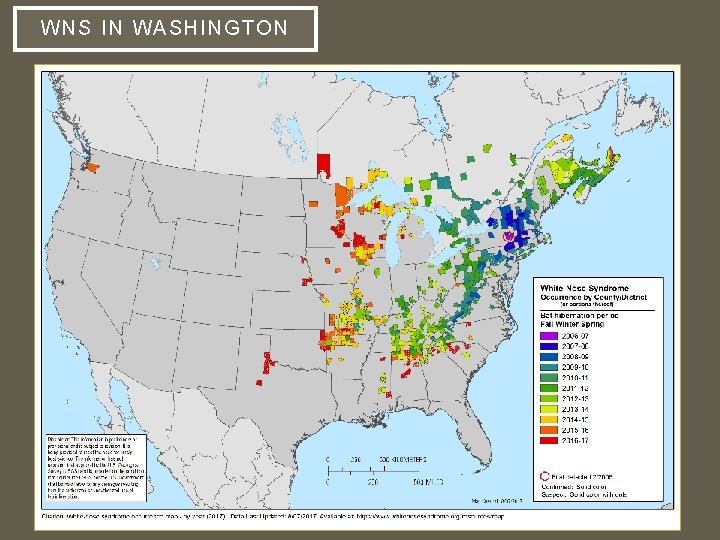
WNS IN WASHINGTON
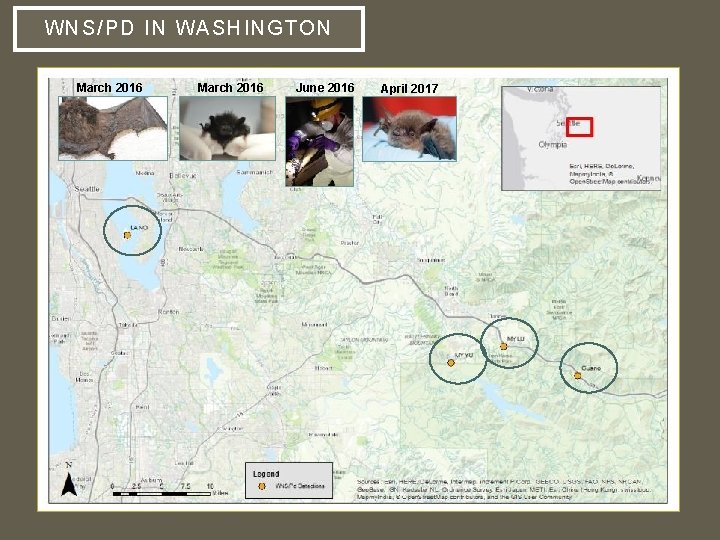
WNS/PD IN WASHINGT ON March 2016 June 2016 April 2017
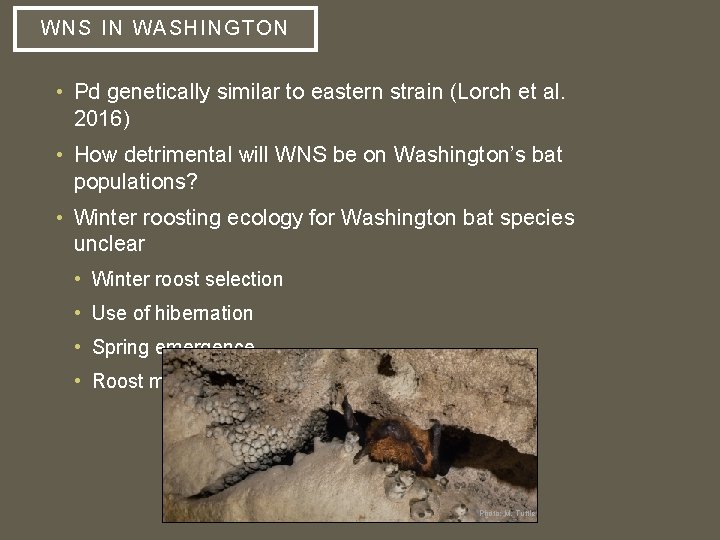
WNS IN WASHINGTON • Pd genetically similar to eastern strain (Lorch et al. 2016) • How detrimental will WNS be on Washington’s bat populations? • Winter roosting ecology for Washington bat species unclear • Winter roost selection • Use of hibernation • Spring emergence • Roost microclimate Photo: M. Tuttle
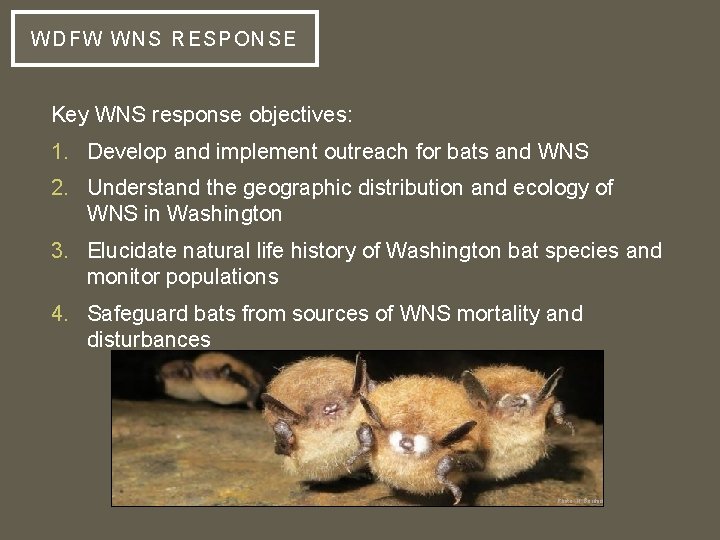
WD FW WNS RESPONSE Key WNS response objectives: 1. Develop and implement outreach for bats and WNS 2. Understand the geographic distribution and ecology of WNS in Washington 3. Elucidate natural life history of Washington bat species and monitor populations 4. Safeguard bats from sources of WNS mortality and disturbances Photo: H. Borders
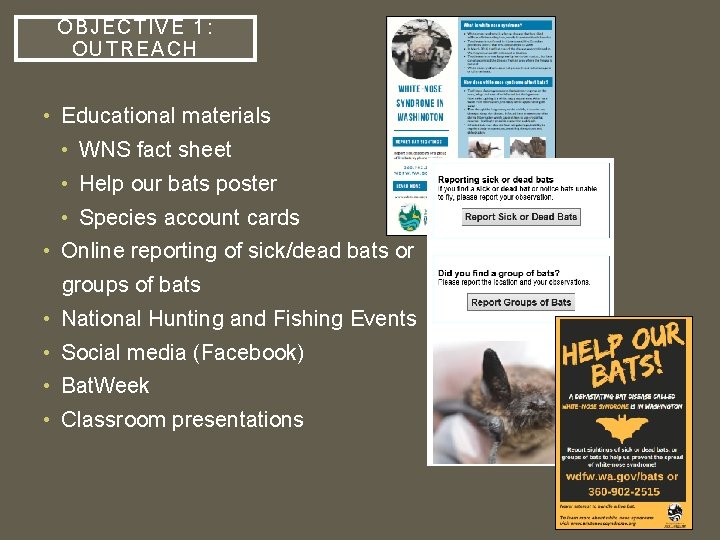
OBJECT IVE 1: OUTR EACH • Educational materials • WNS fact sheet • Help our bats poster • Species account cards • Online reporting of sick/dead bats or groups of bats • National Hunting and Fishing Events • Social media (Facebook) • Bat. Week • Classroom presentations
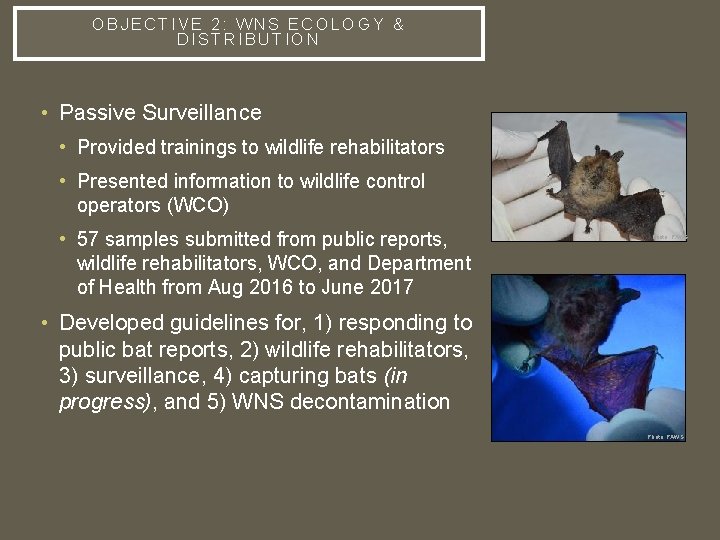
OBJECTIVE 2: WNS ECOLOGY & DISTRIBUTION • Passive Surveillance • Provided trainings to wildlife rehabilitators • Presented information to wildlife control operators (WCO) • 57 samples submitted from public reports, wildlife rehabilitators, WCO, and Department of Health from Aug 2016 to June 2017 Photo: PAWS • Developed guidelines for, 1) responding to public bat reports, 2) wildlife rehabilitators, 3) surveillance, 4) capturing bats (in progress), and 5) WNS decontamination Photo: PAWS
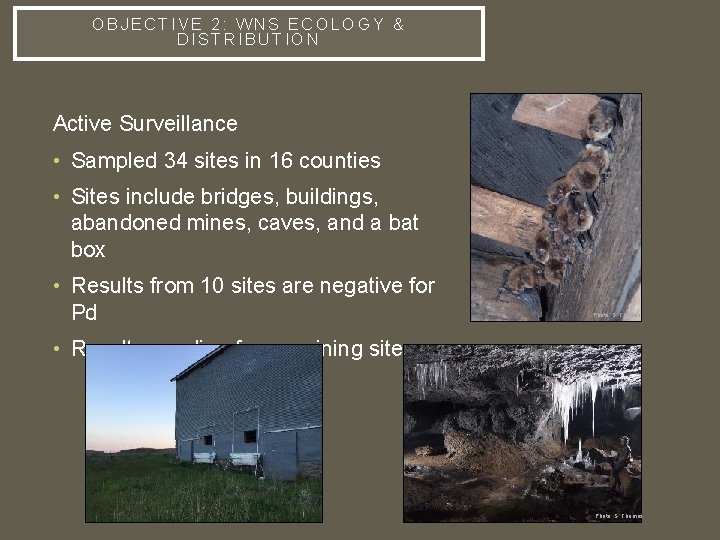
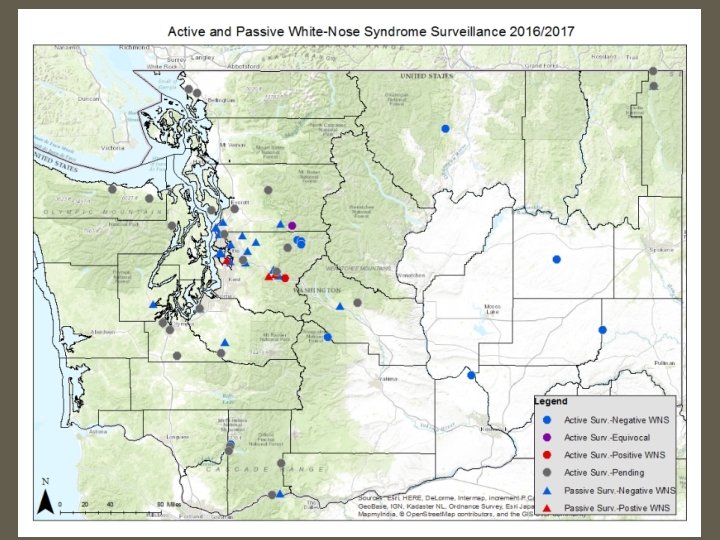
OBJECTIVE 2: WNS ECOLOGY & DISTRIBUTION Active Surveillance • Sampled 34 sites in 16 counties • Sites include bridges, buildings, abandoned mines, caves, and a bat box • Results from 10 sites are negative for Pd Photo: S. Thomas • Results pending for remaining sites Photo: S. Thomas
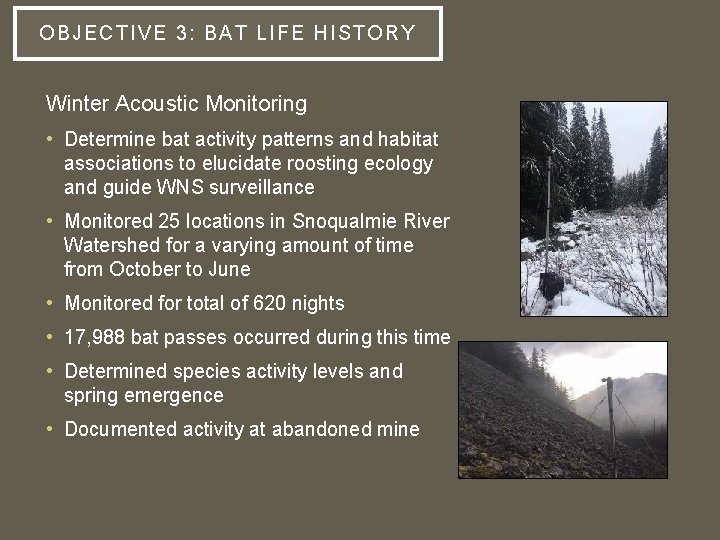
OBJECT IVE 3: BAT LIFE H IS TO RY Winter Acoustic Monitoring • Determine bat activity patterns and habitat associations to elucidate roosting ecology and guide WNS surveillance • Monitored 25 locations in Snoqualmie River Watershed for a varying amount of time from October to June • Monitored for total of 620 nights • 17, 988 bat passes occurred during this time • Determined species activity levels and spring emergence • Documented activity at abandoned mine
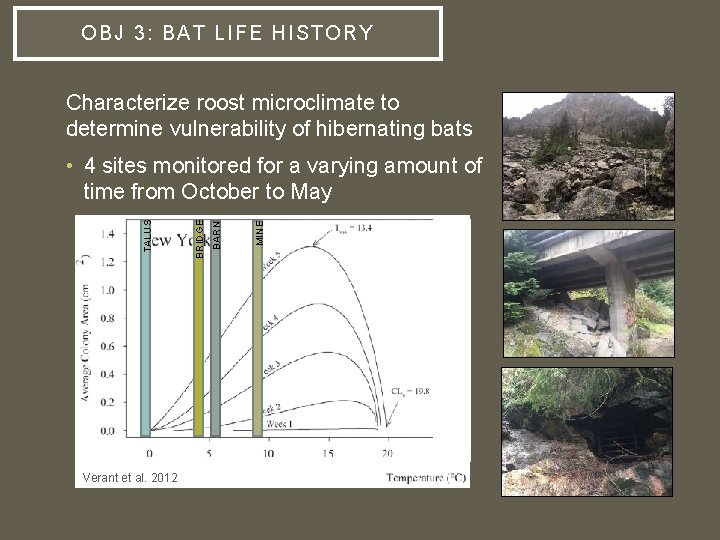
OBJ 3: BAT LIFE H IS TO RY Characterize roost microclimate to determine vulnerability of hibernating bats Verant et al. 2012 MINE BARN BRIDGE TALUS • 4 sites monitored for a varying amount of time from October to May
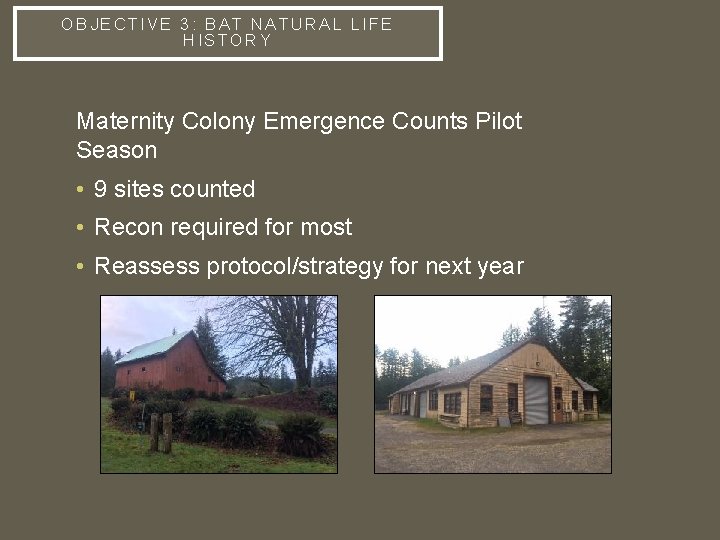
OBJECTIVE 3: BAT NATURAL LIFE HISTORY Maternity Colony Emergence Counts Pilot Season • 9 sites counted • Recon required for most • Reassess protocol/strategy for next year
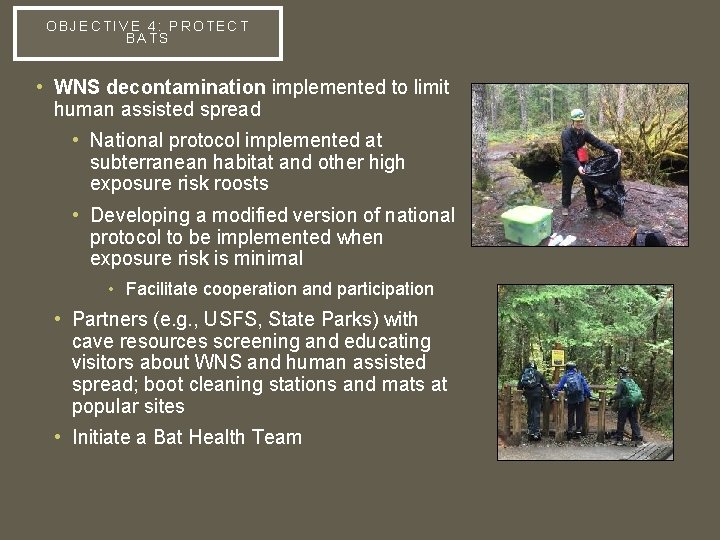
OBJECTIVE 4: PROTECT BATS • WNS decontamination implemented to limit human assisted spread • National protocol implemented at subterranean habitat and other high exposure risk roosts • Developing a modified version of national protocol to be implemented when exposure risk is minimal • Facilitate cooperation and participation • Partners (e. g. , USFS, State Parks) with cave resources screening and educating visitors about WNS and human assisted spread; boot cleaning stations and mats at popular sites • Initiate a Bat Health Team
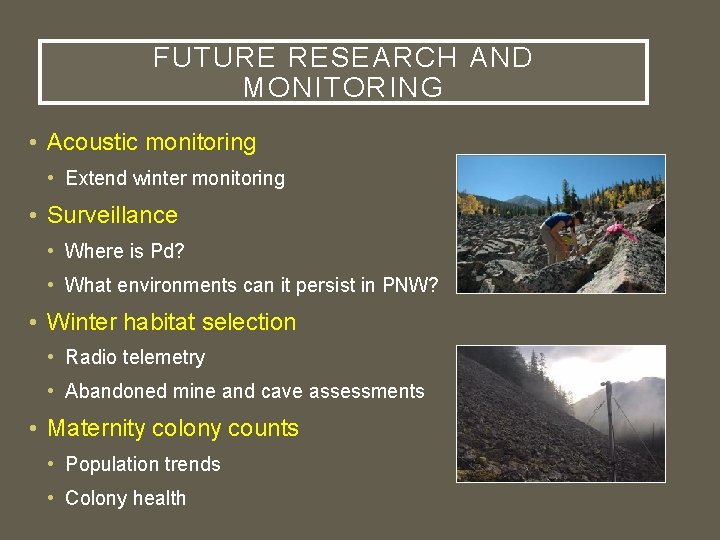
FUTURE RESEARCH AND MONITORING • Acoustic monitoring • Extend winter monitoring • Surveillance • Where is Pd? • What environments can it persist in PNW? • Winter habitat selection • Radio telemetry • Abandoned mine and cave assessments • Maternity colony counts • Population trends • Colony health
ACKNOW LEDGEMEN TS WDFW; Greg Falxa, Joe Buchanan, Lori Salzer, Rachel Blomker, Michelle Tirhi, Ruth Milner, Stefanie Bergh, Fenner Yarborough, Mike Atamian, Jason Fidorra, Anita Mc. Millan, Shelly Ament, Bryan Murphie, Mike Smith, Dana Base, Scott Williams, Ross Huffman, Greg Mackey, Scott Fitkin, Ilai Keren, Treg Christopher, Bill Simper, and Jeff Bernatowicz USFS/BLM; Northern Research Station (Dan Lindner), Kelli Van-Norman, Josh Chapman, Rob Huff, Sonny Paz, Jesse Plumage, Jason Lowe, Kent Woodruff, Matt Marsh, Monte Kuk, Chelsea Muise, Kurt Aluzas, Karen Holtrop, Cathy Flick, Todd Griffin, and Mitch Wainwright. State Parks; Crawford State Park, Samammish State Park, Fort Casey Historical Park, Tor Bjorklund, Steve Christensen, Robert Fimbel, Richard Benson NPS; Tara Chestnut, Mount Rainier National Park, North Cascades National Park, Olympic National Park, San Juan National Historic Site USFWS; Ann Froschauer, Jenny Barnett, Conboy National Wildlife Refuge Other; USGS NWHC (Anne Ballmann), UC Davis (Kevin Keel), DOE Hanford Site, Tacoma Public Utilities La. Grande Dam, Evergreen State University Organic Farm, Tumwater Falls Park, Western State Hospital, Whatcom County Hovander Homestead Park, Rexville Grange Venue, Bats Northwest, Thom Proehl (Valley Camp), Sam Pedigo, Bob Davies, and Bat Conservation International
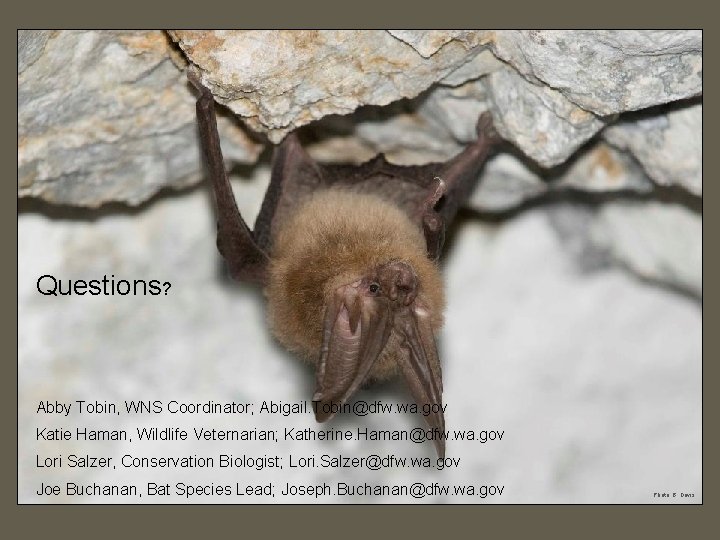
Questions? Abby Tobin, WNS Coordinator; Abigail. Tobin@dfw. wa. gov Katie Haman, Wildlife Veternarian; Katherine. Haman@dfw. wa. gov Lori Salzer, Conservation Biologist; Lori. Salzer@dfw. wa. gov Joe Buchanan, Bat Species Lead; Joseph. Buchanan@dfw. wa. gov Photo: B. Davis