
White Blood Cells Part 1 Neutrophils M Regalia
White Blood Cells Part 1 Neutrophils M. Regalia, LVT
Refresher: What are the leukocytes? § ___Neutrophils_____ § bands § segmented § hypersegmented § basophils § eosinophils § Monocytes/macrophage § _____lymphocytes___ § B cell § T cell § NK cell (natural killer)
Refresher: Granulocytes & Agranulocytes § Granulocytes § neutrophil § basophil § eosinophil § Agranulocytes § monocyte § lymphocyte
Refresher § Where does all leukocyte production begin? Red bone marrow § All leukocytes differentiate and develop in the bone marrow except for the lymphocytes. They start in the bone marrow, but develop elsewhere. § The production of white blood cells is called leukopoiesis § All leukocytes look alike in the bone marrow until they begin to mature
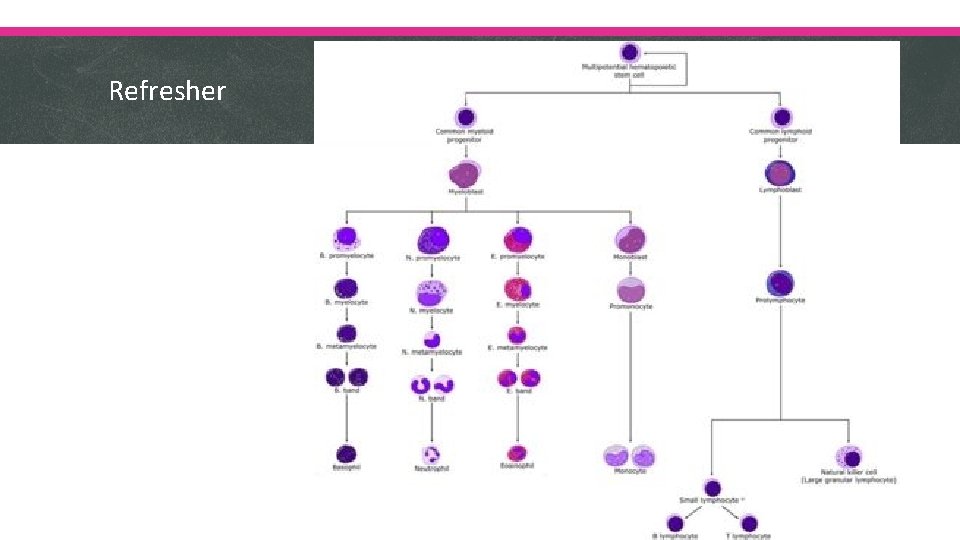
Refresher
Classification of Leukocytes § Classification can be done in three different ways: § Classification of defense function § Shape of nucleus § Presence or absence of cytoplasmic granules t i s i t a h W ng? i o d What does it W h a t is look like? insi de of it ?
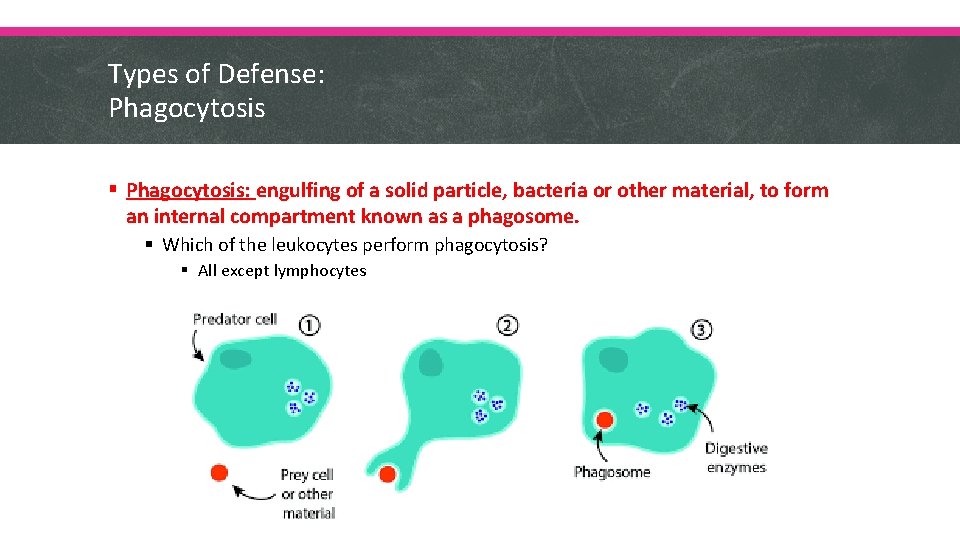
Types of Defense: Phagocytosis § Phagocytosis: engulfing of a solid particle, bacteria or other material, to form an internal compartment known as a phagosome. § Which of the leukocytes perform phagocytosis? § All except lymphocytes
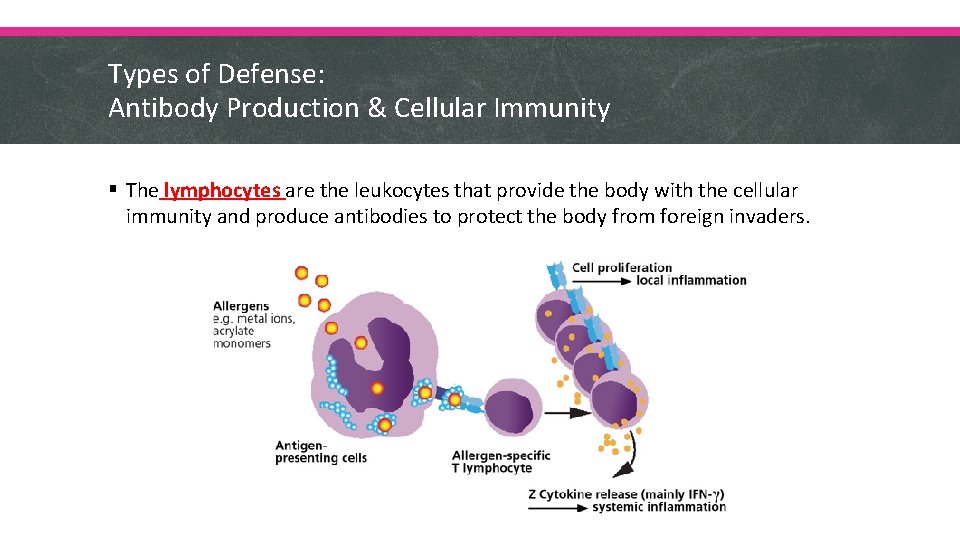
Types of Defense: Antibody Production & Cellular Immunity § The lymphocytes are the leukocytes that provide the body with the cellular immunity and produce antibodies to protect the body from foreign invaders.
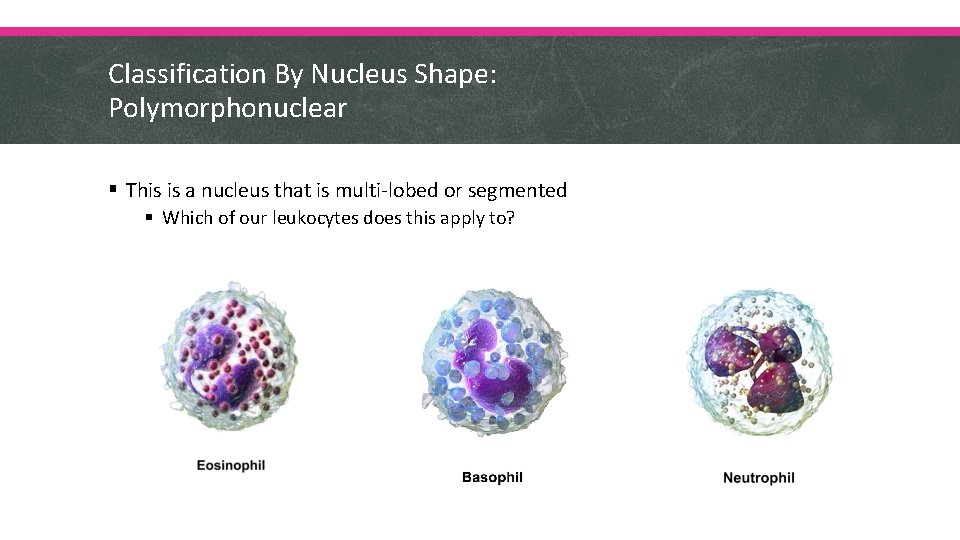
Classification By Nucleus Shape: Polymorphonuclear § This is a nucleus that is multi-lobed or segmented § Which of our leukocytes does this apply to?
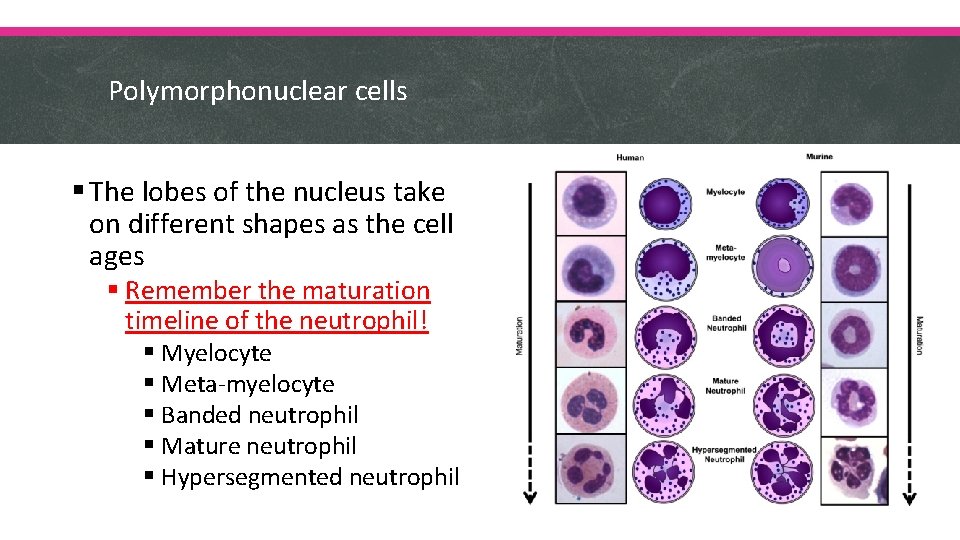
Polymorphonuclear cells § The lobes of the nucleus take on different shapes as the cell ages § Remember the maturation timeline of the neutrophil! § Myelocyte § Meta-myelocyte § Banded neutrophil § Mature neutrophil § Hypersegmented neutrophil
Classification By Nucleus Shape: Mononuclear and Pleomorphic § Mononuclear leukocytes have a single, rounded nucleus § Which one does this apply to? lymphocyte § Pleomorphic leukocytes have a nucleus that varies in shape but are non-segmented § Which one does this apply to? monocyte
Type of Granules Granulocytes • Neutrophils granules are NOT attracted to stain so they stain a light purple color • Eosinophils granules are attracted to acid stain so they stain red • Basophils granules are attracted to alkaline/basic stain so they stain blue
Functions of the Granules § Specific granules contain different substances depending on the type of cell they are. § Neutrophil granules contain lysosomal enzymes. § What does this aid the leukocyte in doing? Kill microorganisms after phagocytosis § Eosinophil granules contain anti-inflammatory substances. § What does this allow the cells to do? Degranulate at the site of allergic reaction to reduce swelling § Basophil granules contain histamine and heparin. § histamine reduce inflammation § Inflammation draws eosinophils to the site § heparin acts as a local anticoagulant to keep blood flowing to injured or damaged areas.

Specific Leukocytes Neutrophils
Specific Leukocytes: Neutrophil
Fast Facts about the Neutrophil § This is the most abundant leukocyte. Makes up about 45 -70% of circulating WBCs in dogs, cats and horses. § Granules are considered to be neutral because they stain neither red or blue § Often identified on a blood smear based on the shape of the nucleus § Adult cells contain 2 -4 lobes that are connected by thin strands of chromatin § Hypersegmented neutrophils contain 5+ lobes
Neutrophil Life Cycle § Neutrophils spend 10 hours in circulation before entering the tissues § Once in the tissue, they do not re-enter circulation, therefore the circulating neutrophils need to continually be replaced at least 2. 5 times a day § They will stay in tissue until they die or are destroyed by microorganisms. § Tissue macrophages pick up and phagocytize the dead or abnormal cells § Under normal circumstances, they should be replaced by mature neutrophils reserved in the bone marrow
Neutrophil Function § Involved with early stages of inflammatory response § Leave vessels via diapedesis (pass through capillary walls, typically accompanying inflammation § Attracted to the site of infection by chemotaxis (movement in response to chemical signal), allowing the neutrophil to ‘recognize’ what it ingests § Always are found in the tissues of the lungs and GI tract § They have the ability to phagocytize § Granules contain digestive enzymes capable of destroying bacteria and viruses § Lysosomal enzymes are released to kill the bacteria or destroy the virus
Neutrophil Pools § Circulating pool: Found toward the center of blood vessels. § Blood samples obtained from laboratory analysis contains neutrophils from this pool § Marginal pool: Found in the lining of the wall of small bleed vessels, mainly in the spleen, lungs, and abdominal organs. These are not circulating
Band Neutrophils § When found in a smear, these are neutrophils that have been released from the bone marrow prior to maturity § When found in peripheral blood smears, it indicates an increase in the demand for neutrophils beyond what the bone marrow can supply § If band cells run out, then the bone marrow starts releasing progressively more immature cells § Left shift: A condition of band neutrophils in the peripheral blood

Left Shift
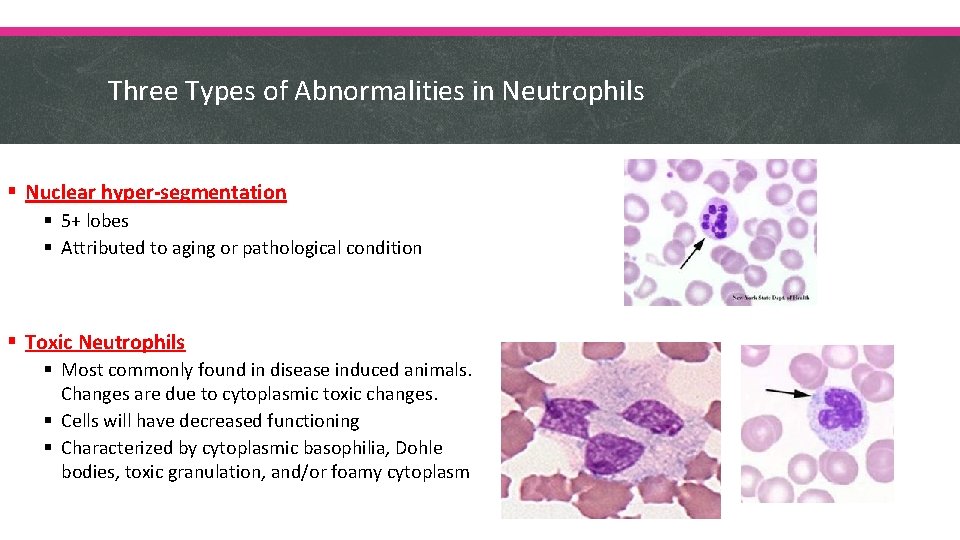
Three Types of Abnormalities in Neutrophils § Nuclear hyper-segmentation § 5+ lobes § Attributed to aging or pathological condition § Toxic Neutrophils § Most commonly found in disease induced animals. Changes are due to cytoplasmic toxic changes. § Cells will have decreased functioning § Characterized by cytoplasmic basophilia, Dohle bodies, toxic granulation, and/or foamy cytoplasm
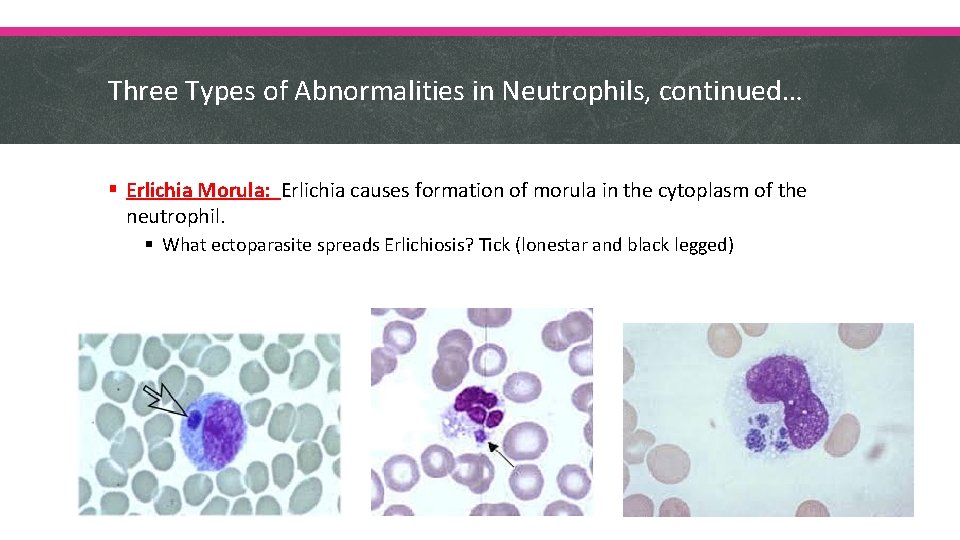
Three Types of Abnormalities in Neutrophils, continued… § Erlichia Morula: Erlichia causes formation of morula in the cytoplasm of the neutrophil. § What ectoparasite spreads Erlichiosis? Tick (lonestar and black legged)
Clinical Chemistry of Neutrophils § Neutrophil counts in peripheral blood is noted to be within a specific range § Dogs: 3000 - 11400 cells/u. L (microliter) § Cats: 2500 - 12500 cells/u. L § What controls the amount of neutrophils present? § The bone marrow releases mature neutrophils from the storage pool into the peripheral blood § How quickly they move from the peripheral blood to the tissue § Entrance of increased numbers of PPSCs into the neutrophil production line, causing a potential increase in neutrophils
Factors That Can Influence Neutrophils Being Released: STRESS!!!! § Physiologic Leukocytosis: § Neutrophils can move freely between circulating and marginal pools § Cells can detach from the marginal pool and move into the circulating pool when an animal is experiencing stress, leading to a temporary transfer of neutrophils § This predictable neutrophil response is called stress response or stress leukogram
Neutrophilia § Definition: An increase in the number of neutrophils § Possible causes of neutrophilia: § Inflammation: mild inflammation yields a response to stress § Bacterial infections § Extensive tissue damage § § § burns necrosis trauma Extensive surgery neoplasia § Cancer/parasitic infections
Neutropenia § Definition: a decrease in the number of circulating neutrophils § What would this indicate? § The infection is out of control and all reserves of neutrophils are used faster than the bone marrow can create them § (What is it called if we have a total WBC count decrease? leukocytopenia § If a critically ill patient has both neutropenia and leukocytopenia, what is their probable prognosis? poor
Neutropenia § What are some potential reasons a patient can have neutropenia? § Excessive tissue demand or destruction of neutrophils § Destruction can be immune-mediated § Reduced or ineffective granulopoiesis § Name some specific conditions: § Overwhelming bacterial infections § Drug reactions (penicillins, cephalosporins, sulfonamides (dogs) chloramphenicol (cats) § Fe. Lv
- Slides: 28