
WHITE BLOOD CELLS DISORDERS LEC 1 The white
WHITE BLOOD CELLS DISORDERS ﻣﻴﺴﻢ ﻣﺆﻴﺪ ﻋﻠﻮﺵ. ﺩ LEC. 1
The white blood cells (leucocytes) may be divided into two broad groups: the phagocytes and the lymphocytes. Phagocytes can themselves be subdivided into: granulocytes (which include neutrophils, eosinophils and basophils) and monocytes.

WHITE BLOOD CELLS
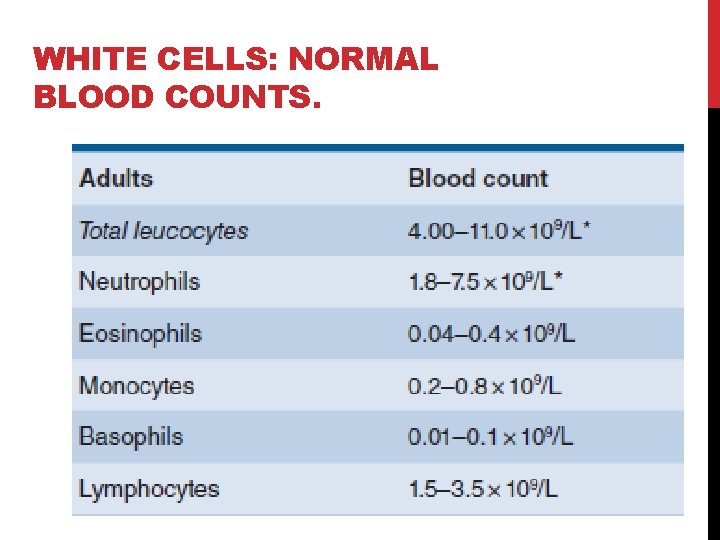
WHITE CELLS: NORMAL BLOOD COUNTS.
The bone marrow normally contains more myeloid cells than erythroid cells in the ratio of 2 : 1 to 4 : 1 (Myeloid /Erythroid ), the largest proportion being /Erythroid ) neutrophils and metamyelocytes.
Granulopoiesis Granulocytes and monocytes are formed in the bone marrow from a common precursor cell under the control of a variety of growth factors. -
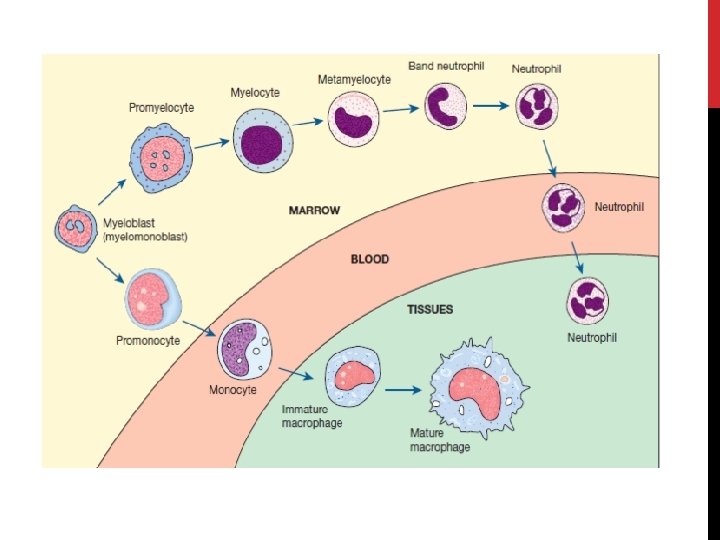
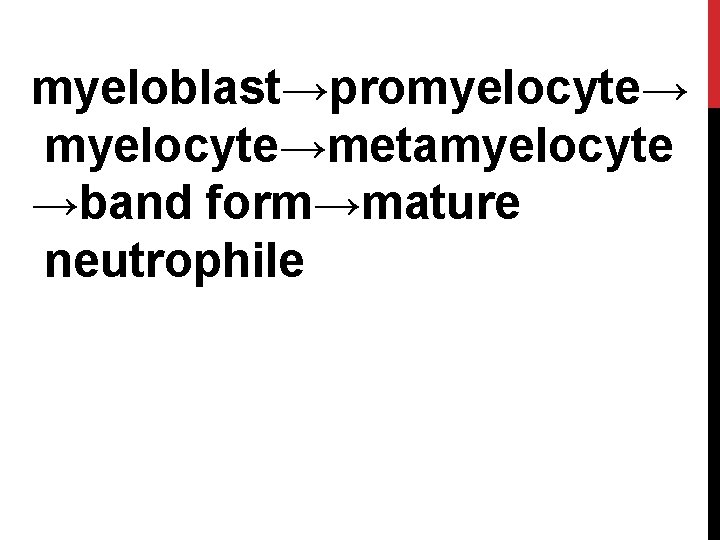
myeloblast→promyelocyte→metamyelocyte →band form→mature neutrophile
Large numbers of band segmented neutrophils (10– 15 times more than in the blood) are held in the normal marrow as a ‘reserve pool’.
In the bloodstream there are two pools usually of about equal size: 1 -the circulating pool (included in the blood count) 2 -marginating pool (not included in the blood count).
Morphological abnormalities of WBCs: .
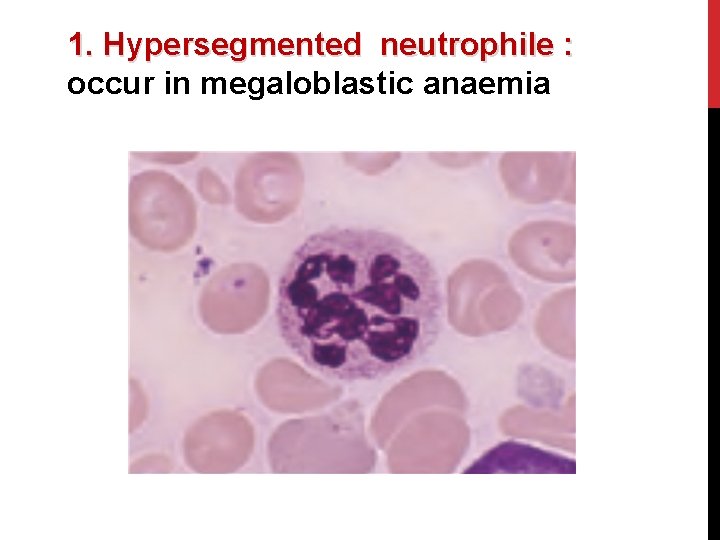
1. Hypersegmented neutrophile : occur in megaloblastic anaemia
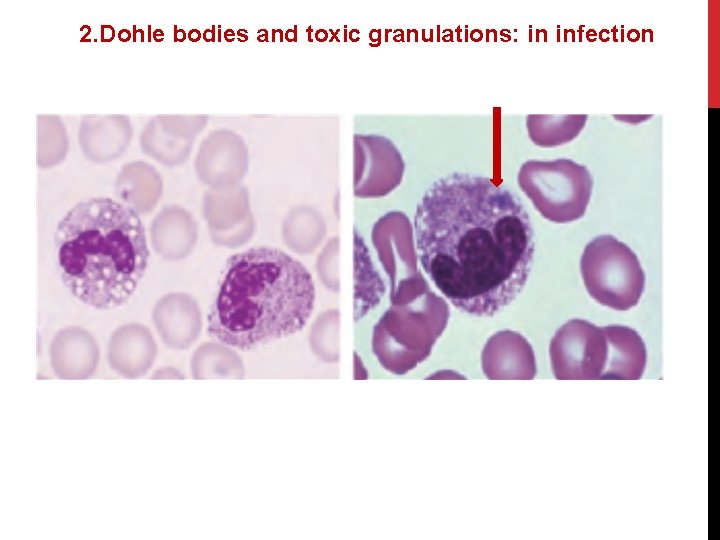
2. Dohle bodies and toxic granulations: in infection
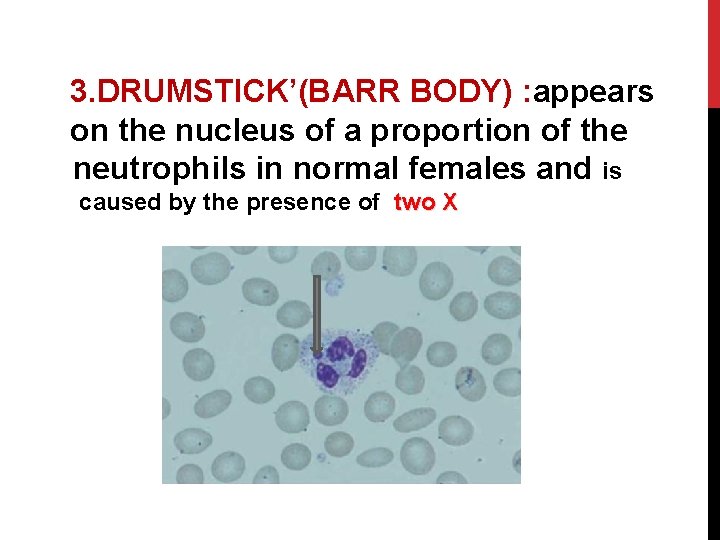
3. DRUMSTICK’(BARR BODY) : appears on the nucleus of a proportion of the neutrophils in normal females and is caused by the presence of two X CHROMOSOMES
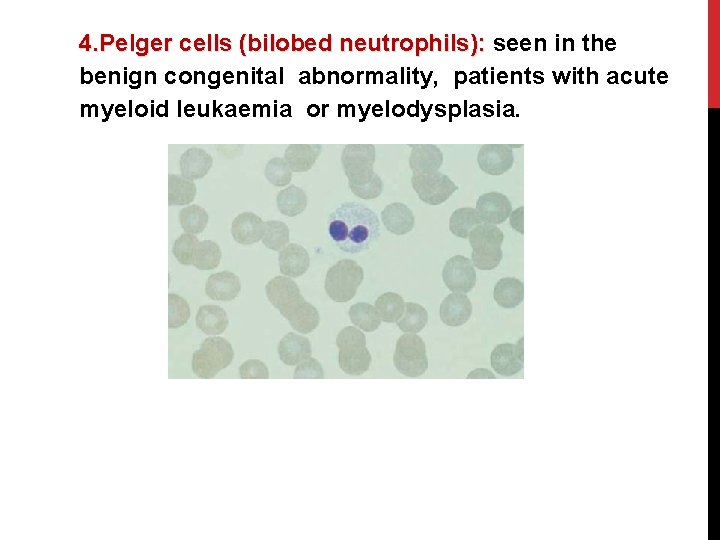
4. Pelger cells (bilobed neutrophils): seen in the bilobed neutrophils): benign congenital abnormality, patients with acute myeloid leukaemia or myelodysplasia.
Leucocytosis : it means increase in WBCs count. Neutrophil leukocytosis(Neutophilia): An increase in circulating neutrophils to levels greater than 7. 5 × 10⁹/L.
Causes of neutrophil leucocytosis. 1 -Bacterial infections (especially pyogenic bacterial, localized or generalized) 2 -Inflammation and tissue necrosis (e. g. cardiac infarct, trauma) 3 -Metabolic disorders (e. g. uraemia, , acidosis, gout) 4 -Pregnancy 5 -Neoplasms of all types
. 6 -Acute haemorrhage or haemolysis 7 -Drugs (e. g. corticosteroid therapy (inhibits margination): lithium, tetracycline) 8 -Chronic myeloid leukaemia, myeloproliferative disease 9 -Rare inherited disorders 10 -Asplenia.
The leukaemoid reaction is a reactive and excessive leucocytosis usually characterized by the presence of immature cells (e. g. myelocytes , promyelocytes, and metamyelocytes) in the peripheral blood. Associated disorders include severe or chronic infections, severe haemolysis or metastatic cancer.
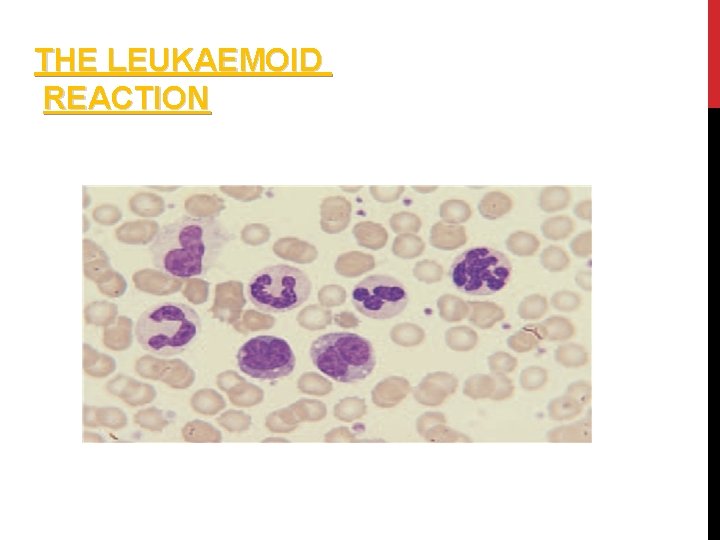
THE LEUKAEMOID REACTION
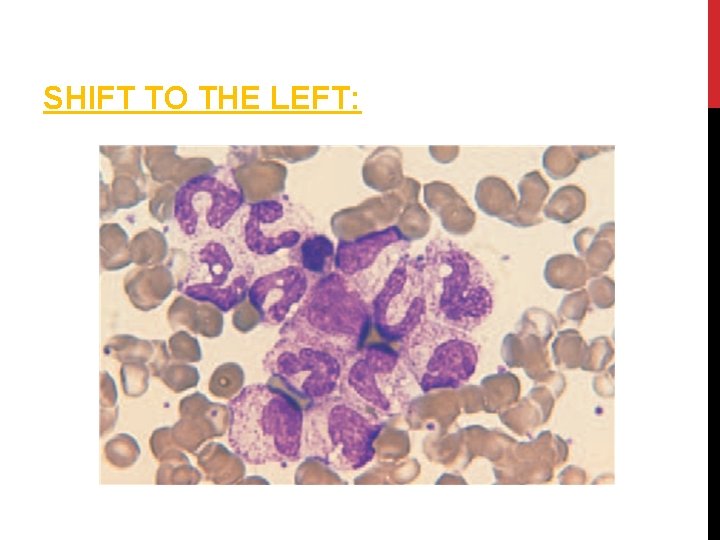
Shift to the left: an increase in the number of band forms in the peripheral blood and the occasional presence of more primitive cells such as metamyelocytes and myelocytes.
SHIFT TO THE LEFT:
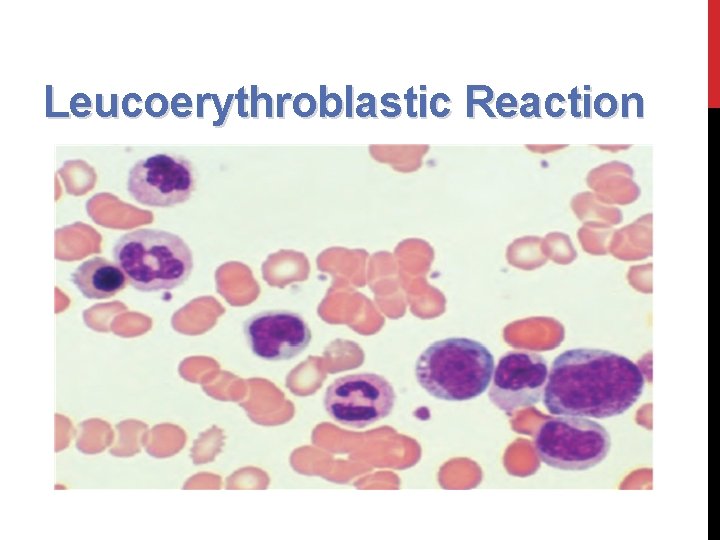
Leucoerythroblastic reaction: This is characterised by the presense of erythroblast (nucleated red blood cells) and granulocyte precursors in the blood ,
Leucoerythroblastic Reaction
It is due to: -metastatic infiltration of the marrow. - certain benign or neoplastic blood disorderse. g. myeloma, lymphoma, myelofibros is. -a response to sever haemolysis and acute blood loss.
Leukopenia : reflect decreased numbers of any of the specific leukocyte types; this most commonly involves neutrophils (neutropenia, granulocytopenia). Lymphopenia is less common.
Neutropenia /Agranulocytosis A reduction in the number of granulocytes in blood is known as neutropenia or, when severe, agranulocytosis. -Neutropenic persons are susceptible to bacterial and fungal infections, in whom they can be fatal.
-Neutropenia may be selective or part of a general pancytopenia. -It may be caused by bone marrow failure, chemotherapy or radiotherapy drugs, immune mechanisms or occur congenitally.
■■ Eosinophilia is most frequently caused by allergic disorders, parasitic infestations, drug reactions, lymphomas, and some vasculitides. It can be caused by a clonal increase in eosinophils, termed chronic eosinophilic leukaemia, or an idiopathic condition.
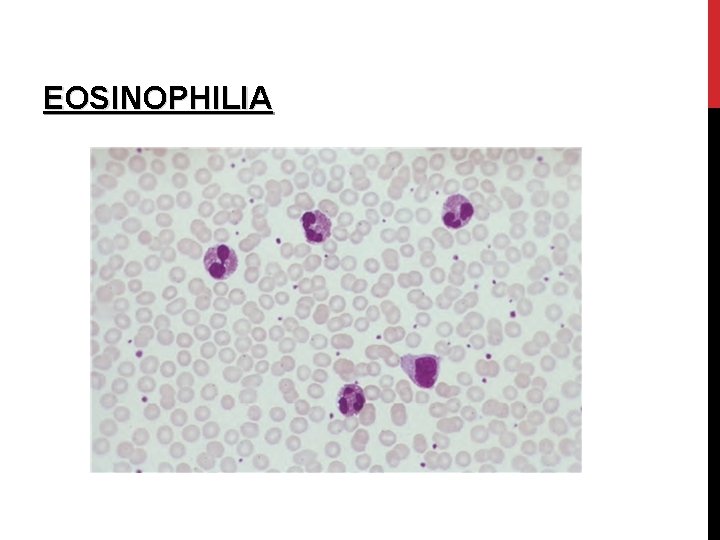
EOSINOPHILIA
Basophil leucocytosis (basophilia) The usual cause is a myeloproliferative disorders. Lymphocytosis often occurs in infants and young children in response to infections that produce a neutrophil reaction in adults.
Causes of lymphocytosis: -Infections : infectious mononucleosis, Infections rubella, pertussis, mumps, cytomegalovirus, HIV, herpes simplex or zoster, tuberculosis, toxoplasmosis -Chronic lymphoid leukaemias. -Acute lymphoblastic leukaemia. - lymphoma (some).
- Slides: 32