
WHII 9 ac Industrial Revolution Origin of the


- Slides: 59
WHII. 9 a-c Industrial Revolution
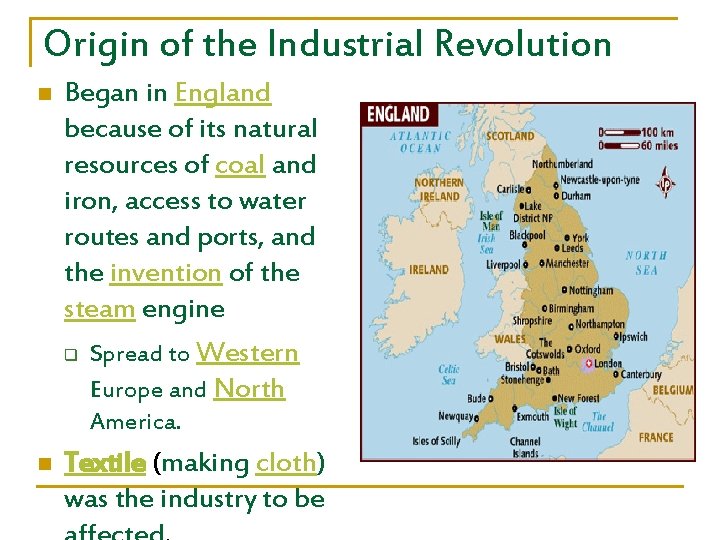
Origin of the Industrial Revolution n Began in England because of its natural resources of coal and iron, access to water routes and ports, and the invention of the steam engine q Spread to Western Europe and North America. n Textile (making cloth) was the industry to be
British Enclosure Movement n n Before 1600’s European villagers had small plots of land used common public lands for animal grazing (Tragedy of the Commons) British Enclosure Movement (1600’s-1700’s)q q q Common lands fenced off into individual plots Small landholdings being combined into larger, more efficient plots Large landholders benefited, small landholders did not
Effects of the British Enclosure Movement n Small-plot owners forced to become tenant farmers or move to cities n Elimination of common lands allowed private farmers to try new techniques q Seed Drill (Tull) q Crop Rotation (Townshend)
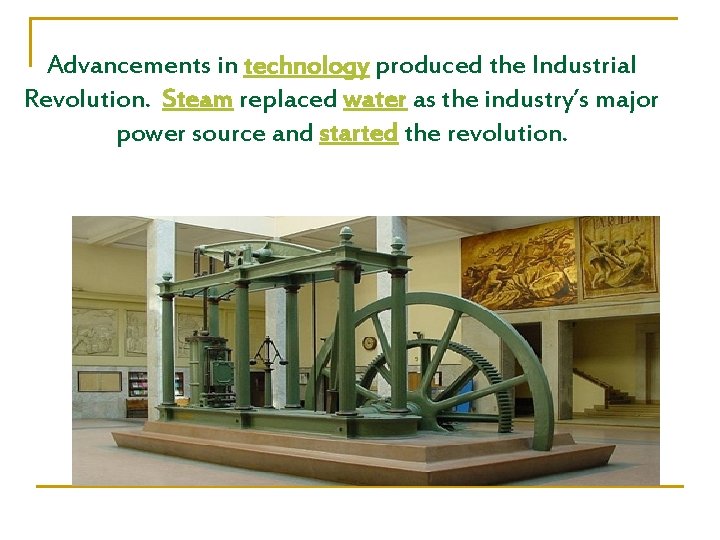
Advancements in technology produced the Industrial Revolution. Steam replaced water as the industry’s major power source and started the revolution.
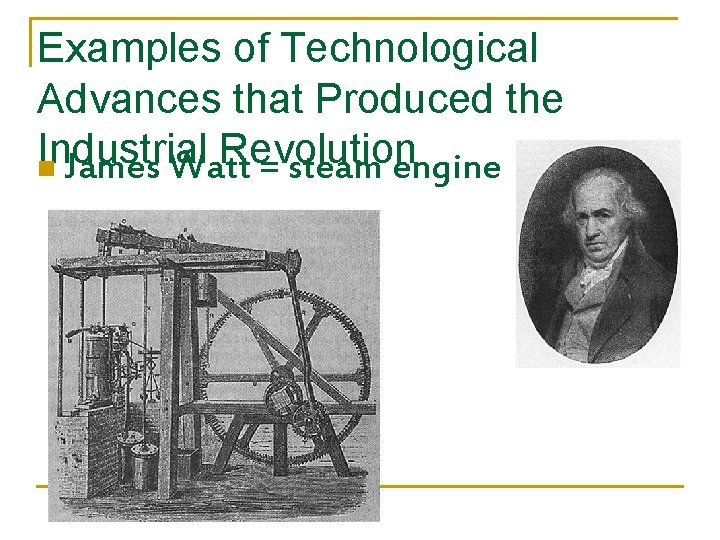
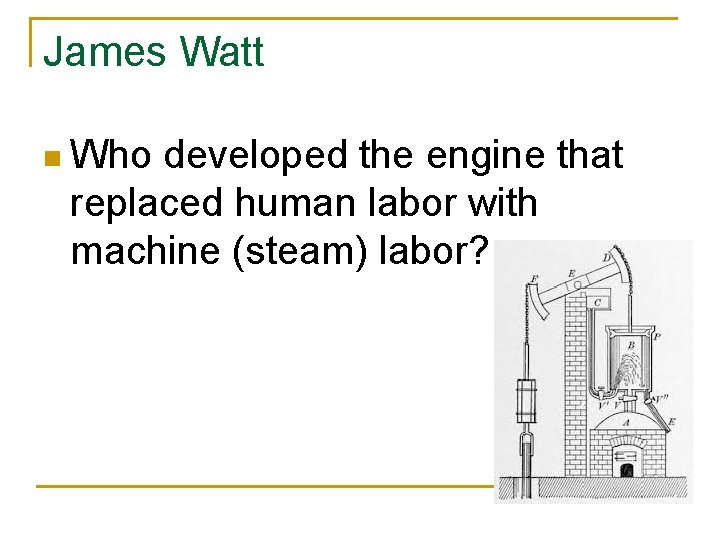
Examples of Technological Advances that Produced the Industrial Revolution n James Watt = steam engine
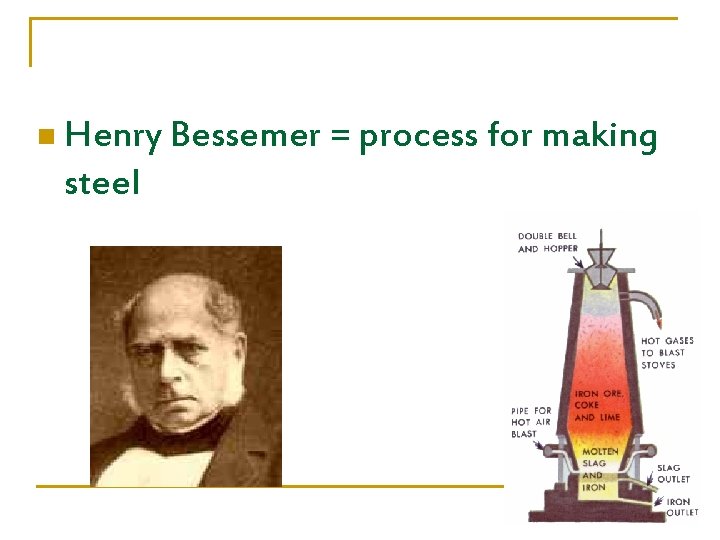
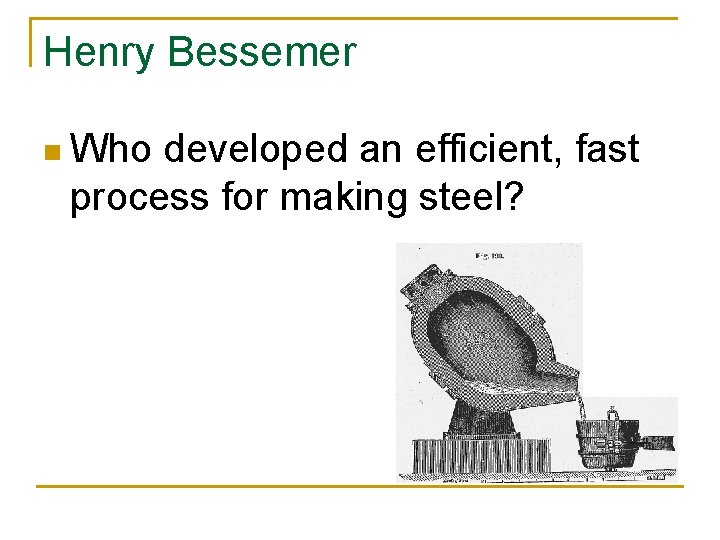
n Henry steel Bessemer = process for making
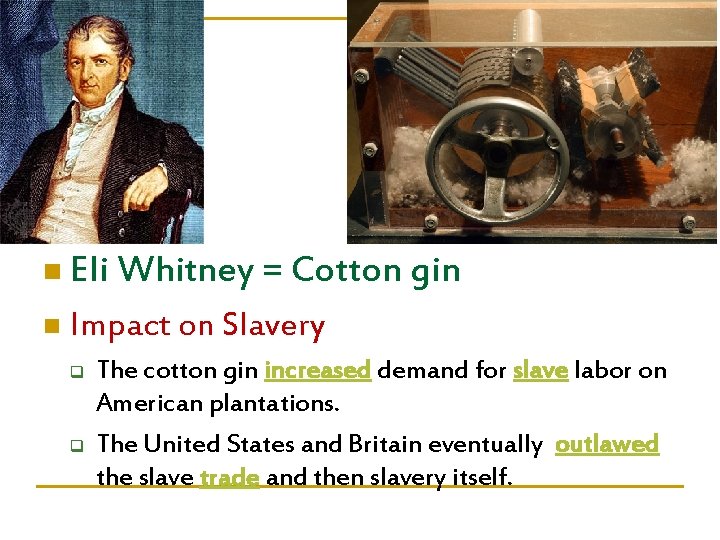
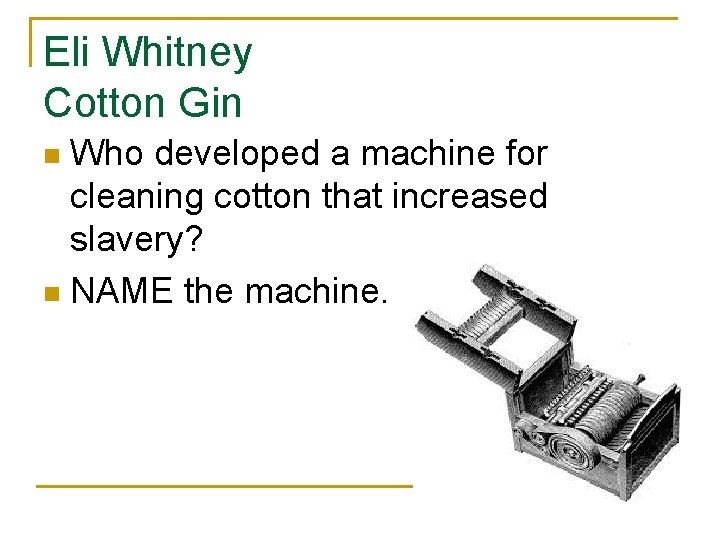
n Eli n Whitney = Cotton gin Impact on Slavery q q The cotton gin increased demand for slave labor on American plantations. The United States and Britain eventually outlawed the slave trade and then slavery itself.
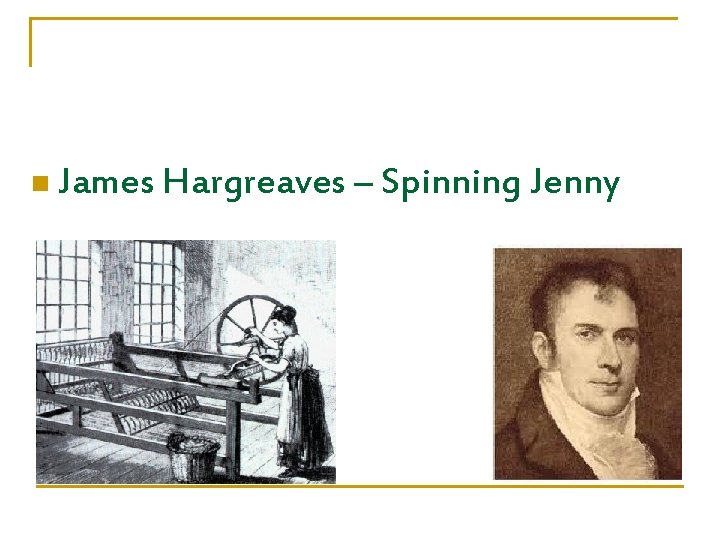
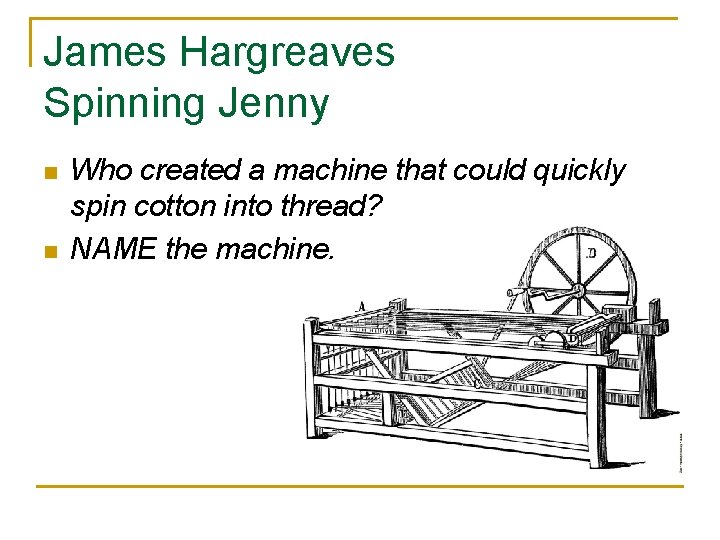
n James Hargreaves – Spinning Jenny
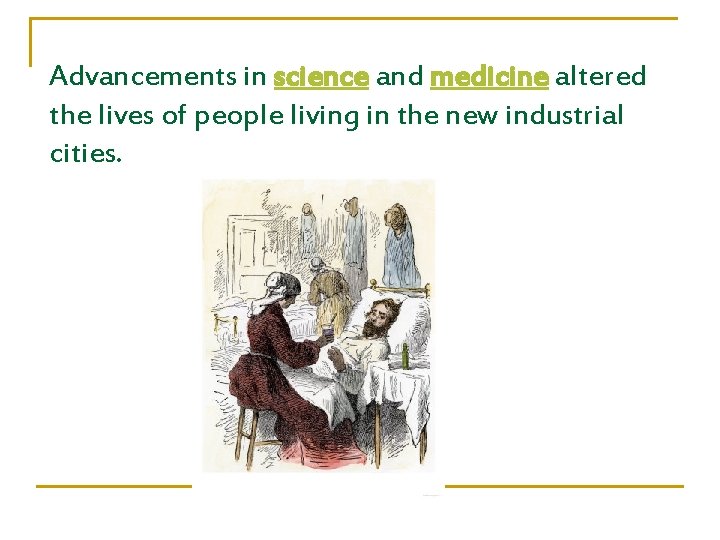
Advancements in science and medicine altered the lives of people living in the new industrial cities.
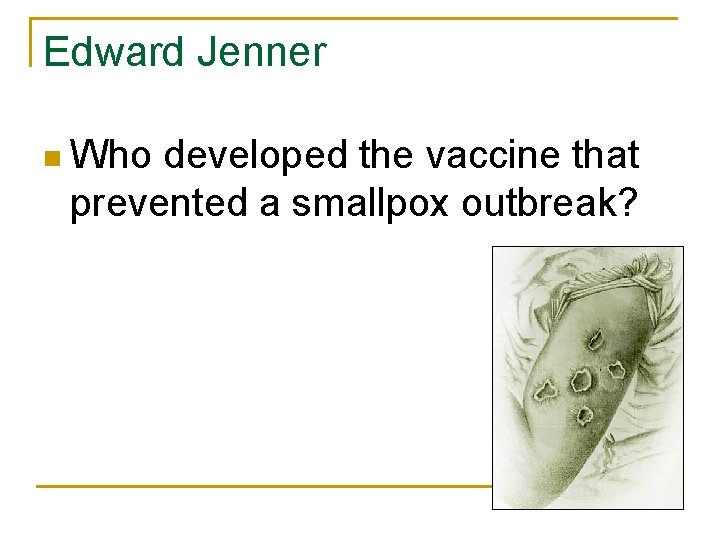
Examples of Advancements in Science and Medicine n Edward Jenner = developed smallpox vaccination n Louis Pasteur = discovered bacteria q The major medical breakthrough in the 19 th century was the germ theory leading to the use of antiseptics.
The Factory System n Employers no longer needed apprentices or skilled laborers- could train a person work a machine in days
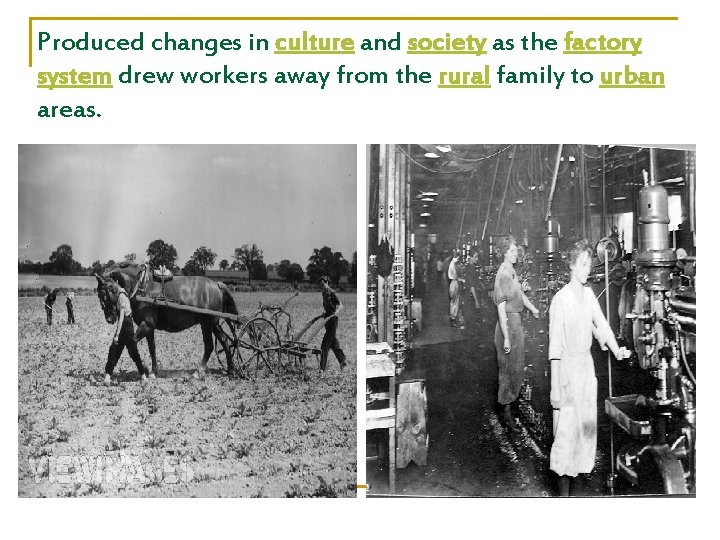
Produced changes in culture and society as the factory system drew workers away from the rural family to urban areas.
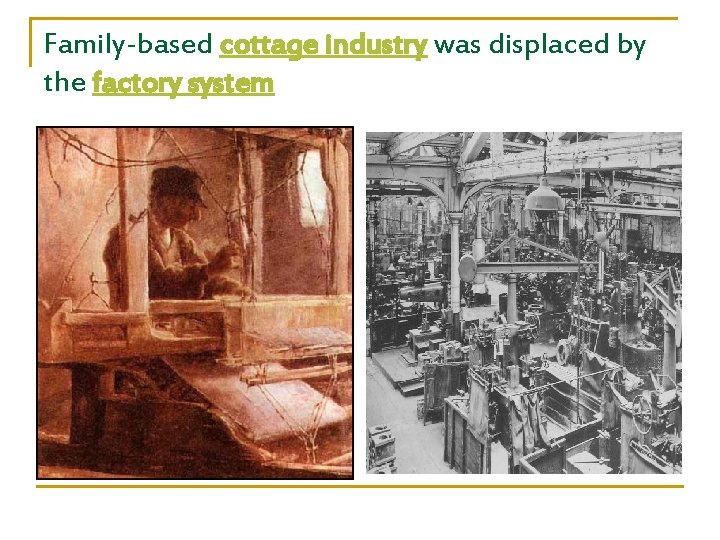
Family-based cottage industry was displaced by the factory system
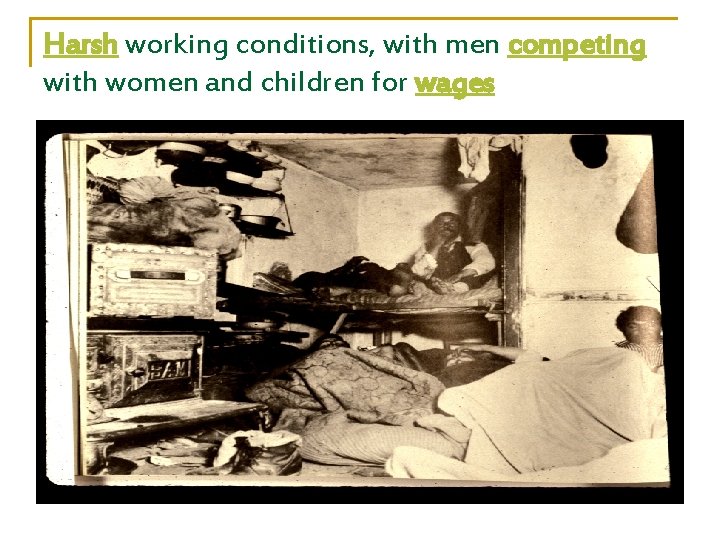
Harsh working conditions, with men competing with women and children for wages
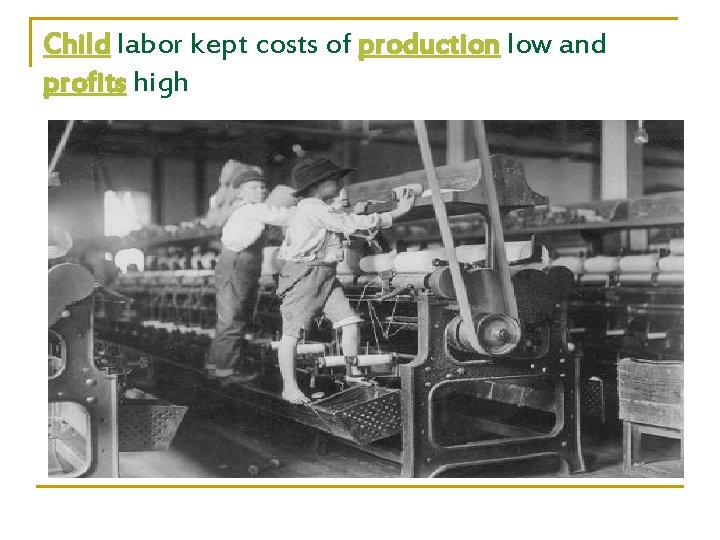
Child labor kept costs of production low and profits high
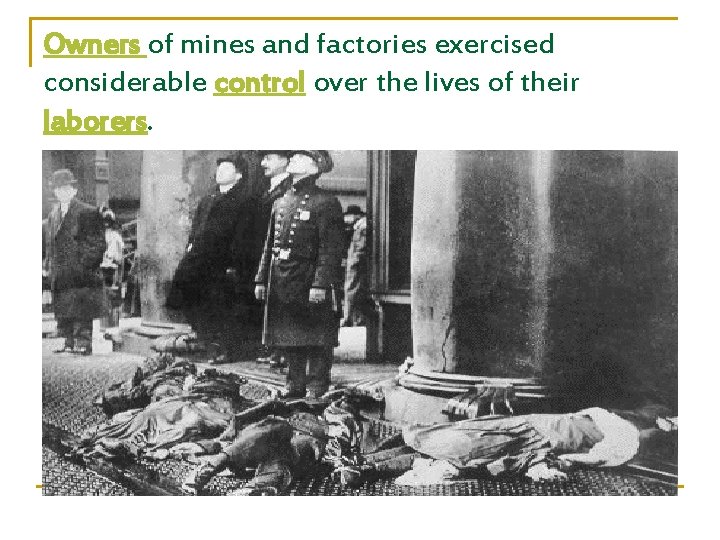
Owners of mines and factories exercised considerable control over the lives of their laborers.
Division of Classes n Industry produced great wealth for the middle class, but the working class lived in grim, crowded cities and worked in noisy, dirty mills and factories. n Raised standard of living for many, though NOT all. n Many reformers labeled it a society of “haves” and. “have-nots”
Division of Classes n Women and children entering the work place as cheap labor. n Caused dissatisfaction of working class with working conditions q Led to development of unions and strikes
Impact of the Industrial Revolution n Changes in Society q Increased n n n q q q Population Urbanization Environment pollution Education Availability of luxury items Improved transportation Introduction of reforms to end child labor Expansion of education for both men and women n Women’s increased demands for suffrage (voting)
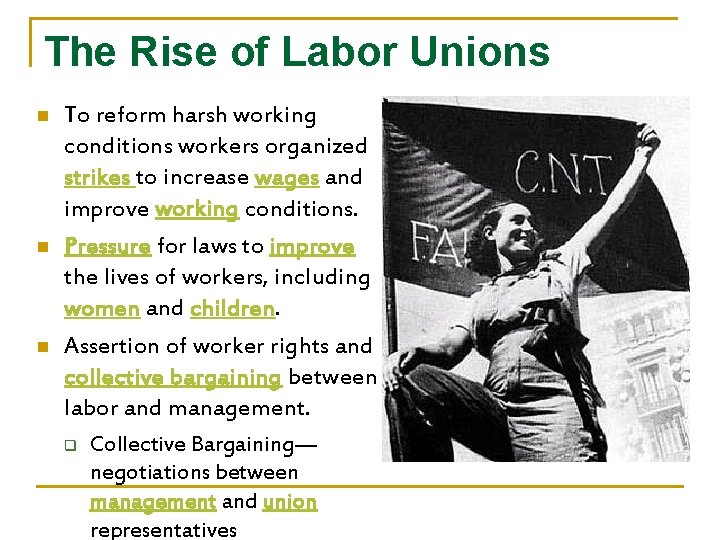
The Rise of Labor Unions n n n To reform harsh working conditions workers organized strikes to increase wages and improve working conditions. Pressure for laws to improve the lives of workers, including women and children. Assertion of worker rights and collective bargaining between labor and management. q Collective Bargaining— negotiations between management and union representatives
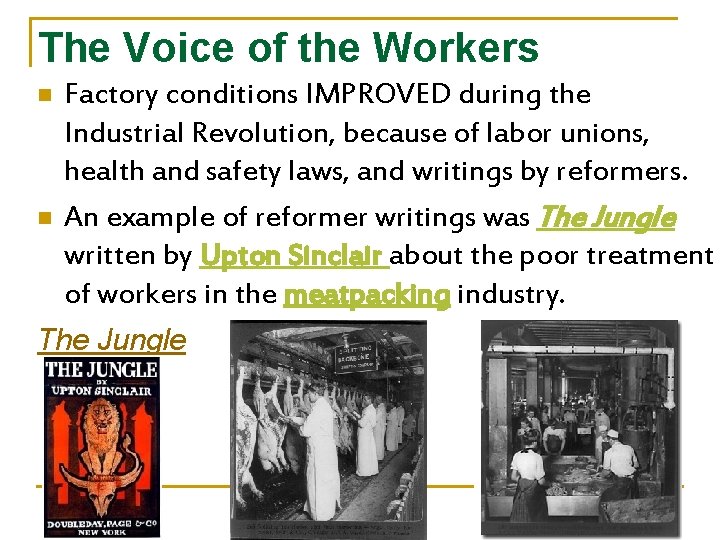
The Voice of the Workers n n Factory conditions IMPROVED during the Industrial Revolution, because of labor unions, health and safety laws, and writings by reformers. An example of reformer writings was The Jungle written by Upton Sinclair about the poor treatment of workers in the meatpacking industry. The Jungle
Industrial Revolution and Economy n Capitalism and market competitor fueled the Industrial Revolution. n Wealth increased the standard of living for some
Industrial Revolution and Economy n Social dissatisfaction associated with capitalism produced a wide range of economic and political ideas, including socialism and communism. n Entrepreneur – person who organizes, manages, and takes on the risks of a business.
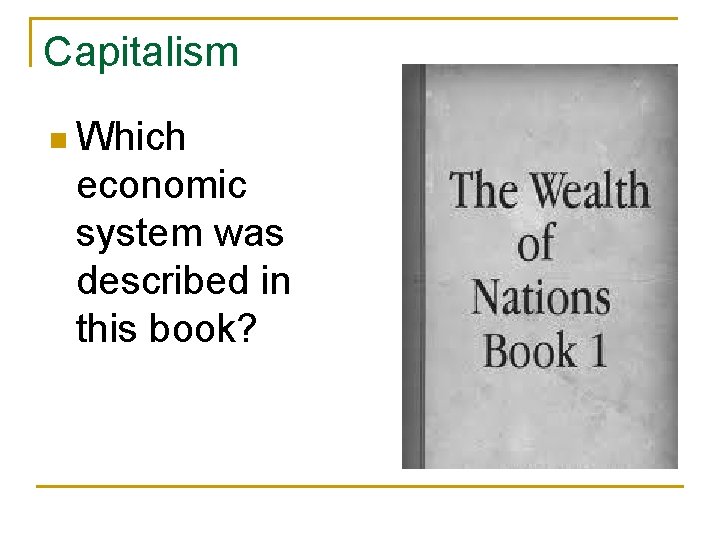
New Ideas n Adam Smith q First to explain capitalism and laissez-faire economics n n q q Capitalism is an economic system in which individuals control the factors of production—rather than the government. Laissez-faire is French for “Leave it alone” or “Let it Go” Wrote The Wealth of Nations Believed Competition and free-market system (no government involvement) was the best form of economics
n Socialism q Reaction to the injustices of capitalism q The belief that the means of production should be owned and controlled by society, either directly or indirectly through the government. n Operate industry to benefit all people, rich or poor
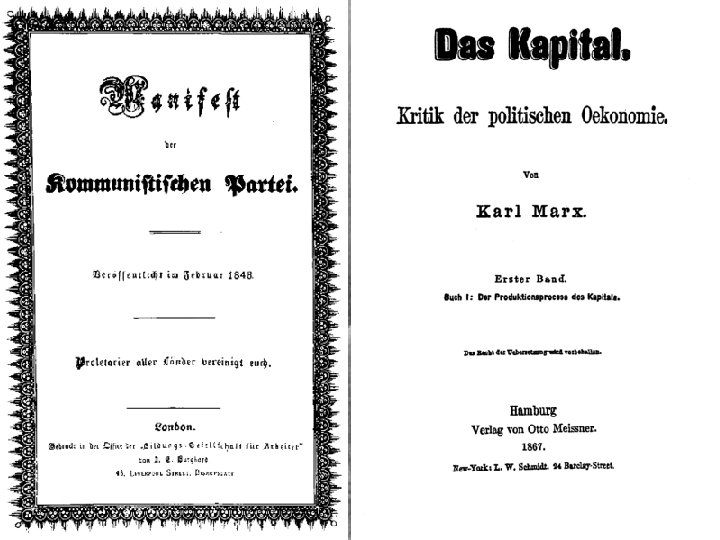
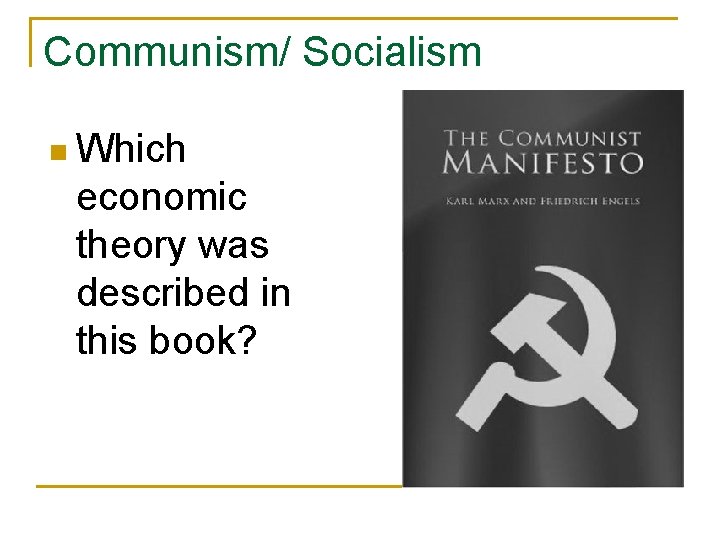
Communism (Marxism) n Karl Marx – German philosopher q Marx and Friedrich Engels wrote The Communist Manifesto q q q “Class struggle” -one class pitted against another n Proletariat, or the working class n Bourgeoisie, or the middle class Marx’s believed eventually the working class would seize control and create a classless society or communism The governing principle would be “from each according to his ability, to each according to his need. ”
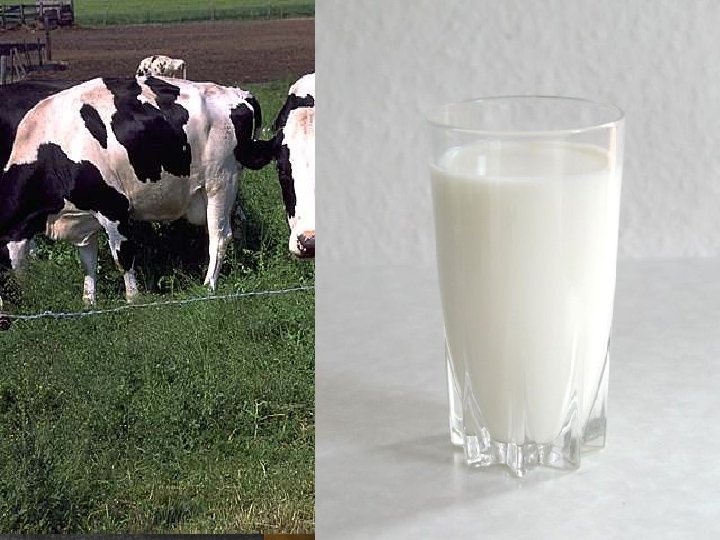
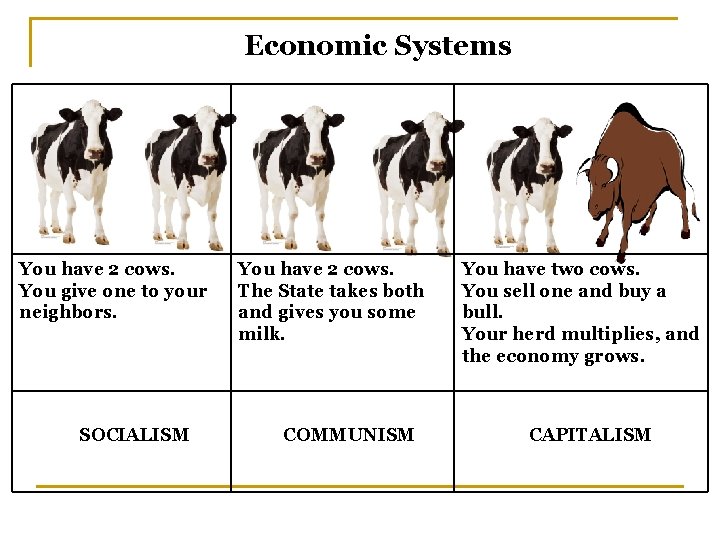
Economic Systems You have 2 cows. You give one to your neighbors. SOCIALISM You have 2 cows. The State takes both and gives you some milk. COMMUNISM You have two cows. You sell one and buy a bull. Your herd multiplies, and the economy grows. CAPITALISM
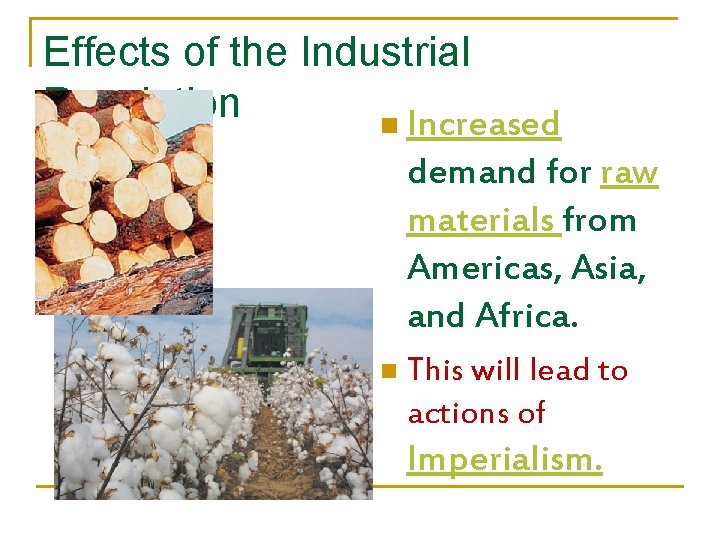
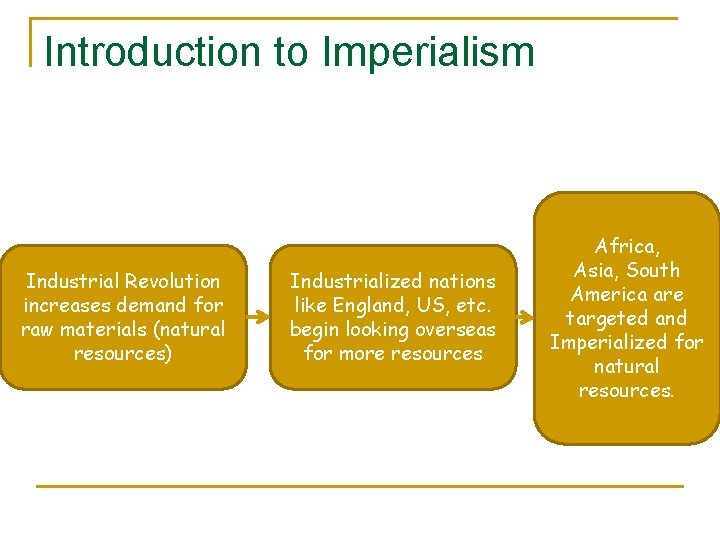
Effects of the Industrial Revolution n Increased demand for raw materials from Americas, Asia, and Africa. n This will lead to actions of Imperialism.
Quiz Review v v v A description will appear on the screen. Write the name/term/item on your whiteboard. Raise your board when I say “Zero!”
James Hargreaves Spinning Jenny n n Who created a machine that could quickly spin cotton into thread? NAME the machine.
Labor Union n Associations of workers that combine forces and demand of different workers.
Henry Bessemer n Who developed an efficient, fast process for making steel?
Capitalism n Economic system in which individuals, rather than governments, control the factors of production.
Working n Monotonous with long hours, low pay, and no security describes ________ conditions during the Industrial Revolution a) Living b) Cultural c) Working d) Farming
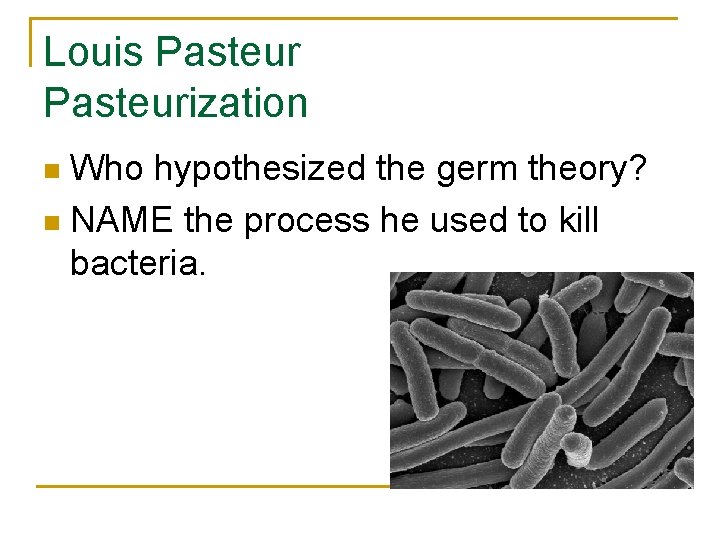
Louis Pasteurization Who hypothesized the germ theory? n NAME the process he used to kill bacteria. n
Strike n Refusal of workers to work until their demands are met.
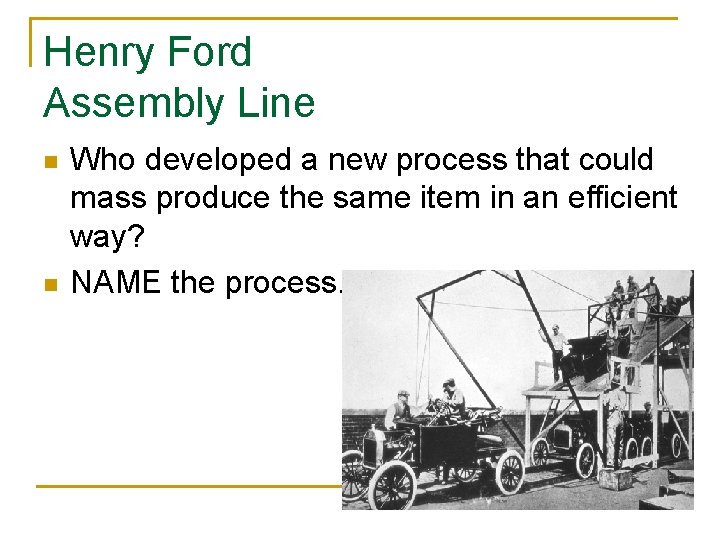
Henry Ford Assembly Line n n Who developed a new process that could mass produce the same item in an efficient way? NAME the process.
Socialism n Political and economic system in which the government owns the means of production.
Adam Smith n Who would make this quote? “The economy will function best if the government stays completely out of the private business sector. Let the free market decide economic questions. ”
James Watt n Who developed the engine that replaced human labor with machine (steam) labor?
Proletariat n Name given by Karl Marx to the working class.
Suffrage n The increase in middle class women also led to increased demands for ________, the right to vote.
Communism n Authoritarian socialism; economic and political system in which governments own the means of production and control economic planning.
Laissez-Faire n Belief that government should not interfere with the operations of businesses.
False n True or False: Class divisions decreased between the wealthy and poor as a result of the Industrial Revolution
Karl Marx n Who would make this quote? “Capitalism is destroying the lives of a huge percentage of workers. It leads to greedy people and an unhealthy society. The government should control all business. ”
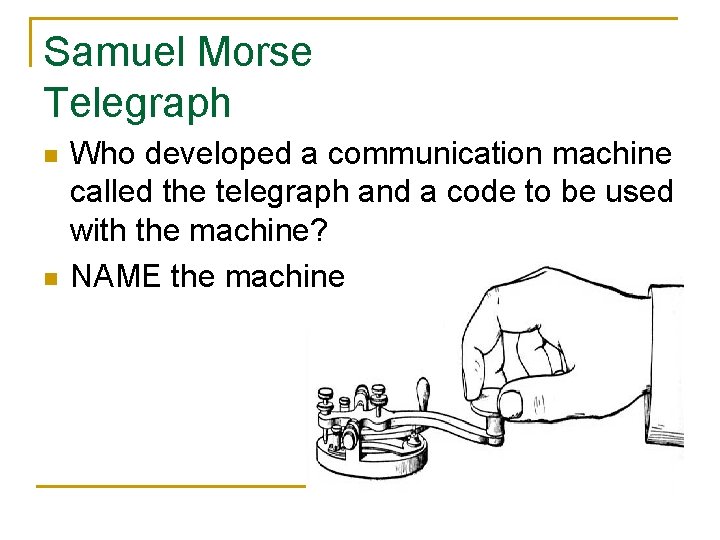
Samuel Morse Telegraph n n Who developed a communication machine called the telegraph and a code to be used with the machine? NAME the machine
Capitalism n Which economic system was described in this book?
Women and Children n Which two groups were used for cheap labor during the Industrial Revolution?
Communism/ Socialism n Which economic theory was described in this book?
Eli Whitney Cotton Gin Who developed a machine for cleaning cotton that increased slavery? n NAME the machine. n
Working n By owning where workers lived and shopped, __________ exercised a great amount of control of their workers. a) b) c) d) Politicians Mine/Factory Owners Local governments Dictators
Edward Jenner n Who developed the vaccine that prevented a smallpox outbreak?
Capitalism n An unequal distribution of wealth is considered a problem of which economic system?
Introduction to Imperialism Industrial Revolution increases demand for raw materials (natural resources) Industrialized nations like England, US, etc. begin looking overseas for more resources Africa, Asia, South America are targeted and Imperialized for natural resources.