
Which plant structure is the site of photosynthesis
- Slides: 29
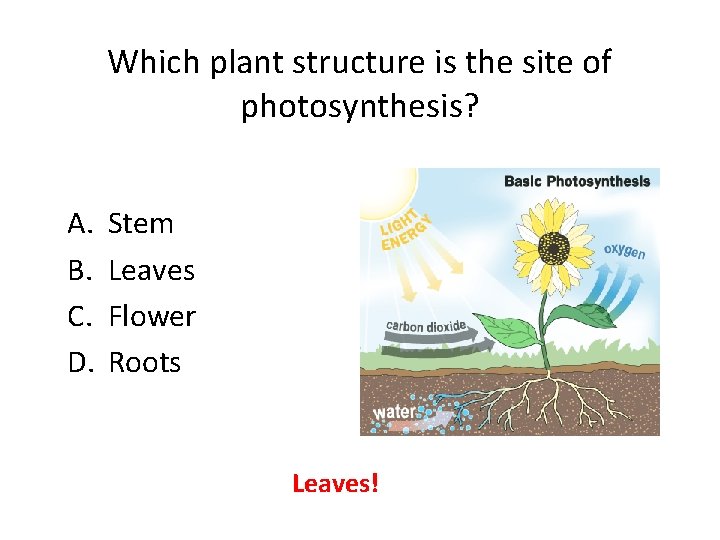
Which plant structure is the site of photosynthesis? A. B. C. D. Stem Leaves Flower Roots Leaves!
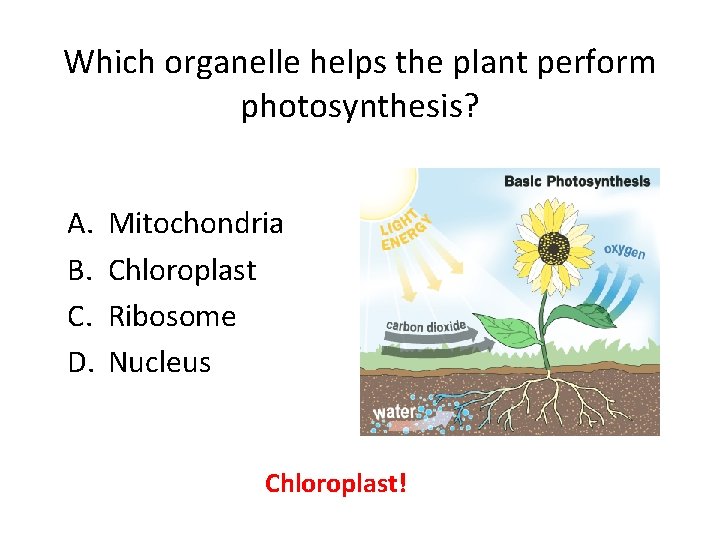
Which organelle helps the plant perform photosynthesis? A. B. C. D. Mitochondria Chloroplast Ribosome Nucleus Chloroplast!
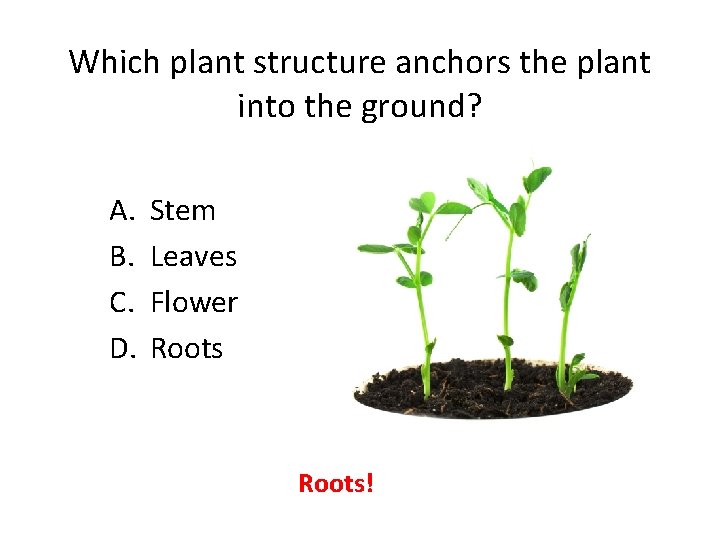
Which plant structure anchors the plant into the ground? A. B. C. D. Stem Leaves Flower Roots!
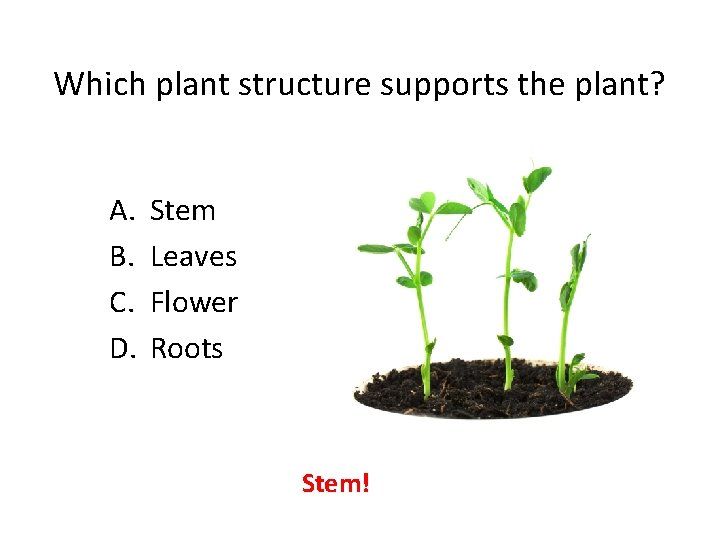
Which plant structure supports the plant? A. B. C. D. Stem Leaves Flower Roots Stem!
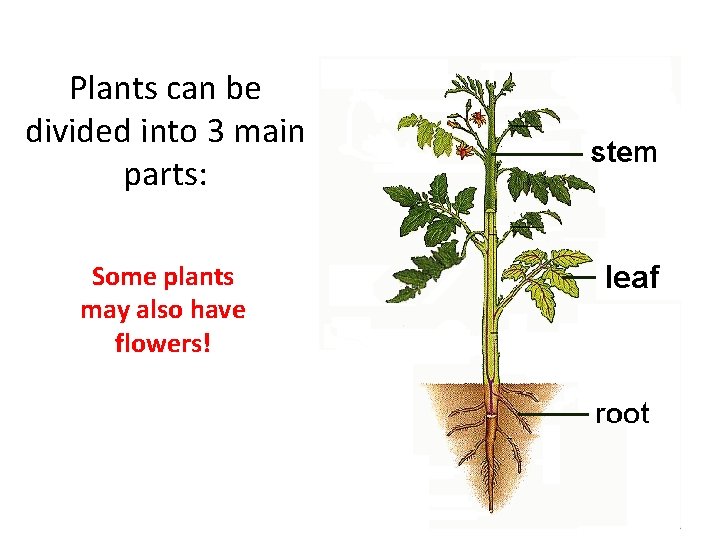
Plants can be divided into 3 main parts: Some plants may also have flowers! leaf
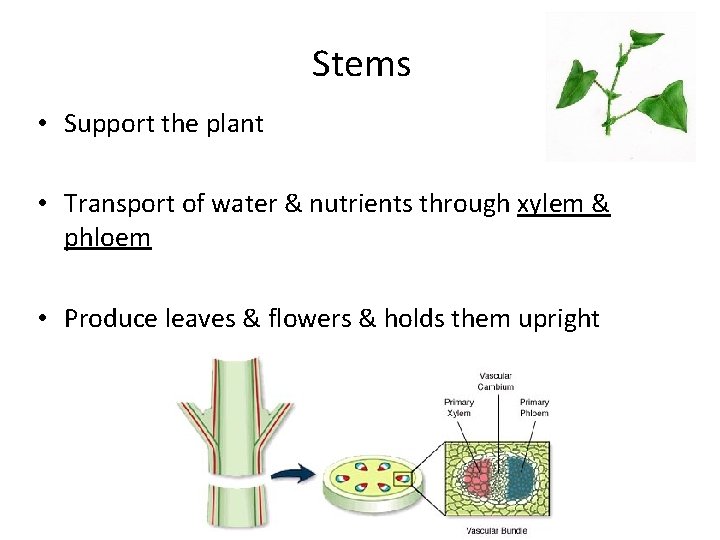
Stems • Support the plant • Transport of water & nutrients through xylem & phloem • Produce leaves & flowers & holds them upright
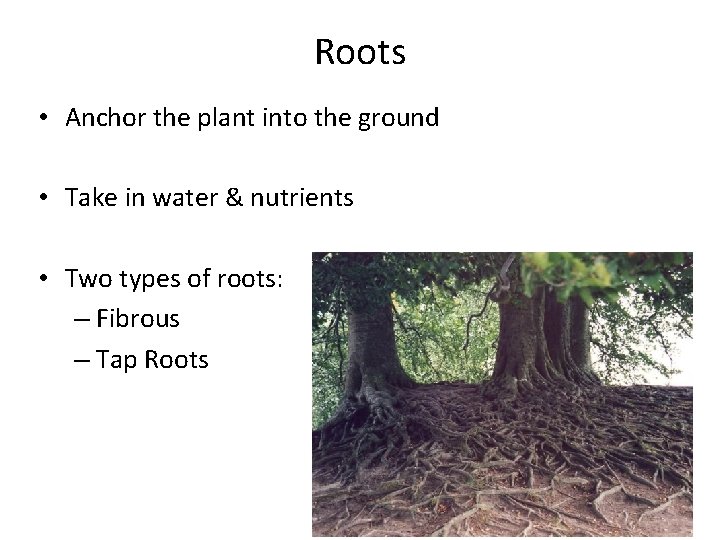
Roots • Anchor the plant into the ground • Take in water & nutrients • Two types of roots: – Fibrous – Tap Roots
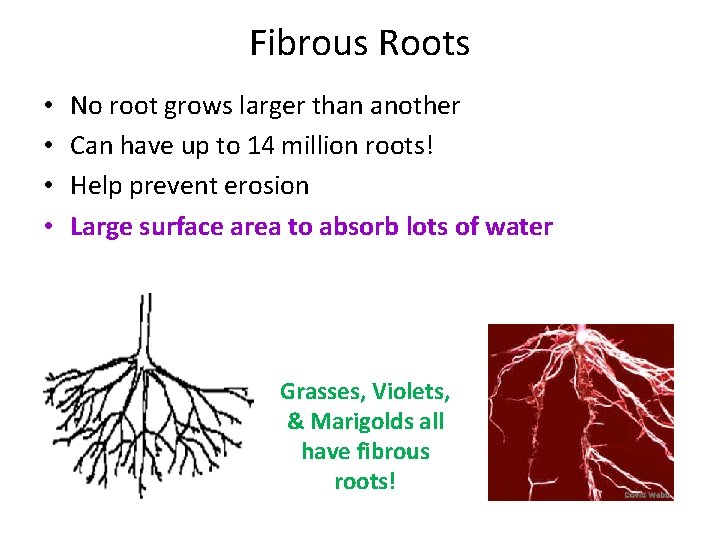
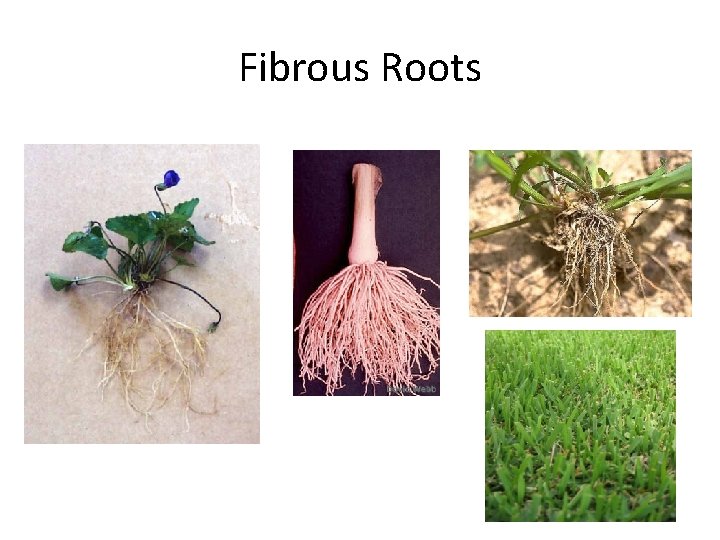
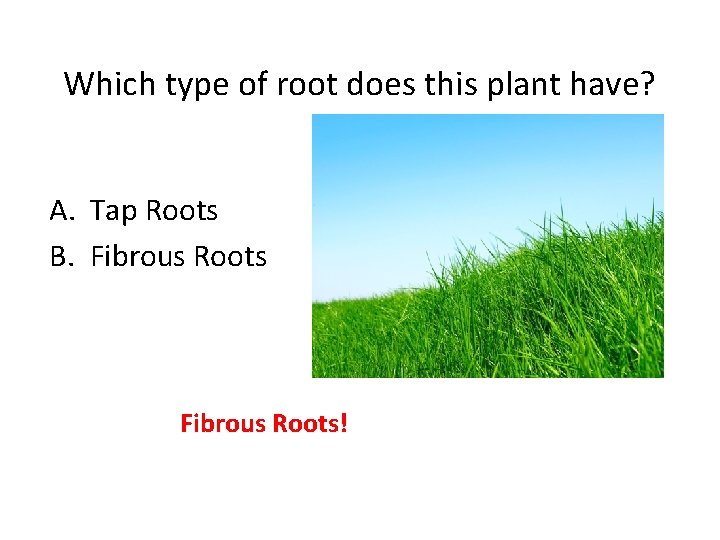
Fibrous Roots • • No root grows larger than another Can have up to 14 million roots! Help prevent erosion Large surface area to absorb lots of water Grasses, Violets, & Marigolds all have fibrous roots!
Fibrous Roots
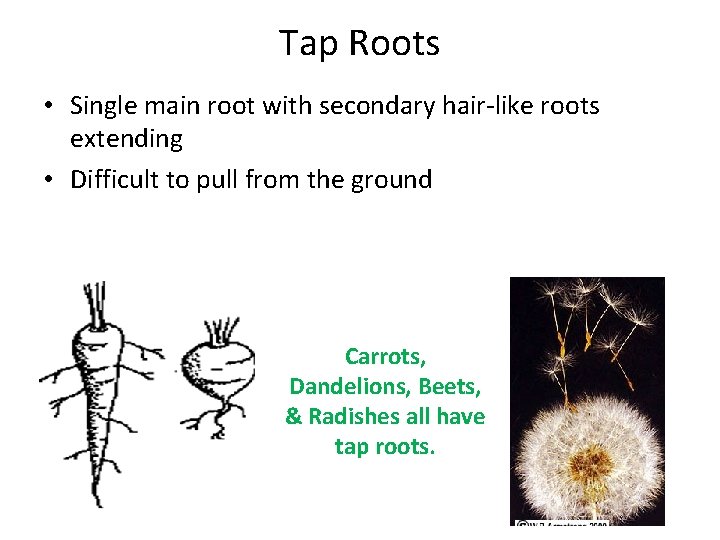
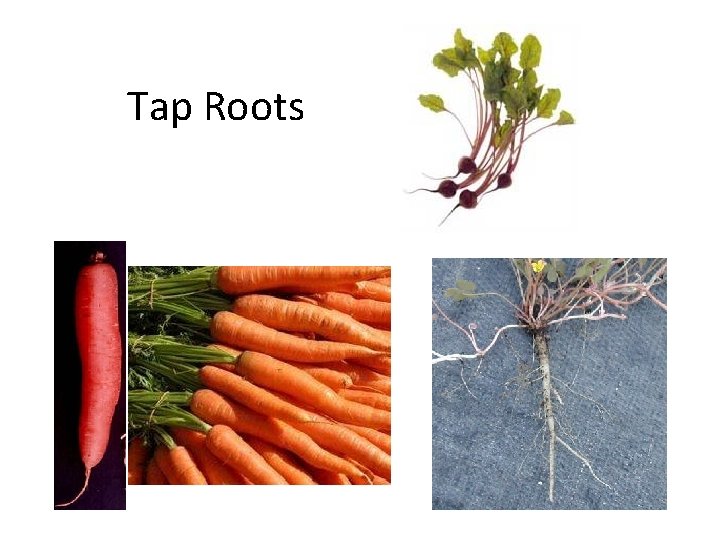
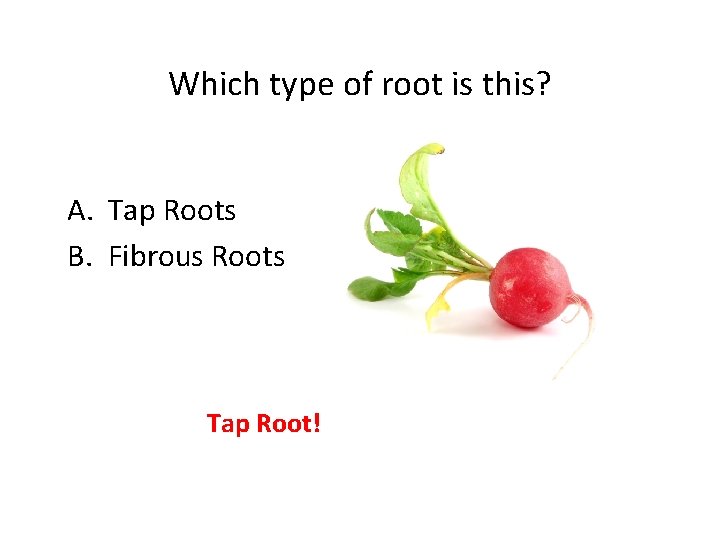
Tap Roots • Single main root with secondary hair-like roots extending • Difficult to pull from the ground Carrots, Dandelions, Beets, & Radishes all have tap roots.
Tap Roots
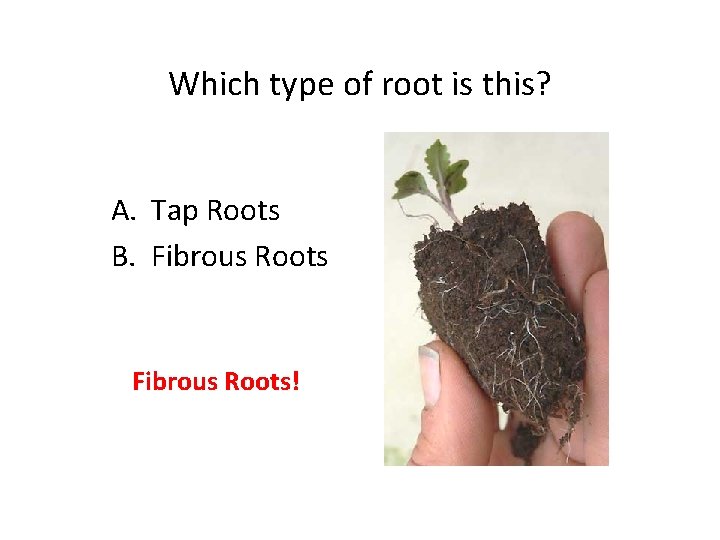
Which type of root is this? A. Tap Roots B. Fibrous Roots!
Which type of root does this plant have? A. Tap Roots B. Fibrous Roots!
Which type of root is this? A. Tap Roots B. Fibrous Roots Tap Root!
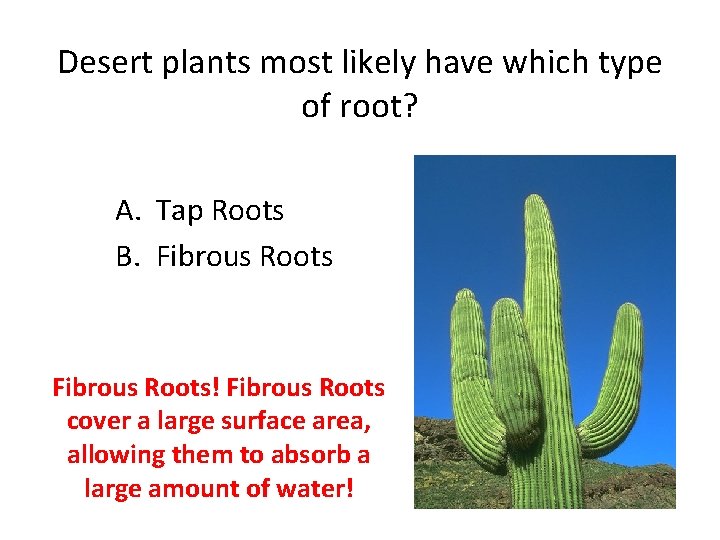
Desert plants most likely have which type of root? A. Tap Roots B. Fibrous Roots! Fibrous Roots cover a large surface area, allowing them to absorb a large amount of water!
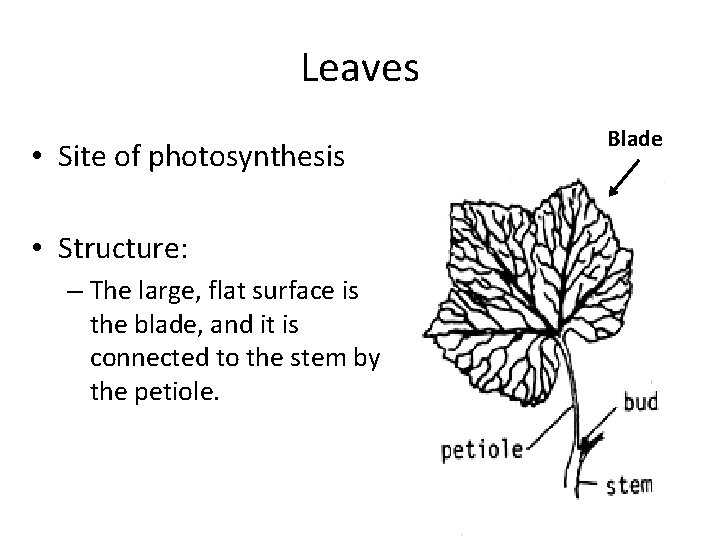
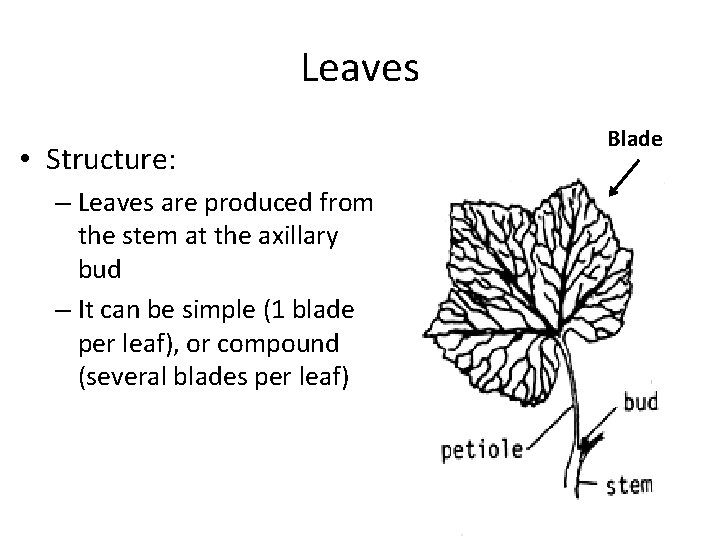
Leaves • Site of photosynthesis • Structure: – The large, flat surface is the blade, and it is connected to the stem by the petiole. Blade
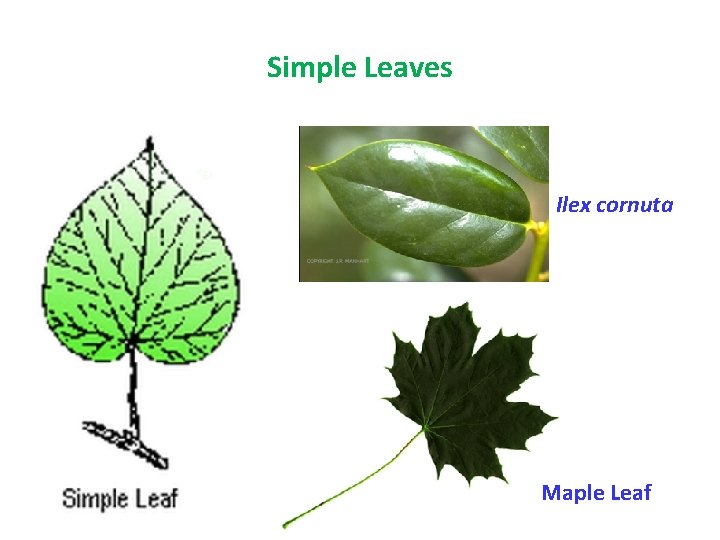
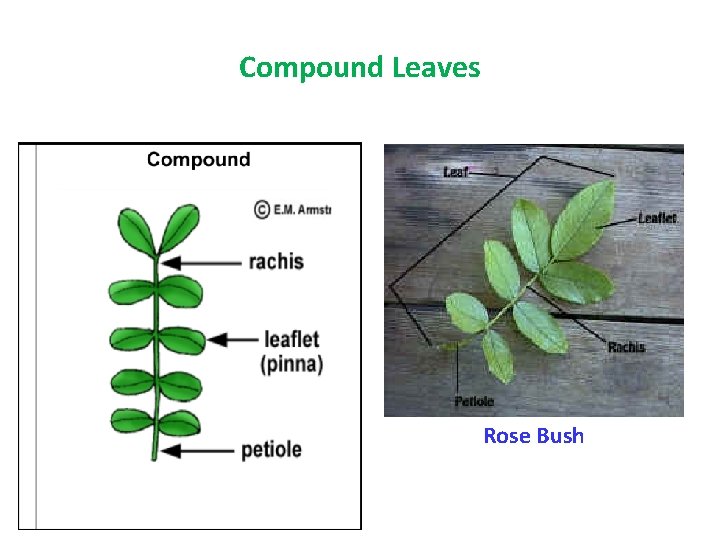
Leaves • Structure: – Leaves are produced from the stem at the axillary bud – It can be simple (1 blade per leaf), or compound (several blades per leaf) Blade
Simple Leaves Ilex cornuta Maple Leaf
Compound Leaves Rose Bush
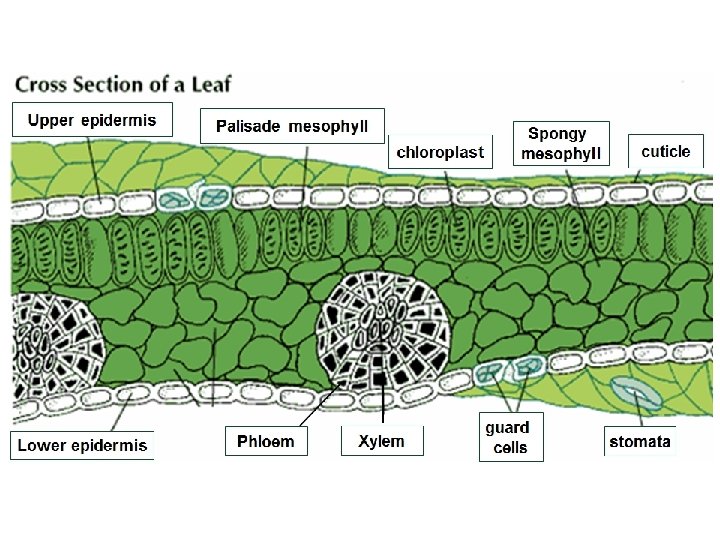
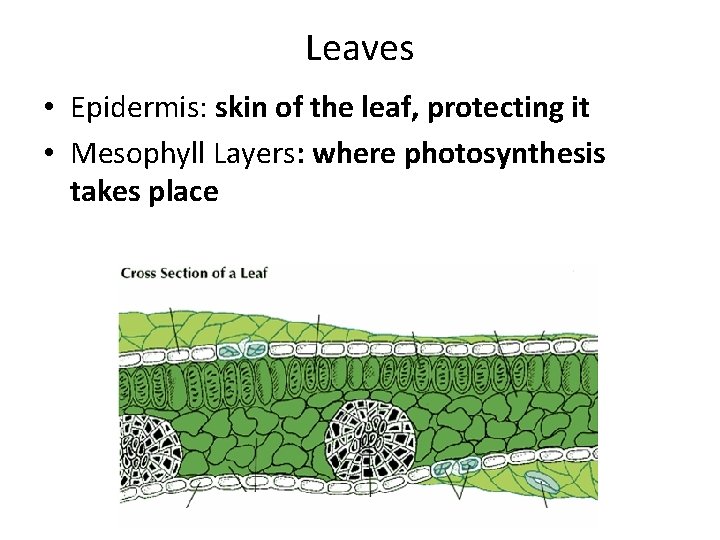
Leaves • Epidermis: skin of the leaf, protecting it • Mesophyll Layers: where photosynthesis takes place
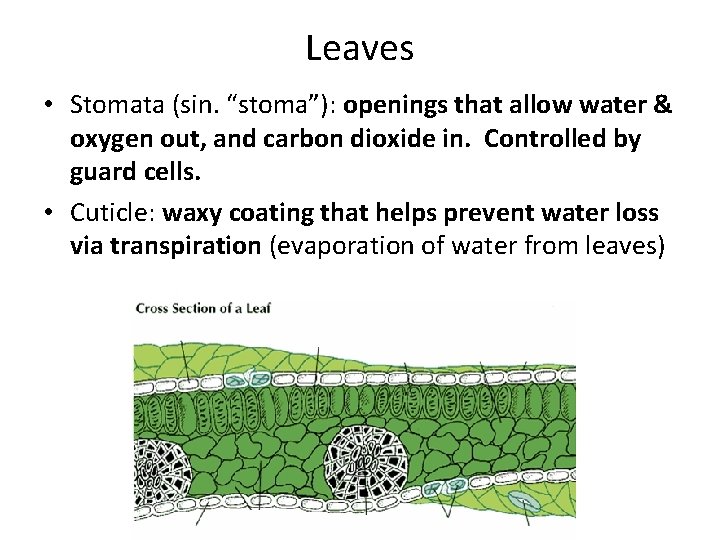
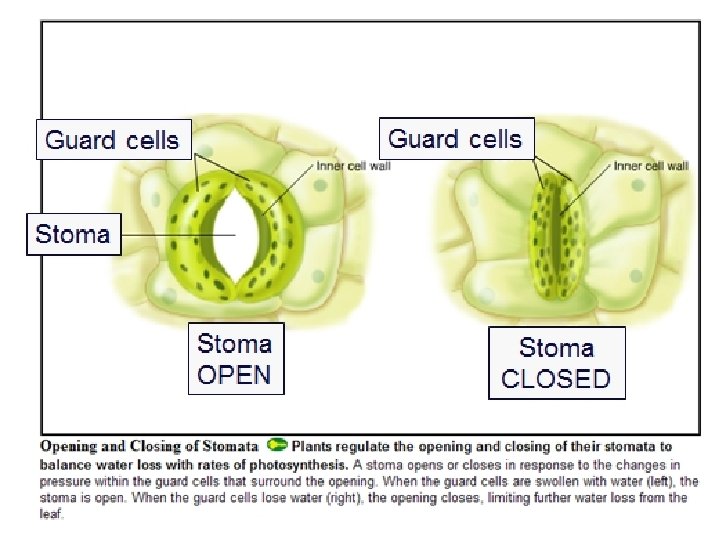
Leaves • Stomata (sin. “stoma”): openings that allow water & oxygen out, and carbon dioxide in. Controlled by guard cells. • Cuticle: waxy coating that helps prevent water loss via transpiration (evaporation of water from leaves)
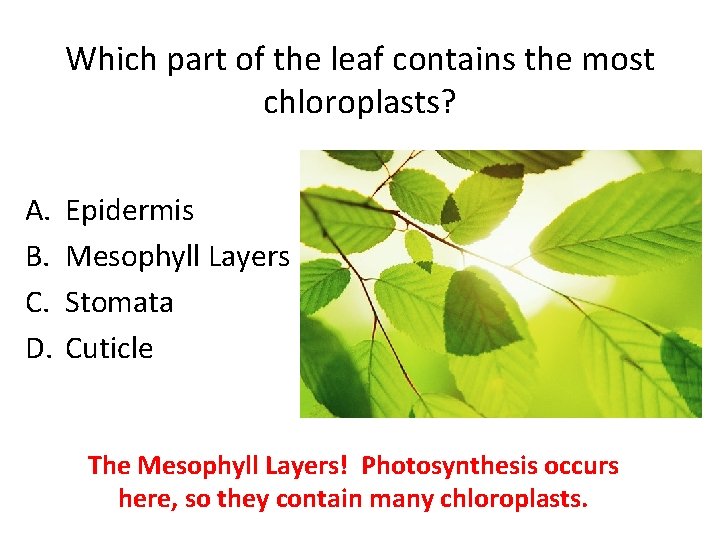
Which part of the leaf contains the most chloroplasts? A. B. C. D. Epidermis Mesophyll Layers Stomata Cuticle The Mesophyll Layers! Photosynthesis occurs here, so they contain many chloroplasts.
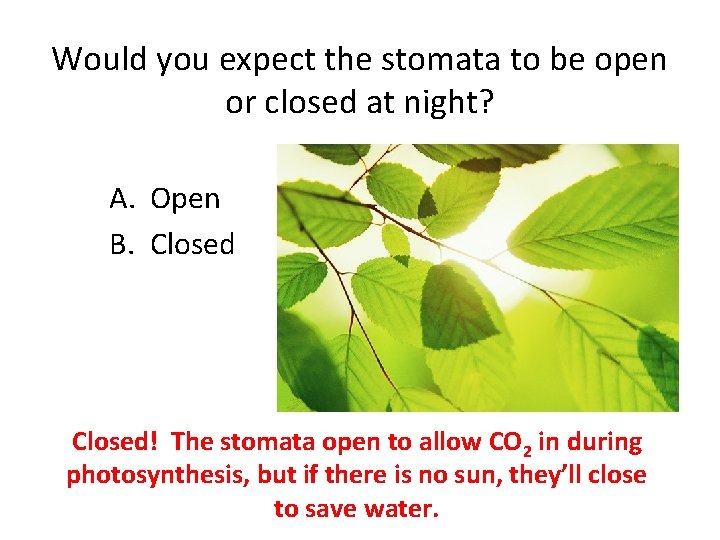
Would you expect the stomata to be open or closed at night? A. Open B. Closed! The stomata open to allow CO 2 in during photosynthesis, but if there is no sun, they’ll close to save water.
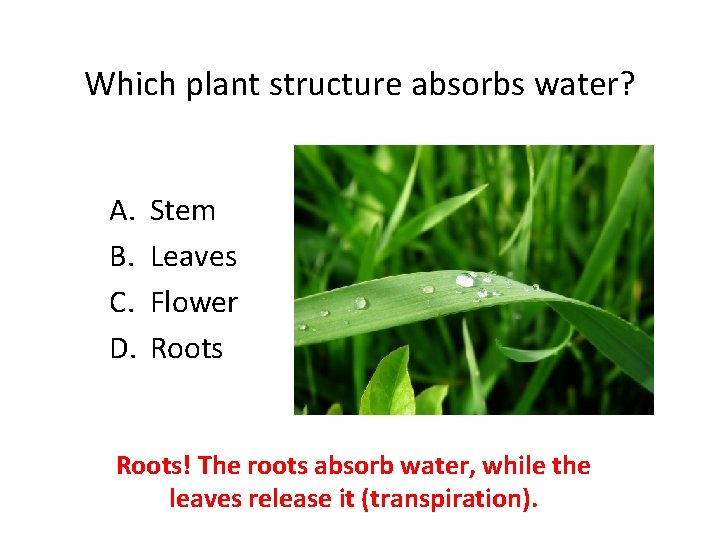
Which plant structure absorbs water? A. B. C. D. Stem Leaves Flower Roots! The roots absorb water, while the leaves release it (transpiration).
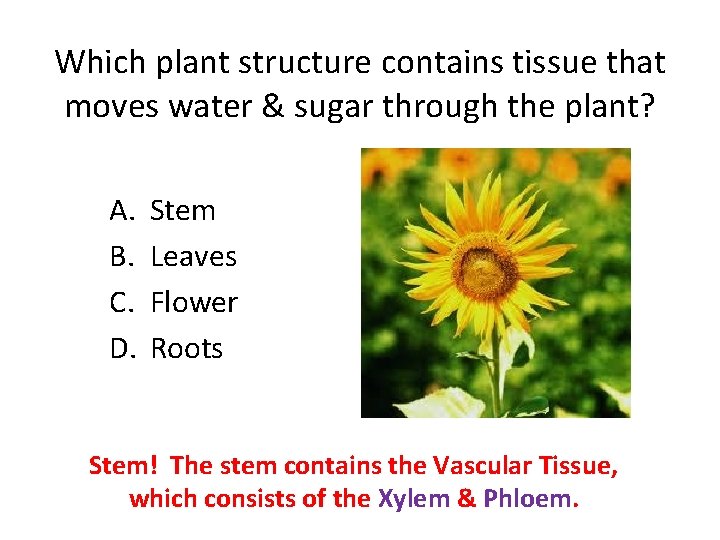
Which plant structure contains tissue that moves water & sugar through the plant? A. B. C. D. Stem Leaves Flower Roots Stem! The stem contains the Vascular Tissue, which consists of the Xylem & Phloem.
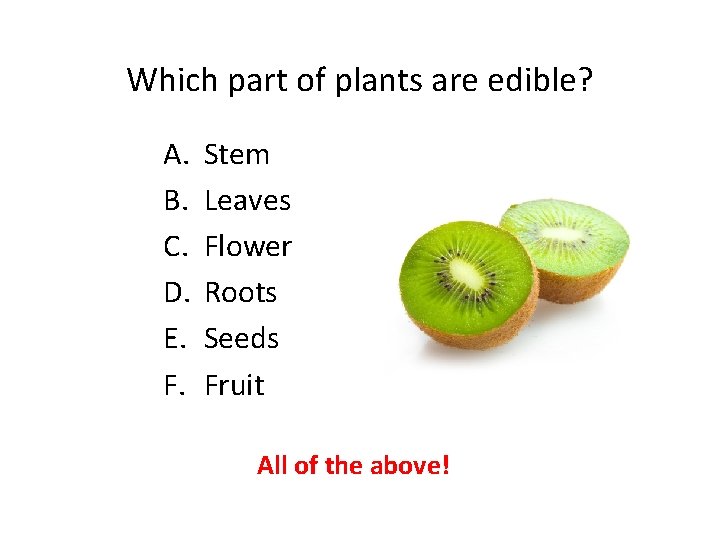
Which part of plants are edible? A. B. C. D. E. F. Stem Leaves Flower Roots Seeds Fruit All of the above!
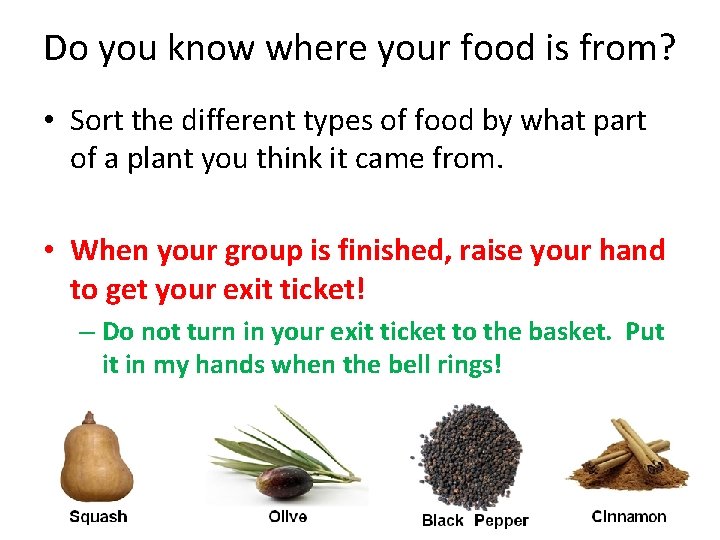
Do you know where your food is from? • Sort the different types of food by what part of a plant you think it came from. • When your group is finished, raise your hand to get your exit ticket! – Do not turn in your exit ticket to the basket. Put it in my hands when the bell rings!