
Which One Doesnt Belong In the chat box
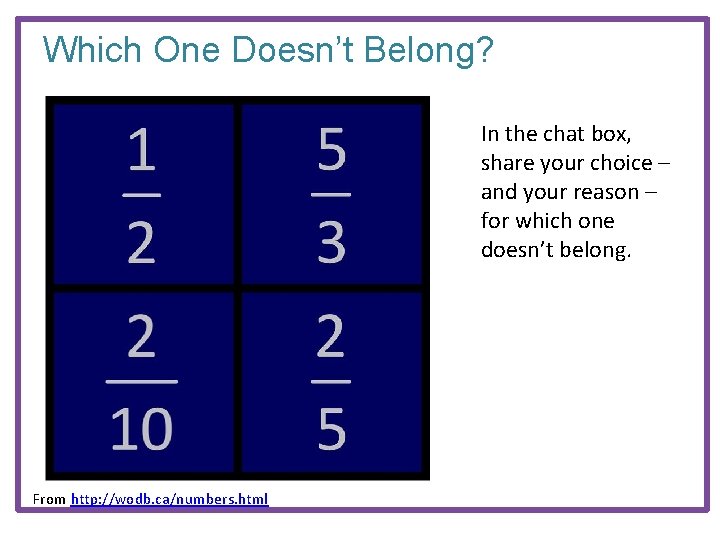
Which One Doesn’t Belong? In the chat box, share your choice – and your reason – for which one doesn’t belong. From http: //wodb. ca/numbers. html
Rethinking Fractions COABE Webinar July 24, 2017 Presented by the Adult Numeracy Center and TERC Melissa Braaten
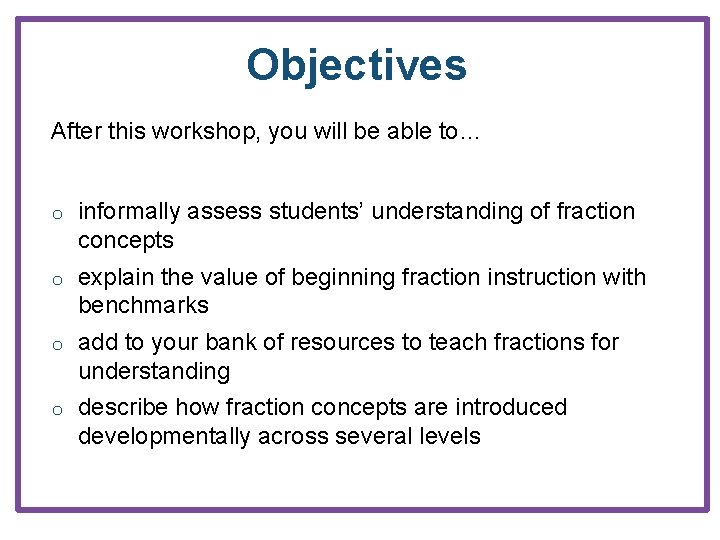
Objectives After this workshop, you will be able to… o informally assess students’ understanding of fraction concepts o explain the value of beginning fraction instruction with benchmarks o add to your bank of resources to teach fractions for understanding o describe how fraction concepts are introduced developmentally across several levels
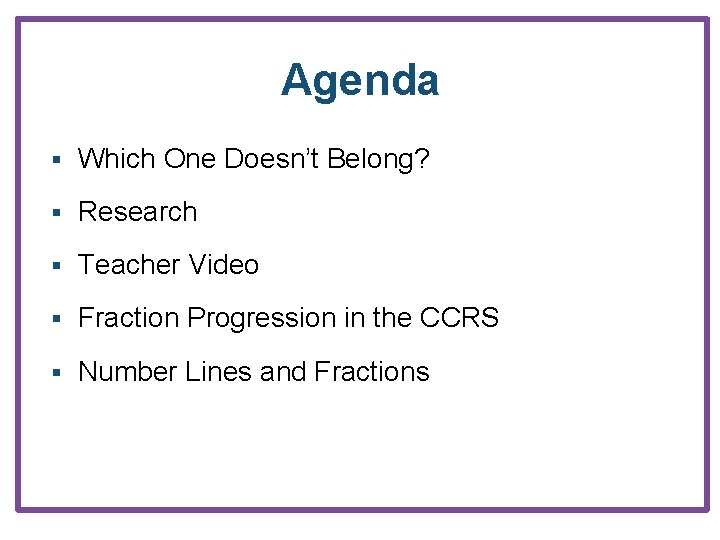
Agenda § Which One Doesn’t Belong? § Research § Teacher Video § Fraction Progression in the CCRS § Number Lines and Fractions
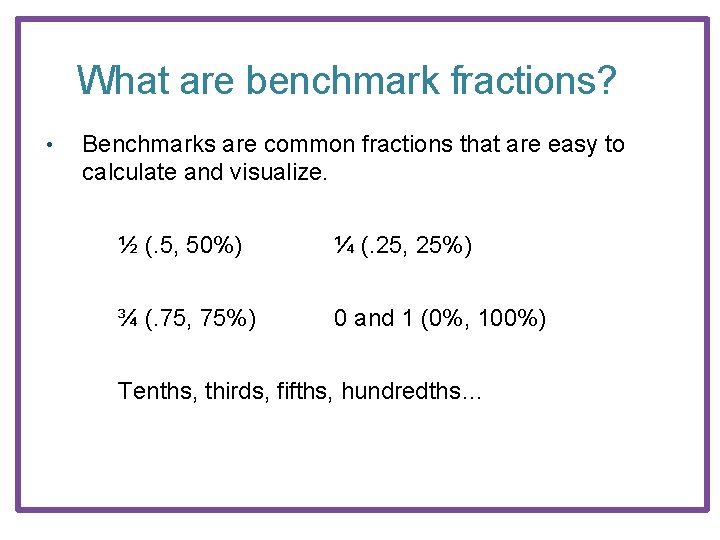
What are benchmark fractions? • Benchmarks are common fractions that are easy to calculate and visualize. ½ (. 5, 50%) ¼ (. 25, 25%) ¾ (. 75, 75%) 0 and 1 (0%, 100%) Tenths, thirds, fifths, hundredths…
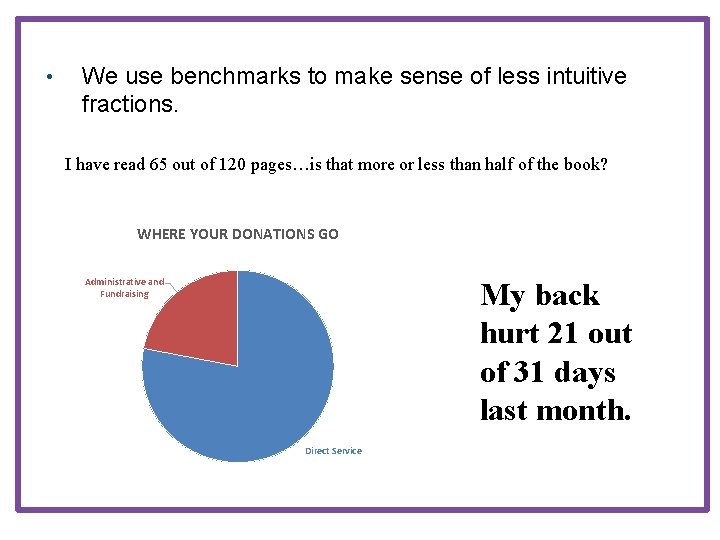
• We use benchmarks to make sense of less intuitive fractions. I have read 65 out of 120 pages…is that more or less than half of the book? WHERE YOUR DONATIONS GO Administrative and Fundraising My back hurt 21 out of 31 days last month. Direct Service
College Ready Students? What Community College Developmental Mathematics Students Understand about Mathematics James W. Stigler, Karen B. Givvin, and Belinda J. Thompson University of California, Los Angeles October, 2009.
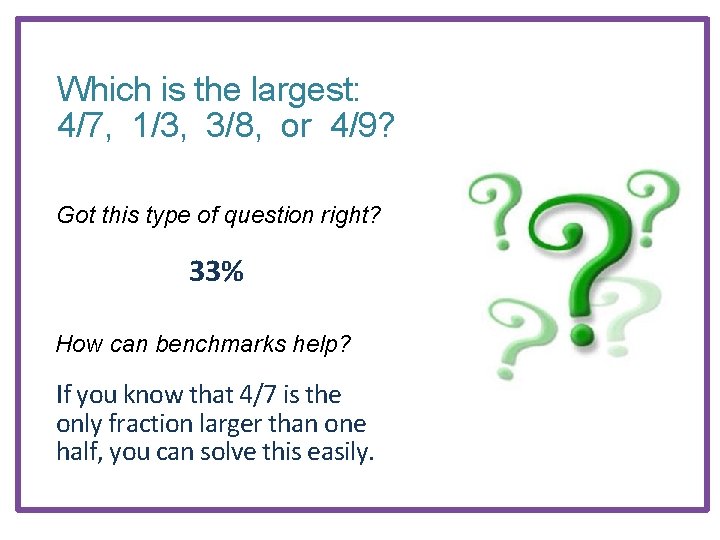
Which is the largest: 4/7, 1/3, 3/8, or 4/9? Got this type of question right? 33% How can benchmarks help? If you know that 4/7 is the only fraction larger than one half, you can solve this easily.
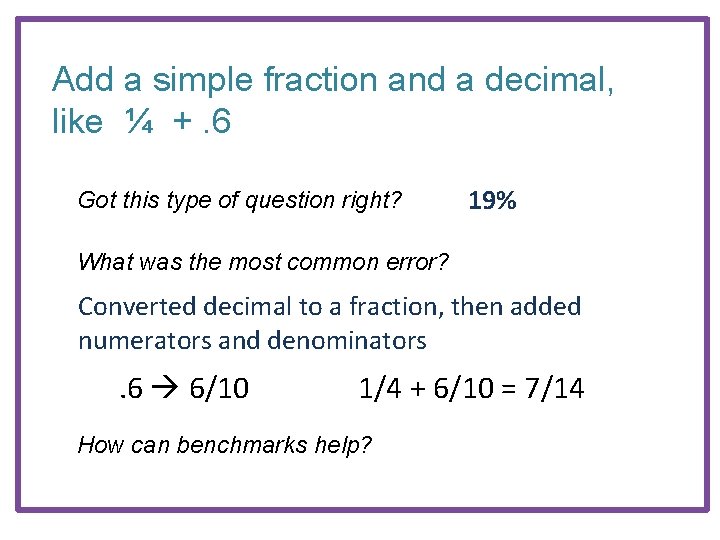
Add a simple fraction and a decimal, like ¼ +. 6 Got this type of question right? 19% What was the most common error? Converted decimal to a fraction, then added numerators and denominators . 6 6/10 1/4 + 6/10 = 7/14 How can benchmarks help?
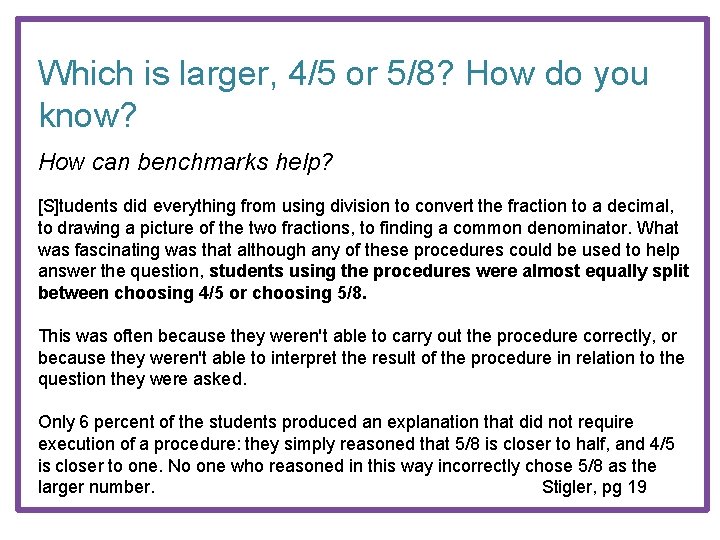
Which is larger, 4/5 or 5/8? How do you know? How can benchmarks help? [S]tudents did everything from using division to convert the fraction to a decimal, to drawing a picture of the two fractions, to finding a common denominator. What was fascinating was that although any of these procedures could be used to help answer the question, students using the procedures were almost equally split between choosing 4/5 or choosing 5/8. This was often because they weren't able to carry out the procedure correctly, or because they weren't able to interpret the result of the procedure in relation to the question they were asked. Only 6 percent of the students produced an explanation that did not require execution of a procedure: they simply reasoned that 5/8 is closer to half, and 4/5 is closer to one. No one who reasoned in this way incorrectly chose 5/8 as the larger number. Stigler, pg 19
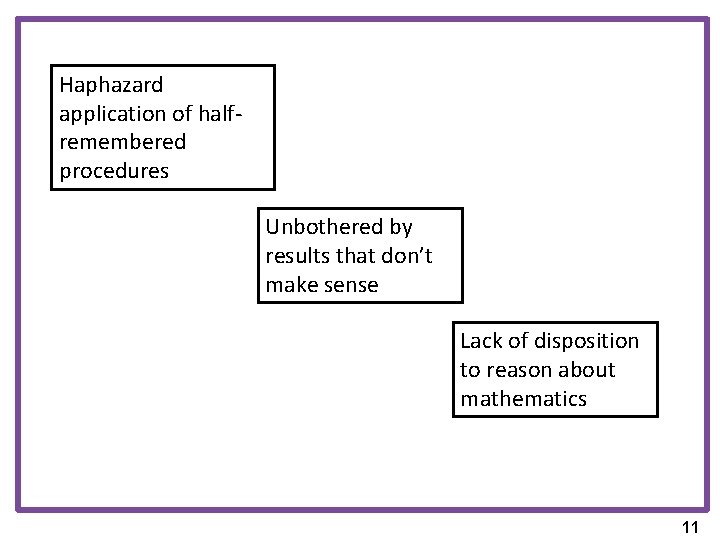
Haphazard application of halfremembered procedures Unbothered by results that don’t make sense Lack of disposition to reason about mathematics 11
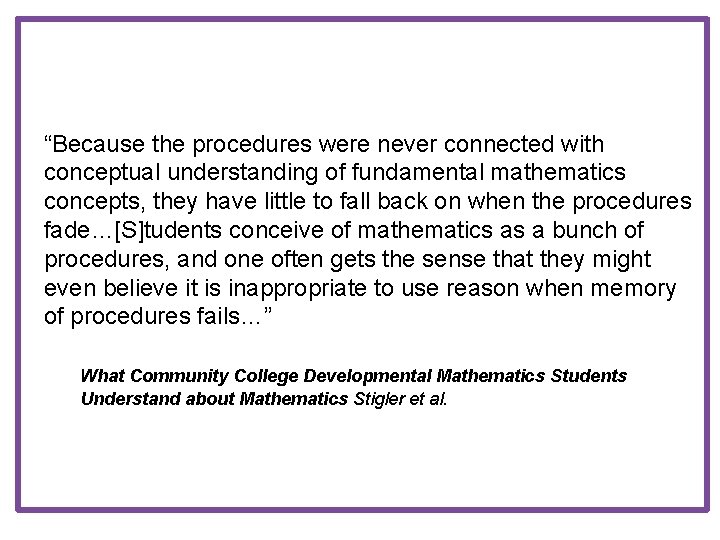
“Because the procedures were never connected with conceptual understanding of fundamental mathematics concepts, they have little to fall back on when the procedures fade…[S]tudents conceive of mathematics as a bunch of procedures, and one often gets the sense that they might even believe it is inappropriate to use reason when memory of procedures fails…” What Community College Developmental Mathematics Students Understand about Mathematics Stigler et al.
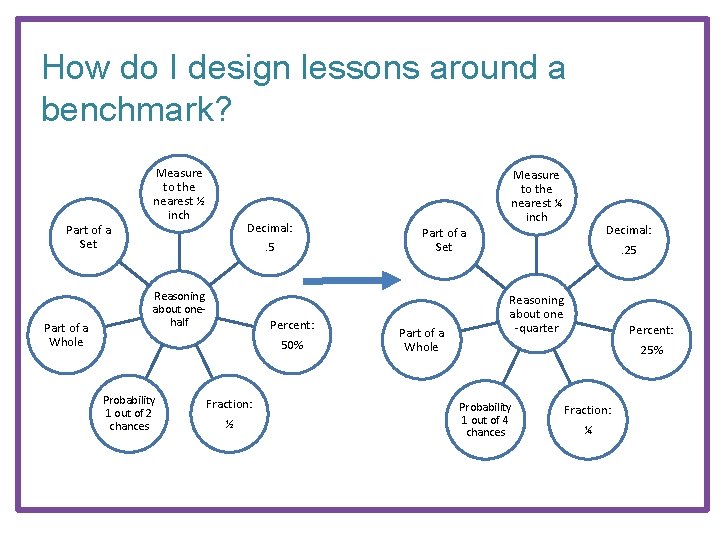
How do I design lessons around a benchmark? Part of a Set Part of a Whole Measure to the nearest ½ inch Decimal: . 5 Reasoning about onehalf Probability 1 out of 2 chances Fraction: ½ Percent: 50% Measure to the nearest ¼ inch Part of a Set Part of a Whole Decimal: . 25 Reasoning about one -quarter Probability 1 out of 4 chances Fraction: ¼ Percent: 25%
Teaching Fraction Concepts 14
As you watch the video, consider…. § What big idea is the teacher focusing on, and what types of questions does she ask? 15
Based on the video… § What stood out for you?
In looking at the fraction progression… § What do you notice? § Where along the continuum of fraction standards was that video clip?
18
1 19
20
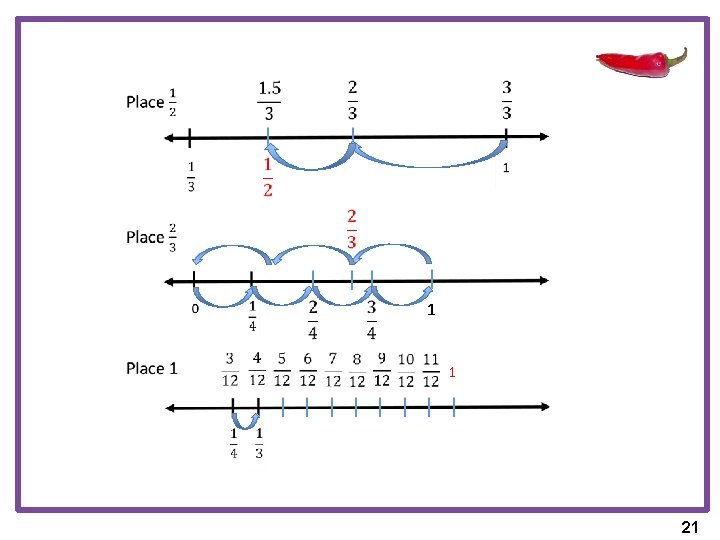
1 21
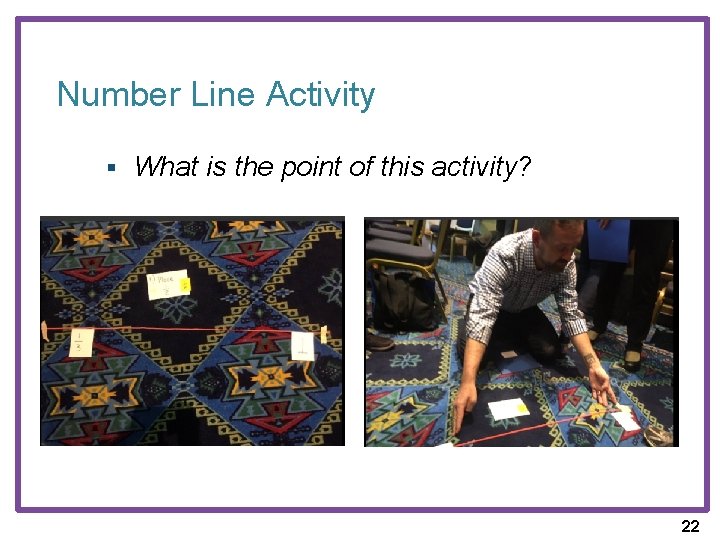
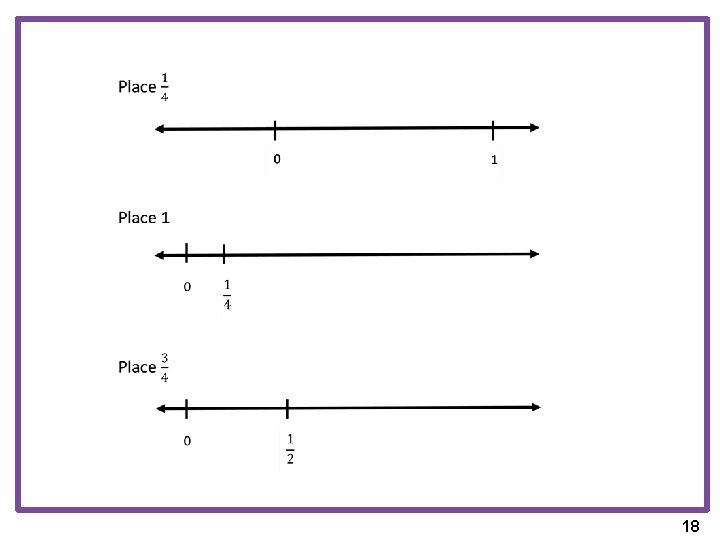
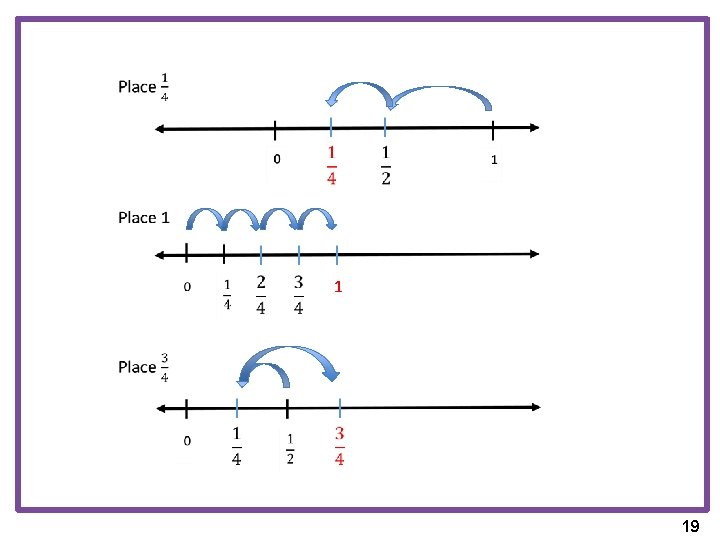
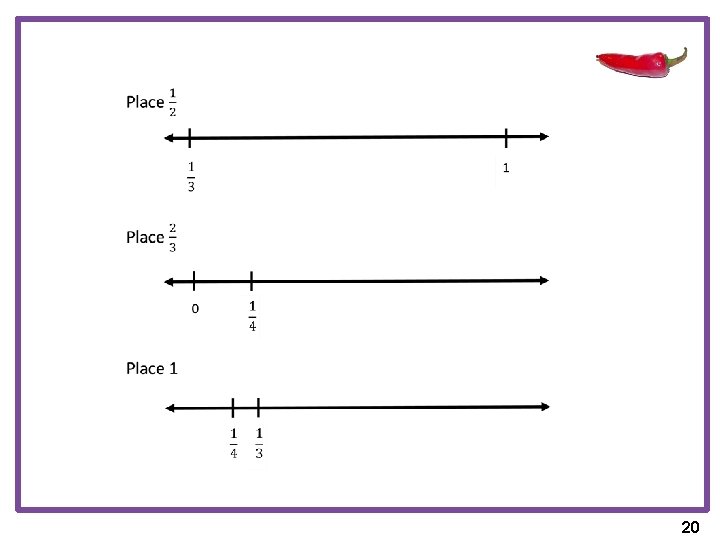
Number Line Activity § What is the point of this activity? 22
Rigor Conceptual Understanding Procedural Skill and Fluency Application
Next Steps What did you learn and what are you going to do with that knowledge?
For more information about the Adult Numeracy Center at TERC, check out: http: //adultnumeracy. terc. edu/ Thanks for being part of this session! Melissa Braaten: melissa. braaten@gmail. com
- Slides: 25