
Which of the following would happen if the
- Slides: 20
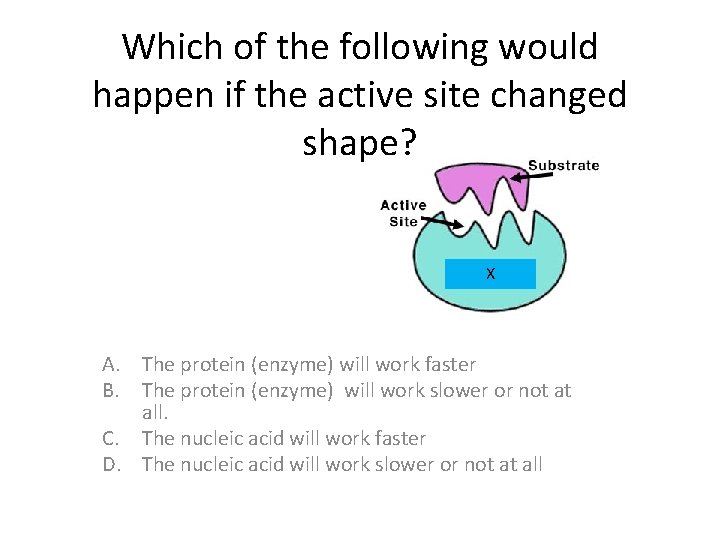
Which of the following would happen if the active site changed shape? X A. The protein (enzyme) will work faster B. The protein (enzyme) will work slower or not at all. C. The nucleic acid will work faster D. The nucleic acid will work slower or not at all
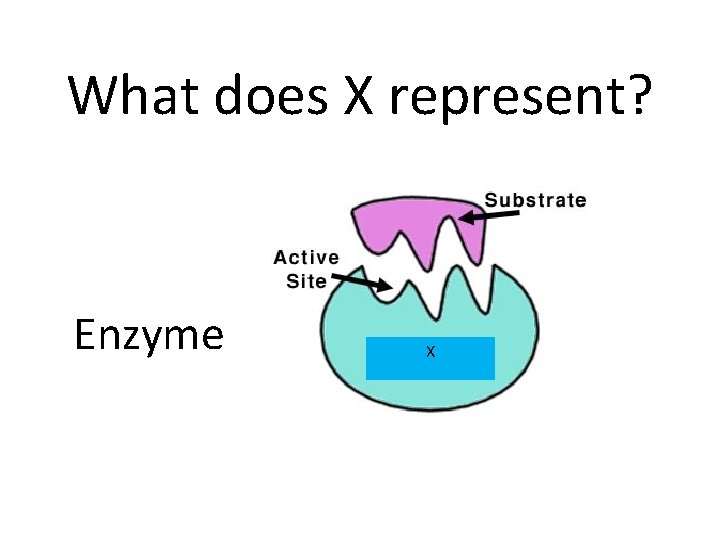
What does X represent? Enzyme X
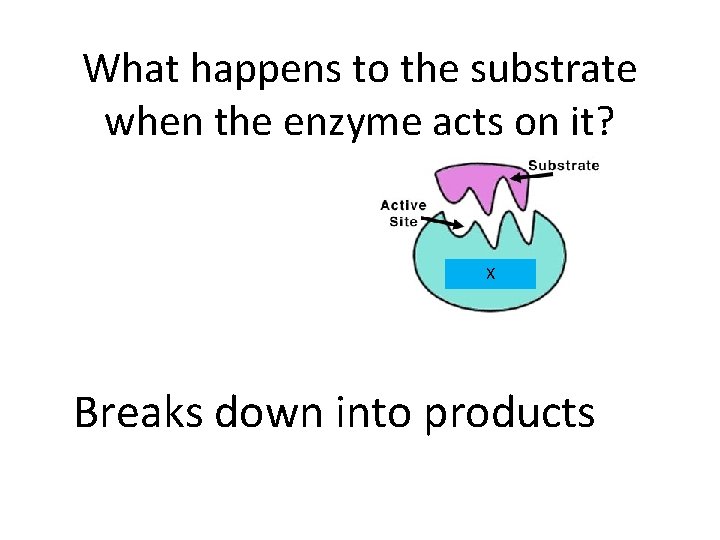
What happens to the substrate when the enzyme acts on it? X Breaks down into products
Which of the following does not affect enzyme activity? A. B. C. D. temperature Concentration p. H color
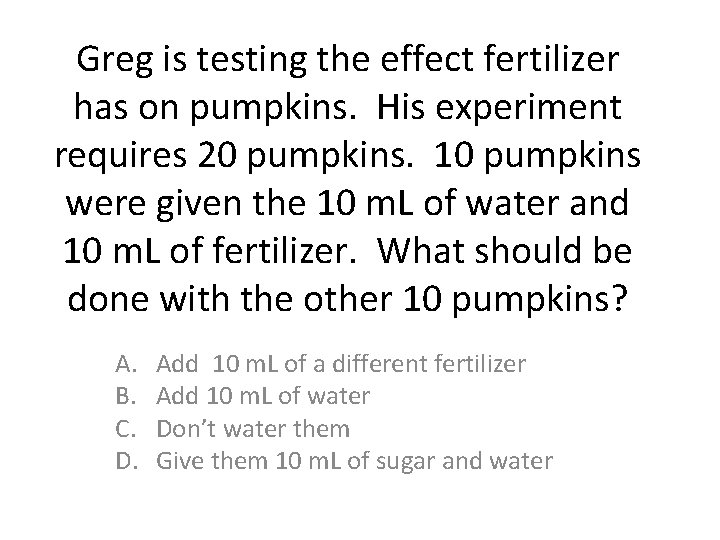
Greg is testing the effect fertilizer has on pumpkins. His experiment requires 20 pumpkins. 10 pumpkins were given the 10 m. L of water and 10 m. L of fertilizer. What should be done with the other 10 pumpkins? A. B. C. D. Add 10 m. L of a different fertilizer Add 10 m. L of water Don’t water them Give them 10 m. L of sugar and water
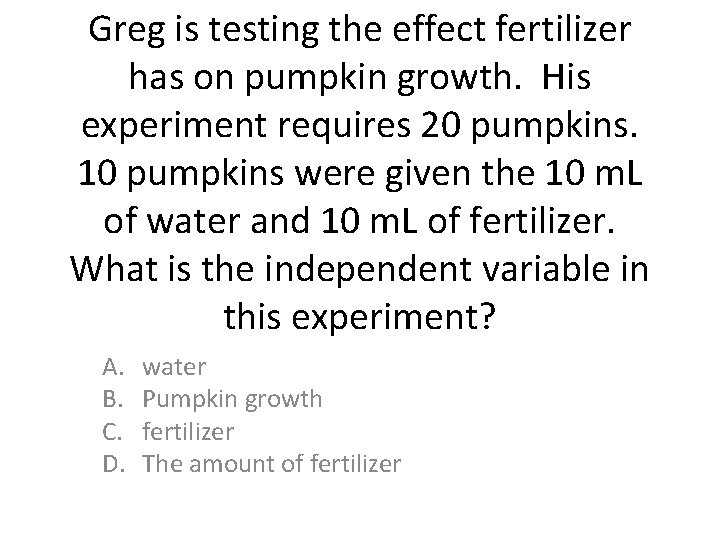
Greg is testing the effect fertilizer has on pumpkin growth. His experiment requires 20 pumpkins. 10 pumpkins were given the 10 m. L of water and 10 m. L of fertilizer. What is the independent variable in this experiment? A. B. C. D. water Pumpkin growth fertilizer The amount of fertilizer
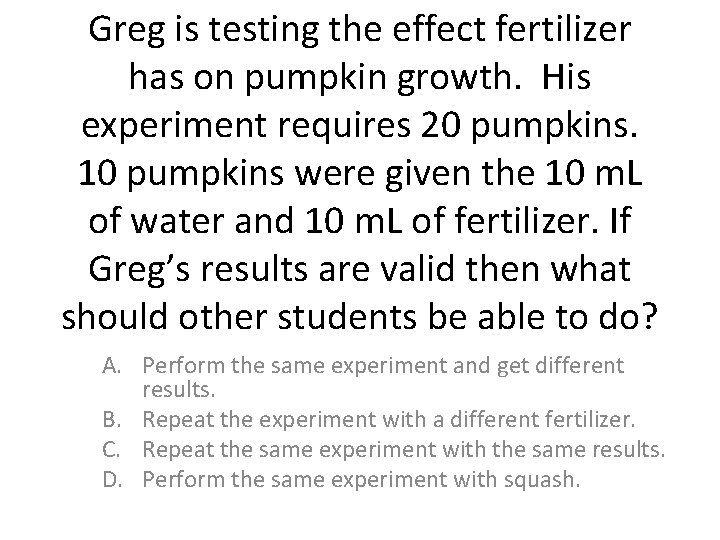
Greg is testing the effect fertilizer has on pumpkin growth. His experiment requires 20 pumpkins. 10 pumpkins were given the 10 m. L of water and 10 m. L of fertilizer. If Greg’s results are valid then what should other students be able to do? A. Perform the same experiment and get different results. B. Repeat the experiment with a different fertilizer. C. Repeat the same experiment with the same results. D. Perform the same experiment with squash.
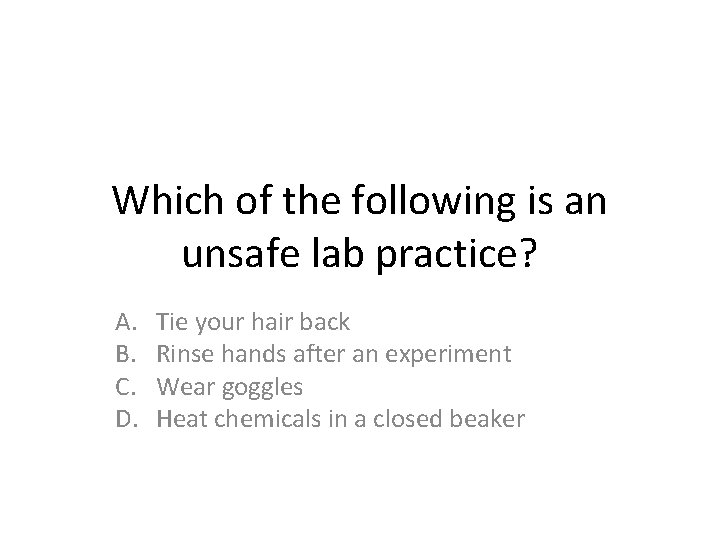
Which of the following is an unsafe lab practice? A. B. C. D. Tie your hair back Rinse hands after an experiment Wear goggles Heat chemicals in a closed beaker
Which of the following do eukaryotic & prokaryotic cells NOT have in common? A. B. C. D. DNA Cell membrane Mitochondria Ribosomes
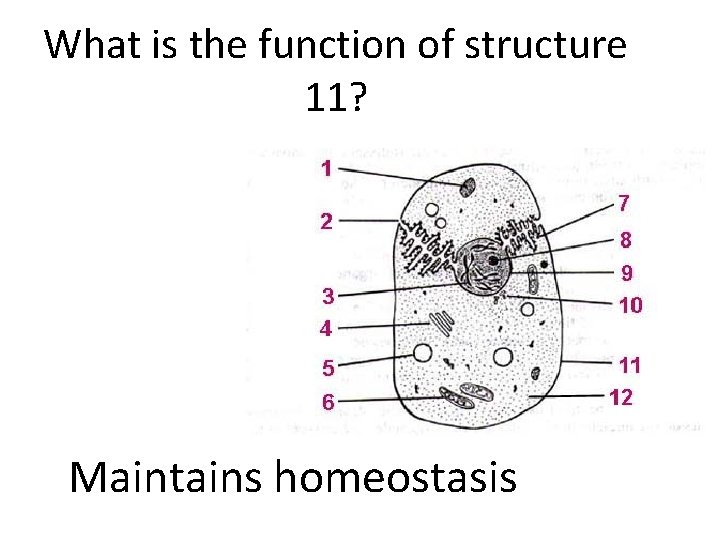
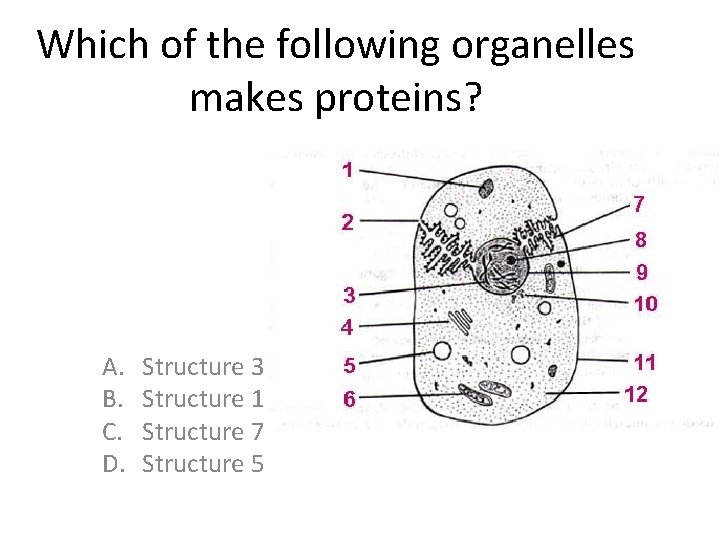
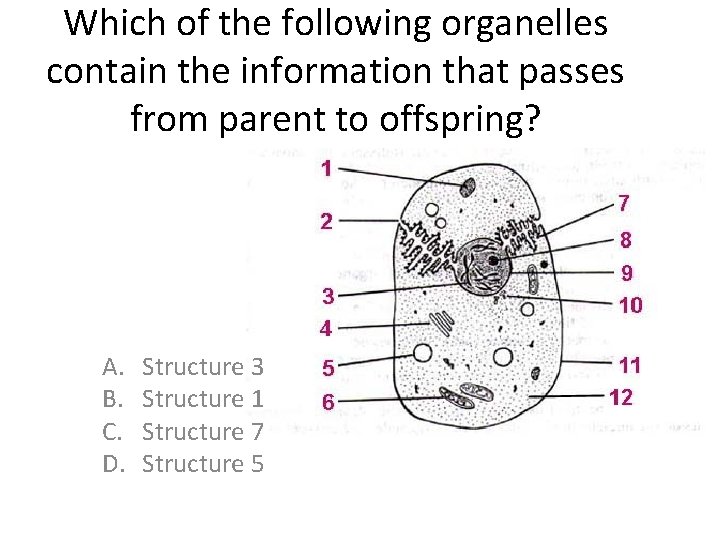
What is the function of structure 11? Maintains homeostasis
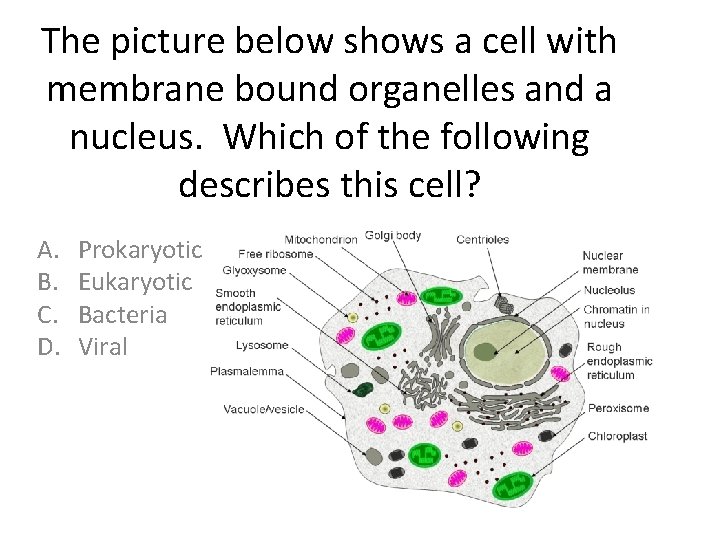
The picture below shows a cell with membrane bound organelles and a nucleus. Which of the following describes this cell? A. B. C. D. Prokaryotic Eukaryotic Bacteria Viral
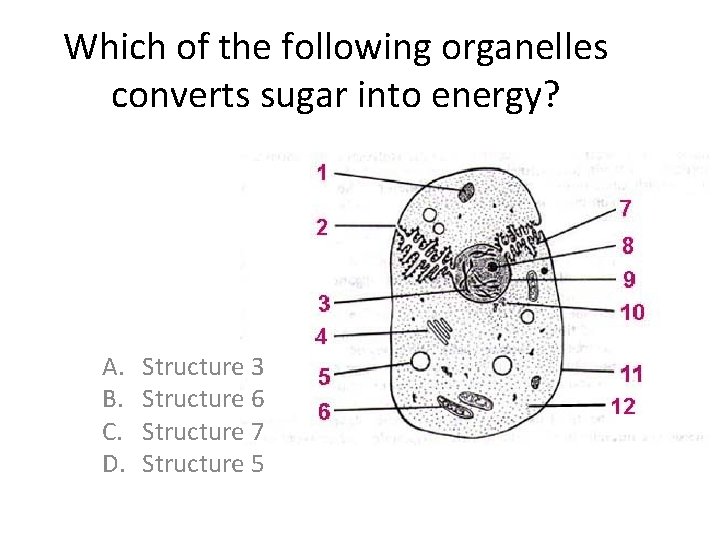
Which of the following organelles converts sugar into energy? A. B. C. D. Structure 3 Structure 6 Structure 7 Structure 5
Which of the following organelles makes proteins? A. B. C. D. Structure 3 Structure 1 Structure 7 Structure 5
Which of the following organelles contain the information that passes from parent to offspring? A. B. C. D. Structure 3 Structure 1 Structure 7 Structure 5
Which macromolecule supplies energy? A. B. C. D. Carbohydrates Lipids Nucleic acids Proteins
Which macromolecule is described below: Made of fatty acids A. B. C. D. Carbohydrates Lipids Nucleic acids Proteins
Which macromolecule is described below: Tested using the brown paper bag test A. B. C. D. Carbohydrates Lipids Nucleic acids Proteins
What is the subunit for DNA? A. B. C. D. Sugars Nucleic acids Fatty acids Nucleotides
Which type of macromolecule is starch? A. B. C. D. Lipids Nucleic acids Proteins Carbohydrates
Which of the following are elements not found in macromolecules? A. B. C. D. Carbon Phosphorus Nitrogen Helium