
Which makes green tea faster tea leaves or
- Slides: 58
• Which makes green tea faster: tea leaves or powder?
• What will go cold faster: French fries or a baked potato? Why?
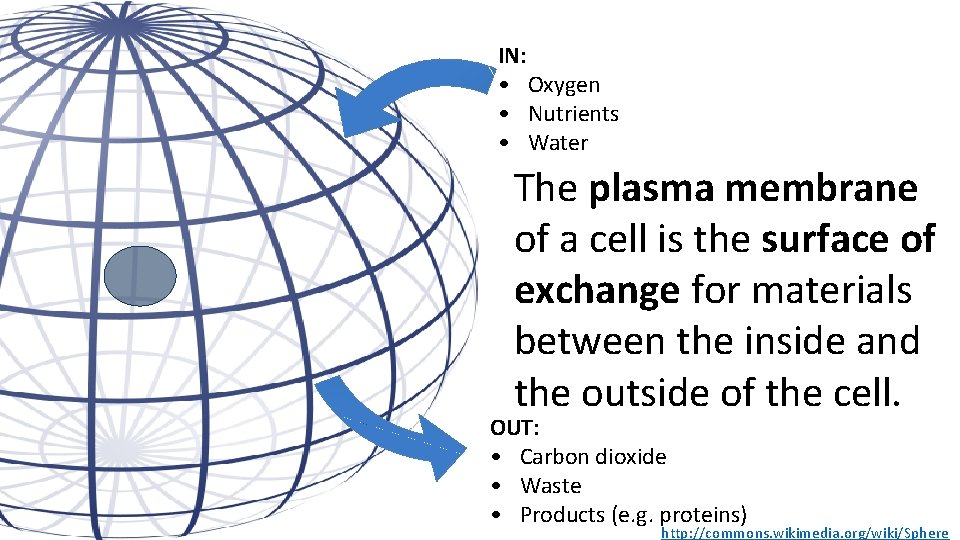
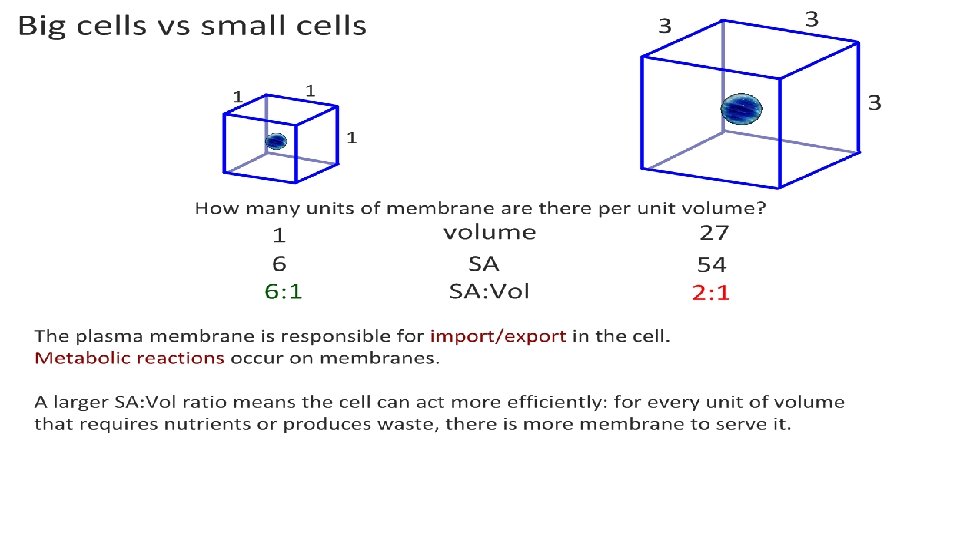
IN: • Oxygen • Nutrients • Water The plasma membrane of a cell is the surface of exchange for materials between the inside and the outside of the cell. OUT: • Carbon dioxide • Waste • Products (e. g. proteins) http: //commons. wikimedia. org/wiki/Sphere
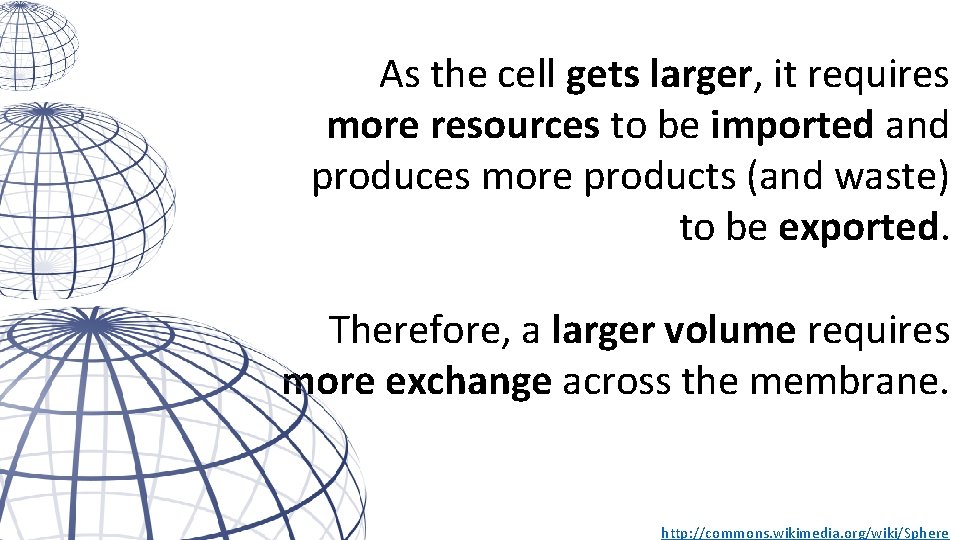
As the cell gets larger, it requires more resources to be imported and produces more products (and waste) to be exported. Therefore, a larger volume requires more exchange across the membrane. http: //commons. wikimedia. org/wiki/Sphere
As the cell gets larger… http: //commons. wikimedia. org/wiki/Sphere
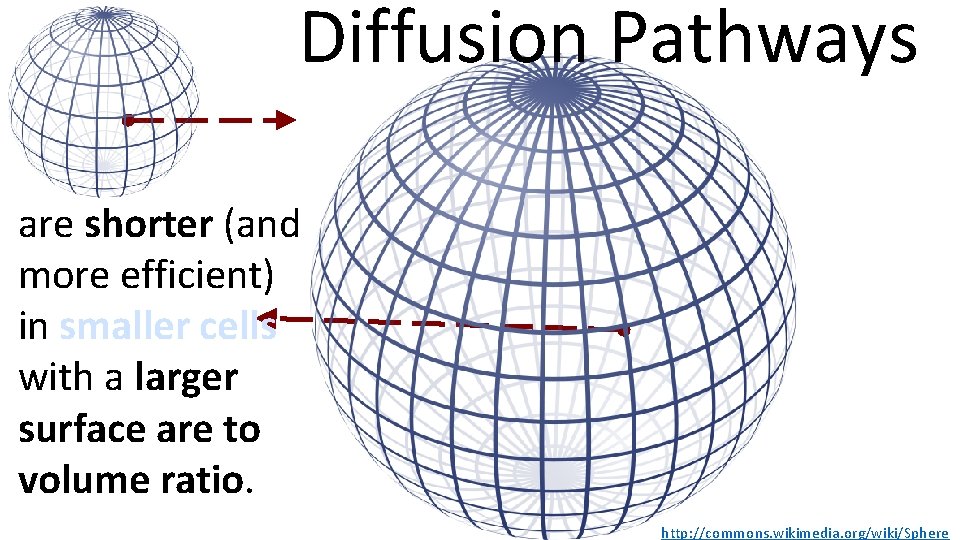
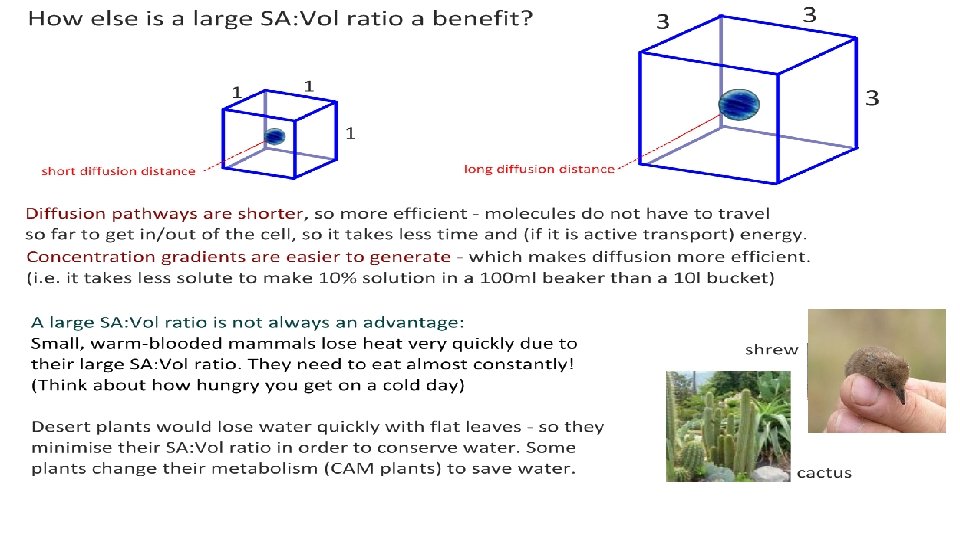
Diffusion Pathways are shorter (and more efficient) in smaller cells with a larger surface are to volume ratio. http: //commons. wikimedia. org/wiki/Sphere
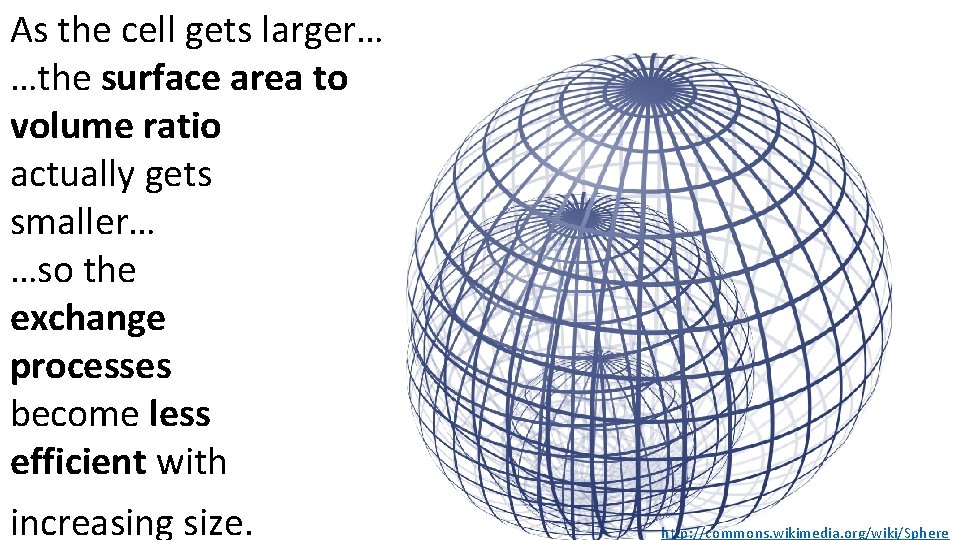
As the cell gets larger… …the surface area to volume ratio actually gets smaller… …so the exchange processes become less efficient with increasing size. http: //commons. wikimedia. org/wiki/Sphere
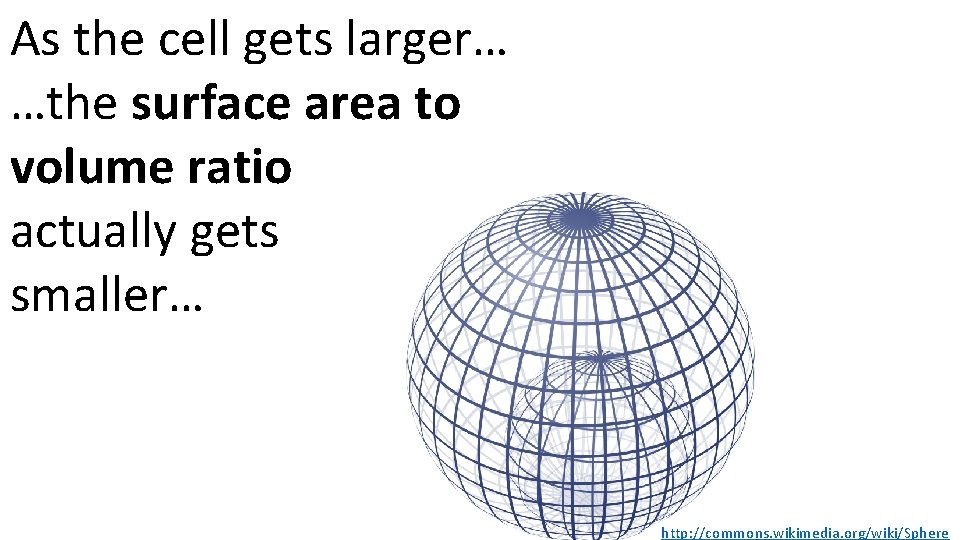
As the cell gets larger… …the surface area to volume ratio actually gets smaller… http: //commons. wikimedia. org/wiki/Sphere
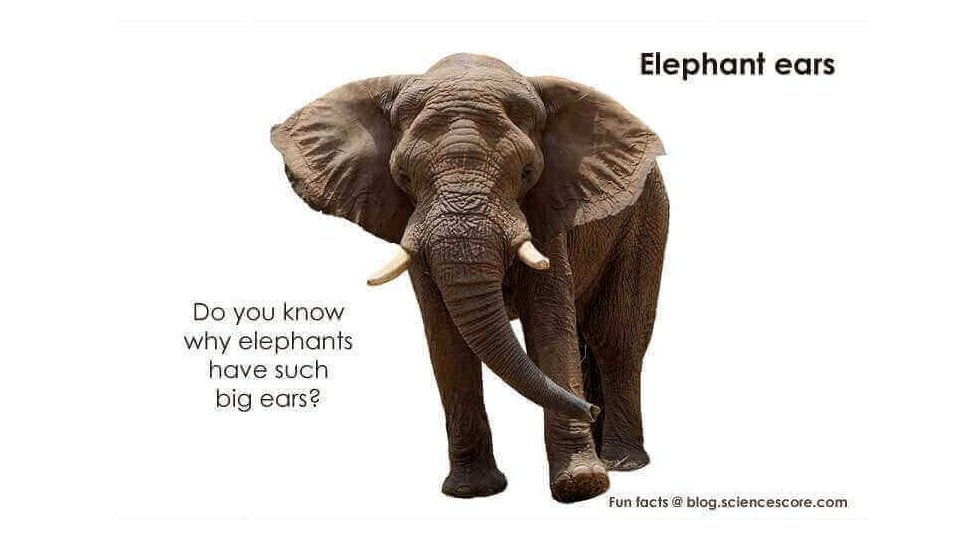
Answer • Elephants do many different things with their big ears. One thing is that they can cool themselves down when they are hot. The blood flowing through the ears is close to the outside of the elephant body, and heat can be released as they flap them about.
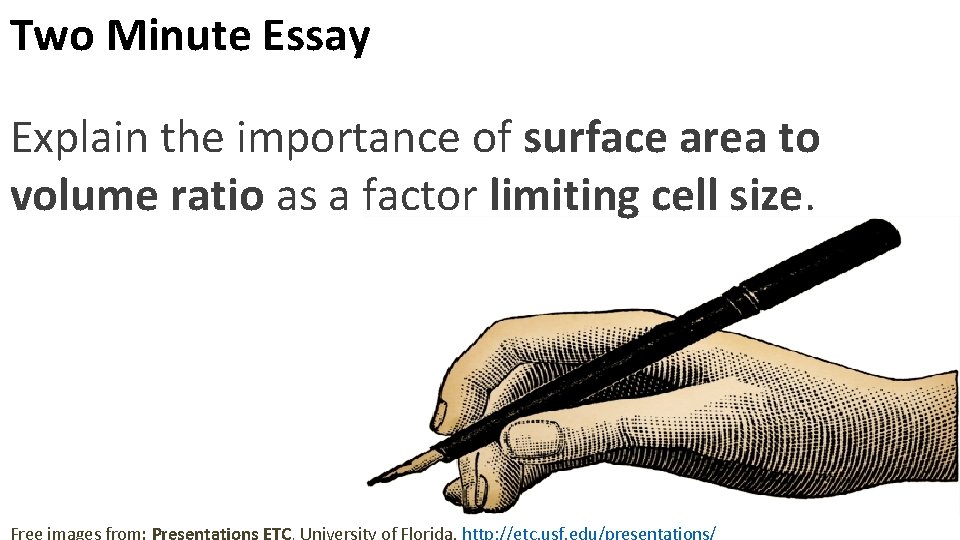
Two Minute Essay Explain the importance of surface area to volume ratio as a factor limiting cell size
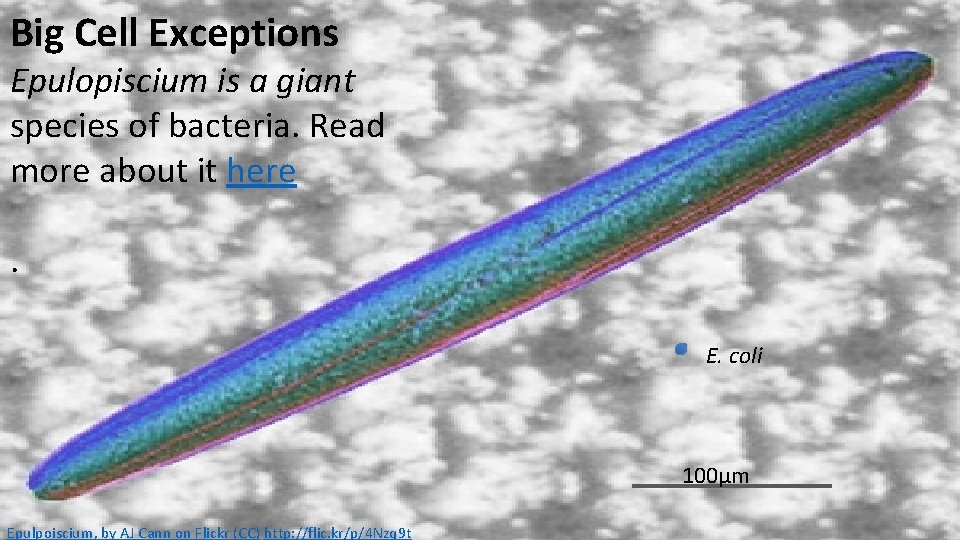
Big Cell Exceptions Epulopiscium is a giant species of bacteria. Read more about it here. E. coli 100μm Epulpoiscium, by AJ Cann on Flickr (CC) http: //flic. kr/p/4 Nzq 9 t
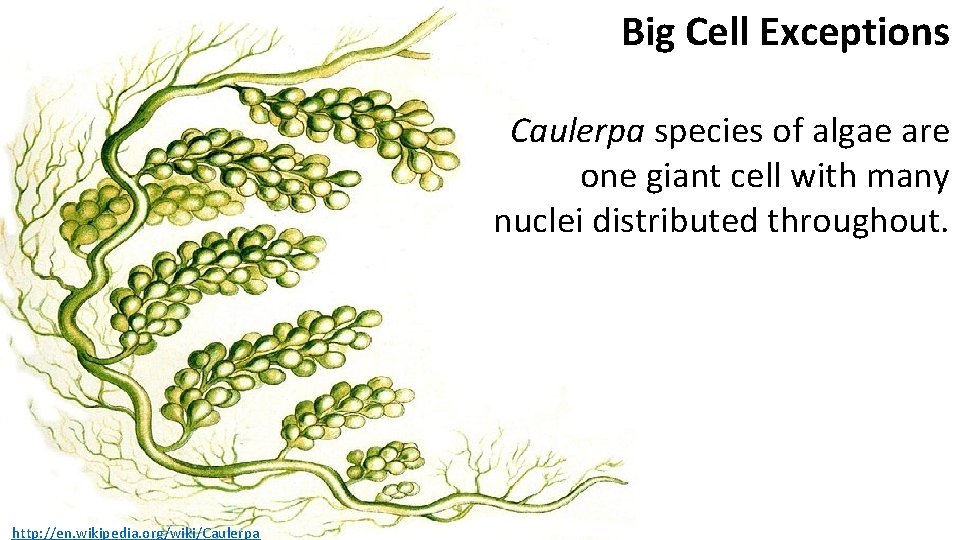
Big Cell Exceptions Caulerpa species of algae are one giant cell with many nuclei distributed throughout. http: //en. wikipedia. org/wiki/Caulerpa
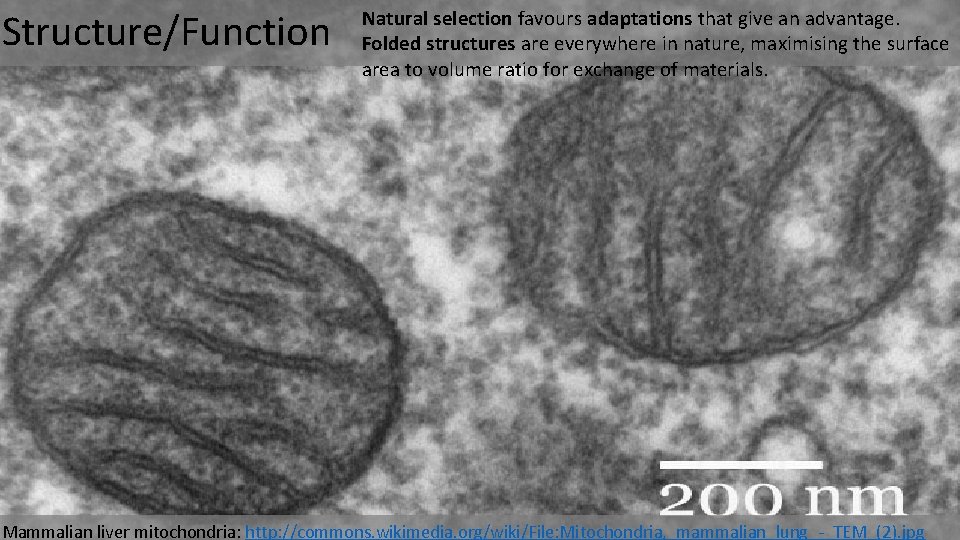
Structure/Function Natural selection favours adaptations that give an advantage. Folded structures are everywhere in nature, maximising the surface area to volume ratio for exchange of materials. Mammalian liver mitochondria: http: //commons. wikimedia. org/wiki/File: Mitochondria, _mammalian_lung_-_TEM_(2). jpg
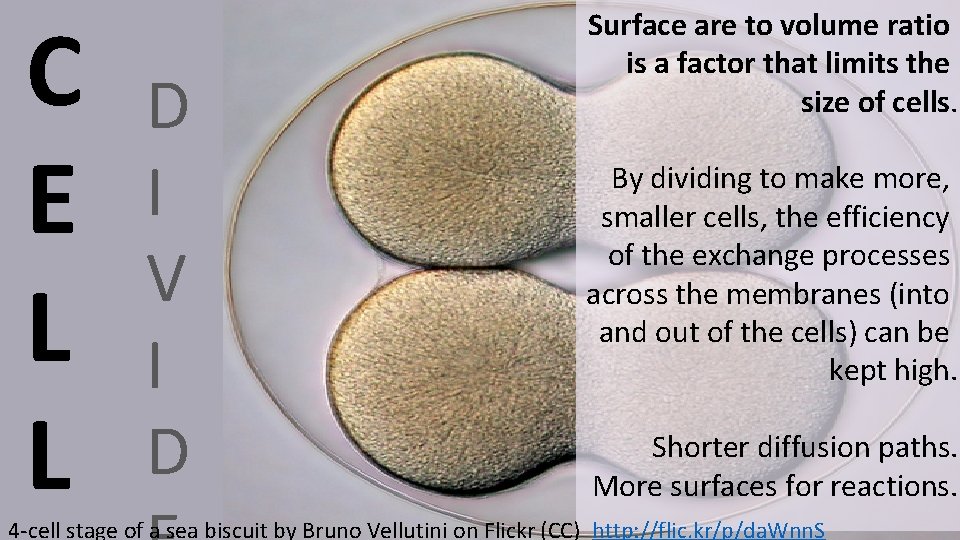
C E L L D I V I D Surface are to volume ratio is a factor that limits the size of cells. By dividing to make more, smaller cells, the efficiency of the exchange processes across the membranes (into and out of the cells) can be kept high. Shorter diffusion paths. More surfaces for reactions. 4 -cell stage of a sea biscuit by Bruno Vellutini on Flickr (CC) http: //flic. kr/p/da. Wnn. S
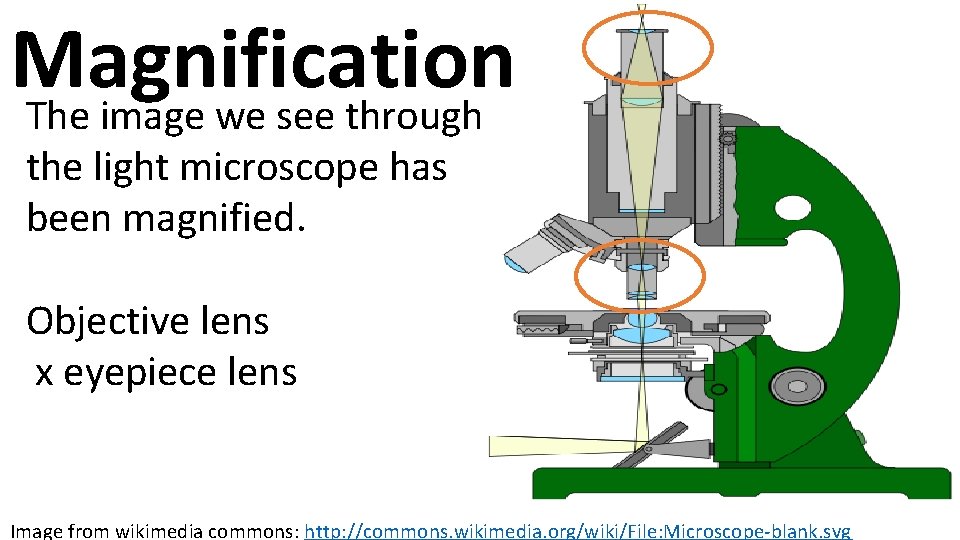
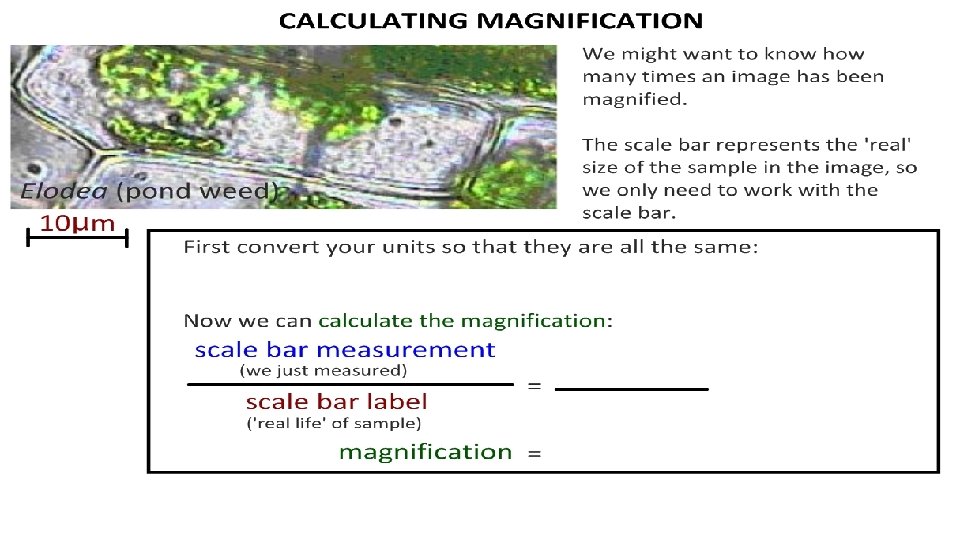
Magnification The image we see through the light microscope has been magnified. Objective lens x eyepiece lens Image from wikimedia commons: http: //commons. wikimedia. org/wiki/File: Microscope-blank. svg
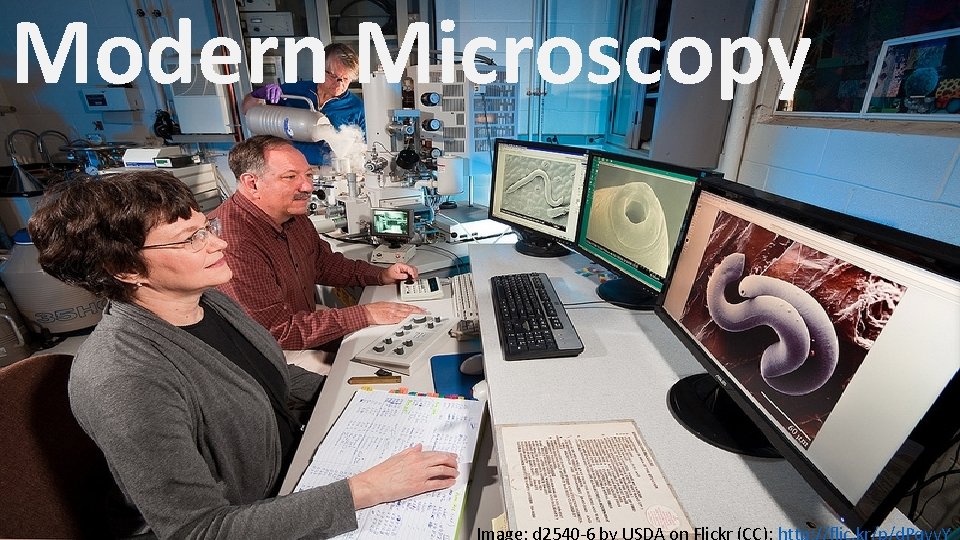
Modern Microscopy
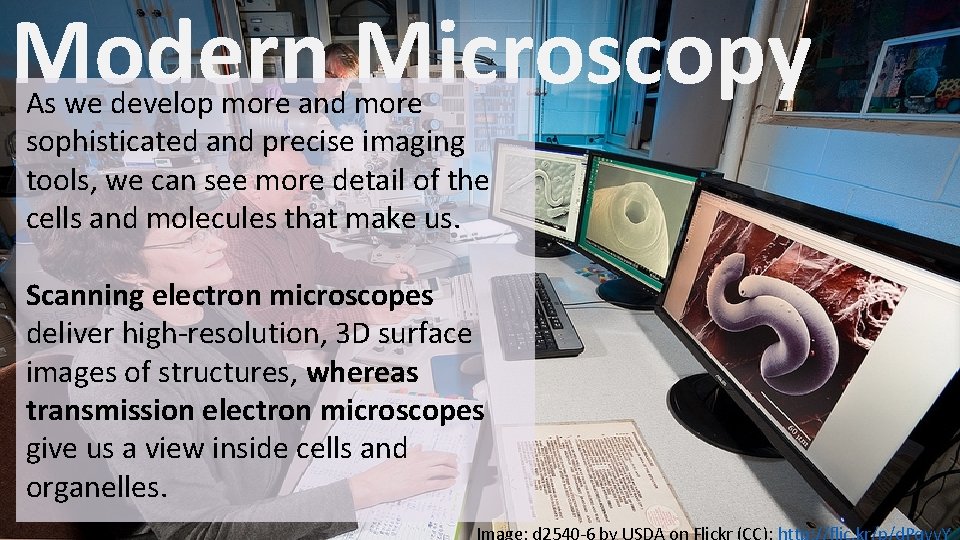
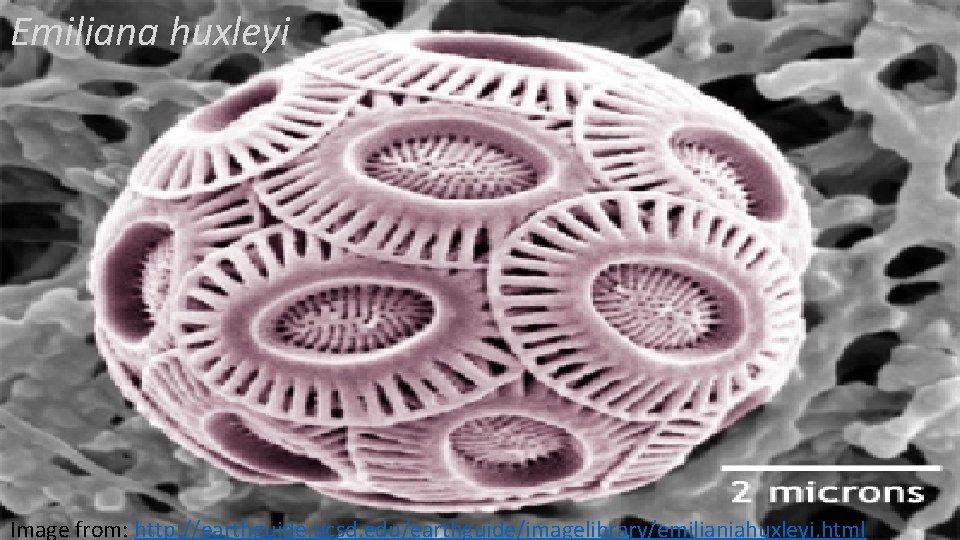
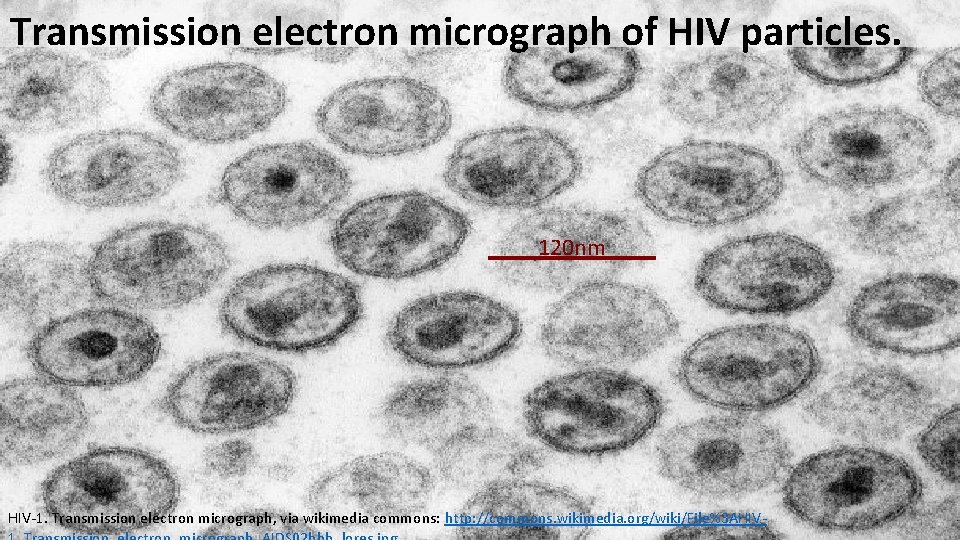
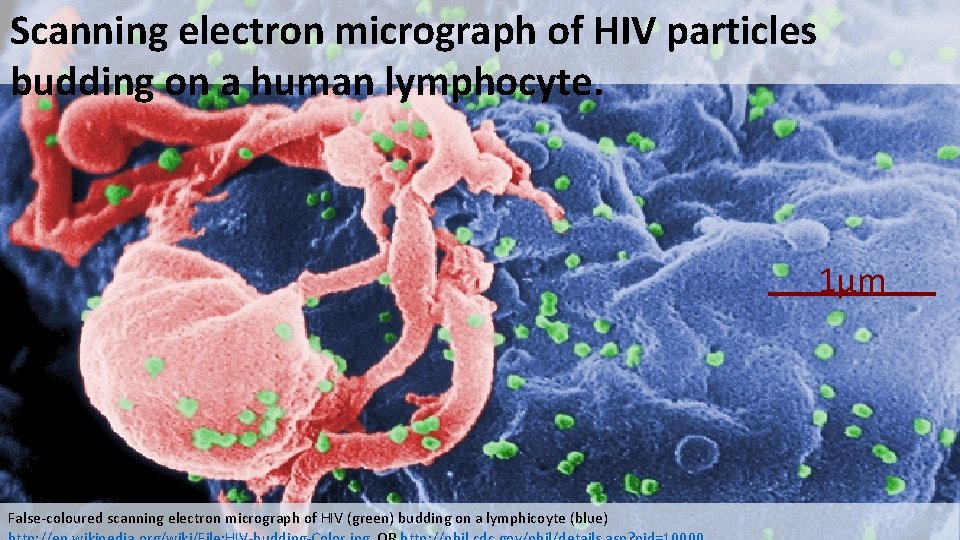
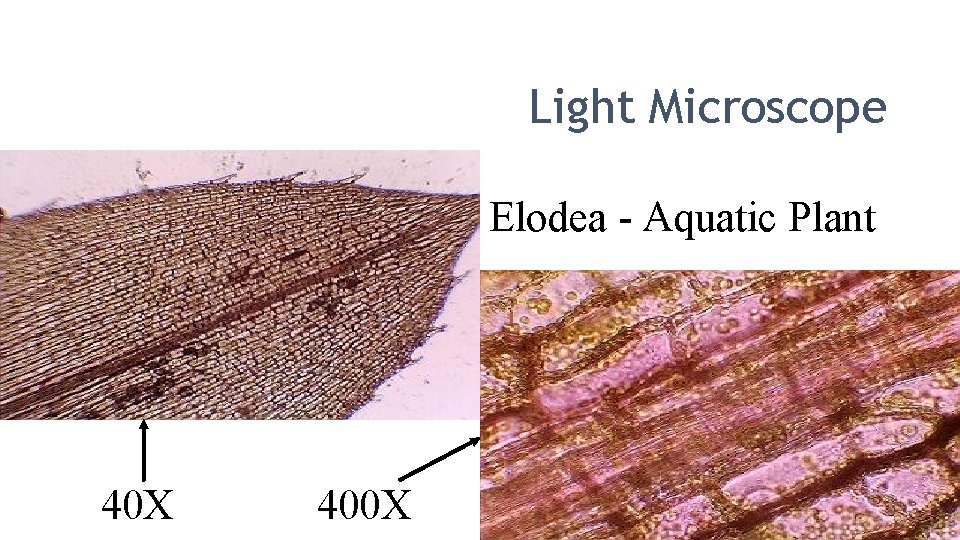
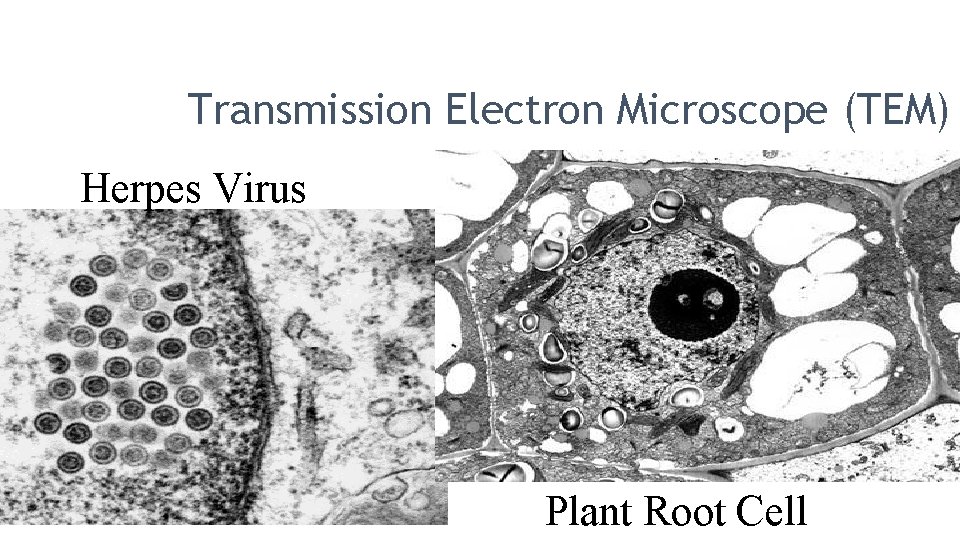
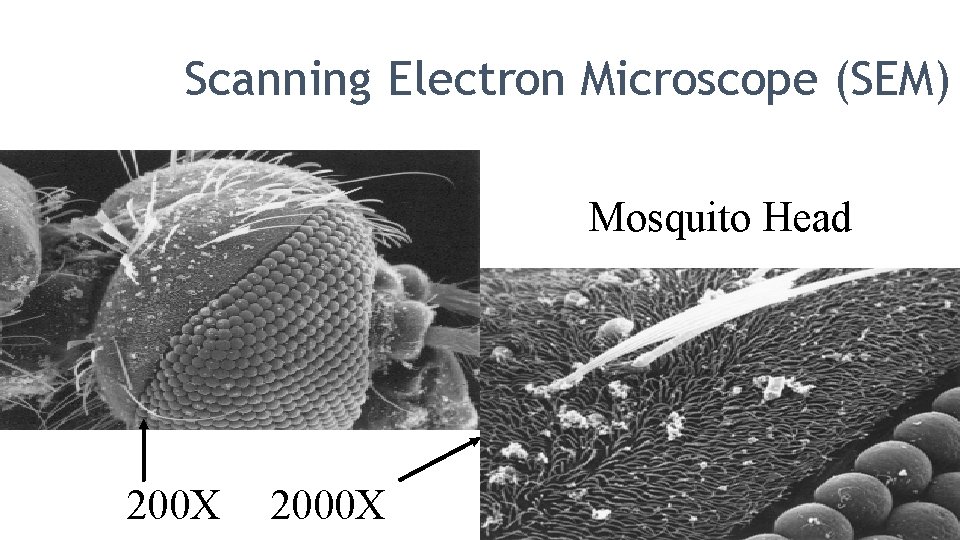
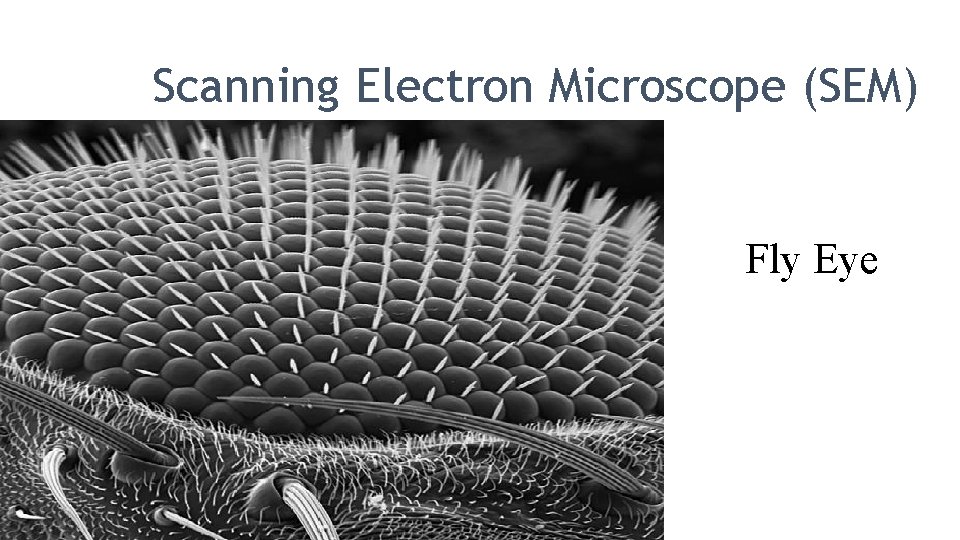
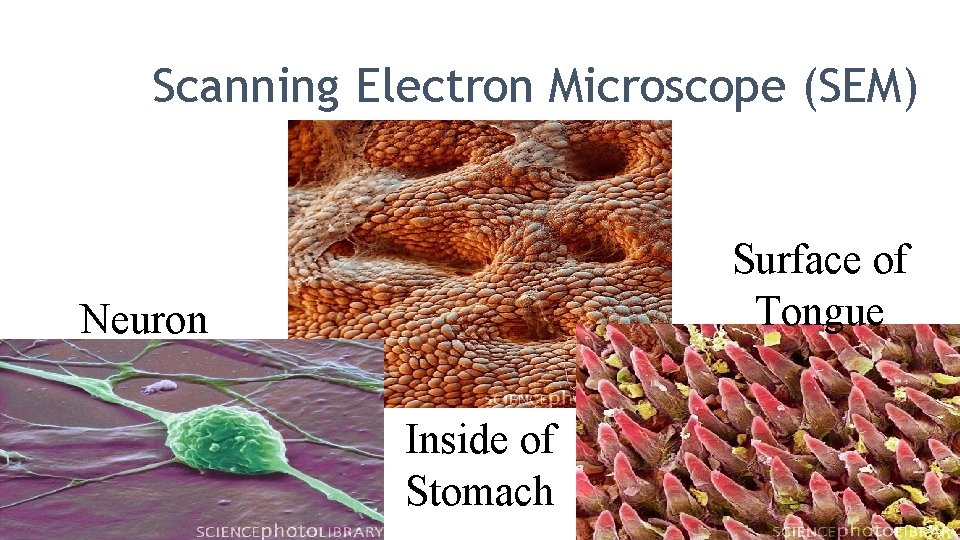
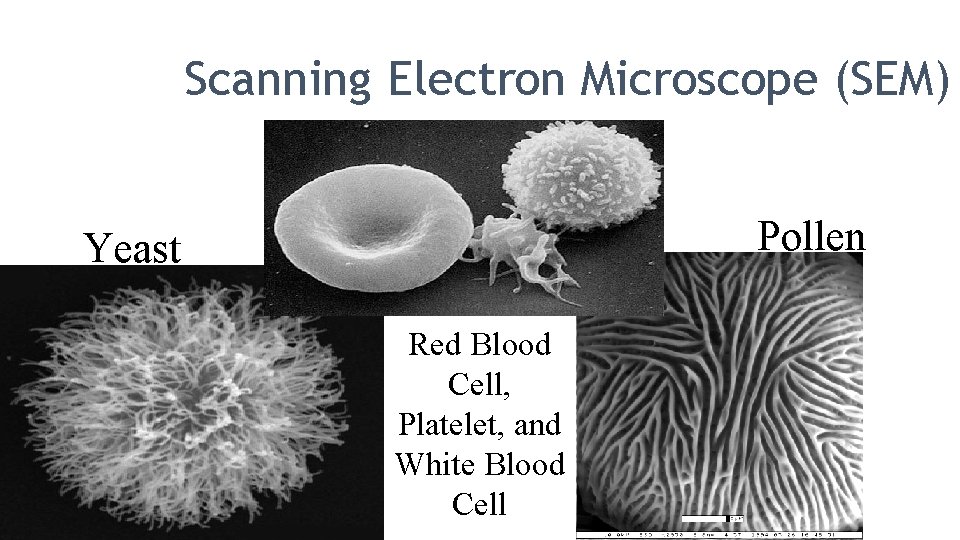
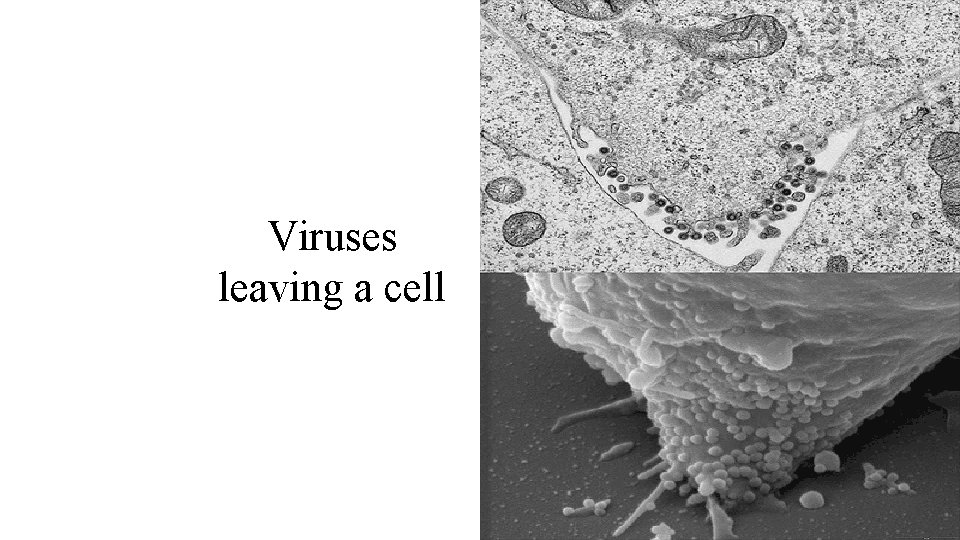
Modern Microscopy As we develop more and more sophisticated and precise imaging tools, we can see more detail of the cells and molecules that make us. Scanning electron microscopes deliver high-resolution, 3 D surface images of structures, whereas transmission electron microscopes give us a view inside cells and organelles.
Emiliana huxleyi Image from: http: //earthguide. ucsd. edu/earthguide/imagelibrary/emilianiahuxleyi. html
Transmission electron micrograph of HIV particles. 120 nm HIV-1. Transmission electron micrograph, via wikimedia commons: http: //commons. wikimedia. org/wiki/File%3 AHIV-
Scanning electron micrograph of HIV particles budding on a human lymphocyte. 1μm False-coloured scanning electron micrograph of HIV (green) budding on a lymphicoyte (blue)
Light Microscope Elodea - Aquatic Plant 40 X 400 X
Transmission Electron Microscope (TEM) Herpes Virus Plant Root Cell
Scanning Electron Microscope (SEM) Mosquito Head 200 X 2000 X
Scanning Electron Microscope (SEM) Fly Eye
Scanning Electron Microscope (SEM) Surface of Tongue Neuron Inside of Stomach
Scanning Electron Microscope (SEM) Pollen Yeast Red Blood Cell, Platelet, and White Blood Cell
TEM vs. SEM Viruses leaving a cell
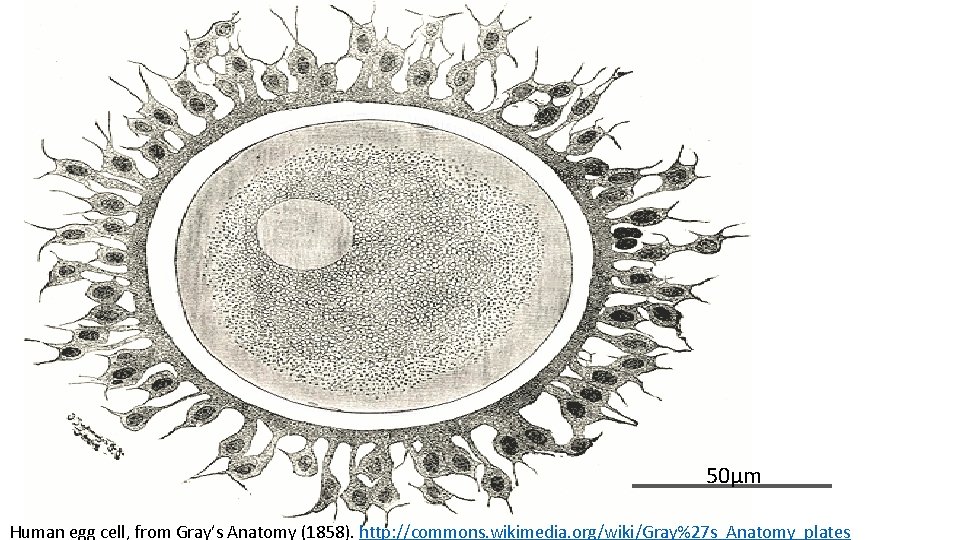
50μm Human egg cell, from Gray’s Anatomy (1858). http: //commons. wikimedia. org/wiki/Gray%27 s_Anatomy_plates
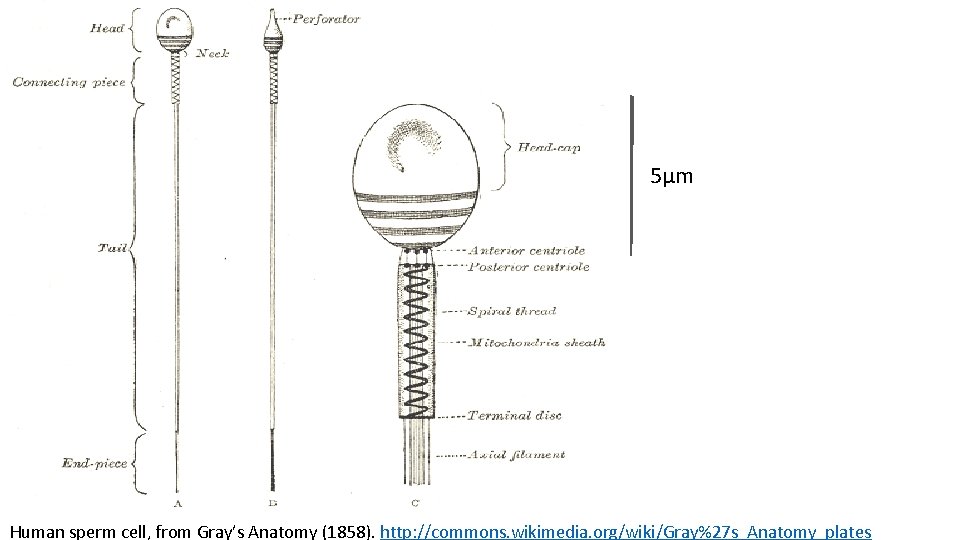
5μm Human sperm cell, from Gray’s Anatomy (1858). http: //commons. wikimedia. org/wiki/Gray%27 s_Anatomy_plates
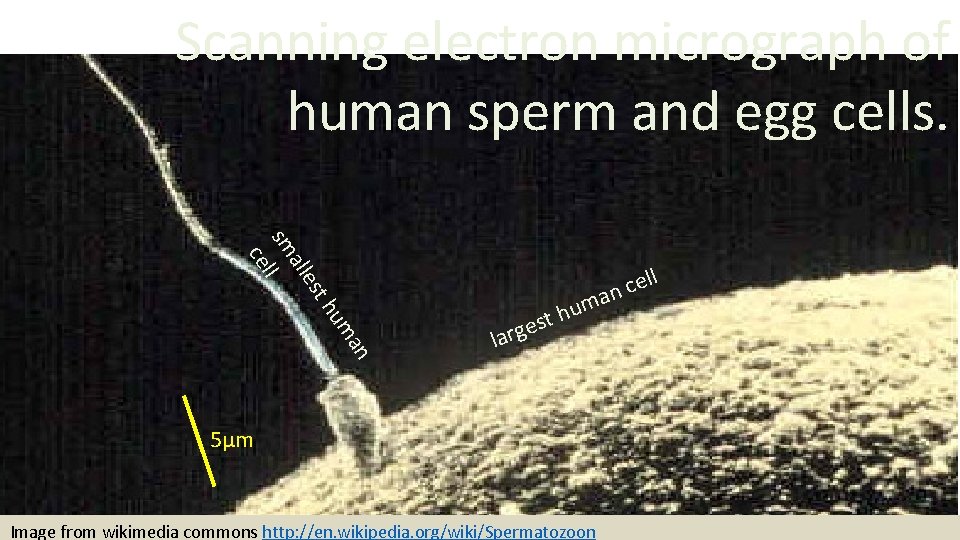
Scanning electron micrograph of human sperm and egg cells. an um th es all sm ll ce m ll e c an hu t s e g r a l 5μm Image from wikimedia commons http: //en. wikipedia. org/wiki/Spermatozoon
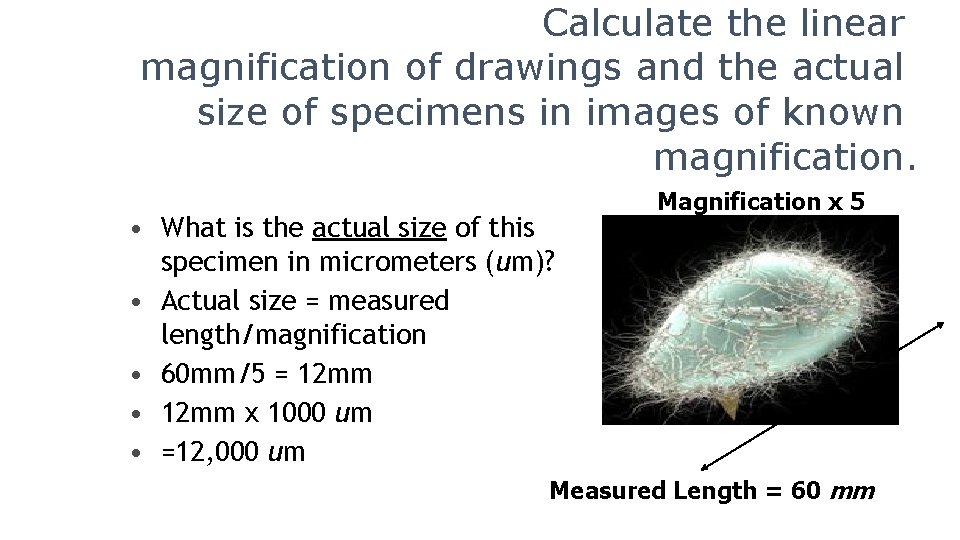
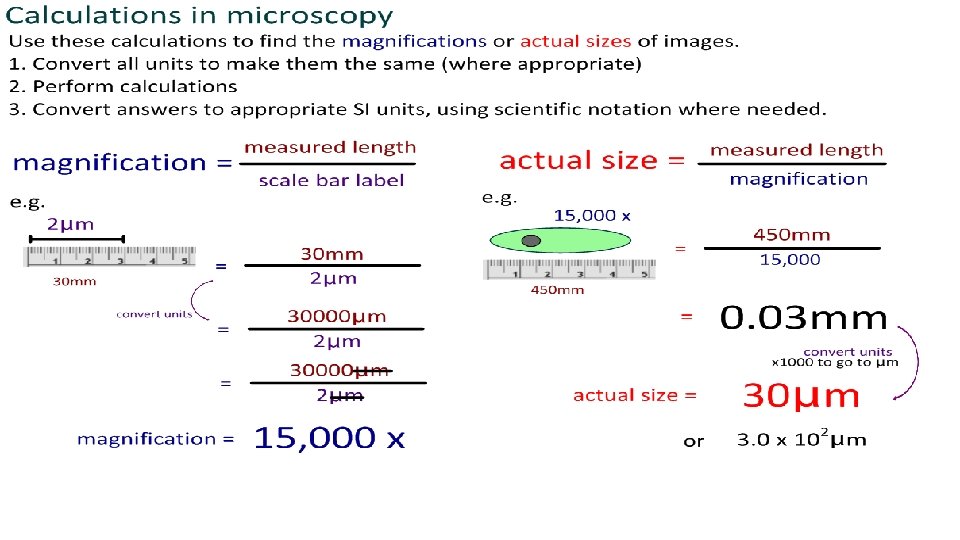
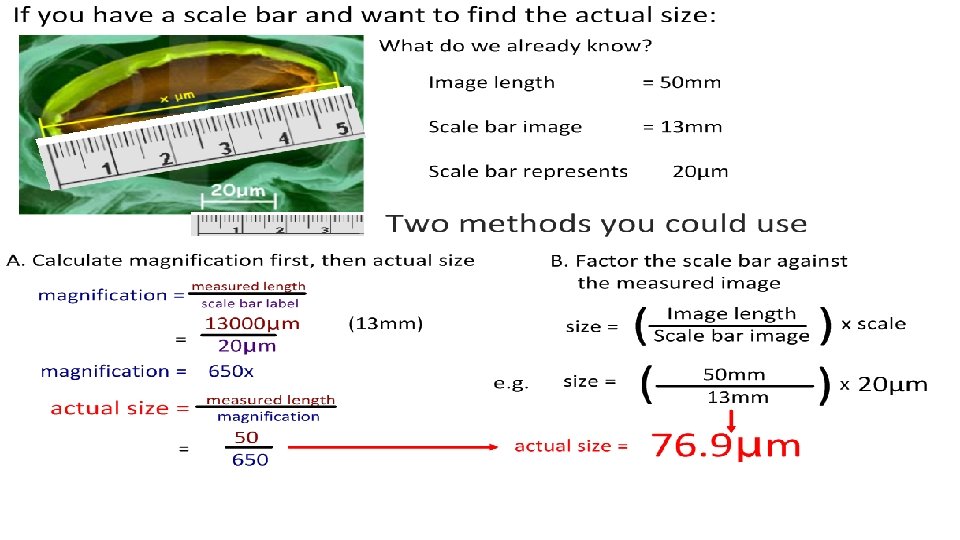
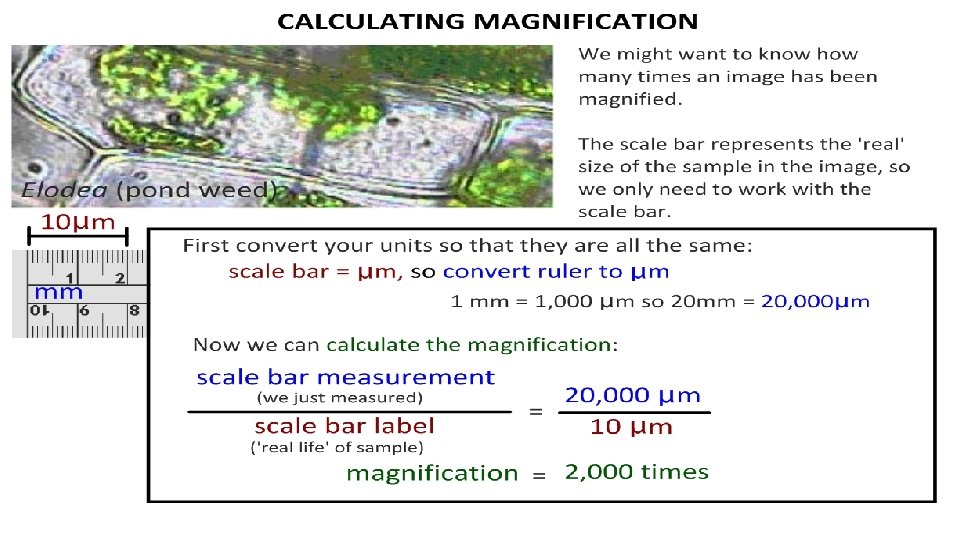
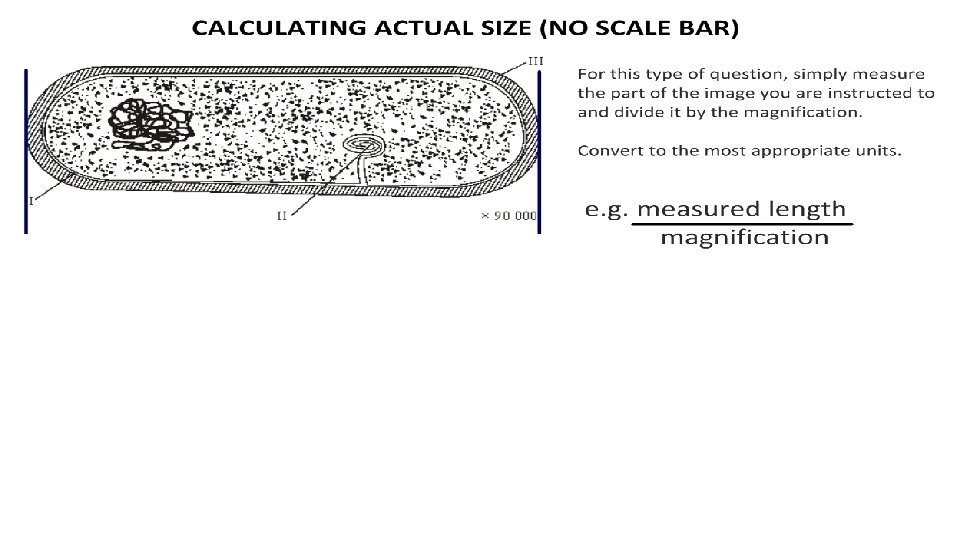
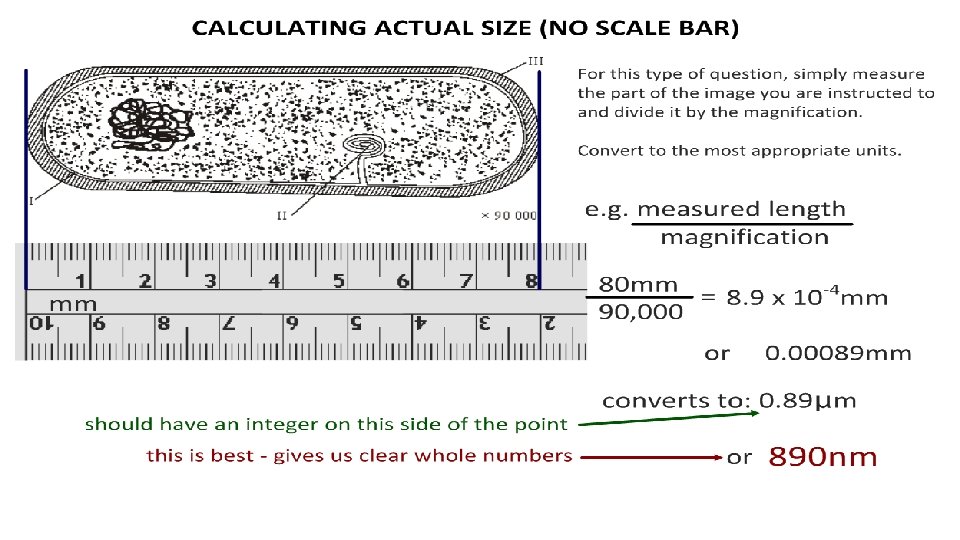
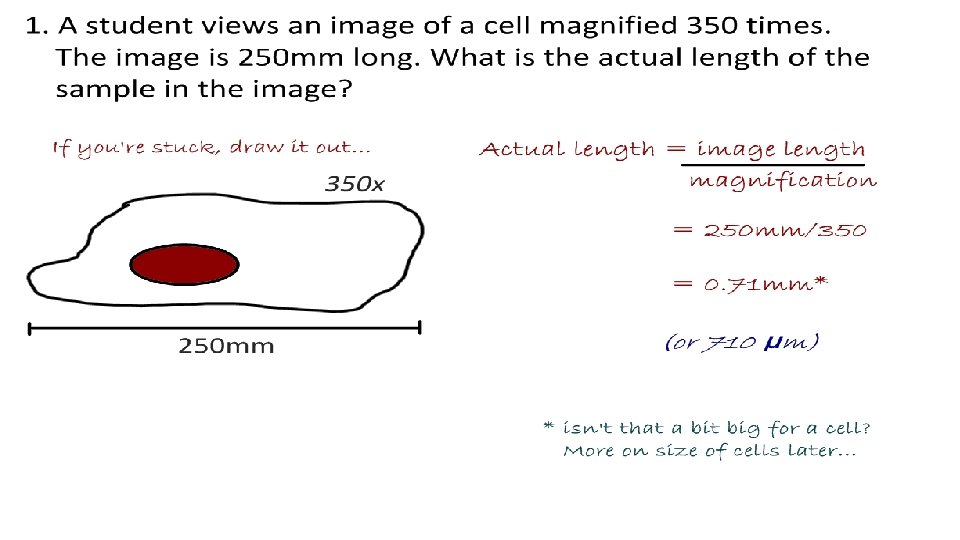
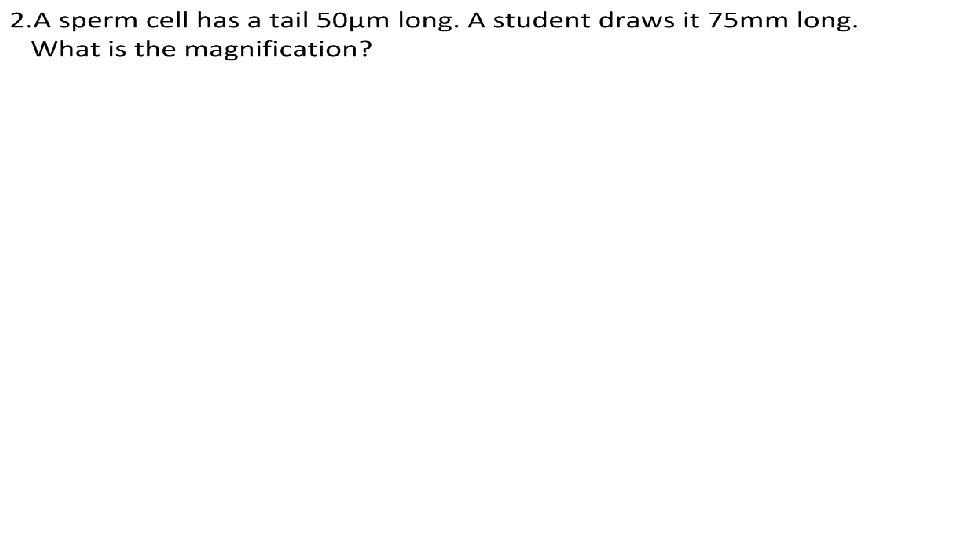
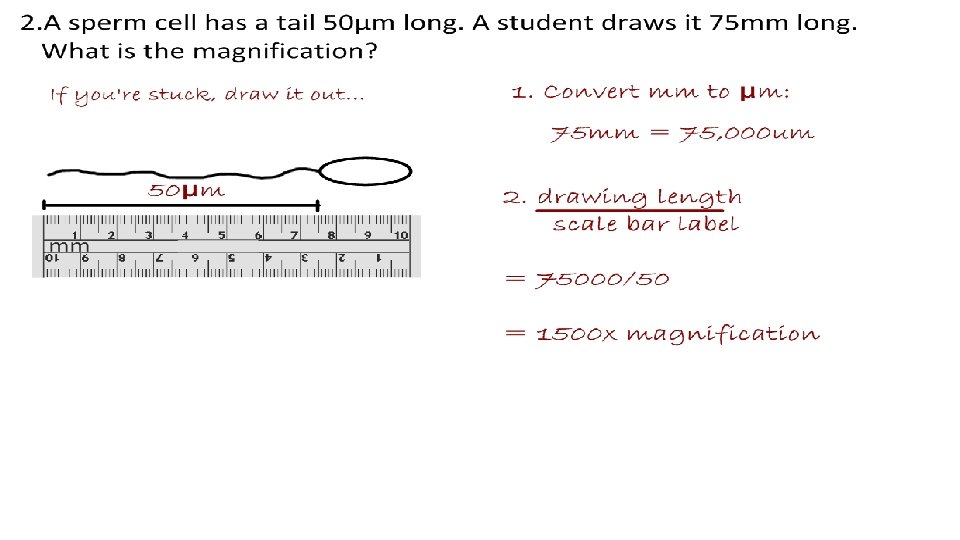
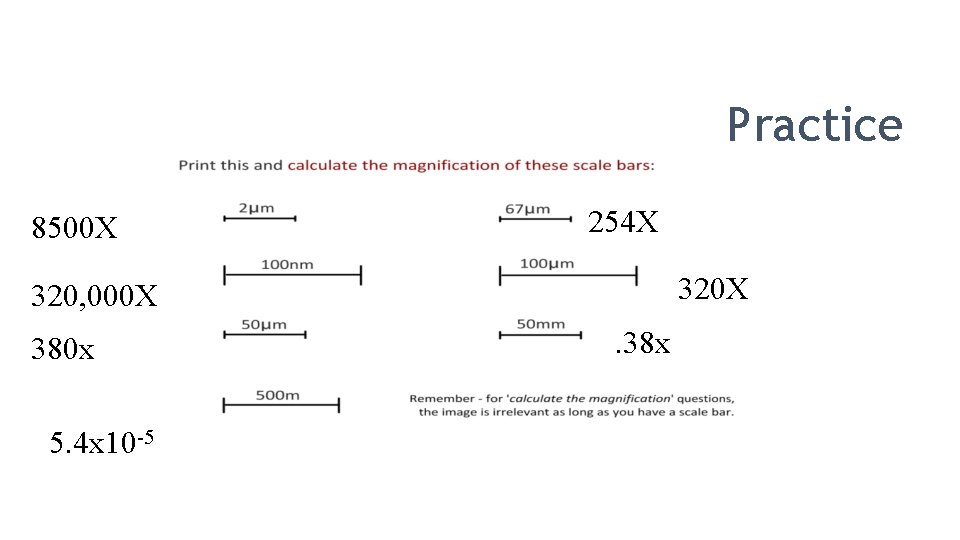
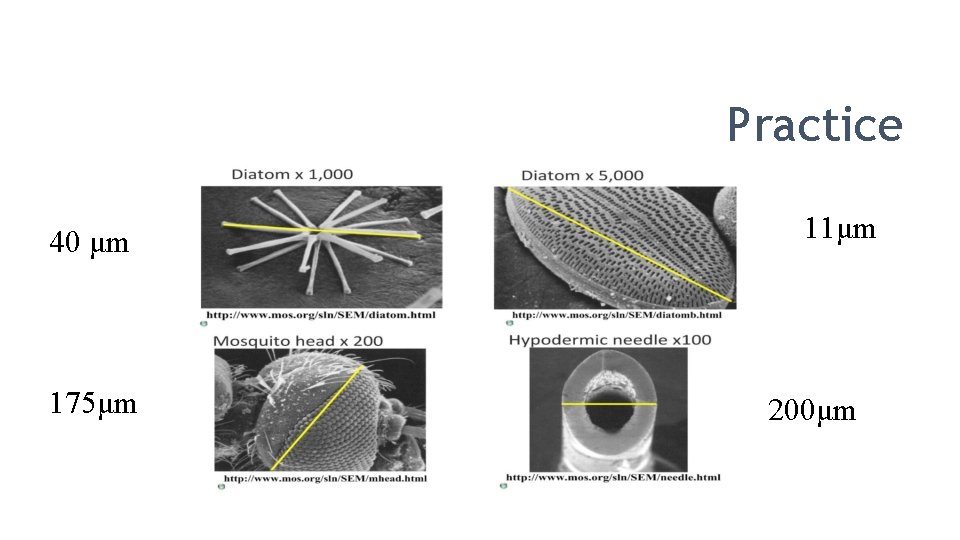
Calculate the linear magnification of drawings and the actual size of specimens in images of known magnification. • What is the actual size of this specimen in micrometers (um)? • Actual size = measured length/magnification • 60 mm/5 = 12 mm • 12 mm x 1000 um • =12, 000 um Magnification x 5 Measured Length = 60 mm
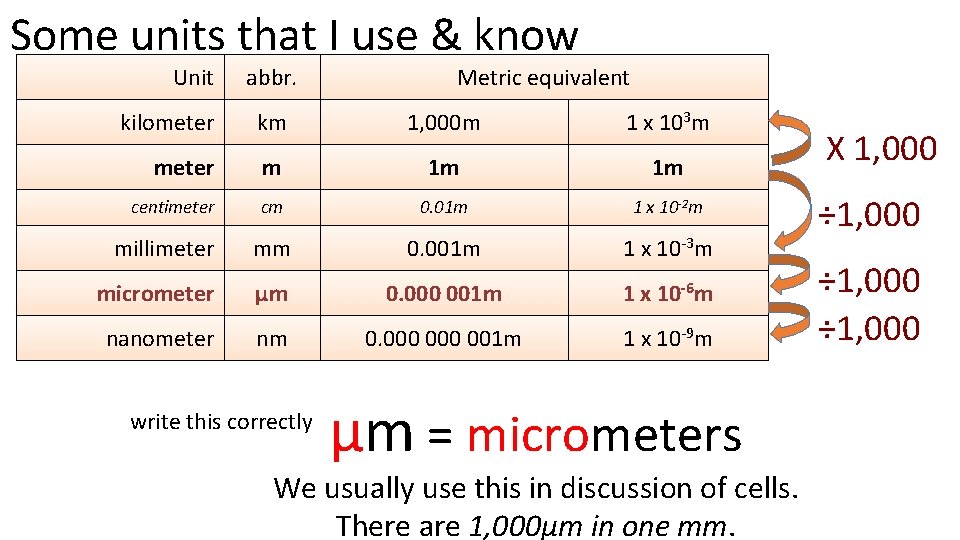
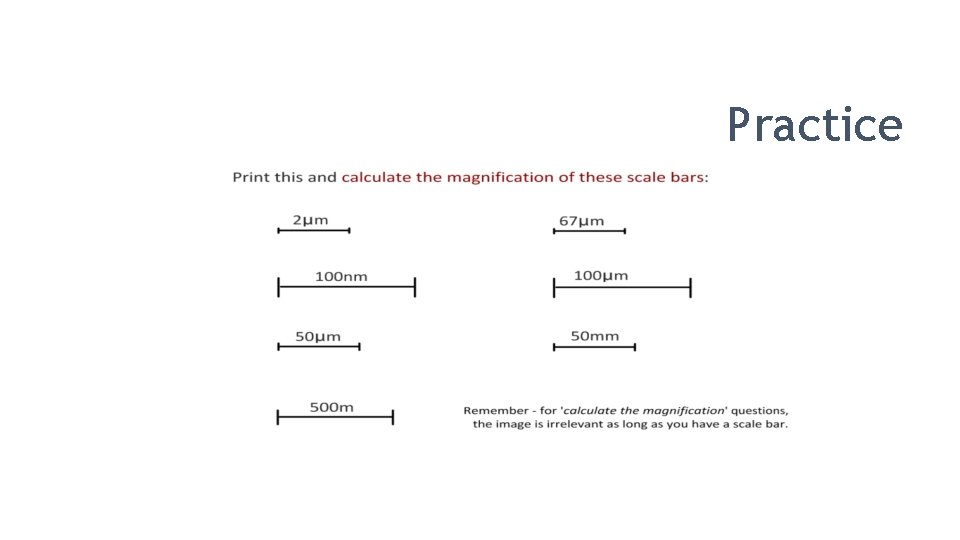
Some units that I use & know Unit abbr. Metric equivalent kilometer km 1, 000 m 1 x 10³ m meter m 1 m 1 m centimeter cm 0. 01 m 1 x 10 -2 m millimeter mm 0. 001 m 1 x 10 -3 m micrometer μm 0. 000 001 m 1 x 10 -6 m nanometer nm 0. 000 001 m 1 x 10 -9 m write this correctly μm = micrometers We usually use this in discussion of cells. There are 1, 000μm in one mm. X 1, 000 ÷ 1, 000
Practice
Practice
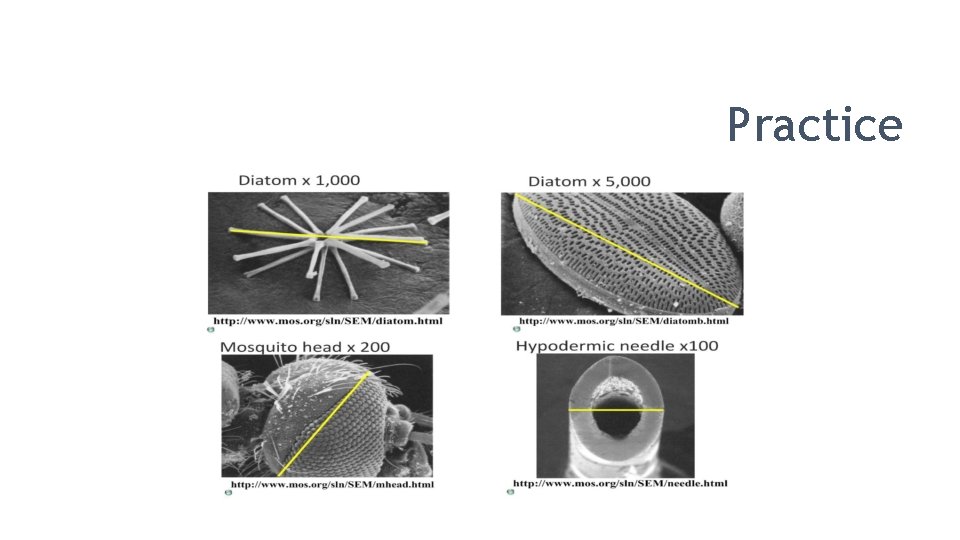
Practice 8500 X 254 X 320, 000 X 380 x 5. 4 x 10 -5 . 38 x
Practice 40 μm 175μm 11μm 200μm
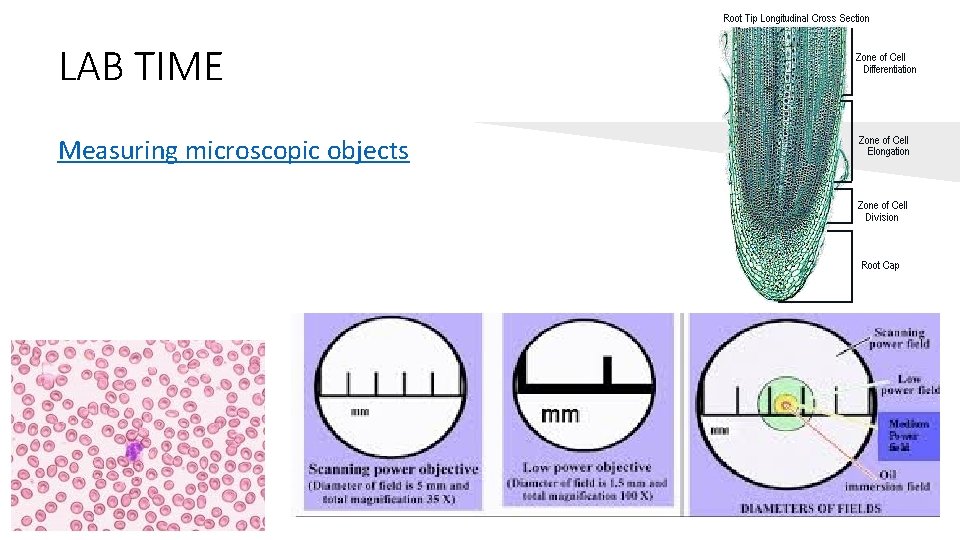
LAB TIME Measuring microscopic objects
• Review notes from previous lesson • Questions? ? ?
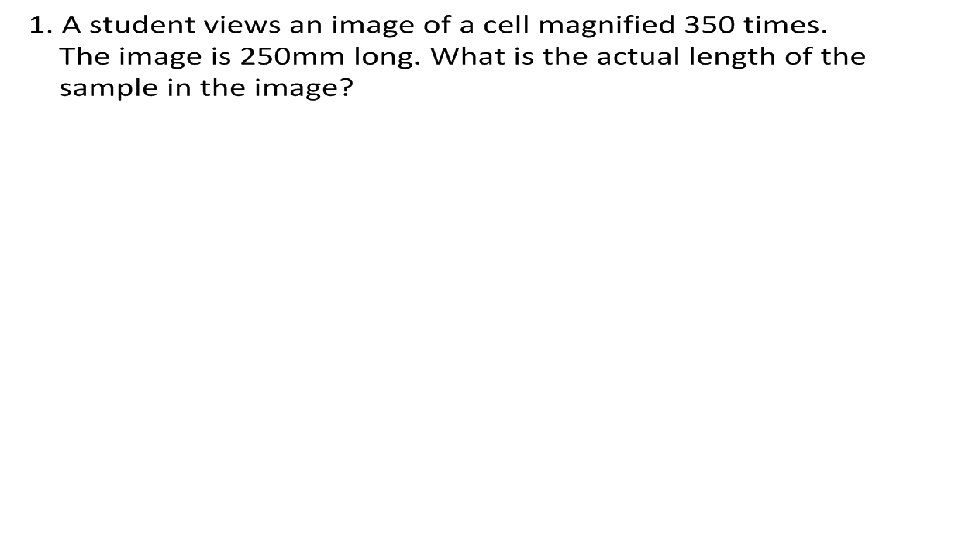
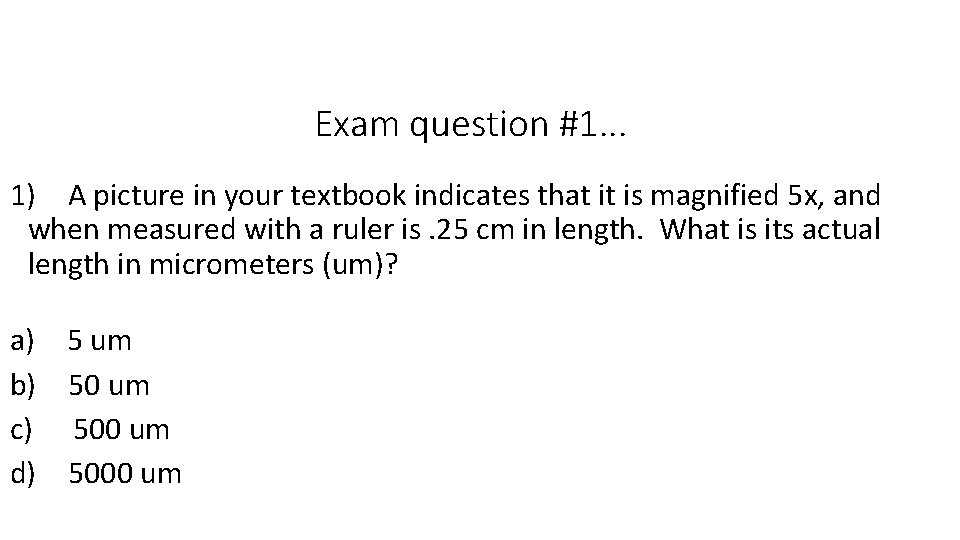
Exam question #1. . . 1) A picture in your textbook indicates that it is magnified 5 x, and when measured with a ruler is. 25 cm in length. What is its actual length in micrometers (um)? a) 5 um b) 50 um c) 500 um d) 5000 um
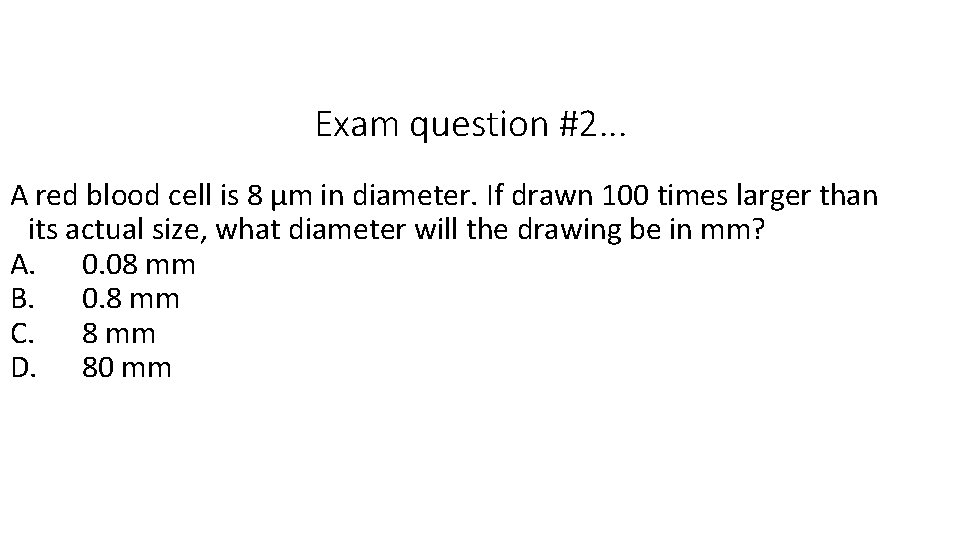
Exam question #2. . . A red blood cell is 8 μm in diameter. If drawn 100 times larger than its actual size, what diameter will the drawing be in mm? A. 0. 08 mm B. 0. 8 mm C. 8 mm D. 80 mm
Two Minute Essay Explain the importance of surface area to volume ratio as a factor limiting cell size.
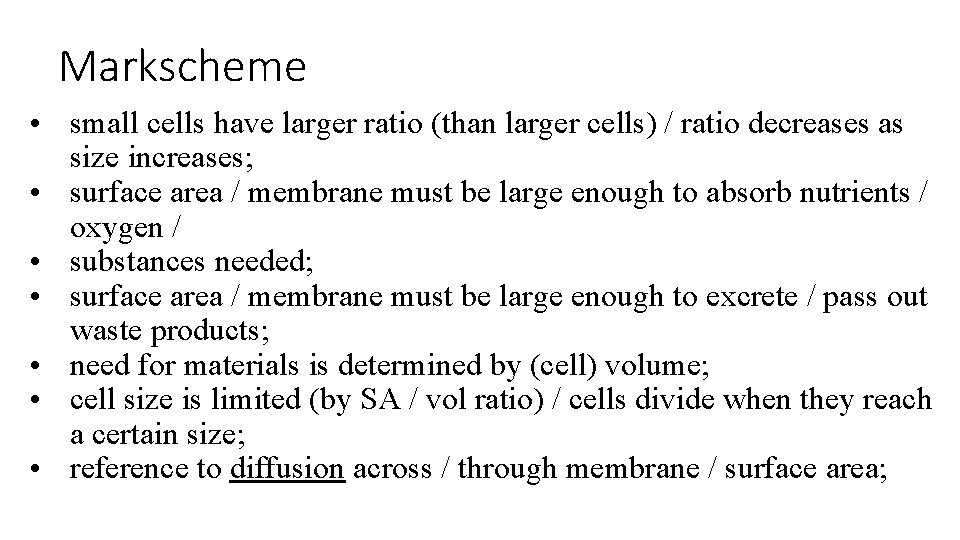
Markscheme • small cells have larger ratio (than larger cells) / ratio decreases as size increases; • surface area / membrane must be large enough to absorb nutrients / oxygen / • substances needed; • surface area / membrane must be large enough to excrete / pass out waste products; • need for materials is determined by (cell) volume; • cell size is limited (by SA / vol ratio) / cells divide when they reach a certain size; • reference to diffusion across / through membrane / surface area;
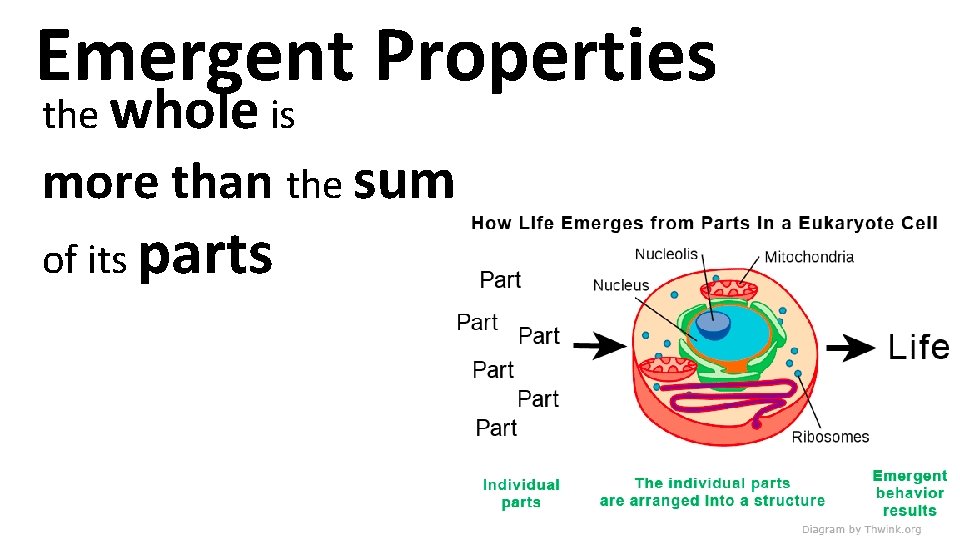
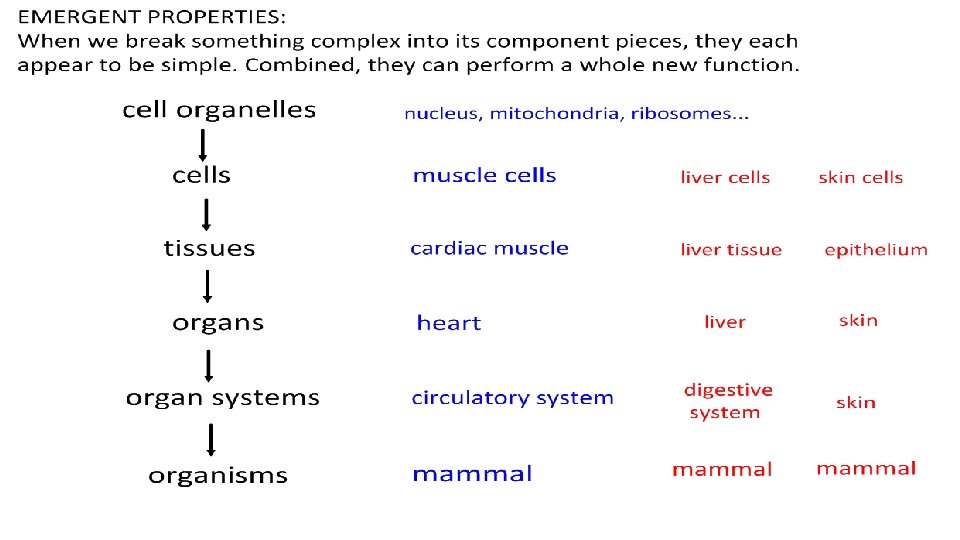
Emergent Properties the whole is more than the sum of its parts