
Where to Start What is a revision timetable
Where to Start? • What is a revision timetable? • Why do I need one? • How do I make one?
Firstly… Work out when you need to start your revision and how many weeks you need to revise for. Four weeks: • W/c Monday 7 th Dec • W/c Monday 14 th Dec • W/c Monday 28 th Dec • W/c Monday 4 th Jan Notice that you have Christmas week off!
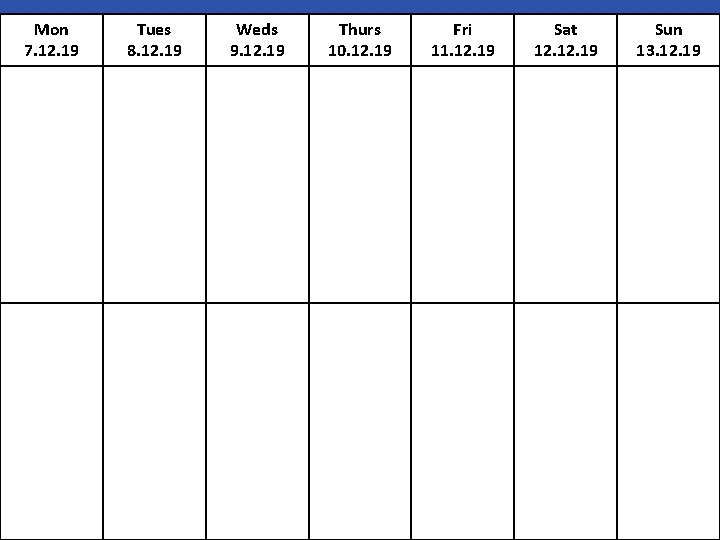
Mon 7. 12. 19 Tues 8. 12. 19 Weds 9. 12. 19 Thurs 10. 12. 19 Fri 11. 12. 19 Sat 12. 19 Sun 13. 12. 19
Secondly… Decide on your day off each week. Most people choose Saturday as their day off, but you can change this depending on what suits you best. Remember this can be flexible each week depending on your plans, but you should be revising for six out of seven days.

Mon 7. 12. 19 Tues 8. 12. 19 Weds 9. 12. 19 Thurs 10. 12. 19 Fri 11. 12. 19 Sat 12. 19 Sun 13. 12. 19
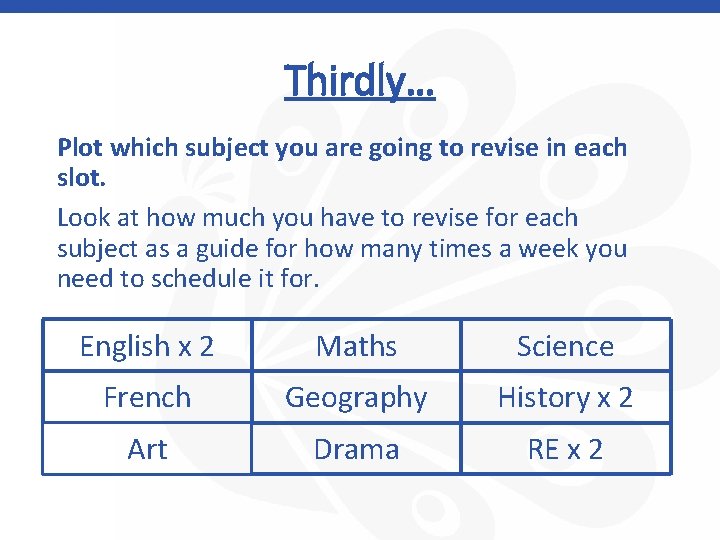
Thirdly… Plot which subject you are going to revise in each slot. Look at how much you have to revise for each subject as a guide for how many times a week you need to schedule it for. English x 2 Maths Science French Geography History x 2 Art Drama RE x 2

Mon 7. 12. 19 Tues 8. 12. 19 Weds 9. 12. 19 Thurs 10. 12. 19 Fri 11. 12. 19 Sat 12. 19 Sun 13. 12. 19 English Science Art RE Maths English French History Drama Geography History RE
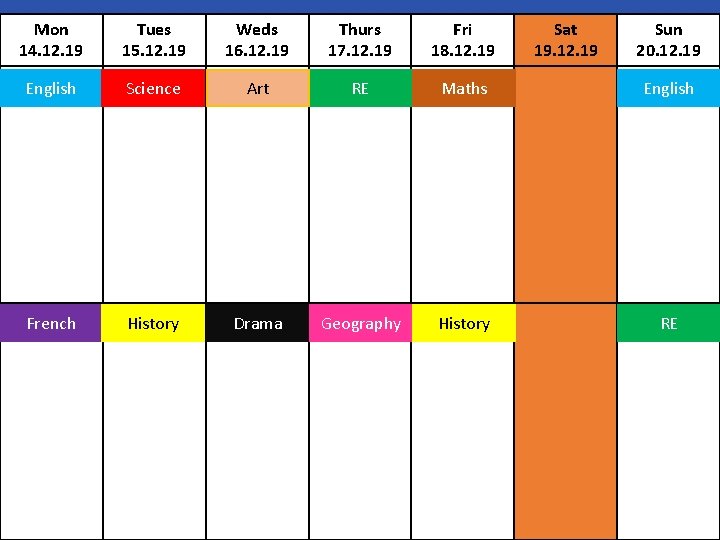
Mon 14. 12. 19 Tues 15. 12. 19 Weds 16. 12. 19 Thurs 17. 12. 19 Fri 18. 12. 19 Sat 19. 12. 19 Sun 20. 12. 19 English Science Art RE Maths English French History Drama Geography History RE

Fourthly… Now assign a topic to each slot. Your teachers have broken the exam paper down into key topics/areas to revise. Make sure you know what you need to revise in each session.
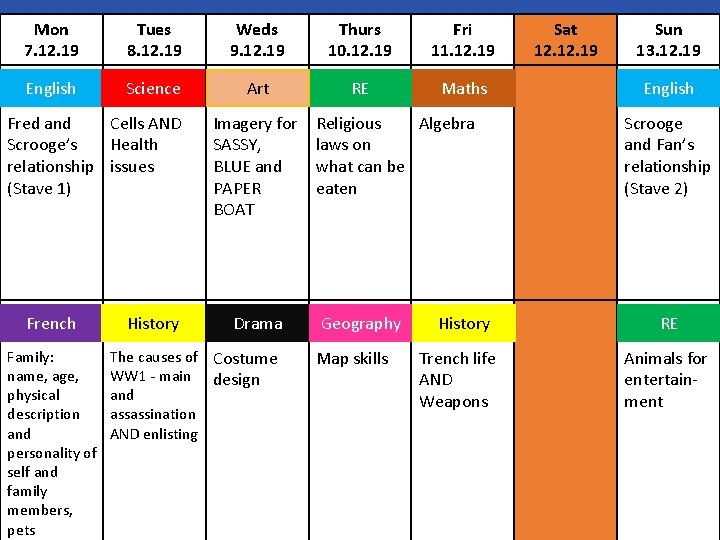
Mon 7. 12. 19 Tues 8. 12. 19 Weds 9. 12. 19 Thurs 10. 12. 19 Fri 11. 12. 19 English Science Art RE Maths Fred and Cells AND Scrooge’s Health relationship issues (Stave 1) French Family: name, age, physical description and personality of self and family members, pets History Imagery for SASSY, BLUE and PAPER BOAT Drama The causes of Costume WW 1 - main design and assassination AND enlisting Religious Algebra laws on what can be eaten Geography Map skills History Trench life AND Weapons Sat 12. 19 Sun 13. 12. 19 English Scrooge and Fan’s relationship (Stave 2) RE Animals for entertainment

Interleaving Instead of focussing on one topic per revision session, test your memory by using interleaving in one session a week per subject. Interleaving is where you mix up questions from different topics to strengthen the pathways in your memory by making it work harder to move between information. Fri – all topics quiz Mon – Maths Sequences and Ratios Tues – Maths Surface Area and Fractions Weds – Maths Algebra and Sequences Thurs – Maths Fractions, Surface Area and Algebra
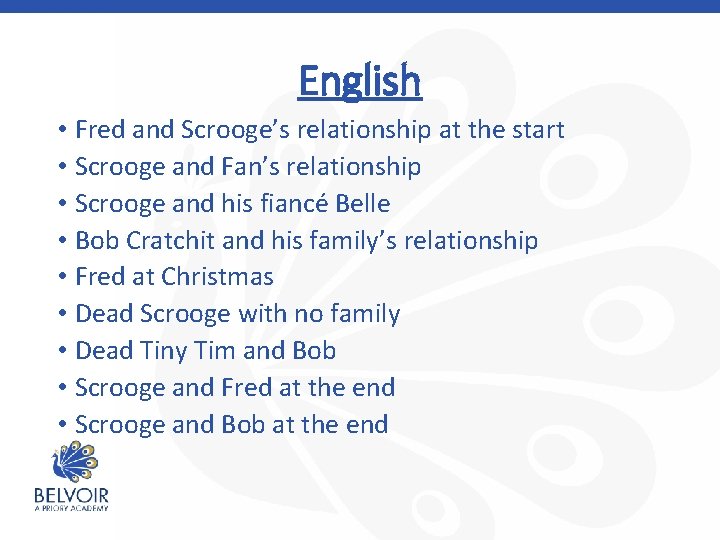
English • Fred and Scrooge’s relationship at the start • Scrooge and Fan’s relationship • Scrooge and his fiancé Belle • Bob Cratchit and his family’s relationship • Fred at Christmas • Dead Scrooge with no family • Dead Tiny Tim and Bob • Scrooge and Fred at the end • Scrooge and Bob at the end
Maths • Number • Algebra • Shape • Handling Data
French • Family: name, age, physical description and personality of self and family members, pets • School: school subjects, opinions • Local town and area: where you live, opinions, what you can do in your area • Holidays: countries, where you go on holiday and how, where you stay and activities • Food: food and drinks, opinions, what you ate and will eat
Geography • Map skills • Analysis skills • Development
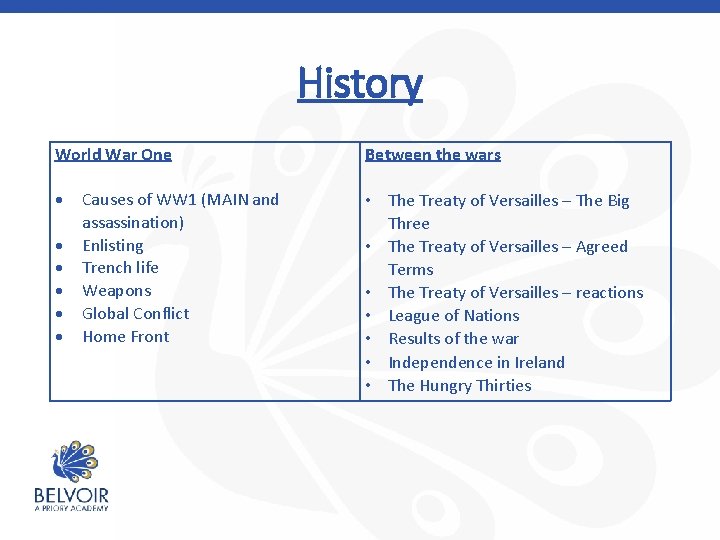
History World War One Between the wars • The Treaty of Versailles – The Big Three • The Treaty of Versailles – Agreed Terms • The Treaty of Versailles – reactions • League of Nations • Results of the war • Independence in Ireland • The Hungry Thirties Causes of WW 1 (MAIN and assassination) Enlisting Trench life Weapons Global Conflict Home Front
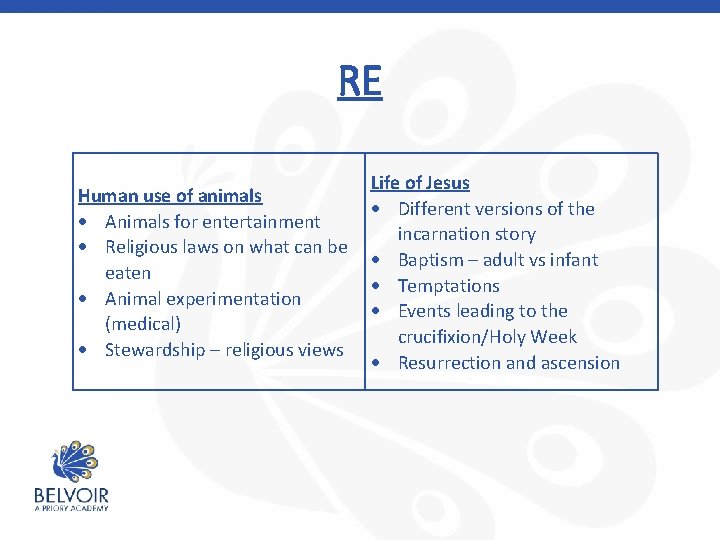
RE Human use of animals Animals for entertainment Religious laws on what can be eaten Animal experimentation (medical) Stewardship – religious views Life of Jesus Different versions of the incarnation story Baptism – adult vs infant Temptations Events leading to the crucifixion/Holy Week Resurrection and ascension
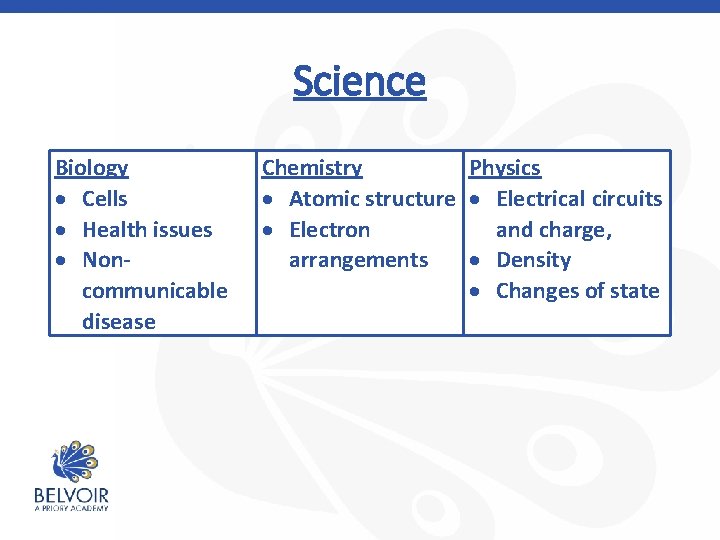
Science Biology Cells Health issues Noncommunicable disease Chemistry Physics Atomic structure Electrical circuits Electron and charge, arrangements Density Changes of state
Drama • Costume design • Vocal skills • Physical skills • Themes and plot of the play
Art • Imagery from the clues you have already worked from (paper boat, sassy, blue, ice, key and guard) • Ways to use the materials and techniques you've learnt to work with
- Slides: 20