
Where the magic happens RESOURCE AND PROJECT PLANNING

- Slides: 30
Where the magic happens RESOURCE AND PROJECT PLANNING Jean Dowson 25 May 2016 AAT is a registered charity. No. 1050724
Contents 1 Understand how to plan resource needs with the team to meet team and project objectives. 2 Understand the need for change to resource requirements. 3 Be able to monitor, record & control resources within the work area. 2
“Managers are responsible for the process of planning, organising, leading and controlling the efforts of organisational resources to achieve stated organisational goals” Managers and Resources (Mescon, Albert and Khedouri (1985) All resources have a cost attached
• What is the difference between a physical and a financial resource? • What is the difference between tangible and intangible resources? • What resources are you responsible for? What are resources?
“Anything that is available to an organisation to help achieve its purpose” CMI Management. Direct Resources are …
Consider …. Tangible - physical assets such as land, buildings, vehicles, equipment, raw materials, financial, IT, etc Intangible - no physical presence such as knowledge, skills, IPR, reputation, brand, good will, etc Types of resources
Efficient & effective deployment of an organisation’s resources in order to achieve project & team aims & objectives For instance “Pay the right people the right amount at the right time. ” Resource Management
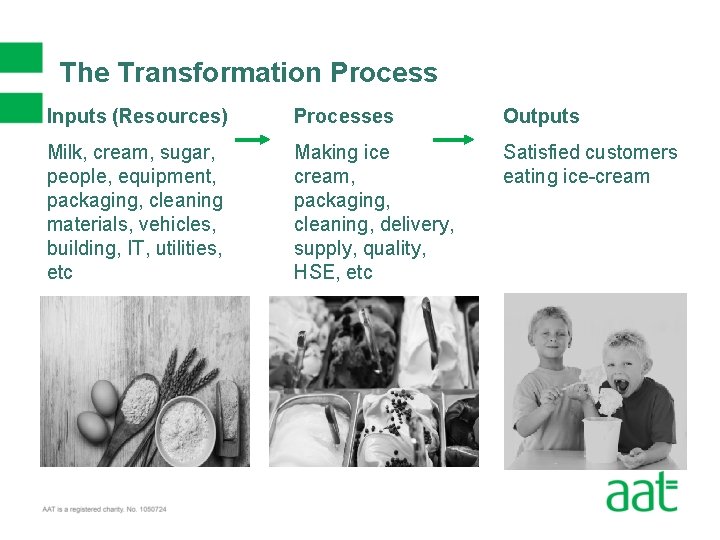
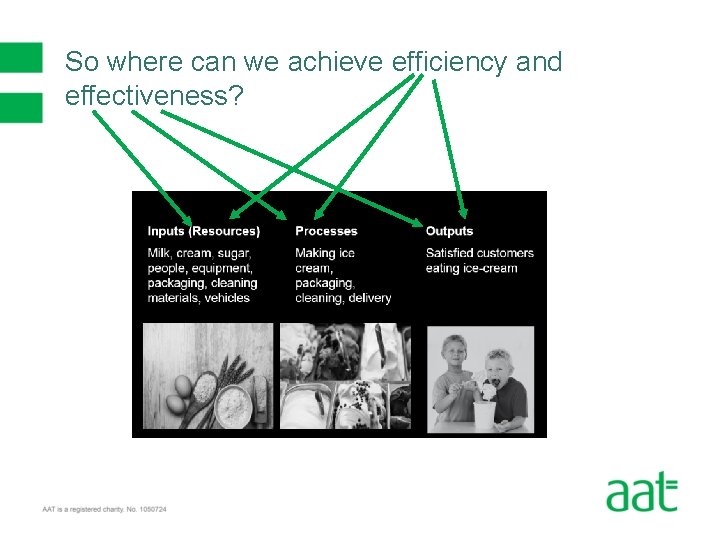
The Transformation Process Inputs (Resources) Processes Outputs Milk, cream, sugar, people, equipment, packaging, cleaning materials, vehicles, building, IT, utilities, etc Making ice cream, packaging, cleaning, delivery, supply, quality, HSE, etc Satisfied customers eating ice-cream
Use resources to achieve objectives effectively & efficiently 1. 2. 3. 4. 5. Managing resources for a building project? Delivering services to a new customer? Planning an office move within the same building ? Relocating the business several miles? Managing your team? • What part do you play in planning, bidding for and managing those resources?
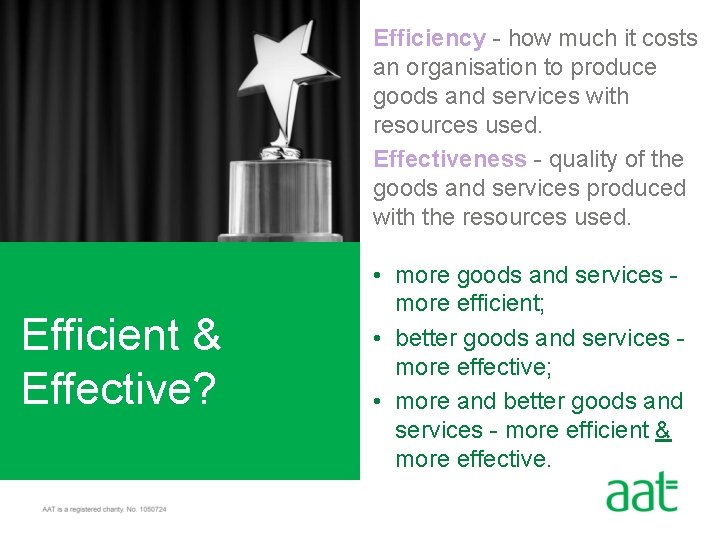
Efficiency - how much it costs an organisation to produce goods and services with resources used. Effectiveness - quality of the goods and services produced with the resources used. Efficient & Effective? • more goods and services more efficient; • better goods and services more effective; • more and better goods and services - more efficient & more effective.
So where can we achieve efficiency and effectiveness?
Reflect and consider in your organisation … • Who manages these resources & how are they allocated and managed? • Which do you / your team use? • Which do you / your team manage & how?
Managers Role: Be aware of the resources your team are using and plan, manage & monitor them and Look out for ways to use them better, to produce more or better goods and services, or use fewer resources.
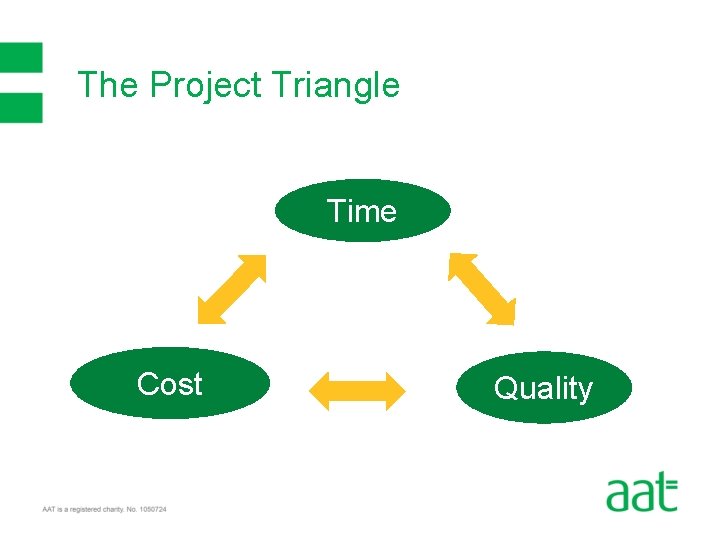
The Project Triangle Time Cost Quality
• Ensure have enough resources but not too much (waste) • Ensure people are assigned tasks that keeps them productive but not overworked (stress) • Ensure organisational / team objectives are being fulfilled (SMART) • Keeping people informed what resources are available and when Creating a Resource Plan
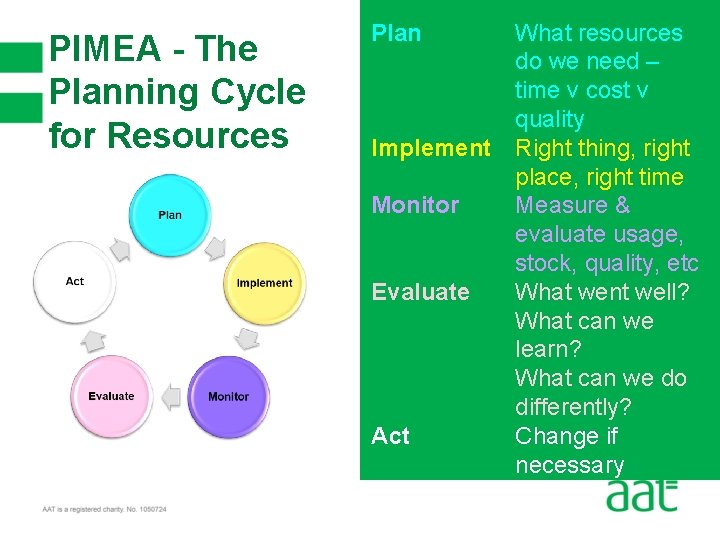
PIMEA - The Planning Cycle for Resources Plan Implement Monitor Evaluate Act What resources do we need – time v cost v quality Right thing, right place, right time Measure & evaluate usage, stock, quality, etc What went well? What can we learn? What can we do differently? Change if necessary
Possible headings of your resource plan. . • Resources req (items) • Resources you already have or are shared? • How much / How many? • How to access resources (when, where, who? ) • Lead time for supply? • Where are they needed? • Who needs them? • Ad hoc, planned, bid? • Management control of issue, stock, reordering • When do you need them? • People (right people, skills, place, time)
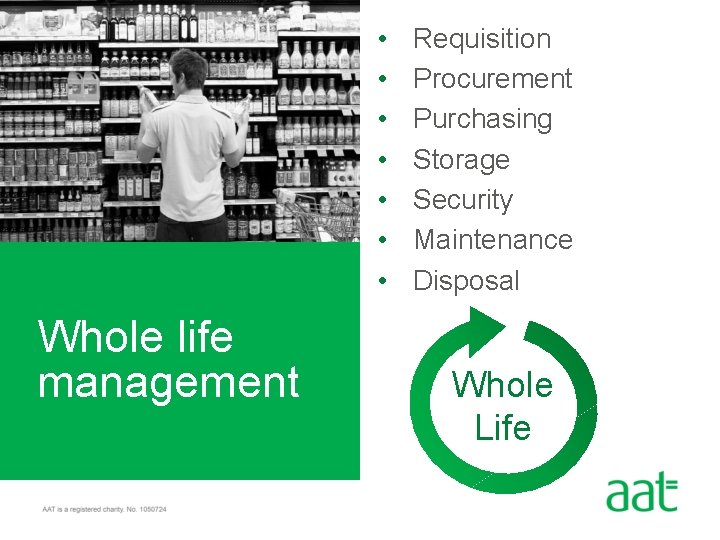
• • Whole life management Requisition Procurement Purchasing Storage Security Maintenance Disposal Whole Life
• Not enough at the right time • Enough available but at the wrong time • Poor quality • Wrong type • Available but not under your control • Not accessible – wrong place • No accountability/ management • Wasted due to lack of involvement in purchase or allocation Resource problems to look out for & manage
How can we monitor resources • • Inventories Stock sheets Time sheets Mileage records Leave records Budgets Sales records Ø Ø Ø Accurate Relevant Appropriate Up to date Secure Comply with regulations
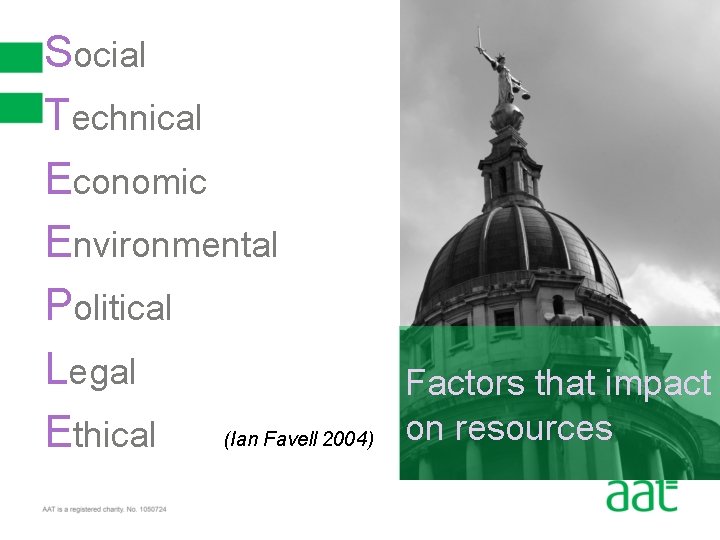
Social Technical Economic Environmental Political Legal Factors that impact on resources (Ian Favell 2004) Ethical
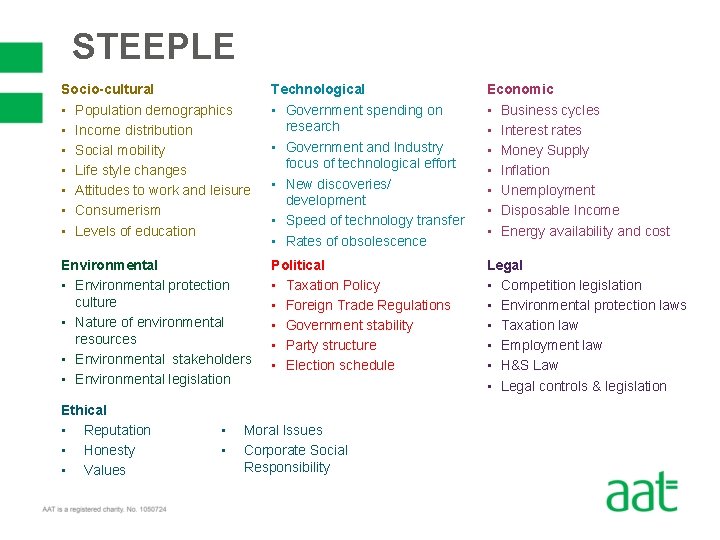
STEEPLE Socio-cultural • Population demographics • Income distribution • Social mobility • Life style changes • Attitudes to work and leisure • Consumerism • Levels of education Technological • Government spending on research • Government and Industry focus of technological effort • New discoveries/ development • Speed of technology transfer • Rates of obsolescence Economic • Business cycles • Interest rates • Money Supply • Inflation • Unemployment • Disposable Income • Energy availability and cost Environmental • Environmental protection culture • Nature of environmental resources • Environmental stakeholders • Environmental legislation Political • Taxation Policy • Foreign Trade Regulations • Government stability • Party structure • Election schedule Legal • Competition legislation • Environmental protection laws • Taxation law • Employment law • H&S Law • Legal controls & legislation Ethical • Reputation • Honesty • Values • • Moral Issues Corporate Social Responsibility
What external influences might affect resource planning in your organisation? REFLECTION ON STEEPLE
• How might these factors impact on your resource planning? • How might that in turn impact on your team objectives? SO WHAT? • How will you need to adjust your plan?
• Make sure the resources you have are contributing to a positive IMPACT in the workplace. • How will you recognise impact? • How can you measure it? • Contingencies? “How can you be more efficient and effective…”
• Economic forces and change • Social and political change • Organisational change You have a lot on your shoulders. . • Changes in markets, services and products • New systems and technology
• Understand how to plan resource needs with the team to meet team and project objectives. • Understand the need for change to resource requirements. • Be able to monitor, record & control resources within the work area. Learning Outcomes
QUESTIONS COMMENTS QUERIES FEEDBACK
AAT Annual Conference 2016 10 - 11 June, Birmingham The AAT Annual Conference is an essential CPD and networking event for all finance professionals. Why attend? 1. Connect with 300 accounting and finance professionals from across the UK. 2. Hear from new and popular speakers on key industry topics. 3. Choose from over 20 sessions with our extended programme. 4. Enjoy interactive workshops and unique sessions that aren’t covered at other AAT events. 5. See how AAT can further your career. Find out more and book your place at aatconference. co. uk
Thank you Disclaimer The information contained in this presentation or delivered in relation to it has been compiled by the author with every bit of accuracy. AAT is not responsible for any veracity, not for any opinions expressed within or in relation to it. By receipt of this information, directly or indirectly, you the attendee or recipient release AAT and any of its officers, directors or employers, jointly or individually from any actions, damages, responsibilities, claims or losses as a result. Association of Accounting Technicians 140 Aldersgate Street London EC 1 A 4 HY AAT is a registered charity. No. 1050724