
Where the esophagus meets the stomach a valve

- Slides: 17
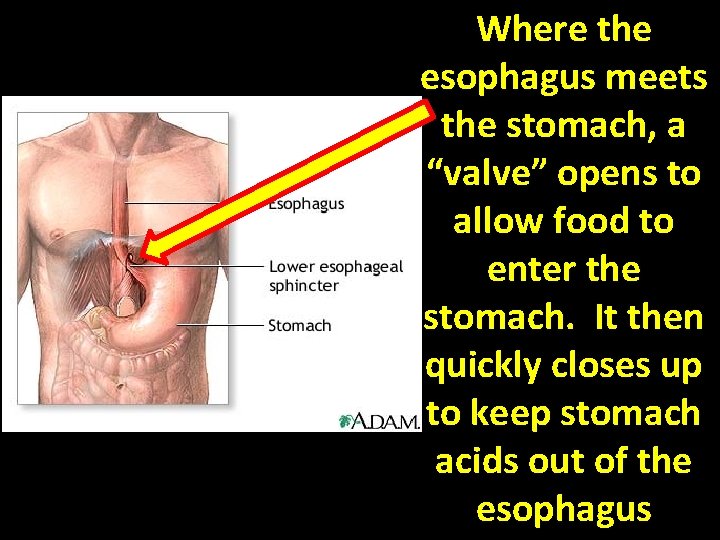
Where the esophagus meets the stomach, a “valve” opens to allow food to enter the stomach. It then quickly closes up to keep stomach acids out of the esophagus
When these wastes reach the ‘end of the line’, nature tells us it’s time to go…
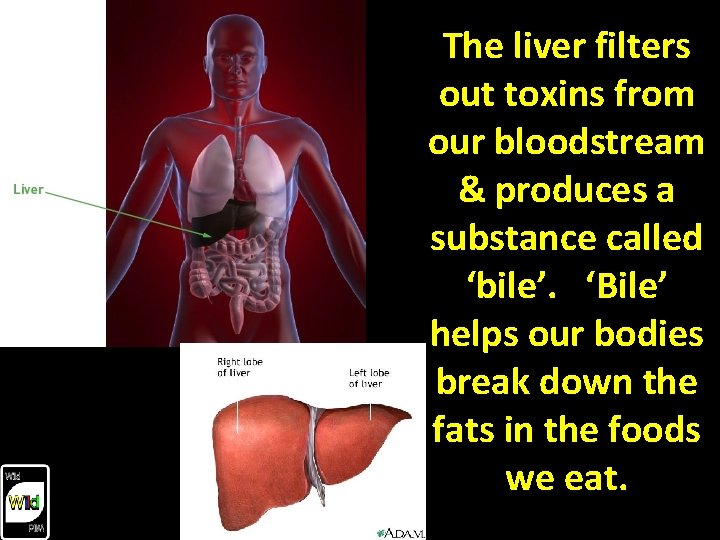
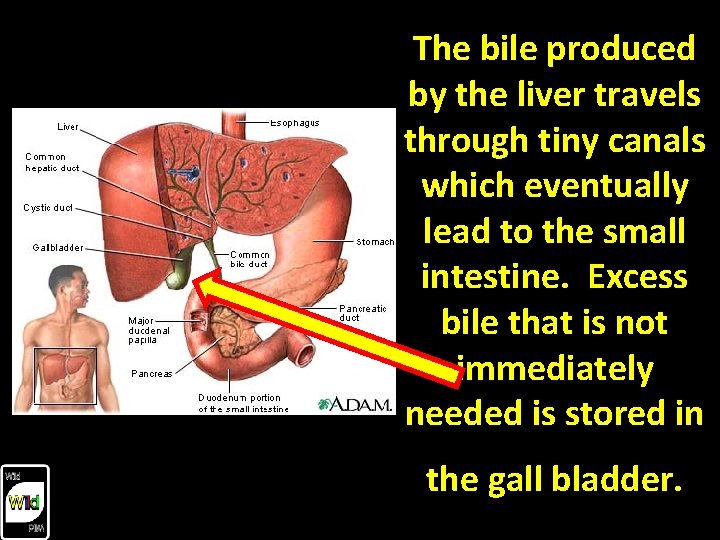
The liver filters out toxins from our bloodstream & produces a substance called ‘bile’. ‘Bile’ helps our bodies break down the fats in the foods we eat.
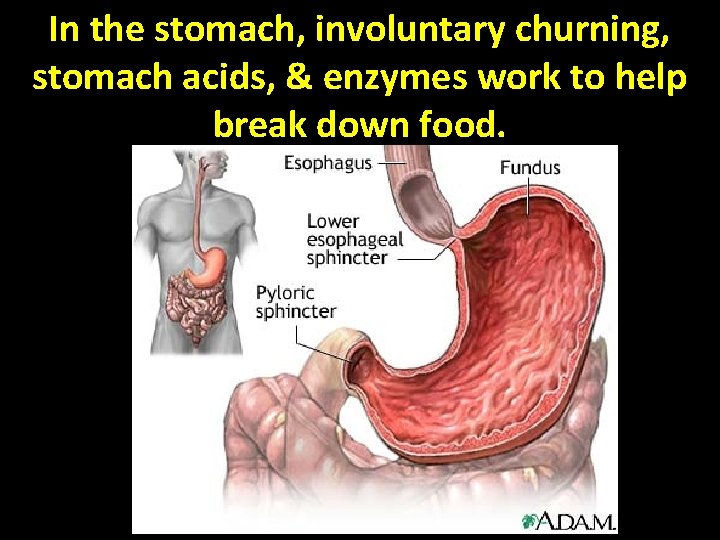
In the stomach, involuntary churning, stomach acids, & enzymes work to help break down food.
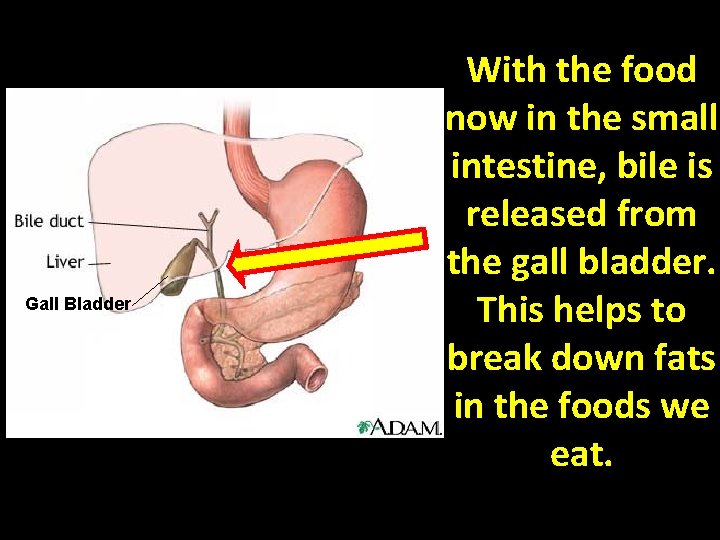
Gall Bladder With the food now in the small intestine, bile is released from the gall bladder. This helps to break down fats in the foods we eat.
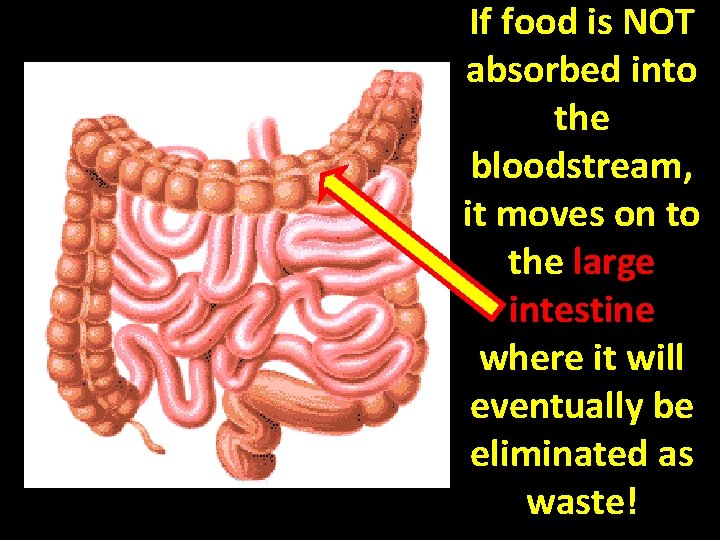
If food is NOT absorbed into the bloodstream, it moves on to the large intestine where it will eventually be eliminated as waste!
Digestion begins in the mouth as teeth grind food & saliva begins to help break it down!
…. and that is the story of how the human digestive system breaks down food into a substance that can be utilized by the body for nutrition or eliminated as wastes!
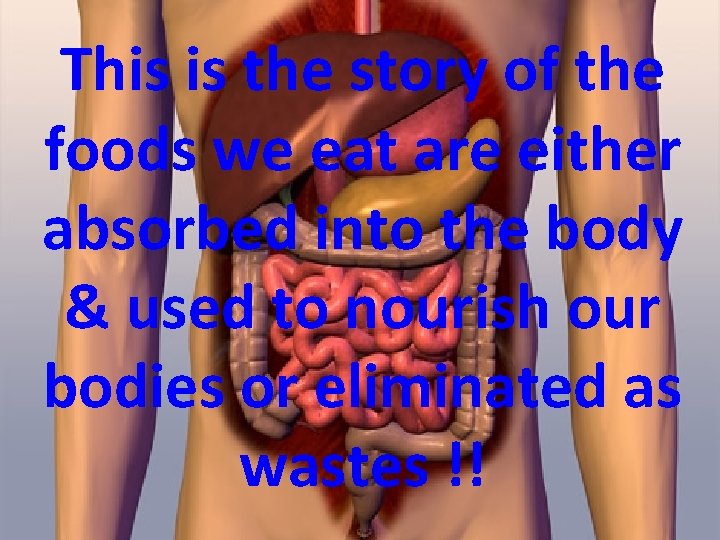
This is the story of the foods we eat are either absorbed into the body & used to nourish our bodies or eliminated as wastes !!
The bile produced by the liver travels through tiny canals which eventually lead to the small intestine. Excess bile that is not immediately needed is stored in the gall bladder.
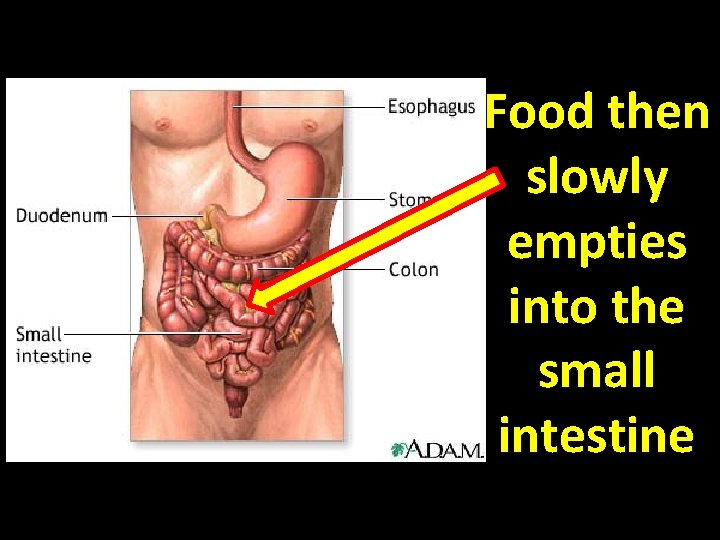
Food then slowly empties into the small intestine
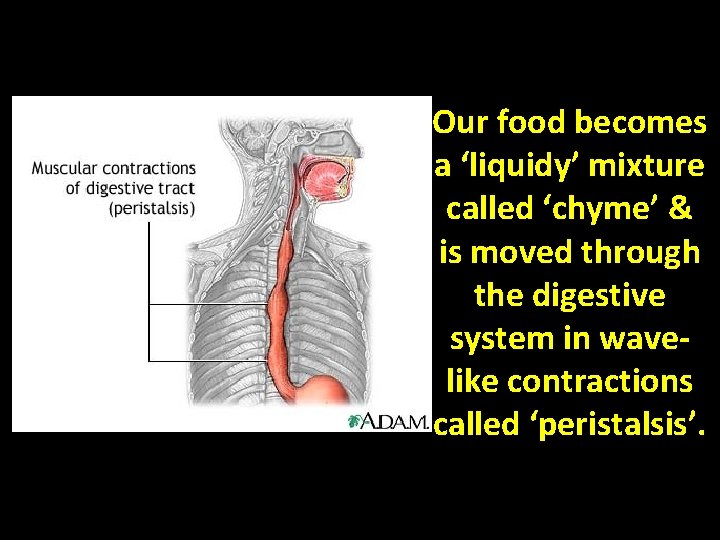
Our food becomes a ‘liquidy’ mixture called ‘chyme’ & is moved through the digestive system in wavelike contractions called ‘peristalsis’.
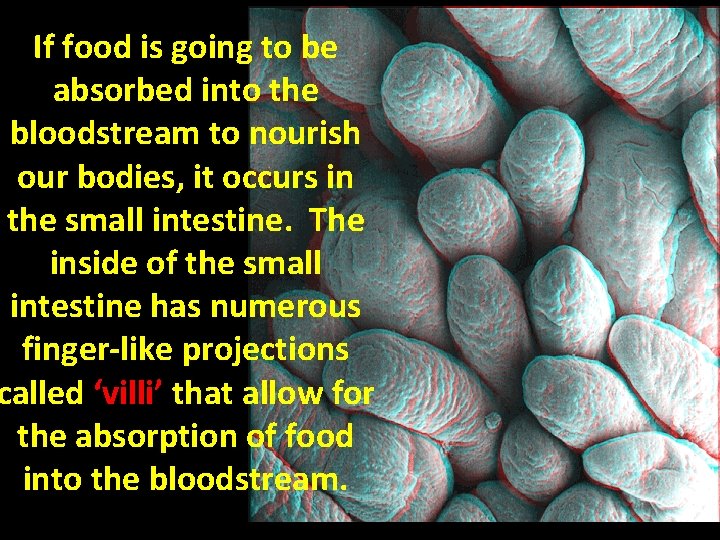
If food is going to be absorbed into the bloodstream to nourish our bodies, it occurs in the small intestine. The inside of the small intestine has numerous finger-like projections called ‘villi’ that allow for the absorption of food into the bloodstream.
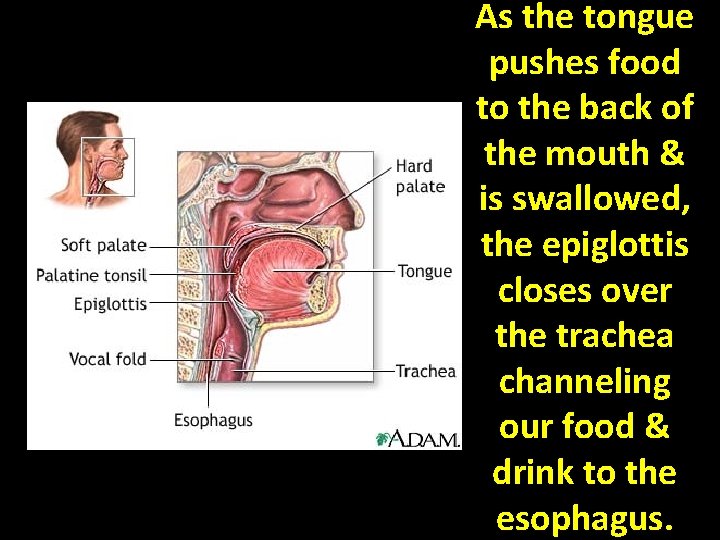
As the tongue pushes food to the back of the mouth & is swallowed, the epiglottis closes over the trachea channeling our food & drink to the esophagus.
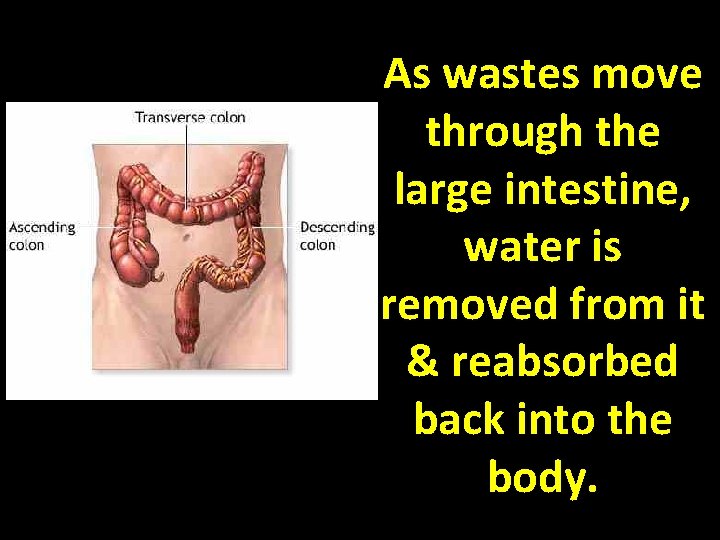
As wastes move through the large intestine, water is removed from it & reabsorbed back into the body.
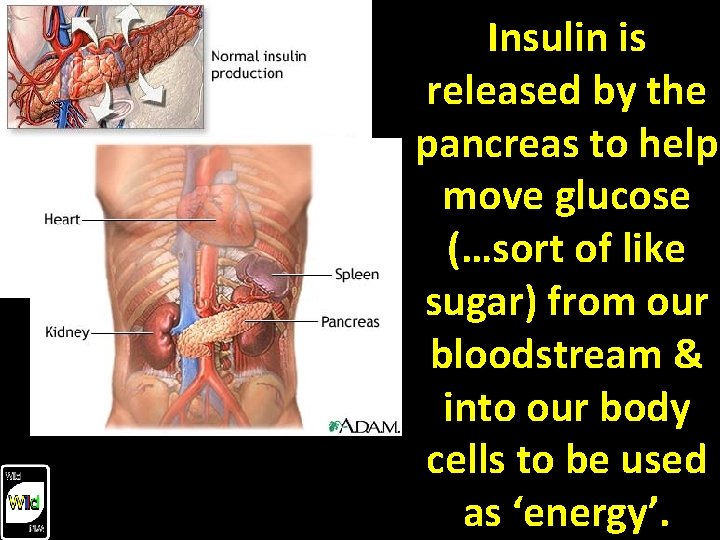
Insulin is released by the pancreas to help move glucose (…sort of like sugar) from our bloodstream & into our body cells to be used as ‘energy’.
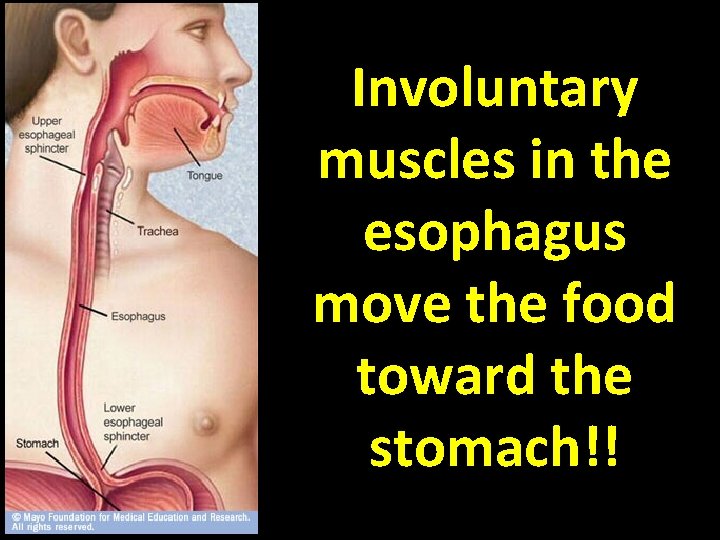
Involuntary muscles in the esophagus move the food toward the stomach!!