
Where Does our Power Come From L O
- Slides: 21
Where Does our Power Come From? • L. O: Evaluate the advantages and disadvantages of energy sources, and determine how energy should be generated in the future • Starter: – Make a list of things that you use electricity for each day (at least 8) EXT: Rank them from most to least important and write down why your #1 choice is most important
Sustainability • Use the following words to create a definition of sustainability: future needs generation today meeting • "Meeting the needs of people today without preventing future generations from meeting their needs. "
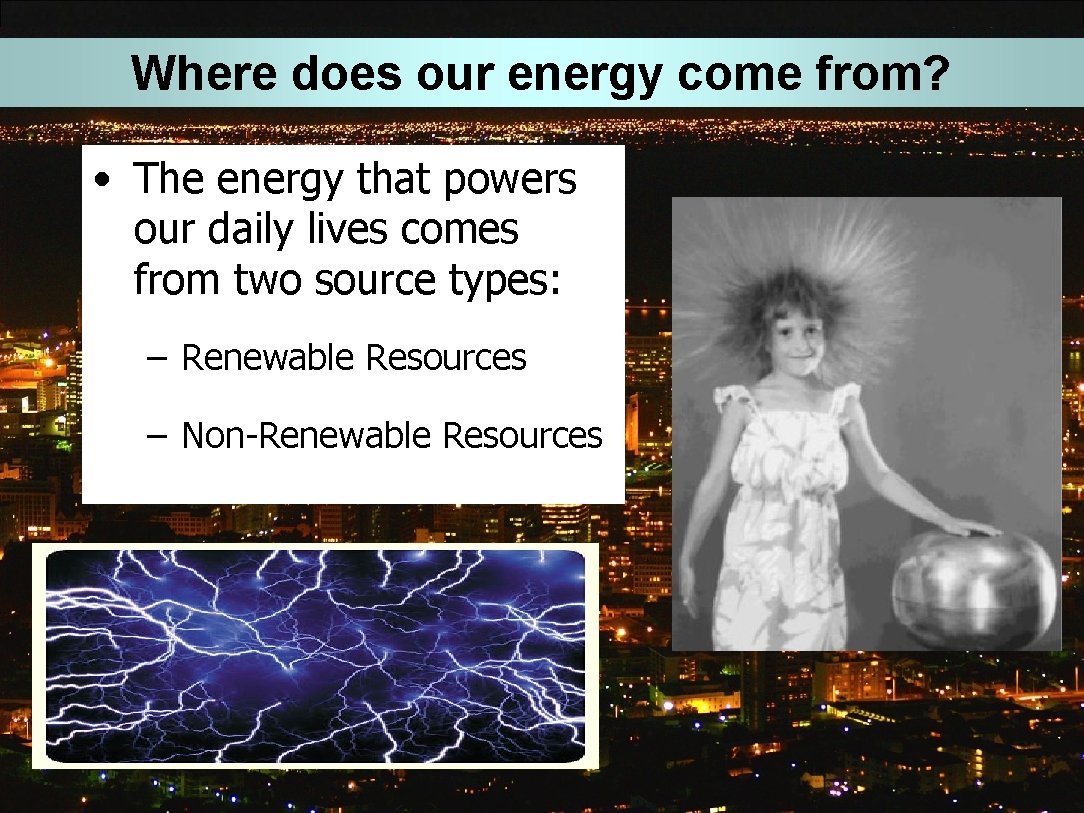
Where does our energy come from? • The energy that powers our daily lives comes from two source types: – Renewable Resources – Non-Renewable Resources
What are renewable resources? • Renewable energy comes from natural resources that can replace themselves over time. – These include the sun, water and wind which won’t run out.
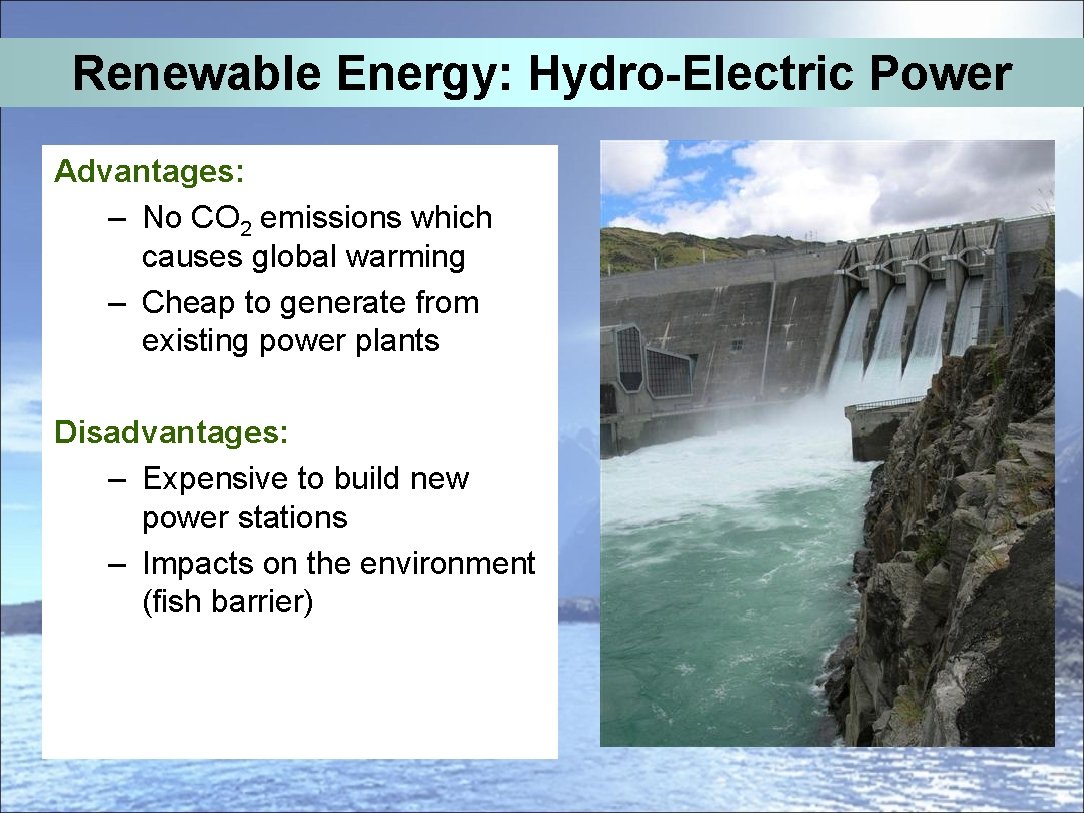
Renewable Energy: Hydro-Electric Power Advantages: – No CO 2 emissions which causes global warming – Cheap to generate from existing power plants Disadvantages: – Expensive to build new power stations – Impacts on the environment (fish barrier)
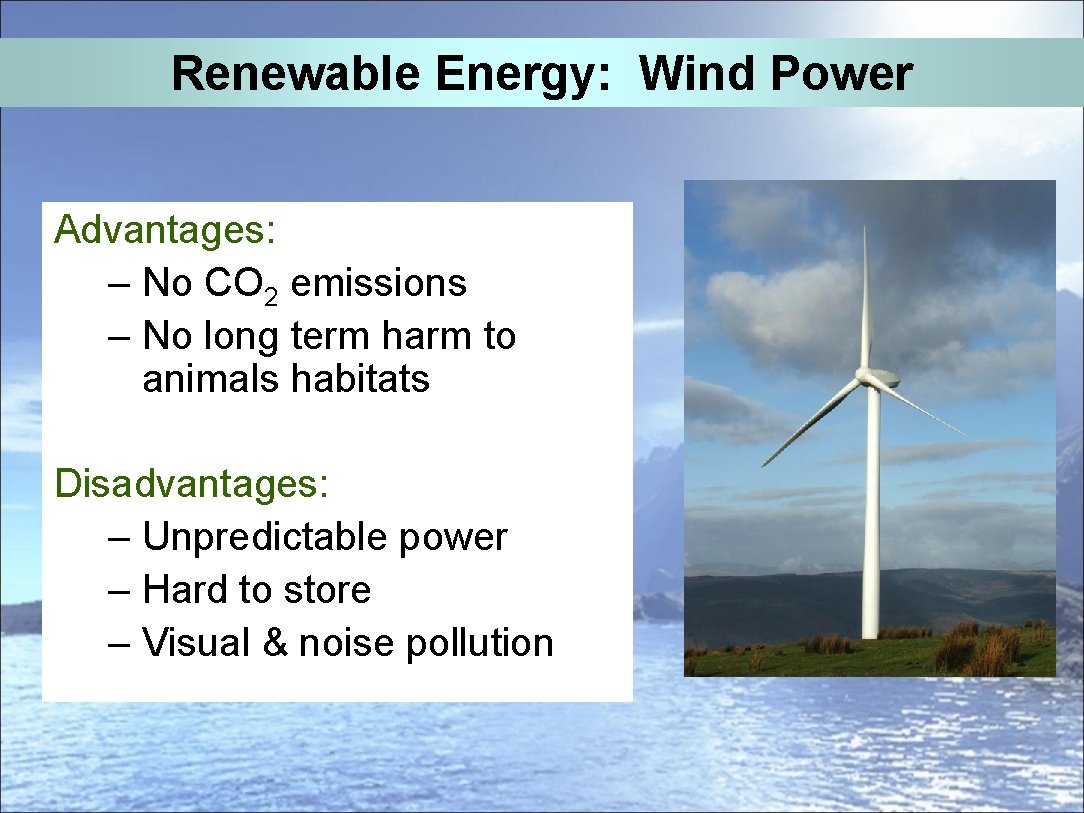
Renewable Energy: Wind Power Advantages: – No CO 2 emissions – No long term harm to animals habitats Disadvantages: – Unpredictable power – Hard to store – Visual & noise pollution
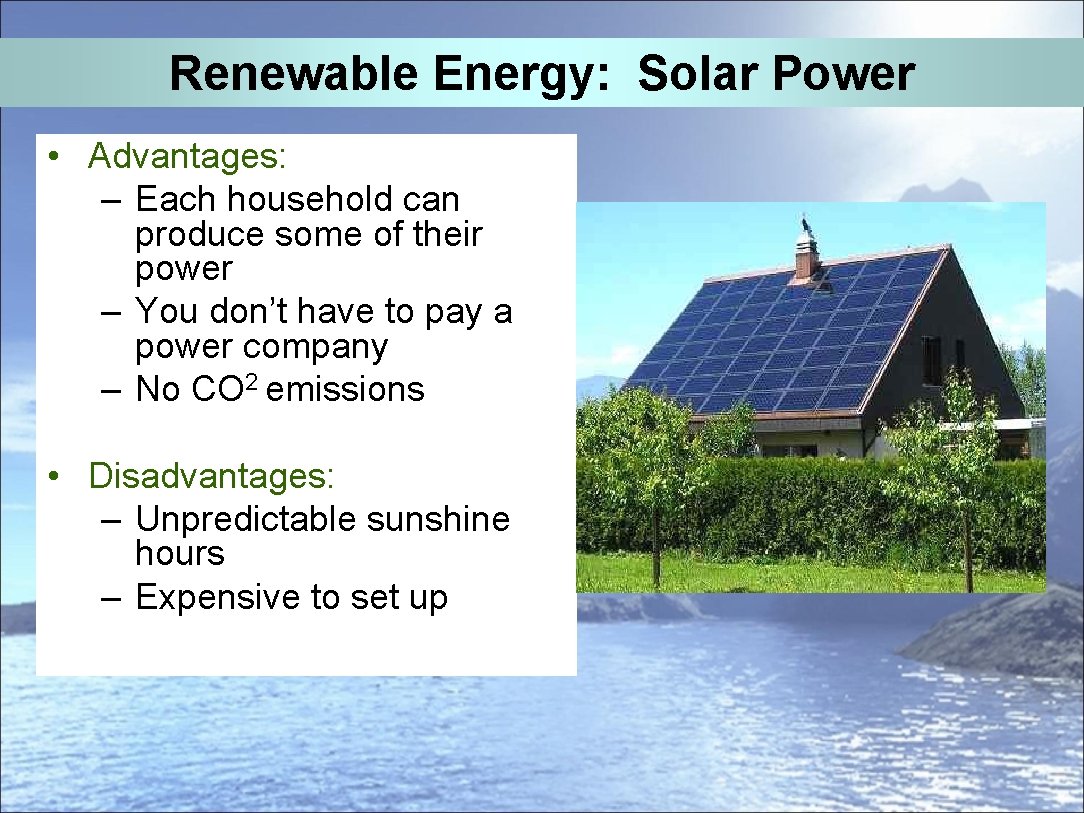
Renewable Energy: Solar Power • Advantages: – Each household can produce some of their power – You don’t have to pay a power company – No CO 2 emissions • Disadvantages: – Unpredictable sunshine hours – Expensive to set up
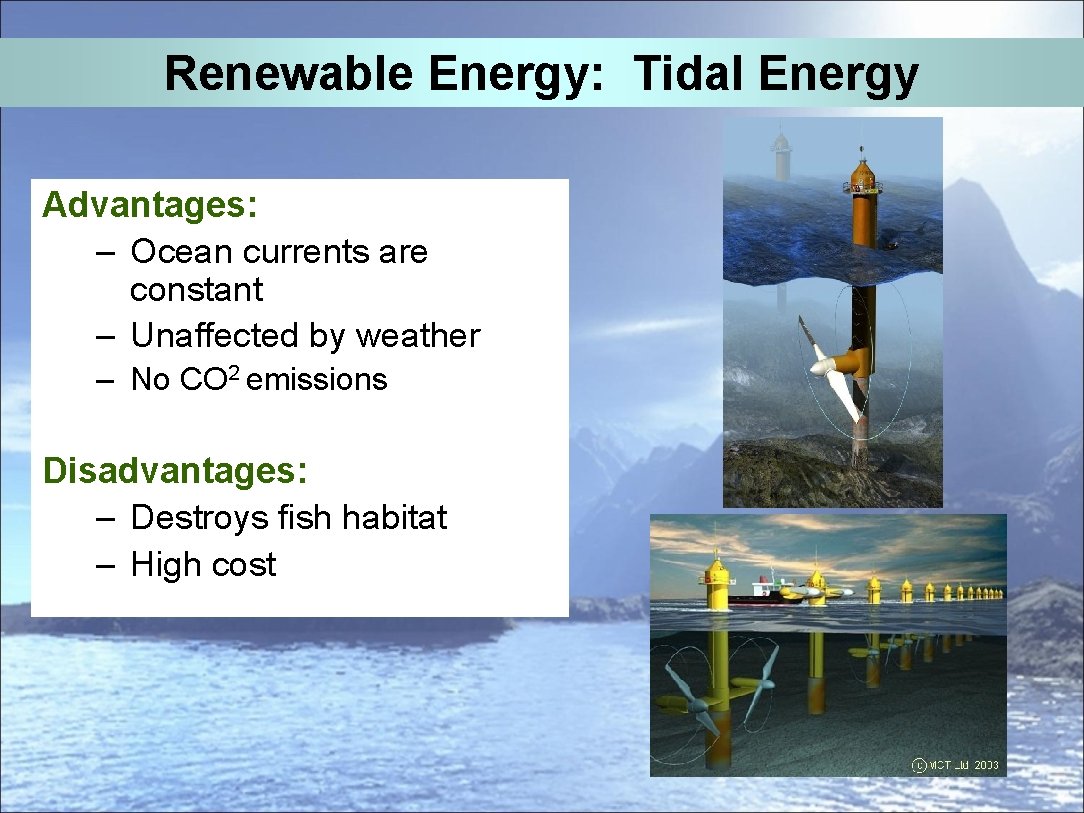
Renewable Energy: Tidal Energy Advantages: – Ocean currents are constant – Unaffected by weather – No CO 2 emissions Disadvantages: – Destroys fish habitat – High cost
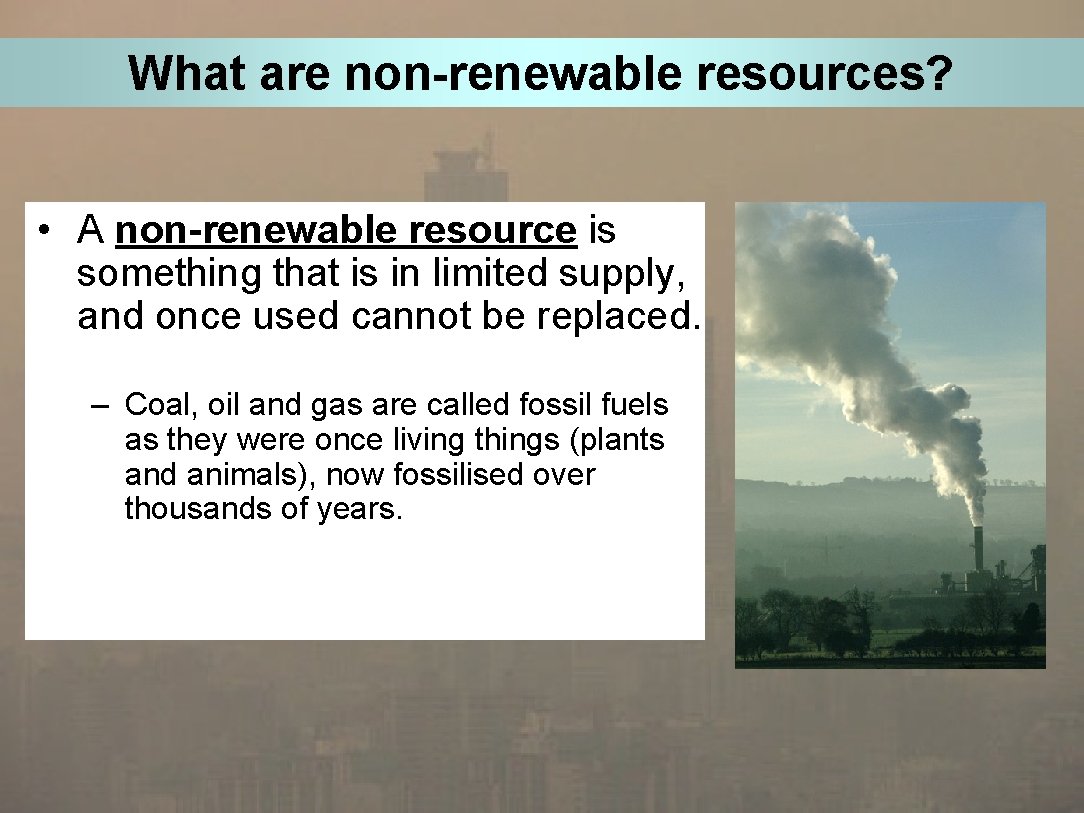
What are non-renewable resources? • A non-renewable resource is something that is in limited supply, and once used cannot be replaced. – Coal, oil and gas are called fossil fuels as they were once living things (plants and animals), now fossilised over thousands of years.
Non-Renewable Energy: Oil Advantages: – World set up for oil – Relatively Cheap Disadvantages: – Only 40 years supply readily available – CO 2 causes global warming – Smog – Oil ownership has started wars
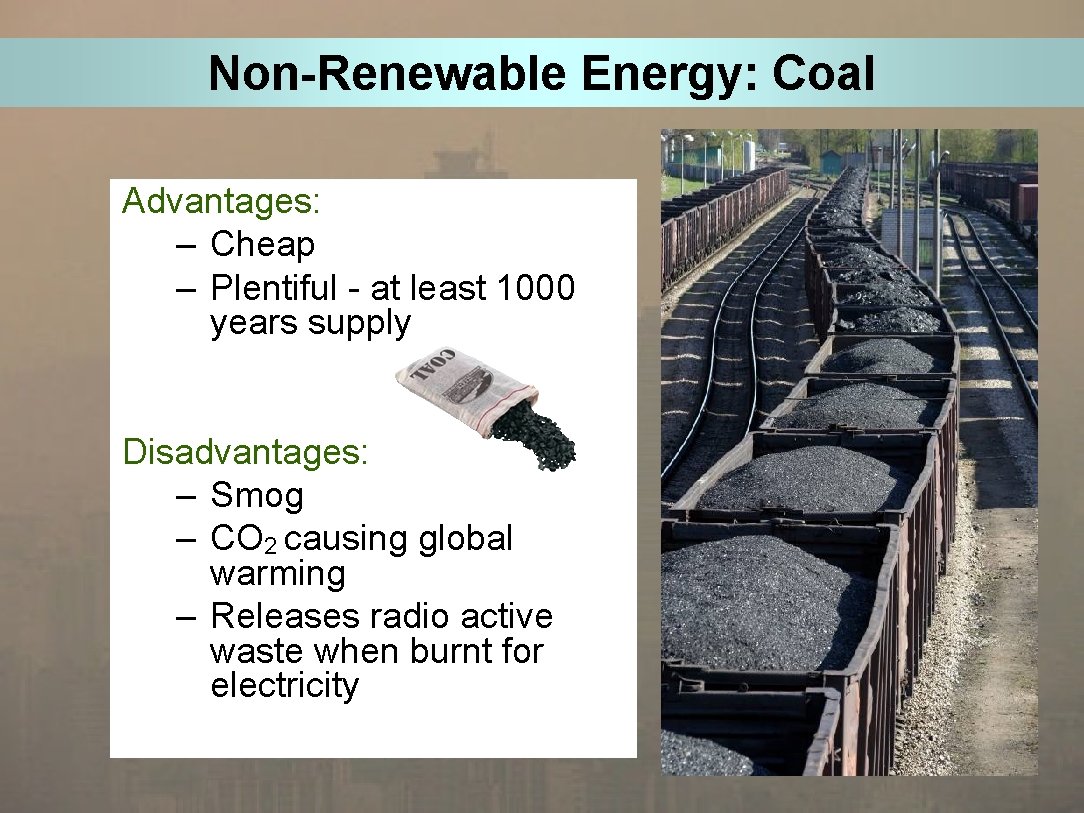
Non-Renewable Energy: Coal Advantages: – Cheap – Plentiful - at least 1000 years supply Disadvantages: – Smog – CO 2 causing global warming – Releases radio active waste when burnt for electricity
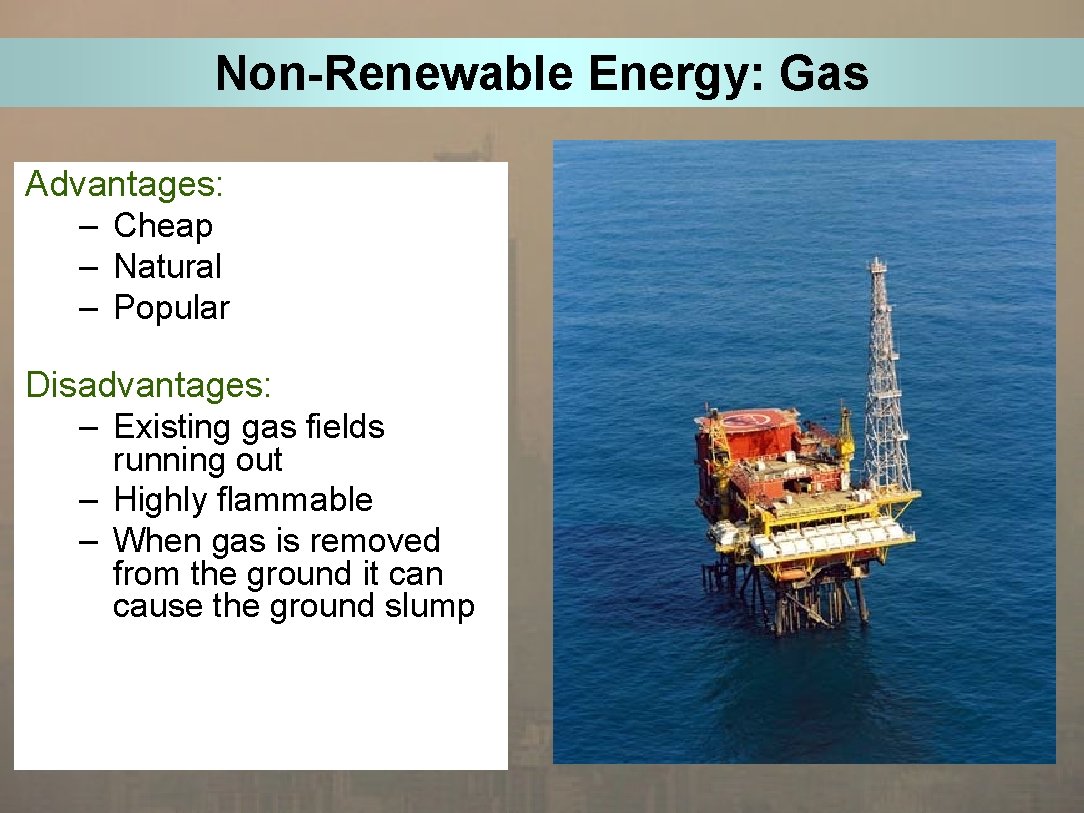
Non-Renewable Energy: Gas Advantages: – Cheap – Natural – Popular Disadvantages: – Existing gas fields running out – Highly flammable – When gas is removed from the ground it can cause the ground slump
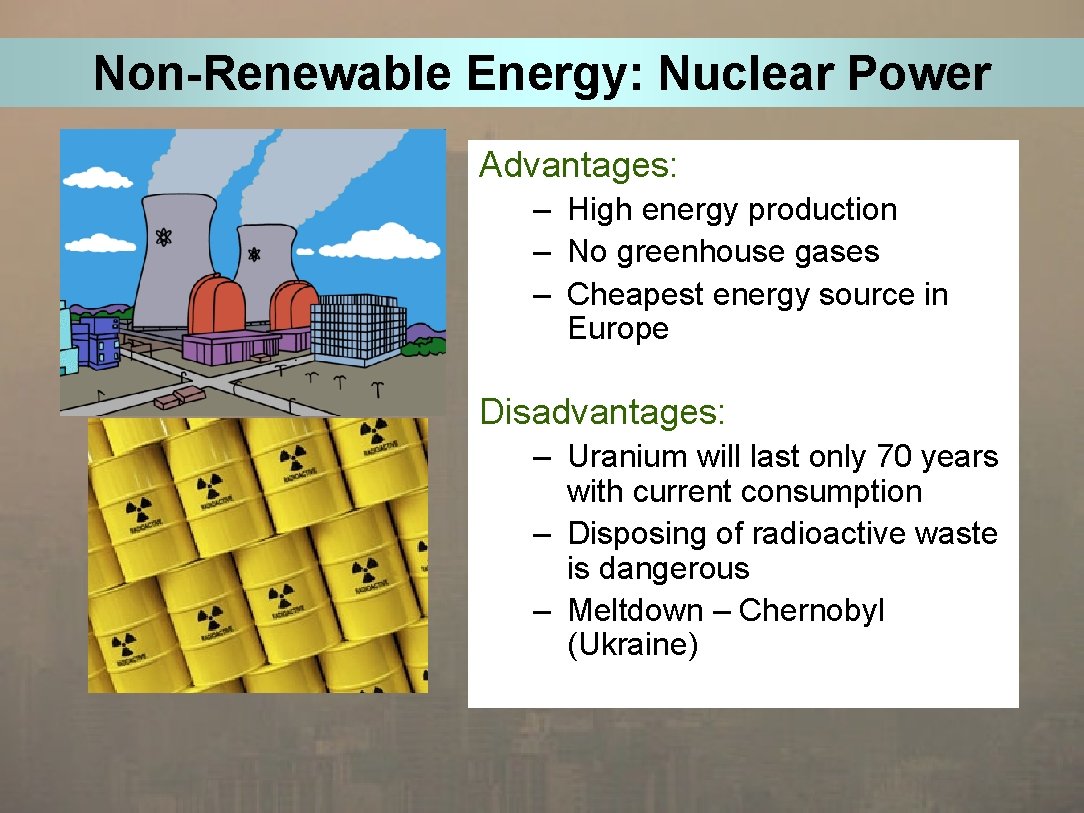
Non-Renewable Energy: Nuclear Power Advantages: – High energy production – No greenhouse gases – Cheapest energy source in Europe Disadvantages: – Uranium will last only 70 years with current consumption – Disposing of radioactive waste is dangerous – Meltdown – Chernobyl (Ukraine)
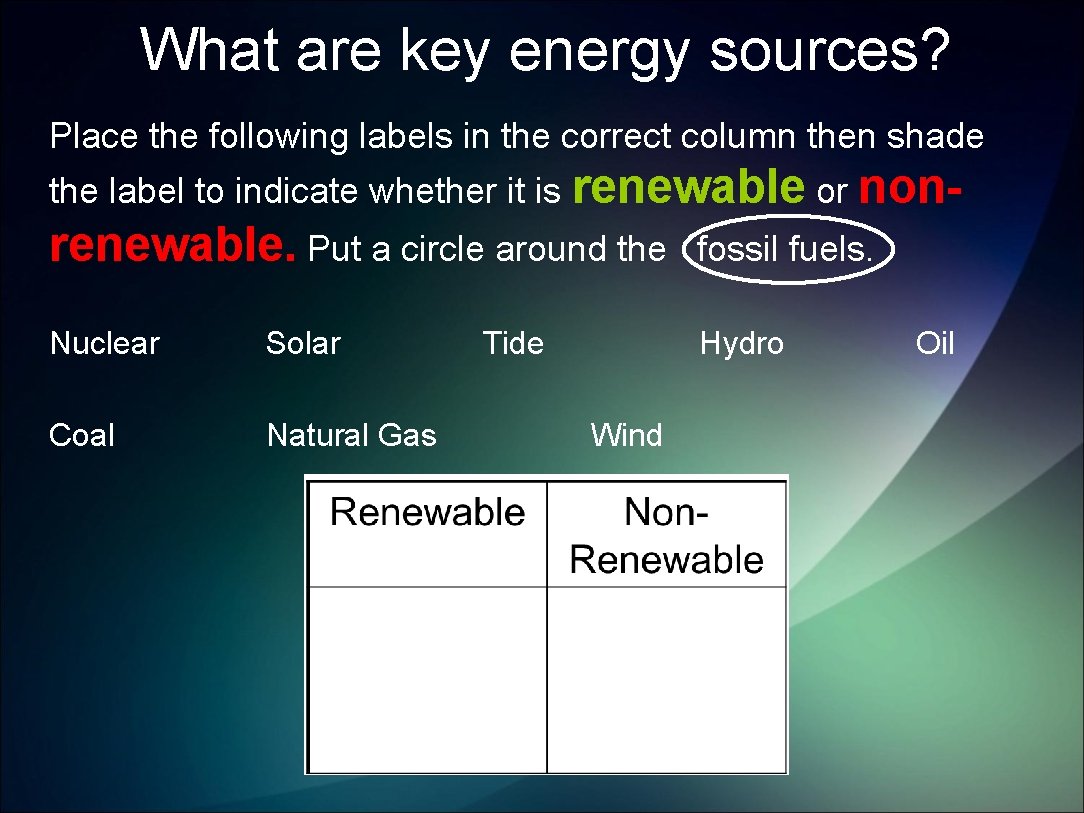
What are key energy sources? Place the following labels in the correct column then shade the label to indicate whether it is renewable or non- renewable. Put a circle around the fossil fuels. Nuclear Solar Hydro Coal Natural Gas Tide Wind Oil
Electricity Use
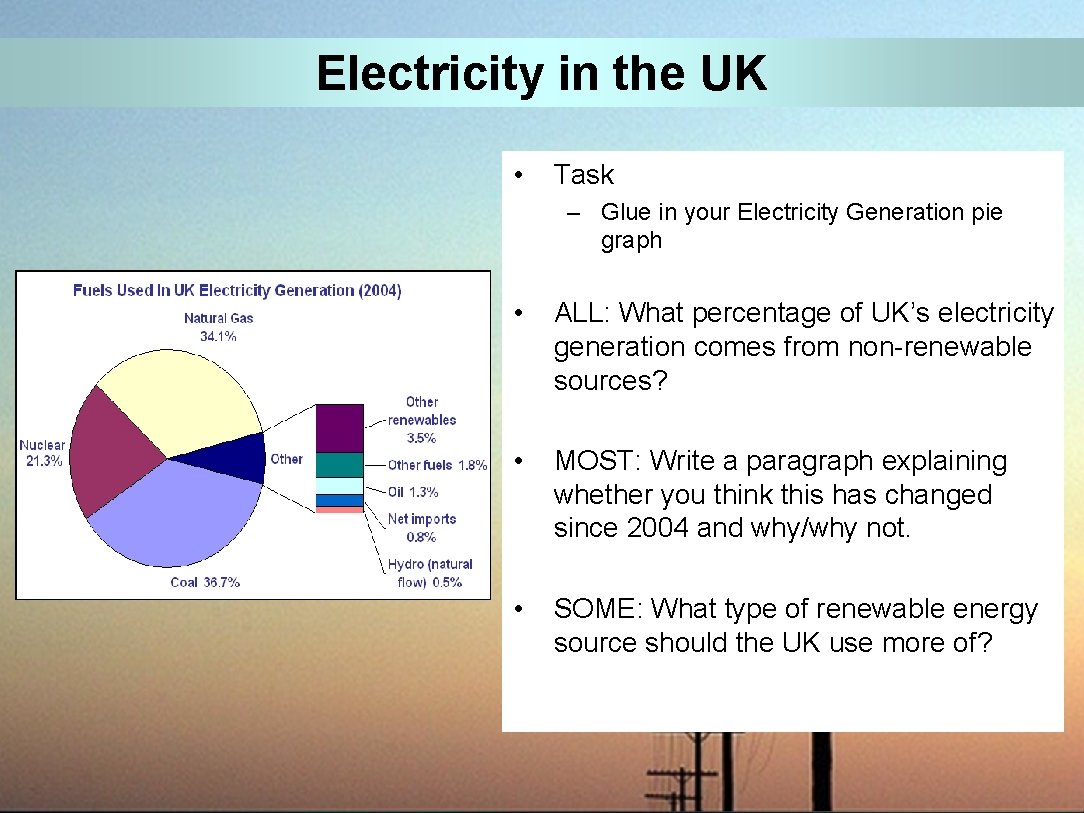
Electricity in the UK • Task – Glue in your Electricity Generation pie graph • ALL: What percentage of UK’s electricity generation comes from non-renewable sources? • MOST: Write a paragraph explaining whether you think this has changed since 2004 and why/why not. • SOME: What type of renewable energy source should the UK use more of?
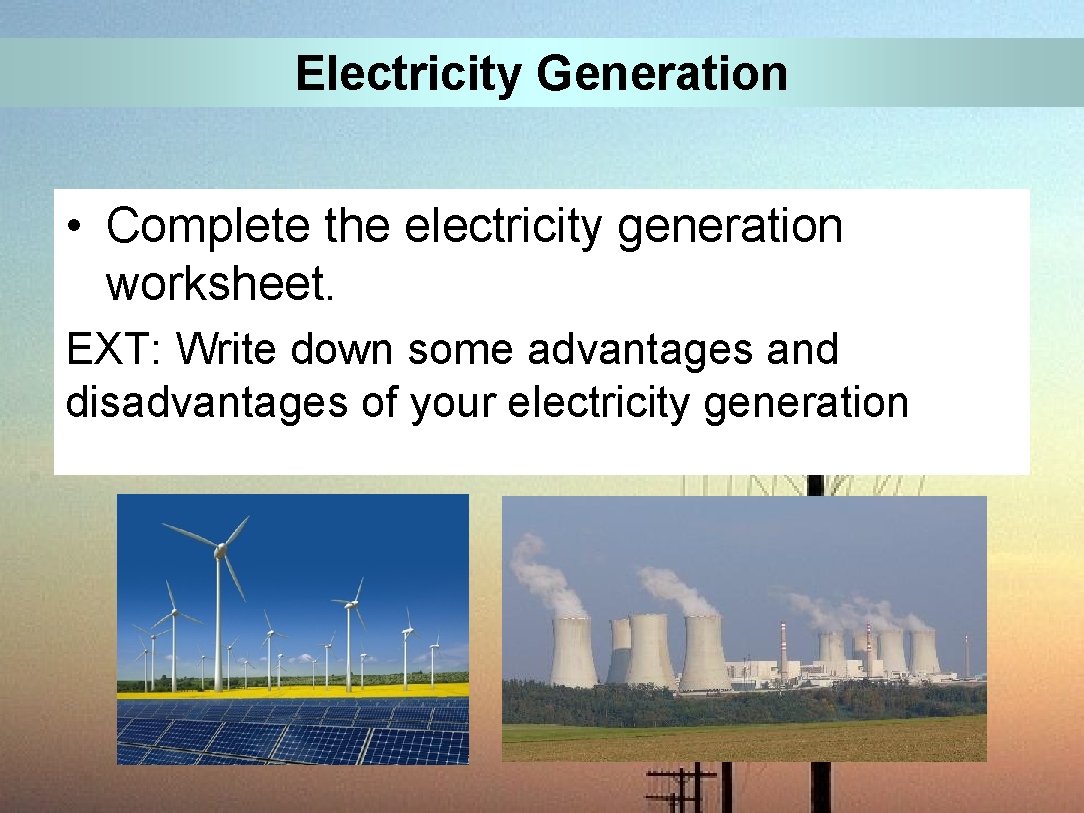
Electricity Generation • Complete the electricity generation worksheet. EXT: Write down some advantages and disadvantages of your electricity generation
Electricity Reduction • So why reduce the amount of electricity we use? – Save the environment from fossil fuels – Save the environment by reducing need for more wind farms and hydro-dams – SAVE MONEY!!
Electricity Reduction: Global Phenomenon • Earth Hour Sydney 2007 • Went global 2008 http: //www. youtube. com/watch? v=1 CRs 7 l. Rl. Po&safe=active • In 2013 approximately 1 billion people participated in Earth Hour • Think back to the list you made at the start of the lesson: Ø Could you go one day without electricity? Ø Why/why not?
L/O: Evaluate the advantages and disadvantages of energy sources, and determine how energy should be generated in the future. • Where are we on our progress line? • What questions do we have? I’m not really sure what the LO is about I fully understand the LO
Homework • Complete a 3, 2, 1: – 3 things you learnt – 2 things you found interesting – 1 question you still have