
Where are the hard manipulation problems Toby Walsh
Where are the hard manipulation problems? Toby Walsh NICTA and UNSW Sydney Australia Log. ICCC Day, COMSOC 2010
Meta-message (especially if your not interested in manipulation) • NP-hardness is only worst case • There is a successful methodology to study such issues – E. g. Finding a manipulation of STV, Computing winner of Dodgson rule, Finding tournament equilibrium set, Computing winner of a combinatorial auction, Finding a mixed strategy Nash equilibrium, Allocating indivisible goods efficiently and
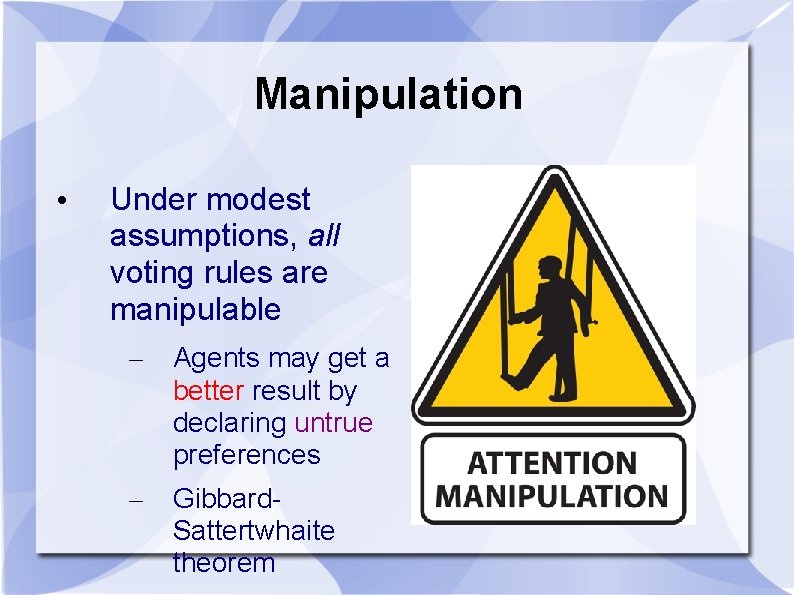
Manipulation • Under modest assumptions, all voting rules are manipulable – Agents may get a better result by declaring untrue preferences – Gibbard. Sattertwhaite theorem
Escaping Gibbard-Sattertwhaite Complexity may be a barrier to manipulation? Some voting rules (like STV) are NP-hard to manipulate [Bartholdi, Tovey & Trick 89, Bartholdi & Orlin 91]
Escaping Gibbard-Sattertwhaite Complexity may be a barrier to manipulation? Some voting rules (like STV) are NP-hard to manipulate Two settings: Unweighted votes, unbounded number of candidates Weighted votes, small number of candidates (cf uncertainty)
Complexity as a friend? NP-hardness is only worst case Manipulation might be easy in practice
![Is manipulation easy? • [Procaccia and Rosenschein 2007] – For many scoring rules, wide](http://slidetodoc.com/presentation_image/3235acba8aac0847d7f3f222db4e7515/image-7.jpg "Is manipulation easy? • [Procaccia and Rosenschein 2007] – For many scoring rules, wide")
Is manipulation easy? • [Procaccia and Rosenschein 2007] – For many scoring rules, wide variety of distribution of votes • • • Coalition = o(√n), prob(manipulation)↦ 0 Coalition = ω(√n), prob(manipulation)↦ 1 [Xia and Conitzer 2008] – For many voting rules (incl. scoring rules, STV, . . ) and votes drawn i. i. d • Coalition = O(np) for p<1/2 then prob(manipulation)↦ 0 • Coalition = Ω(np) for p>1/2 then
How can we look closer? Theoretical tools Average case Parameterized complexity Empirical tools Heuristic methods (see Tu 12. 15 pm, Empirical Study of Borda Manipulation) Phase transition (cf other NP-hard problems like SAT and TSP)
How can we look closer? Theoretical tools Average case Parameterized complexity Empirical tools Heuristic methods (see Tu 12. 15 pm, Empirical Study of Borda Manipulation) Phase transition (cf other NP-hard problems like SAT and TSP)
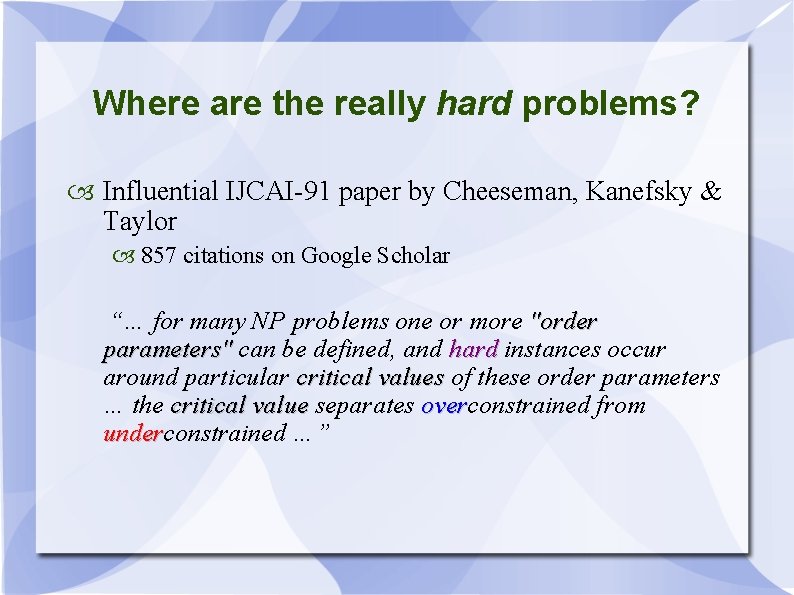
Where are the really hard problems? Influential IJCAI-91 paper by Cheeseman, Kanefsky & Taylor 857 citations on Google Scholar “… for many NP problems one or more "order parameters" can be defined, and hard instances occur around particular critical values of these order parameters … the critical value separates overconstrained from over underconstrained …” under
Where are the really hard problems? Influential IJCAI-91 paper by Cheeseman, Kanefsky & Taylor 857 citations on Google Scholar “We expect that in future computer scientists will produce "phase diagrams" for particular problem domains to aid in hard problem identification”
Where are the really hard problems? AAAI-92 (one year after Cheeseman et al) Hard & Easy Distributions of SAT Problems, Mitchell, Selman & Levesque 804 citations on Google Scholar
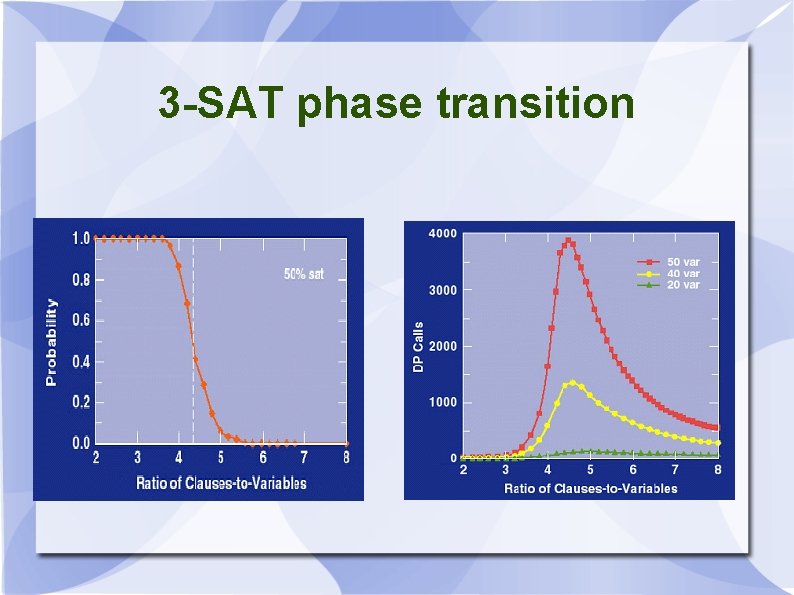
3 -SAT phase transition
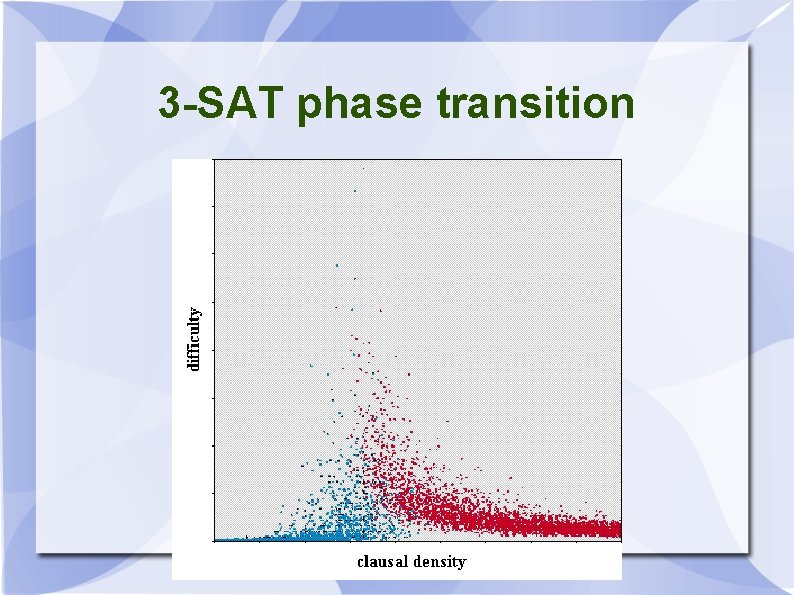
3 -SAT phase transition
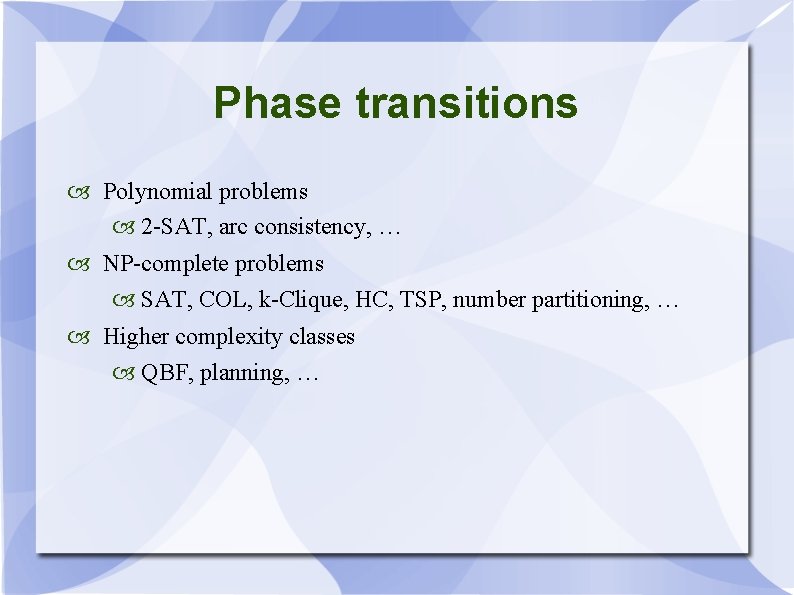
Phase transitions Polynomial problems 2 -SAT, arc consistency, … NP-complete problems SAT, COL, k-Clique, HC, TSP, number partitioning, … Higher complexity classes QBF, planning, …
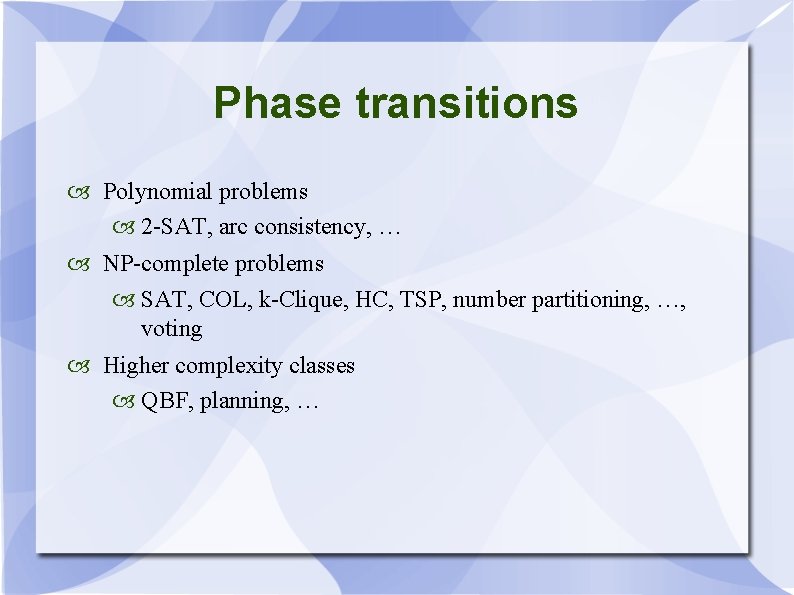
Phase transitions Polynomial problems 2 -SAT, arc consistency, … NP-complete problems SAT, COL, k-Clique, HC, TSP, number partitioning, …, voting Higher complexity classes QBF, planning, …
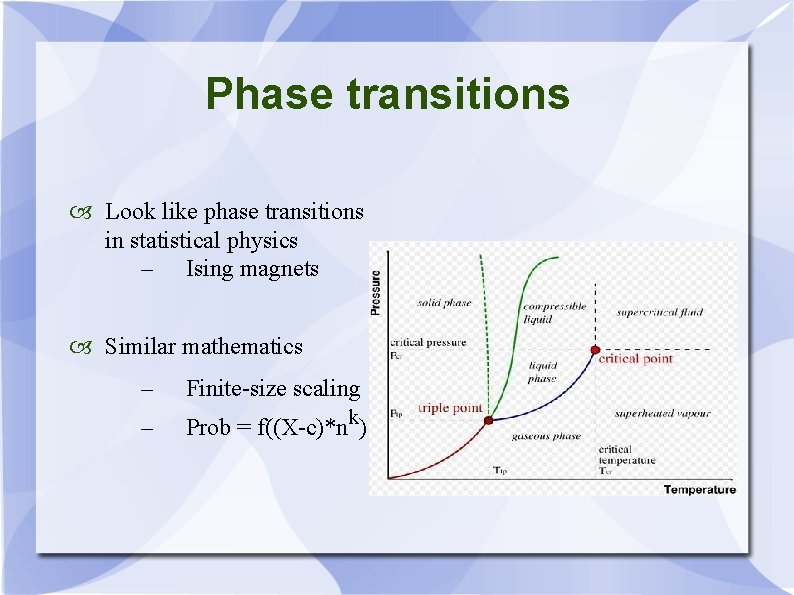
Phase transitions Look like phase transitions in statistical physics – Ising magnets Similar mathematics – Finite-size scaling – Prob = f((X-c)*nk)
Phase transitions in voting • Unweighted votes – • Unbounded number of candidates Weighted votes – Bounded number of candidates – Aside: informs probabilistic case
Phase transitions in voting • Unweighted votes – • STV Weighted votes – Veto
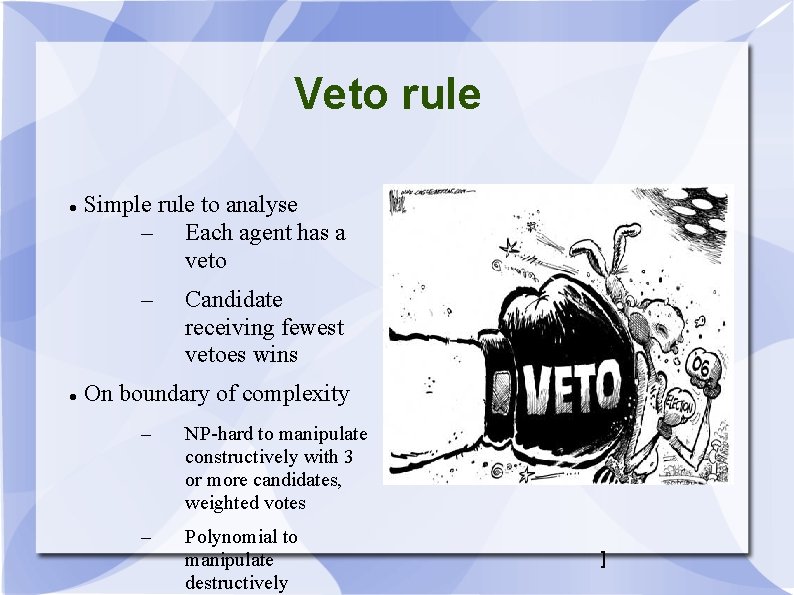
Veto rule Simple rule to analyse – Each agent has a veto – Candidate receiving fewest vetoes wins On boundary of complexity – NP-hard to manipulate constructively with 3 or more candidates, weighted votes – Polynomial to manipulate destructively ]
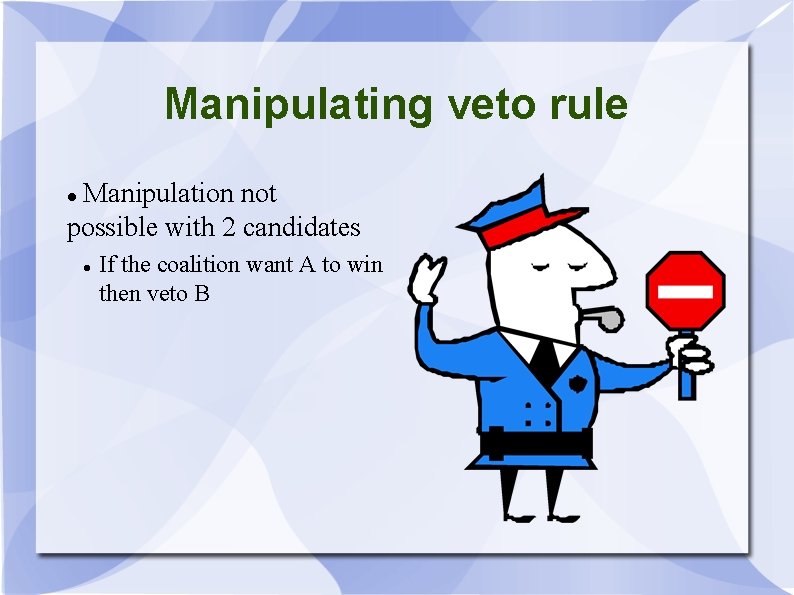
Manipulating veto rule Manipulation not possible with 2 candidates If the coalition want A to win then veto B
Manipulating veto rule Manipulation possible with 3 candidates Voting strategically can improve the result
Manipulating veto rule Suppose A has 4 vetoes B has 2 vetoes C has 3 vetoes Coalition of 5 voters Prefer A to B to C
Manipulating veto rule Suppose A has 4 vetoes B has 2 vetoes C has 3 vetoes Coalition of 5 voters Prefer A to B to C If they all veto C, then B wins
Manipulating veto rule Suppose A has 4 vetoes B has 2 vetoes C has 3 vetoes Coalition of 5 voters Prefer A to B to C Strategic vote is for 3 to veto B and 2 to veto C
Manipulating veto rule With 3 or more candidates Unweighted votes Manipulation is polynomial to compute Weighted votes Destructive manipulation is polynomial Constructive manipulation is NPhard (=number partitioning)
Uniform votes n agents 3 candidates manipulating coalition of size m weights from [0, k] Weighted form of impartial culture model
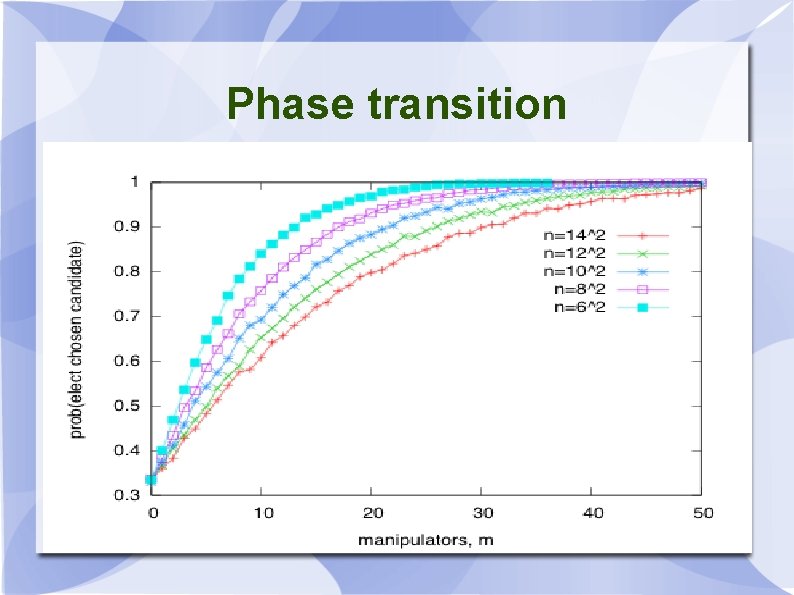
Phase transition
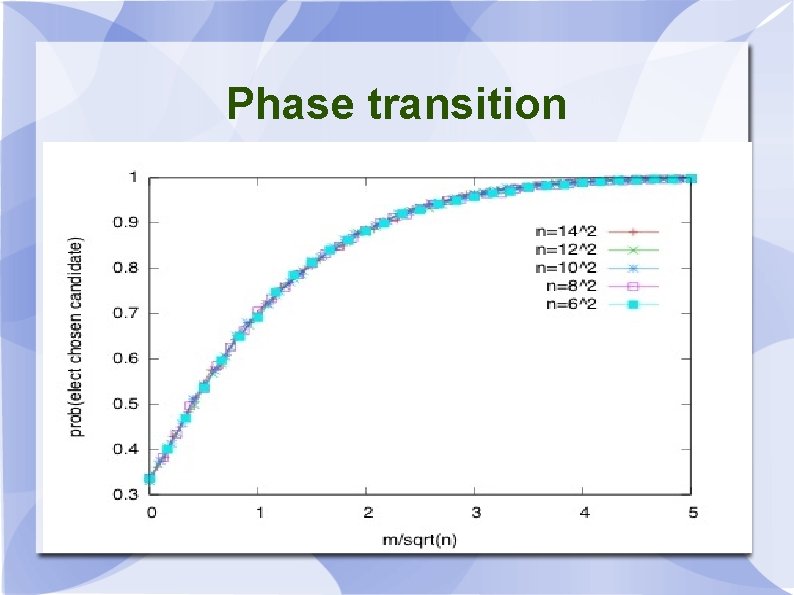
Phase transition
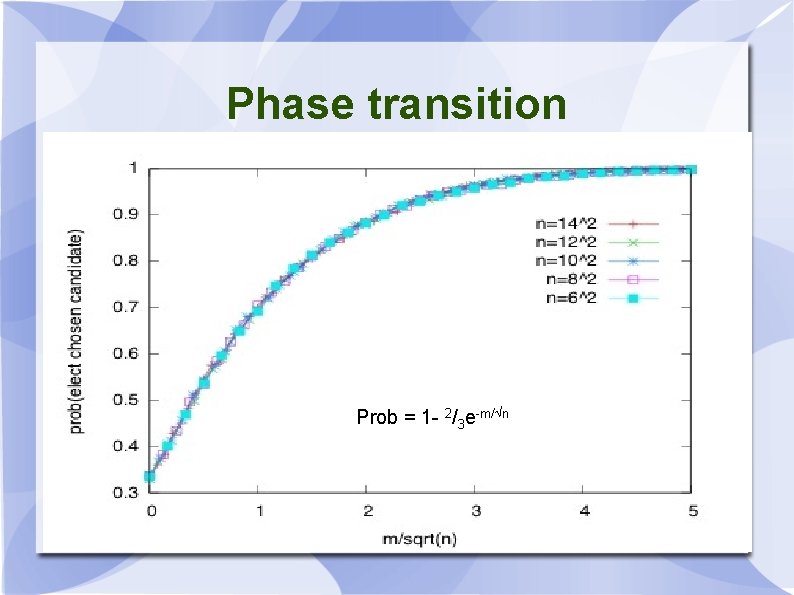
Phase transition Prob = 1 - 2/3 e-m/ n
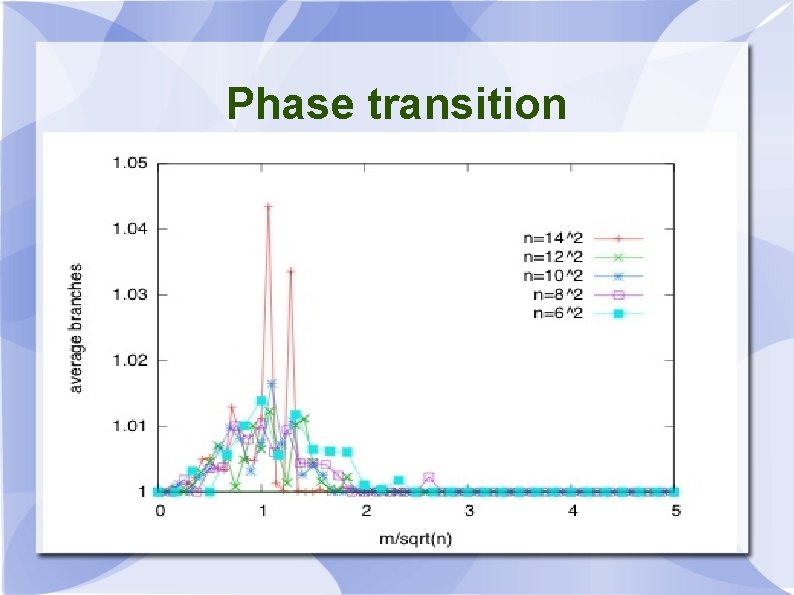
Phase transition
Phase transition Similar results with other distributions of votes Different size weights Normally distributed weights . .
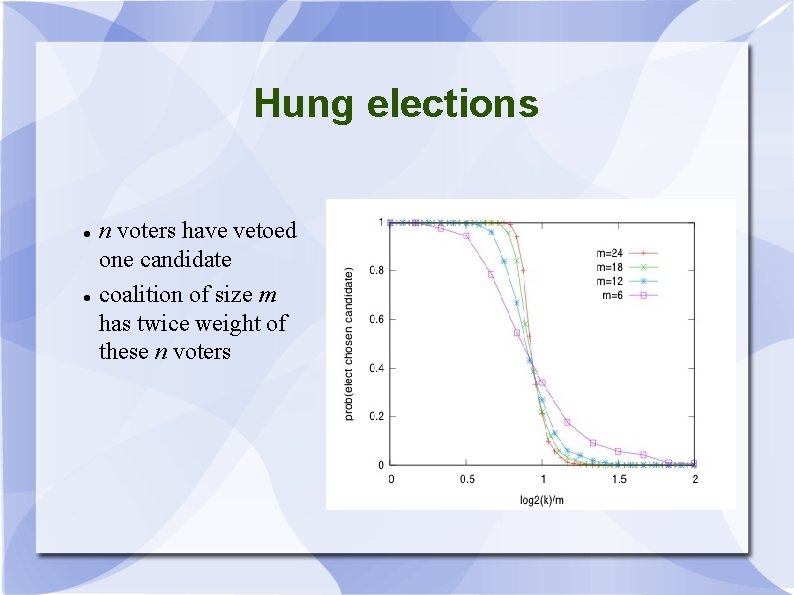
Hung elections n voters have vetoed one candidate coalition of size m has twice weight of these n voters
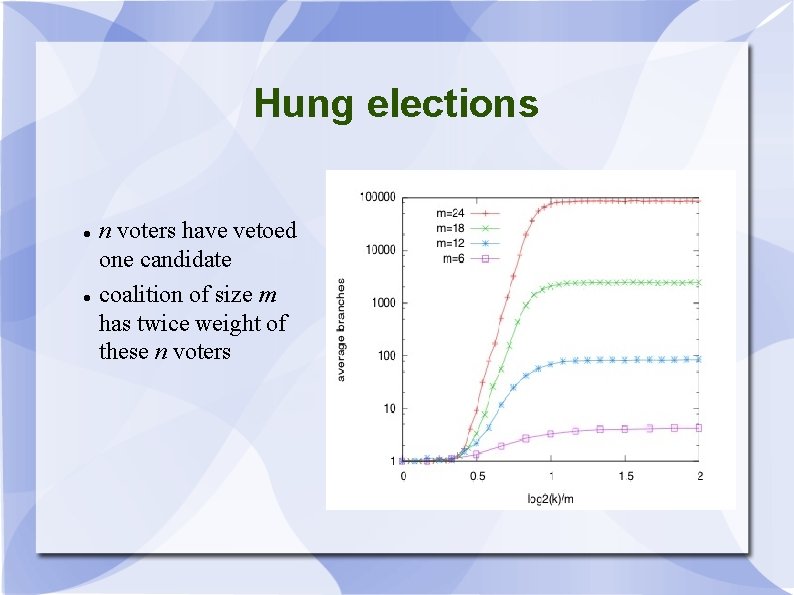
Hung elections n voters have vetoed one candidate coalition of size m has twice weight of these n voters
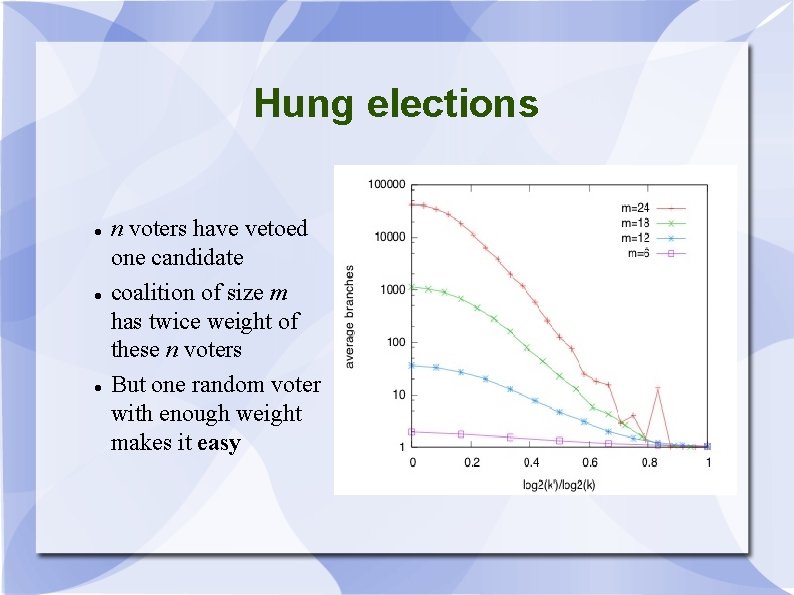
Hung elections n voters have vetoed one candidate coalition of size m has twice weight of these n voters But one random voter with enough weight makes it easy
What if votes are unweighted? STV is then one of the most difficult rules to manipulate One of few rules where it is NP-hard Even for one manipulating agent to compute a manipulation Multiple rounds, complex manipulations. . .
Single Transferable Voting • Proceeds in rounds • If any candidate has a majority, they win • Otherwise eliminate candidate with fewest 1 st place votes – Transfer their votes to 2 nd choices Used by Academy Awards, American Political Science Association, IOC, UK Labour Party, . . .
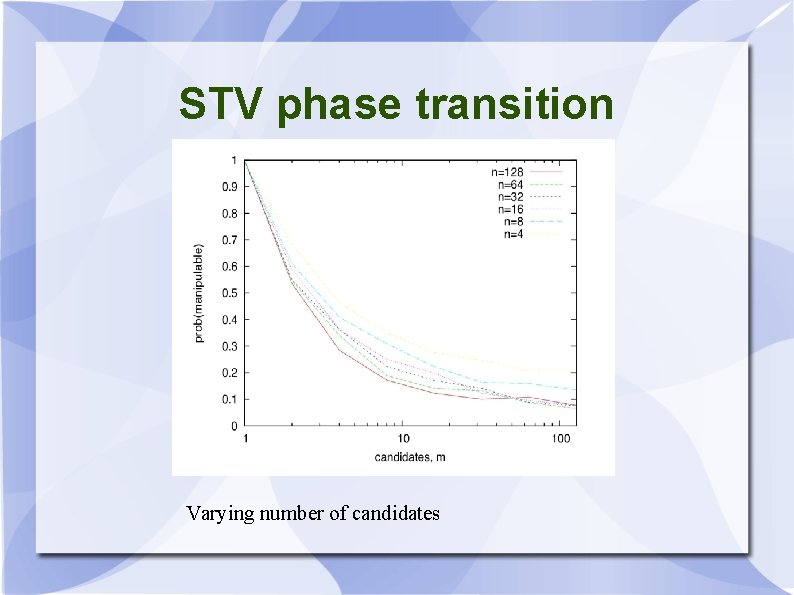
STV phase transition Varying number of candidates
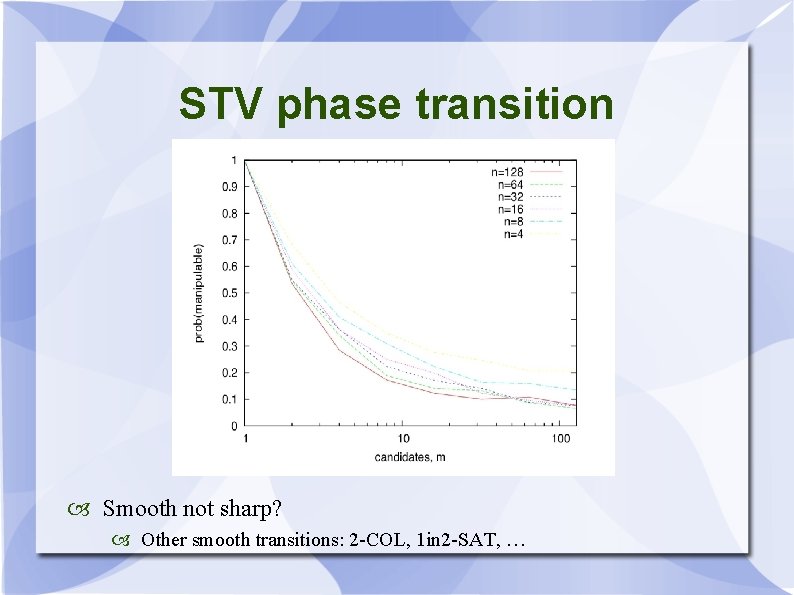
STV phase transition Smooth not sharp? Other smooth transitions: 2 -COL, 1 in 2 -SAT, …
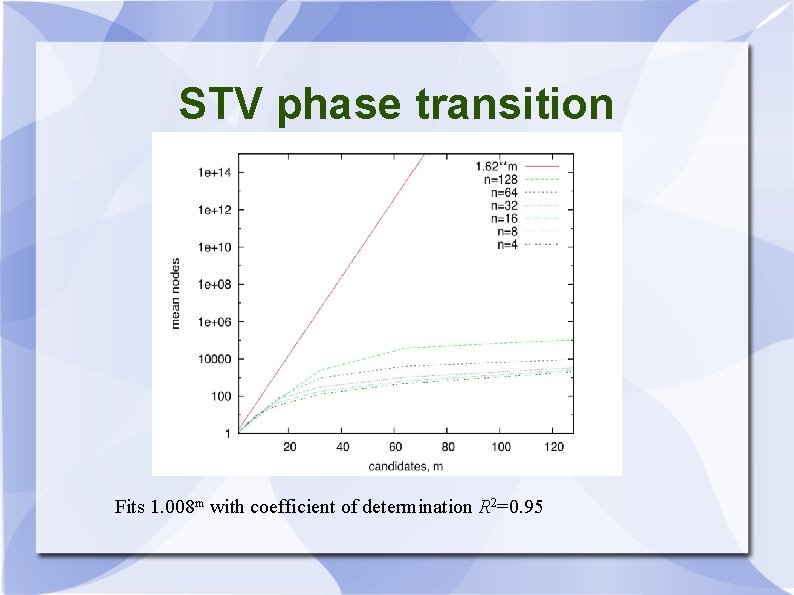
STV phase transition Fits 1. 008 m with coefficient of determination R 2=0. 95
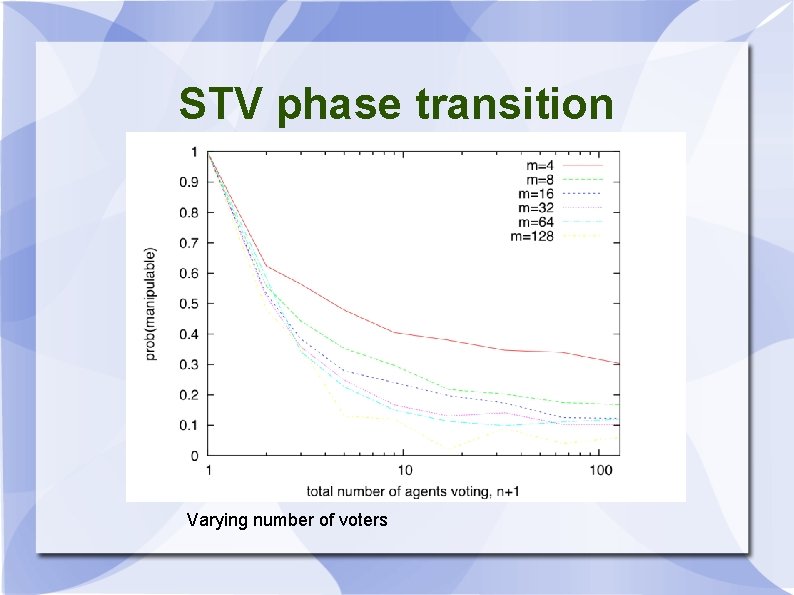
STV phase transition Varying number of voters
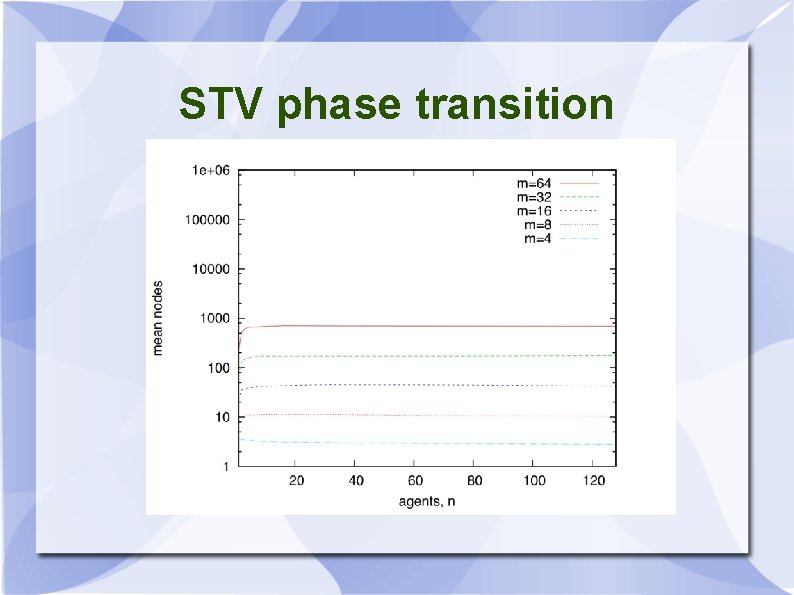
STV phase transition
STV phase transition Similar results with many voting distributions Uniform votes (IC model) Single-peaked votes Polya-Eggenberger urn model (correlated votes) Real elections …
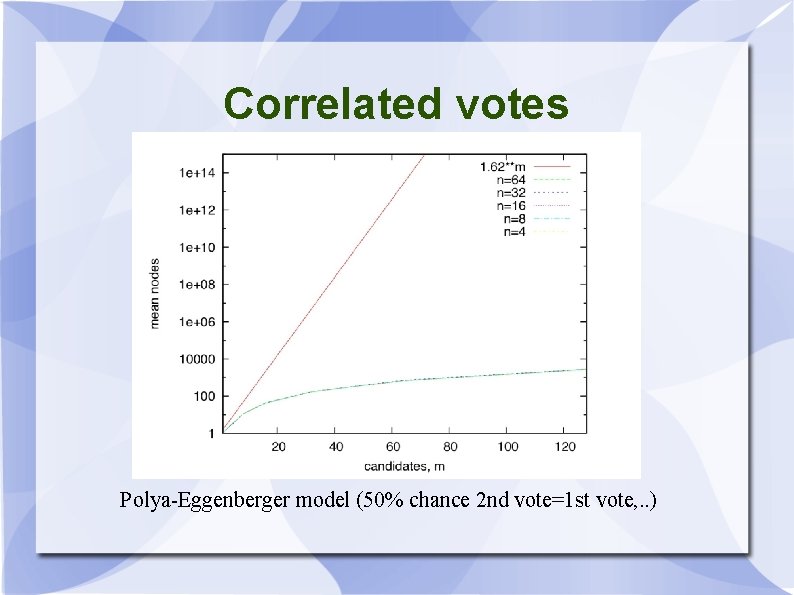
Correlated votes Polya-Eggenberger model (50% chance 2 nd vote=1 st vote, . . )
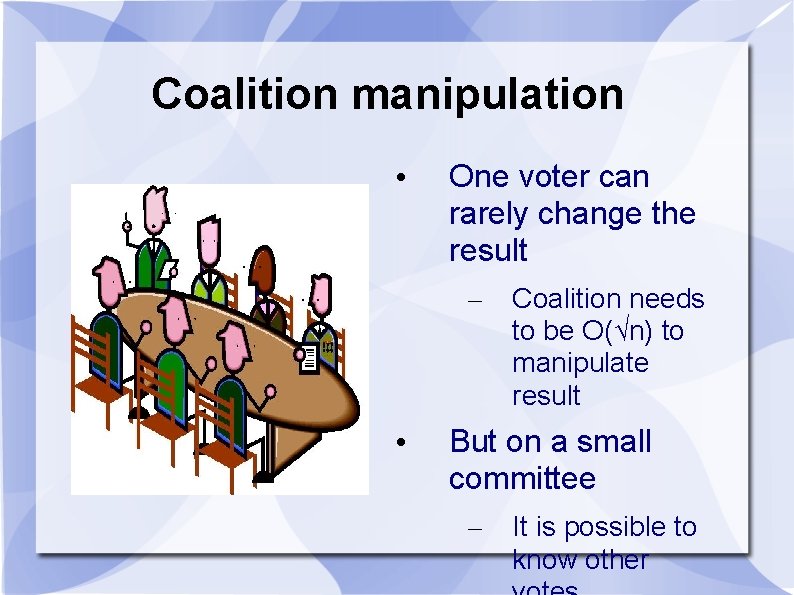
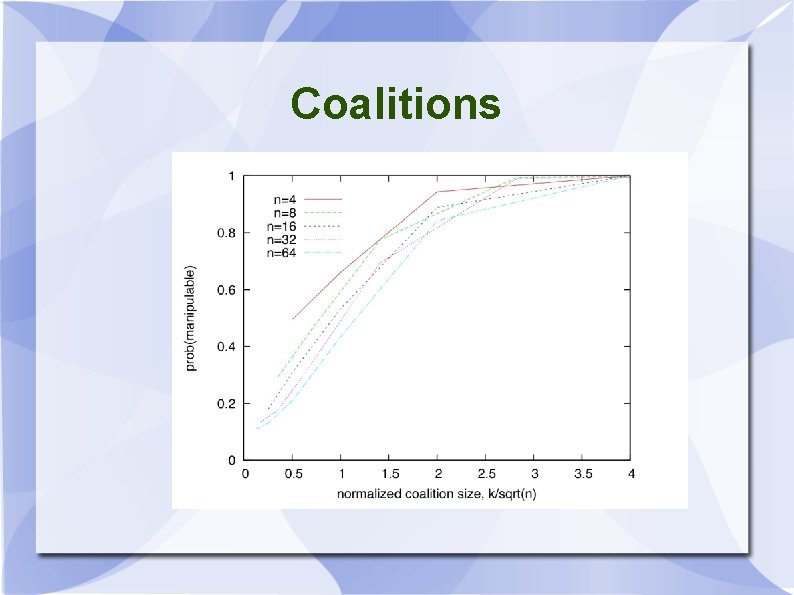
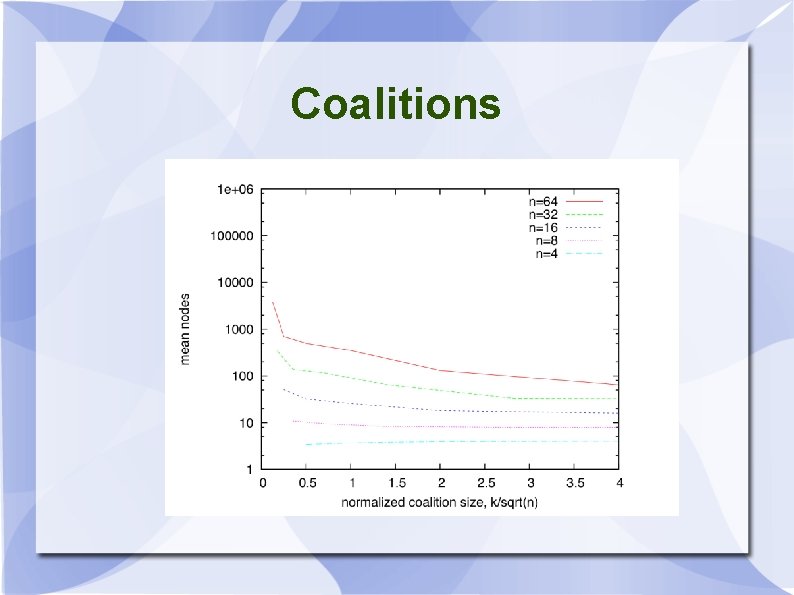
Coalition manipulation • One voter can rarely change the result – • Coalition needs to be O(√n) to manipulate result But on a small committee – It is possible to know other
Coalitions
Coalitions
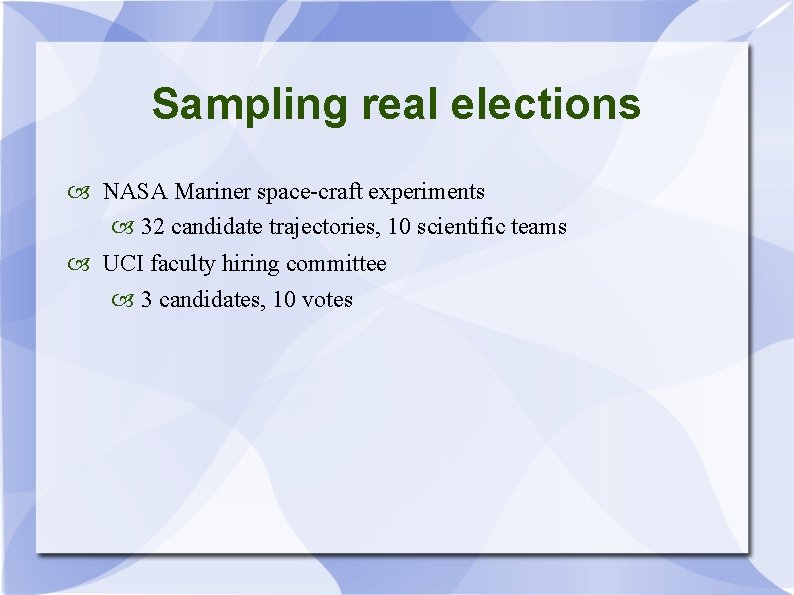
Sampling real elections NASA Mariner space-craft experiments 32 candidate trajectories, 10 scientific teams UCI faculty hiring committee 3 candidates, 10 votes
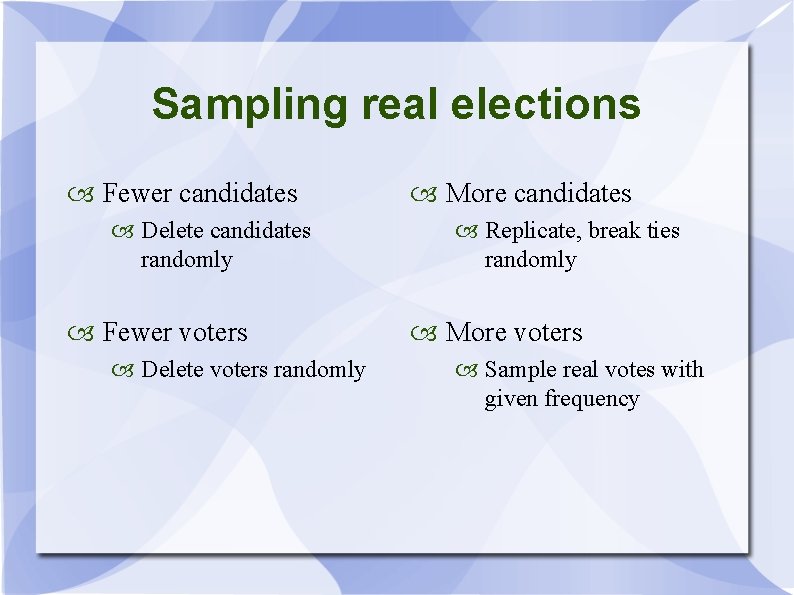
Sampling real elections Fewer candidates Delete candidates randomly Fewer voters Delete voters randomly More candidates Replicate, break ties randomly More voters Sample real votes with given frequency
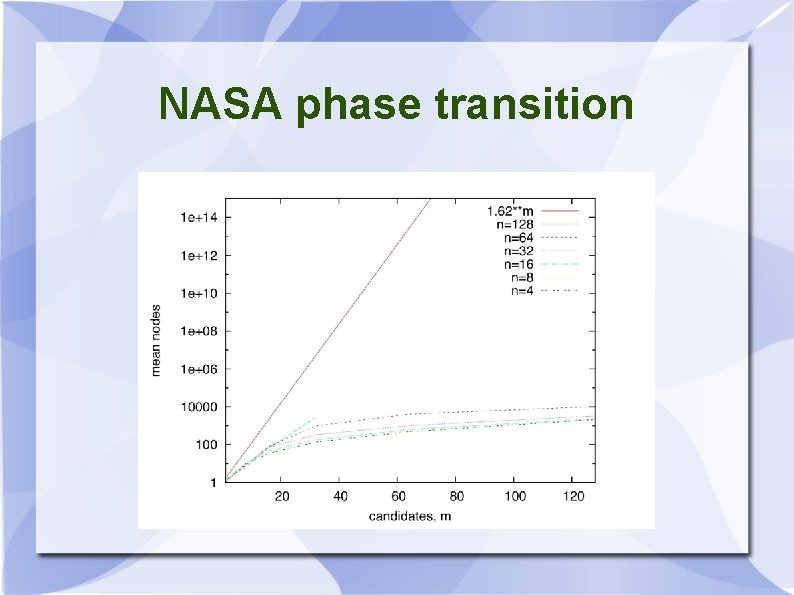
NASA phase transition
Plea: where is Vote. Lib? • • Random problems can be misleading – E. g. in random SAT, a few problems have exponential #sols – SAT competition has non-random track Most fields have a (real) benchmark
Conclusions In many cases, NP hardness does not appear to be a significant barrier to manipulation! How else might we escape Gibbard Sattertwhaite? Higher complexity classes Undecidability Incentive mechanisms (money) Cryptography (one way functions) Uncertainty (random voting methods) Quantum …
Conclusions • In computational social choice – Computational complexity often only tells us about worst case – Empirical studies of phase transition behaviour may give useful additional insight – Could be applied to other computational problems: voting, combinatorial auctions, judgement aggregation, fair division, Nash equilibria, . . .
Questions? Some links into the literature [J. Barthodli, C. Tovey and M. Trick, The Computational Difficulty of Manipulating an Election, Social Choice and Welfare, 6(3) 1989] J. Bartholdi & J. Orlin, Single transferable vote resists strategic voting, Social Choice and Welfare 8(4), 1991] [V. Conitzer, T. Sandholm and J. Lang, When are Election with Few Candidates Hard to Manipulate, JACM 54(3) 2007] [T. Walsh, Where are the really hard manipulation problems? The phase transition in manipulating the veto rule, Proc. of IJCAI 2009] [T. Walsh, An Empirical Study of the Manipulability of Single Transferable Voting, Proc. of ECAI 2010]
Come to Barcelona! IJCAI 2011 W/shop proposal: Oct 4 2010 Tutorial proposal: Oct 15 2010 Paper submission: Jan 24 2011 Conference: Jul 19 -22 2011
- Slides: 55