
When you realize how perfect everything is you

- Slides: 39
“When you realize how perfect everything is, you will tilt your head back and laugh at the sky” -Budda The Outcomes of Evolution Chapter 18
What is a Species? �Biological species concept: species are groups of actually or potentially interbreeding natural populations which are _______ from other such groups �Reproductive isolation: the inability of individuals from two populations to _________ with each other, thereby making it impossible for gene exchange between the populations �Between � Only 3 million and 15 million species exist on earth 1. 8 million species have been described � 99% of all species that have existed are extinct!
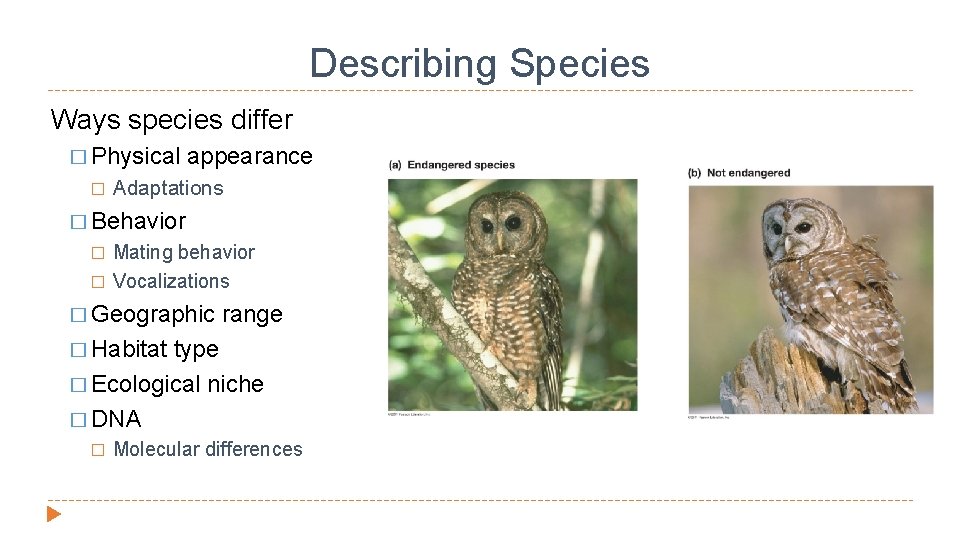
Describing Species Ways species differ � Physical � appearance Adaptations � Behavior � � Mating behavior Vocalizations � Geographic range � Habitat type � Ecological niche � DNA � Molecular differences
Evolution of a New Species �Macroevolution: Large-scale evolution occurring over long periods of time (geologic time) that results in the formation of new species (speciation) �Microevolution: Small-scale evolutionary change resulting from a change of the _________ of a population �Speciation: Development of a new species through evolutionary processes
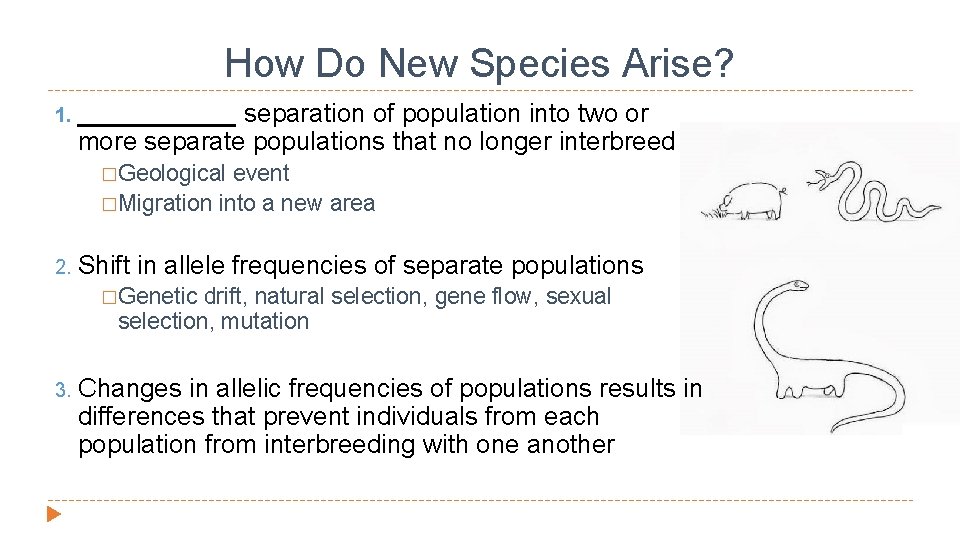
How Do New Species Arise? 1. ______ separation of population into two or more separate populations that no longer interbreed �Geological event �Migration into a new area 2. Shift in allele frequencies of separate populations �Genetic drift, natural selection, gene flow, sexual selection, mutation 3. Changes in allelic frequencies of populations results in differences that prevent individuals from each population from interbreeding with one another
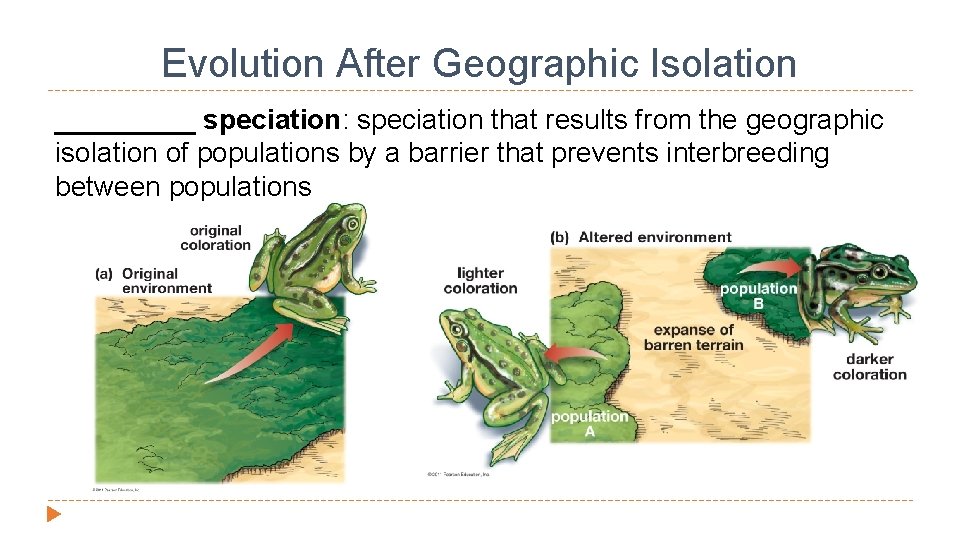
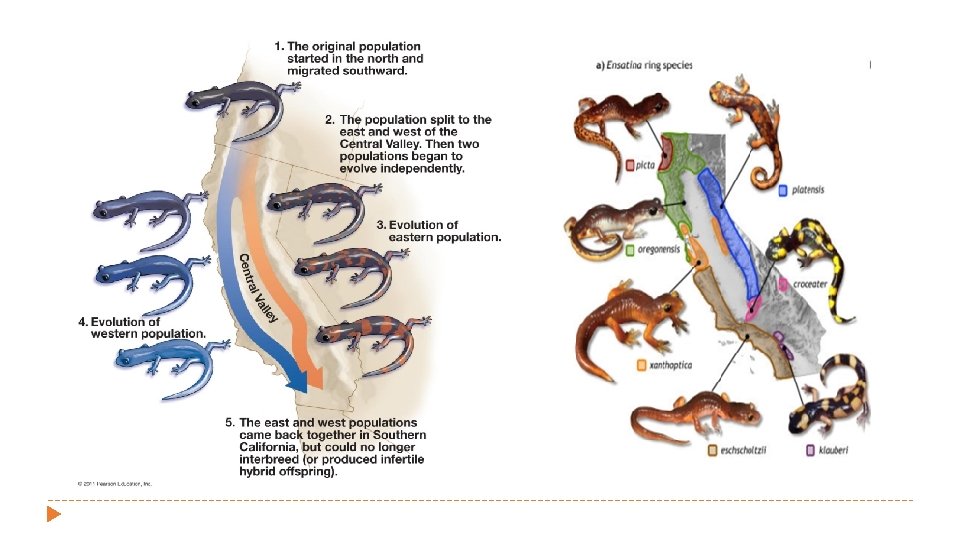
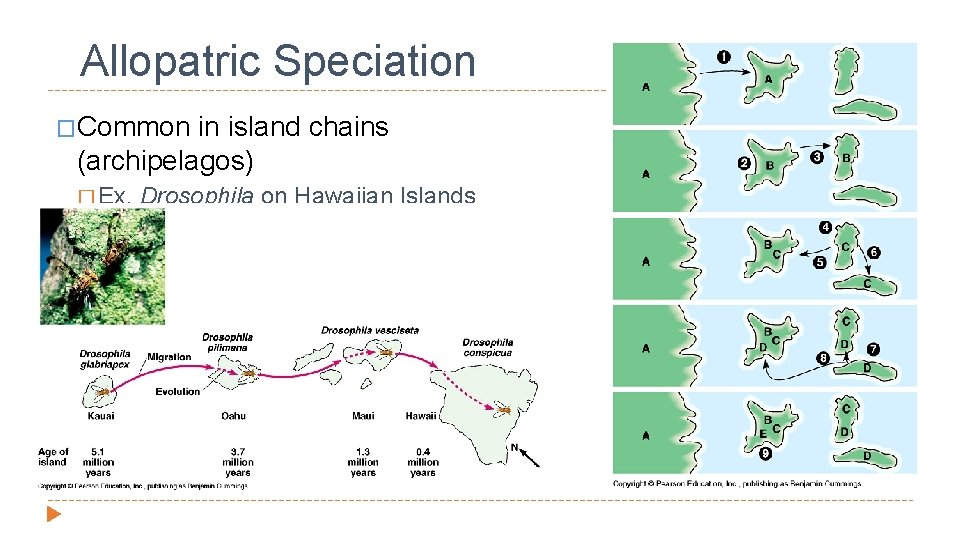
Evolution After Geographic Isolation _____ speciation: speciation that results from the geographic isolation of populations by a barrier that prevents interbreeding between populations
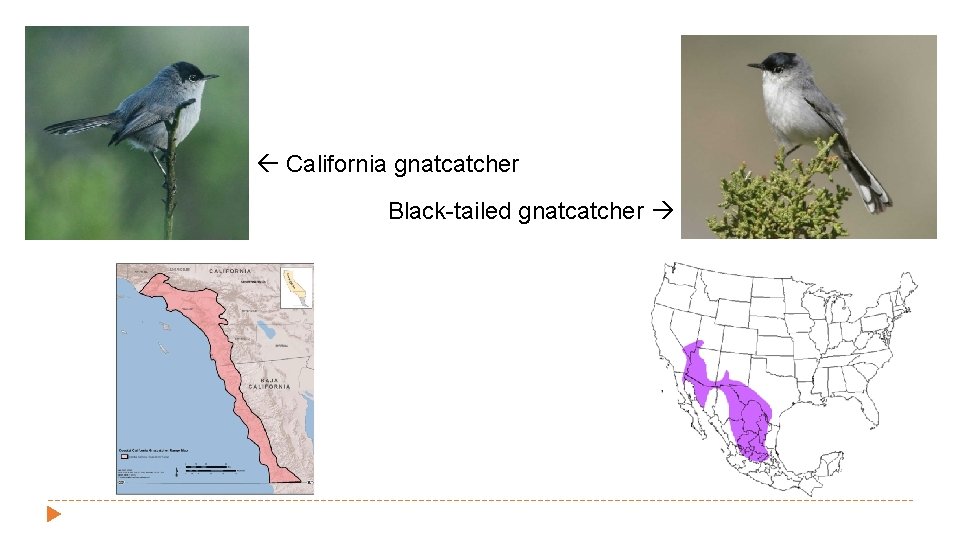
California gnatcatcher Black-tailed gnatcatcher
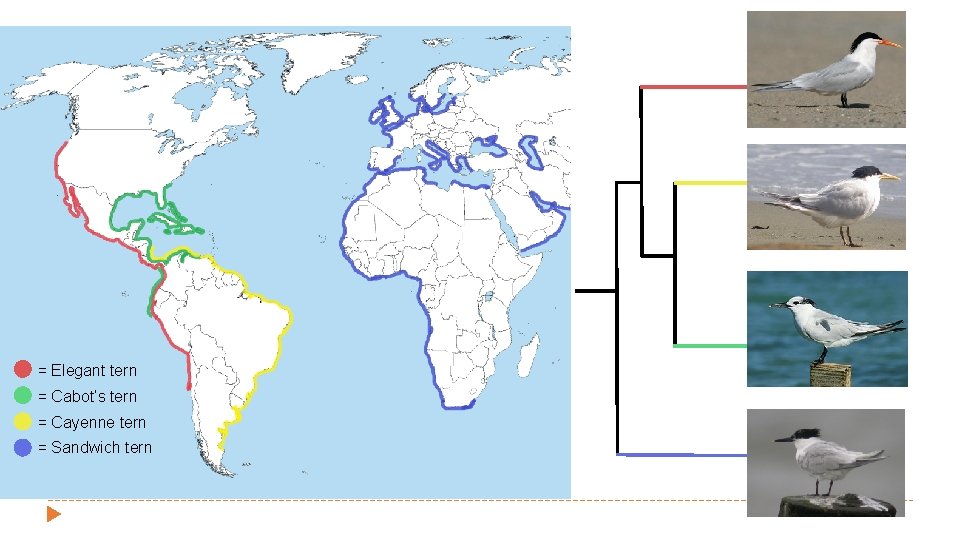
= Elegant tern = Cabot’s tern = Cayenne tern = Sandwich tern
Allopatric Speciation �Common in island chains (archipelagos) � Ex. Drosophila on Hawaiian Islands
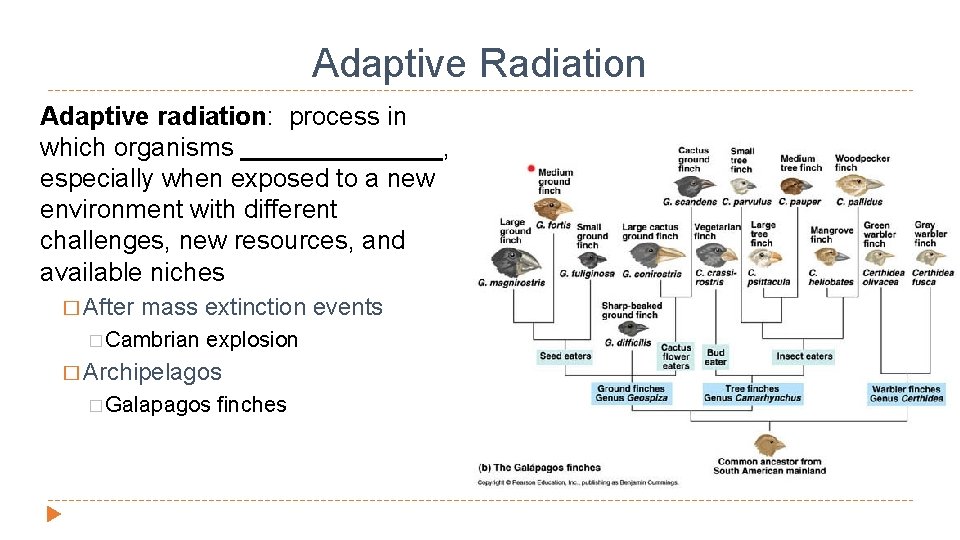
Adaptive Radiation Adaptive radiation: process in which organisms _______, especially when exposed to a new environment with different challenges, new resources, and available niches � After mass extinction events � Cambrian explosion � Archipelagos � Galapagos finches
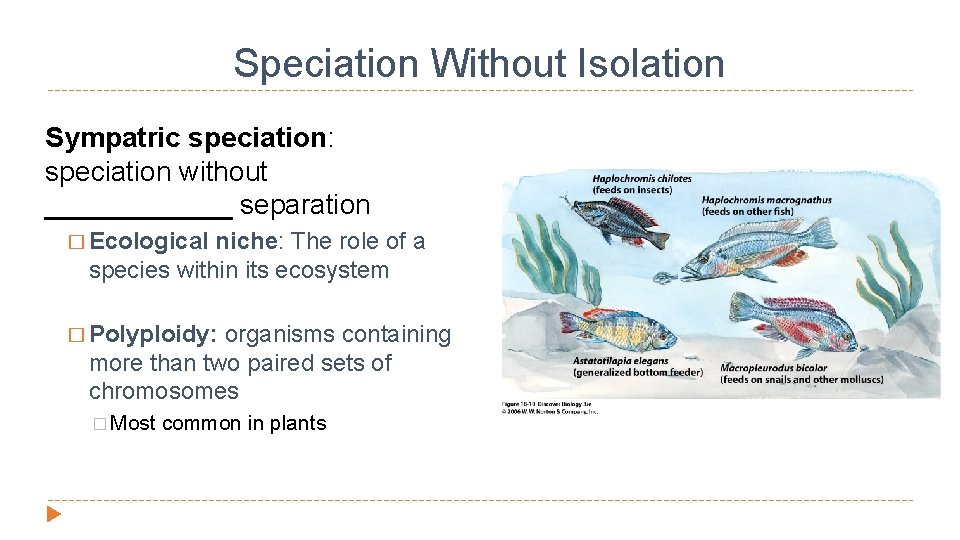
Speciation Without Isolation Sympatric speciation: speciation without ______ separation � Ecological niche: The role of a species within its ecosystem � Polyploidy: organisms containing more than two paired sets of chromosomes � Most common in plants
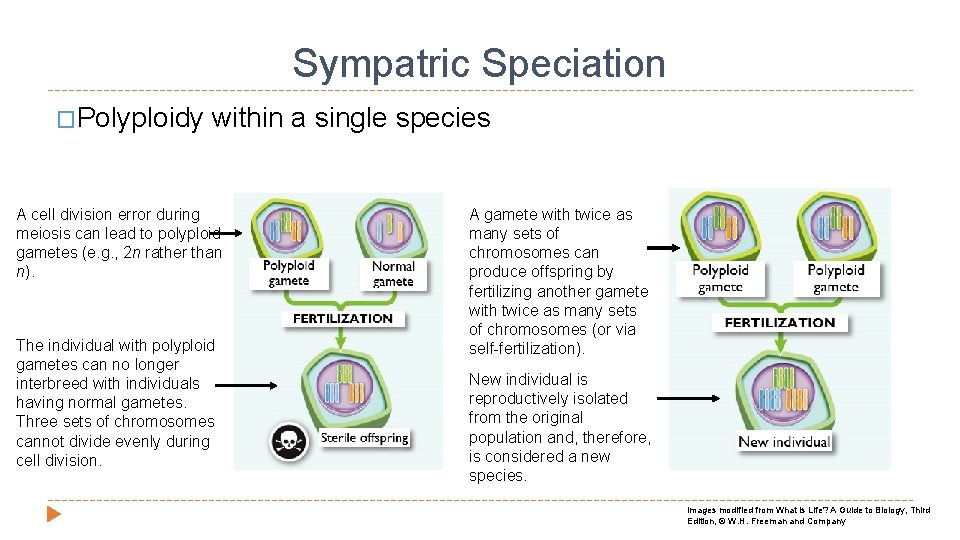
Sympatric Speciation �Polyploidy within a single species A cell division error during meiosis can lead to polyploid gametes (e. g. , 2 n rather than n). The individual with polyploid gametes can no longer interbreed with individuals having normal gametes. Three sets of chromosomes cannot divide evenly during cell division. A gamete with twice as many sets of chromosomes can produce offspring by fertilizing another gamete with twice as many sets of chromosomes (or via self-fertilization). New individual is reproductively isolated from the original population and, therefore, is considered a new species. Images modified from What is Life? A Guide to Biology, Third Edition, © W. H. Freeman and Company
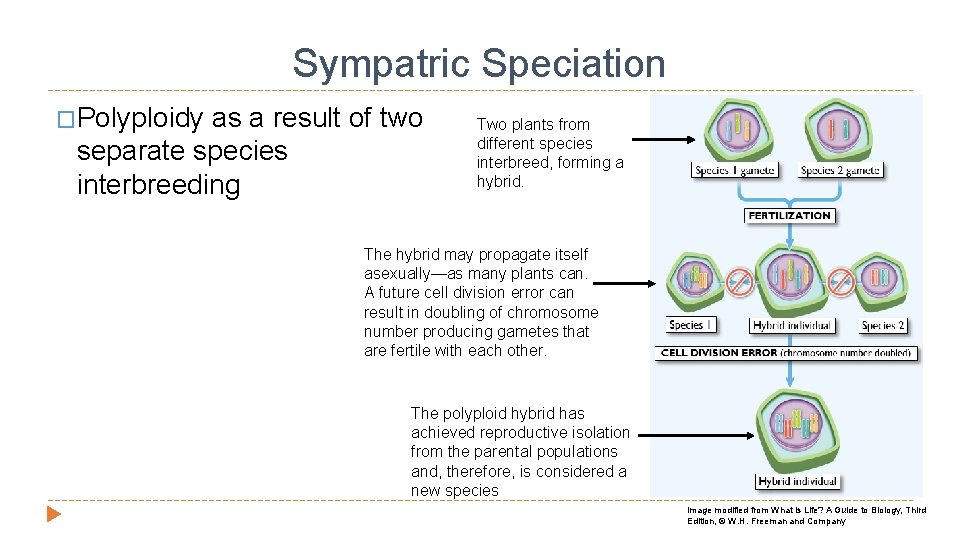
Sympatric Speciation �Polyploidy as a result of two separate species interbreeding Two plants from different species interbreed, forming a hybrid. The hybrid may propagate itself asexually—as many plants can. A future cell division error can result in doubling of chromosome number producing gametes that are fertile with each other. The polyploid hybrid has achieved reproductive isolation from the parental populations and, therefore, is considered a new species Image modified from What is Life? A Guide to Biology, Third Edition, © W. H. Freeman and Company
Reproductive Isolating Mechanisms Reproductive isolating mechanisms: any factor in nature that prevents inbreeding between individuals of the same species or closely related species �Prezygotic barriers: physical or reproductive conditions that make it impossible to individuals to ______ with one another �Postzygotic barrier: conditions that prevent the ____ of two different species from producing viable offspring
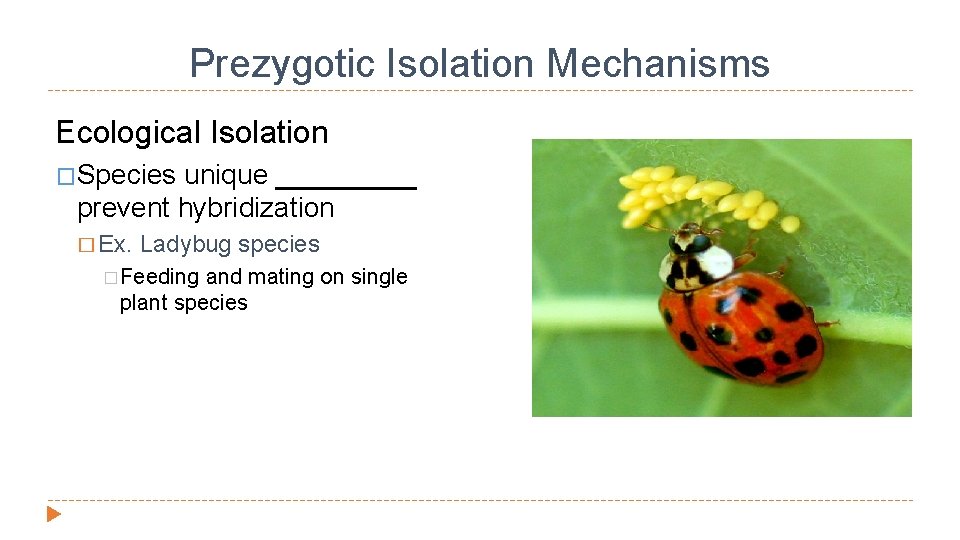
Prezygotic Isolation Mechanisms Ecological Isolation �Species unique _____ prevent hybridization � Ex. Ladybug species � Feeding and mating on single plant species
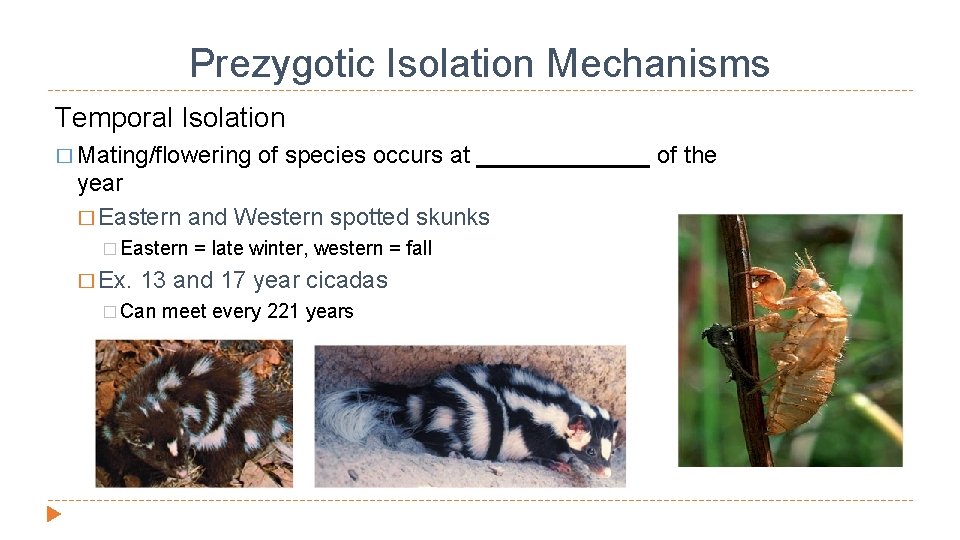
Prezygotic Isolation Mechanisms Temporal Isolation � Mating/flowering of species occurs at _______ of the year � Eastern and Western spotted skunks � Eastern � Ex. = late winter, western = fall 13 and 17 year cicadas � Can meet every 221 years
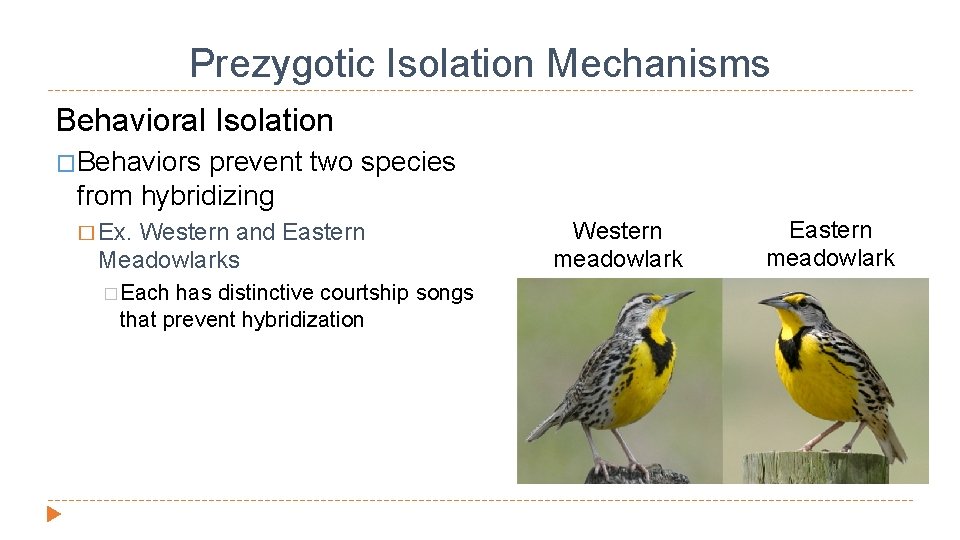
Prezygotic Isolation Mechanisms Behavioral Isolation �Behaviors prevent two species from hybridizing � Ex. Western and Eastern Meadowlarks � Each has distinctive courtship songs that prevent hybridization Western meadowlark Eastern meadowlark
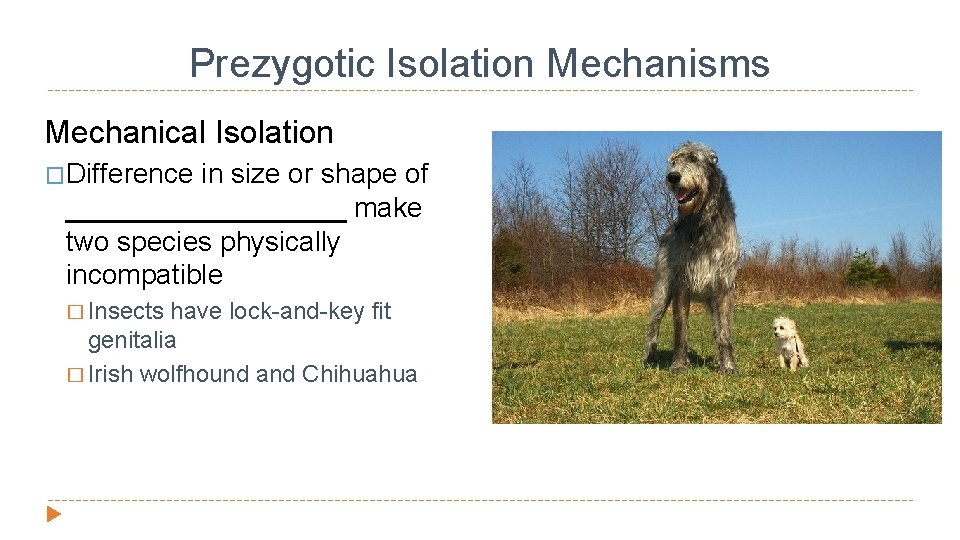
Prezygotic Isolation Mechanisms Mechanical Isolation �Difference in size or shape of _________ make two species physically incompatible � Insects have lock-and-key fit genitalia � Irish wolfhound and Chihuahua
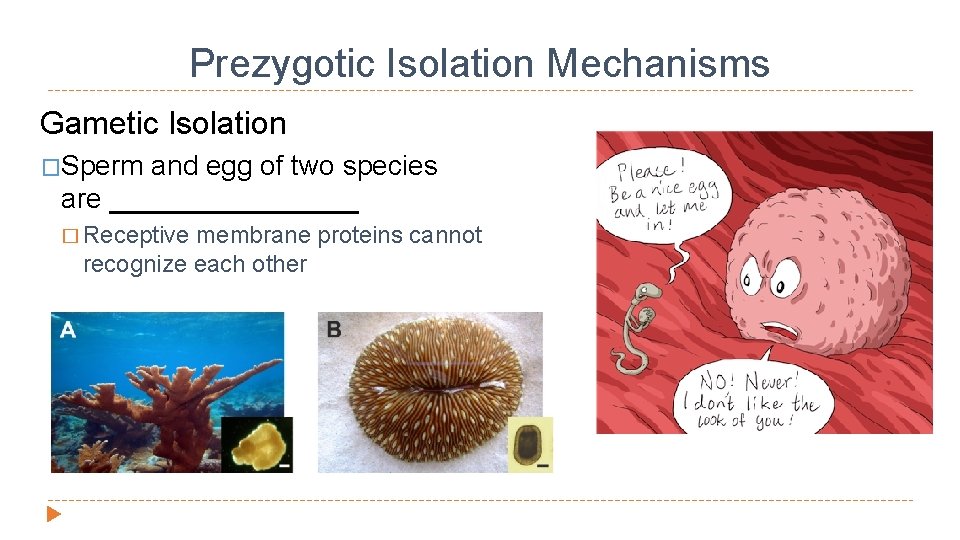
Prezygotic Isolation Mechanisms Gametic Isolation �Sperm and egg of two species are ________ � Receptive membrane proteins cannot recognize each other
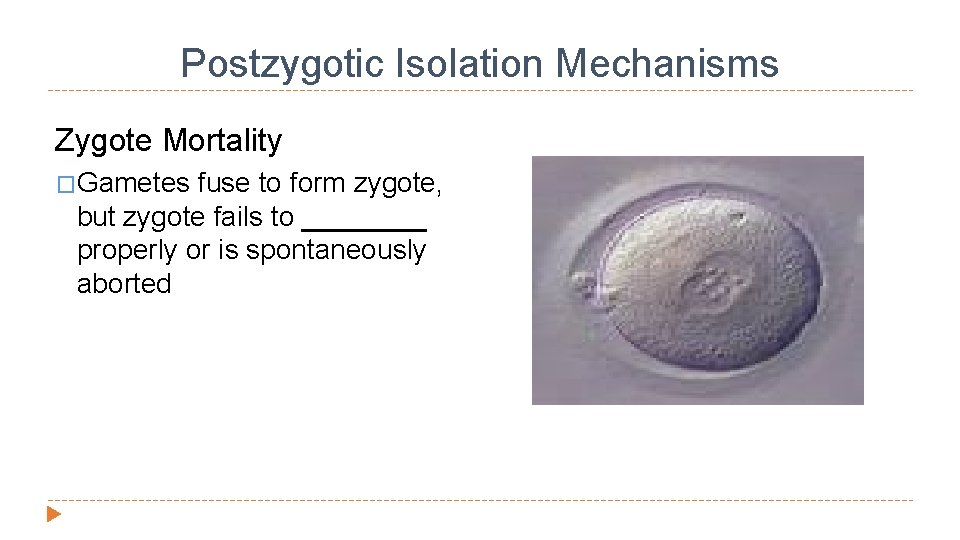
Postzygotic Isolation Mechanisms Zygote Mortality �Gametes fuse to form zygote, but zygote fails to ____ properly or is spontaneously aborted
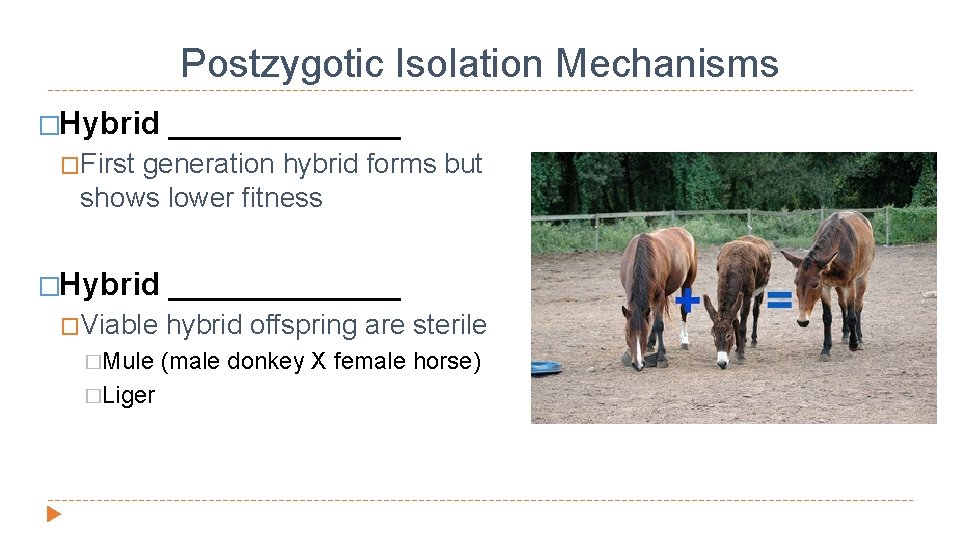
Postzygotic Isolation Mechanisms �Hybrid _______ �First generation hybrid forms but shows lower fitness �Hybrid �Viable �Mule �Liger _______ hybrid offspring are sterile (male donkey X female horse)
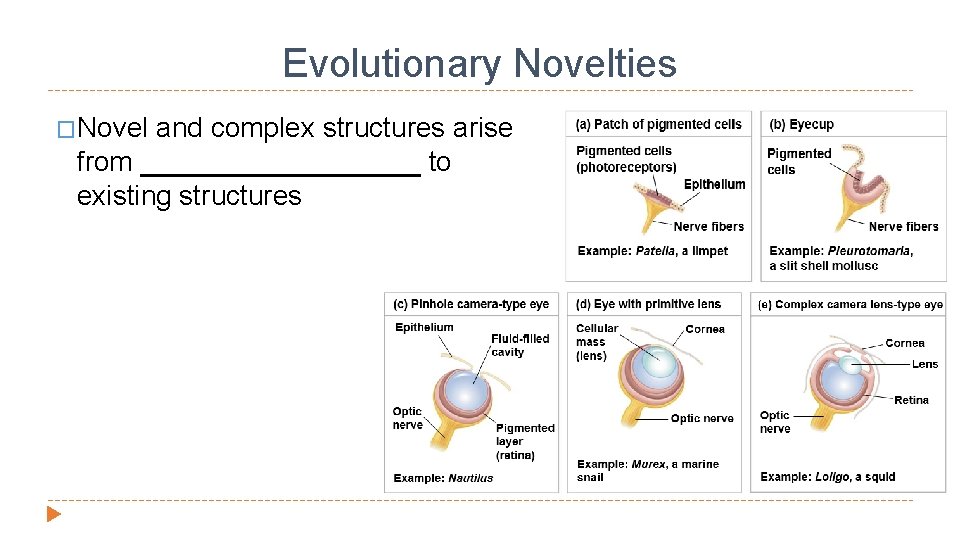
Evolutionary Novelties �Novel and complex structures arise from _________ to existing structures
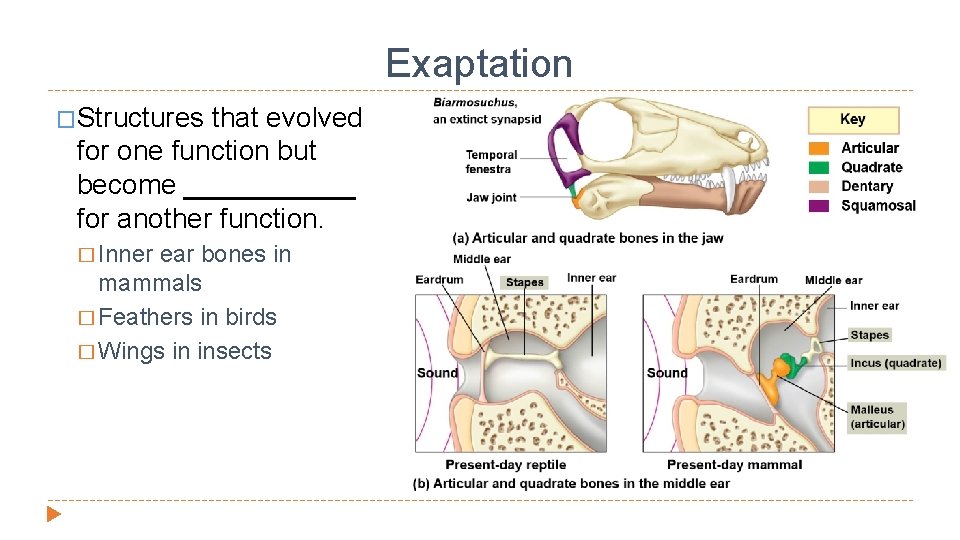
Exaptation �Structures that evolved for one function but become ______ for another function. � Inner ear bones in mammals � Feathers in birds � Wings in insects
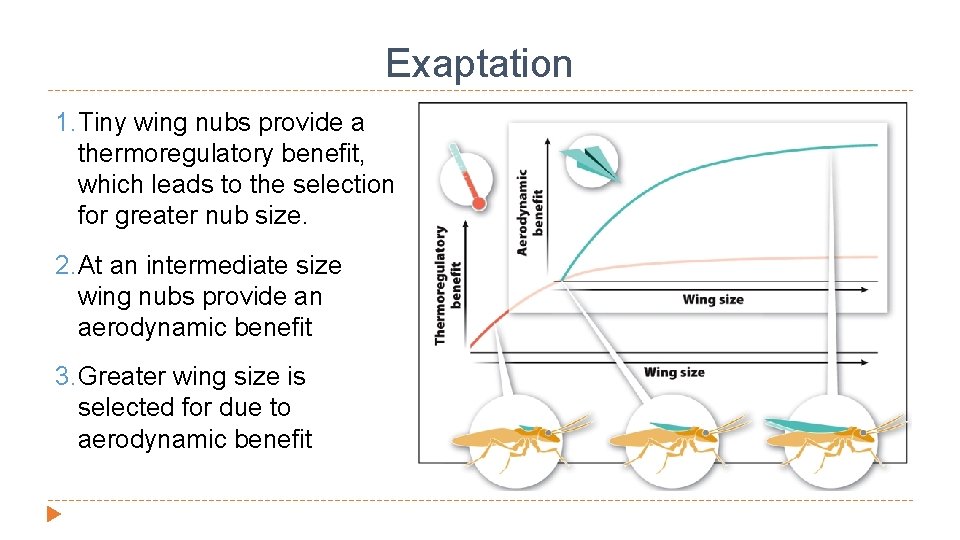
Exaptation 1. Tiny wing nubs provide a thermoregulatory benefit, which leads to the selection for greater nub size. 2. At an intermediate size wing nubs provide an aerodynamic benefit 3. Greater wing size is selected for due to aerodynamic benefit
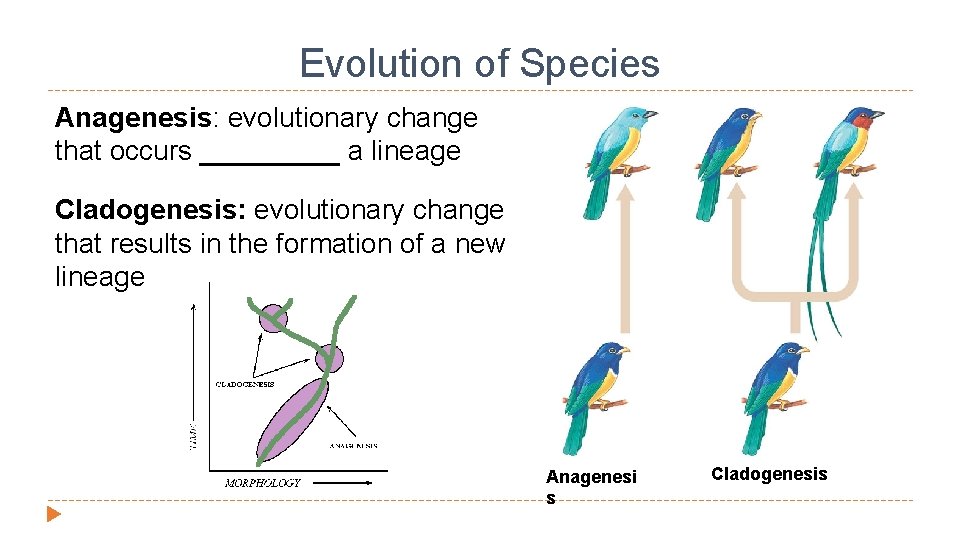
Evolution of Species Anagenesis: evolutionary change that occurs _____ a lineage Cladogenesis: evolutionary change that results in the formation of a new lineage Anagenesi s Cladogenesis
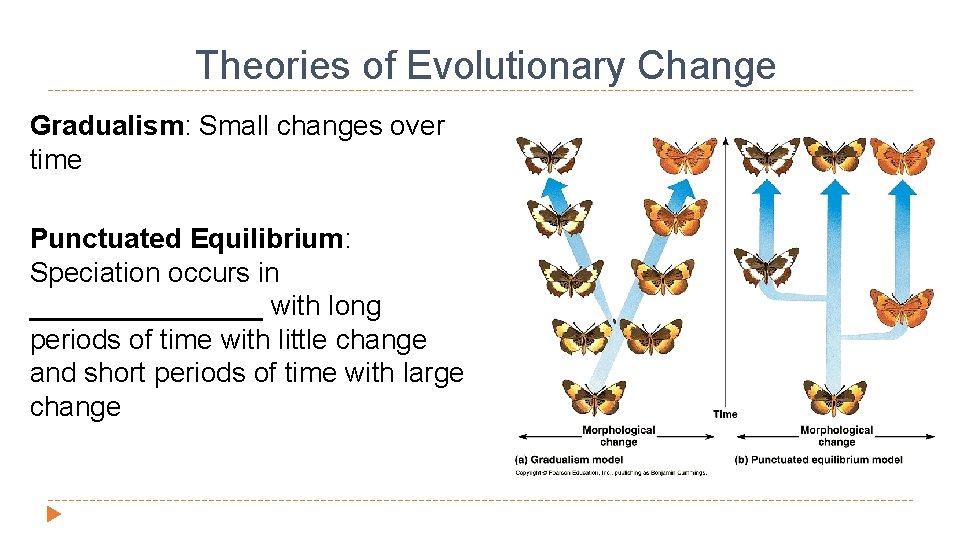
Theories of Evolutionary Change Gradualism: Small changes over time Punctuated Equilibrium: Speciation occurs in ________ with long periods of time with little change and short periods of time with large change
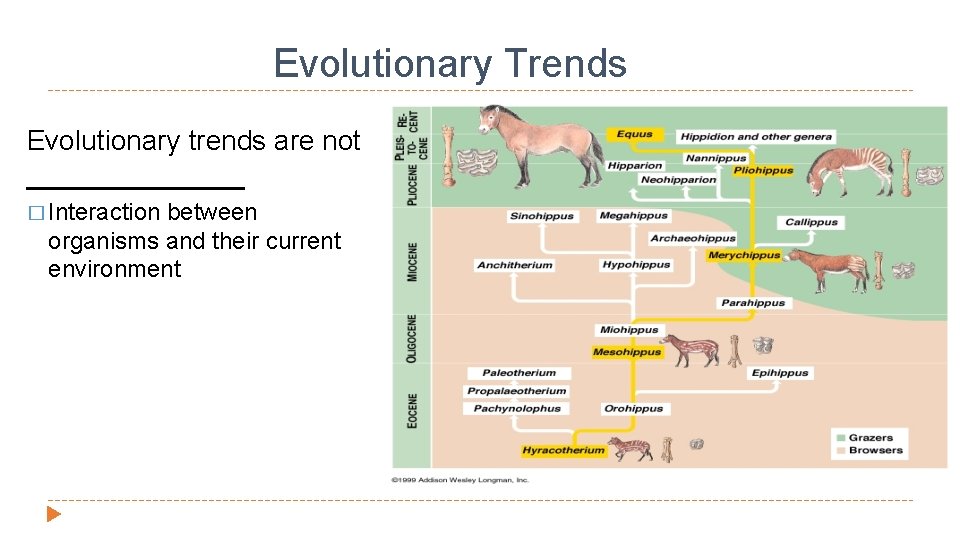
Evolutionary Trends Evolutionary trends are not _______ � Interaction between organisms and their current environment
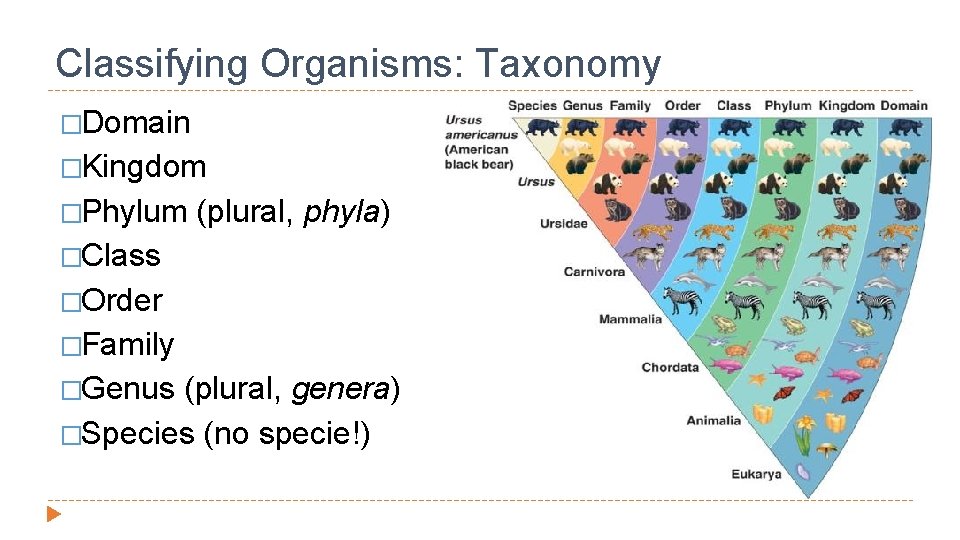
Classifying Organisms: Taxonomy �Domain �Kingdom �Phylum (plural, phyla) �Class �Order �Family �Genus (plural, genera) �Species (no specie!)
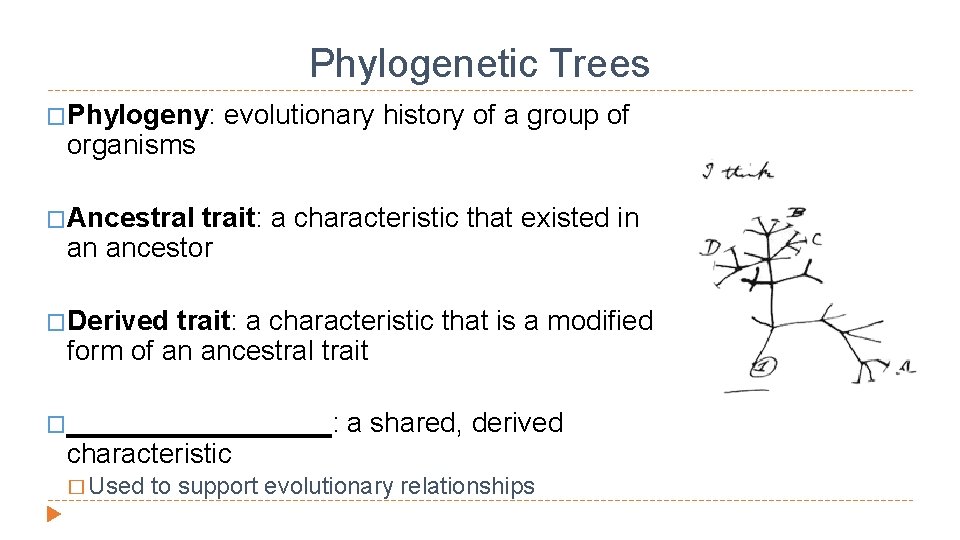
Phylogenetic Trees �Phylogeny: organisms evolutionary history of a group of �Ancestral trait: a characteristic that existed in an ancestor �Derived trait: a characteristic that is a modified form of an ancestral trait �_________: characteristic � Used a shared, derived to support evolutionary relationships
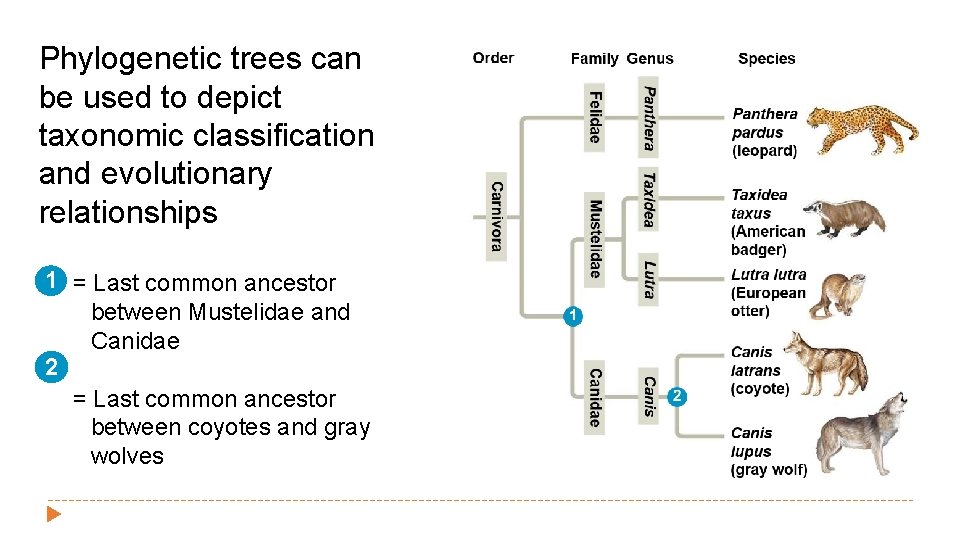
Phylogenetic trees can be used to depict taxonomic classification and evolutionary relationships 1 = Last common ancestor between Mustelidae and Canidae 2 = Last common ancestor between coyotes and gray wolves
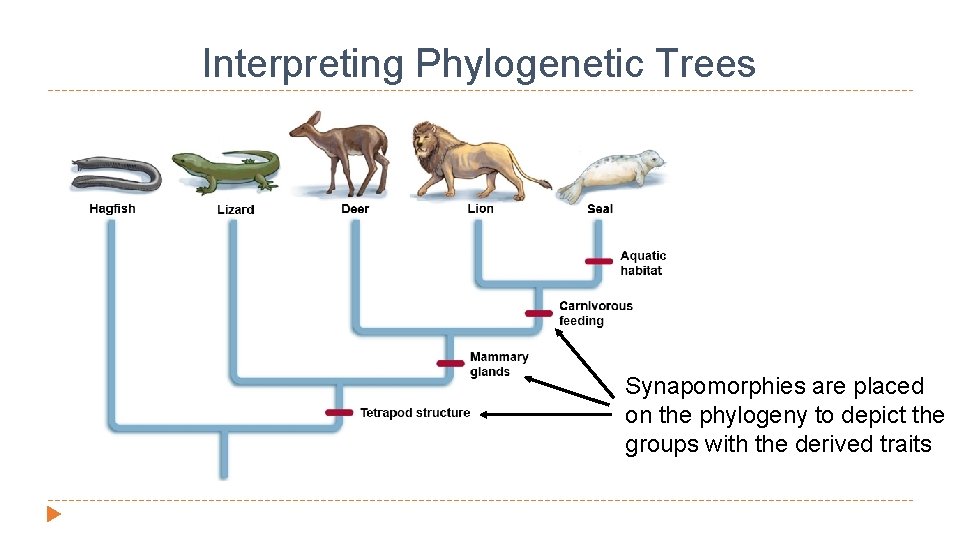
Interpreting Phylogenetic Trees Synapomorphies are placed on the phylogeny to depict the groups with the derived traits
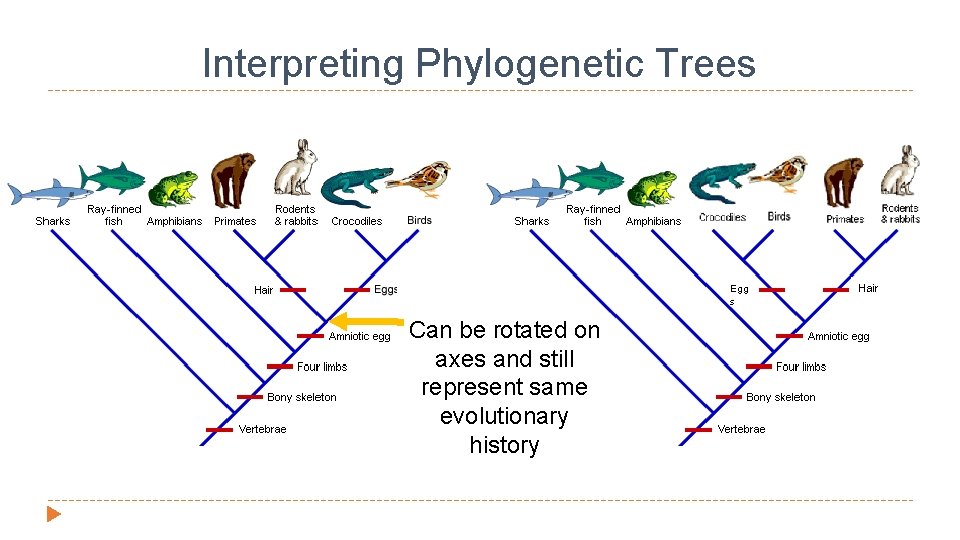
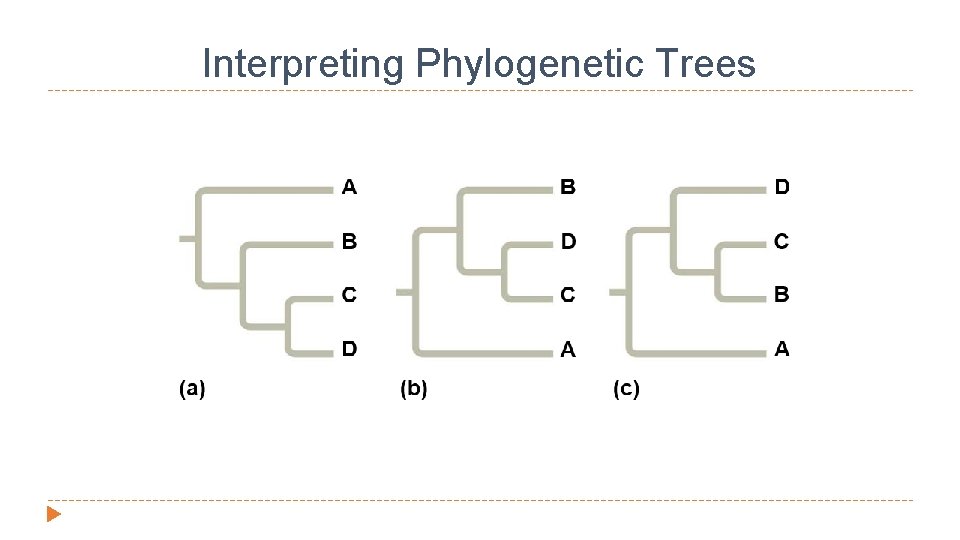
Interpreting Phylogenetic Trees Egg s Can be rotated on axes and still represent same evolutionary history Hair
Interpreting Phylogenetic Trees
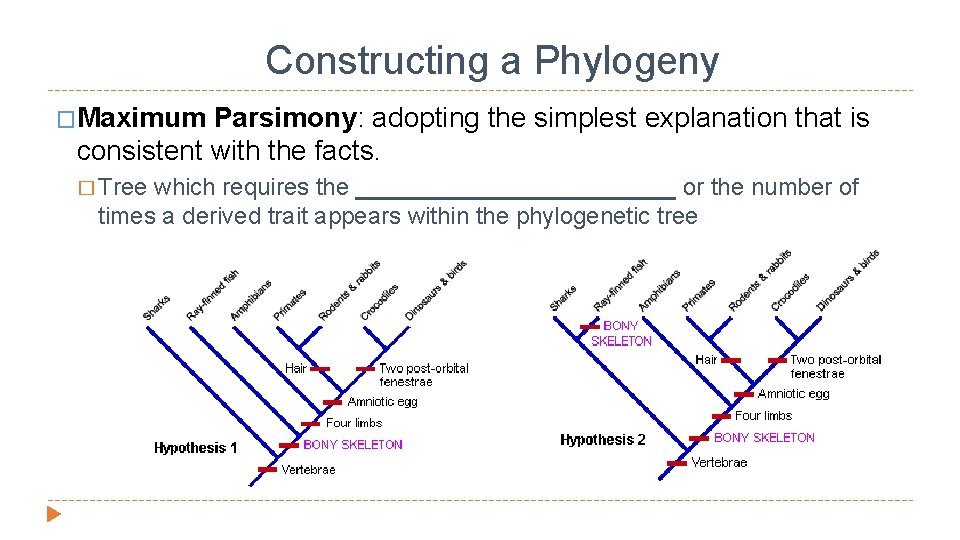
Constructing a Phylogeny �Maximum Parsimony: adopting the simplest explanation that is consistent with the facts. � Tree which requires the ____________ or the number of times a derived trait appears within the phylogenetic tree
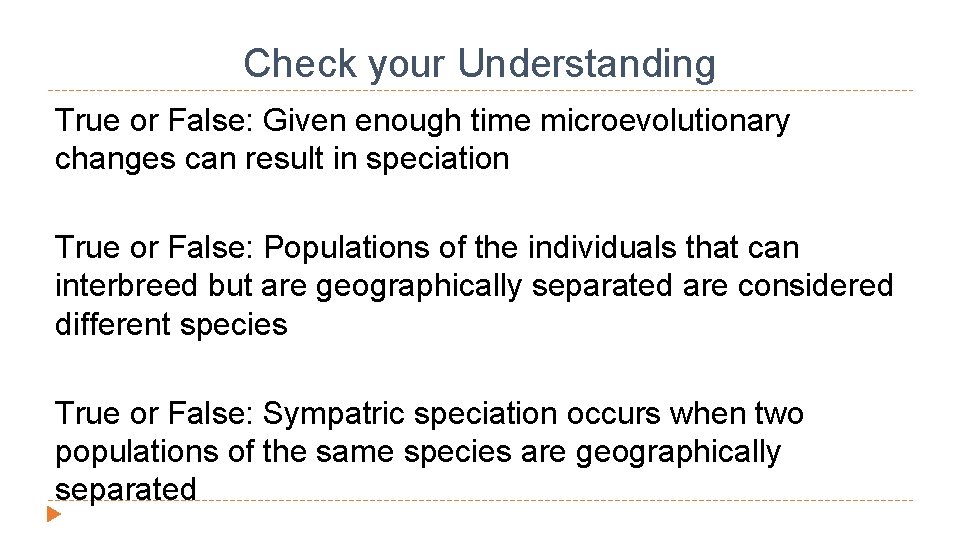
Check your Understanding True or False: Given enough time microevolutionary changes can result in speciation True or False: Populations of the individuals that can interbreed but are geographically separated are considered different species True or False: Sympatric speciation occurs when two populations of the same species are geographically separated
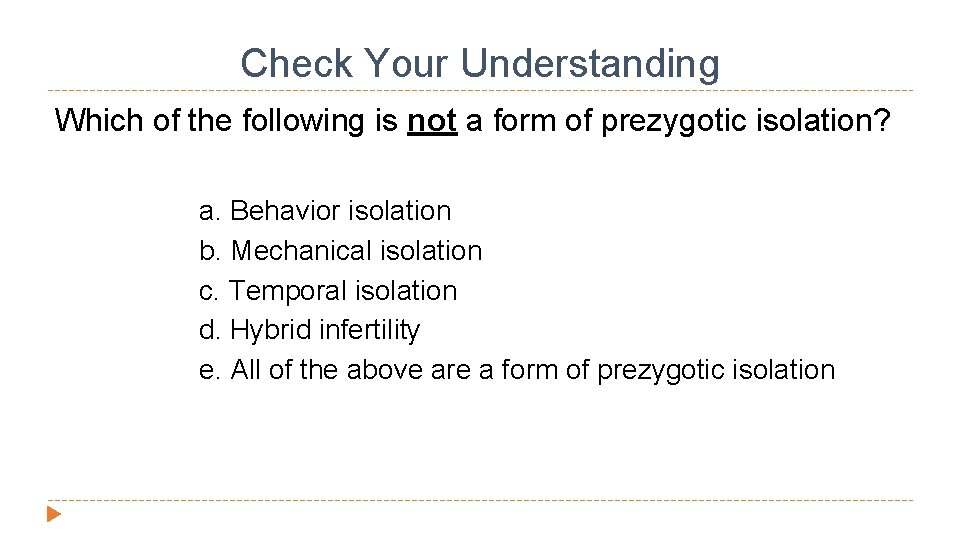
Check Your Understanding Which of the following is not a form of prezygotic isolation? a. Behavior isolation b. Mechanical isolation c. Temporal isolation d. Hybrid infertility e. All of the above are a form of prezygotic isolation
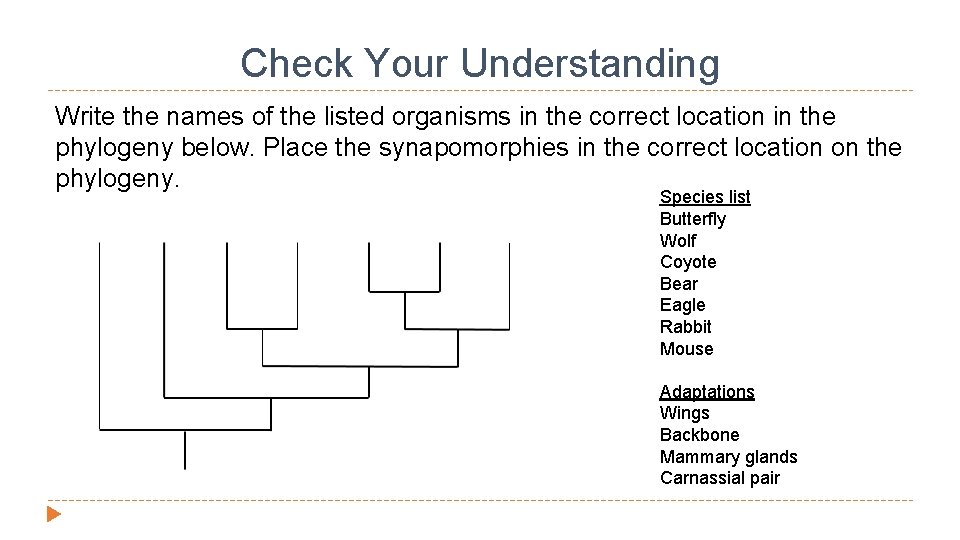
Check Your Understanding Write the names of the listed organisms in the correct location in the phylogeny below. Place the synapomorphies in the correct location on the phylogeny. Species list Butterfly Wolf Coyote Bear Eagle Rabbit Mouse Adaptations Wings Backbone Mammary glands Carnassial pair
Check Your Understanding What are the two ways that speciation can occur? What are the names of the different processes? Provided an example of each type of speciation.