
When What Who Where Why was Modernism Modern
- Slides: 68
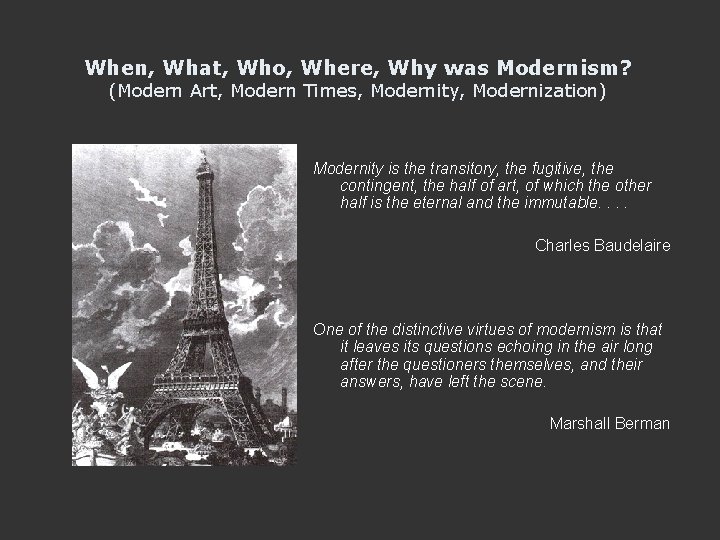
When, What, Who, Where, Why was Modernism? (Modern Art, Modern Times, Modernity, Modernization) Modernity is the transitory, the fugitive, the contingent, the half of art, of which the other half is the eternal and the immutable. . Charles Baudelaire One of the distinctive virtues of modernism is that it leaves its questions echoing in the air long after the questioners themselves, and their answers, have left the scene. Marshall Berman
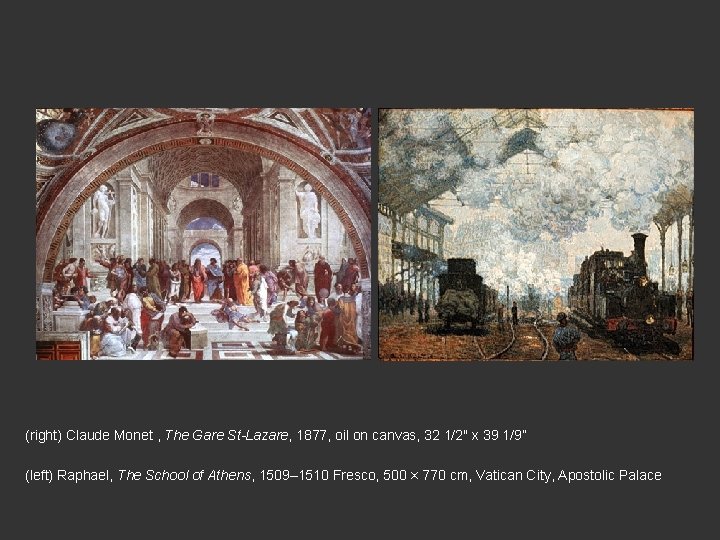
(right) Claude Monet , The Gare St-Lazare, 1877, oil on canvas, 32 1/2" x 39 1/9” (left) Raphael, The School of Athens, 1509– 1510 Fresco, 500 × 770 cm, Vatican City, Apostolic Palace
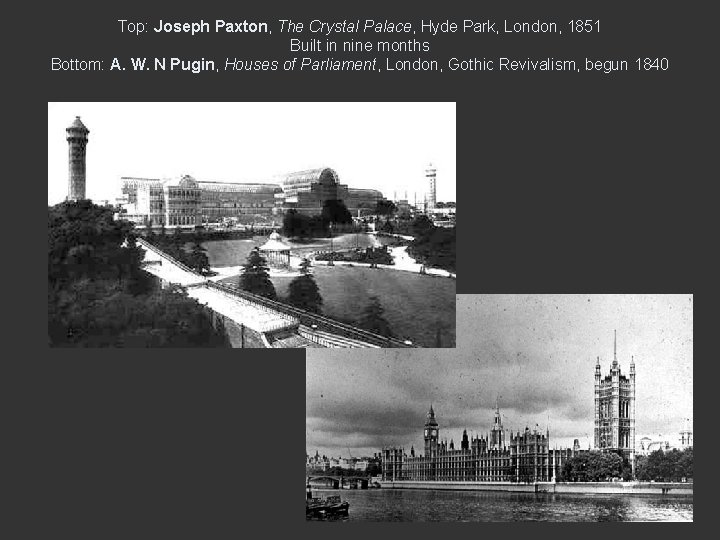
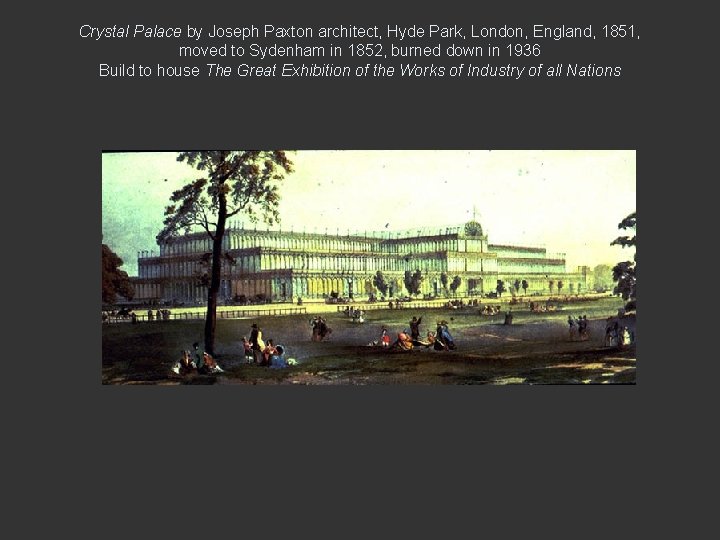
Top: Joseph Paxton, The Crystal Palace, Hyde Park, London, 1851 Built in nine months Bottom: A. W. N Pugin, Houses of Parliament, London, Gothic Revivalism, begun 1840
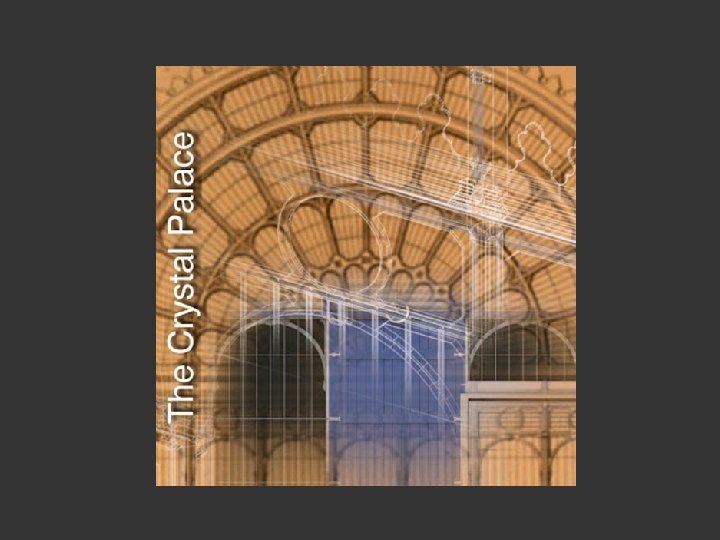
Crystal Palace by Joseph Paxton architect, Hyde Park, London, England, 1851, moved to Sydenham in 1852, burned down in 1936 Build to house The Great Exhibition of the Works of Industry of all Nations
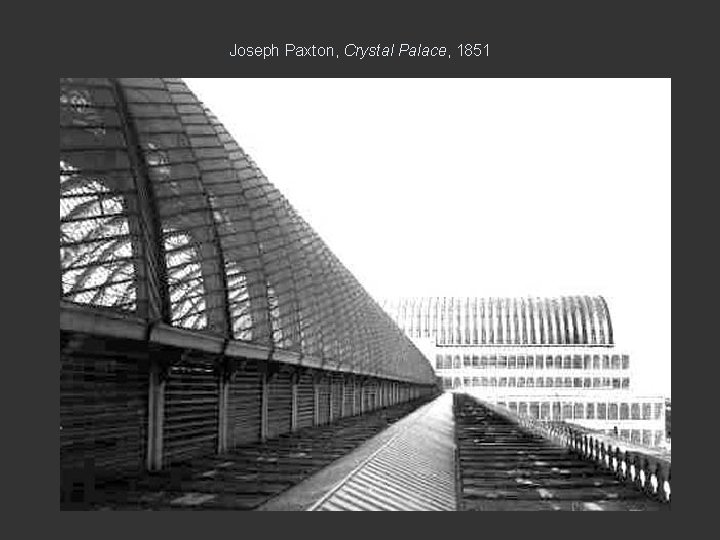
Joseph Paxton, Crystal Palace, 1851
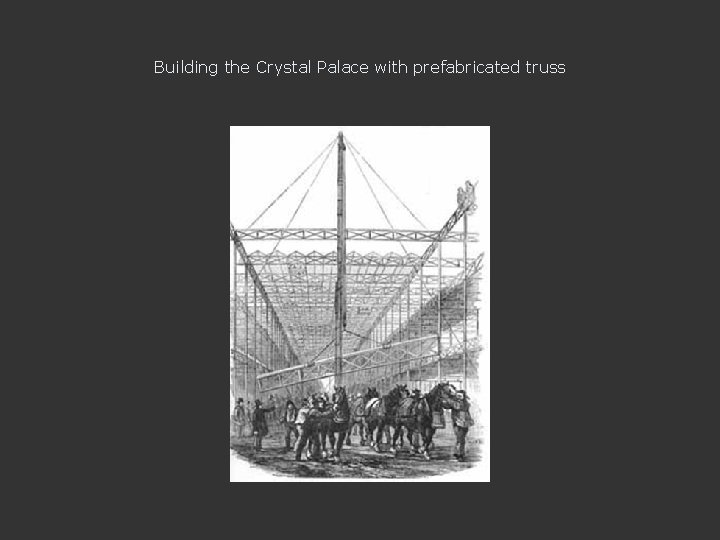
Building the Crystal Palace with prefabricated truss
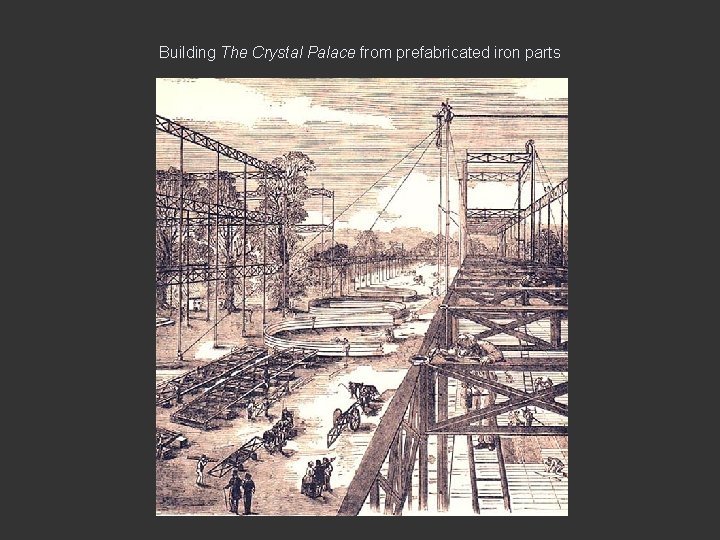
Building The Crystal Palace from prefabricated iron parts
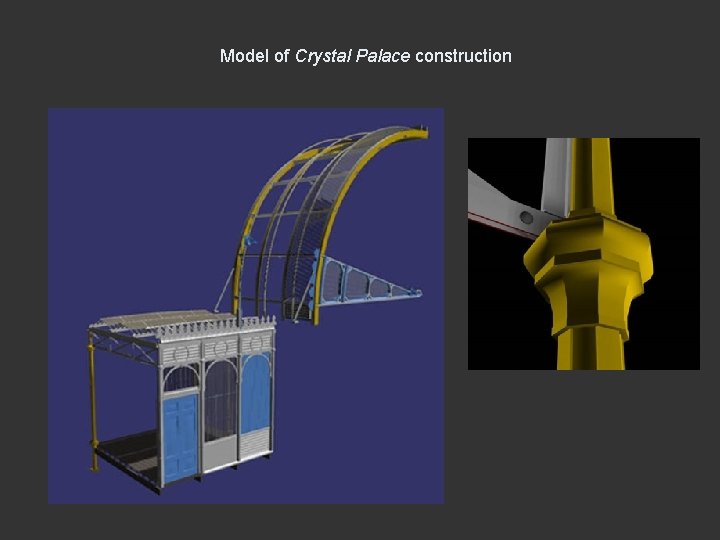
Model of Crystal Palace construction
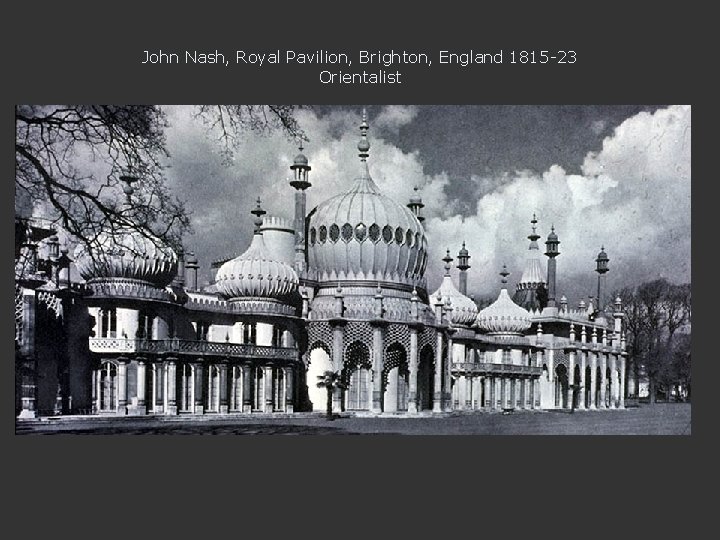
John Nash, Royal Pavilion, Brighton, England 1815 -23 Orientalist
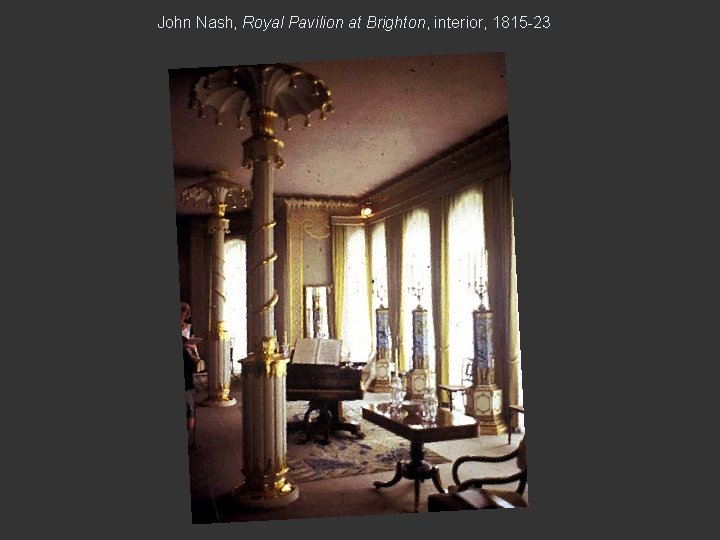
John Nash, Royal Pavilion at Brighton, interior, 1815 -23
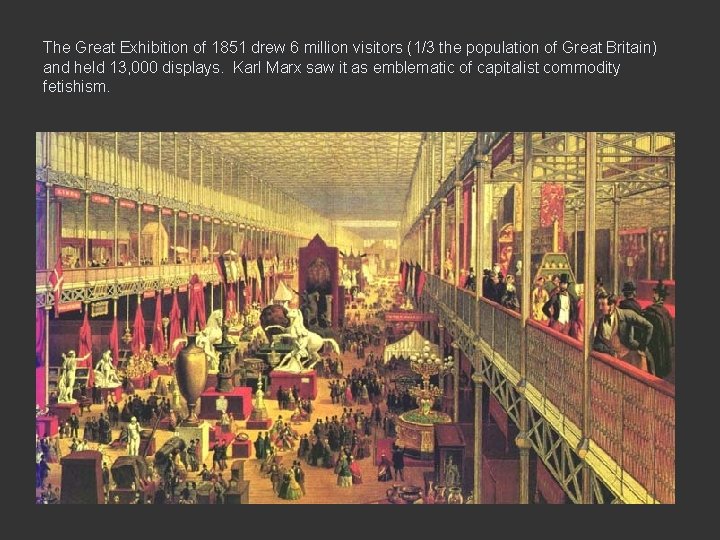
The Great Exhibition of 1851 drew 6 million visitors (1/3 the population of Great Britain) and held 13, 000 displays. Karl Marx saw it as emblematic of capitalist commodity fetishism.
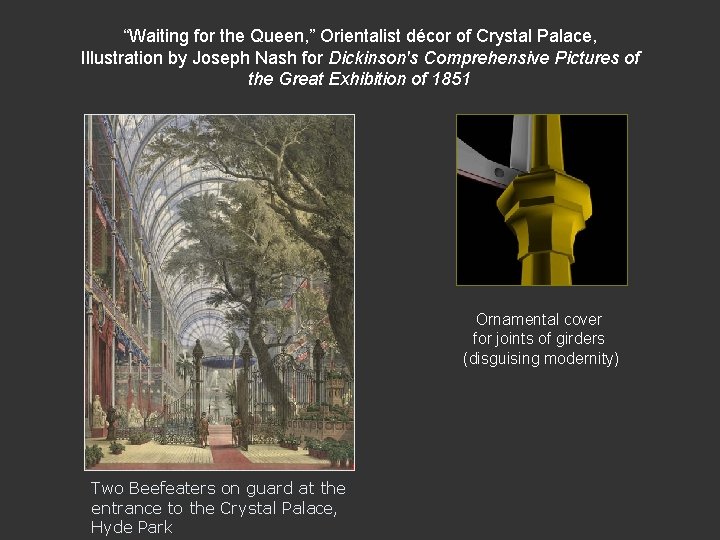
“Waiting for the Queen, ” Orientalist décor of Crystal Palace, Illustration by Joseph Nash for Dickinson's Comprehensive Pictures of the Great Exhibition of 1851 Ornamental cover for joints of girders (disguising modernity) Two Beefeaters on guard at the entrance to the Crystal Palace, Hyde Park
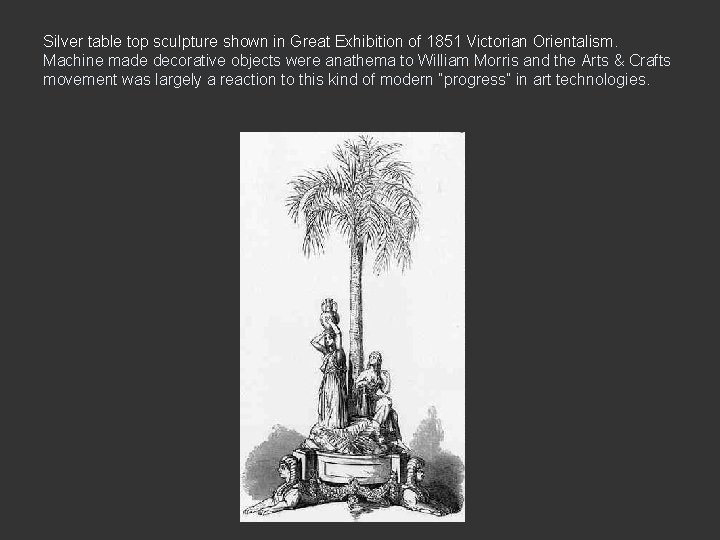
Silver table top sculpture shown in Great Exhibition of 1851 Victorian Orientalism. Machine made decorative objects were anathema to William Morris and the Arts & Crafts movement was largely a reaction to this kind of modern “progress” in art technologies.
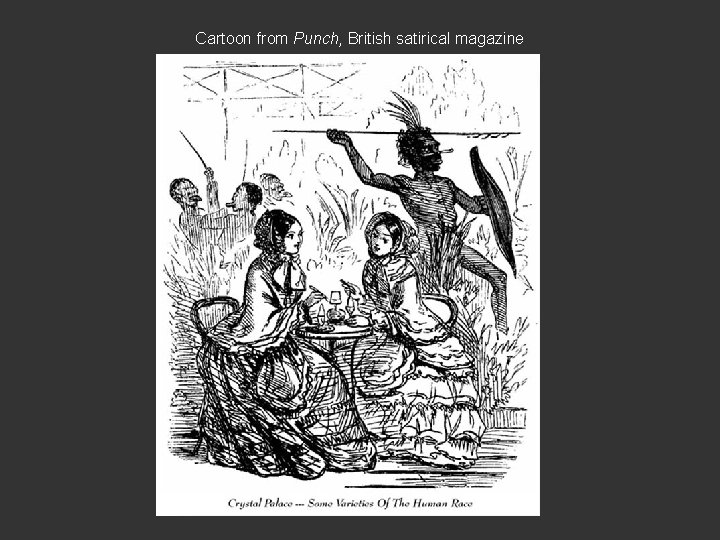
Cartoon from Punch, British satirical magazine
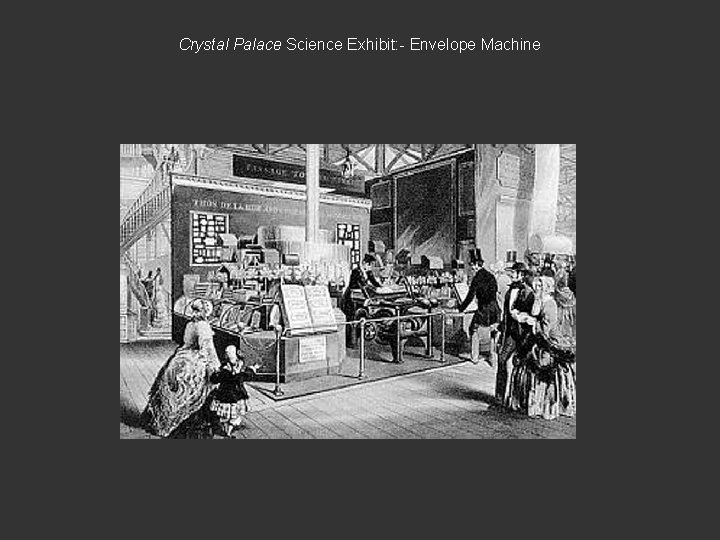
Crystal Palace Science Exhibit: - Envelope Machine
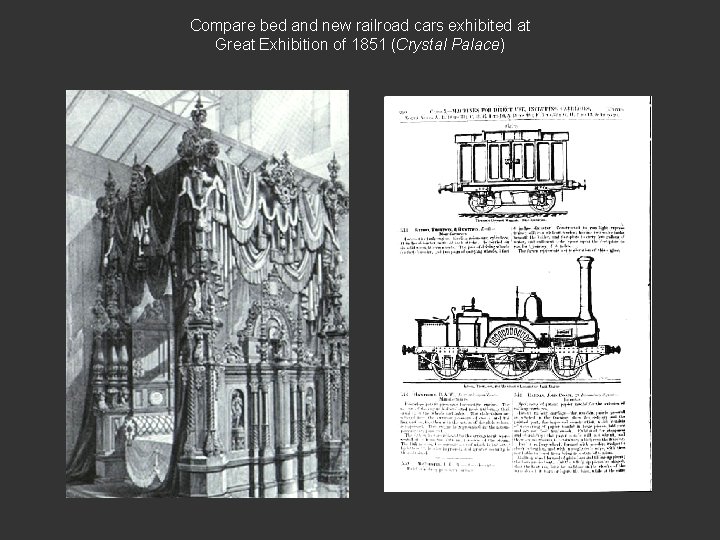
Compare bed and new railroad cars exhibited at Great Exhibition of 1851 (Crystal Palace)
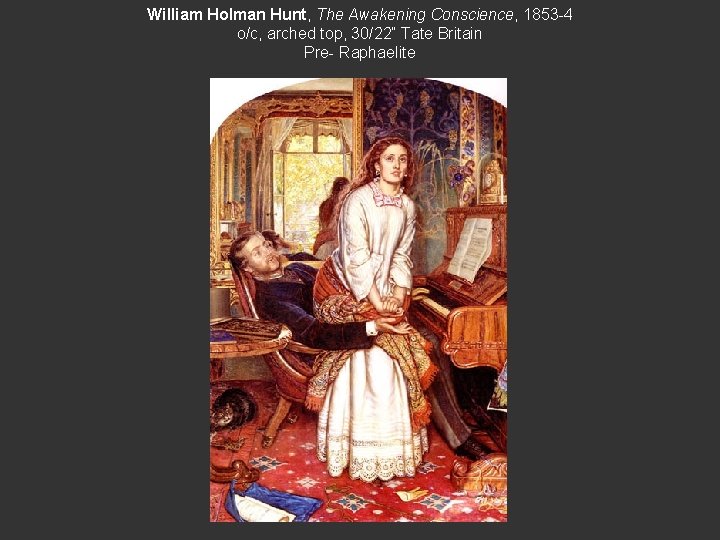
William Holman Hunt, The Awakening Conscience, 1853 -4 o/c, arched top, 30/22” Tate Britain Pre- Raphaelite
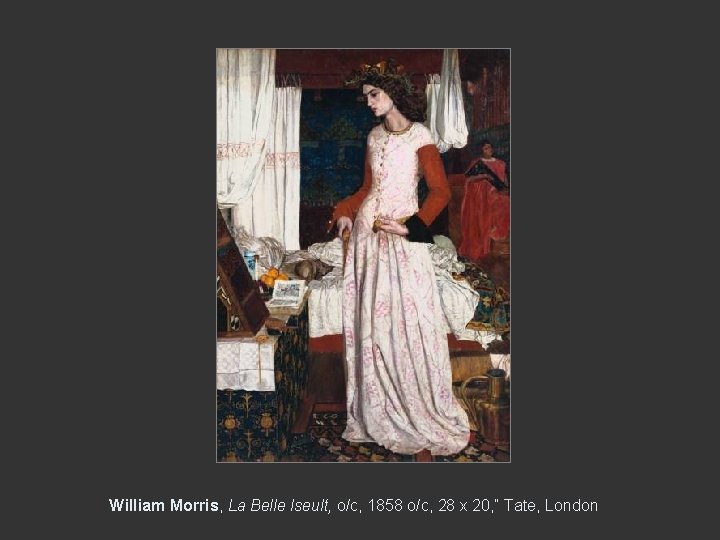
William Morris, La Belle Iseult, o/c, 1858 o/c, 28 x 20, ” Tate, London
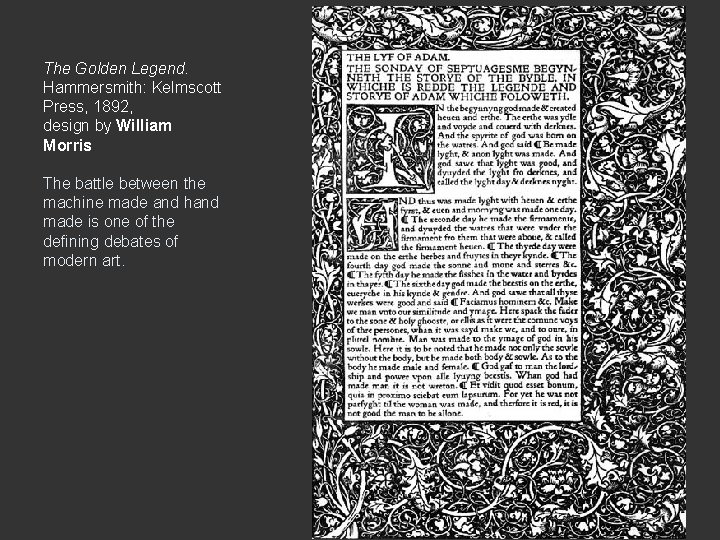
The Golden Legend. Hammersmith: Kelmscott Press, 1892, design by William Morris The battle between the machine made and hand made is one of the defining debates of modern art.
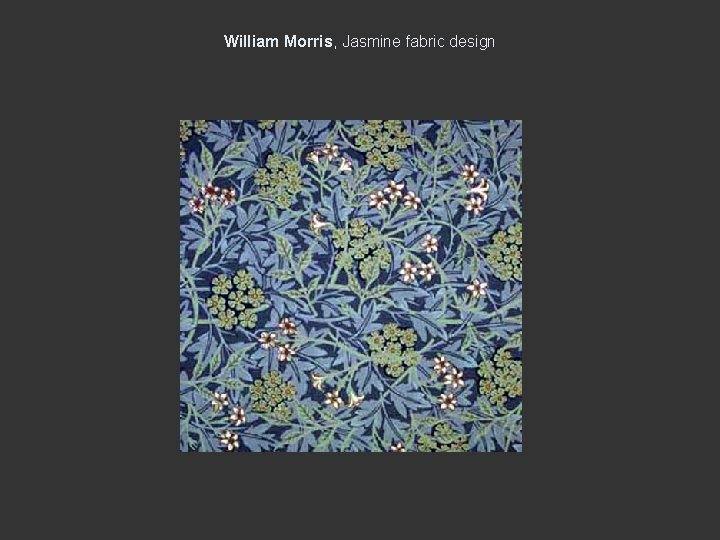
William Morris, Jasmine fabric design
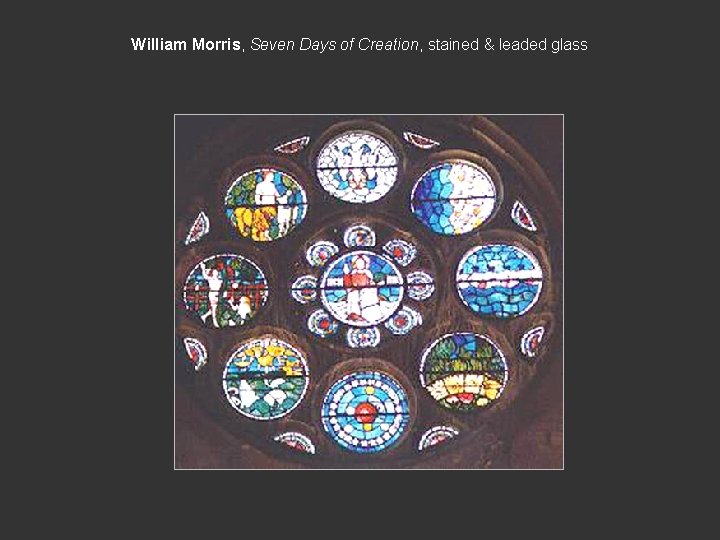
William Morris, Seven Days of Creation, stained & leaded glass
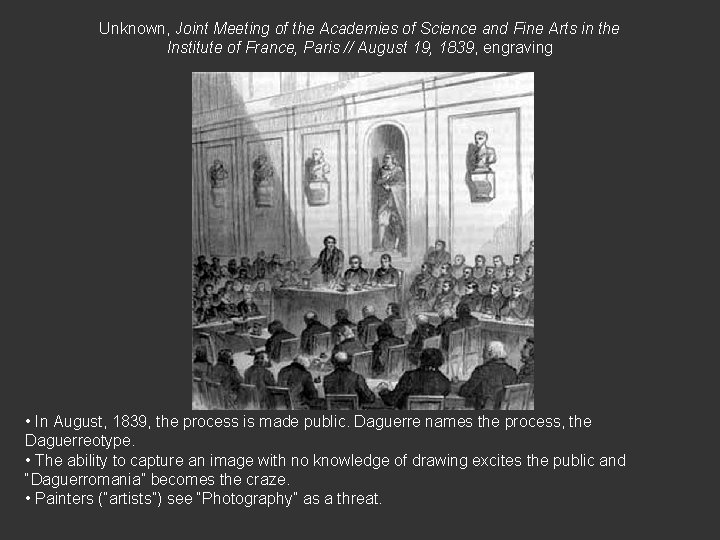
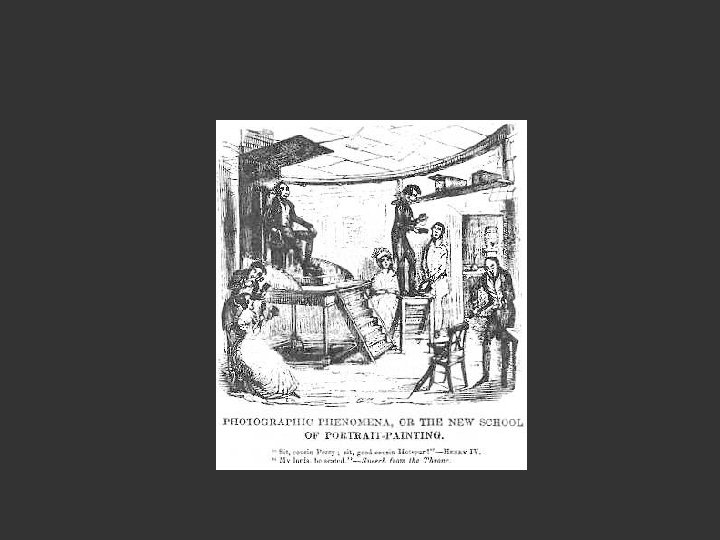
Unknown, Joint Meeting of the Academies of Science and Fine Arts in the Institute of France, Paris // August 19, 1839, engraving • In August, 1839, the process is made public. Daguerre names the process, the Daguerreotype. • The ability to capture an image with no knowledge of drawing excites the public and “Daguerromania” becomes the craze. • Painters (“artists”) see “Photography” as a threat.
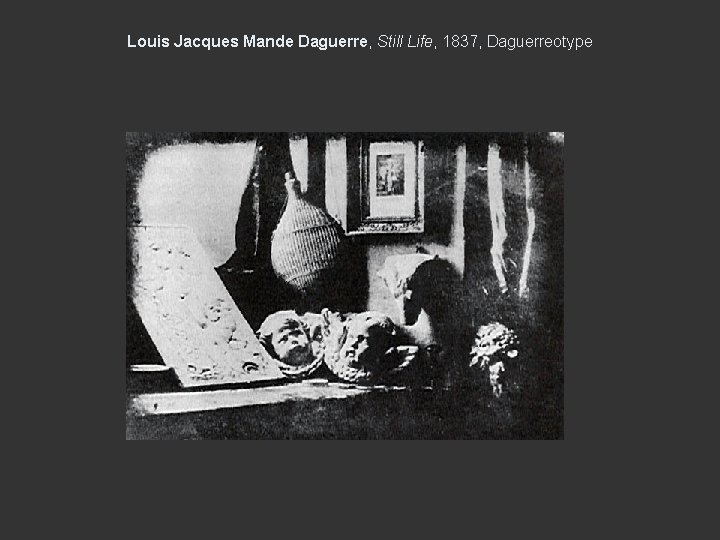
Louis Jacques Mande Daguerre, Still Life, 1837, Daguerreotype
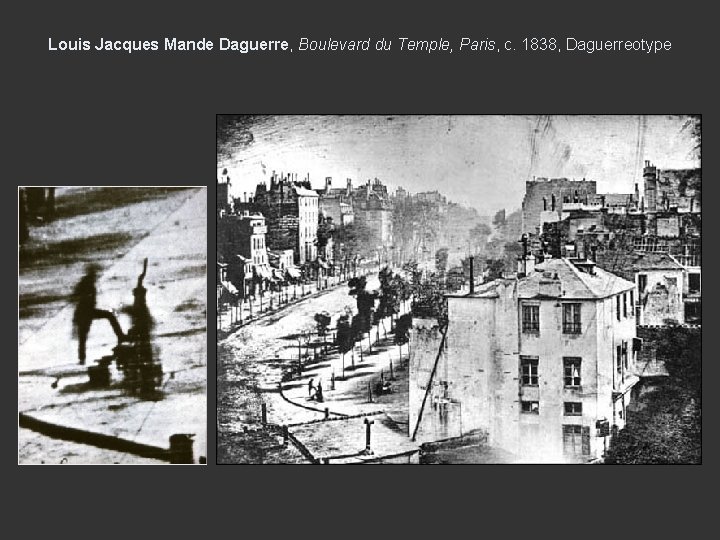
Louis Jacques Mande Daguerre, Boulevard du Temple, Paris, c. 1838, Daguerreotype
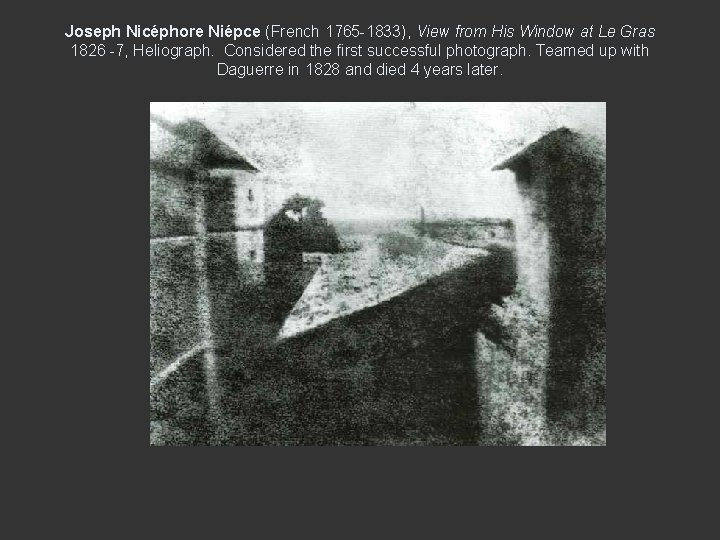
Joseph Nicéphore Niépce (French 1765 -1833), View from His Window at Le Gras 1826 -7, Heliograph. Considered the first successful photograph. Teamed up with Daguerre in 1828 and died 4 years later.
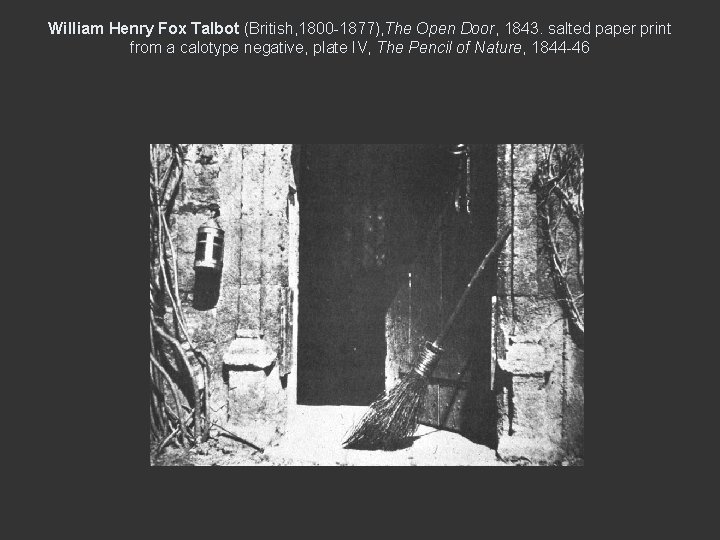
William Henry Fox Talbot (British, 1800 -1877), The Open Door, 1843. salted paper print from a calotype negative, plate IV, The Pencil of Nature, 1844 -46
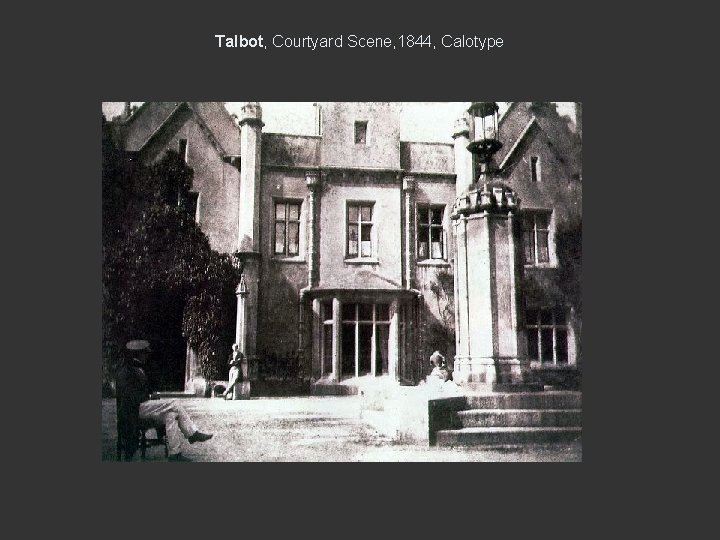
Talbot, Courtyard Scene, 1844, Calotype
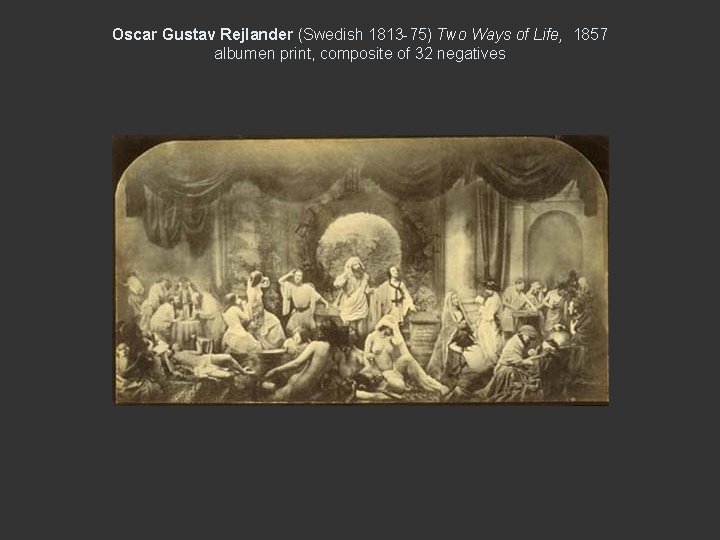
Oscar Gustav Rejlander (Swedish 1813 -75) Two Ways of Life, 1857 albumen print, composite of 32 negatives
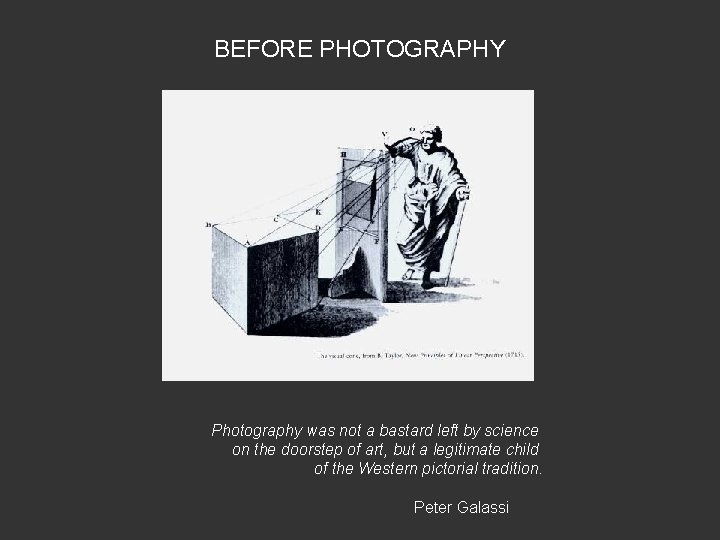
BEFORE PHOTOGRAPHY Photography was not a bastard left by science on the doorstep of art, but a legitimate child of the Western pictorial tradition. Peter Galassi
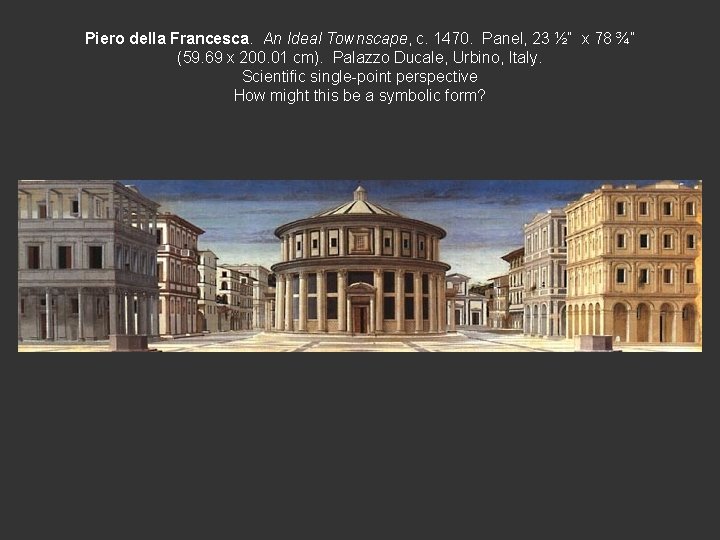
LINEAR PERSPECTIVE “The ultimate origins of photography – both technical and aesthetic – lie in the fifteenth-century invention of linear perspective. ”
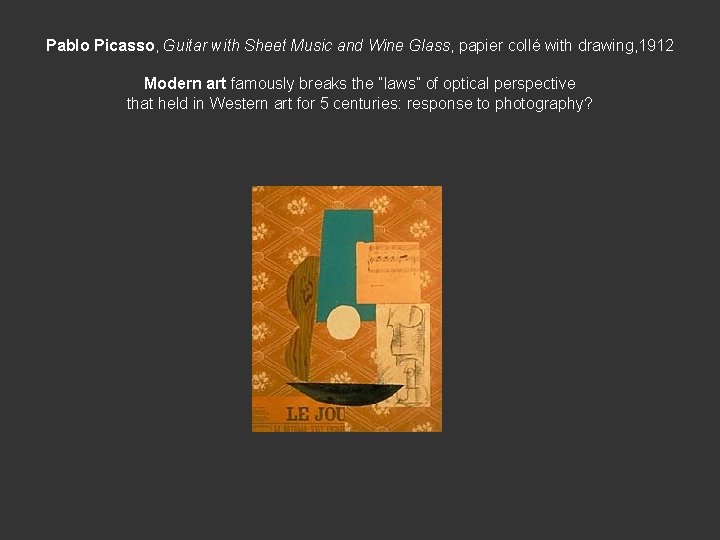
Pablo Picasso, Guitar with Sheet Music and Wine Glass, papier collé with drawing, 1912 Modern art famously breaks the “laws” of optical perspective that held in Western art for 5 centuries: response to photography?
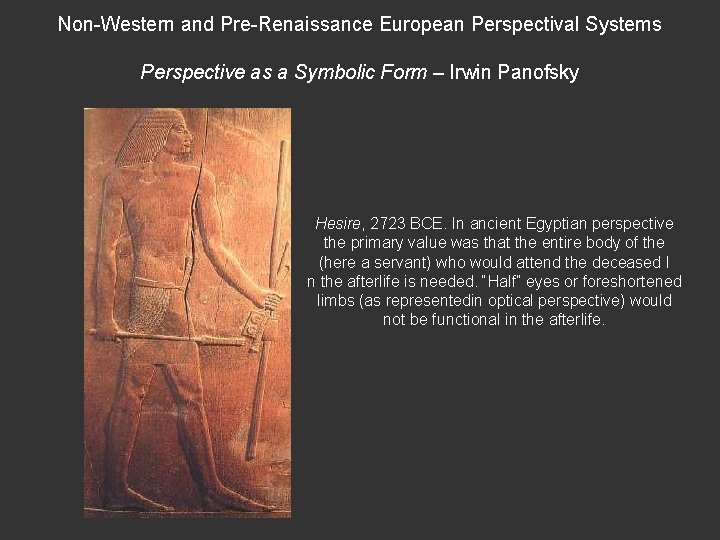
Non-Western and Pre-Renaissance European Perspectival Systems Perspective as a Symbolic Form – Irwin Panofsky Hesire, 2723 BCE. In ancient Egyptian perspective the primary value was that the entire body of the (here a servant) who would attend the deceased I n the afterlife is needed. “Half” eyes or foreshortened limbs (as representedin optical perspective) would not be functional in the afterlife.
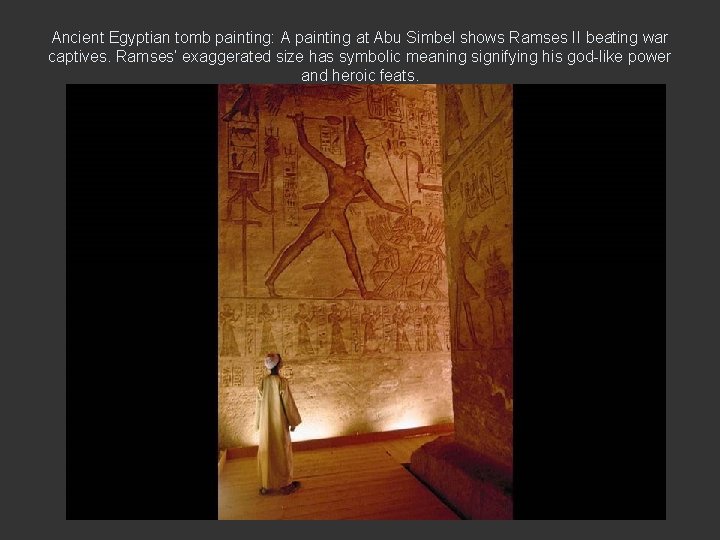
Ancient Egyptian tomb painting: A painting at Abu Simbel shows Ramses II beating war captives. Ramses’ exaggerated size has symbolic meaning signifying his god-like power and heroic feats.
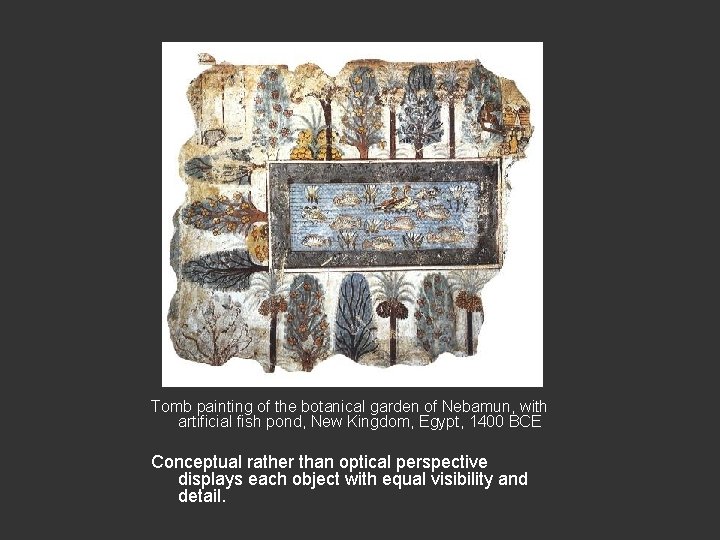
Tomb painting of the botanical garden of Nebamun, with artificial fish pond, New Kingdom, Egypt, 1400 BCE Conceptual rather than optical perspective displays each object with equal visibility and detail.
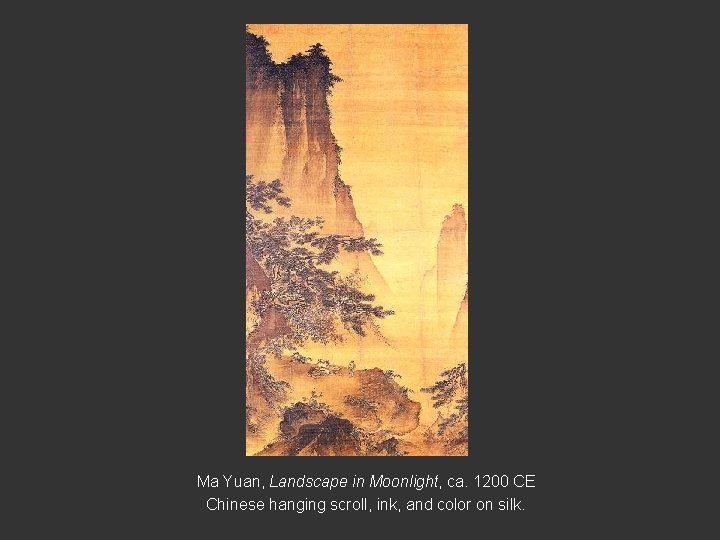
Ma Yuan, Landscape in Moonlight, ca. 1200 CE Chinese hanging scroll, ink, and color on silk.
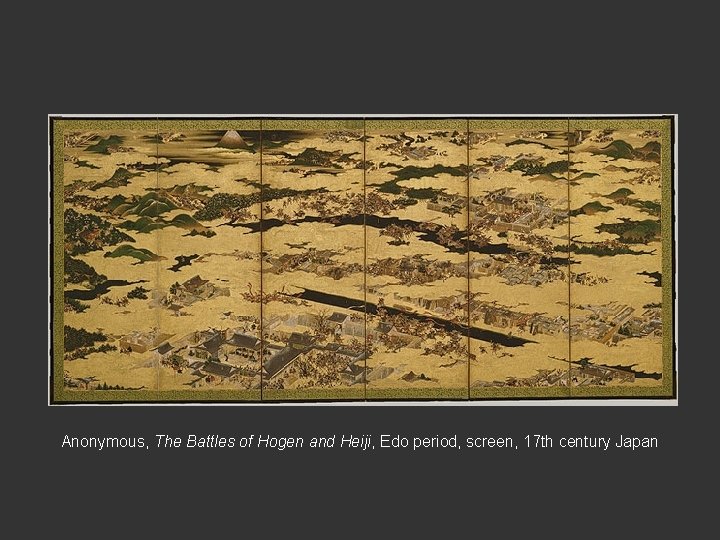
Anonymous, The Battles of Hogen and Heiji, Edo period, screen, 17 th century Japan
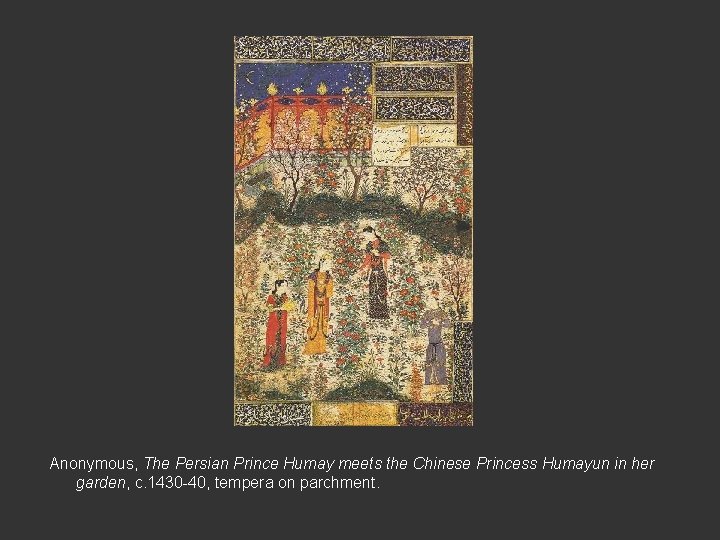
Anonymous, The Persian Prince Humay meets the Chinese Princess Humayun in her garden, c. 1430 -40, tempera on parchment.
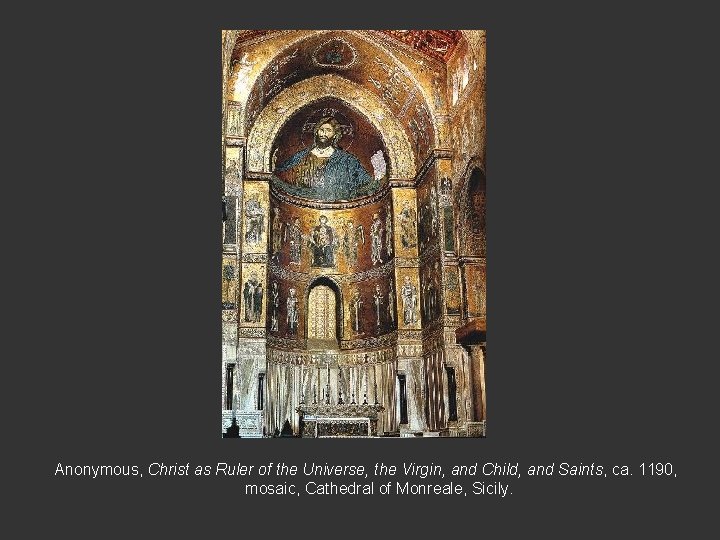
Anonymous, Christ as Ruler of the Universe, the Virgin, and Child, and Saints, ca. 1190, mosaic, Cathedral of Monreale, Sicily.
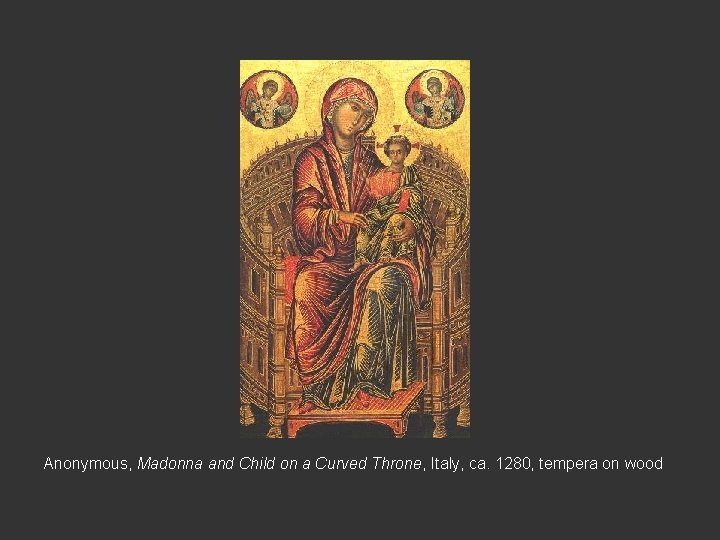
Anonymous, Madonna and Child on a Curved Throne, Italy, ca. 1280, tempera on wood
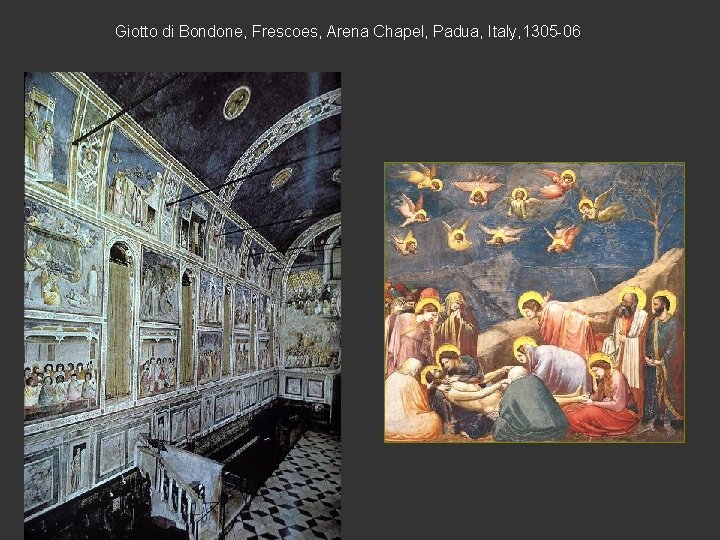
Giotto di Bondone, Frescoes, Arena Chapel, Padua, Italy, 1305 -06
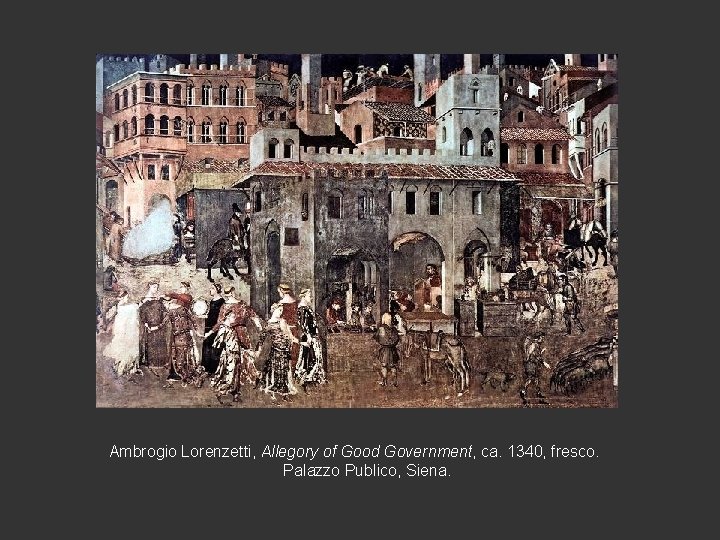
Ambrogio Lorenzetti, Allegory of Good Government, ca. 1340, fresco. Palazzo Publico, Siena.
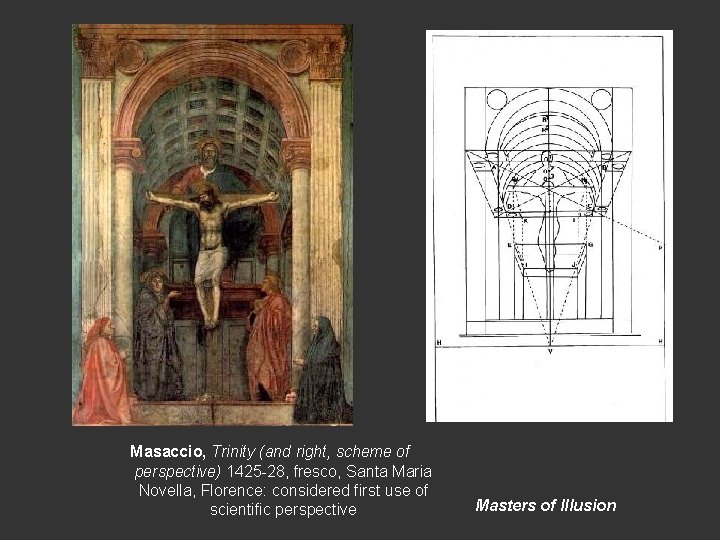
Masaccio, Trinity (and right, scheme of perspective) 1425 -28, fresco, Santa Maria Novella, Florence: considered first use of scientific perspective Masters of Illusion
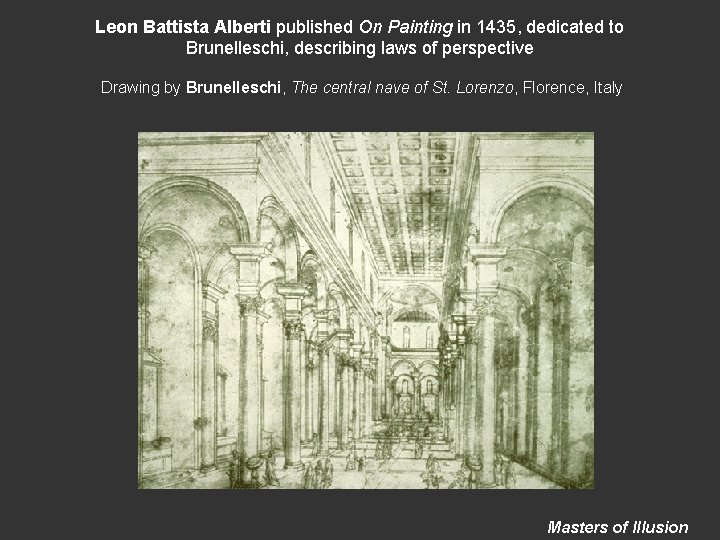
Leon Battista Alberti published On Painting in 1435, dedicated to Brunelleschi, describing laws of perspective Drawing by Brunelleschi, The central nave of St. Lorenzo, Florence, Italy Masters of Illusion
PERSPECTIVE MACHINES
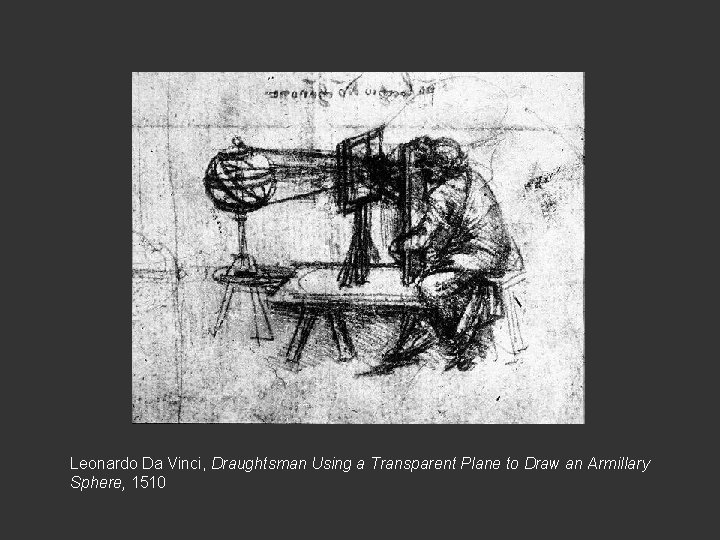
Leonardo Da Vinci, Draughtsman Using a Transparent Plane to Draw an Armillary Sphere, 1510
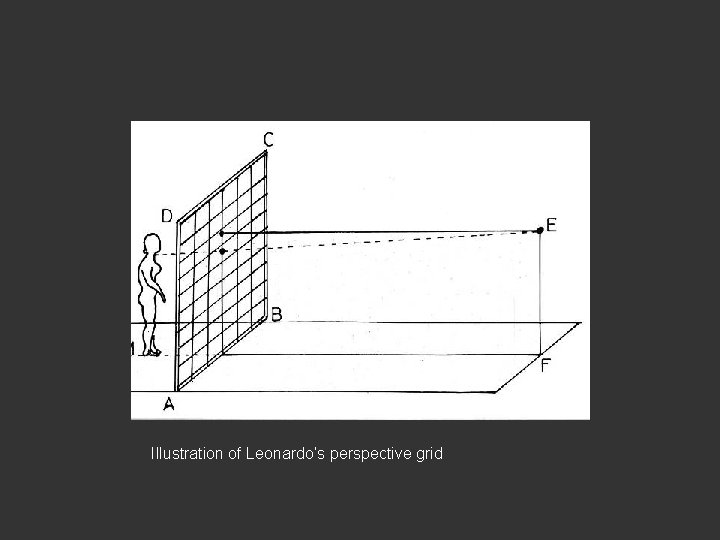
Illustration of Leonardo’s perspective grid
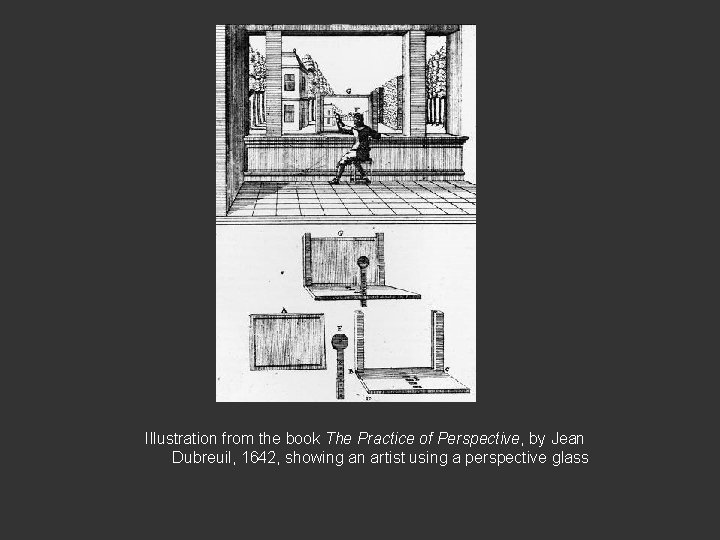
Illustration from the book The Practice of Perspective, by Jean Dubreuil, 1642, showing an artist using a perspective glass
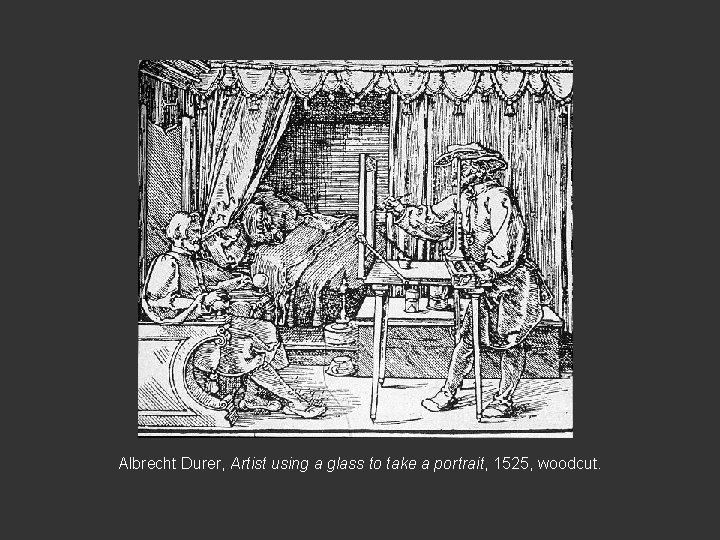
Albrecht Durer, Artist using a glass to take a portrait, 1525, woodcut.
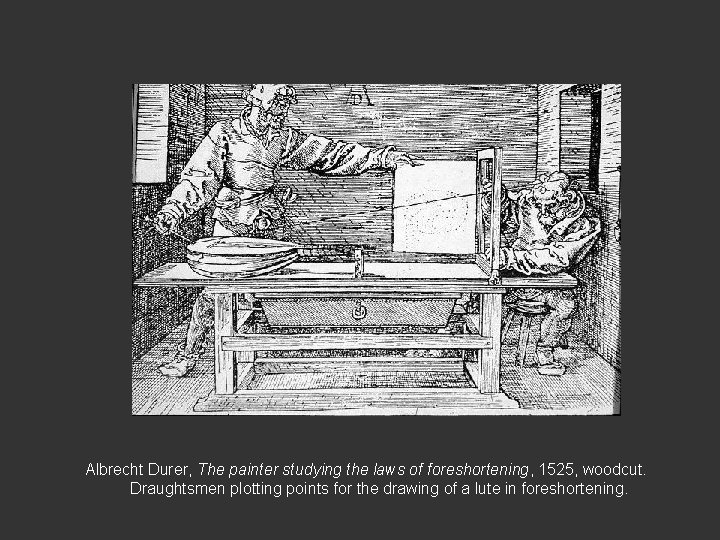
Albrecht Durer, The painter studying the laws of foreshortening, 1525, woodcut. Draughtsmen plotting points for the drawing of a lute in foreshortening.
THE CAMERA OBSCURA
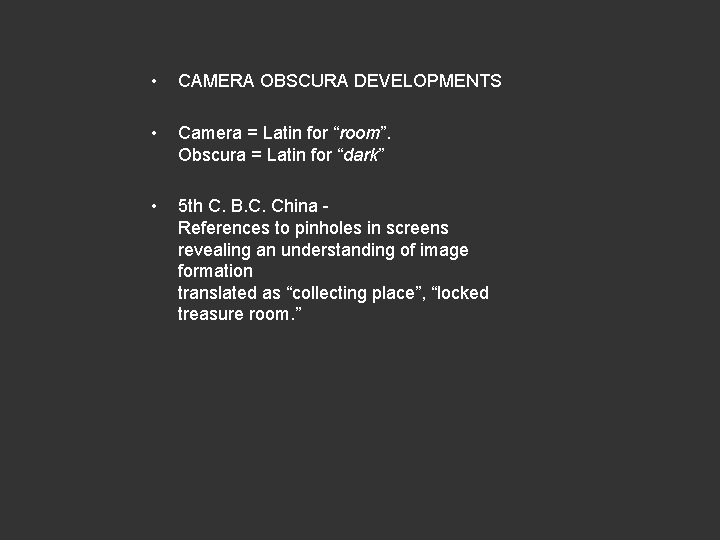
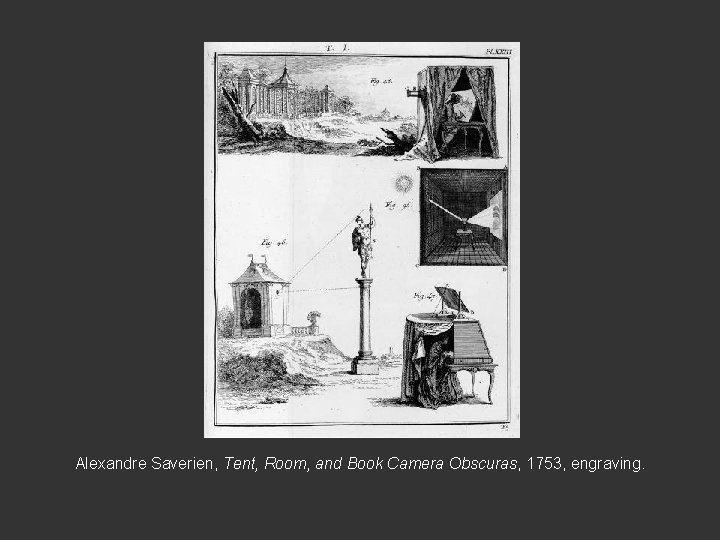
• CAMERA OBSCURA DEVELOPMENTS • Camera = Latin for “room”. Obscura = Latin for “dark” • 5 th C. B. C. China References to pinholes in screens revealing an understanding of image formation translated as “collecting place”, “locked treasure room. ”
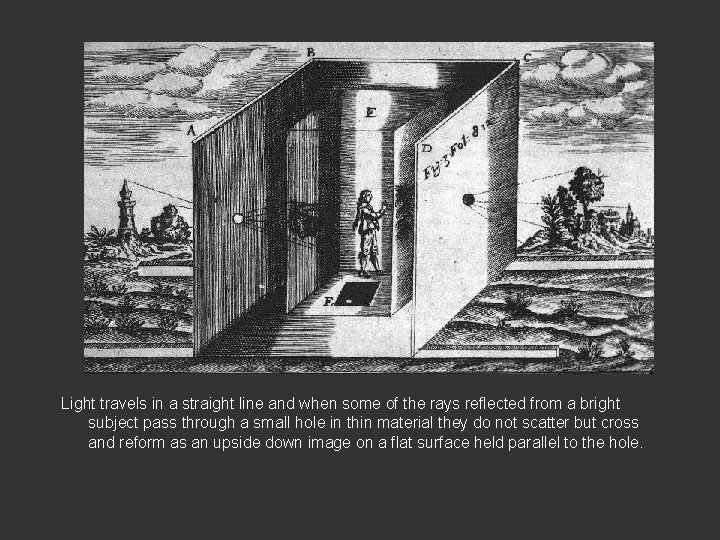
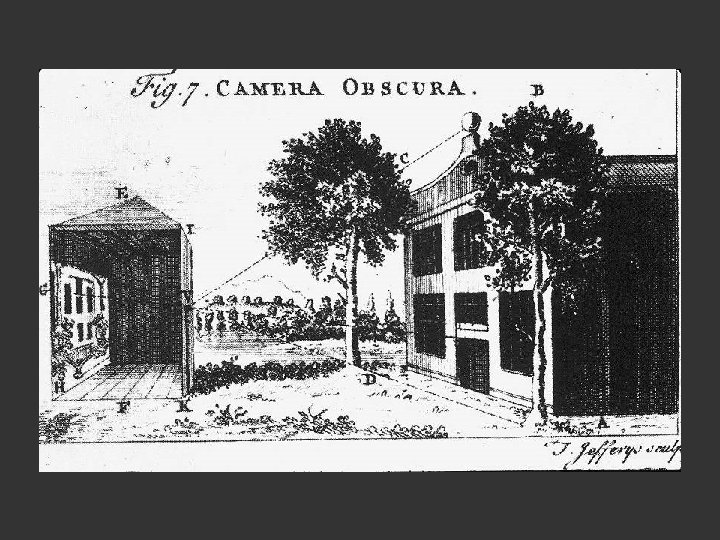
Light travels in a straight line and when some of the rays reflected from a bright subject pass through a small hole in thin material they do not scatter but cross and reform as an upside down image on a flat surface held parallel to the hole.
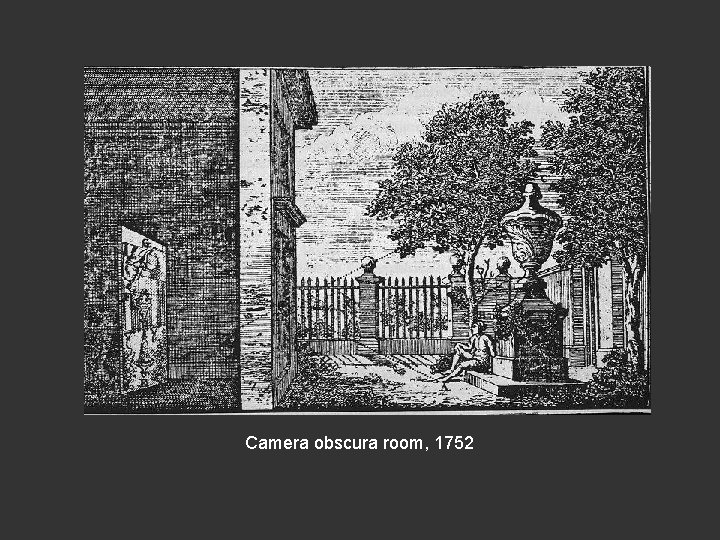
Camera obscura room, 1752
• Camera obscura room, 1754.
Alexandre Saverien, Tent, Room, and Book Camera Obscuras, 1753, engraving.
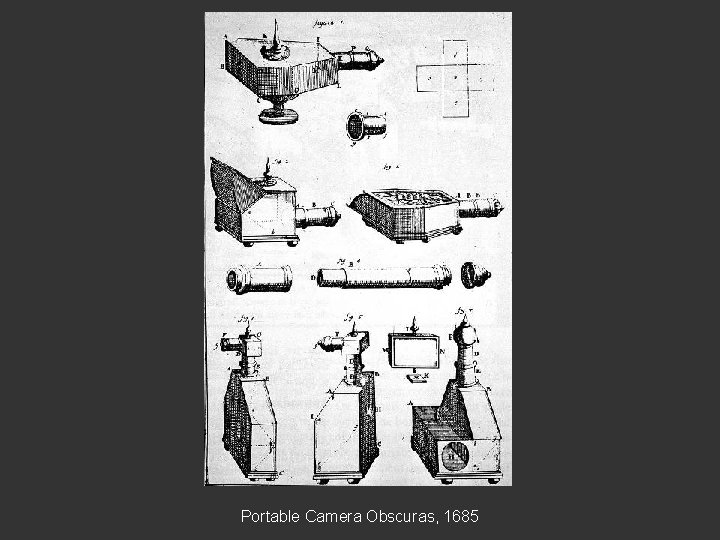
Portable Camera Obscuras, 1685
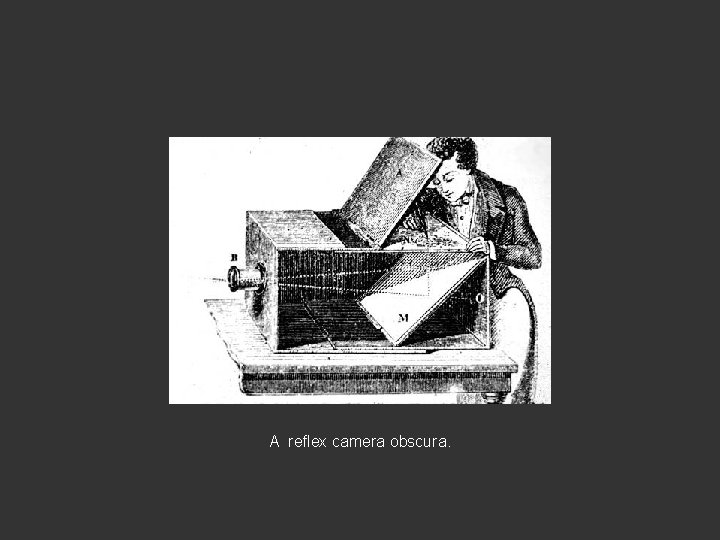
A reflex camera obscura.
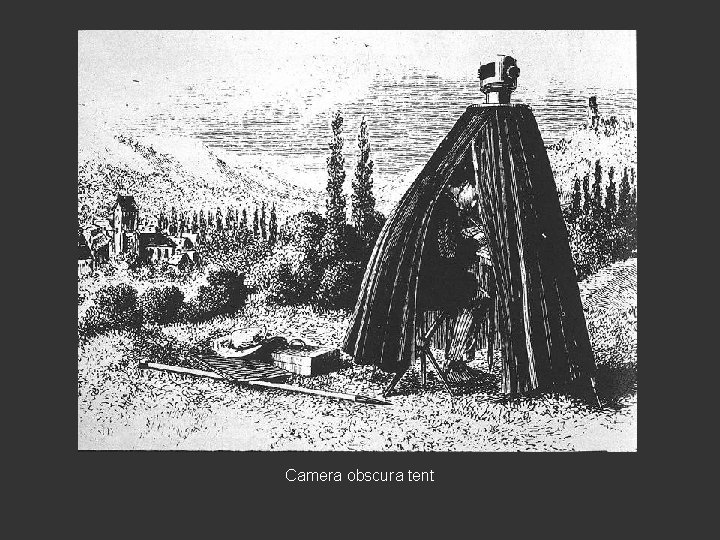
Camera obscura tent
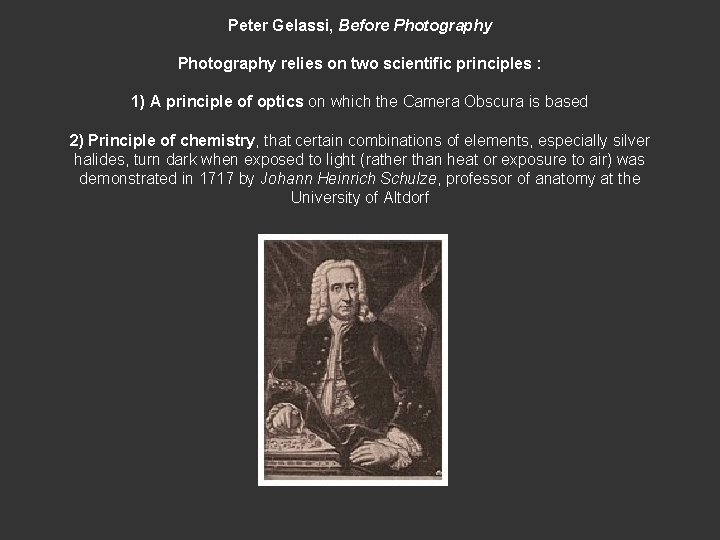
Peter Gelassi, Before Photography relies on two scientific principles : 1) A principle of optics on which the Camera Obscura is based 2) Principle of chemistry, that certain combinations of elements, especially silver halides, turn dark when exposed to light (rather than heat or exposure to air) was demonstrated in 1717 by Johann Heinrich Schulze, professor of anatomy at the University of Altdorf
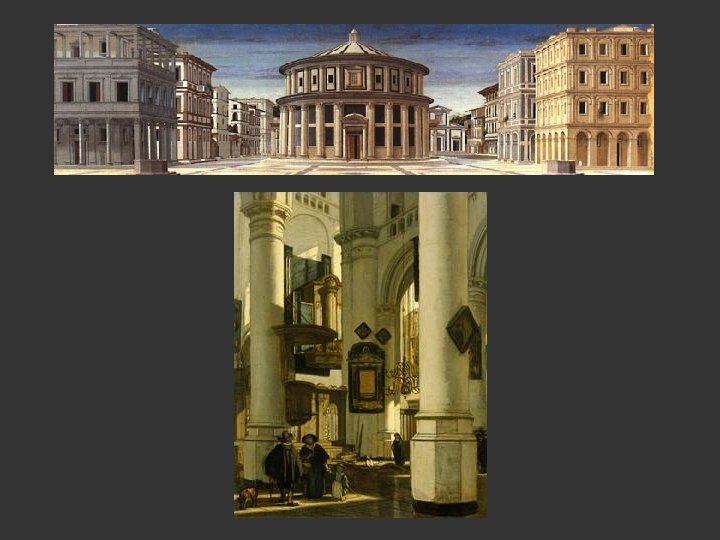
Piero della Francesca. An Ideal Townscape, c. 1470. Panel, 23 ½” x 78 ¾” (59. 69 x 200. 01 cm). Palazzo Ducale, Urbino, Italy. Scientific single-point perspective How might this be a symbolic form?
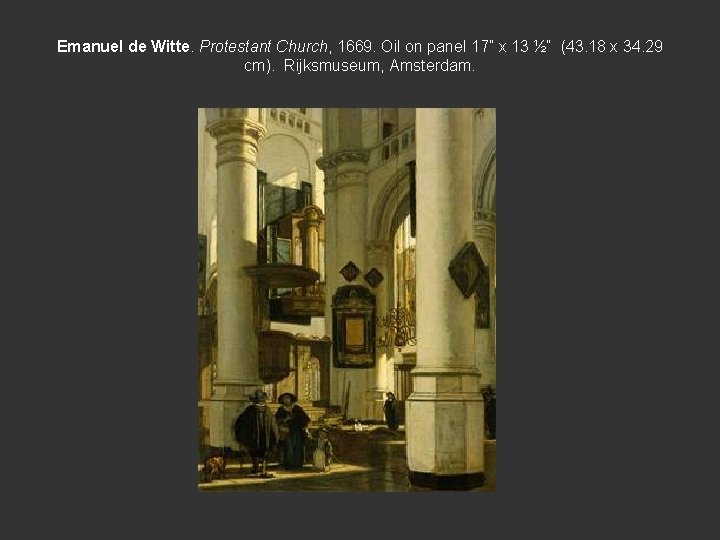
Emanuel de Witte. Protestant Church, 1669. Oil on panel 17” x 13 ½” (43. 18 x 34. 29 cm). Rijksmuseum, Amsterdam.
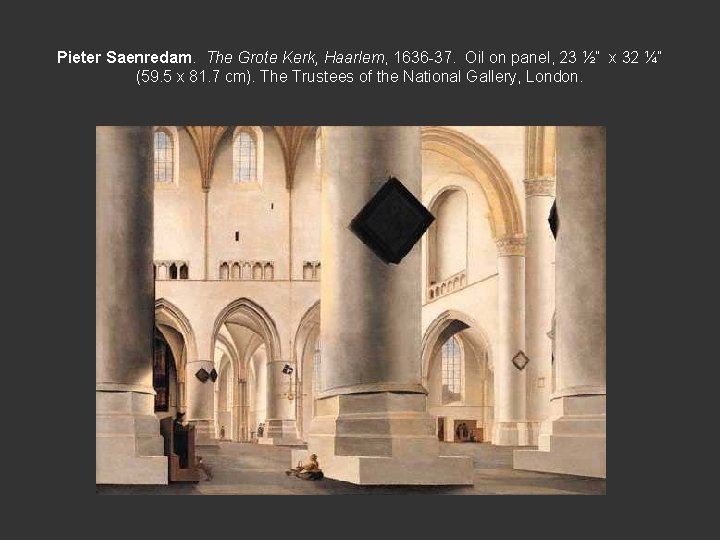
Pieter Saenredam. The Grote Kerk, Haarlem, 1636 -37. Oil on panel, 23 ½” x 32 ¼” (59. 5 x 81. 7 cm). The Trustees of the National Gallery, London.
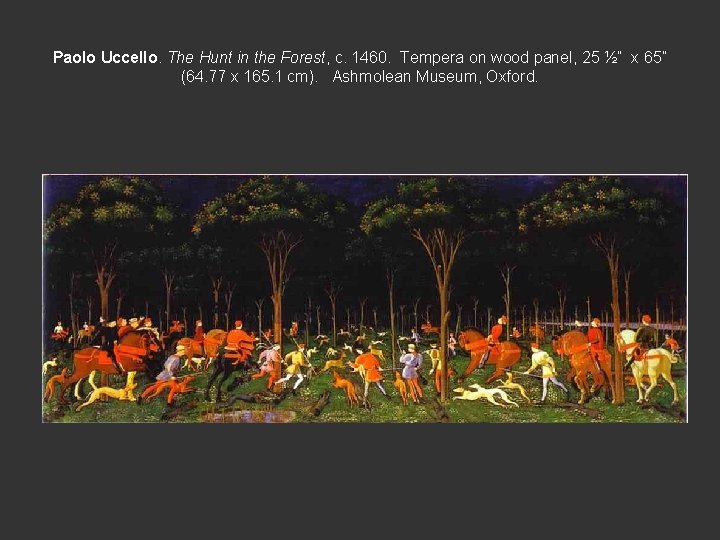
Paolo Uccello. The Hunt in the Forest, c. 1460. Tempera on wood panel, 25 ½” x 65” (64. 77 x 165. 1 cm). Ashmolean Museum, Oxford.
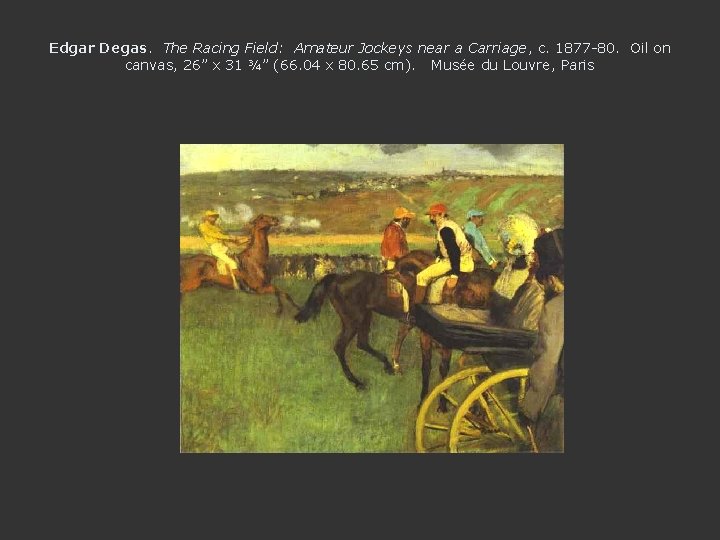
Edgar Degas. The Racing Field: Amateur Jockeys near a Carriage, c. 1877 -80. Oil on canvas, 26” x 31 ¾” (66. 04 x 80. 65 cm). Musée du Louvre, Paris
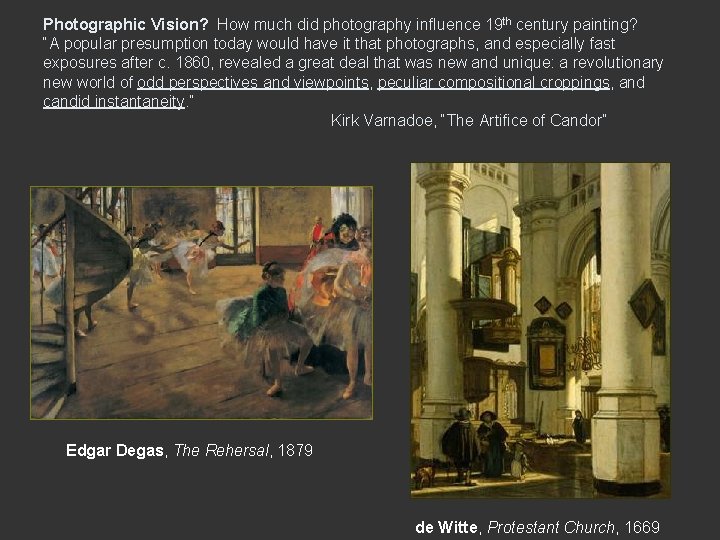
Photographic Vision? How much did photography influence 19 th century painting? “A popular presumption today would have it that photographs, and especially fast exposures after c. 1860, revealed a great deal that was new and unique: a revolutionary new world of odd perspectives and viewpoints, peculiar compositional croppings, and candid instantaneity. ” Kirk Varnadoe, “The Artifice of Candor” Edgar Degas, The Rehersal, 1879 de Witte, Protestant Church, 1669