
When to tell and when not to tell









- Slides: 124
When to tell and when not to tell: Arbitrary and Necessary Dave Hewitt
If I’m having to remember… … then I’m not working on mathematics.
Pimolitel
Katie was about 4 years old when her mother, Barbara, mentioned New York whilst talking to someone else. Katie: Where is New York? Barbara: In the United States. Katie: Why?
Student: What is the name of a four-sided shape which has all four angles equal to 90 degrees and all sides the same length? Teacher: A square. Student: Why?
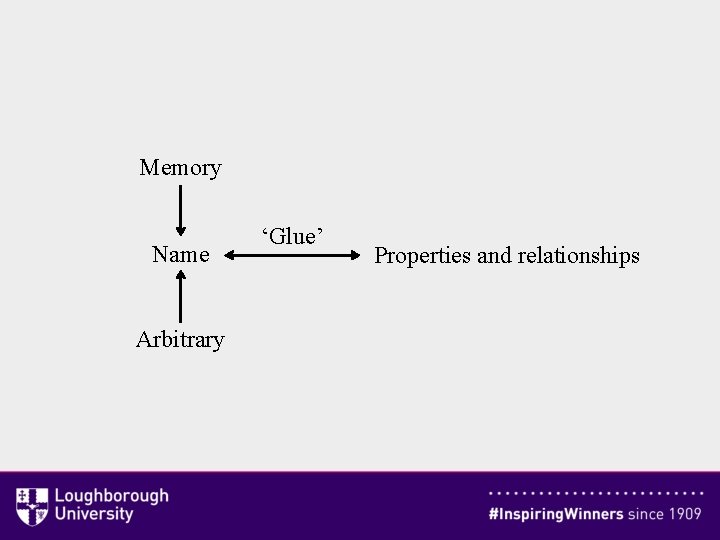
Caleb Gattegno said: … there is knowledge that is distinguished sharply from awareness - the knowledge solely entrusted to one’s memory, such as the label for such an object or a telephone number, items which are arbitrary. Without someone else, that knowledge would not exist for us (p 55). Gattegno, C. (1987), The Science of Education. Part 1 ‑ Theoretical Considerations, New York: Educational Solutions.
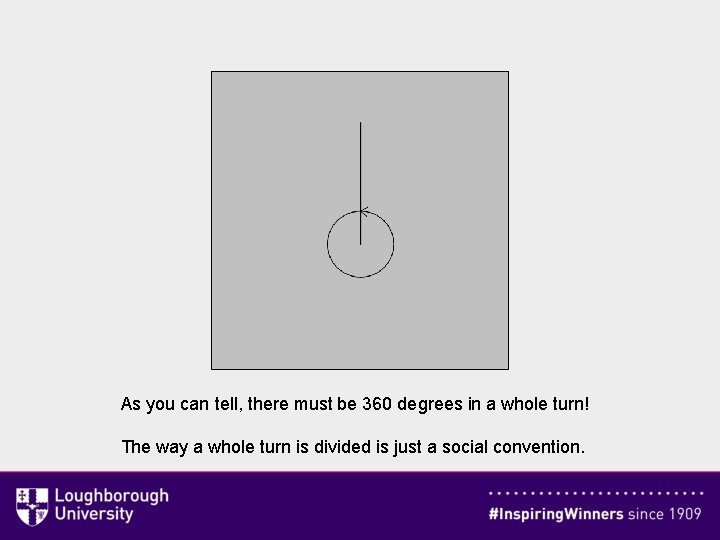
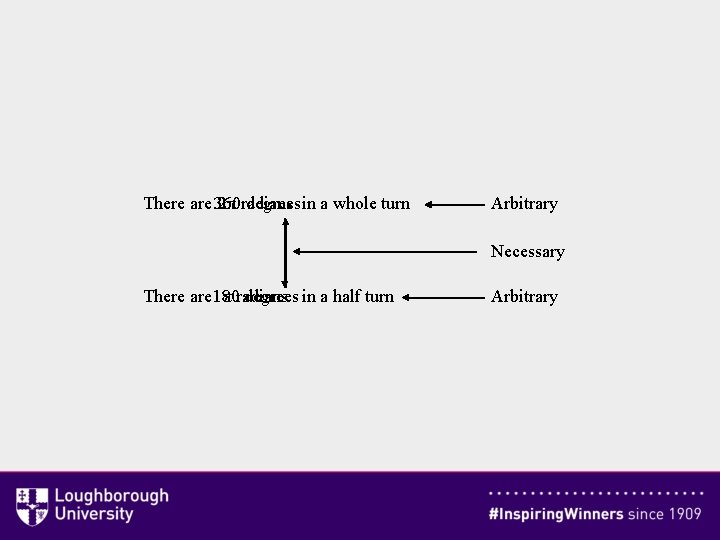
As you can tell, there must be 360 degrees in a whole turn! The way a whole turn is divided is just a social convention.
Ginsburg gave a transcript of a conversation with a second grader, Kathy: I: Why do you write a 13 like that, a 1 followed by a 3? K: ‘Cause there’s one ten, right? So you just put 1. I don’t know why it’s made like that. They could put ten ones and a three. So you see 13 is like ten and a three, but the way we write it, it would be 103 so they just put 1 for one ten and 3 for the extra three that it adds on to the ten. (p 116). Ginsburg, H. (1977), Children's Arithmetic. The Learning Process, New York: D. Van Nostrand Company.
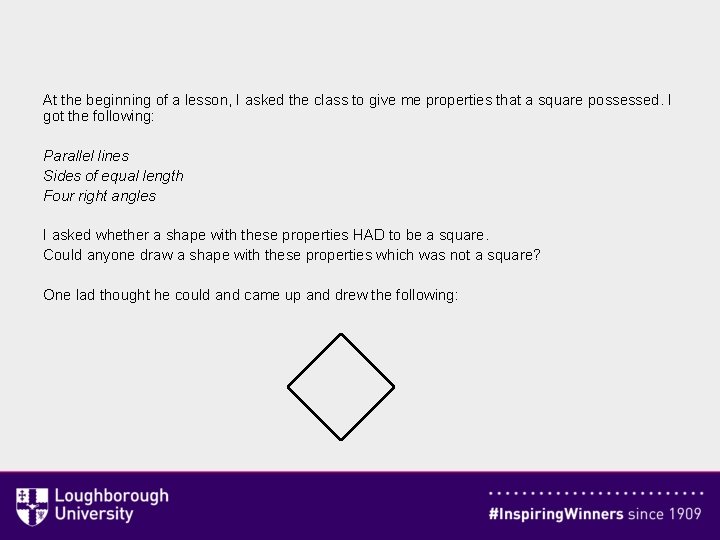
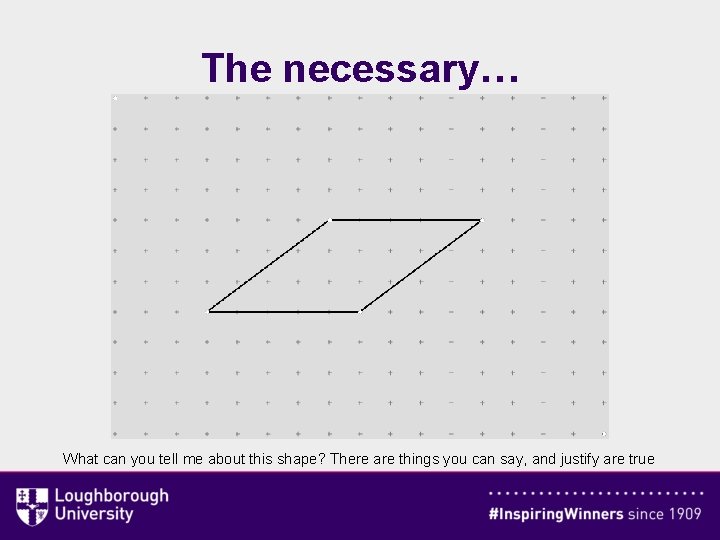
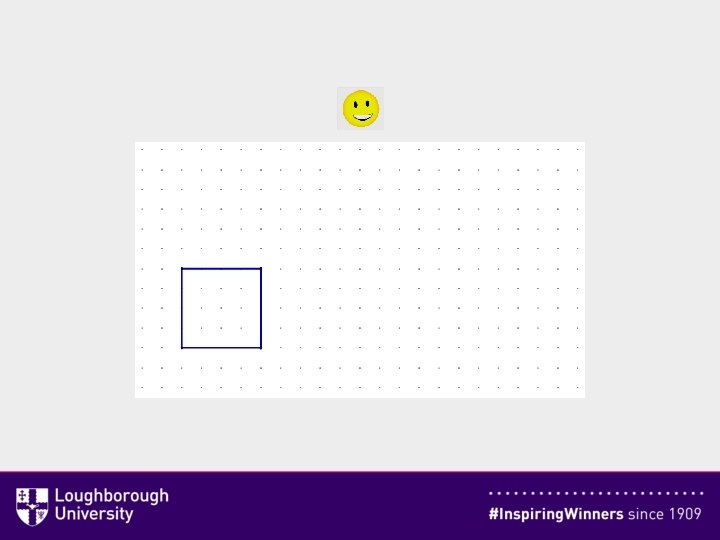
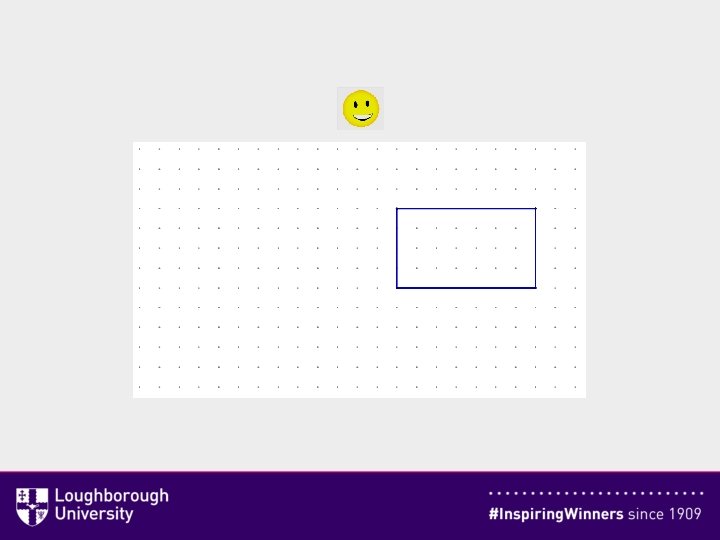
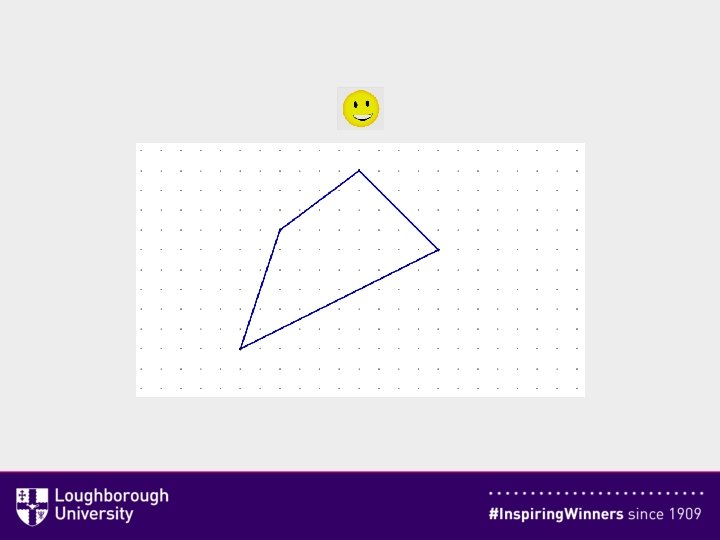
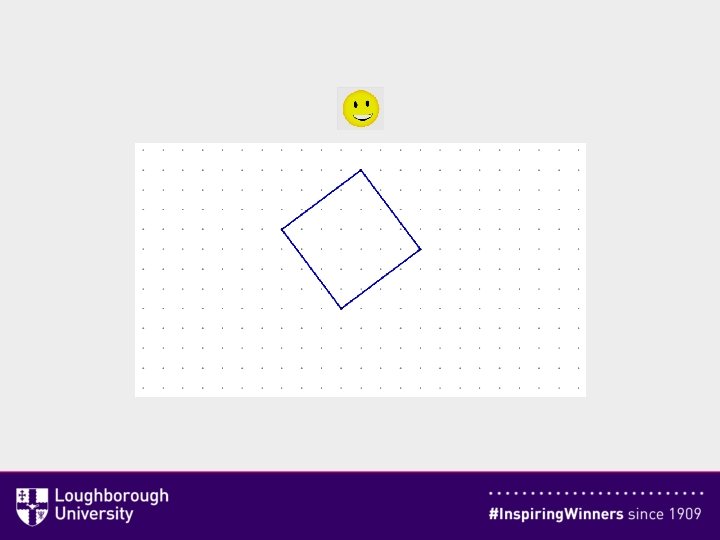
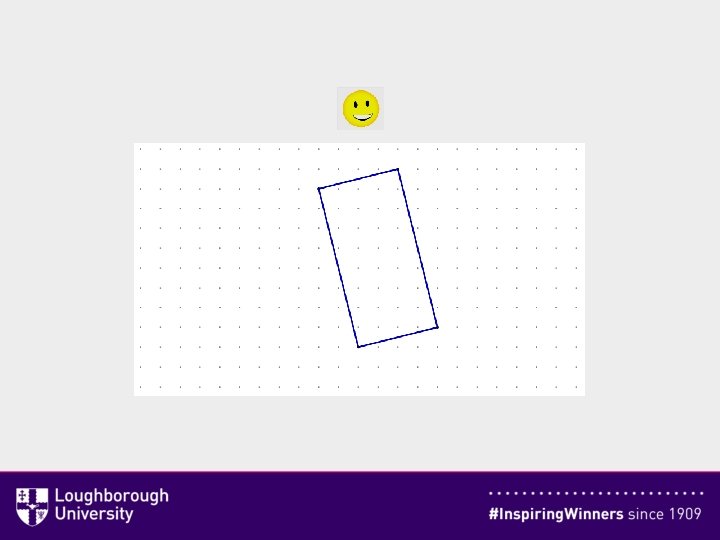
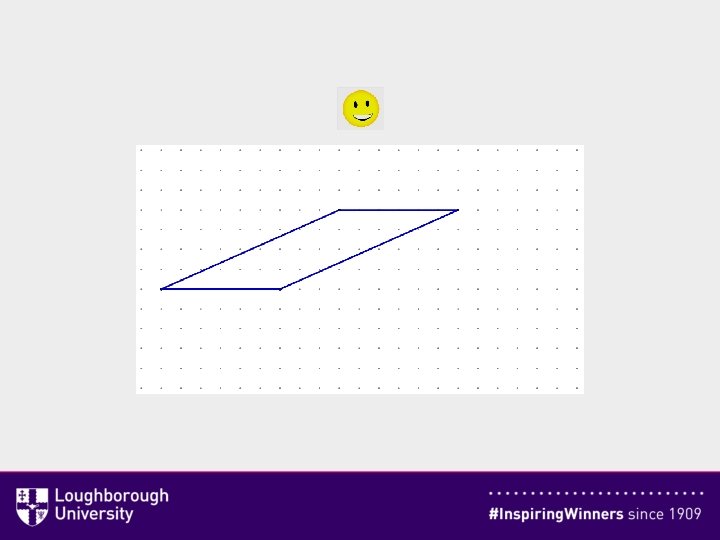
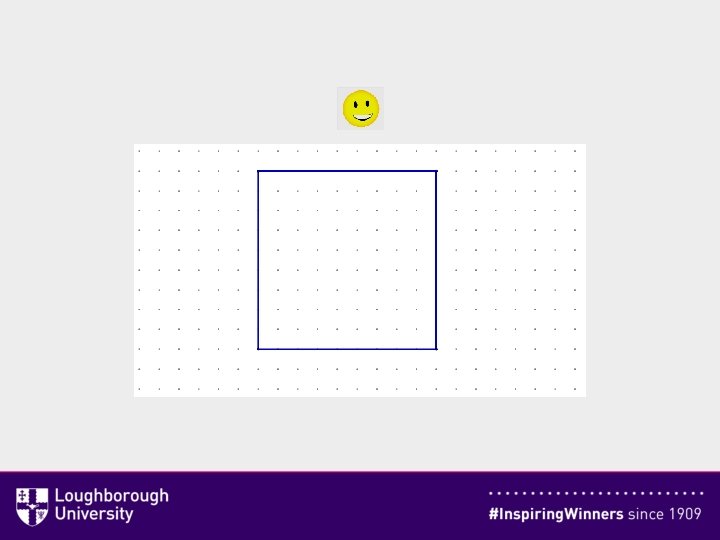
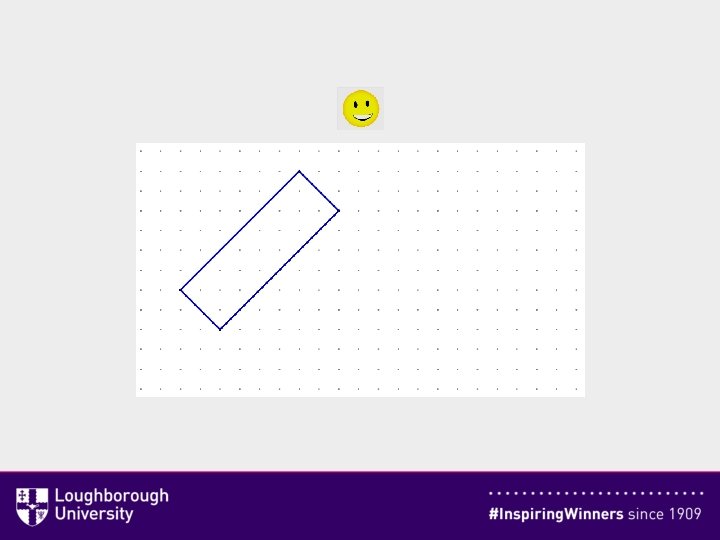
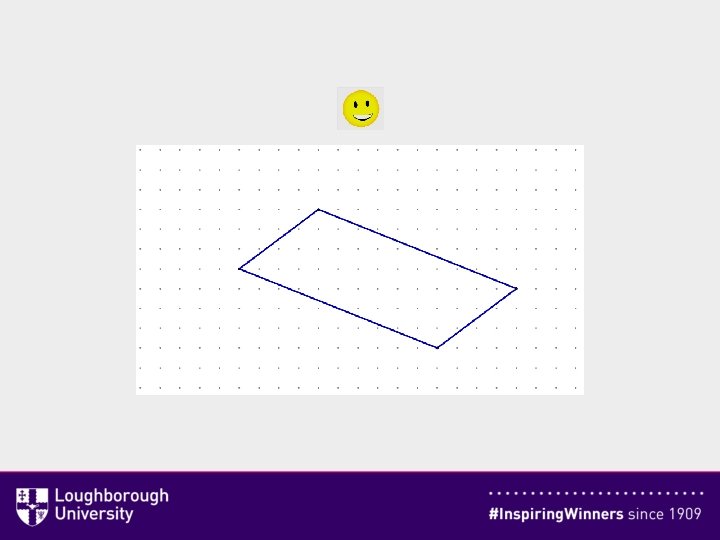
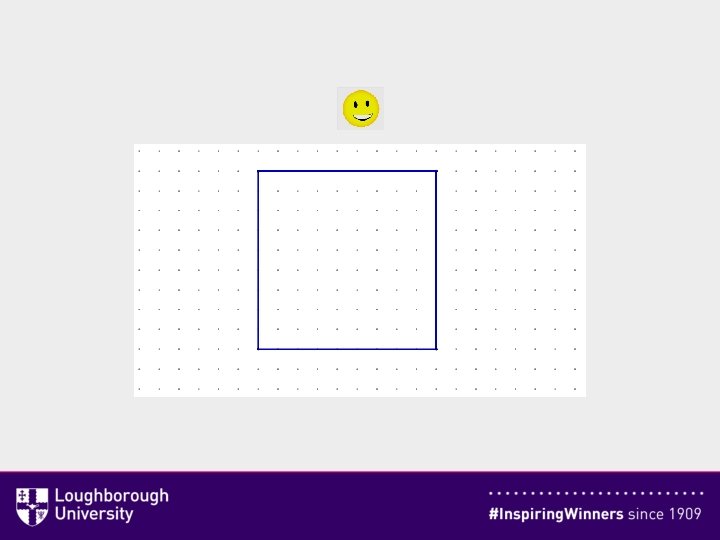
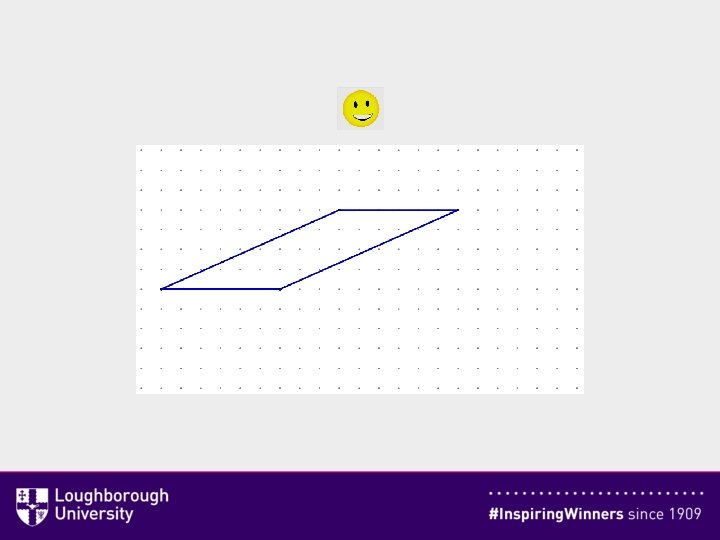
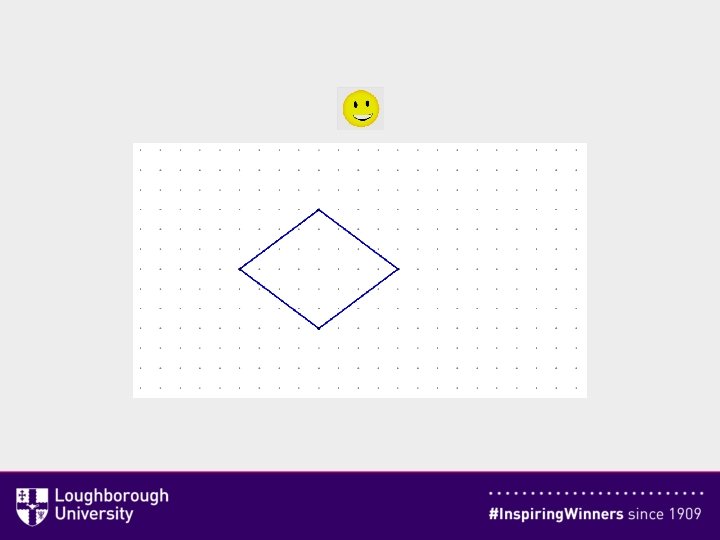
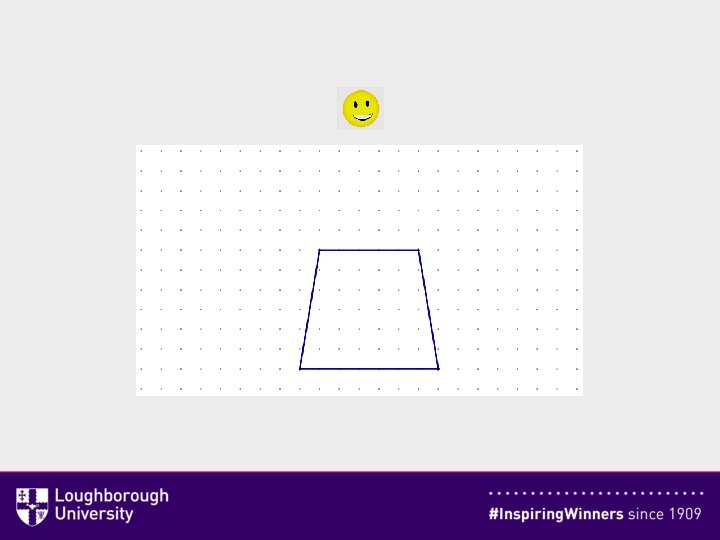
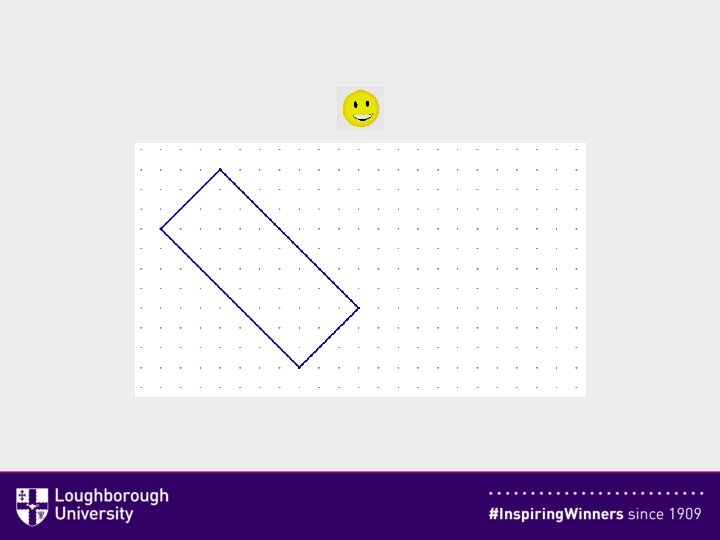
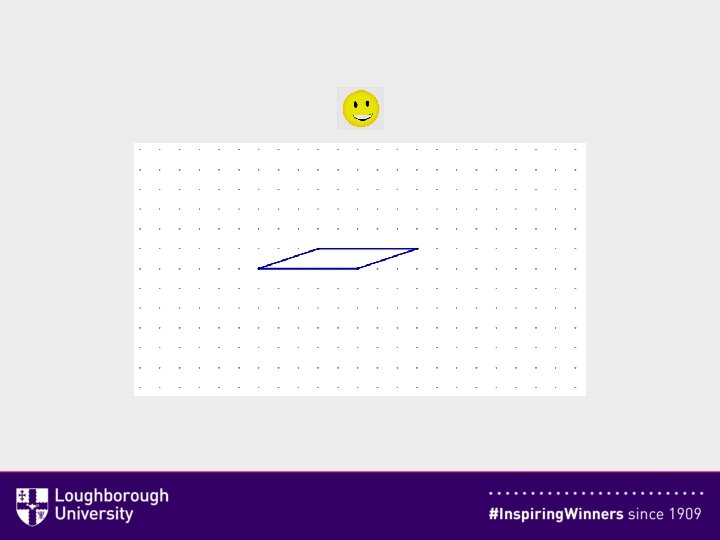
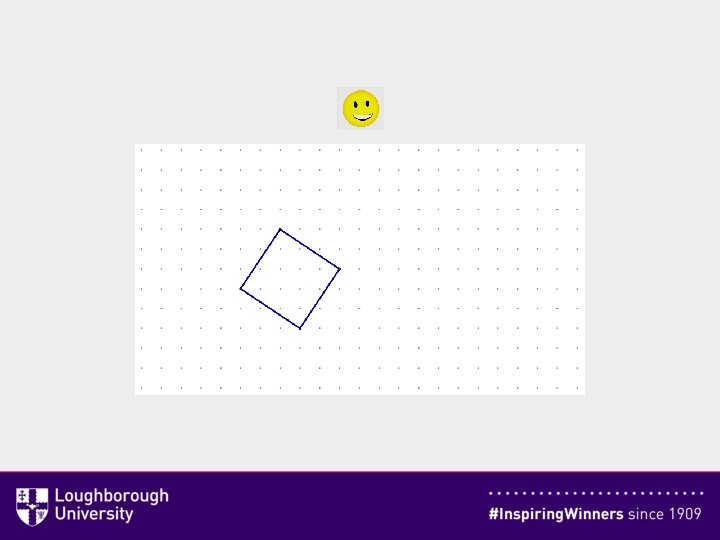
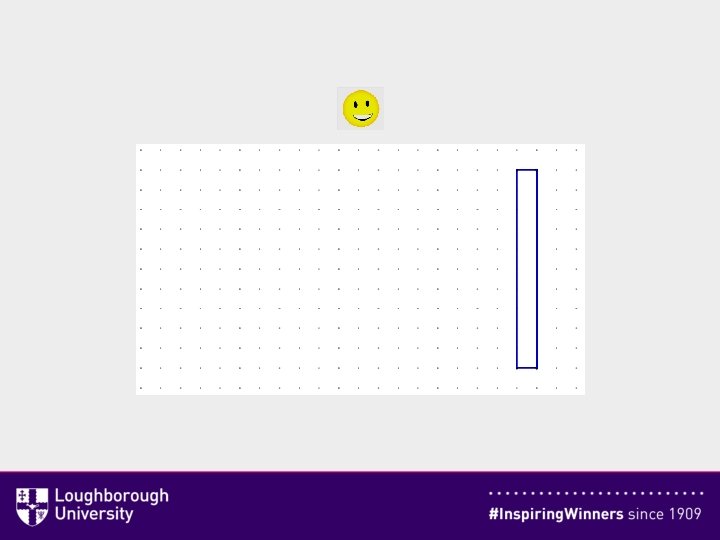
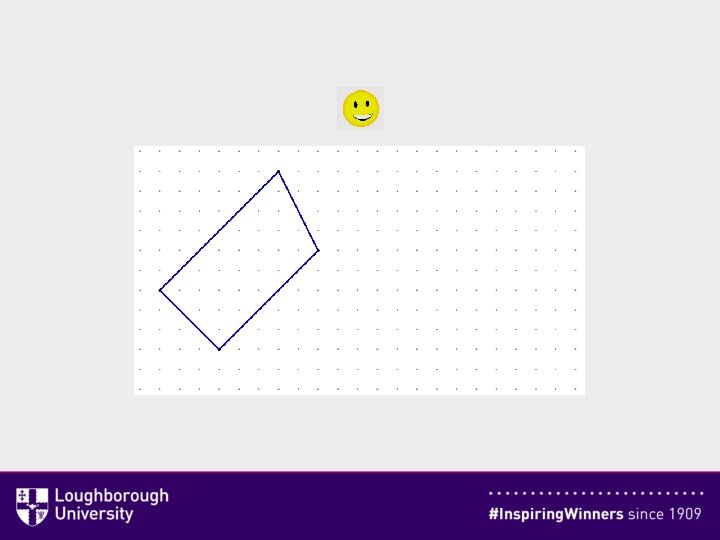
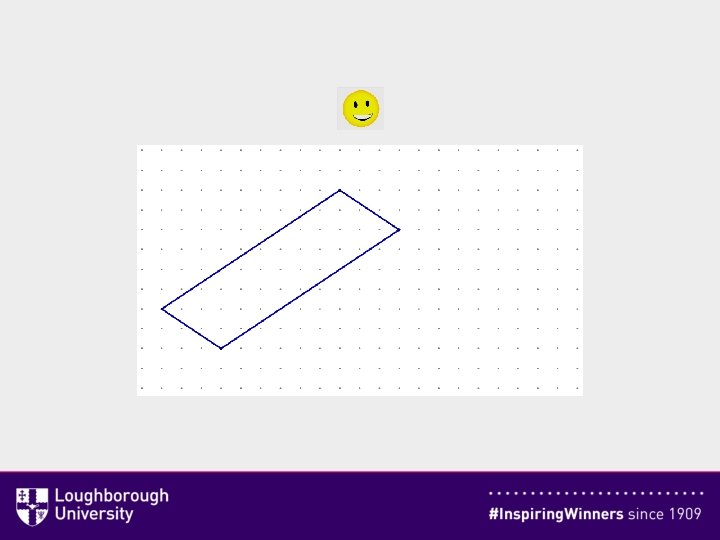
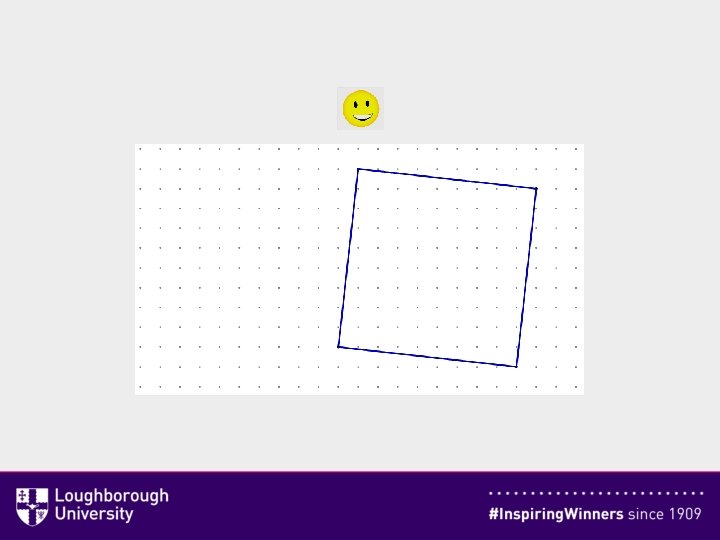
At the beginning of a lesson, I asked the class to give me properties that a square possessed. I got the following: Parallel lines Sides of equal length Four right angles I asked whether a shape with these properties HAD to be a square. Could anyone draw a shape with these properties which was not a square? One lad thought he could and came up and drew the following:
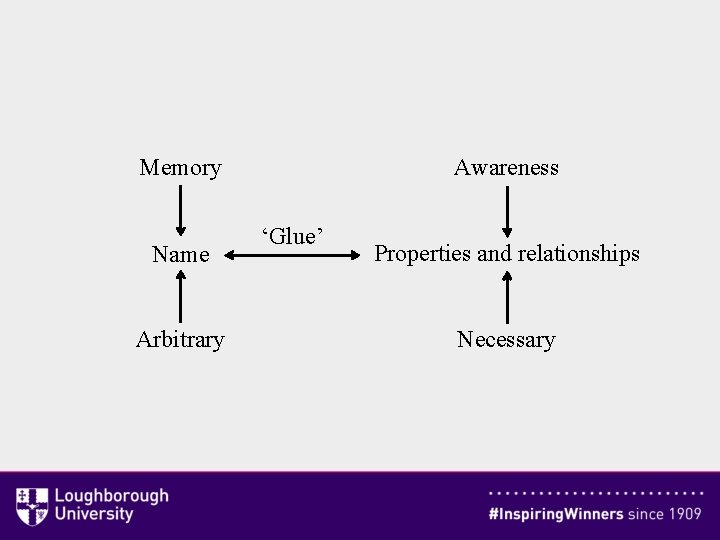
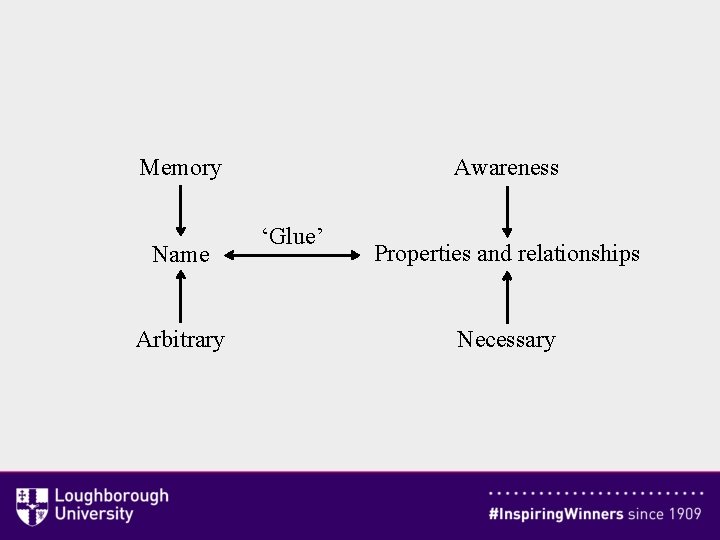
Memory Name Arbitrary ‘Glue’ Properties and relationships
The necessary… What can you tell me about this shape? There are things you can say, and justify are true
degrees in a whole turn There are 360 2π radians Arbitrary Necessary π radians There are 180 degrees in a half turn Arbitrary
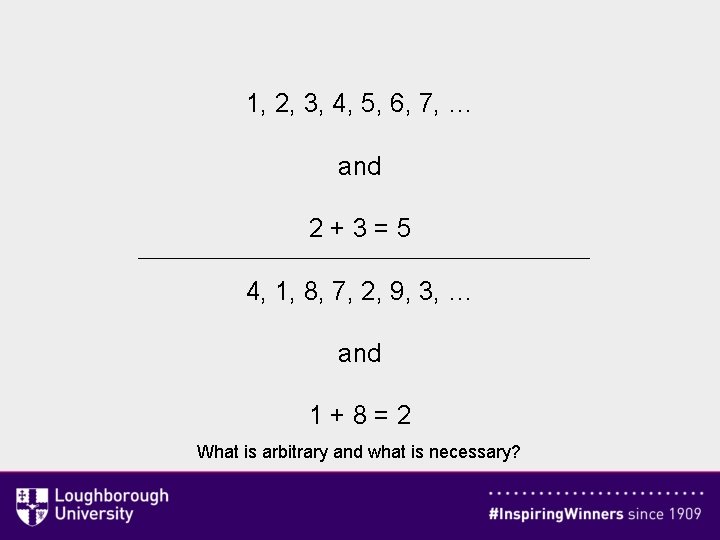
1, 2, 3, 4, 5, 6, 7, … and 2+3=5 4, 1, 8, 7, 2, 9, 3, … and 1+8=2 What is arbitrary and what is necessary?
Awareness Memory Name Arbitrary ‘Glue’ Properties and relationships Necessary
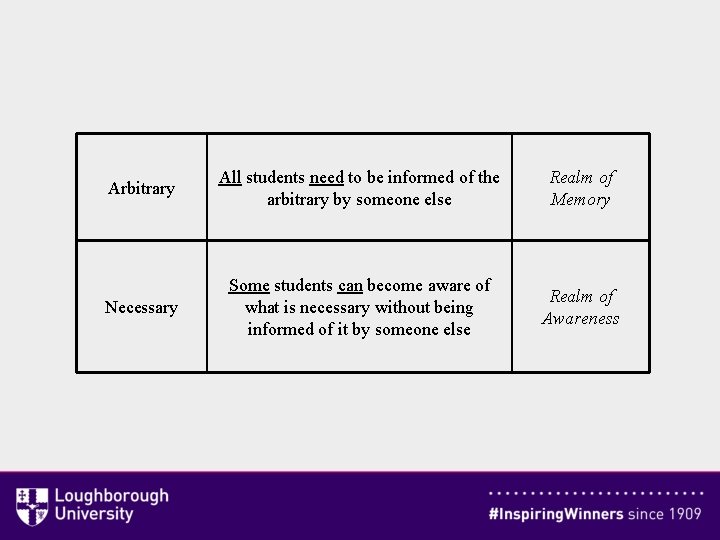
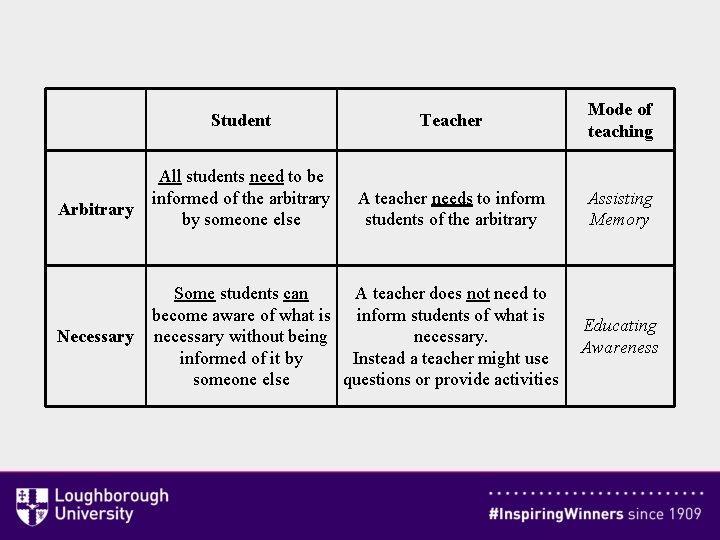
Arbitrary All students need to be informed of the arbitrary by someone else Realm of Memory Necessary Some students can become aware of what is necessary without being informed of it by someone else Realm of Awareness
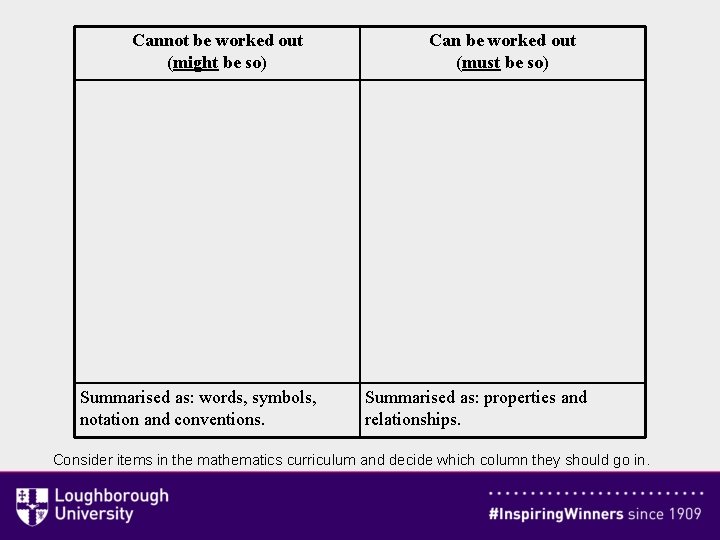
Cannot be worked out (might be so) Summarised as: words, symbols, notation and conventions. Can be worked out (must be so) Summarised as: properties and relationships. Consider items in the mathematics curriculum and decide which column they should go in.
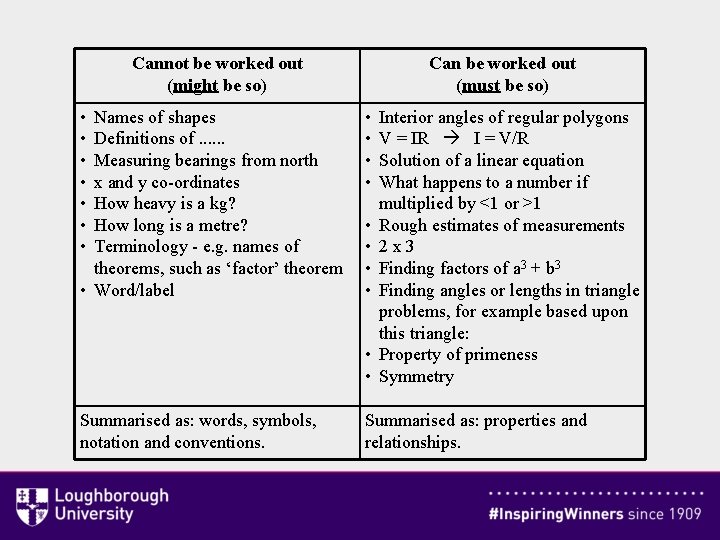
Cannot be worked out (might be so) • • Names of shapes Definitions of. . . Measuring bearings from north x and y co-ordinates How heavy is a kg? How long is a metre? Terminology - e. g. names of theorems, such as ‘factor’ theorem • Word/label Can be worked out (must be so) • • • Summarised as: words, symbols, notation and conventions. Interior angles of regular polygons V = IR I = V/R Solution of a linear equation What happens to a number if multiplied by <1 or >1 Rough estimates of measurements 2 x 3 Finding factors of a 3 + b 3 Finding angles or lengths in triangle problems, for example based upon this triangle: Property of primeness Symmetry Summarised as: properties and relationships.
Arbitrary Student Teacher Mode of teaching All students need to be informed of the arbitrary by someone else A teacher needs to inform students of the arbitrary Assisting Memory Some students can A teacher does not need to become aware of what is inform students of what is Necessary necessary without being necessary. informed of it by Instead a teacher might use someone else questions or provide activities Educating Awareness
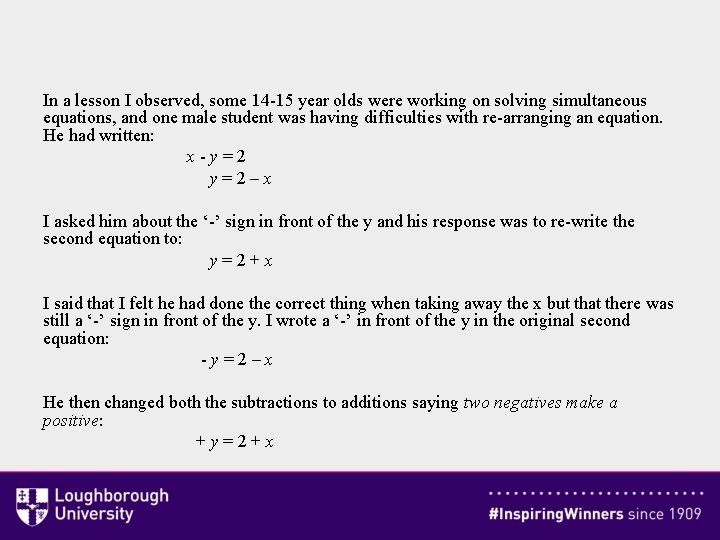
In a lesson I observed, some 14 -15 year olds were working on solving simultaneous equations, and one male student was having difficulties with re-arranging an equation. He had written: x-y=2 y=2–x I asked him about the ‘-’ sign in front of the y and his response was to re-write the second equation to: y=2+x I said that I felt he had done the correct thing when taking away the x but that there was still a ‘-’ sign in front of the y. I wrote a ‘-’ in front of the y in the original second equation: -y=2–x He then changed both the subtractions to additions saying two negatives make a positive: +y=2+x
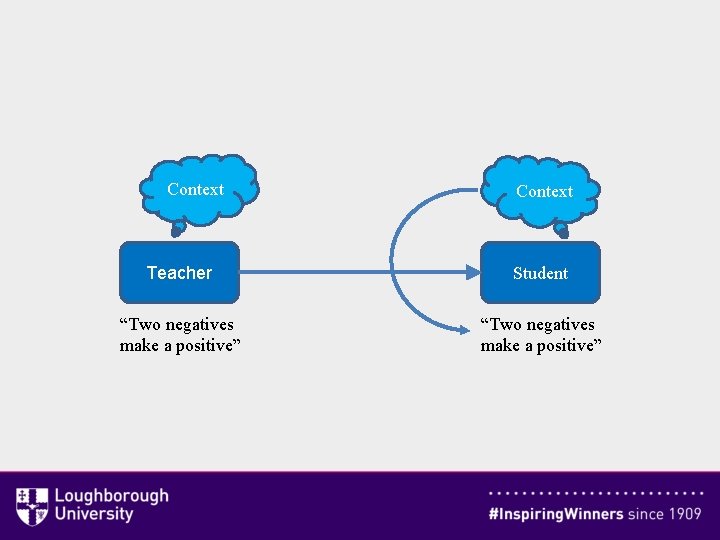
Context Teacher Student “Two negatives make a positive”
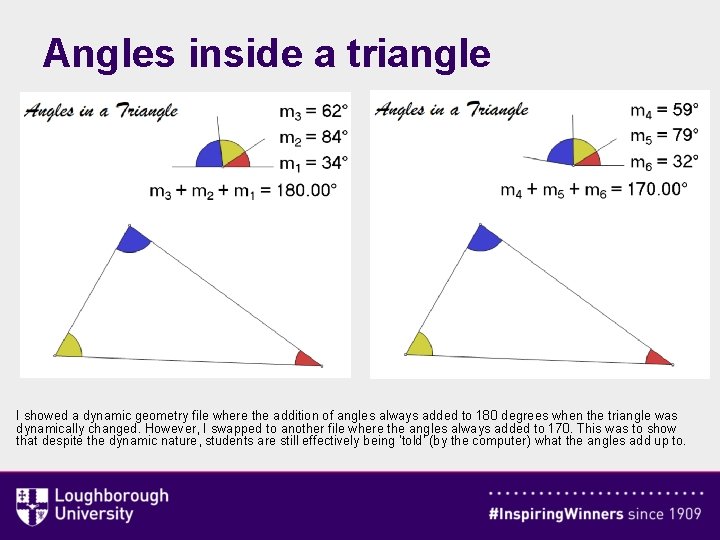
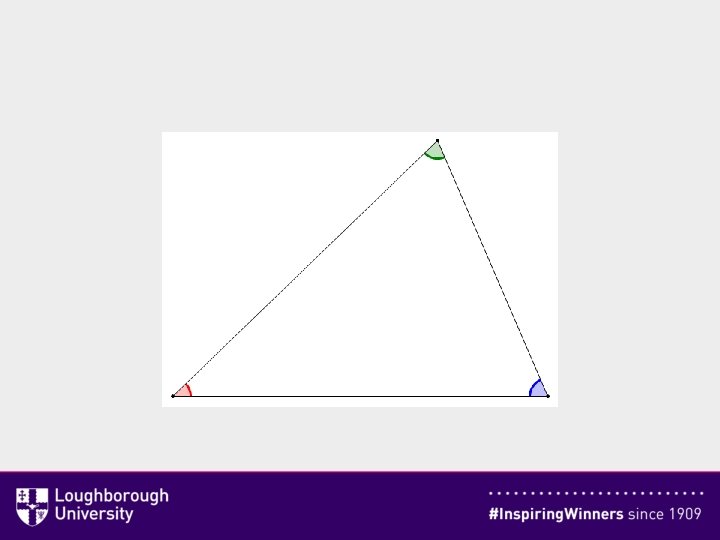
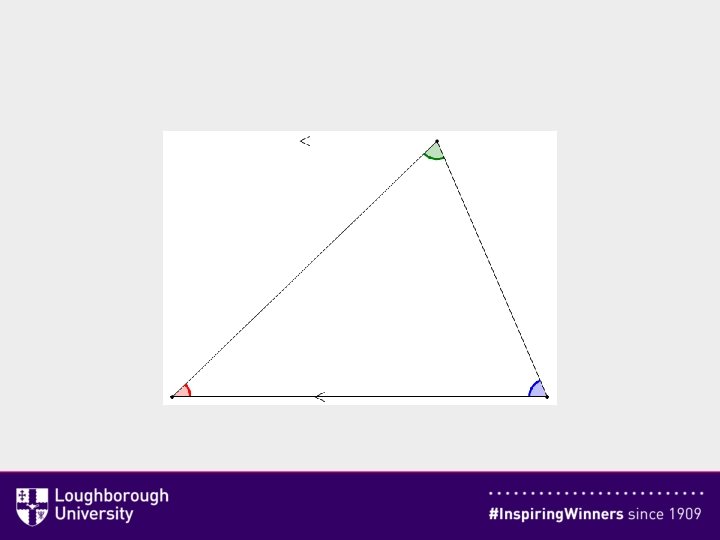
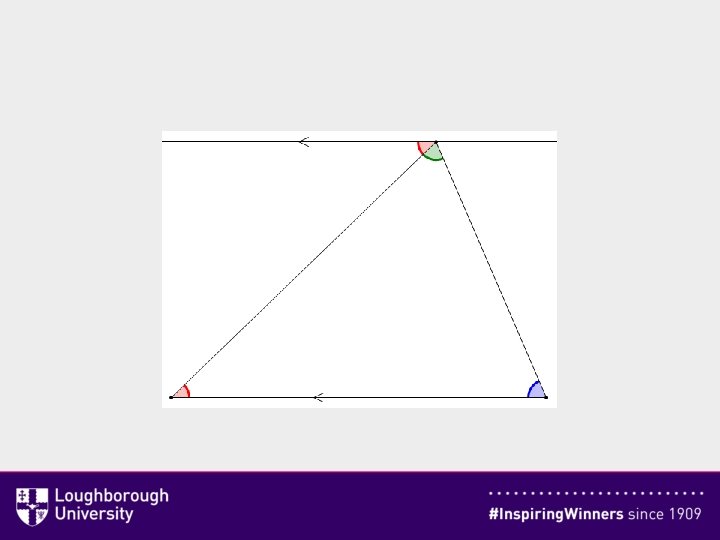
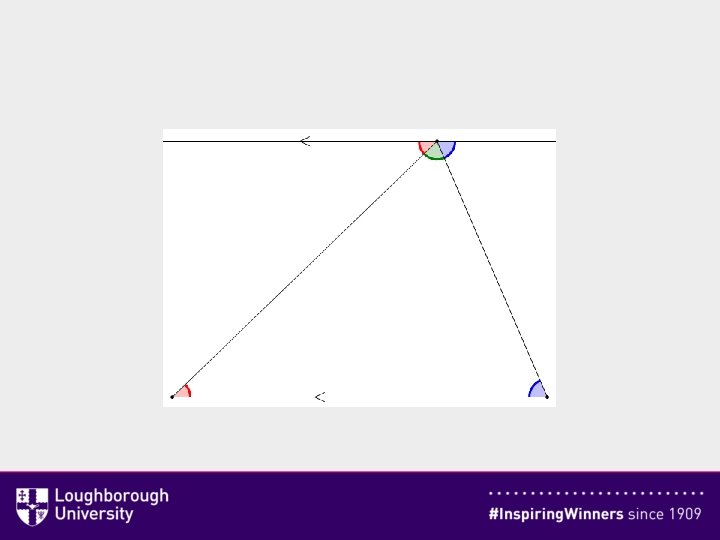
Angles inside a triangle I showed a dynamic geometry file where the addition of angles always added to 180 degrees when the triangle was dynamically changed. However, I swapped to another file where the angles always added to 170. This was to show that despite the dynamic nature, students are still effectively being ‘told’ (by the computer) what the angles add up to.
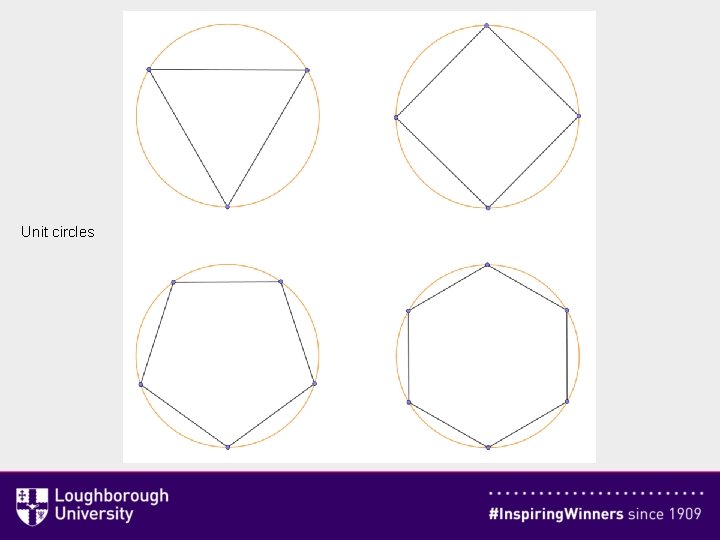
Unit circles
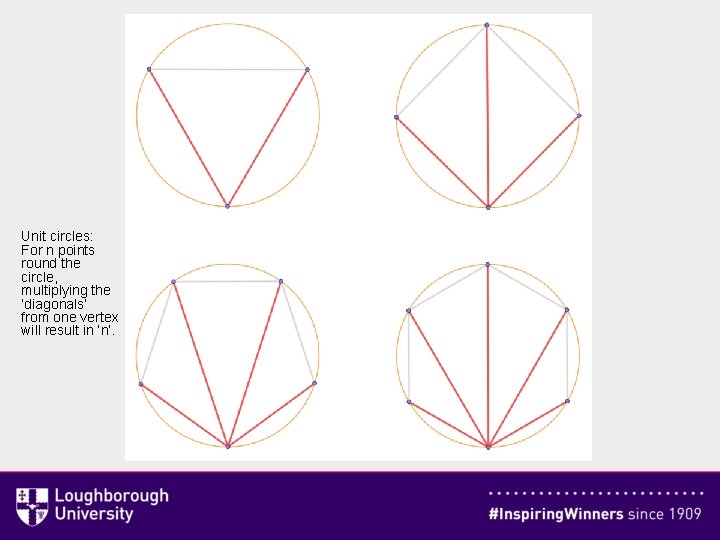
Unit circles: For n points round the circle, multiplying the ‘diagonals’ from one vertex will result in ‘n’.
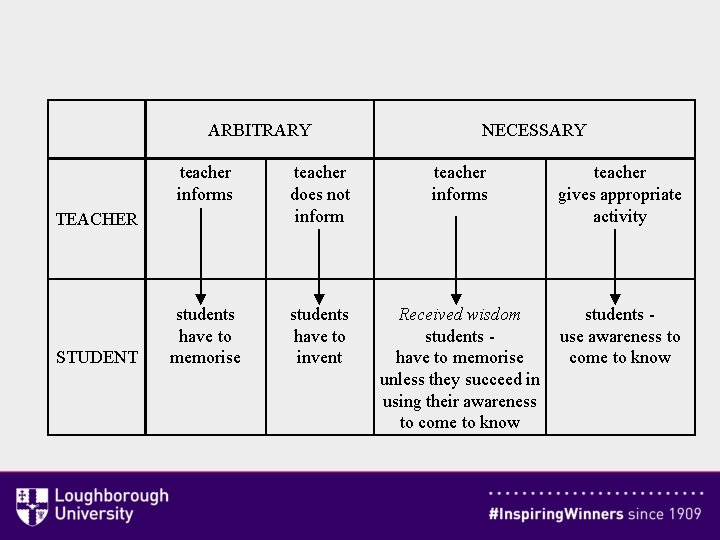
ARBITRARY teacher informs teacher does not inform teacher informs teacher gives appropriate activity students have to memorise students have to invent Received wisdom students have to memorise unless they succeed in using their awareness to come to know students use awareness to come to know TEACHER STUDENT NECESSARY
BREAK
The Arbitrary: Assisting Memory
Walkerdine posed the question: how do children come to read the myriad of arbitrary signifiers – the words, gestures, objects, etc. – with which they are surrounded, such that their arbitrariness is banished and they appear to have that meaning which is conventional? (p 3) Walkerdine, Valerie (1990) The Mastery of Reason: cognitive development and the production of rationality, London: Routledge.
What was the word I asked you to remember? Pimolitel
Introducing the arbitrary
LEARN THE NAMES
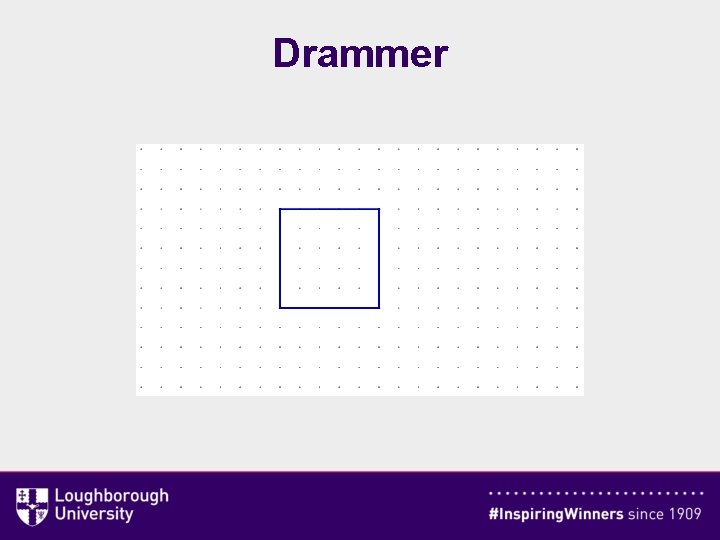
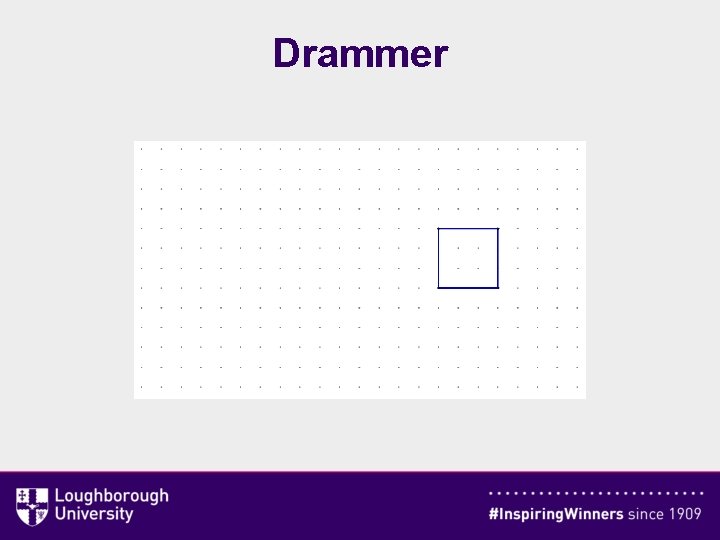
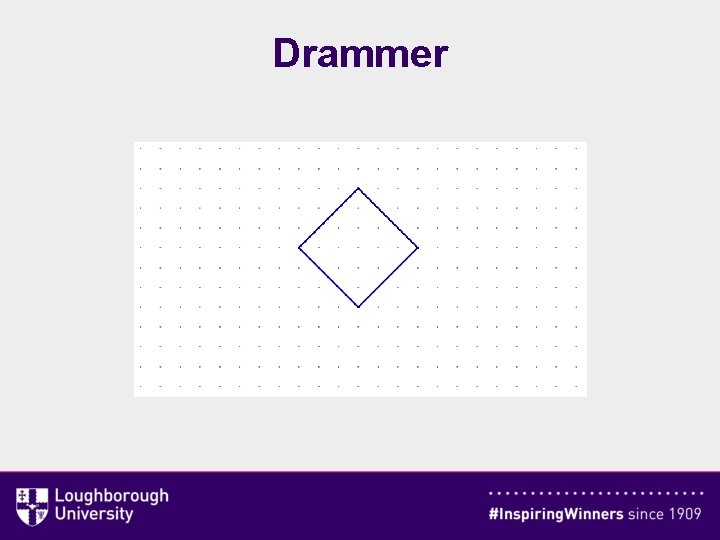
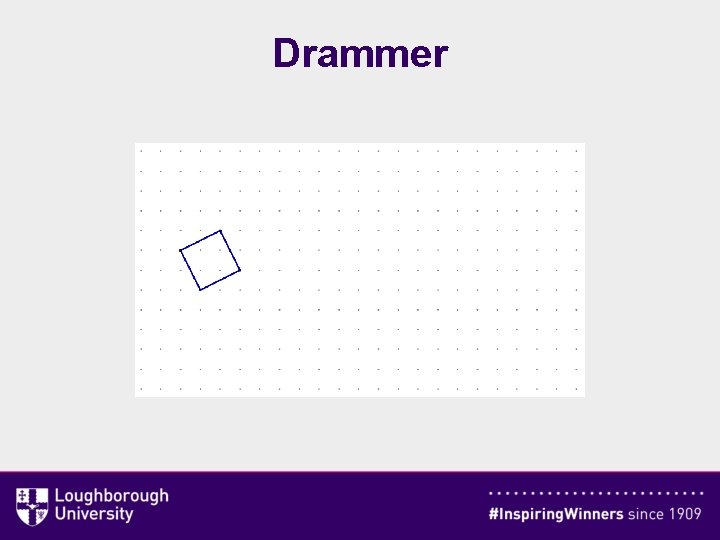
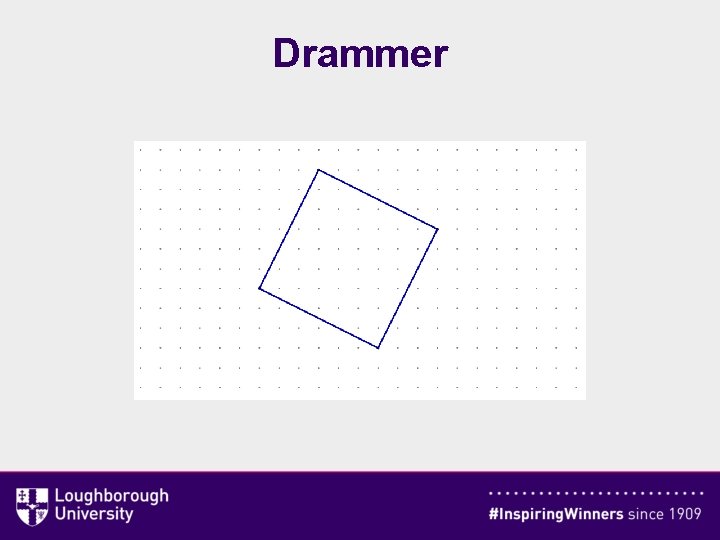
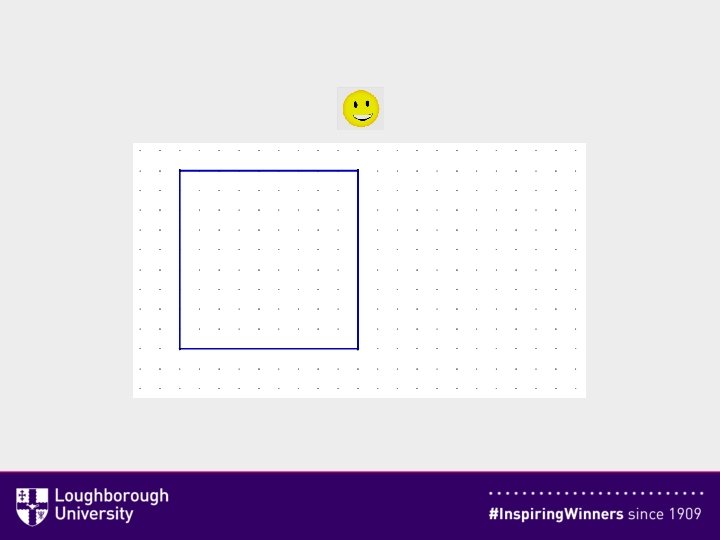
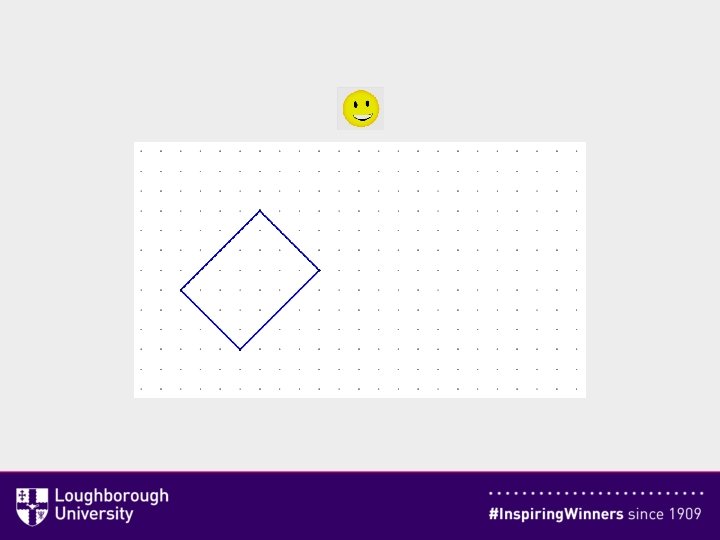
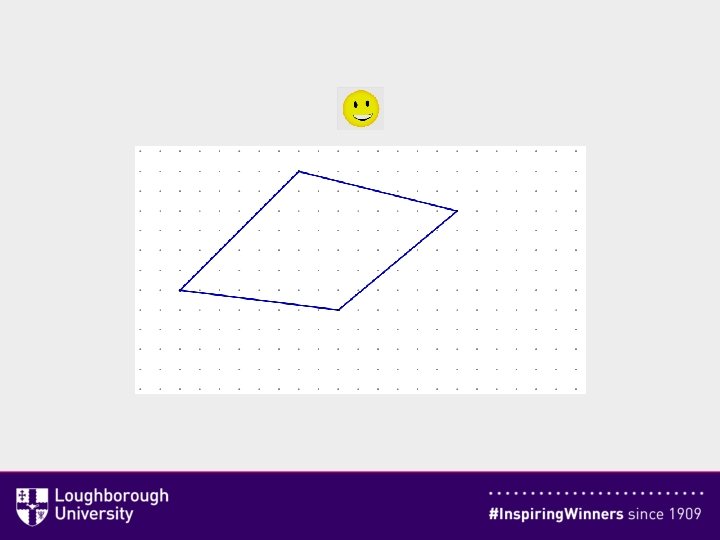
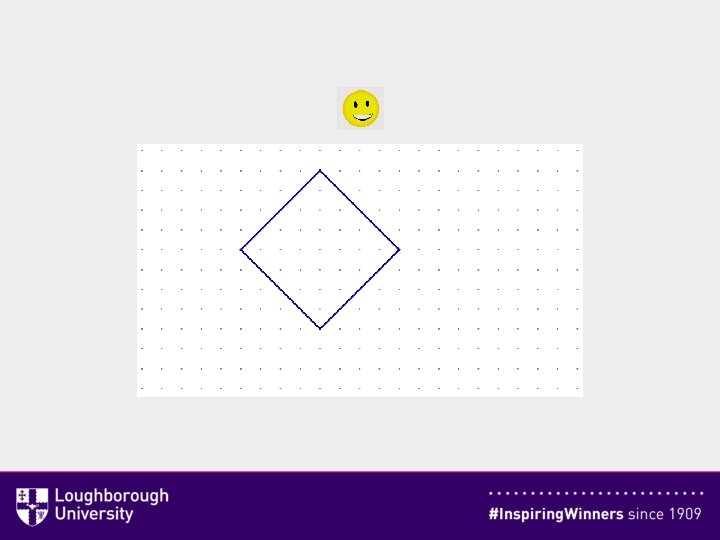
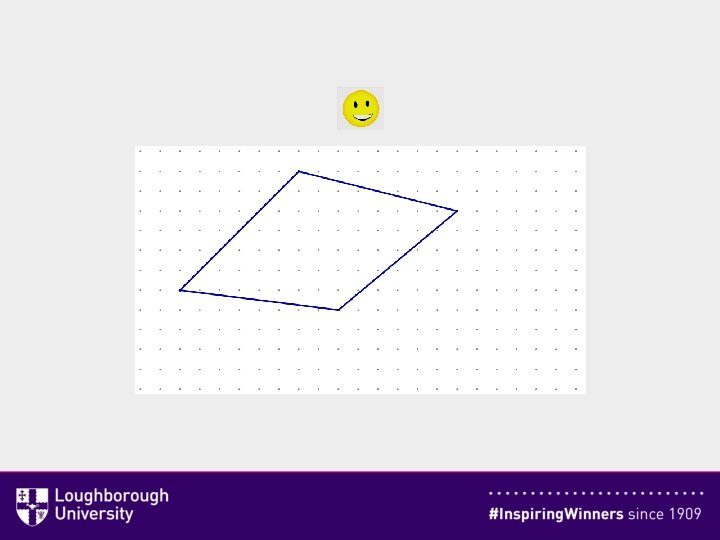
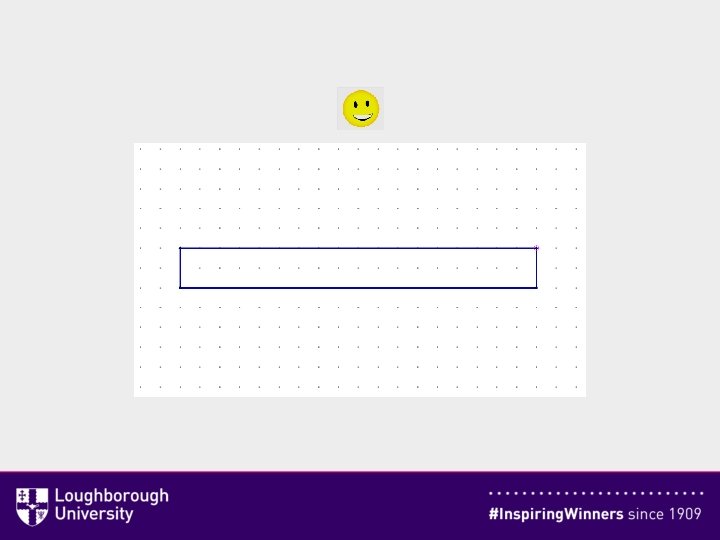
DRAMMER
Awareness Memory Name Arbitrary ‘Glue’ Properties and relationships Necessary
Drammer
Drammer
Drammer
Drammer
Drammer
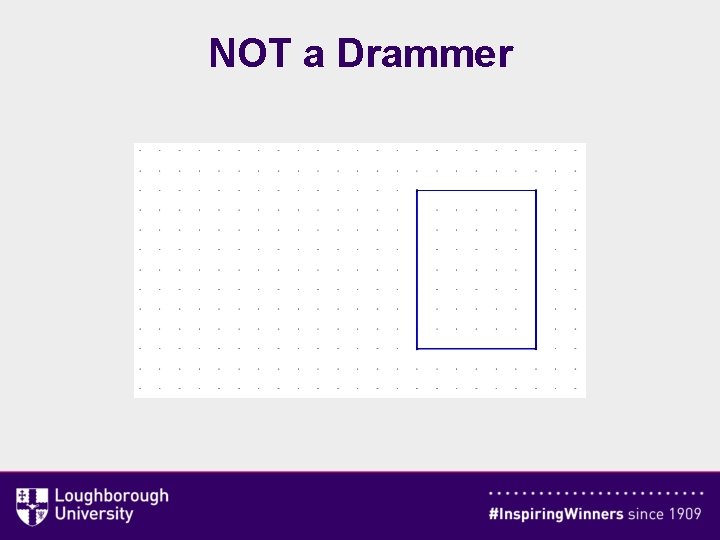
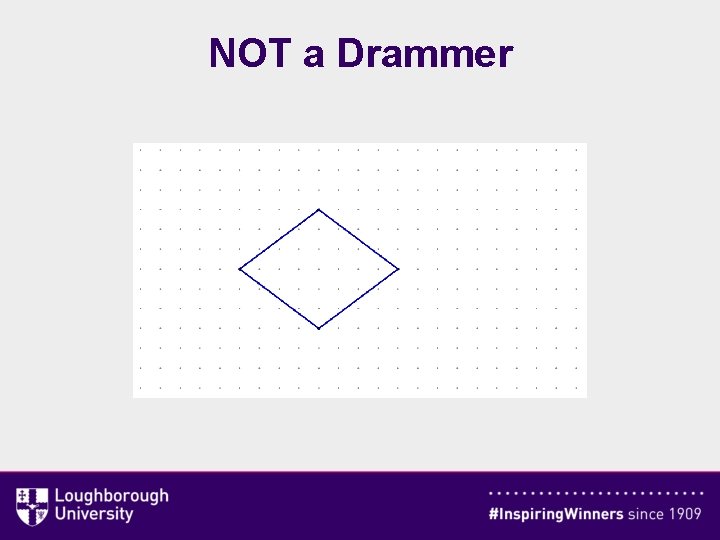
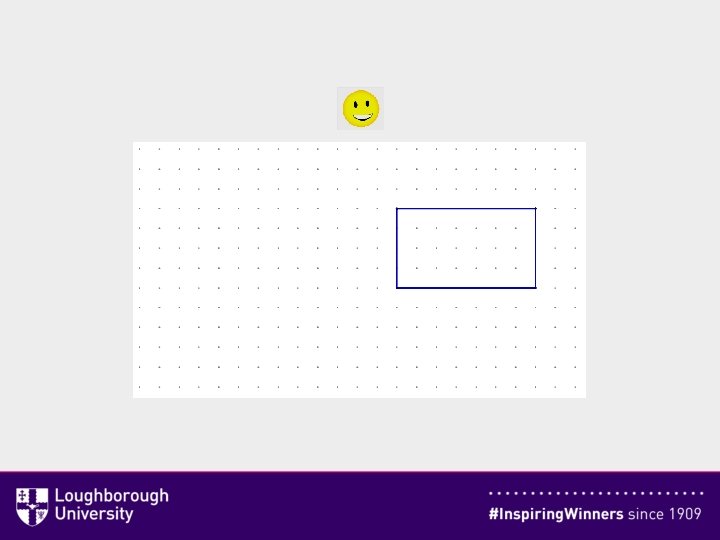
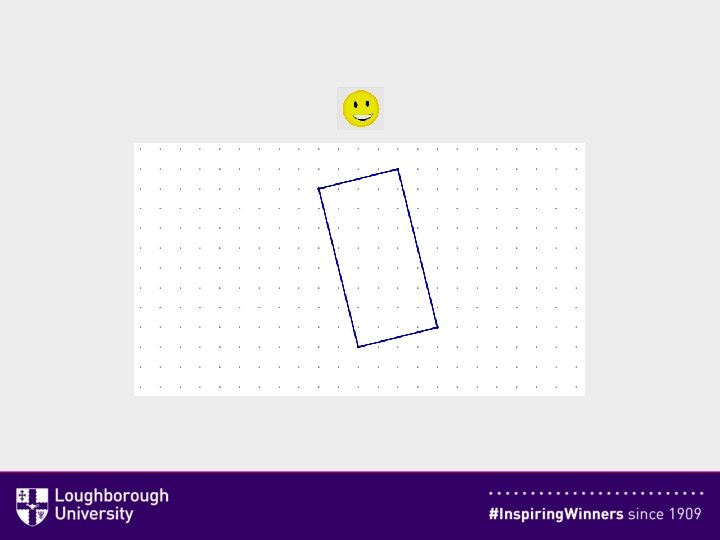
NOT a Drammer
NOT a Drammer
YOUR TURN TO SAY…. CHANT “DRAMMER”… OR SHOUT “NO”!
A NEW NAME…
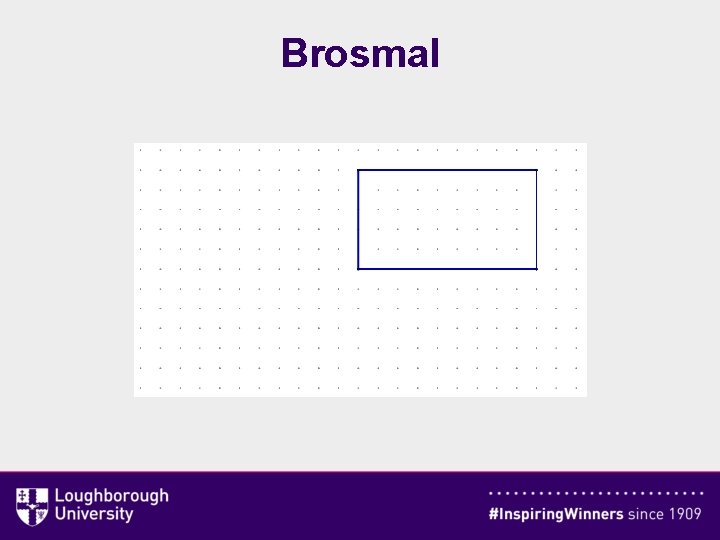
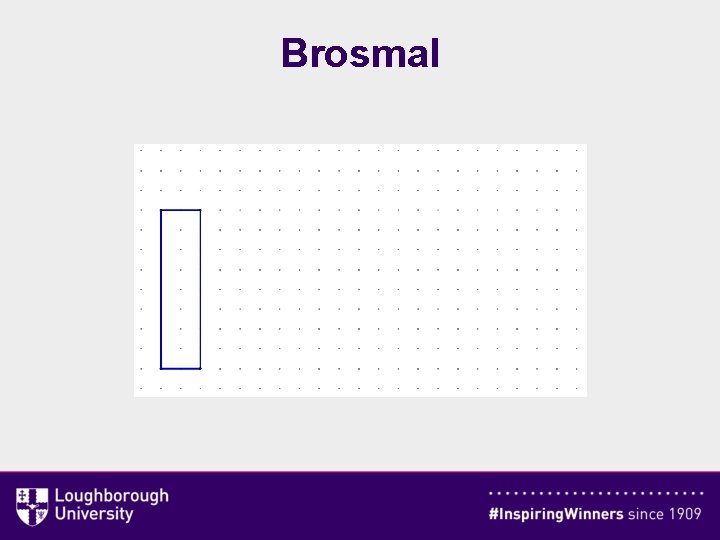
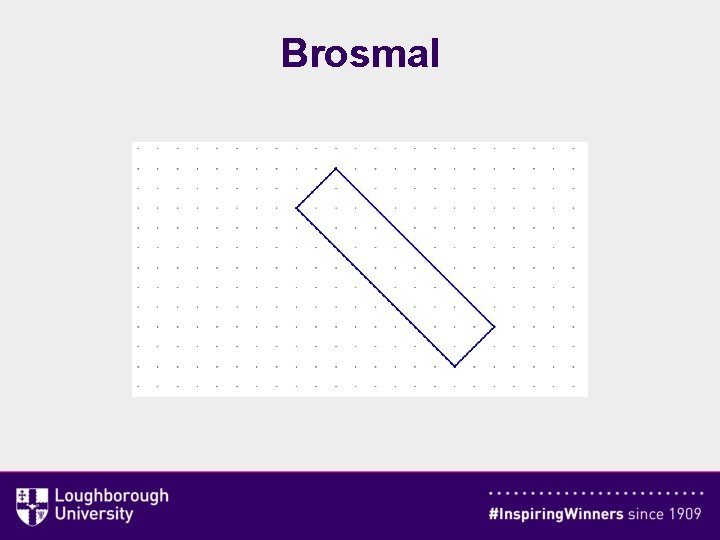
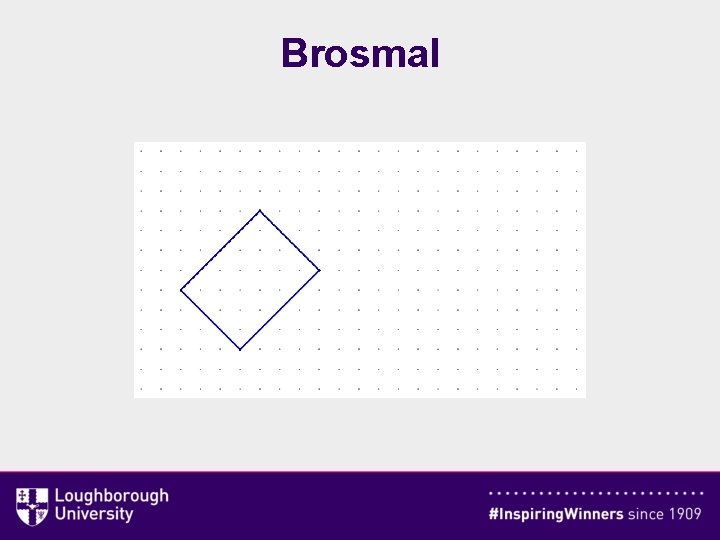
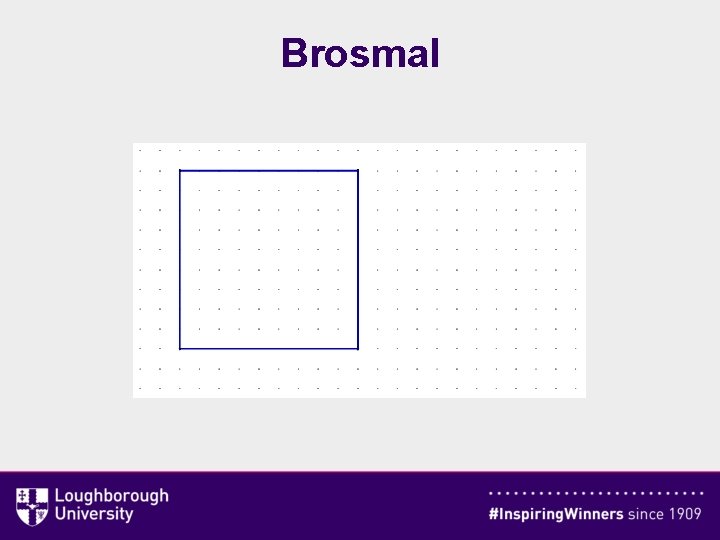
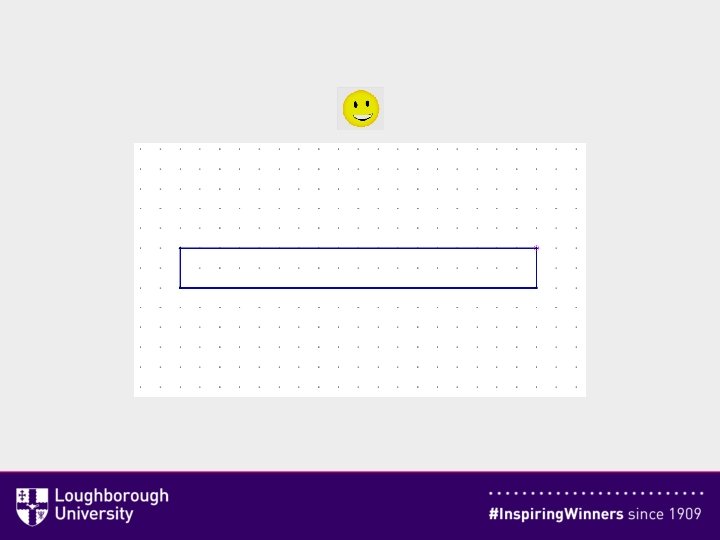
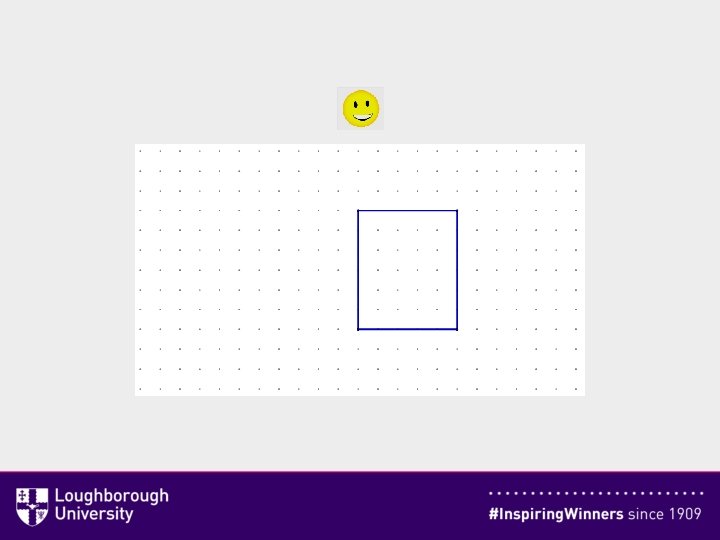
Brosmal
Brosmal
Brosmal
Brosmal
Brosmal
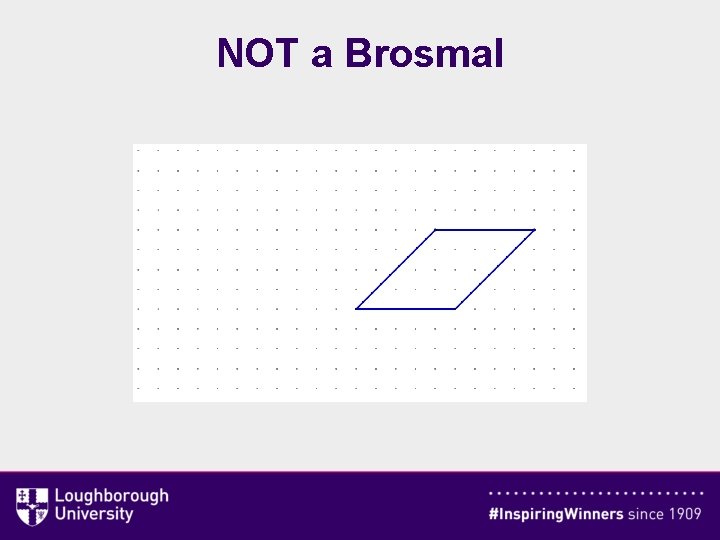
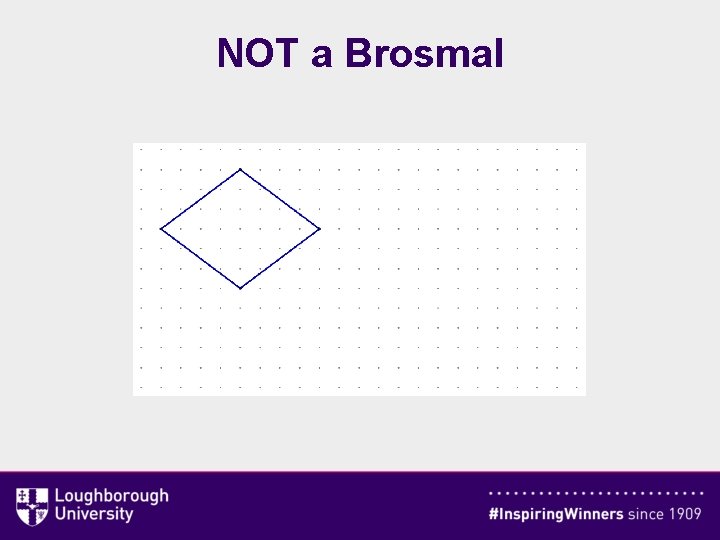
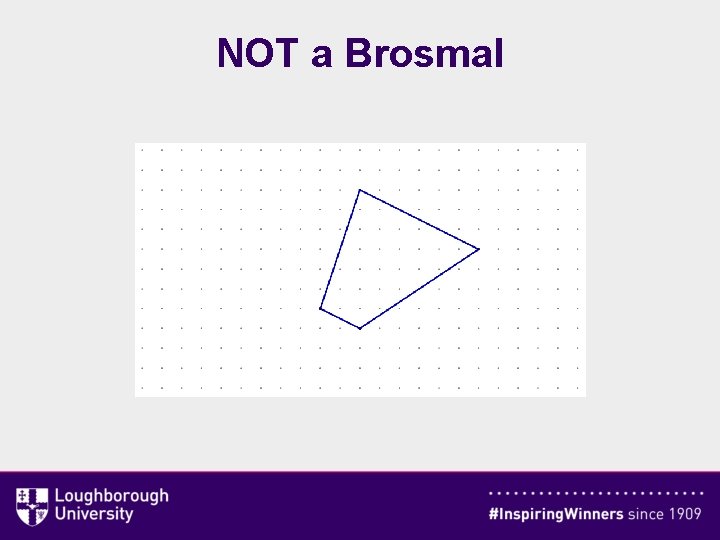
NOT a Brosmal
NOT a Brosmal
NOT a Brosmal
YOUR TURN TO SAY…. CHANT “BROSMAL”… OR SHOUT “NO”!
YOUR TURN TO SAY…. CHANT “BROSMAL” AND/OR “DRAMMER”… OR SHOUT “NO”!
A NEW NAME…
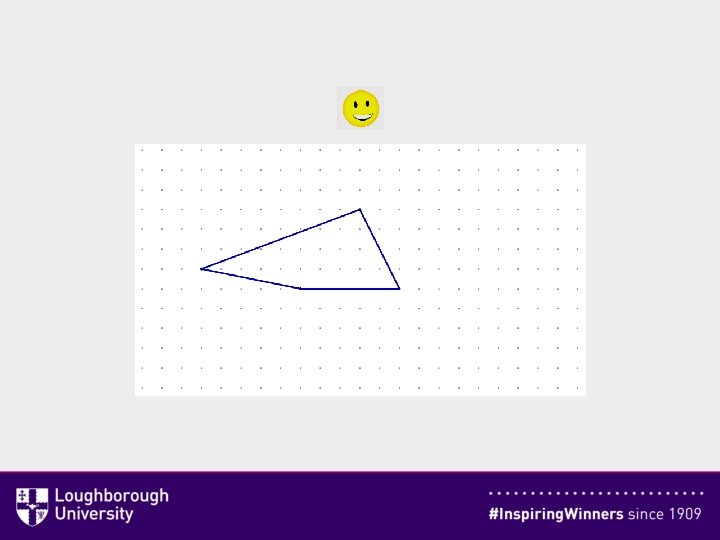
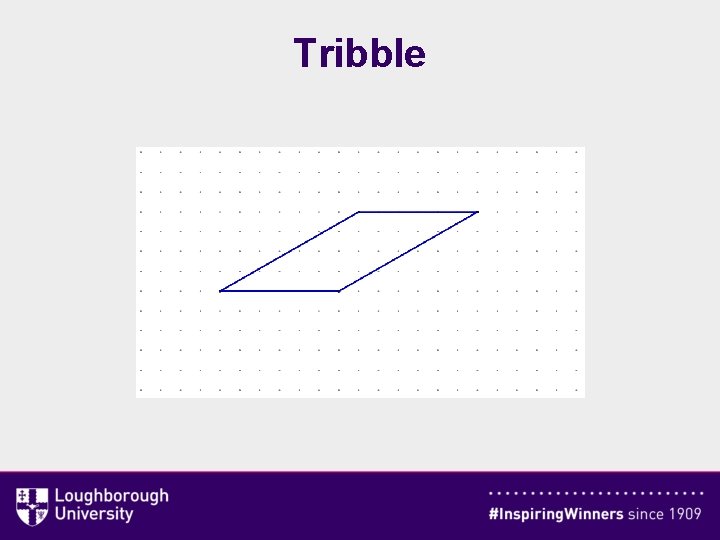
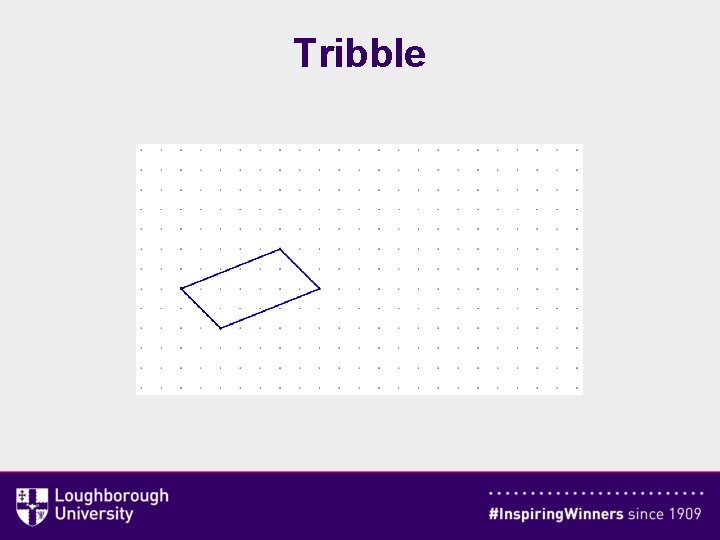
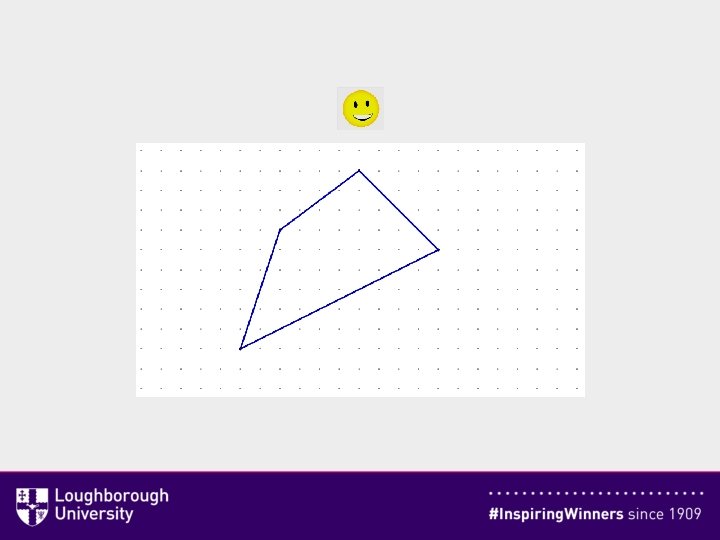
Tribble
Tribble
Tribble
Tribble
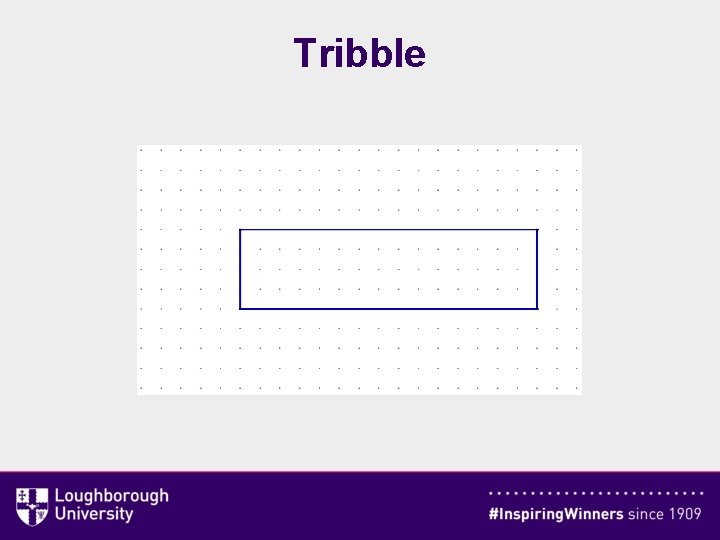
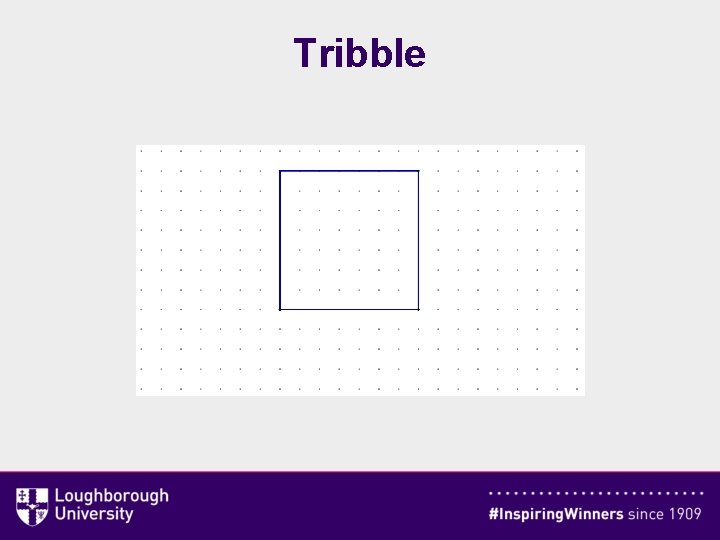
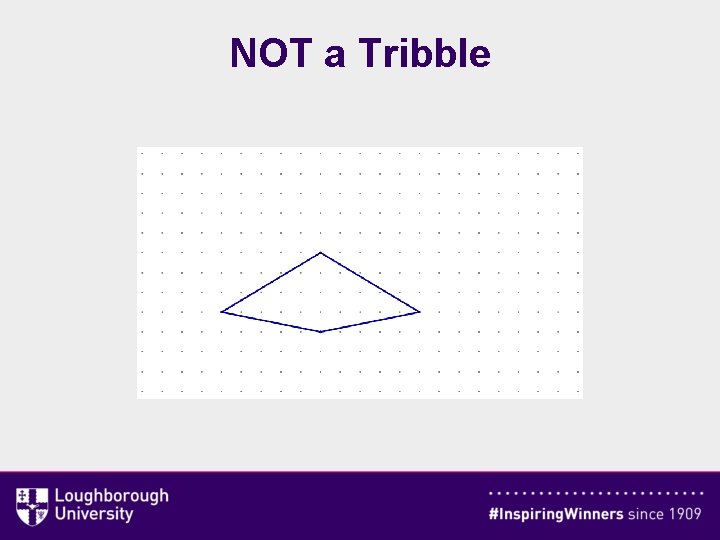
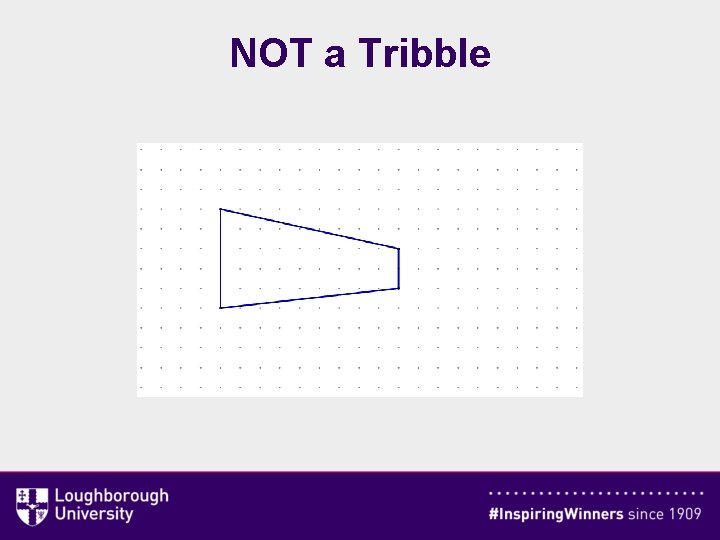
NOT a Tribble
NOT a Tribble
YOUR TURN TO CHANT…. “TRIBBLE”… OR SHOUT “NO”!
YOUR TURN TO CHANT…. “TRIBBLE”, “BROSMAL” AND/OR “DRAMMER”… OR SHOUT “NO”!
Practising the arbitrary
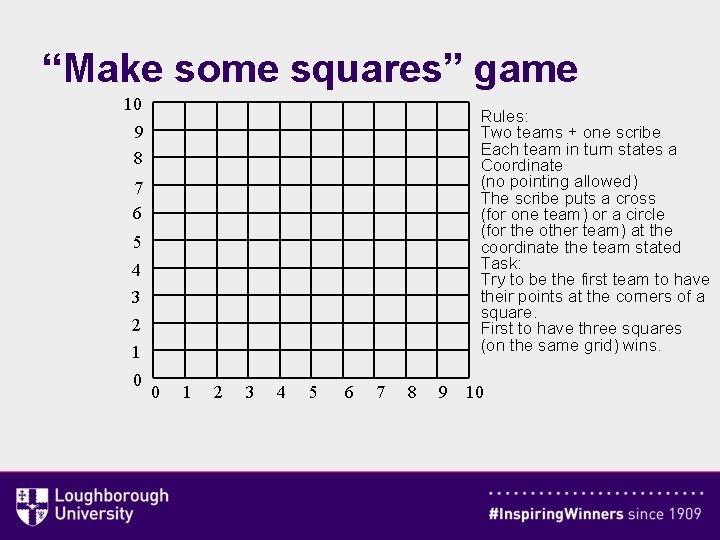
“Make some squares” game 10 Rules: Two teams + one scribe Each team in turn states a Coordinate (no pointing allowed) The scribe puts a cross (for one team) or a circle (for the other team) at the coordinate the team stated Task: Try to be the first team to have their points at the corners of a square. First to have three squares (on the same grid) wins. 9 8 7 6 5 4 3 2 1 0 0 1 2 3 4 5 6 7 8 9 10
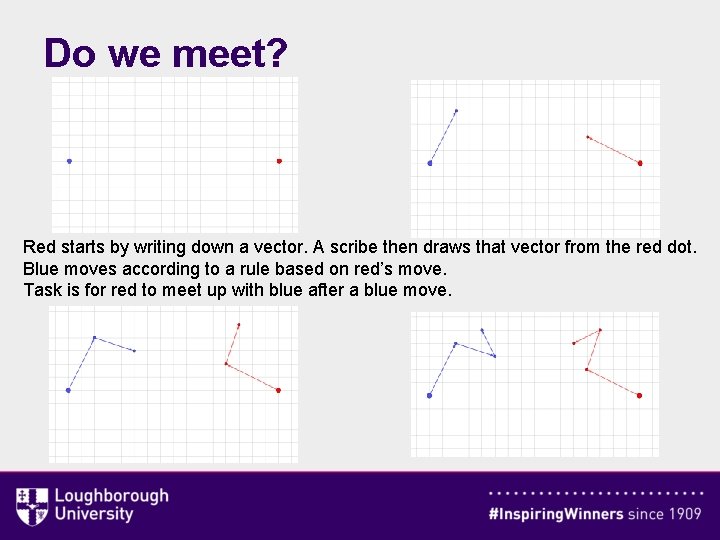
Do we meet? Red starts by writing down a vector. A scribe then draws that vector from the red dot. Blue moves according to a rule based on red’s move. Task is for red to meet up with blue after a blue move.
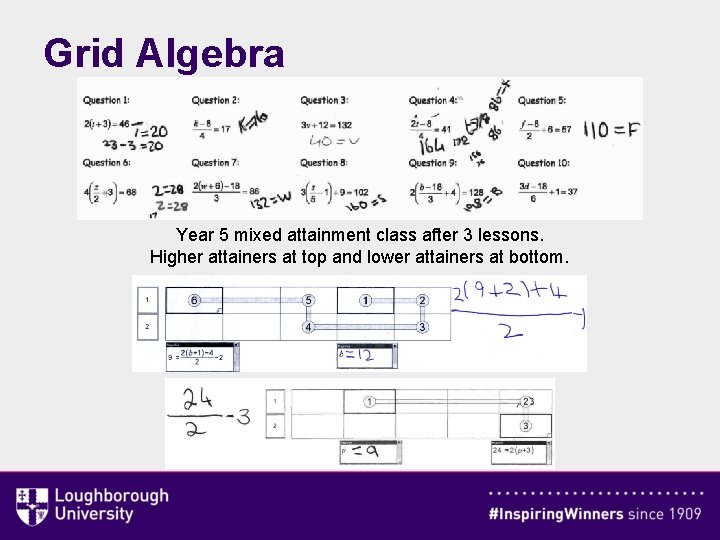
Grid Algebra To see information about the software: • Go to You. Tube and search for Grid Algebra and Dave Hewitt Software can be obtained from the Association of Teachers of Mathematics (ATM) • Single user: – https: //www. atm. org. uk/shop/All-Products/Grid-Algebra--Single-User-Licence/sof 071 • Site licence: – https: //www. atm. org. uk/shop/All-Products/Grid-Algebra--Site-Licence/sof 074
Grid Algebra Year 5 mixed attainment class after 3 lessons. Higher attainers at top and lower attainers at bottom.
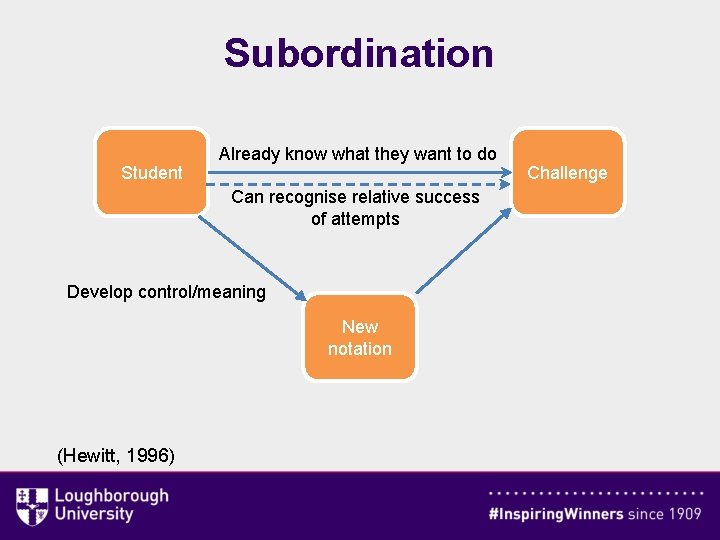
Subordination Student Already know what they want to do Can recognise relative success of attempts Develop control/meaning New notation (Hewitt, 1996) Challenge
BREAK
The Necessary: Educating Awareness
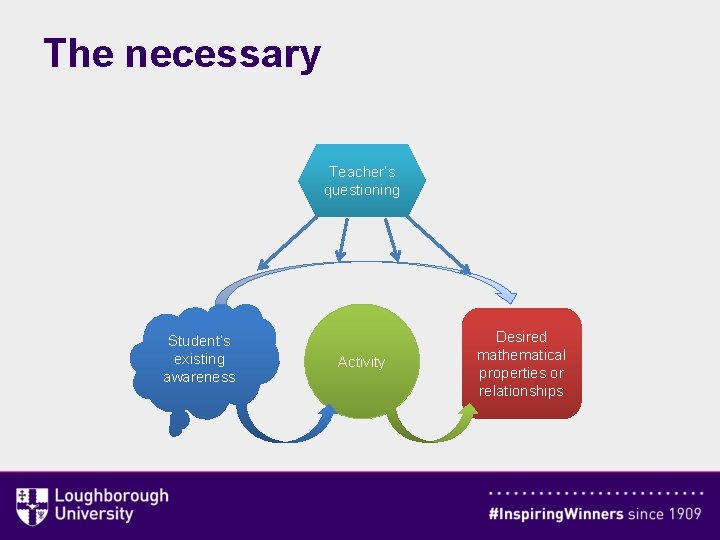
The necessary Teacher’s questioning Student’s existing awareness Activity Desired mathematical properties or relationships
Becoming aware of what students are aware of… • Number line and fractions activity – (this was carried out with participants on the day) • Malcom Swan’s matching activities – Available from the STEM Centre (free but you have to register) – https: //www. stem. org. uk/system/files/elibraryresources/legacy_files_migrated/6517 -S 6. pdf • Get students talking and arguing!. . . (about the mathematics)
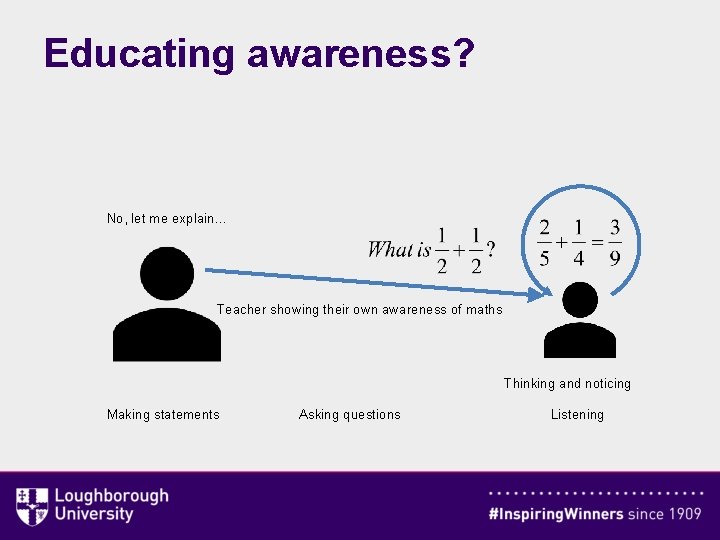
Educating awareness? No, let me explain… Teacher showing their own awareness of maths Thinking and noticing Making statements Asking questions Listening
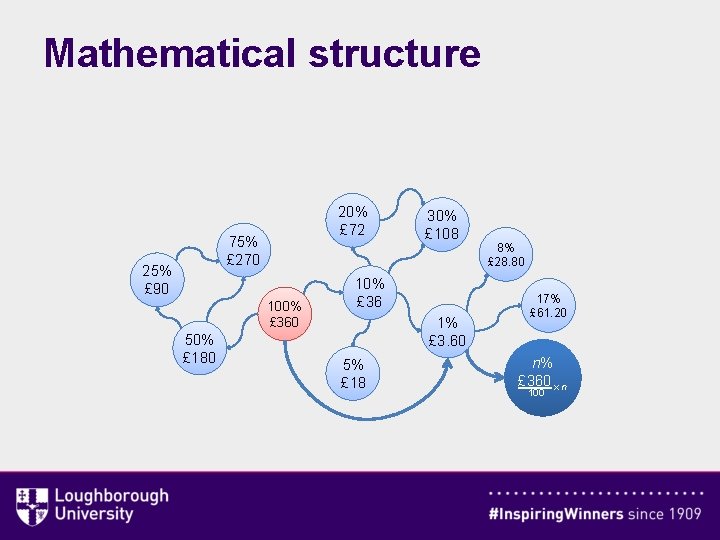
Mathematical structure 20% £ 72 75% £ 270 25% £ 90 100% £ 360 50% £ 180 30% £ 108 10% £ 36 1% £ 3. 60 5% £ 18 8% £ 28. 80 17% £ 61. 20 n% £ 360 x n 100. . .
What is going on? Favourite times tables activity – This was an activity carried out on the day with participants. – It is written up in the following ATM publication: • Hewitt, D. (2018). Forcing awareness. In D. Brown, A. Coles & J. Ingram (Eds. ), On teaching and learning mathematics with awareness (pp. 59 -66). Derby: Association of Teachers of Mathematics.
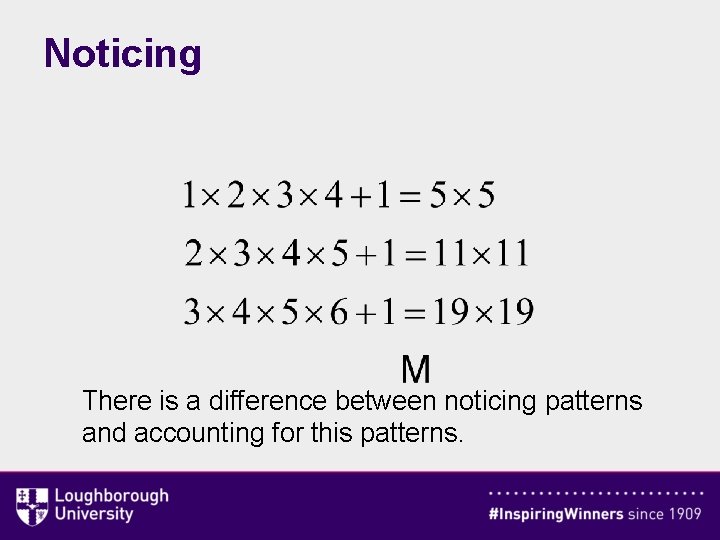
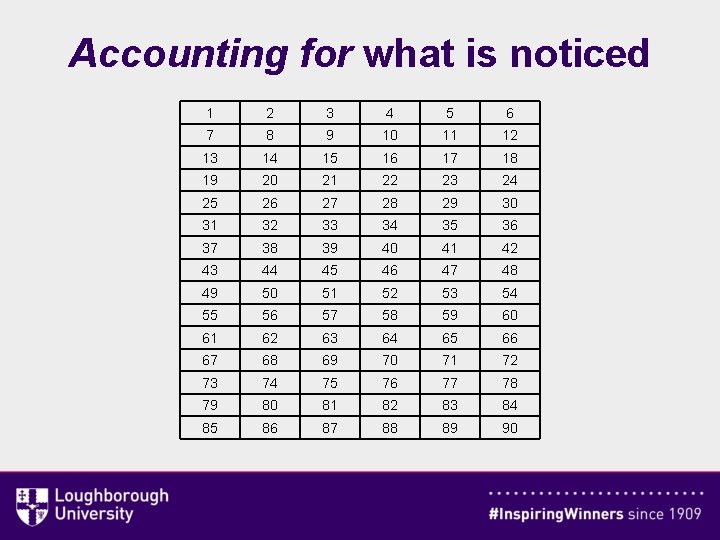
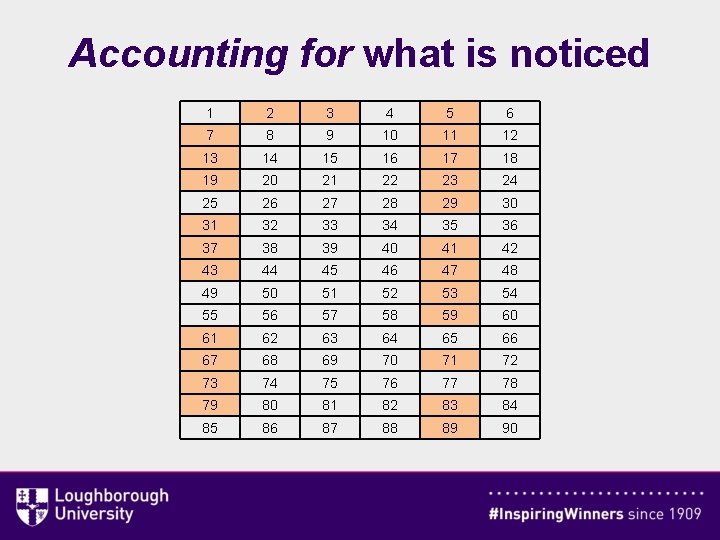
Noticing There is a difference between noticing patterns and accounting for this patterns.
Accounting for what is noticed 1 2 3 4 5 6 7 8 9 10 11 12 13 14 15 16 17 18 19 20 21 22 23 24 25 26 27 28 29 30 31 32 33 34 35 36 37 38 39 40 41 42 43 44 45 46 47 48 49 50 51 52 53 54 55 56 57 58 59 60 61 62 63 64 65 66 67 68 69 70 71 72 73 74 75 76 77 78 79 80 81 82 83 84 85 86 87 88 89 90
Accounting for what is noticed 1 2 3 4 5 6 7 8 9 10 11 12 13 14 15 16 17 18 19 20 21 22 23 24 25 26 27 28 29 30 31 32 33 34 35 36 37 38 39 40 41 42 43 44 45 46 47 48 49 50 51 52 53 54 55 56 57 58 59 60 61 62 63 64 65 66 67 68 69 70 71 72 73 74 75 76 77 78 79 80 81 82 83 84 85 86 87 88 89 90
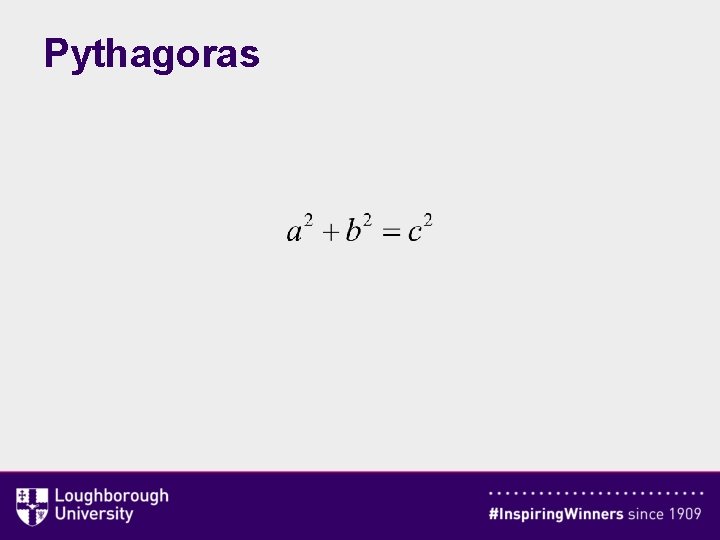
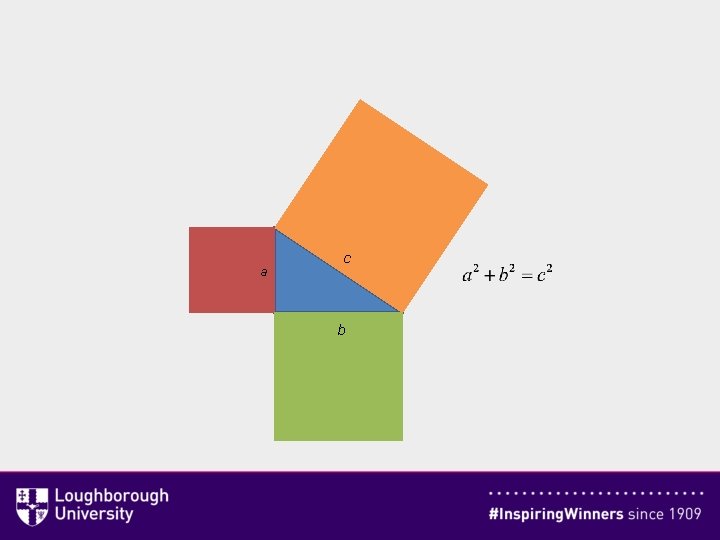
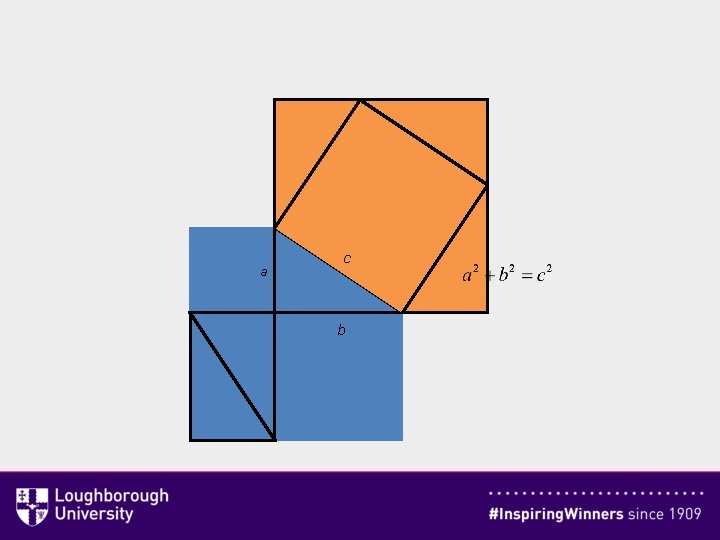
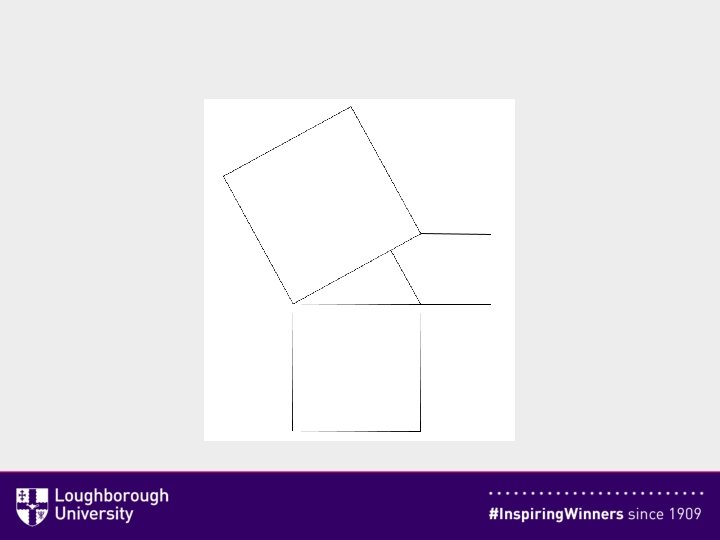
Pythagoras
a c b
a c b
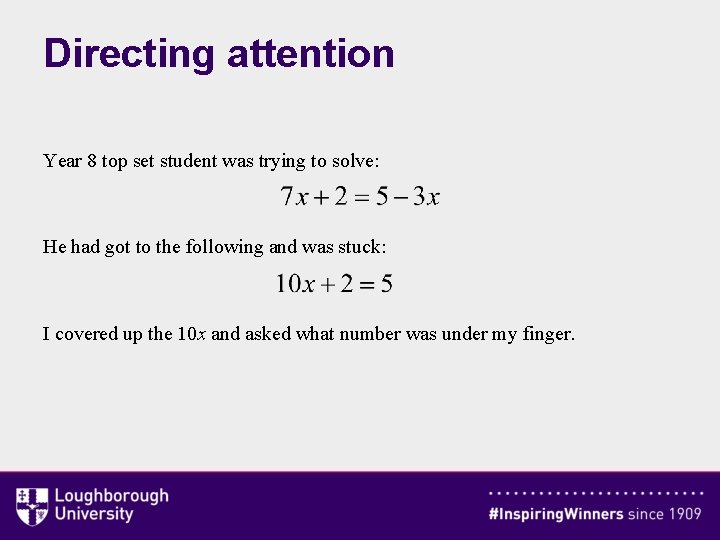
Directing attention Year 8 top set student was trying to solve: He had got to the following and was stuck: I covered up the 10 x and asked what number was under my finger.
Scenarios • A list of scenarios was given out where the task is to consider: – What you would state – What questions you would ask – How you might direct attention to certain aspects – Etc… … whilst being sensitive to the notion of only telling students those things which are arbitrary.
If I’m having to remember… … then I’m not working on mathematics.
THANK YOU