
When to study 1 Study difficult or boring

When to study • 1. ) Study difficult (or boring) subjects first. A. Hard courses require more creative energy. B. Save favorite subjects later.
• 2. ) Be aware of your best time of day A. Many people learn best in daylight hours. B. Some people study better during the late night.
Wait time • 3. ) Use waiting time A. Either waiting for the bus, waiting for the dentist, or getting a hair cut, wait time adds up.
Where to Study • 4. ) Use a regular study area A. Use the same place to study, day after day.
Where to study • 5. ) Study where you’ll be alert. • In bed your brain gets a signal. (Time to sleep) A. Give your body a signal to study. B. Chairs and sofa’s are dangerous places to study.
Where to study • Use a library A. Libraries are designed for learning B. Lighting is perfect and noise is low. ``

Ways to handle the rest of the world.
#7. Pay attention to your attention • Your own thoughts jump in to divert you from your studies. Notice those thoughts and let them go.
#8. Agree with living mates about study time • Roommates, cousins, sister or brothers. • Make rules clear and follow them yourself.
#9. Get off the phone • Telephone is the ultimate interrupter. • Unplug the phone if you have to.
#10. Learn to say no • It is a time saver and a valuable life skill. • Most parents will understand.
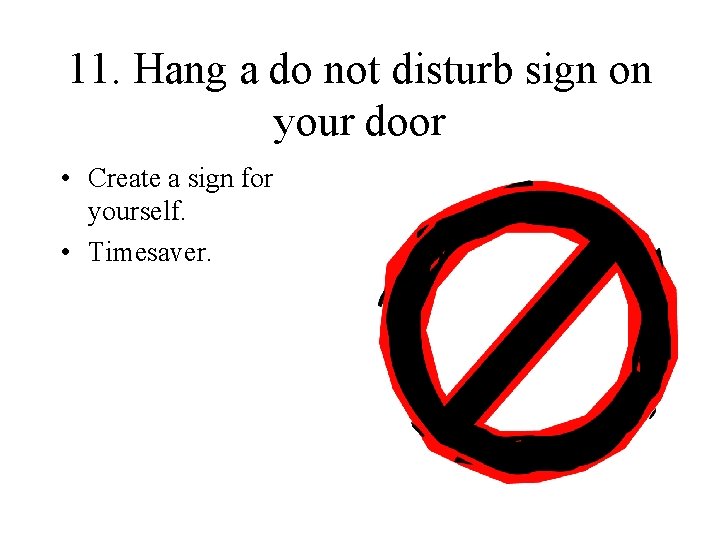
11. Hang a do not disturb sign on your door • Create a sign for yourself. • Timesaver.
12. Get ready the night before • Completing a few simple task just before bed can help you get in gear the next day.
13. Call ahead • Call movies or stores ahead of time to know what they have so you will not waste time. • Few hours on the phone can save trips and wrong time.
14. Avoid noise distractions • Promote concentration, turn off the T. V. or the radio. • Try to schedule study sessions when no one is at home.
15. Notice how other’s misuse your time. • Are there certain relatives or friends who consistently interrupt your study time. • Give a gentle but firm reminder that they are breaking your concentration.

16. Ask: what is one task I can accomplish toward achieving my goal? • Pick one small accomplishment. • Pick one that only takes 5 minutes • Satisfaction of getting one thing done can influence you to do more things.
17. Ask: Am I being to hard on myself • Lighten up/ don’t be so hard on yourself.
18. Ask: Is this a piano • Perfection is not necessary. • Sometimes it must be perfect • You must determine.
19. Ask: Would I get paid for what I’m doing right now? • Ask yourself, If I was employed would I be already fired.
20. Ask: Can I do just one more thing? • Try just one small task before you finish.
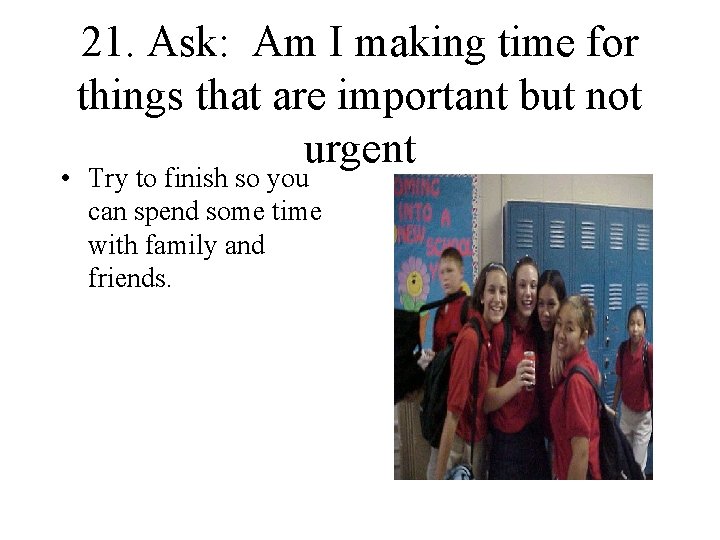
21. Ask: Am I making time for things that are important but not urgent • Try to finish so you can spend some time with family and friends.
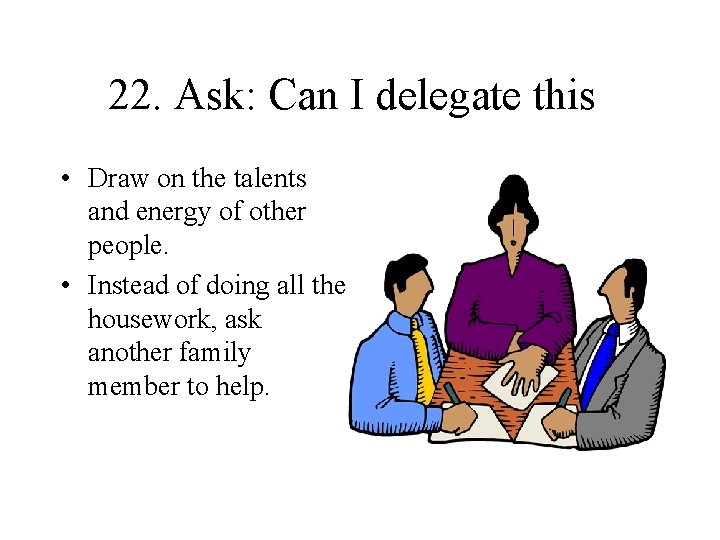
22. Ask: Can I delegate this • Draw on the talents and energy of other people. • Instead of doing all the housework, ask another family member to help.
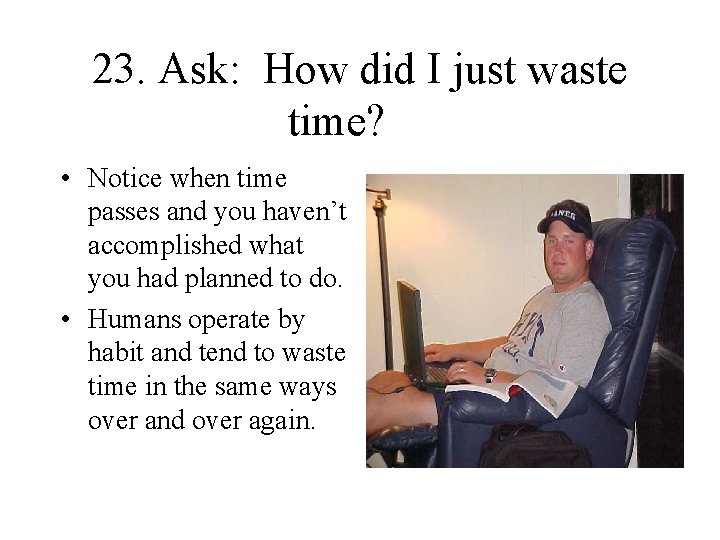
23. Ask: How did I just waste time? • Notice when time passes and you haven’t accomplished what you had planned to do. • Humans operate by habit and tend to waste time in the same ways over and over again.
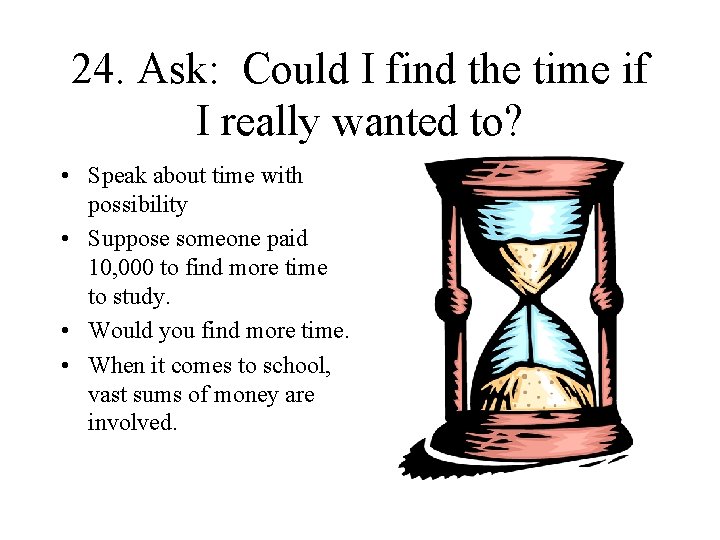
24. Ask: Could I find the time if I really wanted to? • Speak about time with possibility • Suppose someone paid 10, 000 to find more time to study. • Would you find more time. • When it comes to school, vast sums of money are involved.
25. Ask: Am I willing to promise it? • Most powerful timemanagement idea, make a promise that you’ll get it done • Take an oath • If you don’t make large promise then you don’t stretch your self.
- Slides: 28