
When to start CRRT during ECMO Matthew L
- Slides: 38
When to start CRRT during ECMO? Matthew L. Paden, MD Associate Professor of Pediatric Critical Care Director, Pediatric ECMO
Disclosures • Everything in ECMO is off label use • I’m a believer… Children’s Healthcare of Atlanta | Emory University 2
When do YOU start CRRT during ECMO? On every pediatric respiratory patient at initiation of ECMO, regardless of creatinine/UOP. Children’s Healthcare of Atlanta | Emory University 3
When to start CRRT during ECMO? No one knows. Children’s Healthcare of Atlanta | Emory University 4
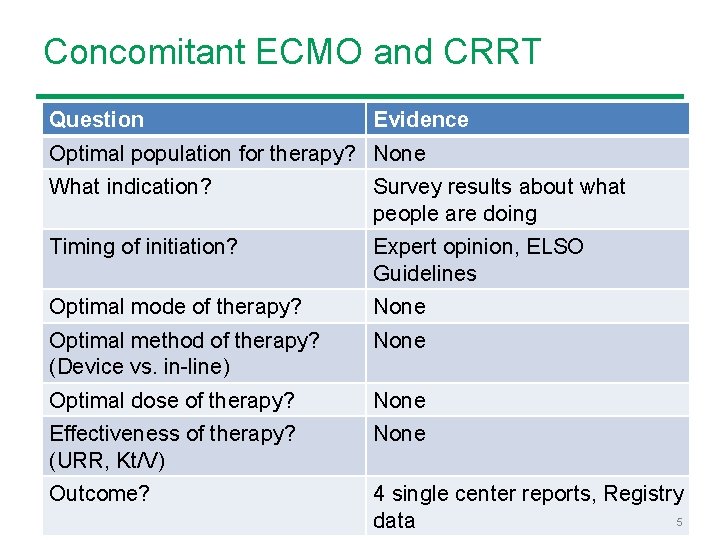
Concomitant ECMO and CRRT Question Evidence Optimal population for therapy? None What indication? Survey results about what people are doing Timing of initiation? Expert opinion, ELSO Guidelines Optimal mode of therapy? None Optimal method of therapy? (Device vs. in-line) None Optimal dose of therapy? None Effectiveness of therapy? (URR, Kt/V) None Outcome? 4 single center reports, Registry 5 Children’s Healthcare of Atlanta | Emory University data
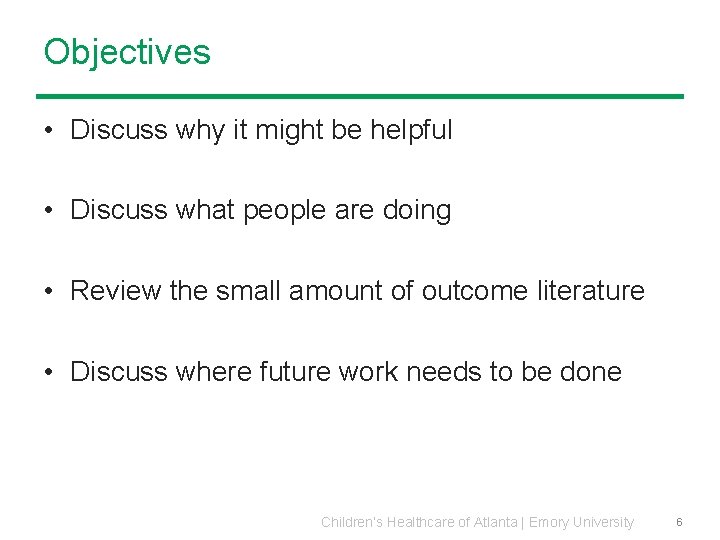
Objectives • Discuss why it might be helpful • Discuss what people are doing • Review the small amount of outcome literature • Discuss where future work needs to be done Children’s Healthcare of Atlanta | Emory University 6
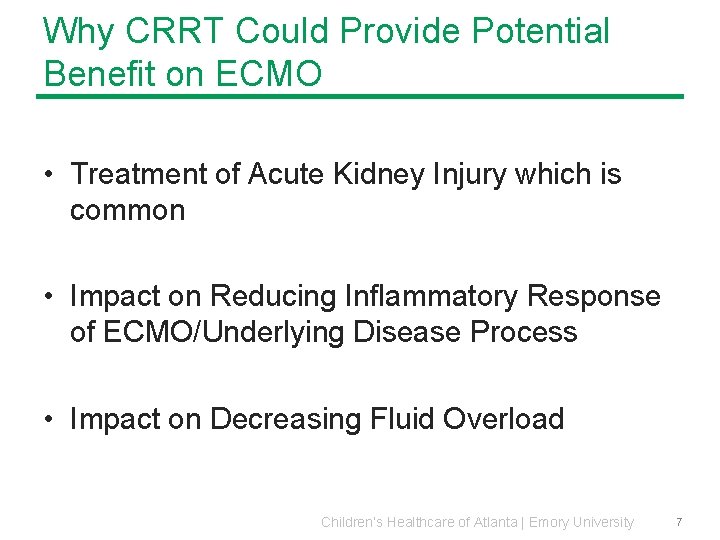
Why CRRT Could Provide Potential Benefit on ECMO • Treatment of Acute Kidney Injury which is common • Impact on Reducing Inflammatory Response of ECMO/Underlying Disease Process • Impact on Decreasing Fluid Overload Children’s Healthcare of Atlanta | Emory University 7
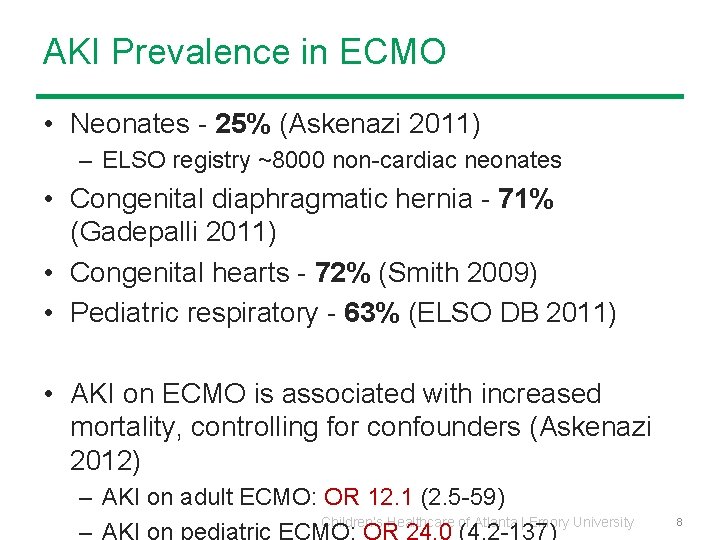
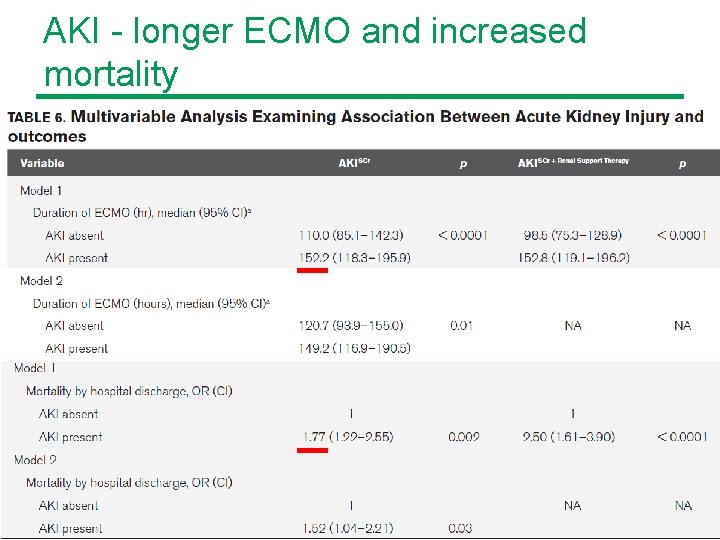
AKI Prevalence in ECMO • Neonates - 25% (Askenazi 2011) – ELSO registry ~8000 non-cardiac neonates • Congenital diaphragmatic hernia - 71% (Gadepalli 2011) • Congenital hearts - 72% (Smith 2009) • Pediatric respiratory - 63% (ELSO DB 2011) • AKI on ECMO is associated with increased mortality, controlling for confounders (Askenazi 2012) – AKI on adult ECMO: OR 12. 1 (2. 5 -59) Children’s Healthcare of Atlanta | Emory University – AKI on pediatric ECMO: OR 24. 0 (4. 2 -137) 8
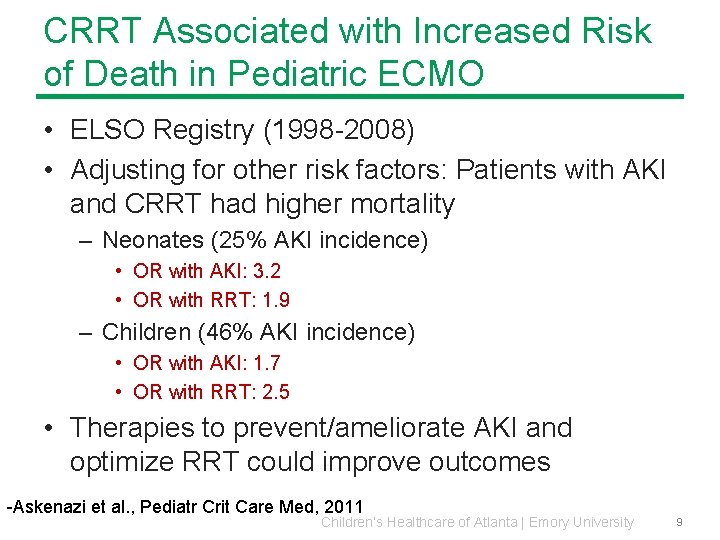
CRRT Associated with Increased Risk of Death in Pediatric ECMO • ELSO Registry (1998 -2008) • Adjusting for other risk factors: Patients with AKI and CRRT had higher mortality – Neonates (25% AKI incidence) • OR with AKI: 3. 2 • OR with RRT: 1. 9 – Children (46% AKI incidence) • OR with AKI: 1. 7 • OR with RRT: 2. 5 • Therapies to prevent/ameliorate AKI and optimize RRT could improve outcomes -Askenazi et al. , Pediatr Crit Care Med, 2011 Children’s Healthcare of Atlanta | Emory University 9
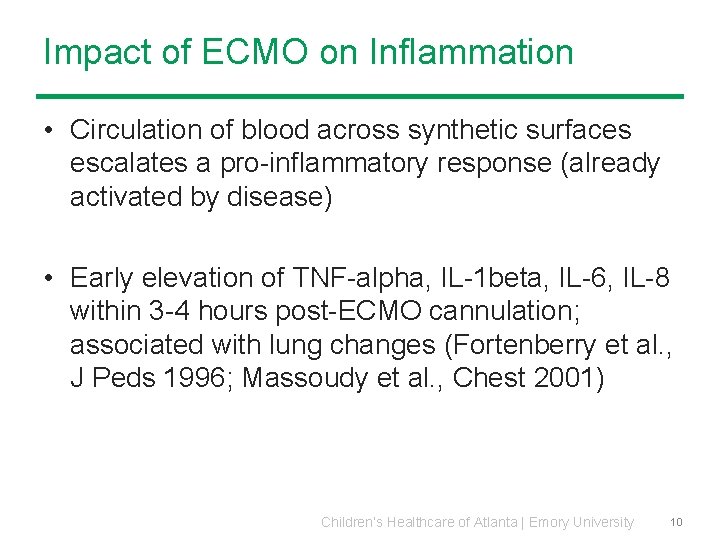
Impact of ECMO on Inflammation • Circulation of blood across synthetic surfaces escalates a pro-inflammatory response (already activated by disease) • Early elevation of TNF-alpha, IL-1 beta, IL-6, IL-8 within 3 -4 hours post-ECMO cannulation; associated with lung changes (Fortenberry et al. , J Peds 1996; Massoudy et al. , Chest 2001) Children’s Healthcare of Atlanta | Emory University 10
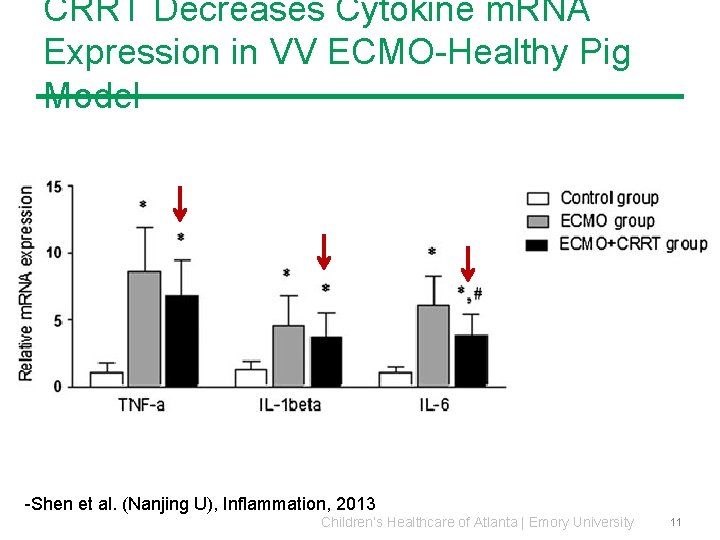
CRRT Decreases Cytokine m. RNA Expression in VV ECMO-Healthy Pig Model -Shen et al. (Nanjing U), Inflammation, 2013 Children’s Healthcare of Atlanta | Emory University 11
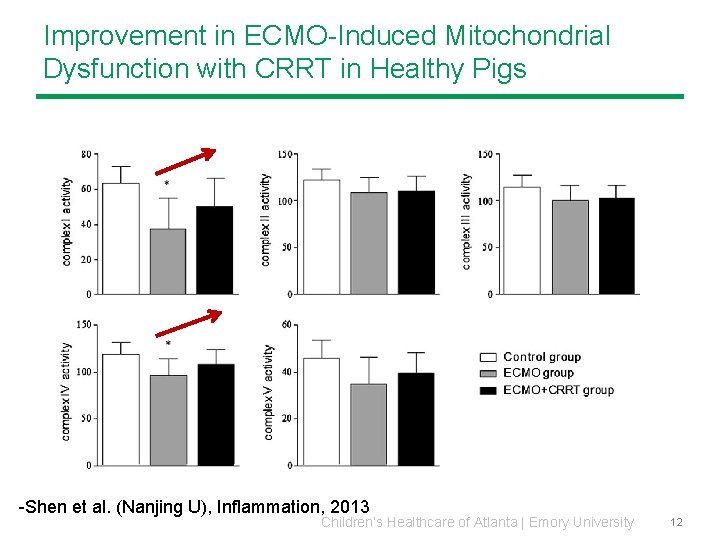
Improvement in ECMO-Induced Mitochondrial Dysfunction with CRRT in Healthy Pigs -Shen et al. (Nanjing U), Inflammation, 2013 Children’s Healthcare of Atlanta | Emory University 12
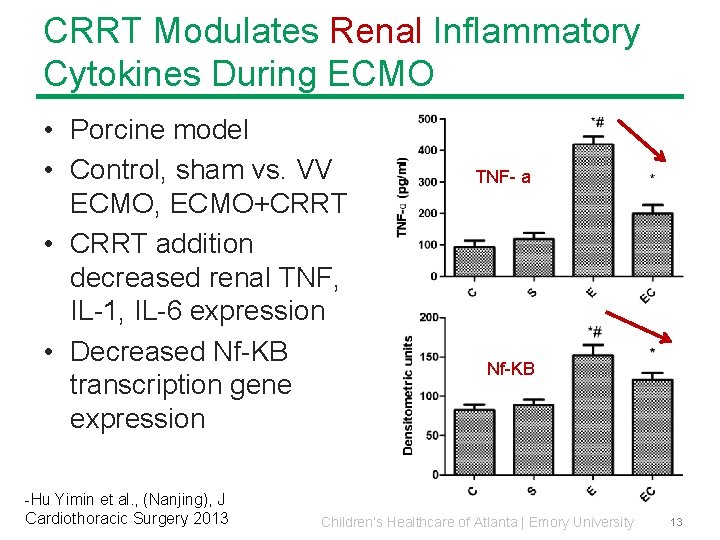
CRRT Modulates Renal Inflammatory Cytokines During ECMO • Porcine model • Control, sham vs. VV ECMO, ECMO+CRRT • CRRT addition decreased renal TNF, IL-1, IL-6 expression • Decreased Nf-KB transcription gene expression -Hu Yimin et al. , (Nanjing), J Cardiothoracic Surgery 2013 TNF- a Nf-KB Children’s Healthcare of Atlanta | Emory University 13
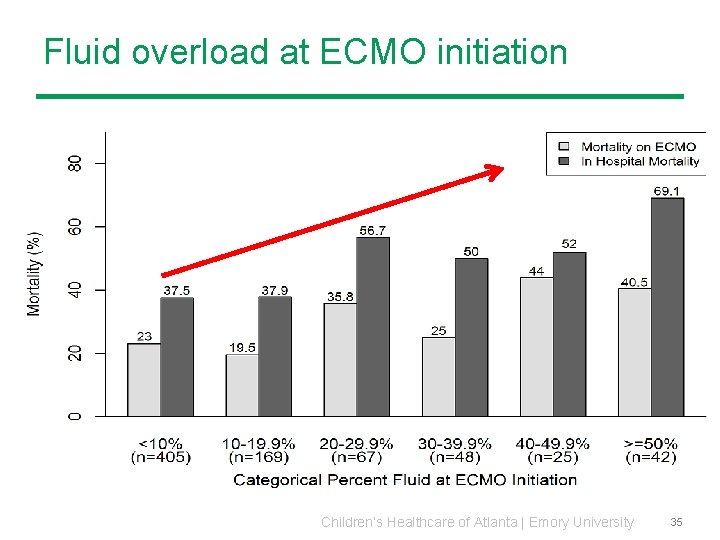
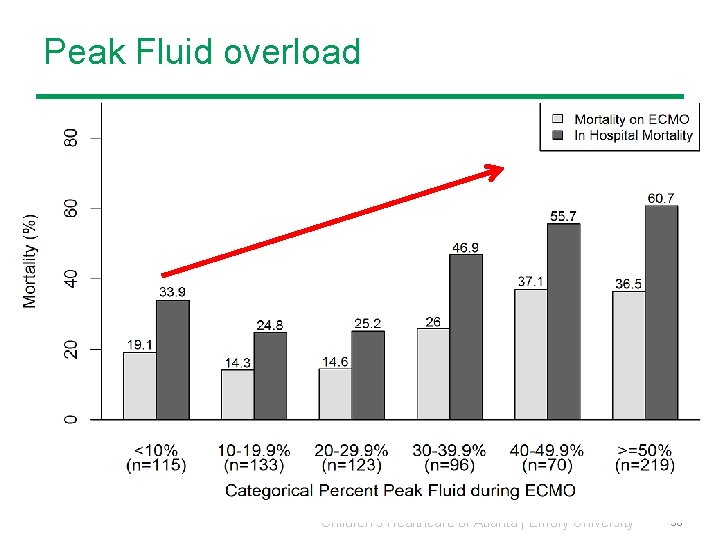
Fluid Overload and Outcome • Strong body of evidence showing fluid overload is associated with: – – – Acute kidney injury Increased mortality Increased ventilator days Increased ICU LOS In both children and adults • Conservative fluid approach (fluid restriction, diuretics) associated with improved ventilator days, ICU LOS (FACTT Trial, NEJM 2006) Children’s Healthcare of Atlanta | Emory University 14
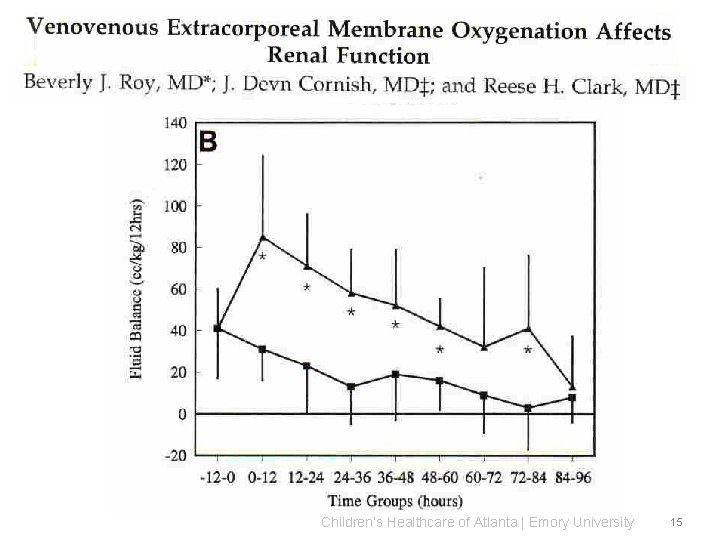
Children’s Healthcare of Atlanta | Emory University 15
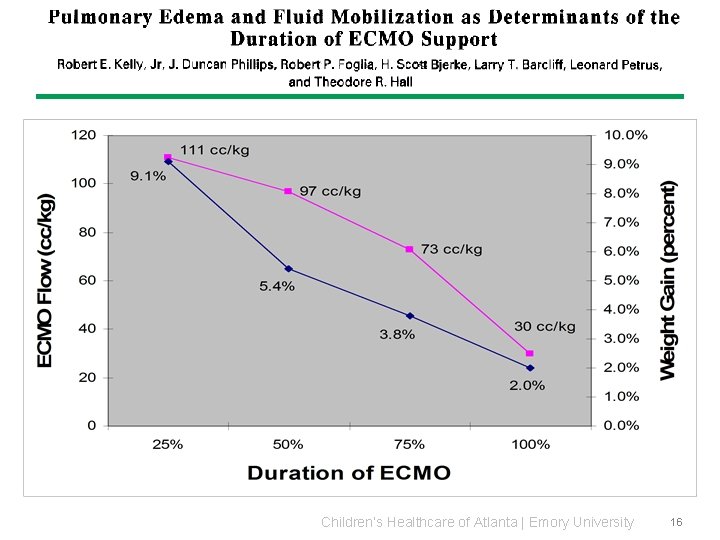
Children’s Healthcare of Atlanta | Emory University 16
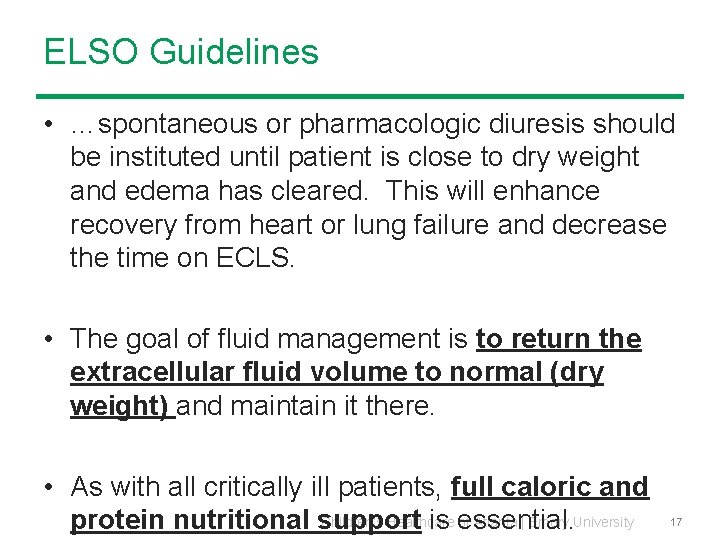
ELSO Guidelines • …spontaneous or pharmacologic diuresis should be instituted until patient is close to dry weight and edema has cleared. This will enhance recovery from heart or lung failure and decrease the time on ECLS. • The goal of fluid management is to return the extracellular fluid volume to normal (dry weight) and maintain it there. • As with all critically ill patients, full caloric and Children’s Healthcare of Atlanta | Emory University protein nutritional support is essential. 17
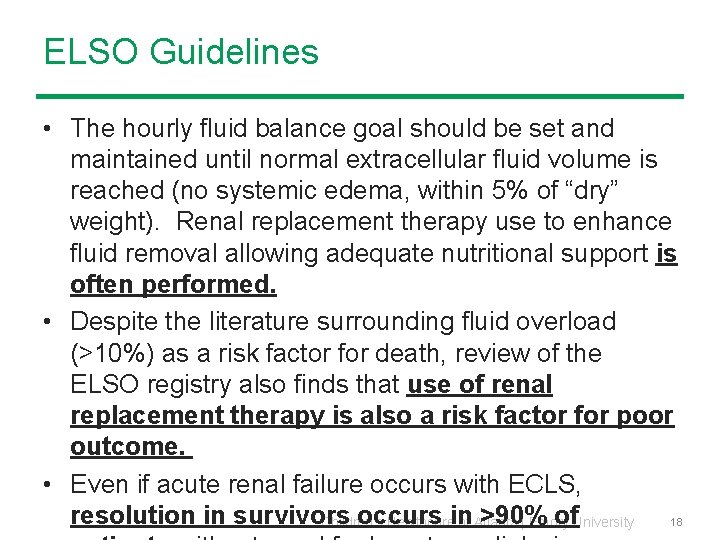
ELSO Guidelines • The hourly fluid balance goal should be set and maintained until normal extracellular fluid volume is reached (no systemic edema, within 5% of “dry” weight). Renal replacement therapy use to enhance fluid removal allowing adequate nutritional support is often performed. • Despite the literature surrounding fluid overload (>10%) as a risk factor for death, review of the ELSO registry also finds that use of renal replacement therapy is also a risk factor for poor outcome. • Even if acute renal failure occurs with ECLS, resolution in survivors occurs >90% of. University 18 Children’s Healthcarein of Atlanta | Emory
So we should do it, but how do we do it? No guidance. 19
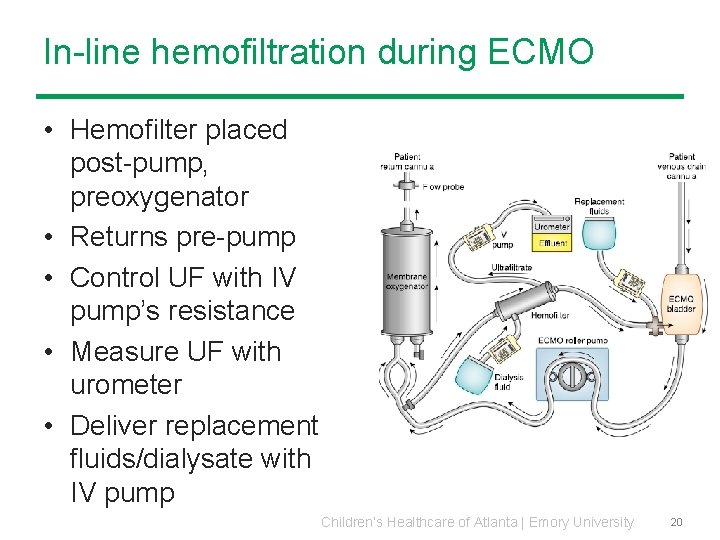
In-line hemofiltration during ECMO • Hemofilter placed post-pump, preoxygenator • Returns pre-pump • Control UF with IV pump’s resistance • Measure UF with urometer • Deliver replacement fluids/dialysate with IV pump Children’s Healthcare of Atlanta | Emory University 20
Advantages of in-line hemofiltration • Cheap – Does not require stand alone machine – Only need dialysis filter, IV pumps, and urometer • No need for dialysis/CRRT trained nurse • Can provide SCUF, CVVHD • Smaller addition of extracorporeal volume compared to stand alone CRRT device Children’s Healthcare of Atlanta | Emory University 21
Disadvantages of in-line hemofiltration • Creates a shunt – Pump flow ≠ delivered flow • Less effective with diffusive techniques • Incredibly inaccurate fluid control – IV pump error rates – between 2 -12. 5% – ECMO conditions – 34 m. L/hour (>800 m. L/day) difference between prescribed and actual ultrafiltration. Children’s Healthcare of Atlanta | Emory University 22
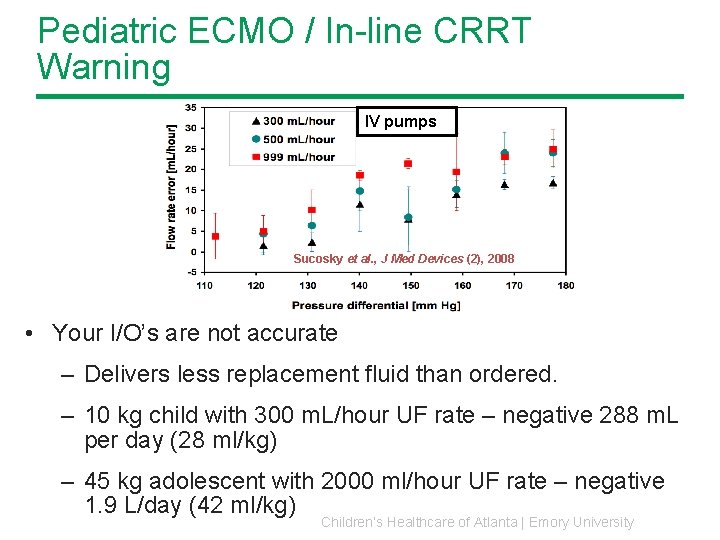
Pediatric ECMO / In-line CRRT Warning IV pumps Sucosky et al. , J Med Devices (2), 2008 • Your I/O’s are not accurate – Delivers less replacement fluid than ordered. – 10 kg child with 300 m. L/hour UF rate – negative 288 m. L per day (28 ml/kg) – 45 kg adolescent with 2000 ml/hour UF rate – negative 1. 9 L/day (42 ml/kg) Children’s Healthcare of Atlanta | Emory University
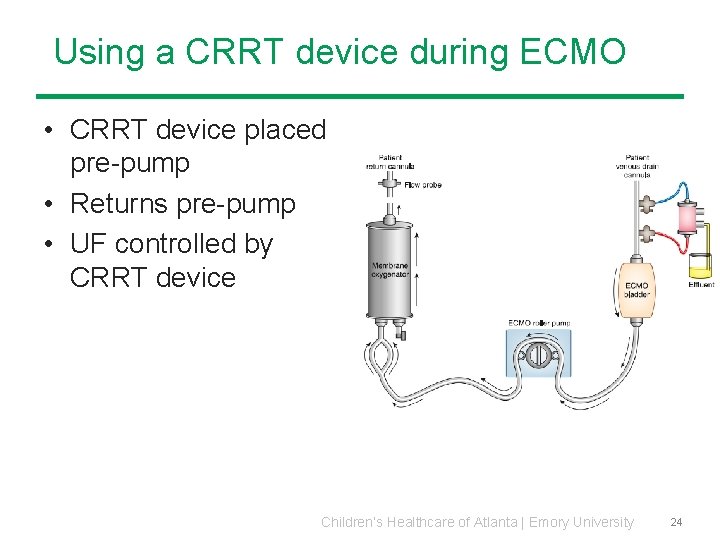
Using a CRRT device during ECMO • CRRT device placed pre-pump • Returns pre-pump • UF controlled by CRRT device Children’s Healthcare of Atlanta | Emory University 24
Advantages of CRRT device • Engineered to provide CRRT * • Provides multiple modalities of therapy • More accurate fluid balance control than in-line hemofiltration • No shunt Children’s Healthcare of Atlanta | Emory University 25
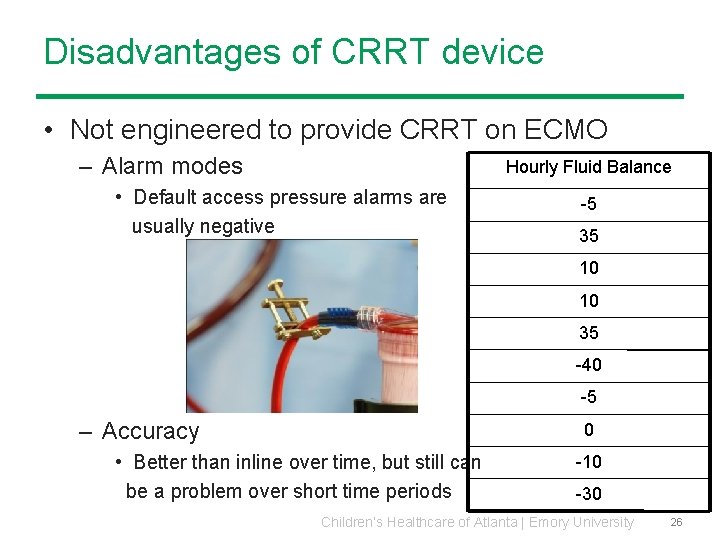
Disadvantages of CRRT device • Not engineered to provide CRRT on ECMO – Alarm modes Hourly Fluid Balance • Default access pressure alarms are usually negative -5 35 10 10 35 -40 -5 – Accuracy 0 • Better than inline over time, but still can be a problem over short time periods -10 -30 Children’s Healthcare of Atlanta | Emory University 26
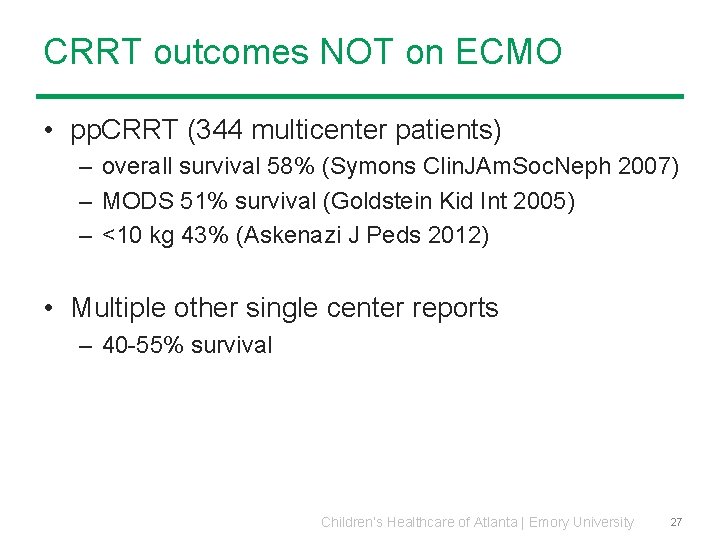
CRRT outcomes NOT on ECMO • pp. CRRT (344 multicenter patients) – overall survival 58% (Symons Clin. JAm. Soc. Neph 2007) – MODS 51% survival (Goldstein Kid Int 2005) – <10 kg 43% (Askenazi J Peds 2012) • Multiple other single center reports – 40 -55% survival Children’s Healthcare of Atlanta | Emory University 27
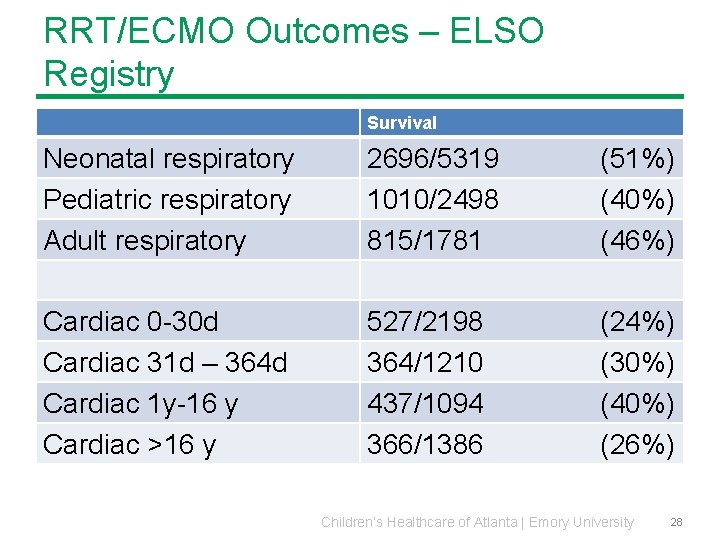
RRT/ECMO Outcomes – ELSO Registry Survival Neonatal respiratory Pediatric respiratory Adult respiratory 2696/5319 1010/2498 815/1781 (51%) (40%) (46%) Cardiac 0 -30 d Cardiac 31 d – 364 d Cardiac 1 y-16 y Cardiac >16 y 527/2198 364/1210 437/1094 366/1386 (24%) (30%) (40%) (26%) Children’s Healthcare of Atlanta | Emory University 28
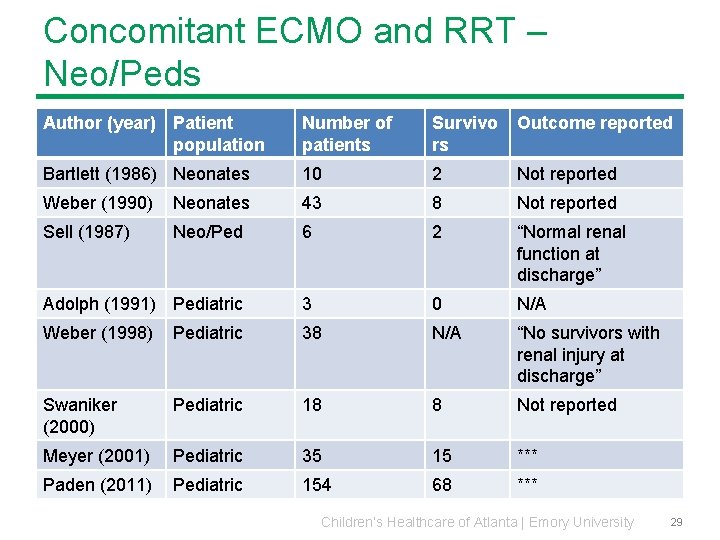
Concomitant ECMO and RRT – Neo/Peds Author (year) Patient population Number of patients Survivo rs Outcome reported Bartlett (1986) Neonates 10 2 Not reported Weber (1990) Neonates 43 8 Not reported Sell (1987) Neo/Ped 6 2 “Normal renal function at discharge” Adolph (1991) Pediatric 3 0 N/A Weber (1998) Pediatric 38 N/A “No survivors with renal injury at discharge” Swaniker (2000) Pediatric 18 8 Not reported Meyer (2001) Pediatric 35 15 *** Paden (2011) Pediatric 154 68 *** Children’s Healthcare of Atlanta | Emory University 29
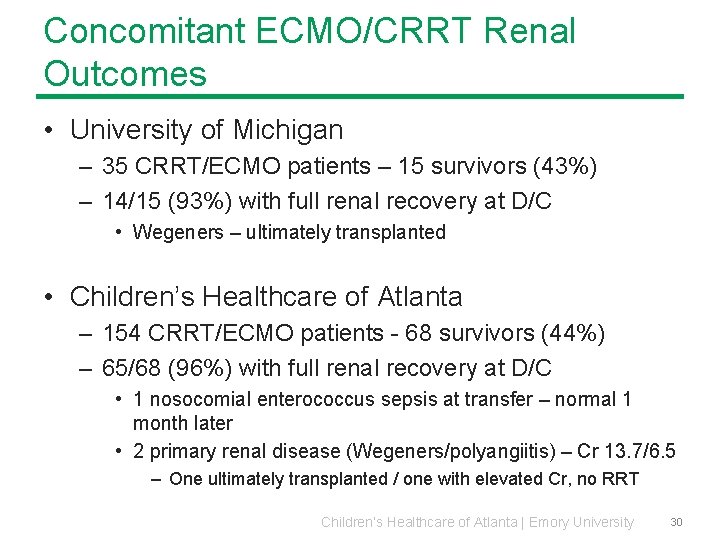
Concomitant ECMO/CRRT Renal Outcomes • University of Michigan – 35 CRRT/ECMO patients – 15 survivors (43%) – 14/15 (93%) with full renal recovery at D/C • Wegeners – ultimately transplanted • Children’s Healthcare of Atlanta – 154 CRRT/ECMO patients - 68 survivors (44%) – 65/68 (96%) with full renal recovery at D/C • 1 nosocomial enterococcus sepsis at transfer – normal 1 month later • 2 primary renal disease (Wegeners/polyangiitis) – Cr 13. 7/6. 5 – One ultimately transplanted / one with elevated Cr, no RRT Children’s Healthcare of Atlanta | Emory University 30
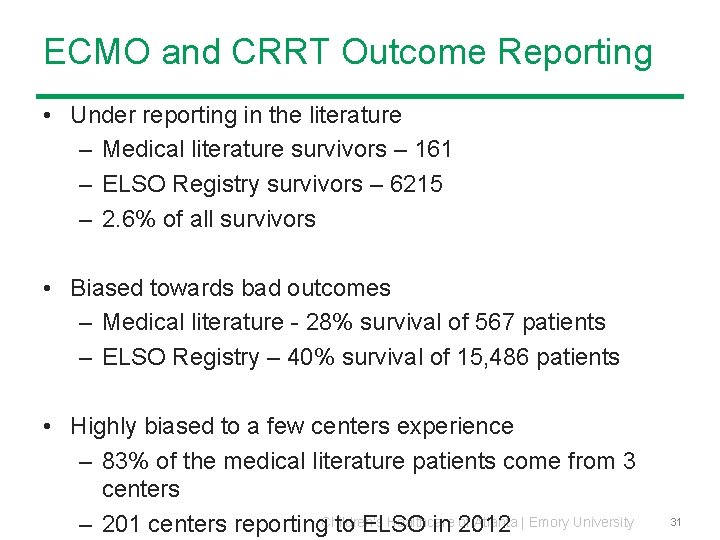
ECMO and CRRT Outcome Reporting • Under reporting in the literature – Medical literature survivors – 161 – ELSO Registry survivors – 6215 – 2. 6% of all survivors • Biased towards bad outcomes – Medical literature - 28% survival of 567 patients – ELSO Registry – 40% survival of 15, 486 patients • Highly biased to a few centers experience – 83% of the medical literature patients come from 3 centers Healthcare of Atlanta | Emory University – 201 centers reporting. Children’s to ELSO in 2012 31
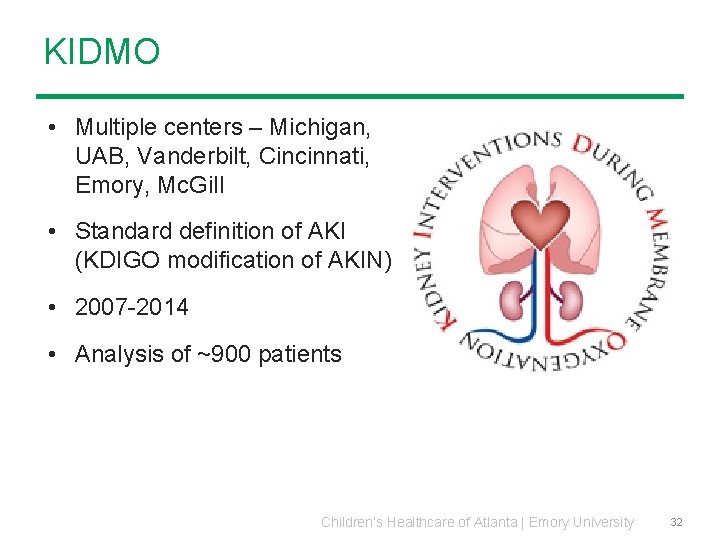
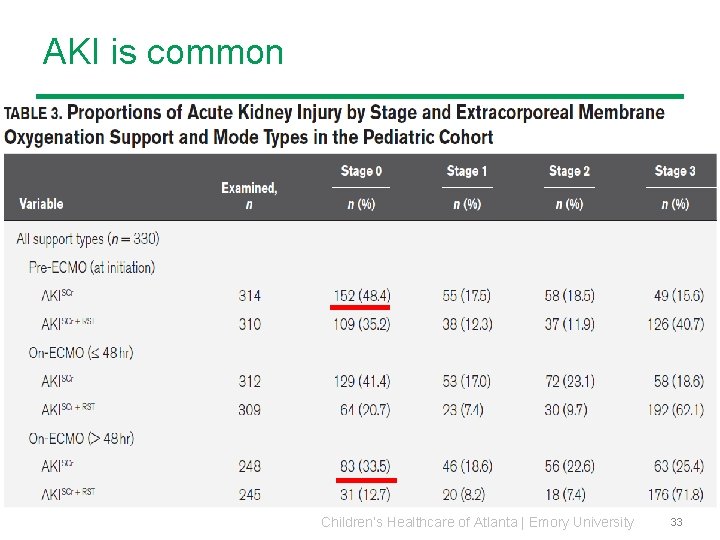
KIDMO • Multiple centers – Michigan, UAB, Vanderbilt, Cincinnati, Emory, Mc. Gill • Standard definition of AKI (KDIGO modification of AKIN) • 2007 -2014 • Analysis of ~900 patients Children’s Healthcare of Atlanta | Emory University 32
AKI is common Children’s Healthcare of Atlanta | Emory University 33
AKI - longer ECMO and increased mortality Children’s Healthcare of Atlanta | Emory University 34
Fluid overload at ECMO initiation Children’s Healthcare of Atlanta | Emory University 35
Peak Fluid overload Children’s Healthcare of Atlanta | Emory University 36
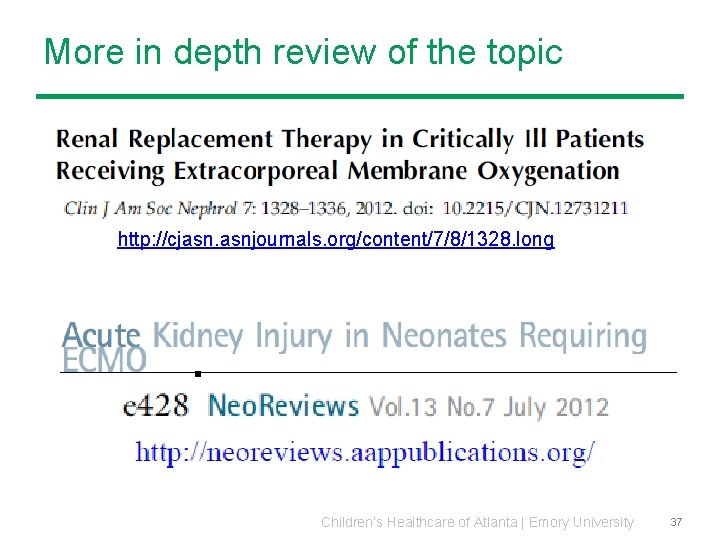
More in depth review of the topic http: //cjasn. asnjournals. org/content/7/8/1328. long Children’s Healthcare of Atlanta | Emory University 37
Angelica Hale Children’s Healthcare of Atlanta | Emory University 38