
WHEN THE DAY BREAKS How the protagonist and
WHEN THE DAY BREAKS
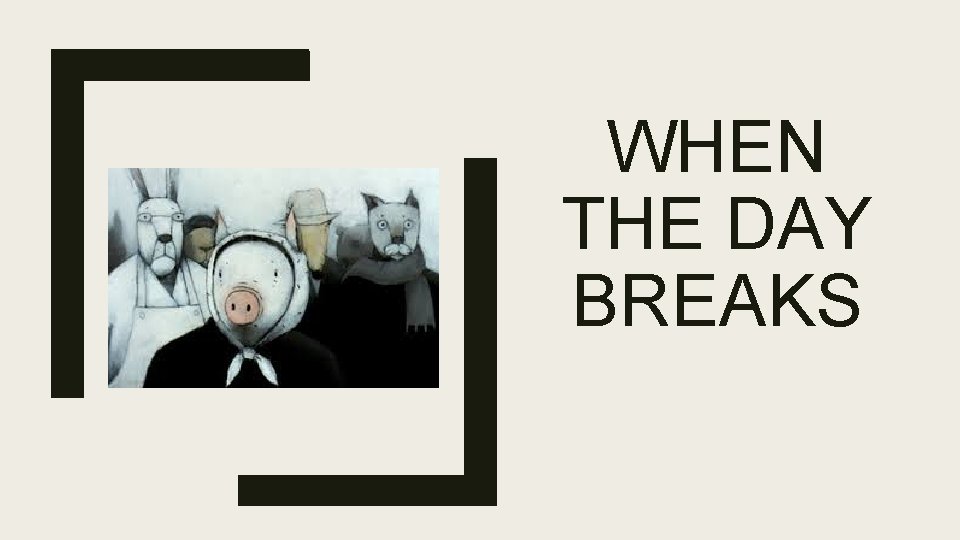
How the protagonist and other characters are established and developed • • All the characters have their own identity The characters have animals heads despite doing human things- like going to the shops or making a cup of tea or doing the ironing Protagonist- rooster and pig- presented as typical ordinary people/animals with similar routines and uneventful yet content lives The film begins with the chicken character, the real protagonist is the pig. She seems full of joy singing along with opera, cheerfully skinning potatoes and executing a dance move with a chair. What happens next though, shows her acute sensitivity
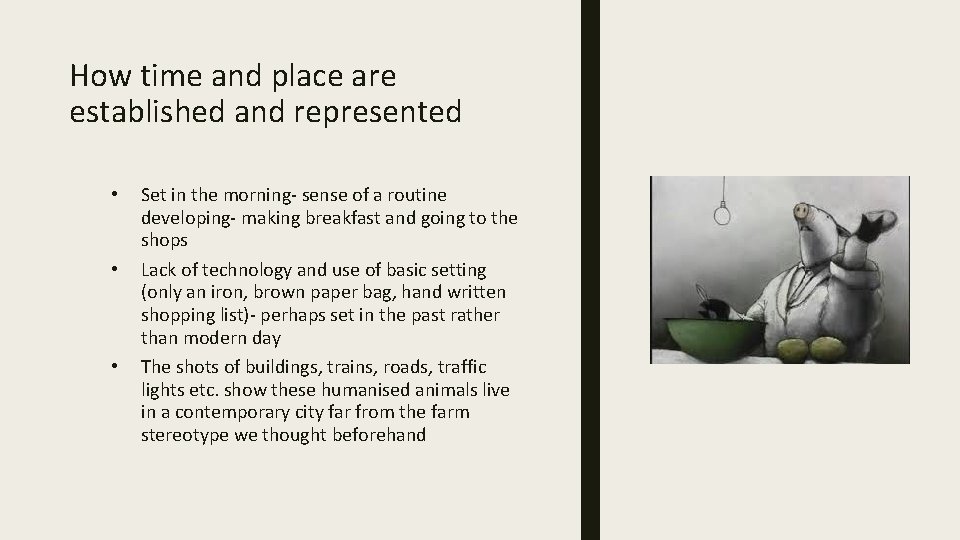
How time and place are established and represented • • • Set in the morning- sense of a routine developing- making breakfast and going to the shops Lack of technology and use of basic setting (only an iron, brown paper bag, hand written shopping list)- perhaps set in the past rather than modern day The shots of buildings, trains, roads, traffic lights etc. show these humanised animals live in a contemporary city far from the farm stereotype we thought beforehand
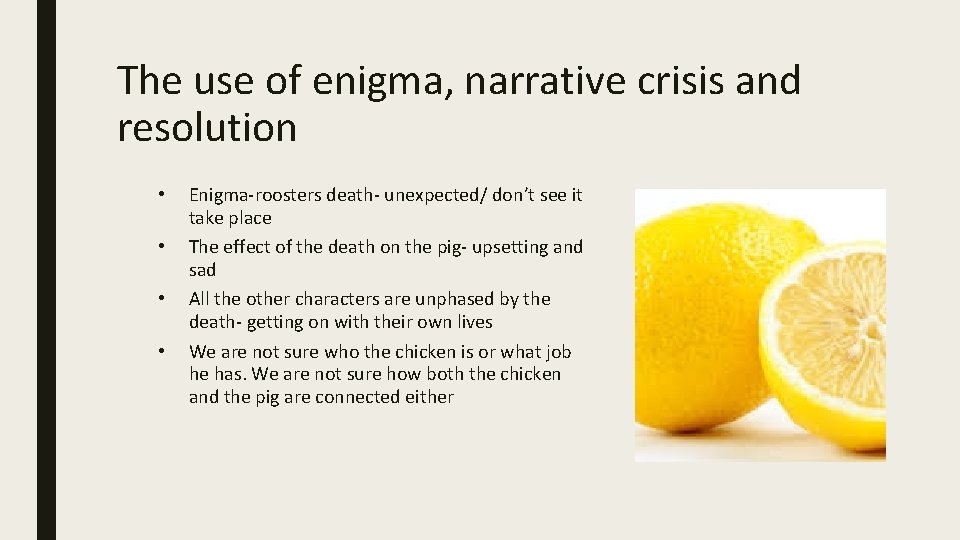
The use of enigma, narrative crisis and resolution • • Enigma-roosters death- unexpected/ don’t see it take place The effect of the death on the pig- upsetting and sad All the other characters are unphased by the death- getting on with their own lives We are not sure who the chicken is or what job he has. We are not sure how both the chicken and the pig are connected either
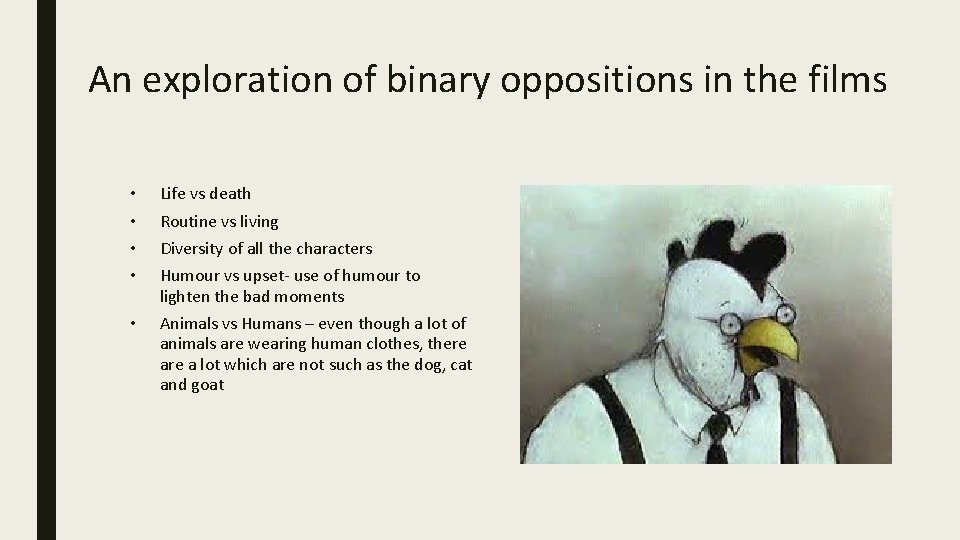
An exploration of binary oppositions in the films • • Life vs death • Animals vs Humans – even though a lot of animals are wearing human clothes, there a lot which are not such as the dog, cat and goat Routine vs living Diversity of all the characters Humour vs upset- use of humour to lighten the bad moments
Identify and explore the messages and ideas of the film and ideology? • • You never know when you’re going to die- maybe linking to existentialism? Diversity of the animals- all of them are different- reflection on our society and criticises it for being unequal Normality of life- sticking to a routine Importance of living every day- might die at any second Compares life to a lemon- rolling down the drain- as simple as that ‘When life gives you lemons, make lemonade’ saying is used to encourage optimism and a positive attitudes- the film takes this sway and does the opposite Everyone in a city is connected - becoming a holistic entity - even if their lives seem isolated and atomised
How does the film make you feel? What does it make you think about? • • • Saddening mood- an innocent person becoming a victim and having their life taken away from them Tense atmosphere- watching a normal life waiting for something bad to happen Makes the audience reflect upon how they go about their own lives Narrative - The loop is closed by returning to Ruby and her opening the blind to a sunny day (suggesting her good mood has been restored - a return to the original equilibrium. ) The film straight away makes the viewer confused as eh first thing we see is a pig in human clothes and body. We get to understand that the whole town is like this and that none of them are the typical barnyard animal. Makes us wonder how they got there

FILM FORM:
Cinematography: • • • Rota-scope- shooting a film and drawing over it Cartoon- gives a childlike/ innocent impression- contrast by the character’s death Begins and ends with the same image Tracking shot from plug socket and electrical cord to toaster Tracking shot over to the rooster as if we are being showed something by the camera before we actually see him Close ups of the pig in the beginning highlighting its importance. Constant use of close-ups or mid shots (no use of long shots)- makes us feel immersed in the characters world and increases our emotional connect with them but also makes us feel claustrophobia and on-edge Closeup of the tap- significant at start and end Black and white- exception for some colours (mainly yellow like the roosters beak and the lemon) Repeated image extreme close-up of bacteria Fast tracking shot down from exterior window to door of building
Sound: • • • Black out so we hear the sound of the train before we see it Foley sound- two main songs (upbeat- lyrics create an optimistic and positive feeling)- old fashioned/ record jazz songs Close sonic perspective of the tap dripping- tense and uncomfortable mood Close sonic perspective of the road/traffic/ car horns- pre-empting car accident Close sonic perspective- emphasise car crash Close sonic perspective of a lot of household machines, such as hearing a knife chop. This highlights the importance of what the animals and the pig is doing
Mise en scene and Editing: • • • Toaster looks like the drain the lemon falls down Throws away potato but keeps the skin- comedy Repeated image of the lemon- holds all the significance Red traffic light- colour red associated with danger We don’t see the death but watch the bag of lemons fall on the floor In black and white, yet it gives across the feeling that it is in colour. This could be because it uses objects like a lemon which everyone knows what the colour is. • Fast pace of editing- add to the feeling of being uncomfortable and apprehension whilst also slightly comical Rotascoping- jarring and grainy image blurring our vision and creating a tense mood Jump cuts form character to character making us realise how big this town is. It also reinforces the fact that everyone has an animal face which could be because a hidden meaning could be about how everyone has an animalistic side. • •
- Slides: 11