
When forming sentences you dont have to use

- Slides: 42
When forming sentences, you don’t have to use the subject pronouns yo, tú, nosotros, and vosotros. You do have to use the pronouns Ud. , él, ella, Uds. , ellos, and ellas.
Gustar-to like Me gusta la pizza. Me gustan los videojuegos. Me gusta el helado. Me gustan los animales. Me gusta la comida italiana. Me gustan los deportes.
la comida mexicana
la leche
los chicos
la escuela
el dinero
los patos
las películas
el chocolate
la familia
las frutas
los libros
las ranas
la música
las gafas de sol
el regalo
las botas
las verduras
los amigos
la piscina
el tenis
los deportes
los niños
el agua
el postre
los videojuegos
el elefante
la moda
los refrescos
las papas fritas
el pastel
On your verb sheet: gustar-to like ______ ______
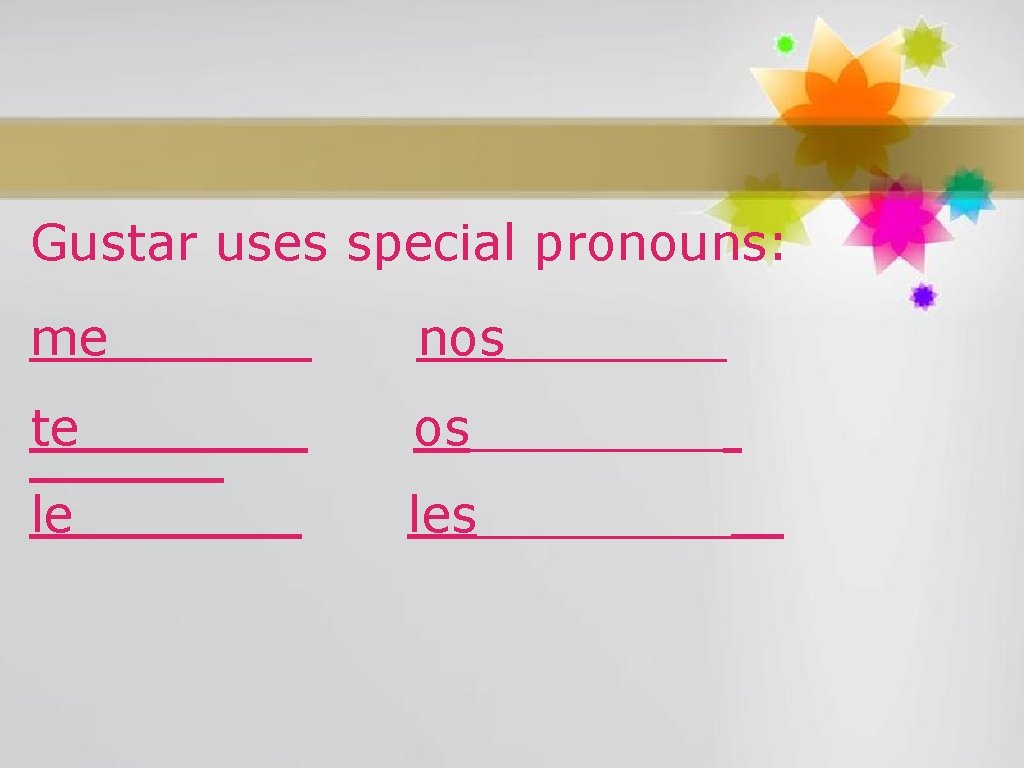
Gustar uses special pronouns: me nos_______ te os____ le les____
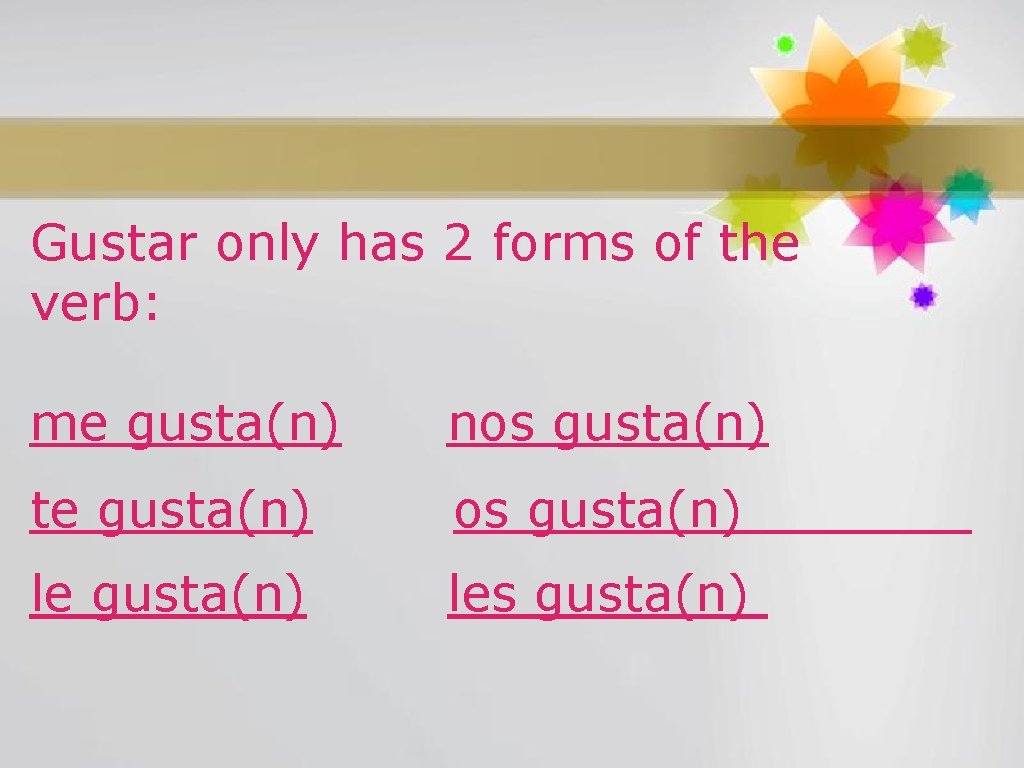
Gustar only has 2 forms of the verb: me gusta(n) nos gusta(n) te gusta(n) os gusta(n) les gusta(n)
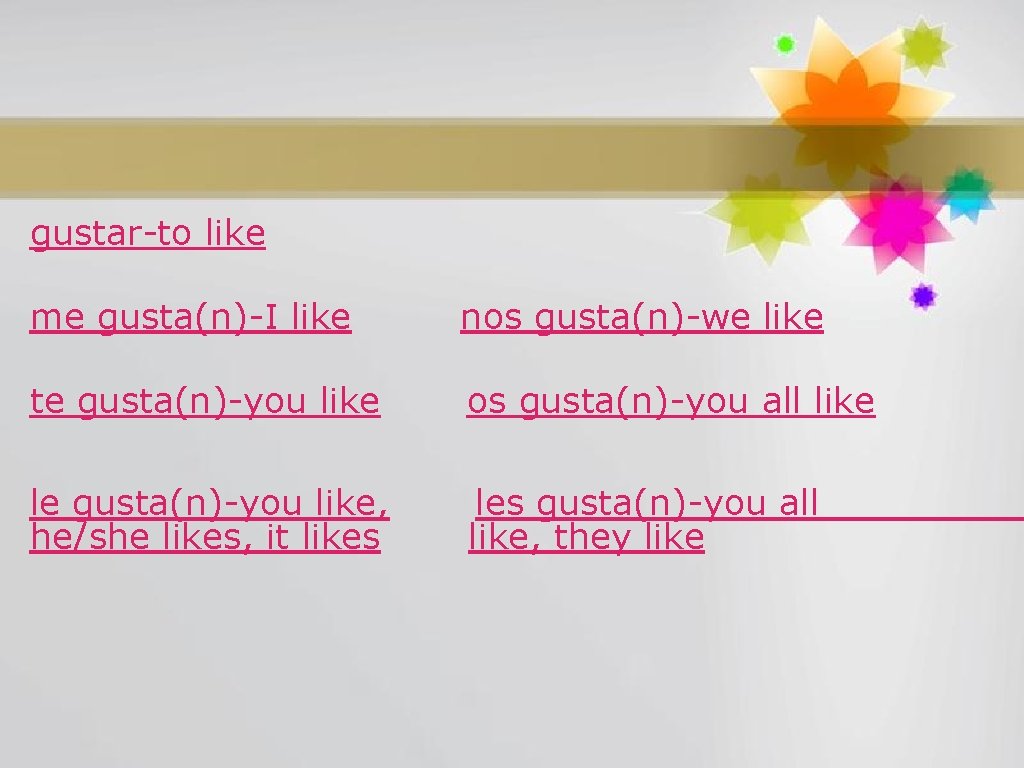
gustar-to like me gusta(n)-I like nos gusta(n)-we like te gusta(n)-you like os gusta(n)-you all like le gusta(n)-you like, he/she likes, it likes les gusta(n)-you all like, they like
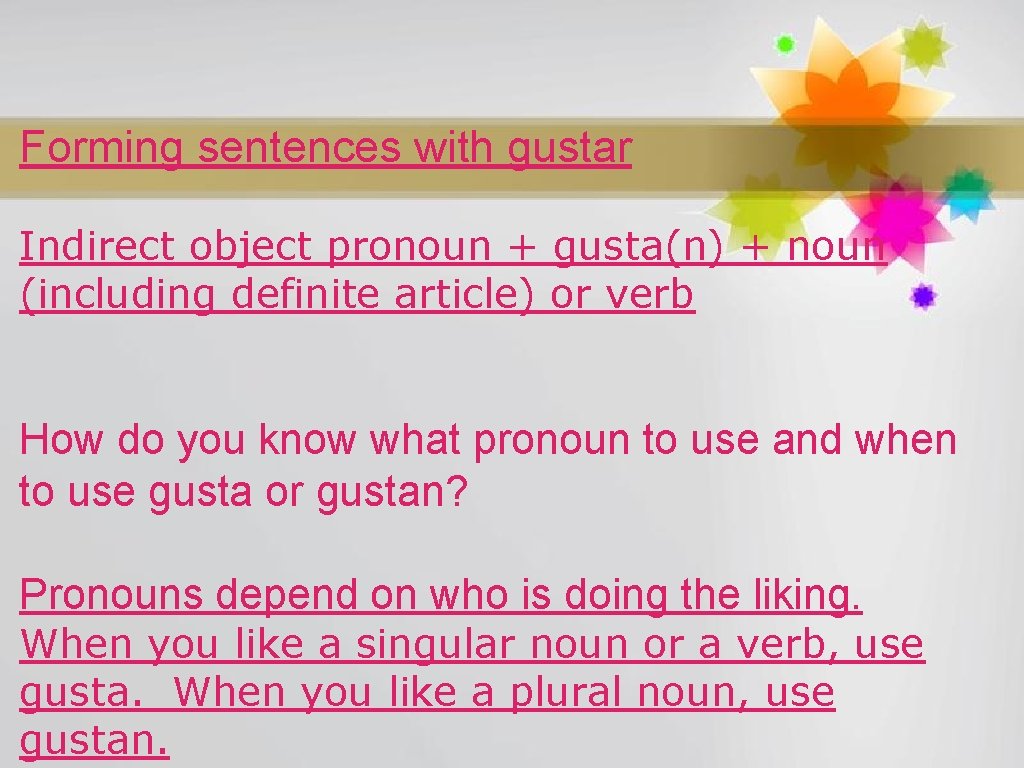
Forming sentences with gustar Indirect object pronoun + gusta(n) + noun (including definite article) or verb How do you know what pronoun to use and when to use gusta or gustan? Pronouns depend on who is doing the liking. When you like a singular noun or a verb, use gusta. When you like a plural noun, use gustan.
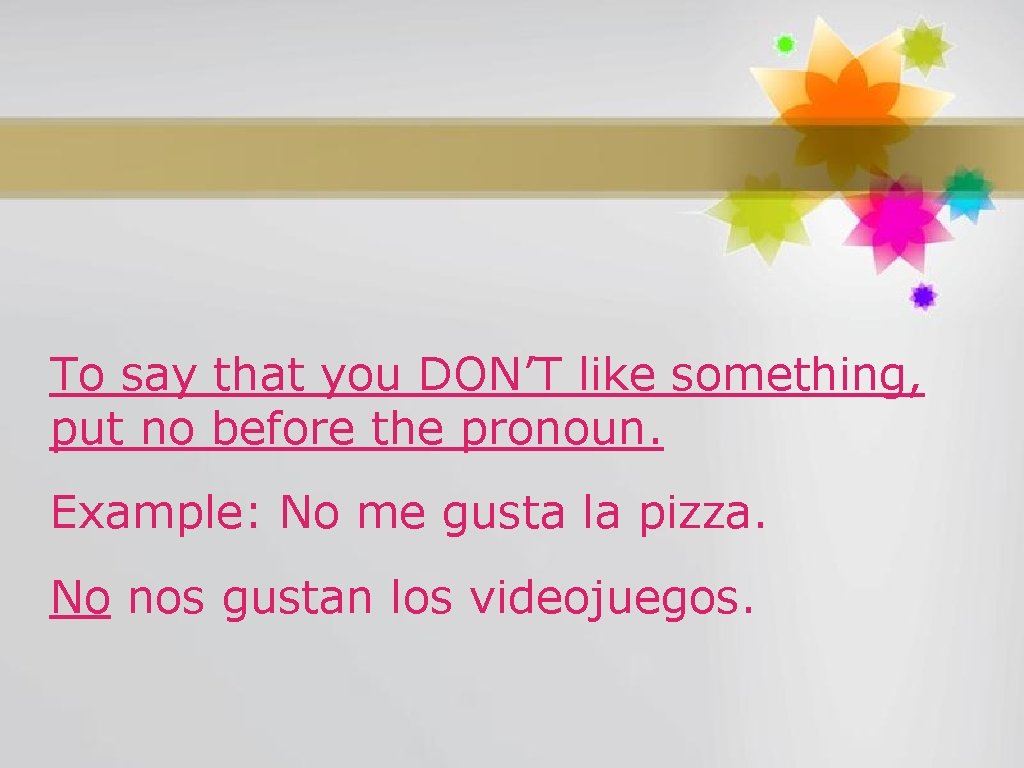
To say that you DON’T like something, put no before the pronoun. Example: No me gusta la pizza. No nos gustan los videojuegos.
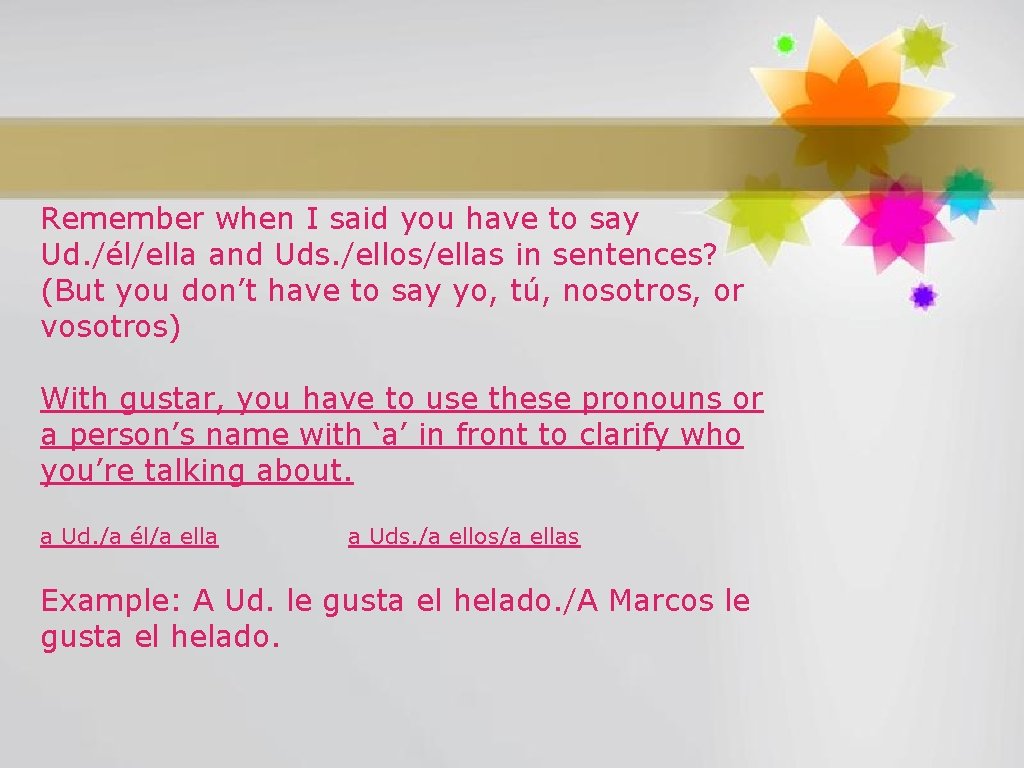
Remember when I said you have to say Ud. /él/ella and Uds. /ellos/ellas in sentences? (But you don’t have to say yo, tú, nosotros, or vosotros) With gustar, you have to use these pronouns or a person’s name with ‘a’ in front to clarify who you’re talking about. a Ud. /a él/a ella a Uds. /a ellos/a ellas Example: A Ud. le gusta el helado. /A Marcos le gusta el helado.
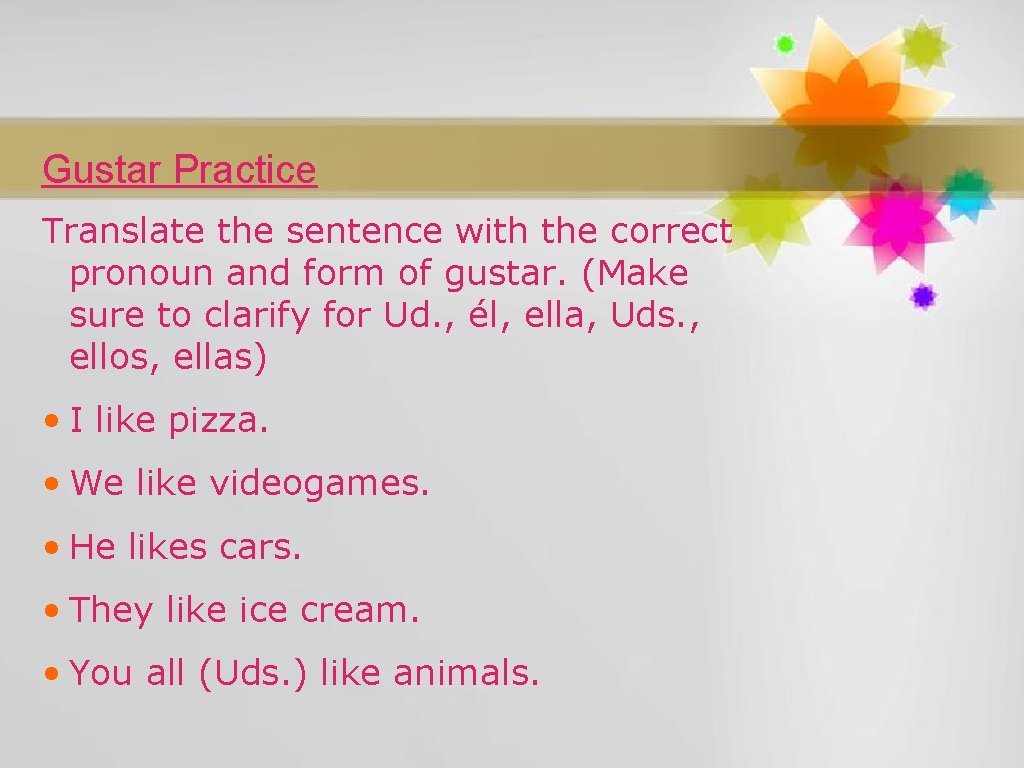
Gustar Practice Translate the sentence with the correct pronoun and form of gustar. (Make sure to clarify for Ud. , él, ella, Uds. , ellos, ellas) • I like pizza. • We like videogames. • He likes cars. • They like ice cream. • You all (Uds. ) like animals.
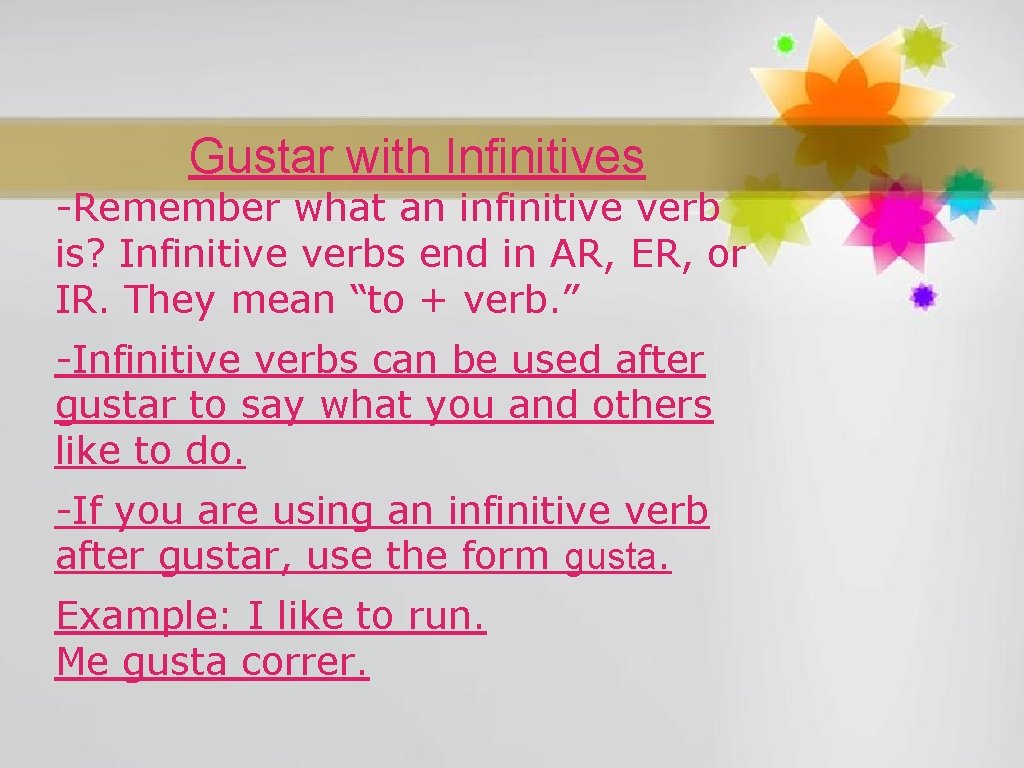
Gustar with Infinitives -Remember what an infinitive verb is? Infinitive verbs end in AR, ER, or IR. They mean “to + verb. ” -Infinitive verbs can be used after gustar to say what you and others like to do. -If you are using an infinitive verb after gustar, use the form gusta. Example: I like to run. Me gusta correr.