
When and Why Did People Start Living in
- Slides: 11
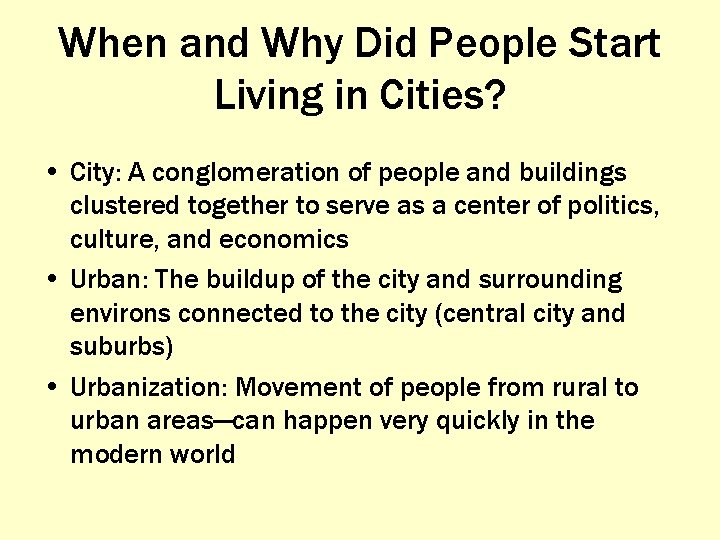
When and Why Did People Start Living in Cities? • City: A conglomeration of people and buildings clustered together to serve as a center of politics, culture, and economics • Urban: The buildup of the city and surrounding environs connected to the city (central city and suburbs) • Urbanization: Movement of people from rural to urban areas—can happen very quickly in the modern world
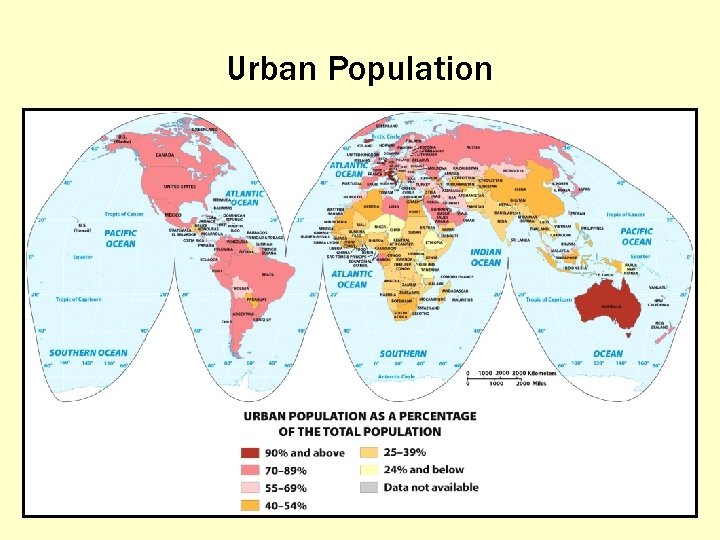
Urban Population
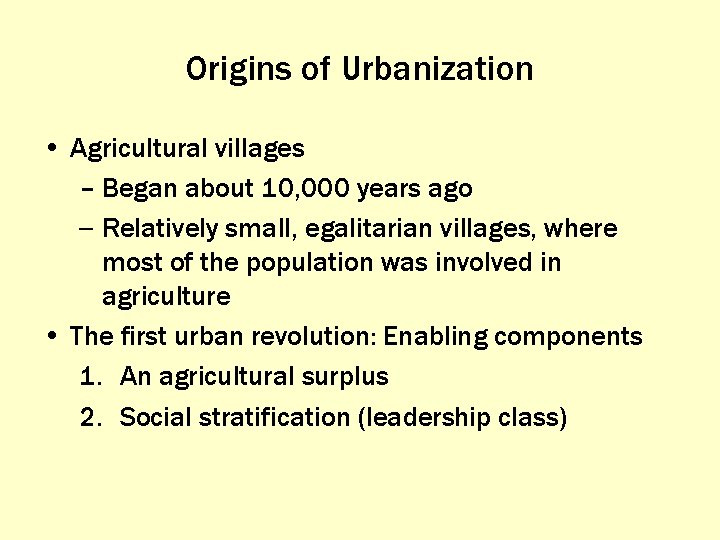
Origins of Urbanization • Agricultural villages – Began about 10, 000 years ago – Relatively small, egalitarian villages, where most of the population was involved in agriculture • The first urban revolution: Enabling components 1. An agricultural surplus 2. Social stratification (leadership class)
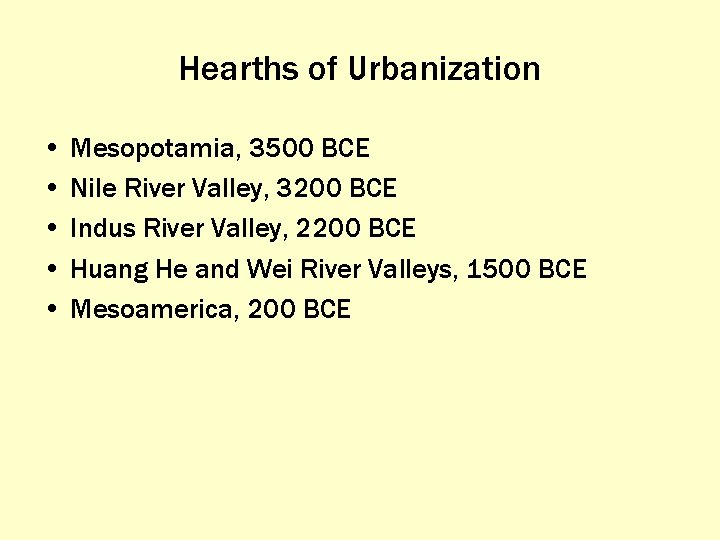
Hearths of Urbanization • Mesopotamia, 3500 BCE • Nile River Valley, 3200 BCE • Indus River Valley, 2200 BCE • Huang He and Wei River Valleys, 1500 BCE • Mesoamerica, 200 BCE
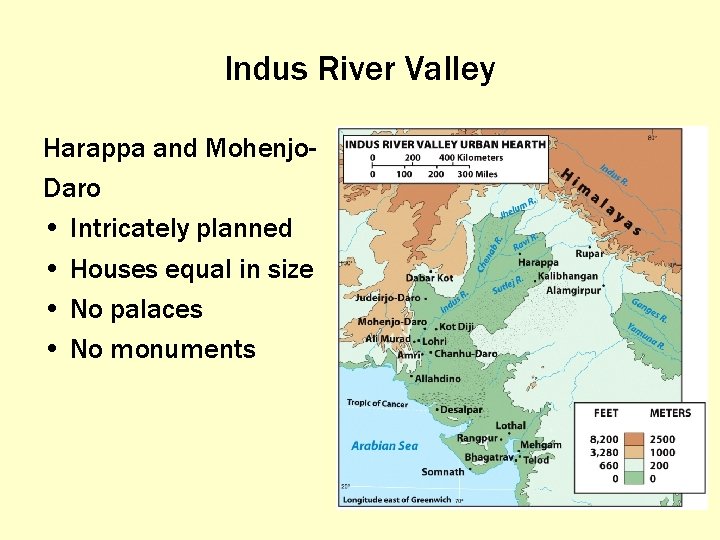
Indus River Valley Harappa and Mohenjo. Daro • Intricately planned • Houses equal in size • No palaces • No monuments
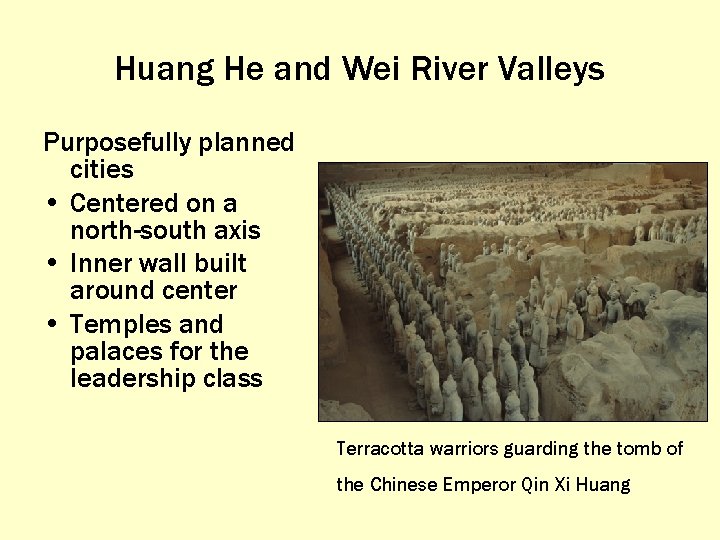
Huang He and Wei River Valleys Purposefully planned cities • Centered on a north-south axis • Inner wall built around center • Temples and palaces for the leadership class Terracotta warriors guarding the tomb of the Chinese Emperor Qin Xi Huang
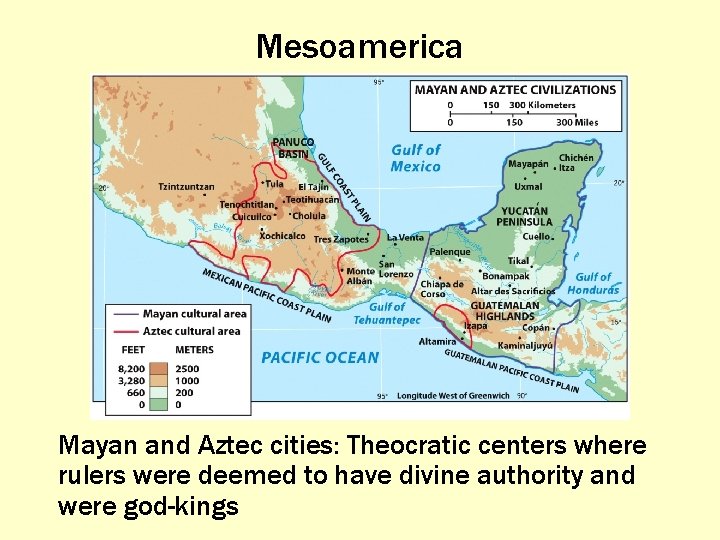
Mesoamerica Mayan and Aztec cities: Theocratic centers where rulers were deemed to have divine authority and were god-kings
Diffusion of Urbanization • Greek cities (by 500 BCE) – Greeks highly urbanized – Network of more than 500 cities and towns on the mainland on islands – Acropolis (buildings on a height of land) and an agora (open public space) in each city • Roman cities – A system of cities and small towns, linked together by hundreds of miles of roads and sea routes – Sites of Roman cities typically for trade – Forum a combination of the acropolis and agora into one space – Extreme wealth and extreme poverty
Urban Growth after Greece and Rome • Europe – Middle Ages (500– 1300) – Little urban growth, even decline • Asia – Centers along the Silk Road – Urban growth in Korea, Japan • West Africa • The Americas
Cities in the Age of Exploration • Early Eurasian centers – Crescent-shaped zone from England to Japan – Most cities sited in continental interiors • Maritime exploration – Change in situation to favor coastal locations – Continued importance under colonialism – Wealth for mercantile cities of Europe – European model for cities in colonies
The Second Urban Revolution • A large-scale movement of people to cities to work in manufacturing, made possible by 1. Second agricultural revolution that improved food production and created a larger surplus 2. Industrialization, which encouraged growth of cities near industrial resources • Favored places – Had undergone the second agricultural revolution – Possessed industrial resources – Possessed capital from mercantilism and colonialism